Chapter 1
Introducing Economics


                        1
Definition of Economics
The study of how society
chooses to allocate its
scarce resources to the
production of goods and
services in order to satisfy
unlimited wants
                           2
Microeconomics vs.
        Macroeconomics
• Microeconomics       • Macroeconomics
The branch of         The branch of
  economics that         economics that
  studies decision-      studies decision-
  making by a            making for the
  single individual,     economy as a
  household, firm,       whole
  industry, or level
  of government
                                        3
What is
  Ceteris Paribus?
A Latin phrase that means
that while certain variables
can change, “all other
things remain unchanged”

                               4
BASIC CONCEPTS:
•   Scarcity - the fundamental
economic problem that human      wants
exceed the availability of  time,
goods, and resources.
•    Choice – Because individuals
and society can never have everything
they desire, they therefore are forced
to make choices
•    Opportunity cost – the second best
     alternative foregone for a chosen
option.                                   5
Factors of Production
1. Land Resource - any natural resource
   provided by nature
2. Labour - The mental and physical capacity
   of workers to produce goods and services
3. Capital - The physical plants, machinery,
   and equipment used to produce other
   goods
   (Financial capital - The money used to
   purchase capital)
4. Entrepreneurs - The creative ability of
   individuals to seek profits by combining
   resources to produce innovative products 6
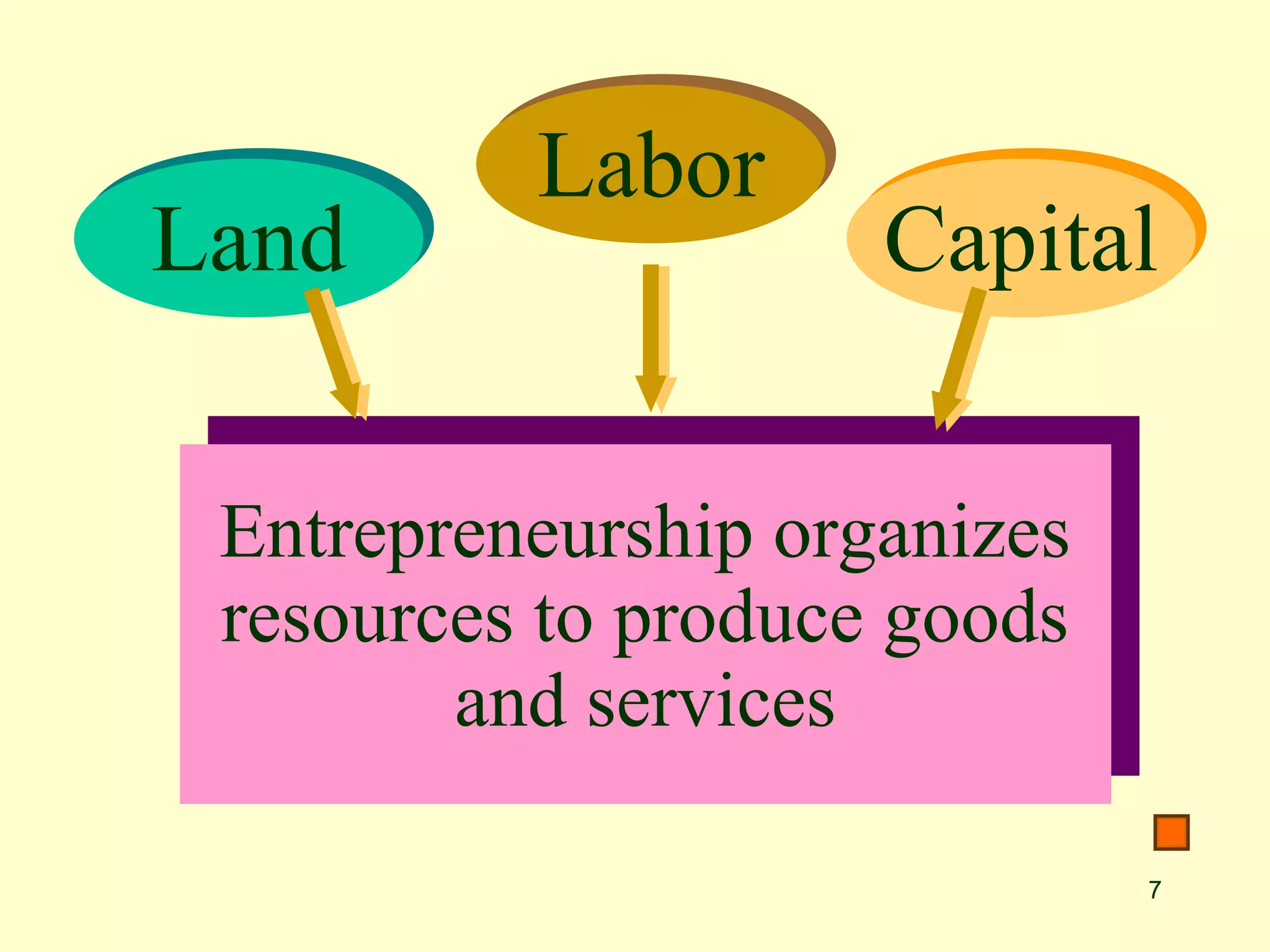
Labor
           Labor
Land
Land                  Capital
                      Capital

  Entrepreneurshiporganizes
 Entrepreneurship   organizes
  resourcesto produce goods
 resources  to produce goods
         andservices
        and   services

                                7
Graph
Graphs provide a means to clearly
show economic relationships in two-
dimensional space. Economic analysis
is often concerned with two variables
confined to the upper right-hand
(northeast) quadrant of the coordinate
number system.

                                     8
A shift in a curve occurs only
when the ceteris paribus
assumption is relaxed and a third
variable not on either axis of the
graph is allowed to change


                                      9
Marginal Analysis
- An examination of the
  effects of additions to or
  subtractions from a
  current situation

                           10
Production Possibilities
        Curve:
- A curve that shows the
  maximum combinations of
  two outputs that an
  economy can produce,
  given its available
  resources and technology
                         11
Technology:
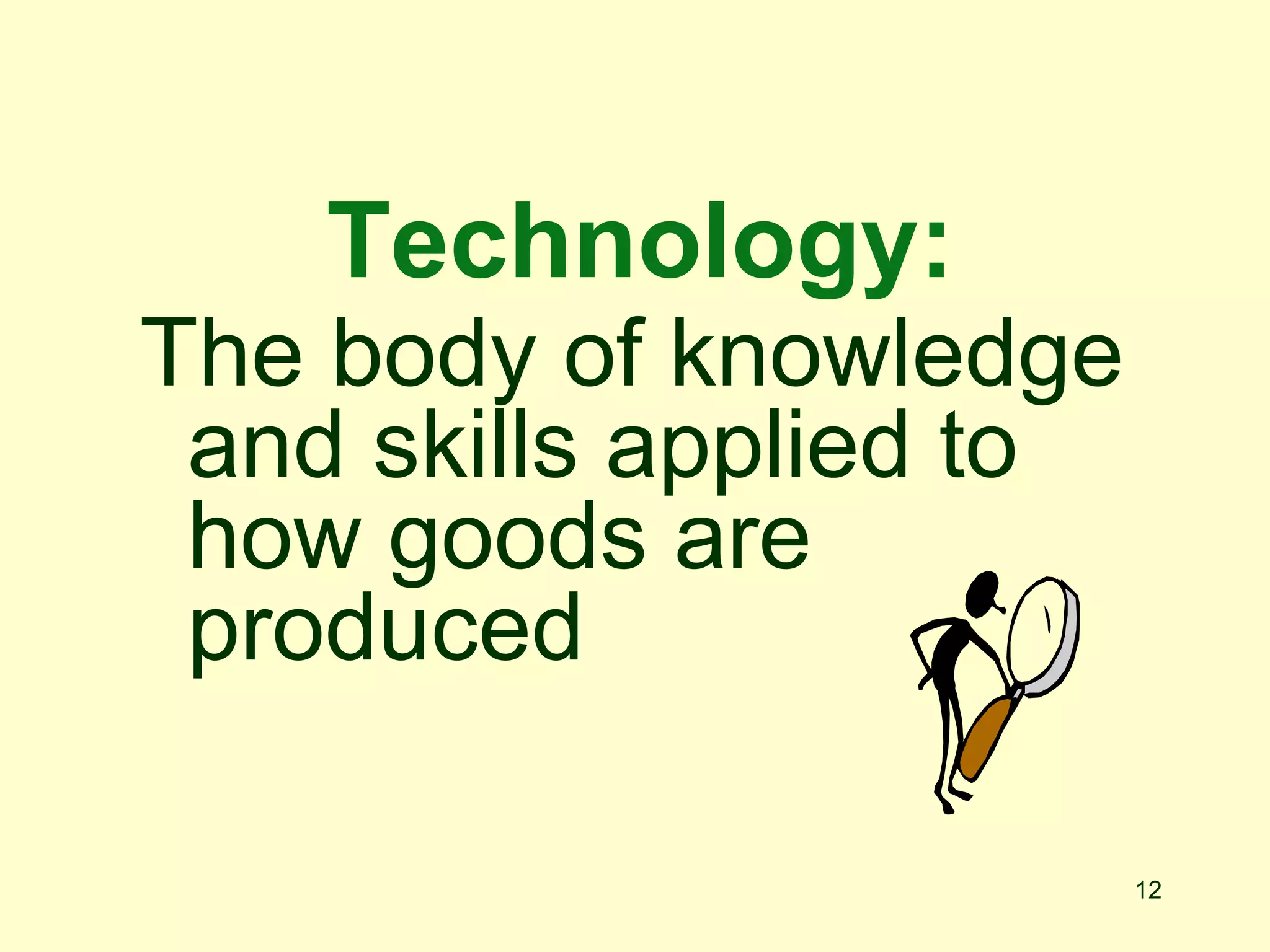
The body of knowledge
 and skills applied to
 how goods are
 produced

                         12
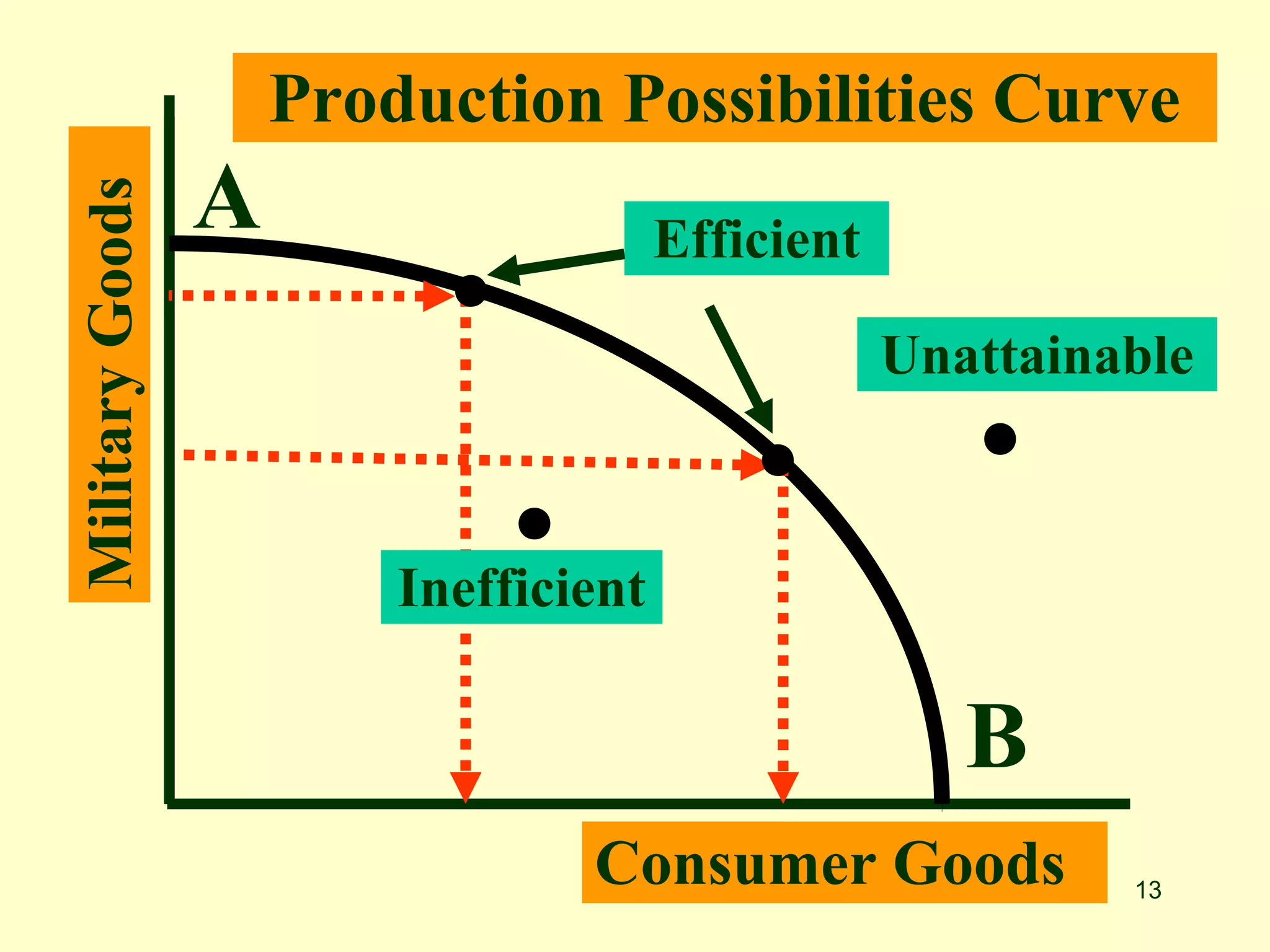
Production Possibilities Curve
                 A
Military Goods
                                       Efficient

                                                   Unattainable


                         Inefficient

                                                      B
                                 Consumer Goods             13
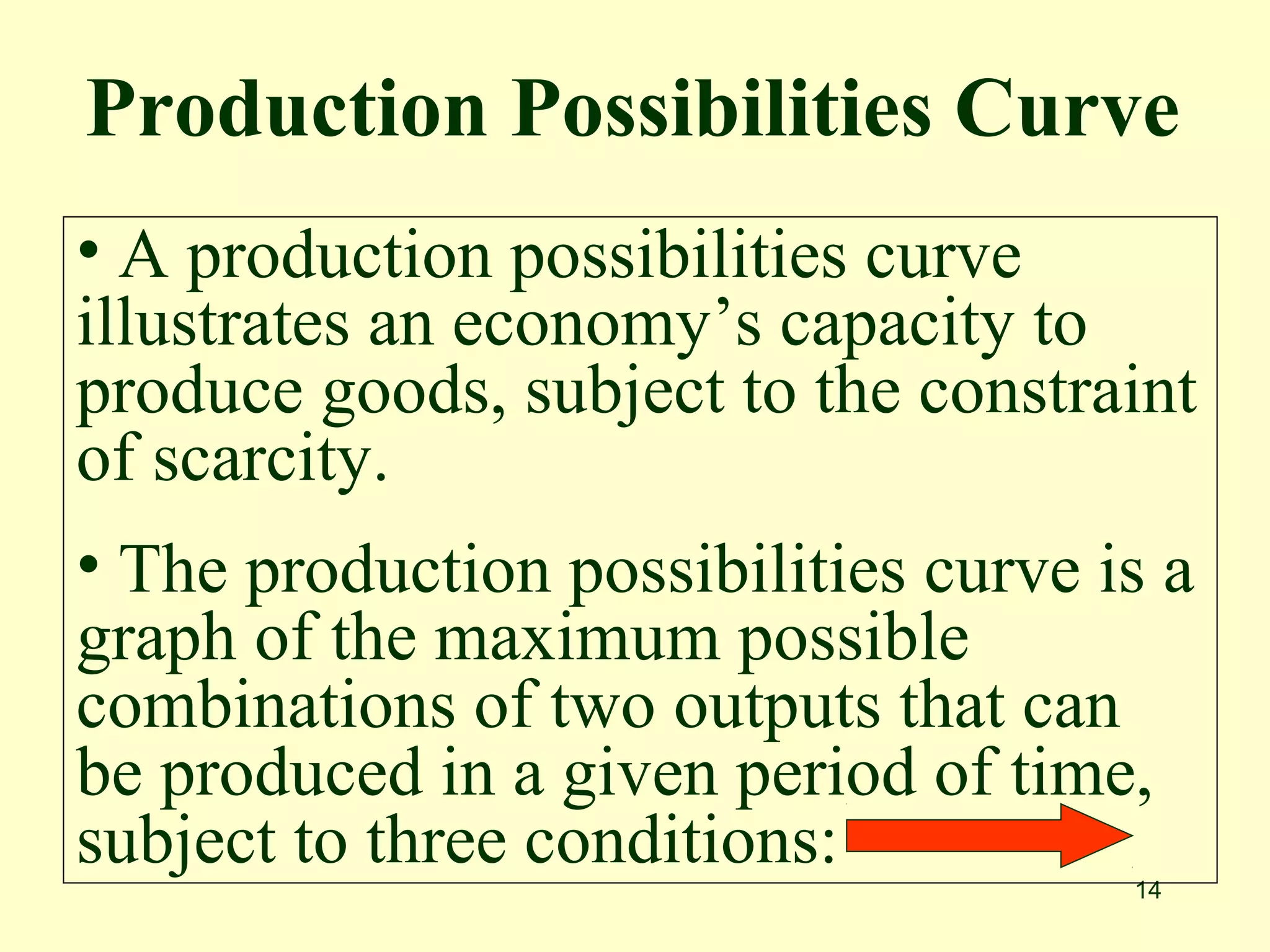
Production Possibilities Curve
• A production possibilities curve
illustrates an economy’s capacity to
produce goods, subject to the constraint
of scarcity.
• The production possibilities curve is a
graph of the maximum possible
combinations of two outputs that can
be produced in a given period of time,
subject to three conditions:
                                      14
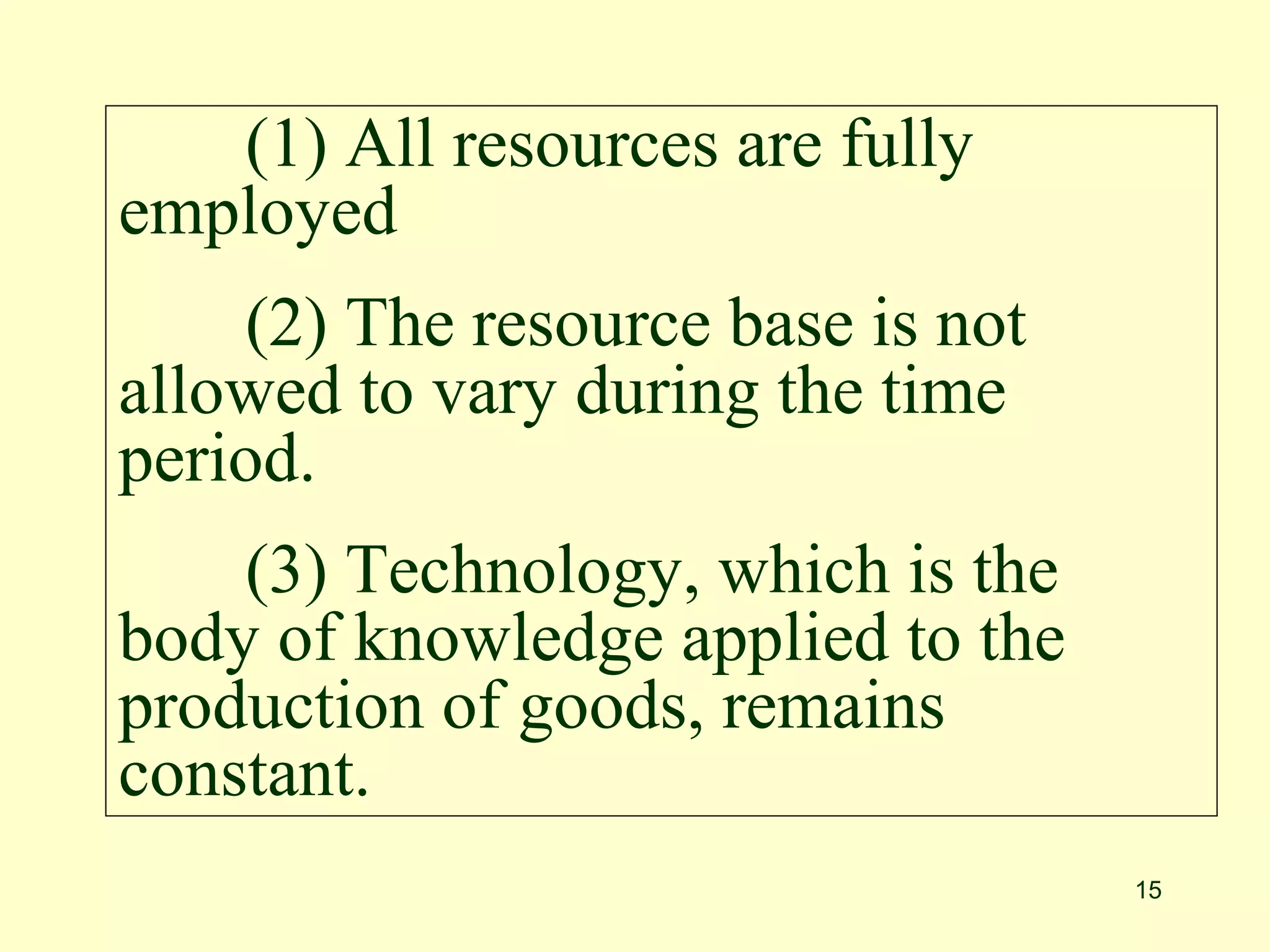
(1) All resources are fully
employed
    (2) The resource base is not
allowed to vary during the time
period.
    (3) Technology, which is the
body of knowledge applied to the
production of goods, remains
constant.
                                   15
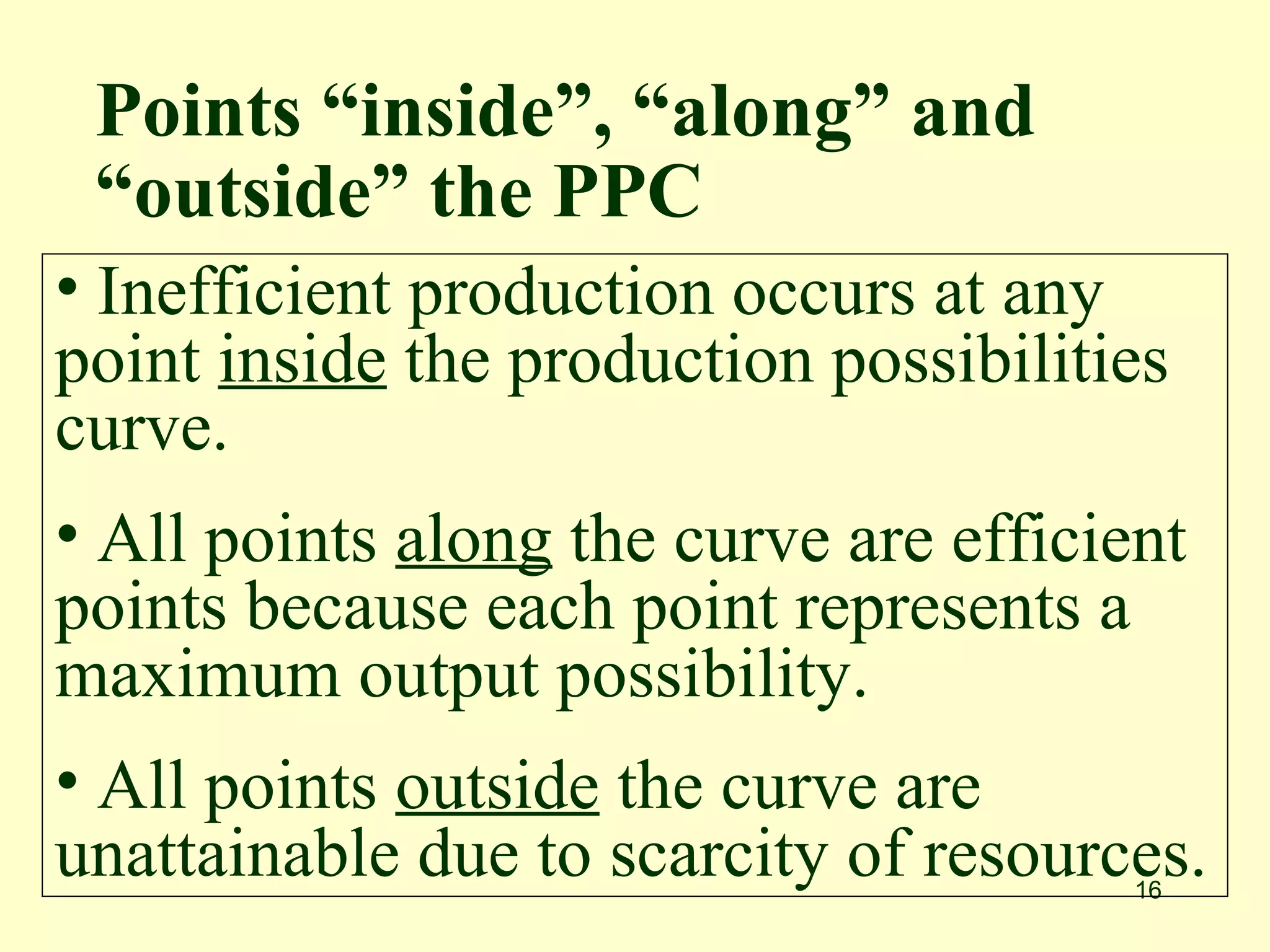
Points “inside”, “along” and
 “outside” the PPC
• Inefficient production occurs at any
point inside the production possibilities
curve.
• All points along the curve are efficient
points because each point represents a
maximum output possibility.
• All points outside the curve are
unattainable due to scarcity of resources.
                                        16
The shape of PPC
• PPC is usually concave to the origin
because of the law of increasing opportunity
costs that states that the opportunity cost
increases as the production of an output
expands.
•The explanation for the law of increasing
opportunity costs is that the suitability of
resources declines sharply as greater
amounts are transferred from producing one
output to producing another output.
                                         17
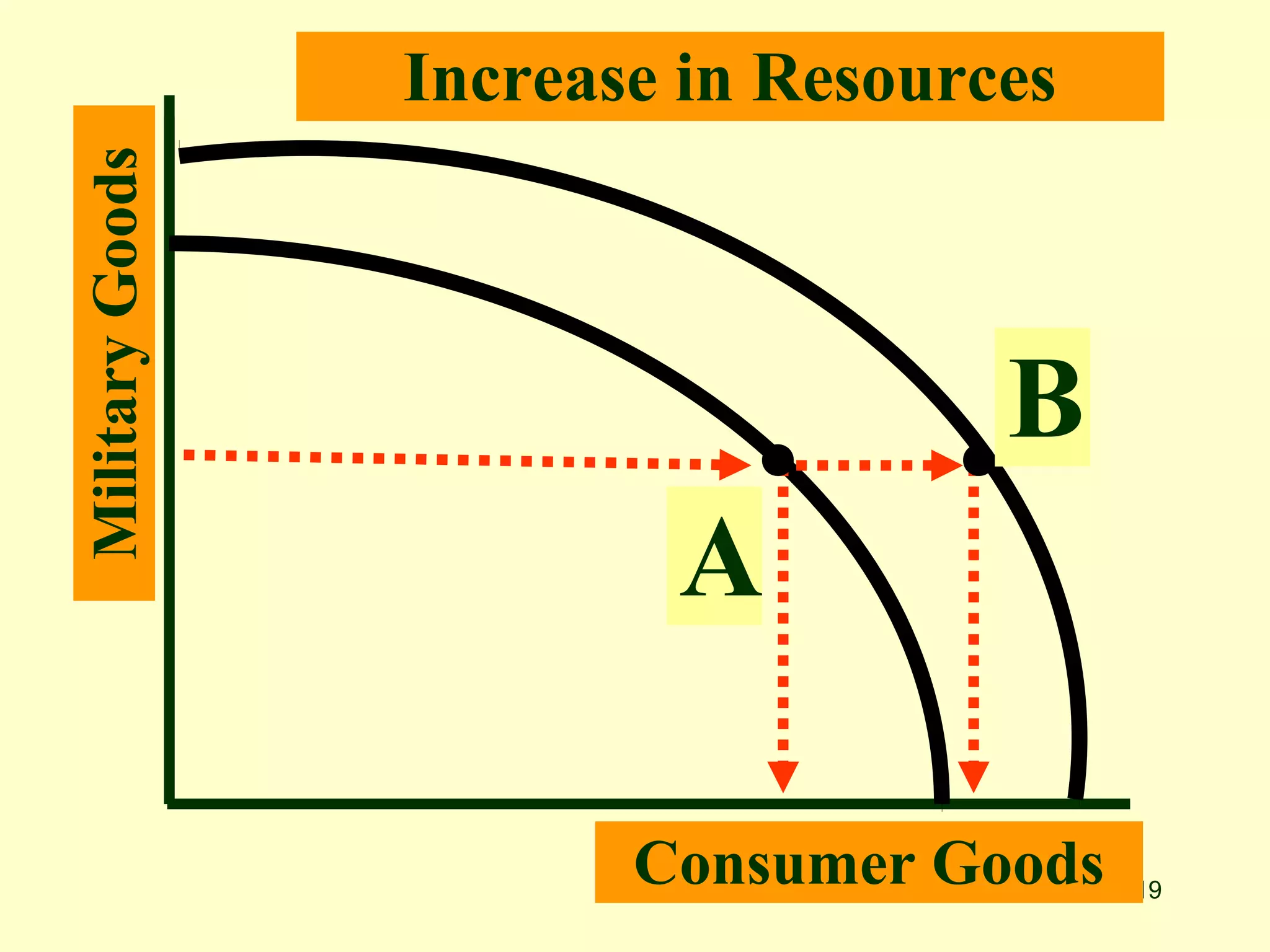
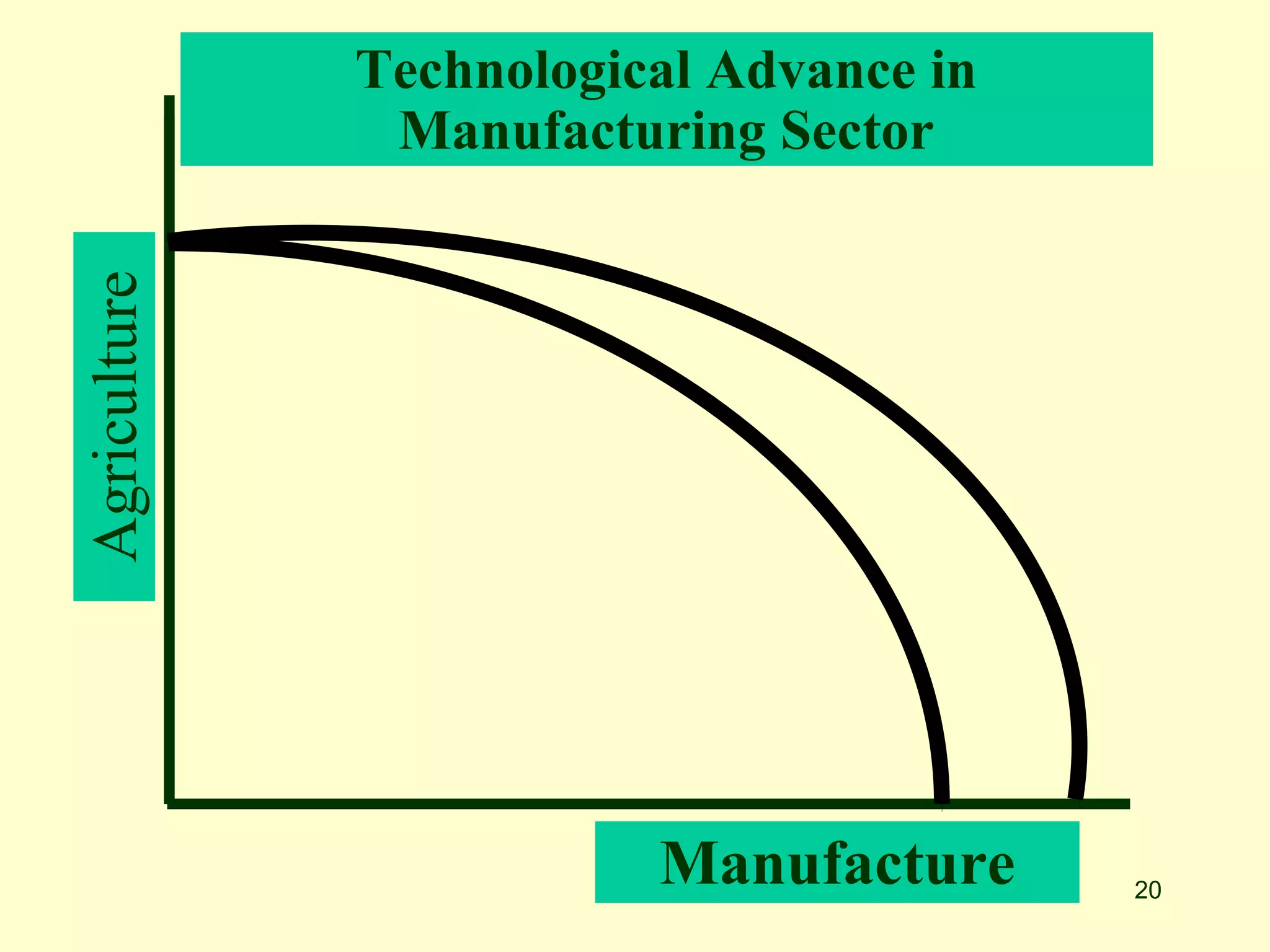
Economic Growth
• The ability of an economy to
  produce greater levels of output,
  represented by an outward shift of
  its production possibilities curve as
  a result of an increase in resources
  or an advance in technology


                                    18
Increase in Resources
Military Goods


                                    B
                         A

                        Consumer Goods   19
Technological Advance in
Agriculture    Manufacturing Sector


                         Manufacture     20
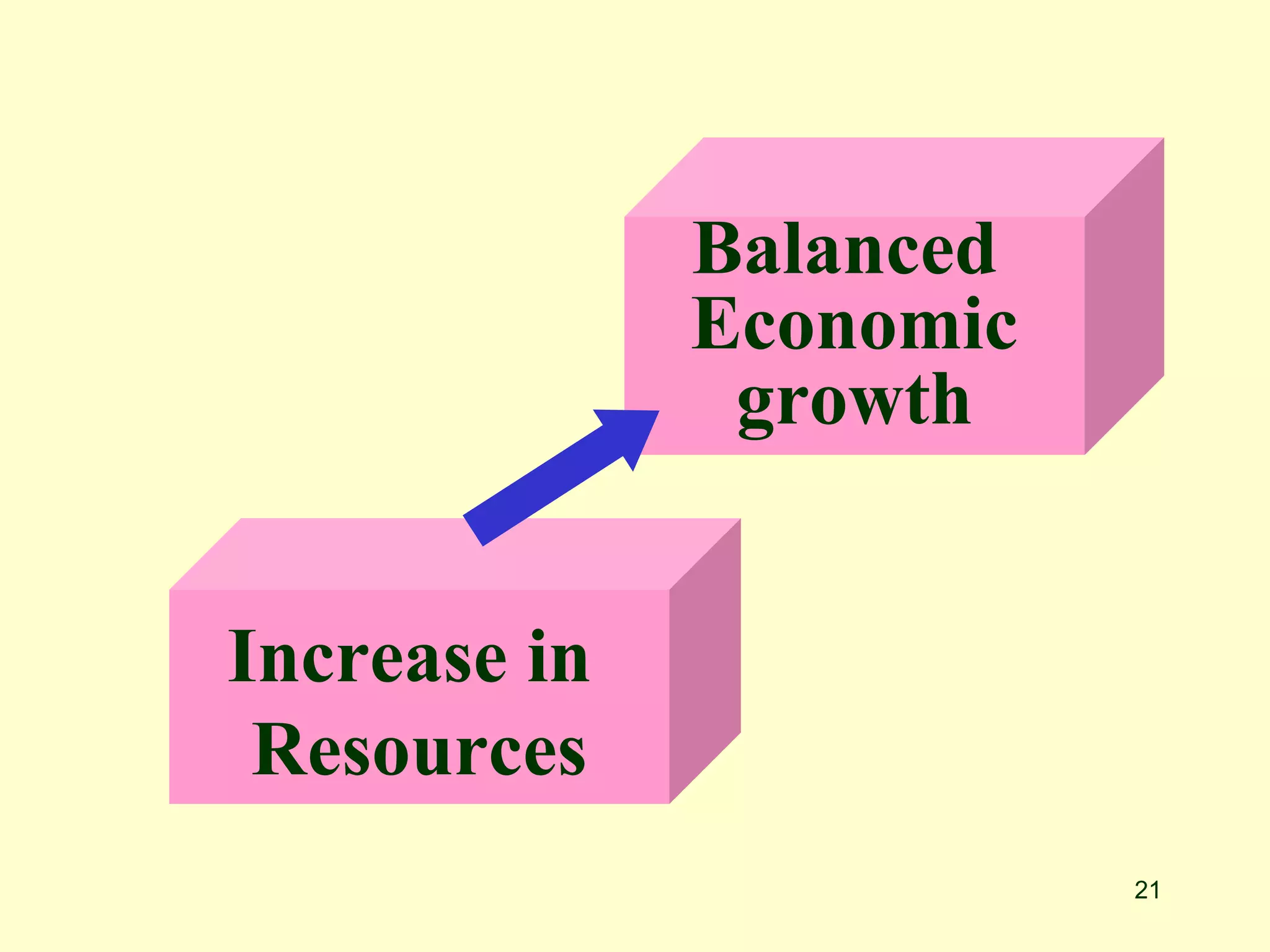
Balanced
              Economic
               growth


Increase in
 Resources
                         21
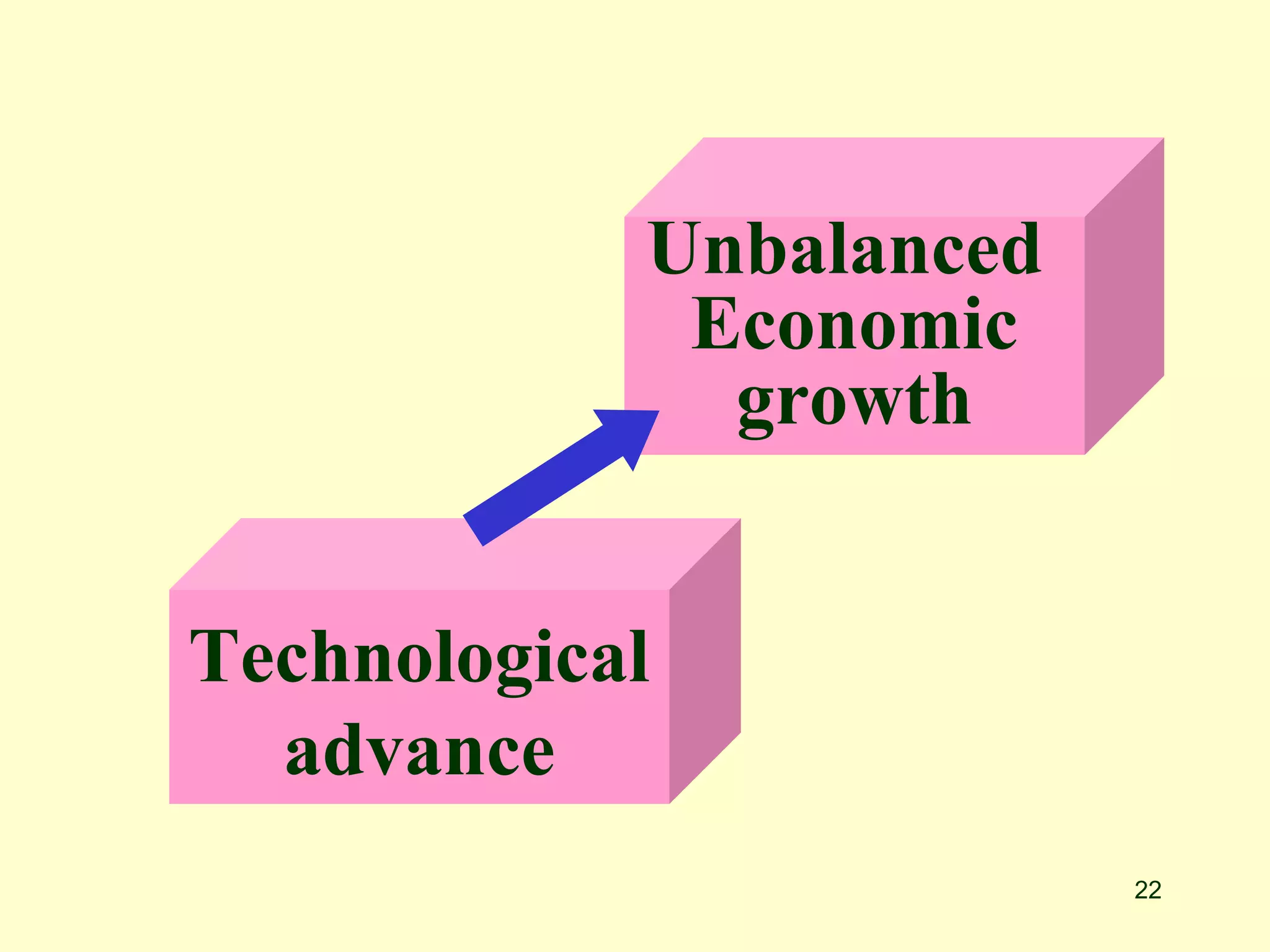
Unbalanced
             Economic
              growth


Technological
  advance
                         22
Basic Economic Problems
- The fundamental economic questions facing any
economy are What, How, and For Whom to
produce goods.
- The WHAT question asks exactly which goods
are to be produced and in what quantities.
- The HOW question requires society to decide the
resource mix used to produce goods.
-The FOR WHOM problem concerns the division
of output among society’s citizens.
                                              23

Chapter 1 Microeconomics Intro

  • 1.
  • 2.
    Definition of Economics Thestudy of how society chooses to allocate its scarce resources to the production of goods and services in order to satisfy unlimited wants 2
  • 3.
    Microeconomics vs. Macroeconomics • Microeconomics • Macroeconomics The branch of The branch of economics that economics that studies decision- studies decision- making by a making for the single individual, economy as a household, firm, whole industry, or level of government 3
  • 4.
    What is Ceteris Paribus? A Latin phrase that means that while certain variables can change, “all other things remain unchanged” 4
  • 5.
    BASIC CONCEPTS: • Scarcity - the fundamental economic problem that human wants exceed the availability of time, goods, and resources. • Choice – Because individuals and society can never have everything they desire, they therefore are forced to make choices • Opportunity cost – the second best alternative foregone for a chosen option. 5
  • 6.
    Factors of Production 1.Land Resource - any natural resource provided by nature 2. Labour - The mental and physical capacity of workers to produce goods and services 3. Capital - The physical plants, machinery, and equipment used to produce other goods (Financial capital - The money used to purchase capital) 4. Entrepreneurs - The creative ability of individuals to seek profits by combining resources to produce innovative products 6
  • 7.
    Labor Labor Land Land Capital Capital Entrepreneurshiporganizes Entrepreneurship organizes resourcesto produce goods resources to produce goods andservices and services 7
  • 8.
    Graph Graphs provide ameans to clearly show economic relationships in two- dimensional space. Economic analysis is often concerned with two variables confined to the upper right-hand (northeast) quadrant of the coordinate number system. 8
  • 9.
    A shift ina curve occurs only when the ceteris paribus assumption is relaxed and a third variable not on either axis of the graph is allowed to change 9
  • 10.
    Marginal Analysis - Anexamination of the effects of additions to or subtractions from a current situation 10
  • 11.
    Production Possibilities Curve: - A curve that shows the maximum combinations of two outputs that an economy can produce, given its available resources and technology 11
  • 12.
    Technology: The body ofknowledge and skills applied to how goods are produced 12
  • 13.
    Production Possibilities Curve A Military Goods Efficient Unattainable Inefficient B Consumer Goods 13
  • 14.
    Production Possibilities Curve •A production possibilities curve illustrates an economy’s capacity to produce goods, subject to the constraint of scarcity. • The production possibilities curve is a graph of the maximum possible combinations of two outputs that can be produced in a given period of time, subject to three conditions: 14
  • 15.
    (1) All resourcesare fully employed (2) The resource base is not allowed to vary during the time period. (3) Technology, which is the body of knowledge applied to the production of goods, remains constant. 15
  • 16.
    Points “inside”, “along”and “outside” the PPC • Inefficient production occurs at any point inside the production possibilities curve. • All points along the curve are efficient points because each point represents a maximum output possibility. • All points outside the curve are unattainable due to scarcity of resources. 16
  • 17.
    The shape ofPPC • PPC is usually concave to the origin because of the law of increasing opportunity costs that states that the opportunity cost increases as the production of an output expands. •The explanation for the law of increasing opportunity costs is that the suitability of resources declines sharply as greater amounts are transferred from producing one output to producing another output. 17
  • 18.
    Economic Growth • Theability of an economy to produce greater levels of output, represented by an outward shift of its production possibilities curve as a result of an increase in resources or an advance in technology 18
  • 19.
    Increase in Resources MilitaryGoods B A Consumer Goods 19
  • 20.
    Technological Advance in Agriculture Manufacturing Sector Manufacture 20
  • 21.
    Balanced Economic growth Increase in Resources 21
  • 22.
    Unbalanced Economic growth Technological advance 22
  • 23.
    Basic Economic Problems -The fundamental economic questions facing any economy are What, How, and For Whom to produce goods. - The WHAT question asks exactly which goods are to be produced and in what quantities. - The HOW question requires society to decide the resource mix used to produce goods. -The FOR WHOM problem concerns the division of output among society’s citizens. 23