
Designing the CXC

UX & UI Design behind SDL’s Customer Experience Cloud
Philipp Engel, Group UX Director, SDL
This presentation illustrates the journey SDL’s design
community went through over the course of the last few years.
As part of that process, UX design thinking proved to be an
invaluable transformational element and an innovational
catalyst in transforming a set of disconnected and separate
products into one consistent service offering, the
SDL Customer Experience Cloud.
Where we started…

Situation & Motivation
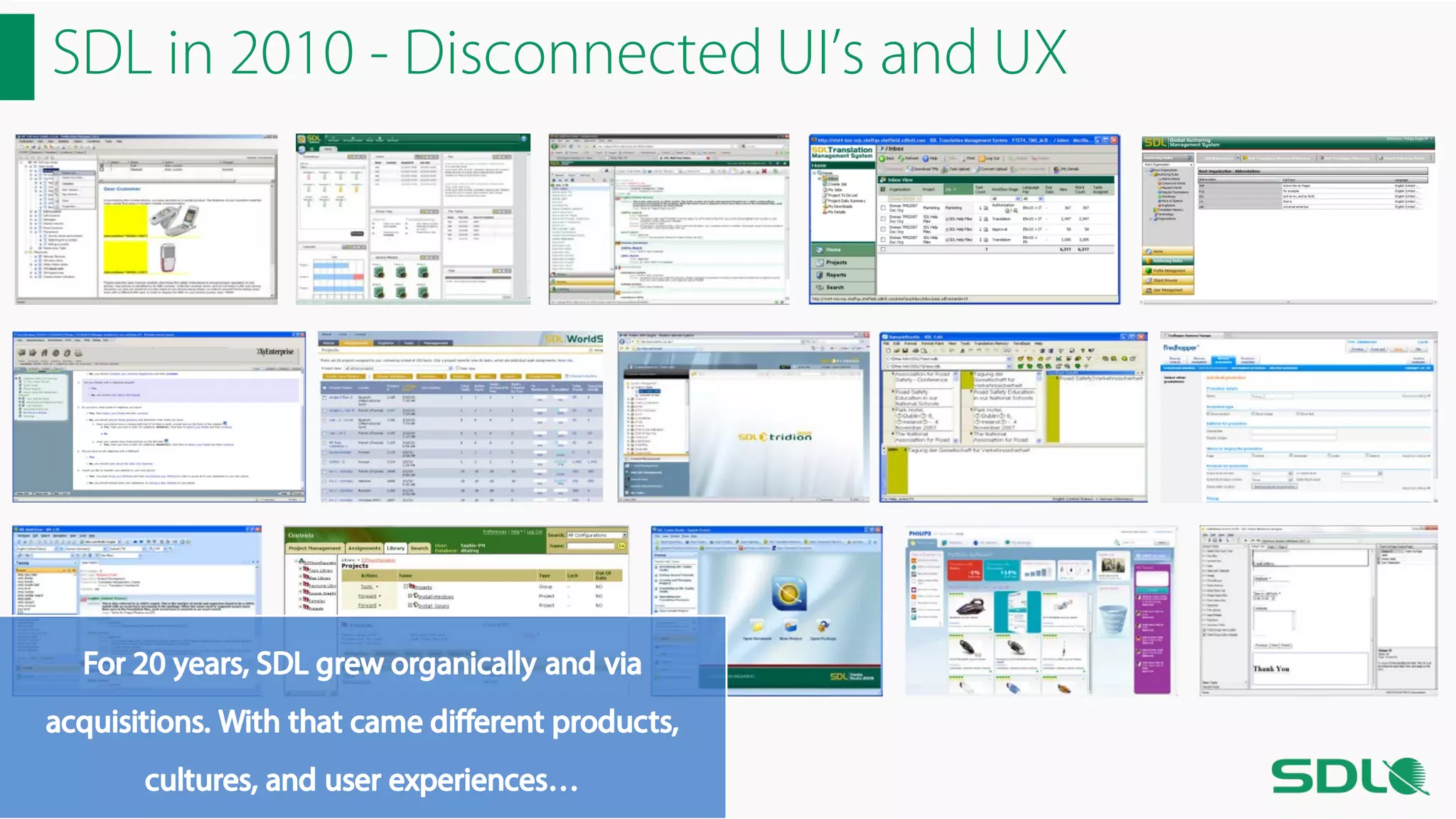
SDL in 2010 - Disconnected UI’s and UX
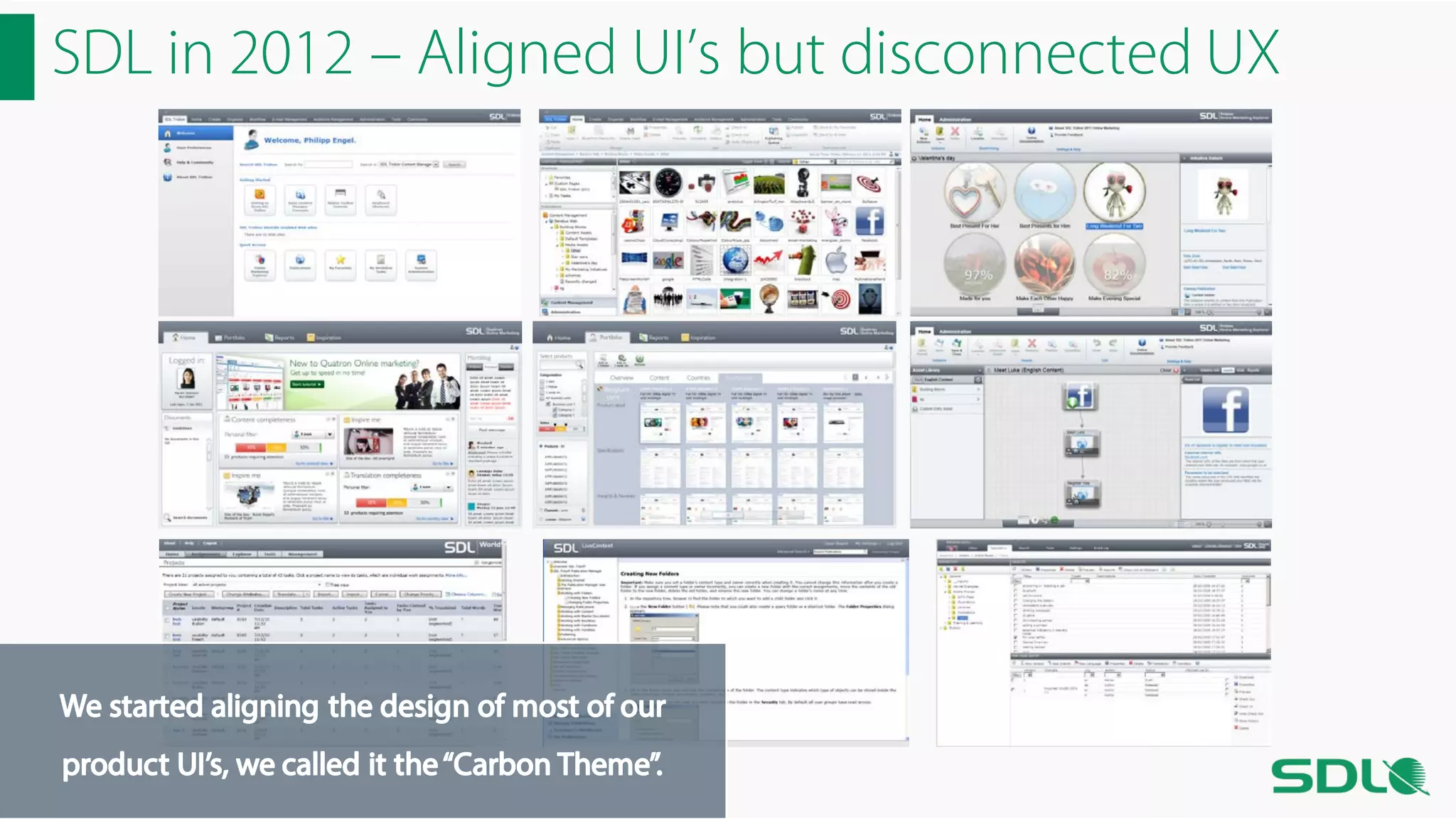
SDL in 2012 – Aligned UI’s but disconnected UX
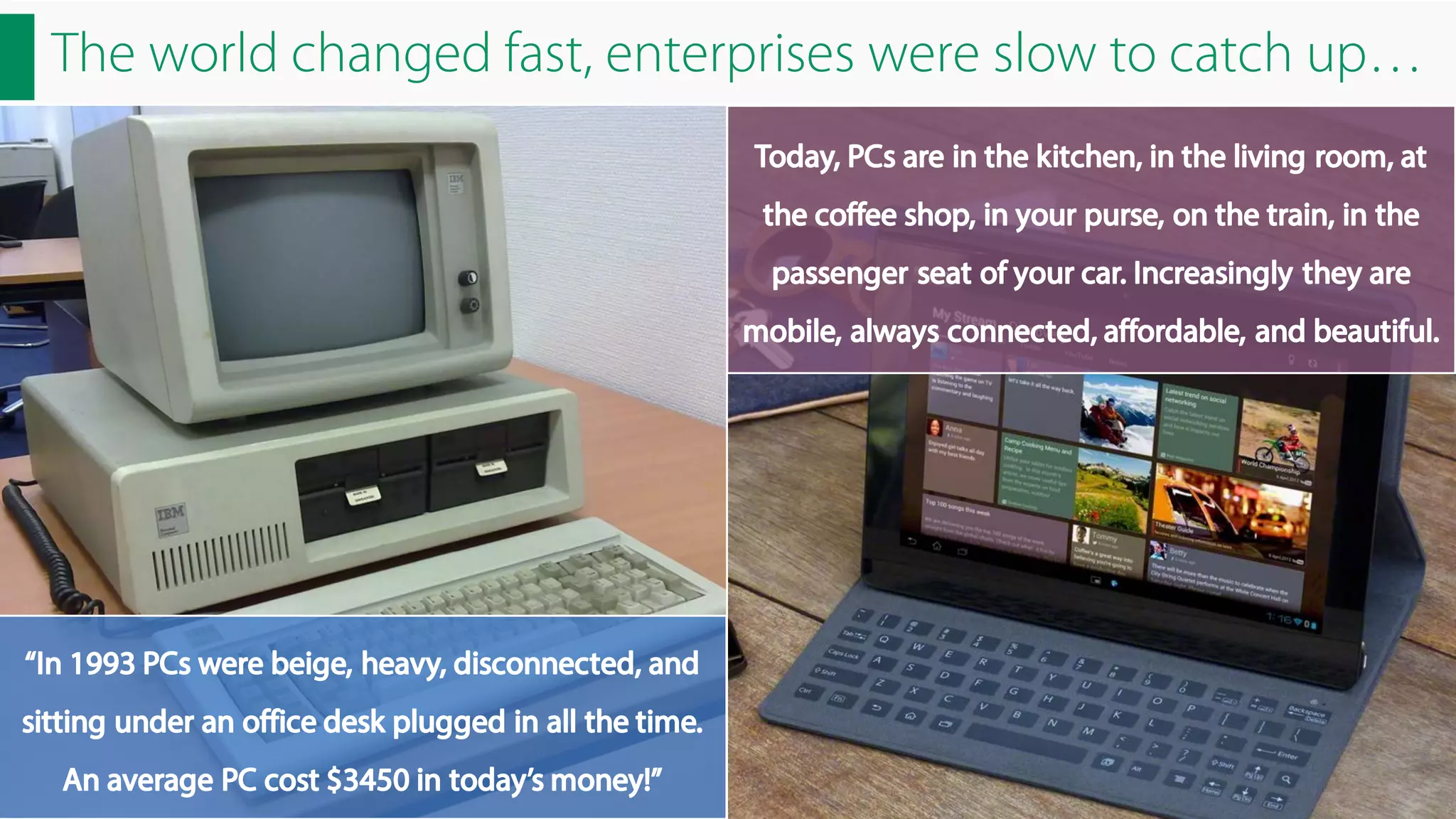
The world changed fast, enterprises were slow to catch up…
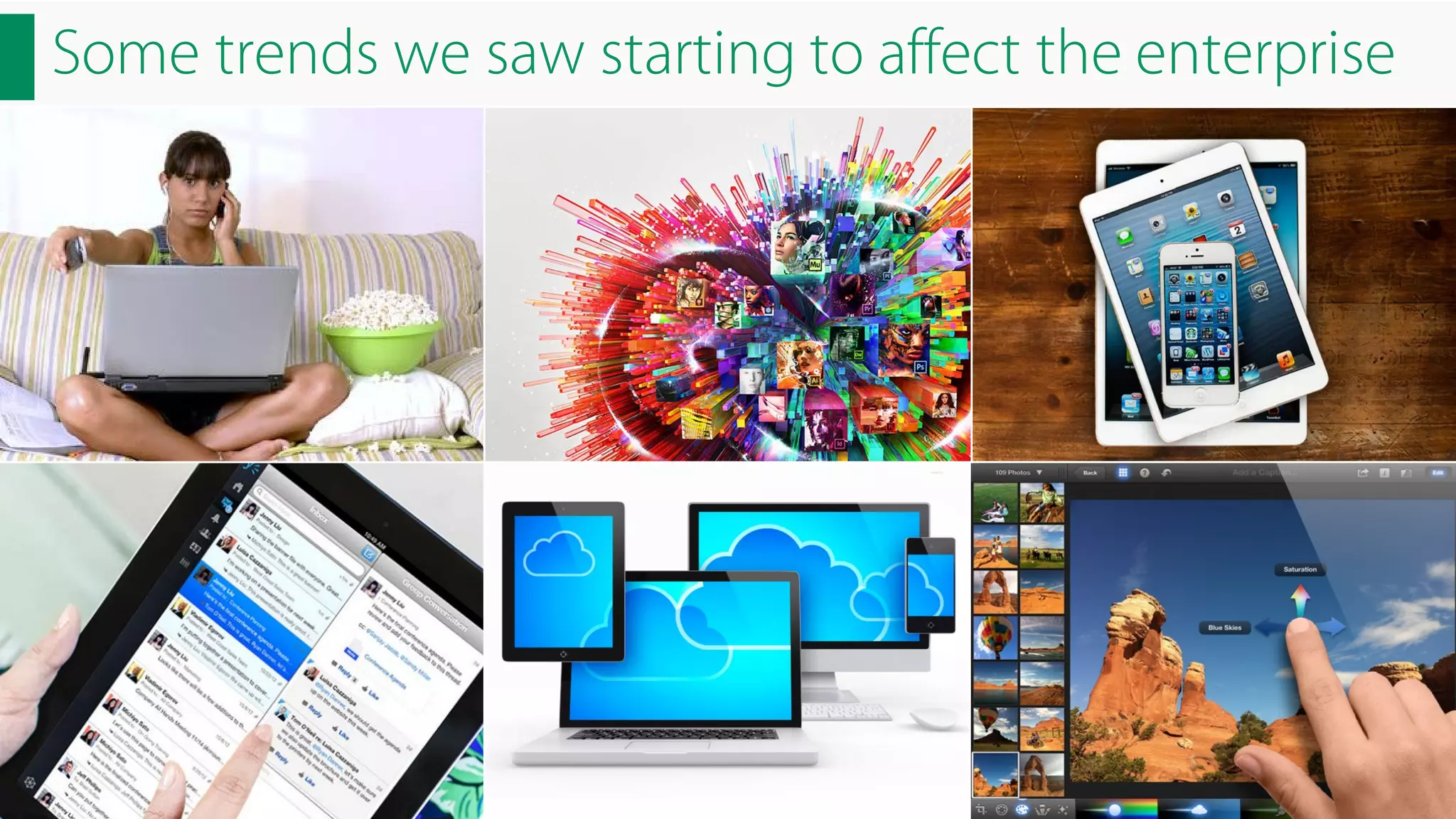
Some trends we saw starting to affect the enterprise
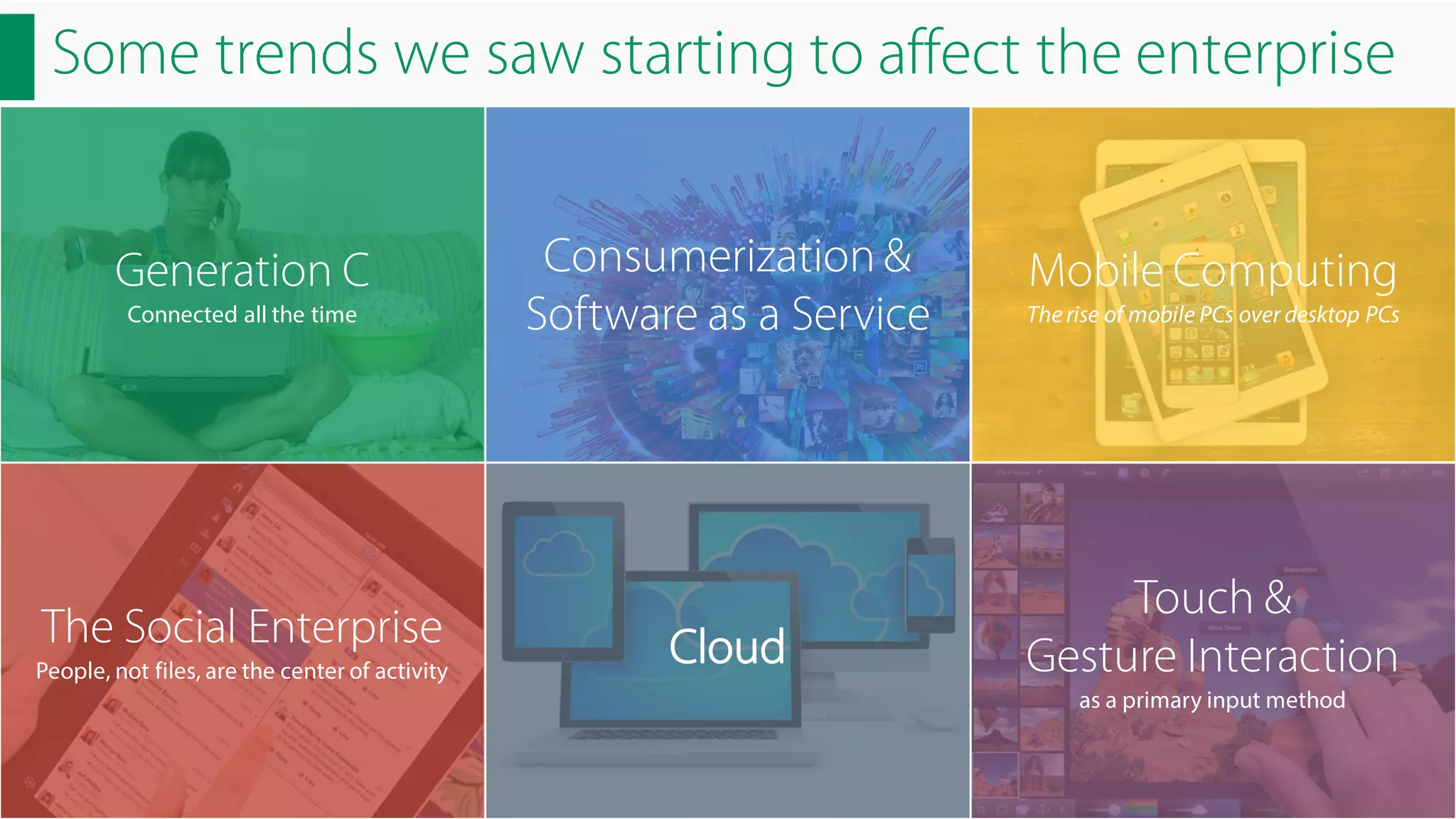
Generation C
Connected all the time

The Social Enterprise
People, not files, are the center of activity

Consumerization &
Software as a Service

Mobile Computing
The rise of mobile PCs over desktop PCs

Touch &
Gesture Interaction
as a primary input method
Defining our direction…

One SDL Experience
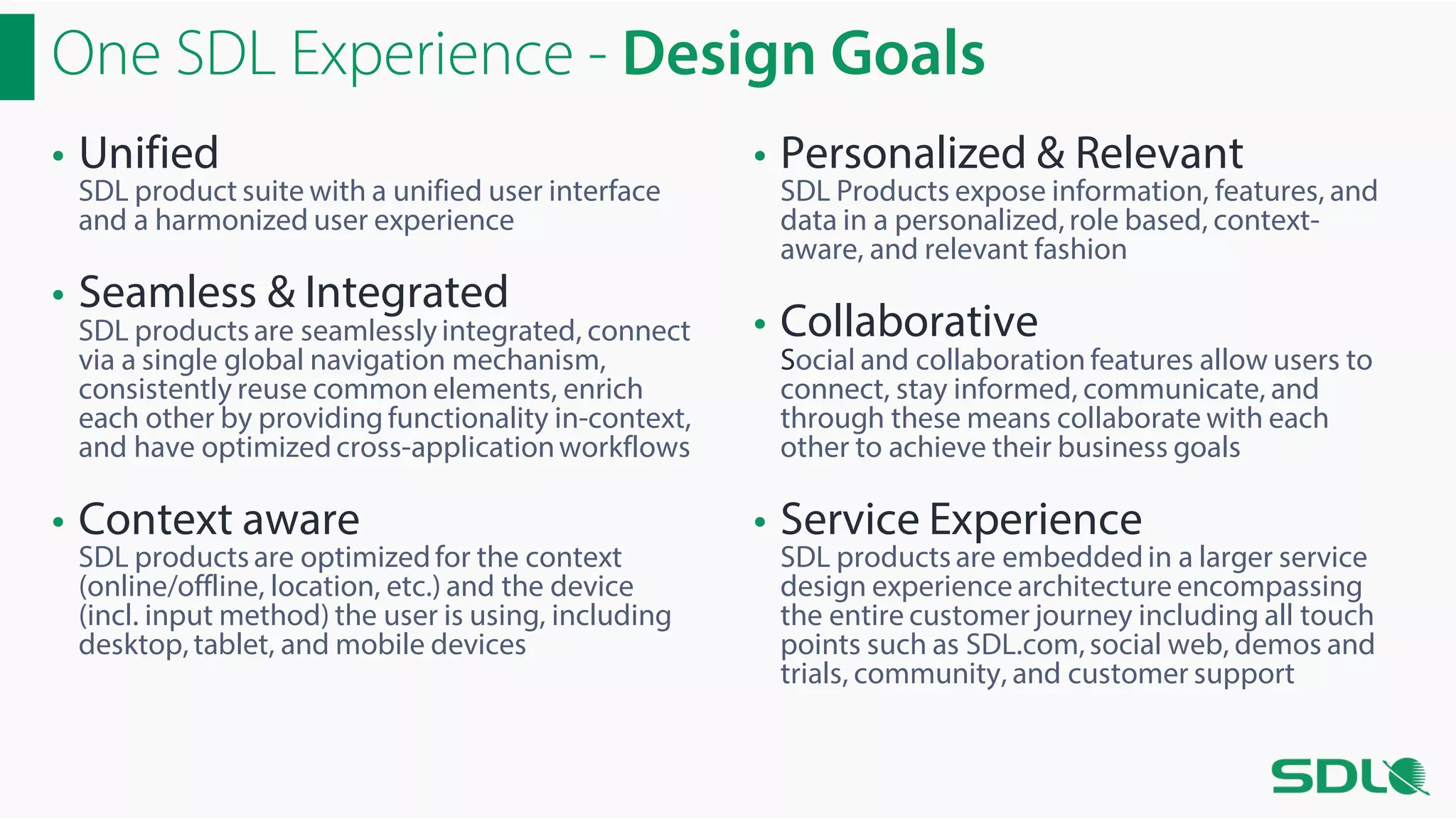
One SDL Experience - Design Goals
• Unified

SDL product suite with a unified user interface
and a harmonized user experience

• Seamless & Integrated

SDL products are seamlessly integrated, connect
via a single global navigation mechanism,
consistently reuse common elements, enrich
each other by providing functionality in-context,
and have optimized cross-application workflows

• Context aware

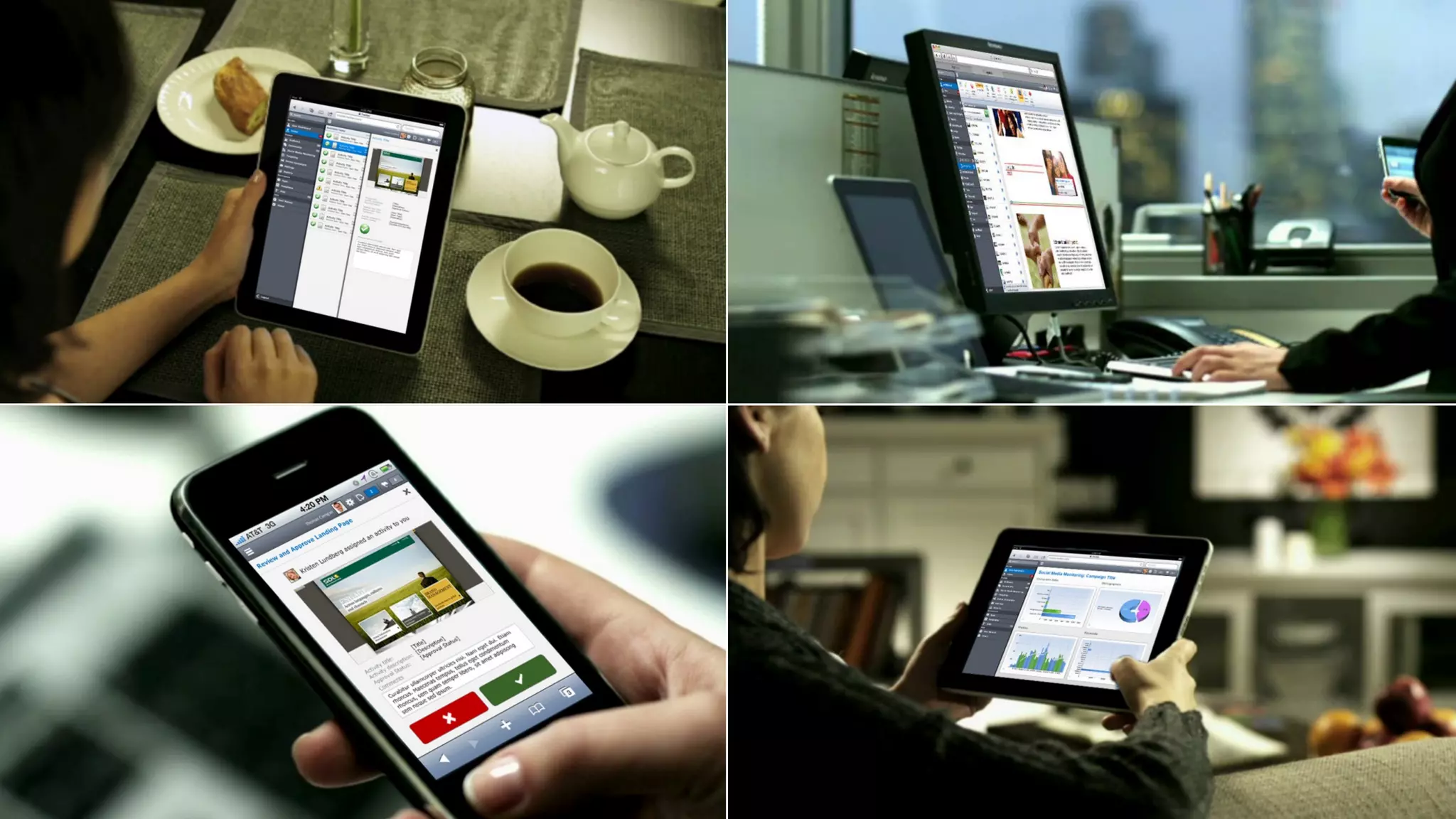
SDL products are optimized for the context
(online/offline, location, etc.) and the device
(incl. input method) the user is using, including
desktop, tablet, and mobile devices

• Personalized & Relevant

SDL Products expose information, features, and
data in a personalized, role based, contextaware, and relevant fashion

• Collaborative

Social and collaboration features allow users to
connect, stay informed, communicate, and
through these means collaborate with each
other to achieve their business goals

• Service Experience

SDL products are embedded in a larger service
design experience architecture encompassing
the entire customer journey including all touch
points such as SDL.com, social web, demos and
trials, community, and customer support
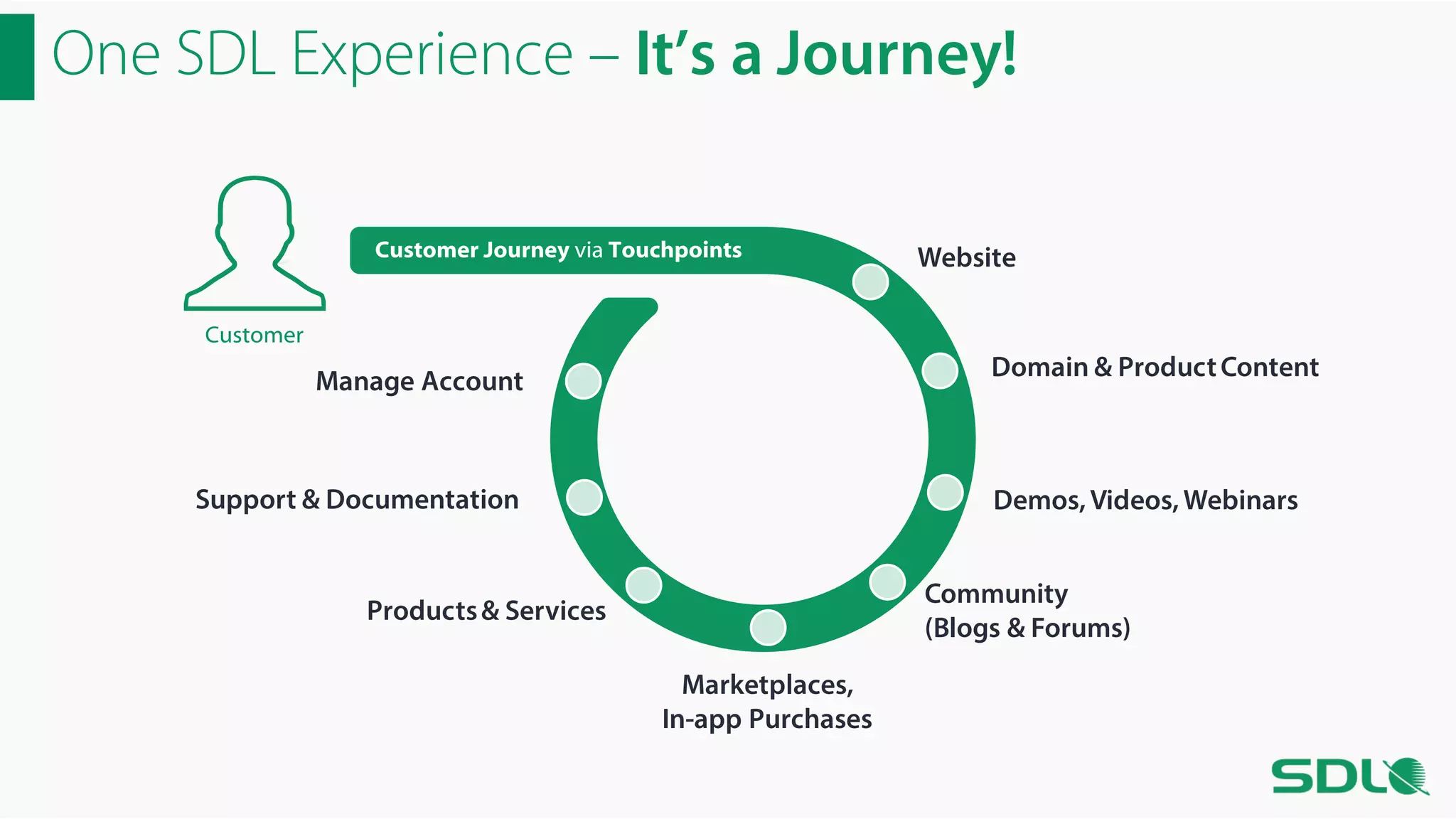
One SDL Experience – It’s a Journey!
Customer Journey via Touchpoints

Website

Customer

Domain & Product Content

Manage Account

Support & Documentation

Demos, Videos, Webinars
Community
(Blogs & Forums)

Products & Services
Marketplaces,
In-app Purchases
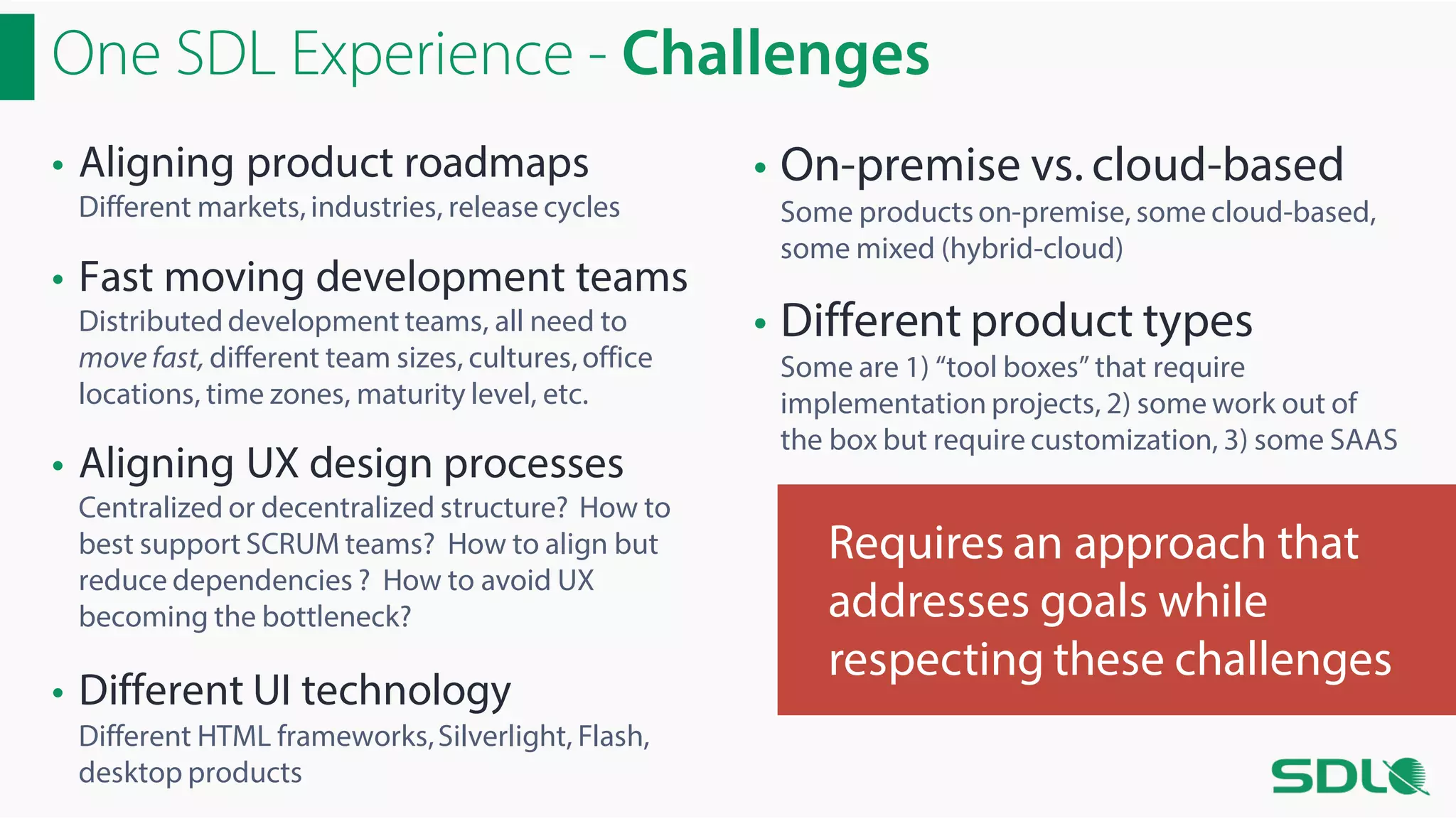
One SDL Experience - Challenges
• Aligning product roadmaps

Different markets, industries, release cycles

• Fast moving development teams
Distributed development teams, all need to
move fast, different team sizes, cultures, office
locations, time zones, maturity level, etc.

• Aligning UX design processes

Centralized or decentralized structure? How to
best support SCRUM teams? How to align but
reduce dependencies ? How to avoid UX
becoming the bottleneck?

• Different UI technology
Different HTML frameworks, Silverlight, Flash,
desktop products

• On-premise vs. cloud-based
Some products on-premise, some cloud-based,
some mixed (hybrid-cloud)

• Different product types

Some are 1) “tool boxes” that require
implementation projects, 2) some work out of
the box but require customization, 3) some SAAS

Requires an approach that
addresses goals while
respecting these challenges
How to get there…

Approach & Process
Inspiration from a different field…

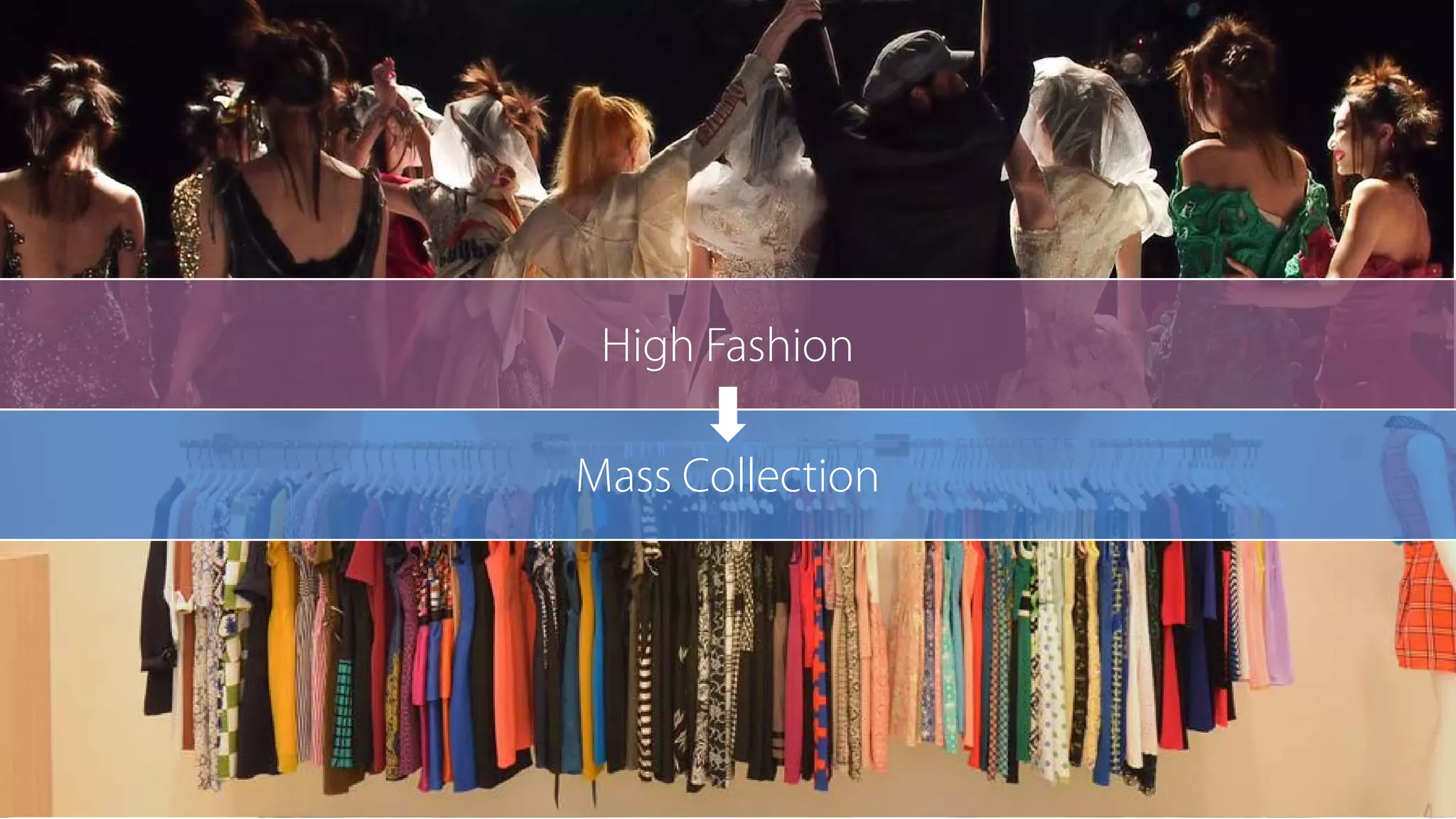
High Fashion
Inspiration from a different field…

High Fashion
Mass Collection
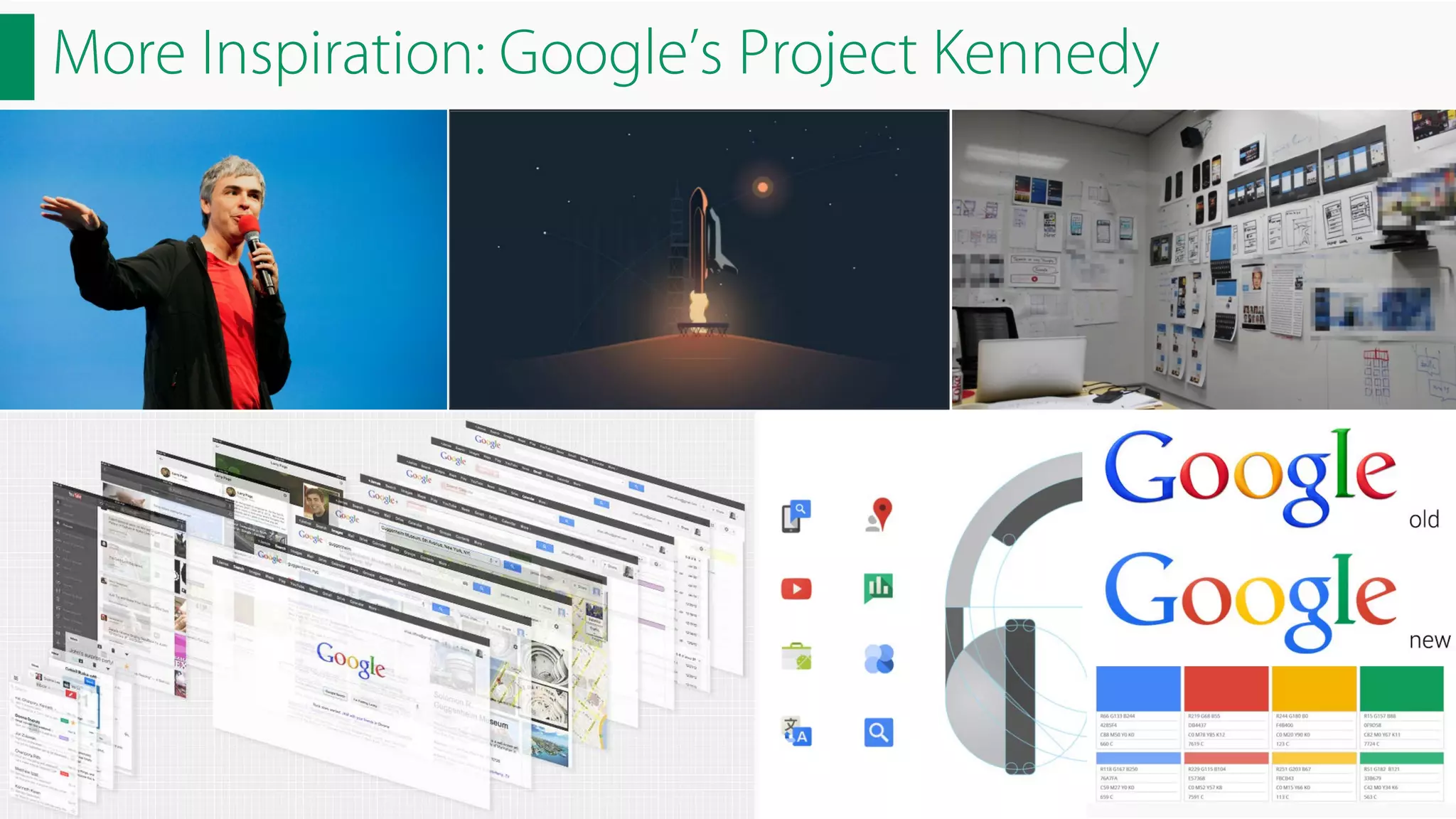
More Inspiration: Google’s Project Kennedy
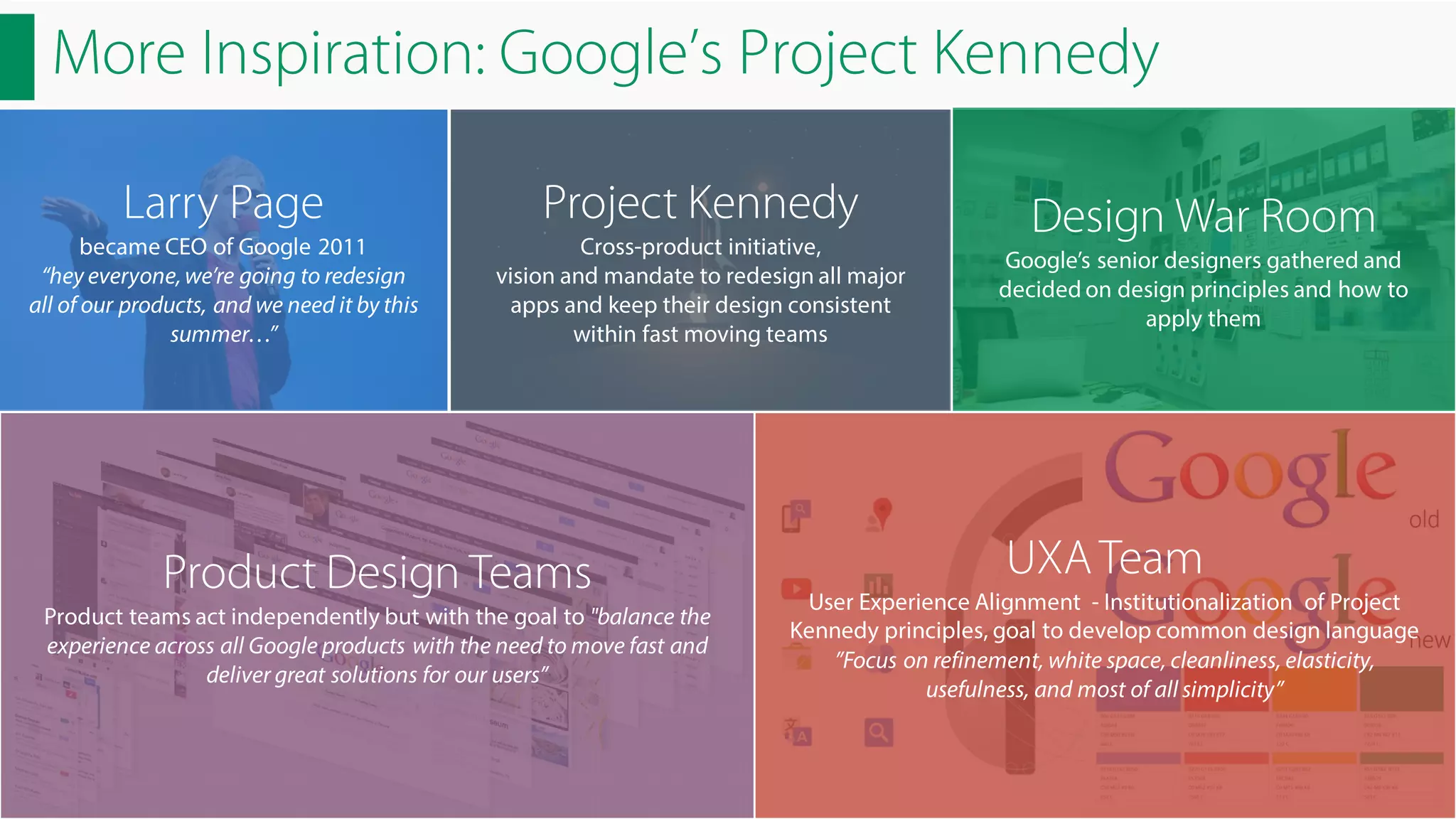
Larry Page

Project Kennedy

became CEO of Google 2011
“hey everyone, we’re going to redesign
all of our products, and we need it by this
summer…”

Cross-product initiative,
vision and mandate to redesign all major
apps and keep their design consistent
within fast moving teams

Product Design Teams
Product teams act independently but with the goal to "balance the
experience across all Google products with the need to move fast and
deliver great solutions for our users”

Design War Room
Google’s senior designers gathered and
decided on design principles and how to
apply them

UXA Team
User Experience Alignment - Institutionalization of Project
Kennedy principles, goal to develop common design language
”Focus on refinement, white space, cleanliness, elasticity,
usefulness, and most of all simplicity”
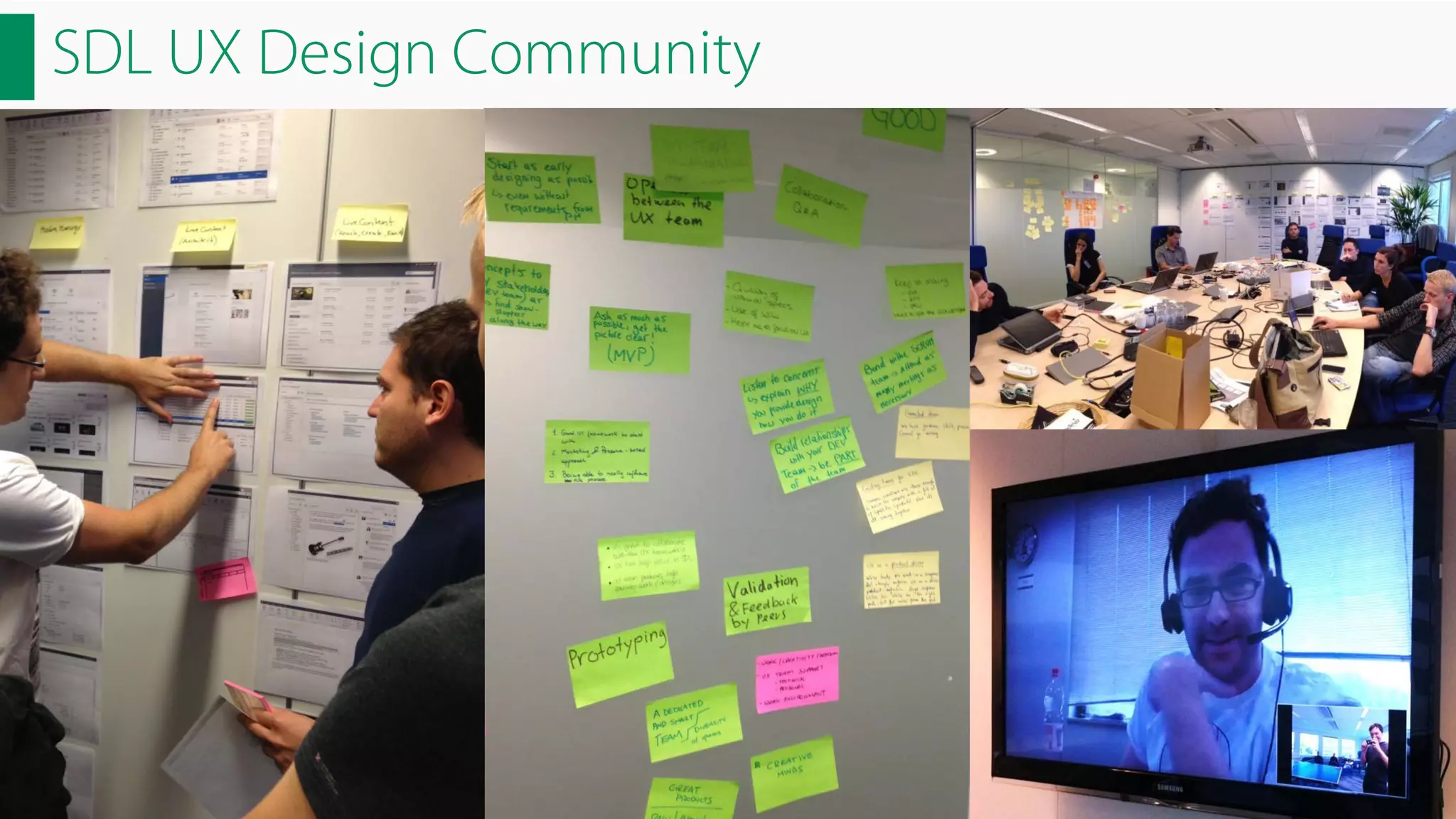
SDL UX Design Community
UX Community
Central UX group
to define guidelines and support
Focus on strategy and reference
designs
Decentralized, independent,
flexible UX teams
Focus on products, projects, and
detailed designs

Our Manifesto

Collaboration

1.

We are open, collaborative, and
support each other

• Weekly UX Community Meeting

2.

Because we are distributed we
communicate and share a lot
to create transparency

• Yearly UX Summit

3.

We see ourselves as a team,
rather than solo players

4.

We focus on results rather than
on process

5.

We work hard, but also
celebrate victories!

• Weekly UX Product Line Meetings
• “UX Walls” in Team Spaces
• All Designs on UX WIKI
“Design is how it works”

User Experience Design
“The Frame Model”
“The Frame Model”
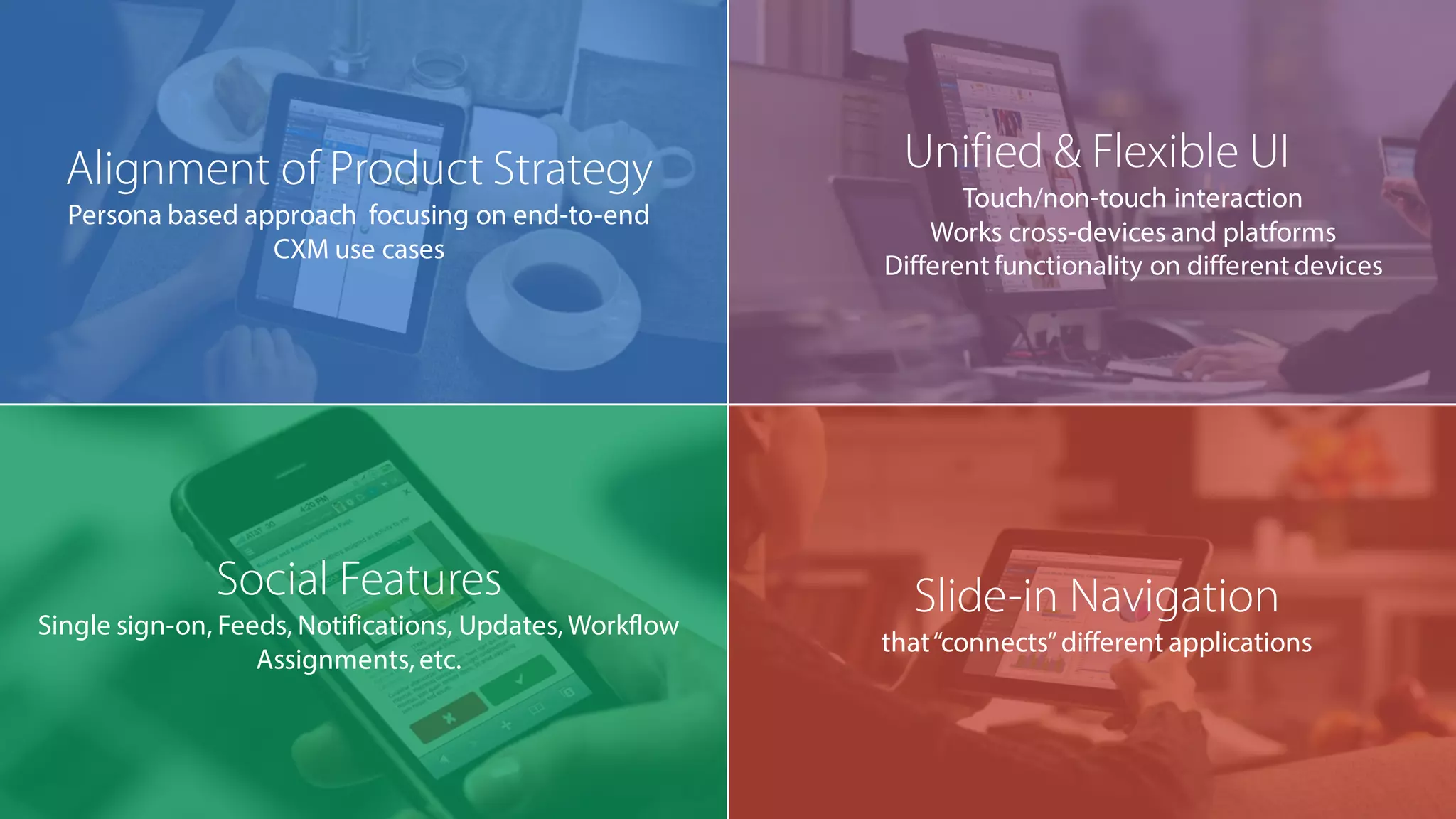
Alignment of Product Strategy
Persona based approach focusing on end-to-end
CXM use cases

Social Features
Single sign-on, Feeds, Notifications, Updates, Workflow
Assignments, etc.

Unified & Flexible UI
Touch/non-touch interaction
Works cross-devices and platforms
Different functionality on different devices

Slide-in Navigation
that “connects” different applications
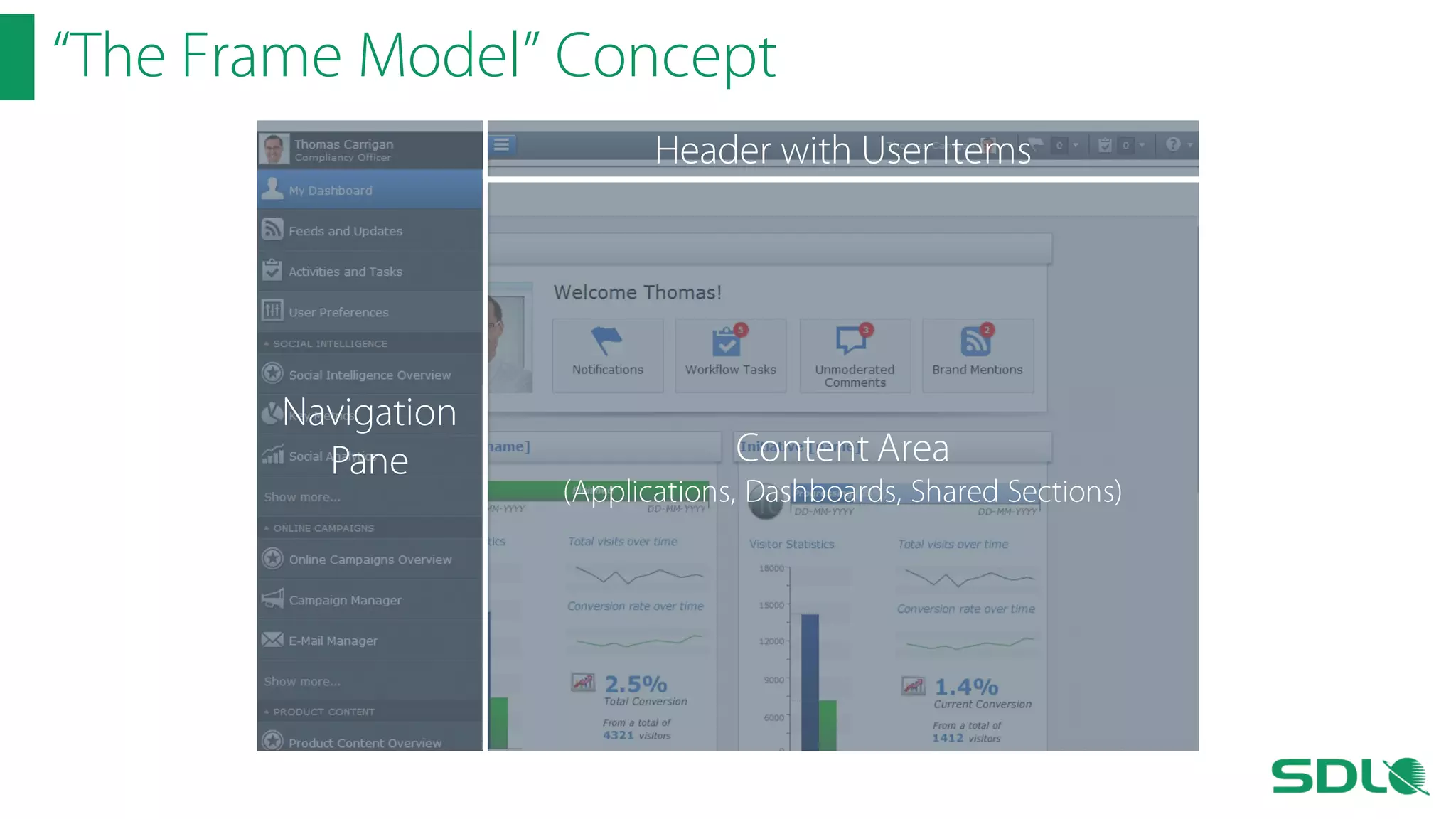
“The Frame Model” Concept
Header with User Items

Navigation
Pane

Content Area
(Applications, Dashboards, Shared Sections)
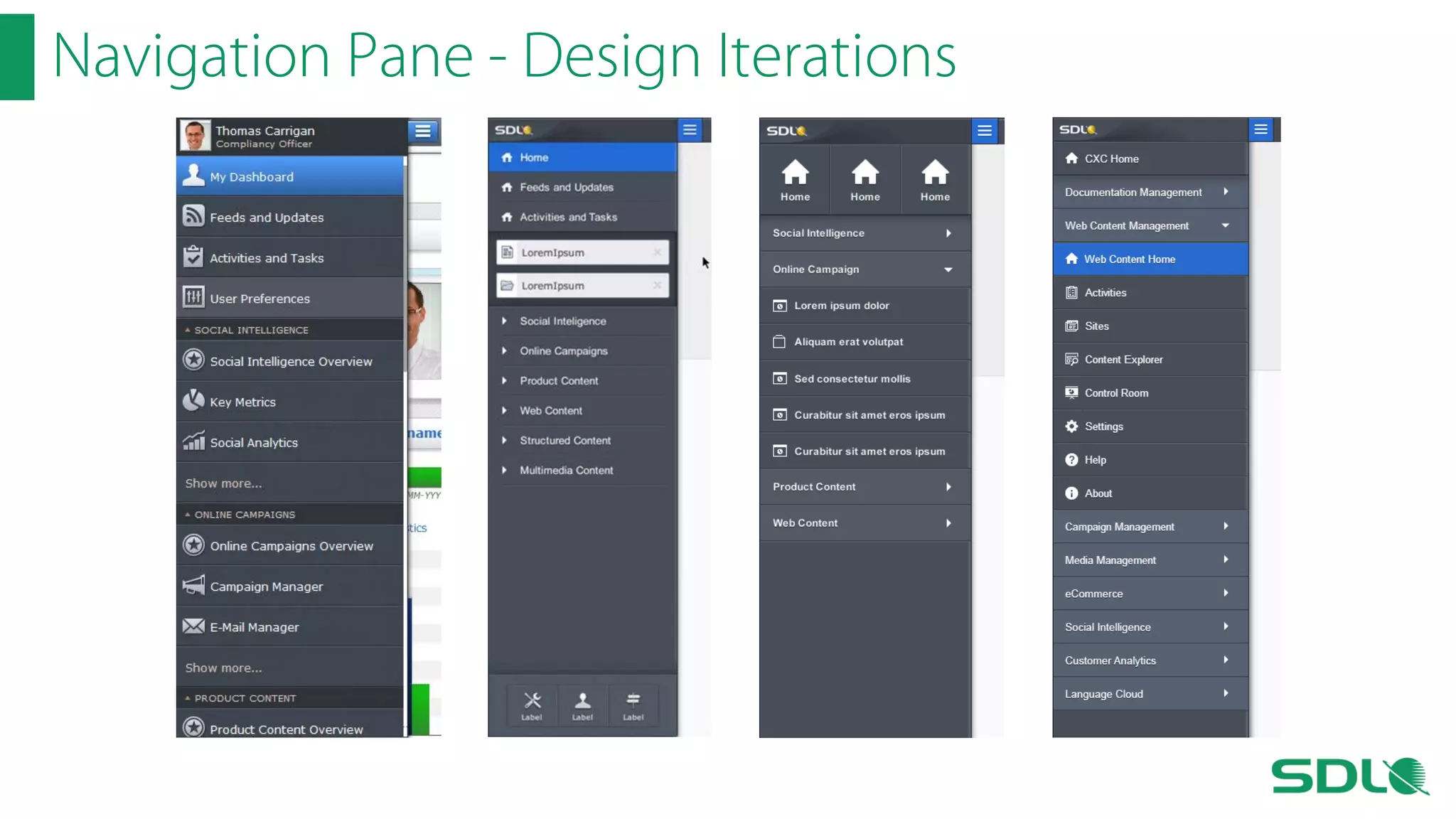
Navigation Pane - Design Iterations
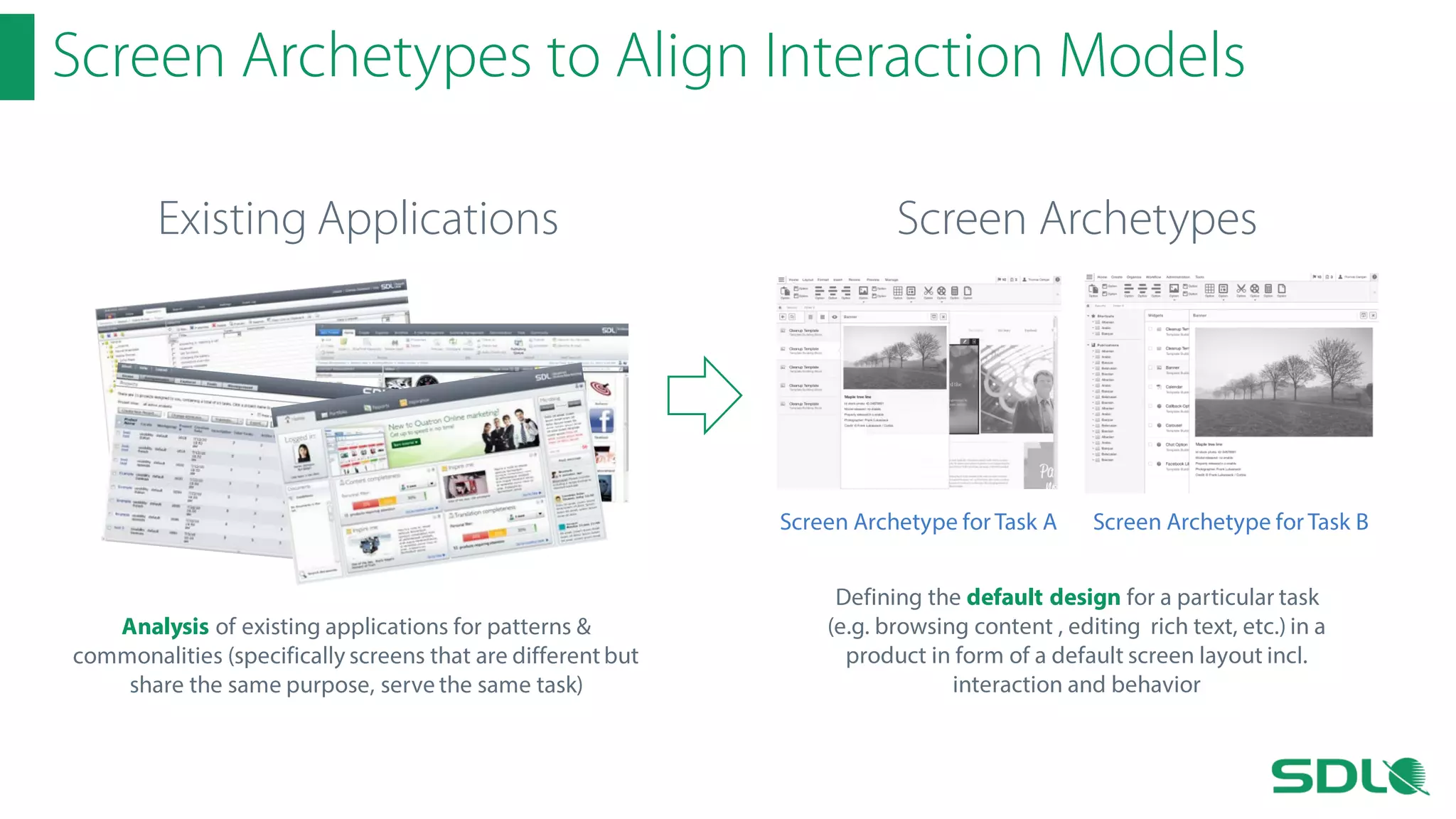
Screen Archetypes to Align Interaction Models
Existing Applications

Screen Archetypes

Screen Archetype for Task A

Analysis of existing applications for patterns &
commonalities (specifically screens that are different but
share the same purpose, serve the same task)

Screen Archetype for Task B

Defining the default design for a particular task
(e.g. browsing content , editing rich text, etc.) in a
product in form of a default screen layout incl.
interaction and behavior
Screen Archetypes to Align Interaction Models

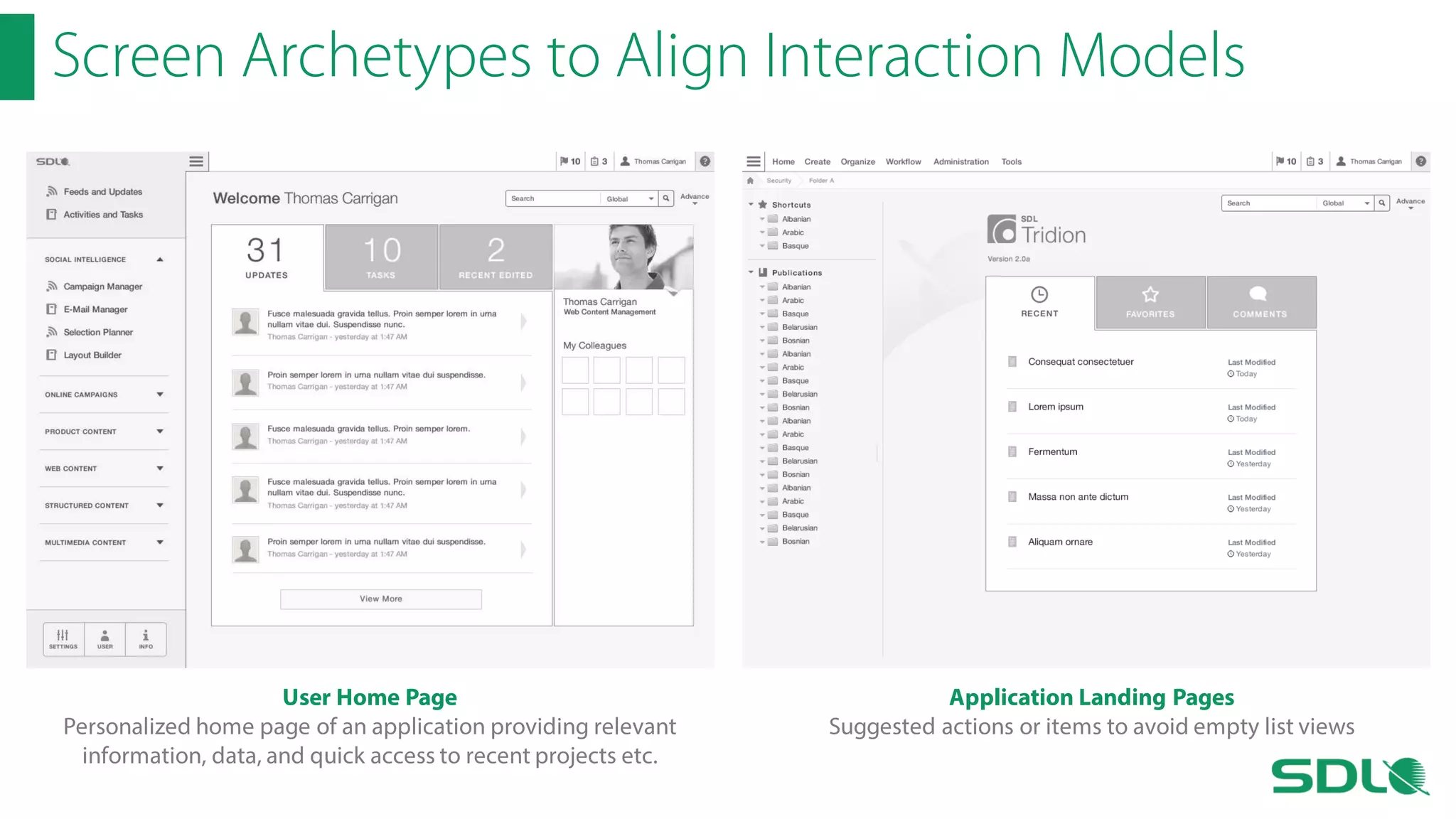
User Home Page
Personalized home page of an application providing relevant
information, data, and quick access to recent projects etc.

Application Landing Pages
Suggested actions or items to avoid empty list views
Screen Archetypes to Align Interaction Models

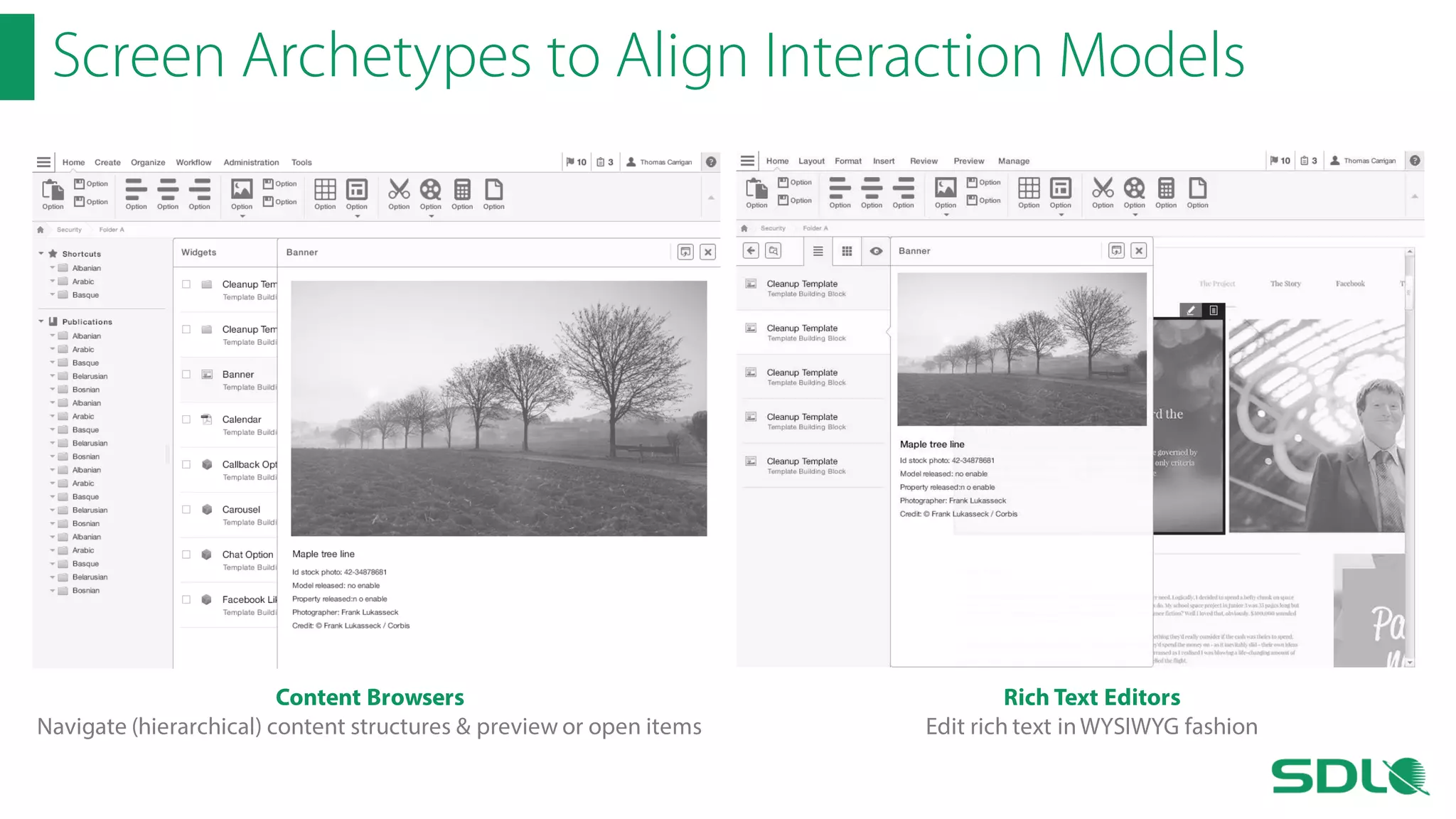
Content Browsers
Navigate (hierarchical) content structures & preview or open items

Rich Text Editors
Edit rich text in WYSIWYG fashion
Screen Archetypes to Align Interaction Models

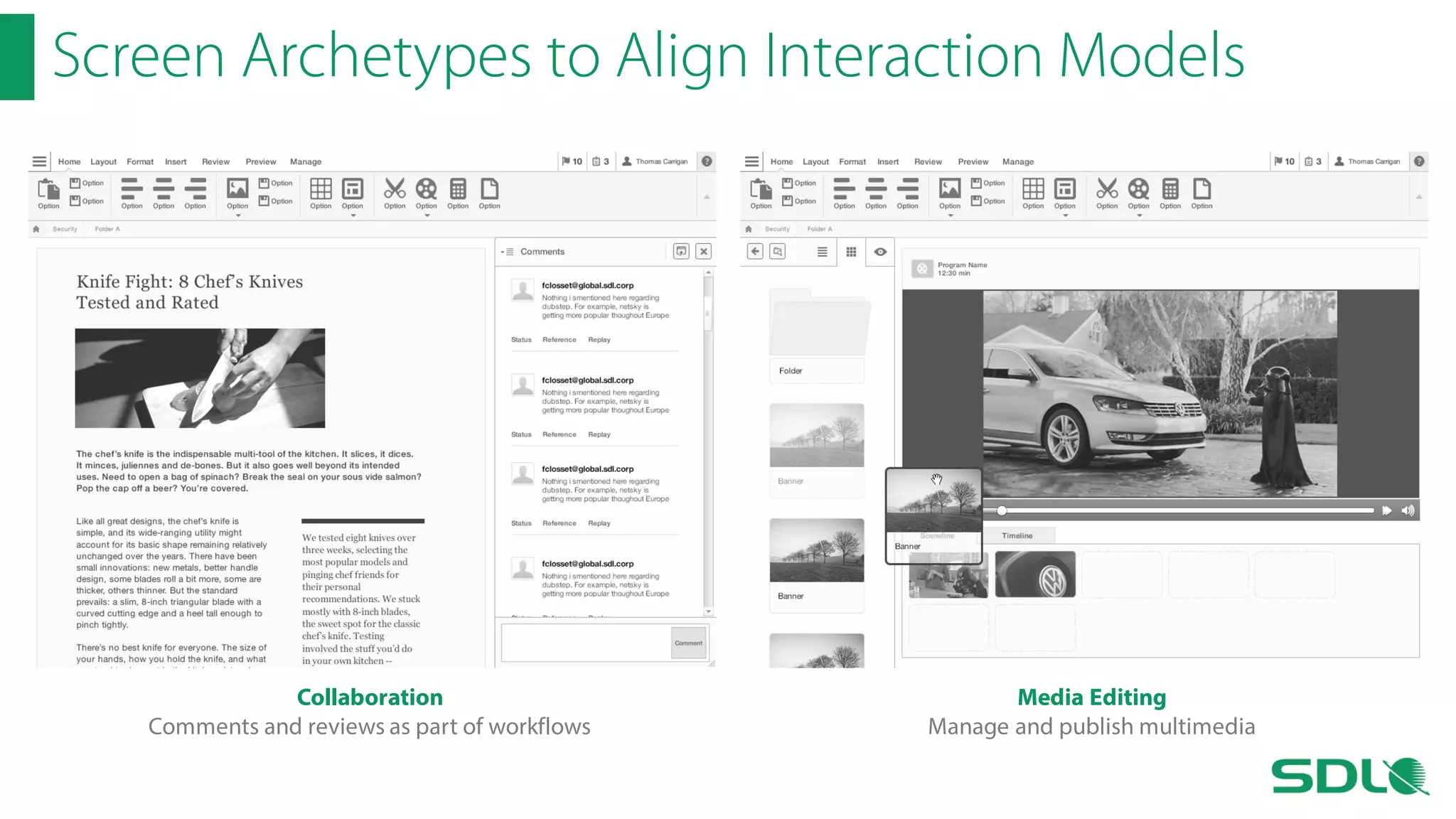
Collaboration
Comments and reviews as part of workflows

Media Editing
Manage and publish multimedia
Screen Archetypes to Align Interaction Models

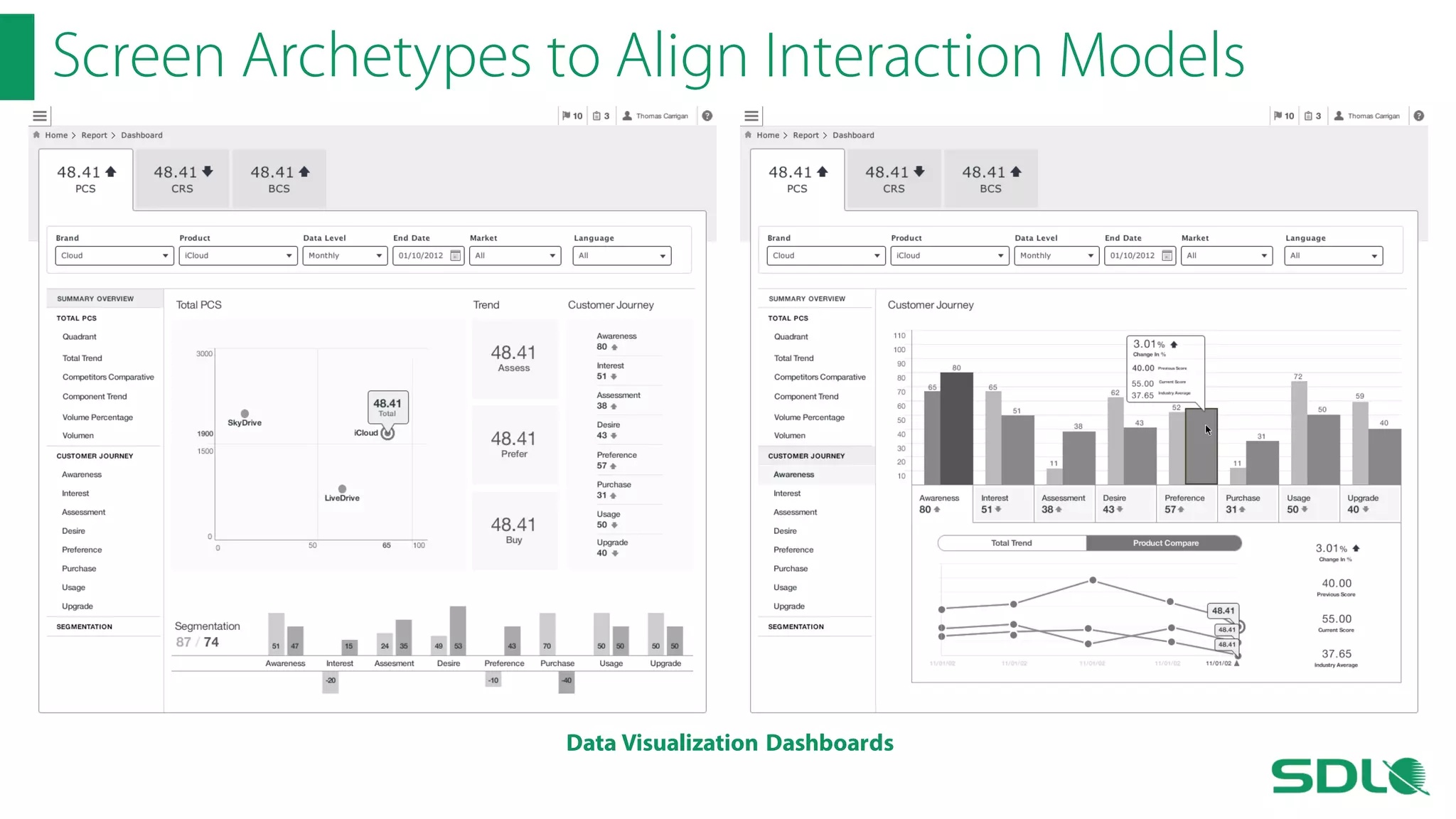
Data Visualization Dashboards
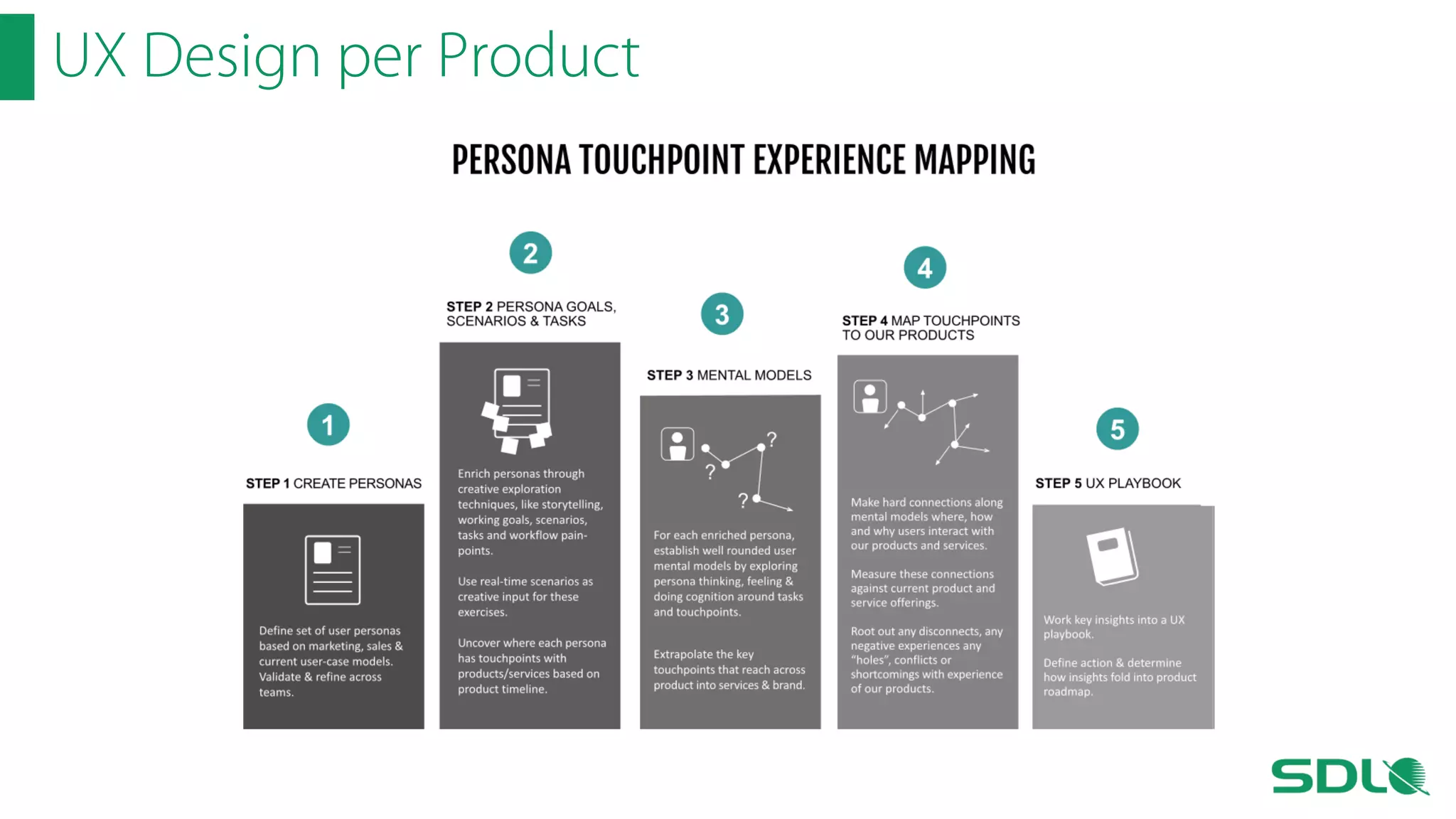
UX Design per Product
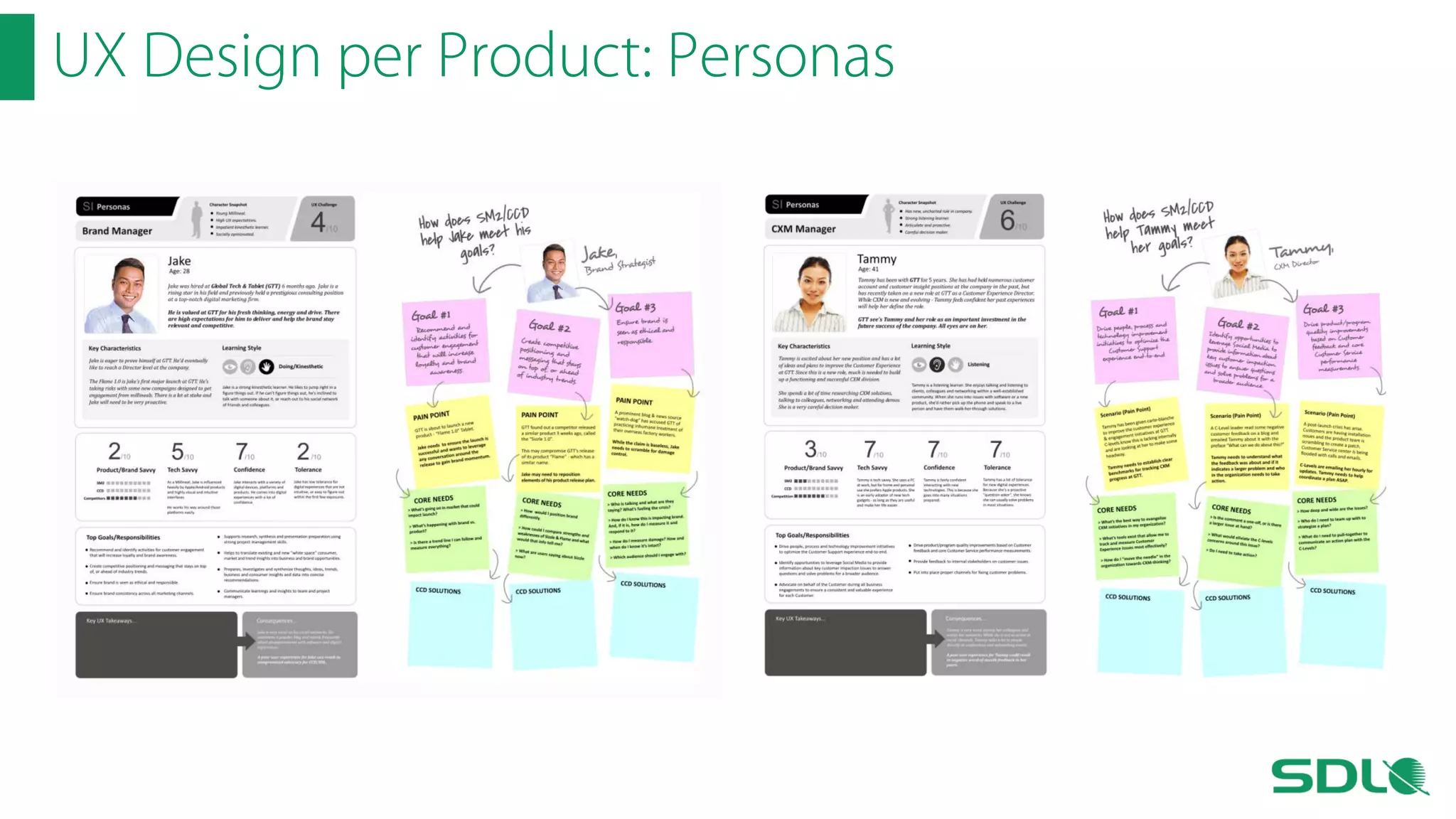
UX Design per Product: Personas
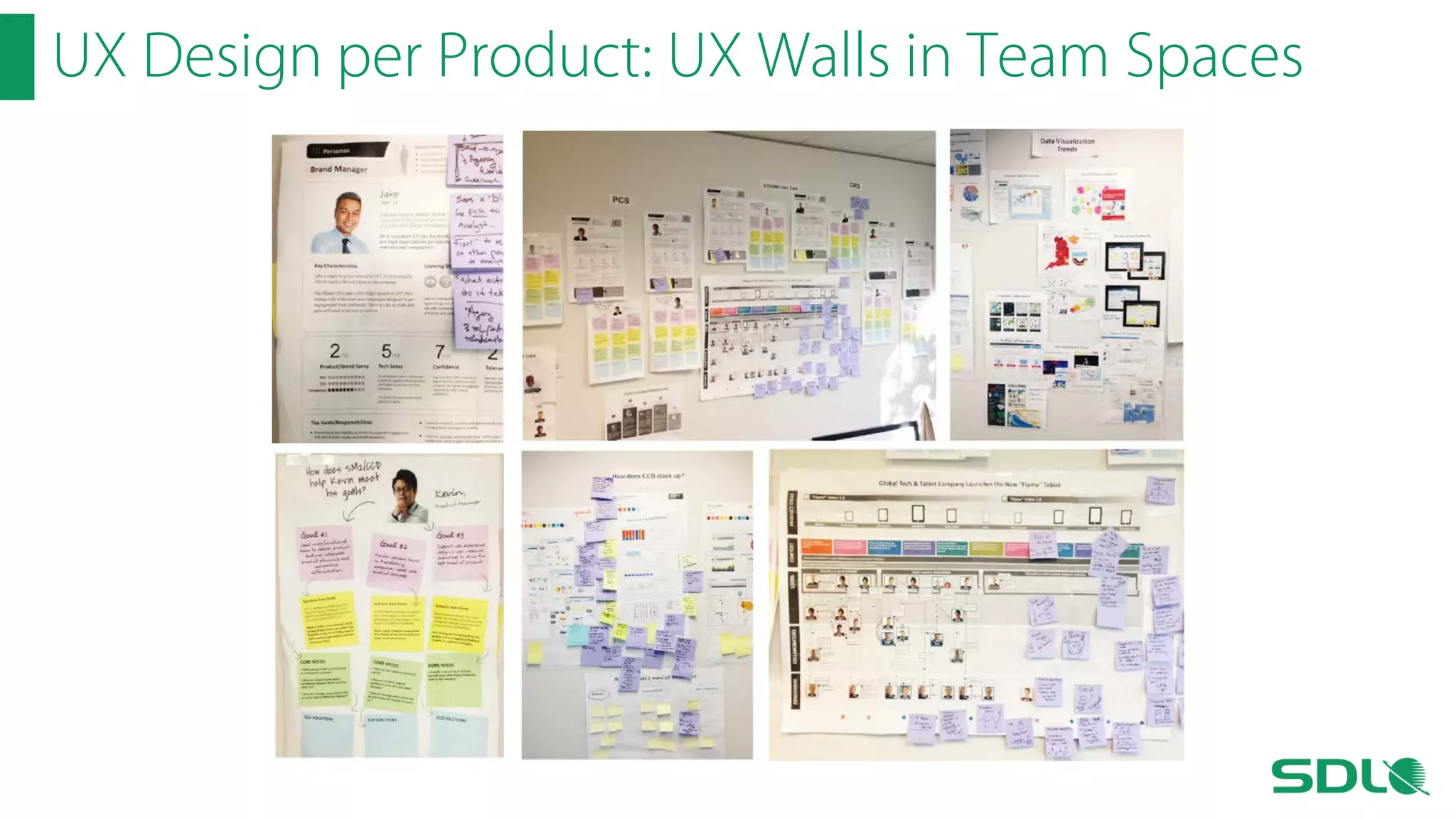
UX Design per Product: UX Walls in Team Spaces
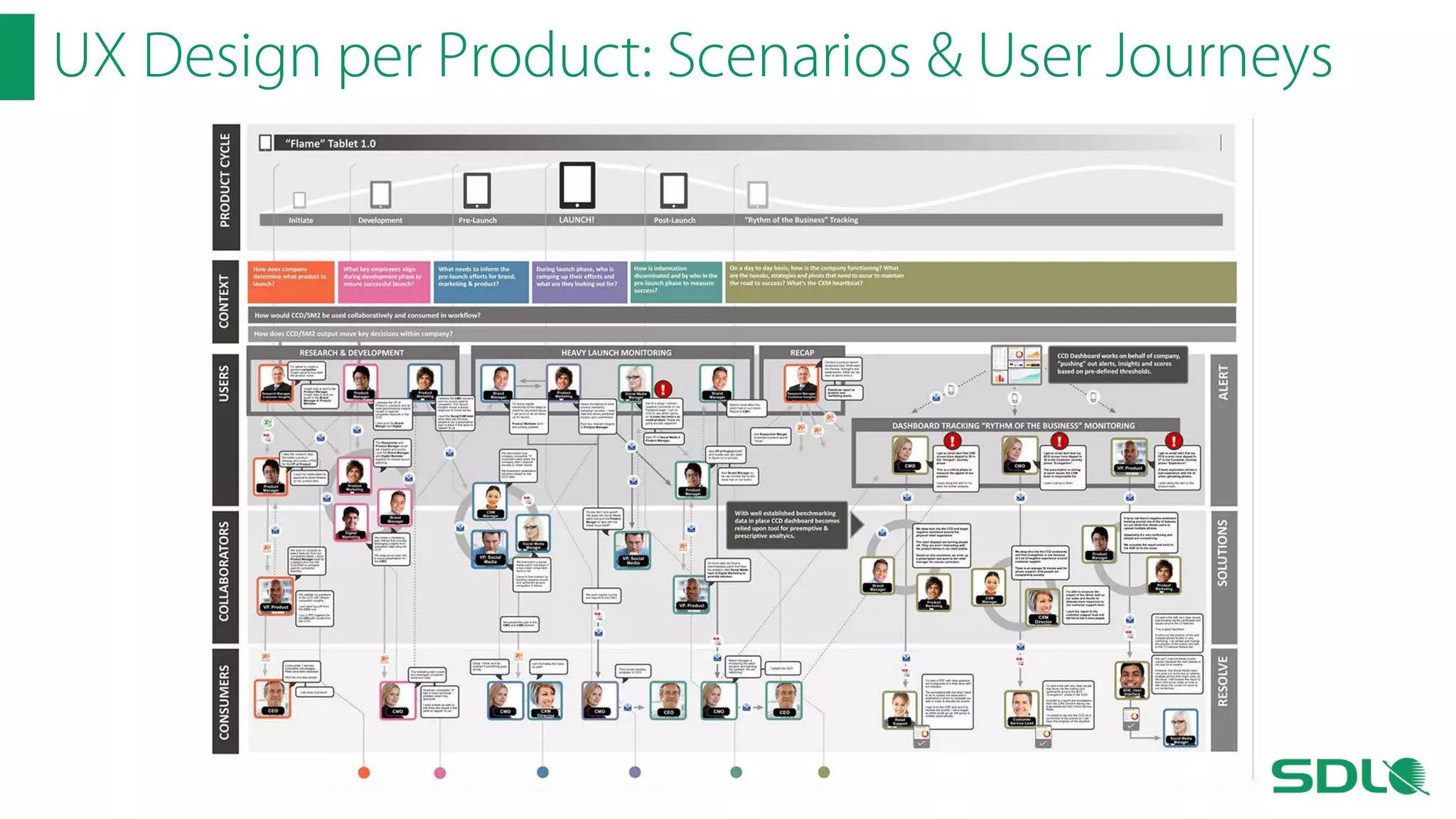
UX Design per Product: Scenarios & User Journeys
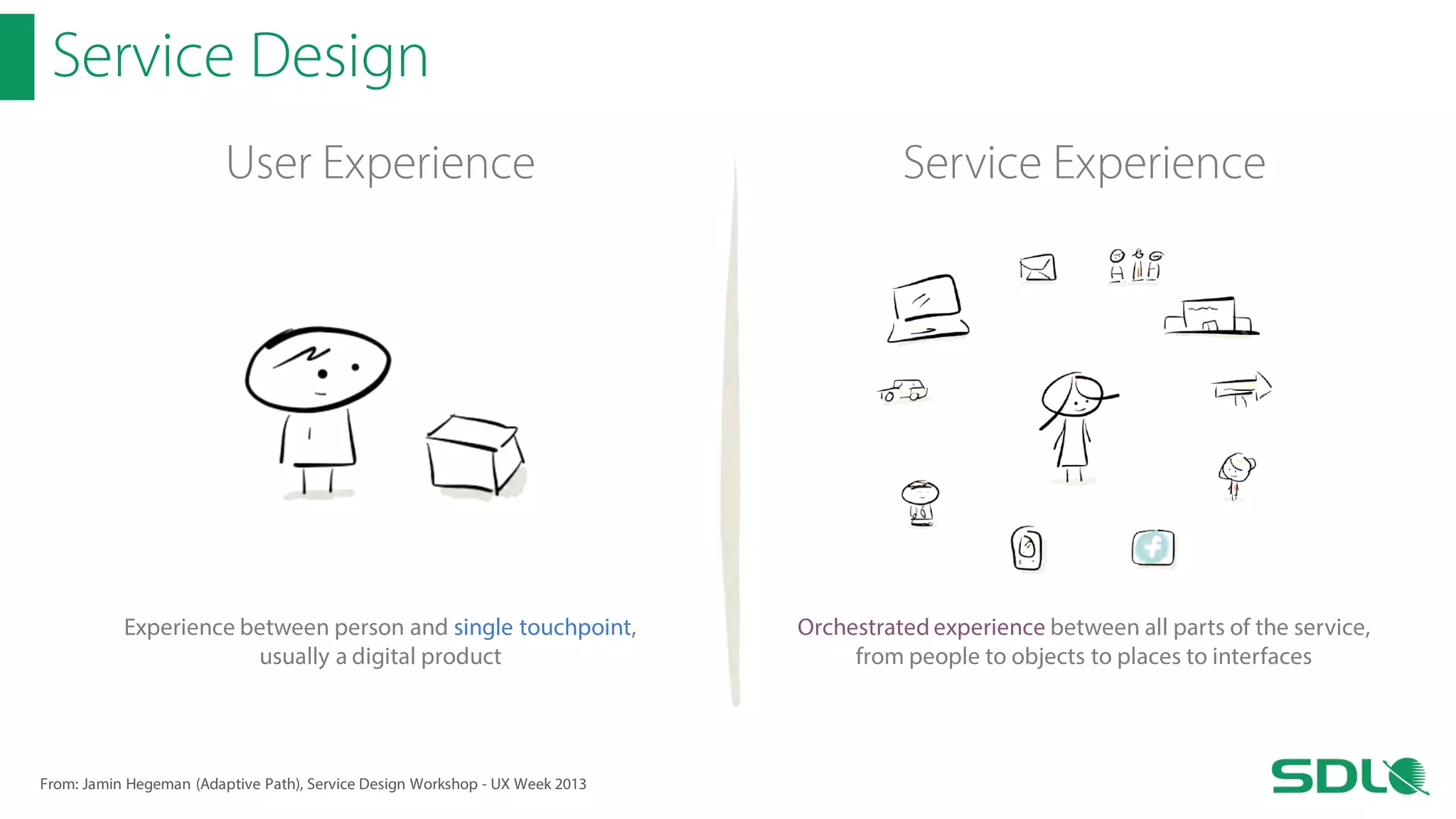
Service Design
User Experience

Service Experience

Experience between person and single touchpoint,
usually a digital product

Orchestrated experience between all parts of the service,
from people to objects to places to interfaces

From: Jamin Hegeman (Adaptive Path), Service Design Workshop - UX Week 2013
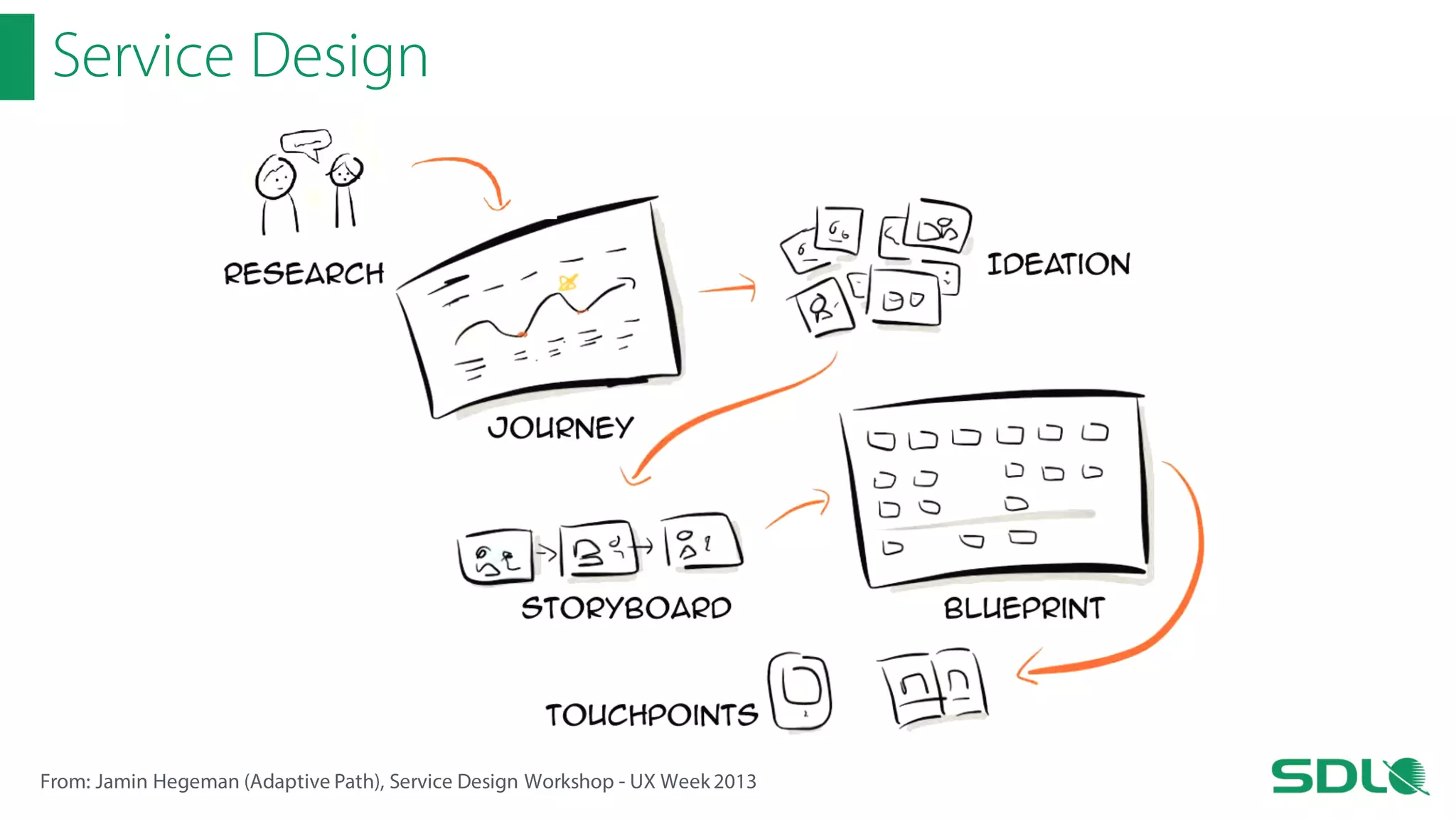
Service Design

From: Jamin Hegeman (Adaptive Path), Service Design Workshop - UX Week 2013
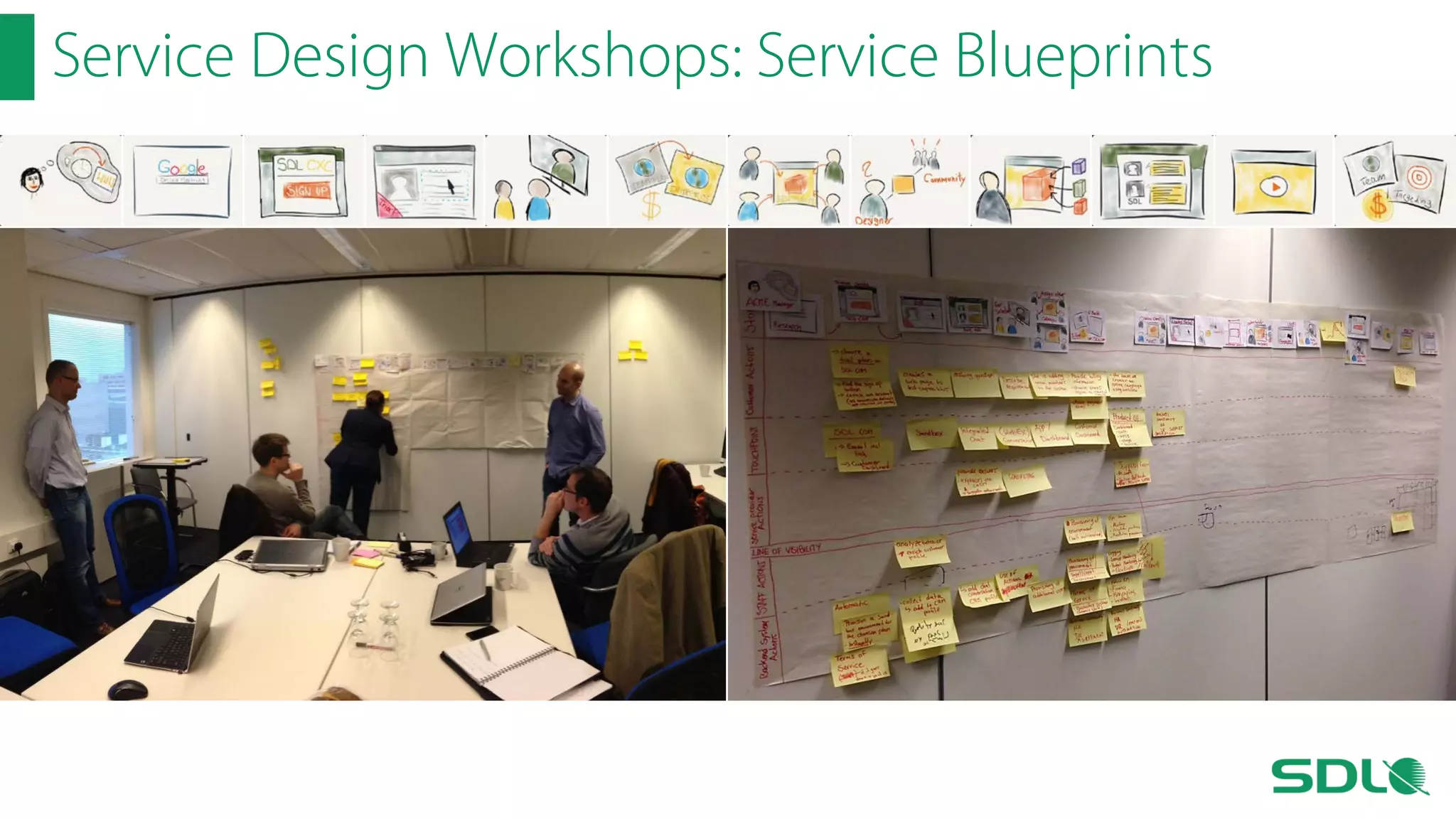
Service Design Workshops: Service Blueprints
A unique and recognizable brand identity…

Visual & UI Design
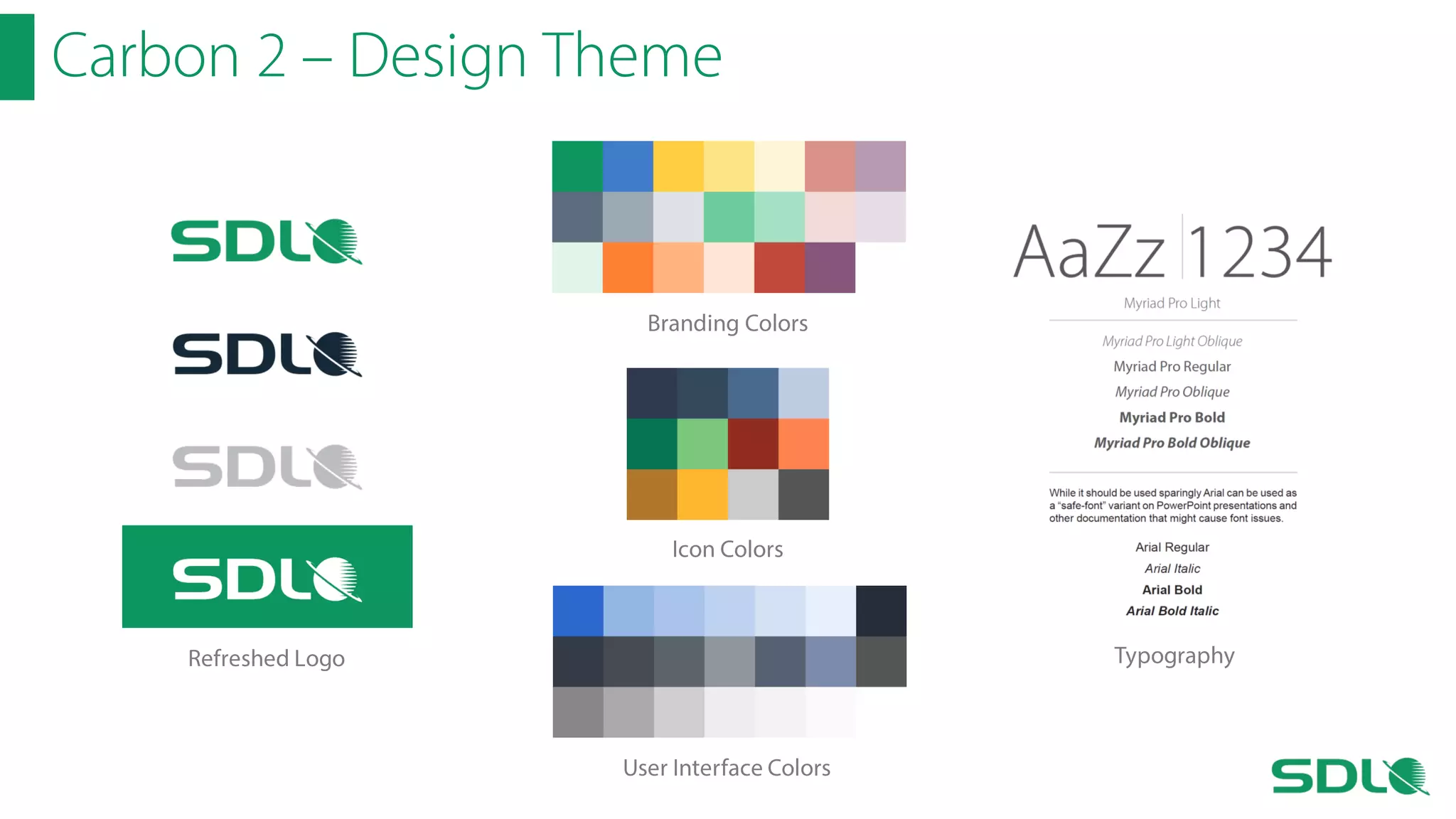
Carbon 2 – Design Theme

Branding Colors

Icon Colors

Typography

Refreshed Logo

User Interface Colors
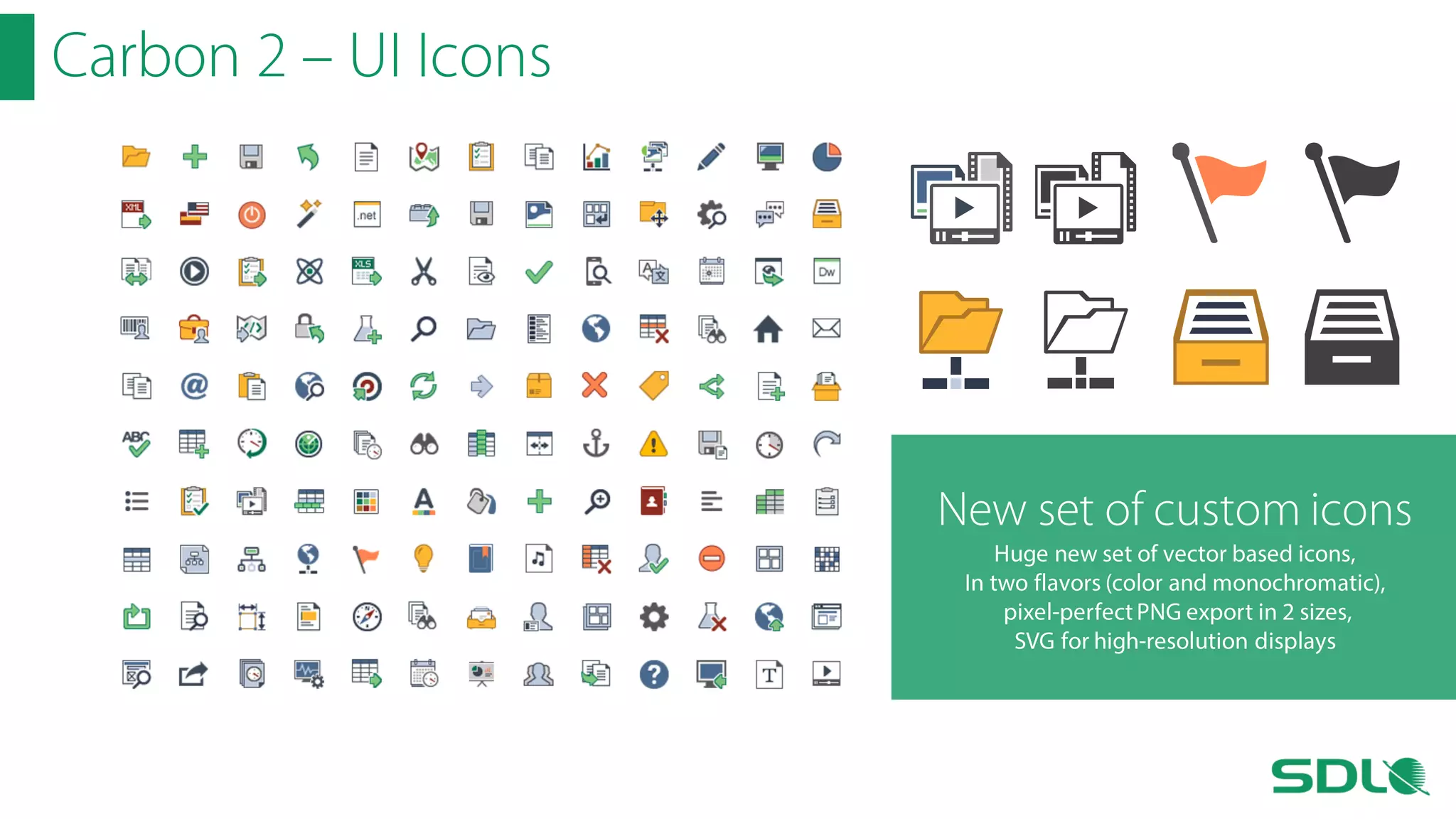
Carbon 2 – UI Icons

New set of custom icons
Huge new set of vector based icons,
In two flavors (color and monochromatic),
pixel-perfect PNG export in 2 sizes,
SVG for high-resolution displays
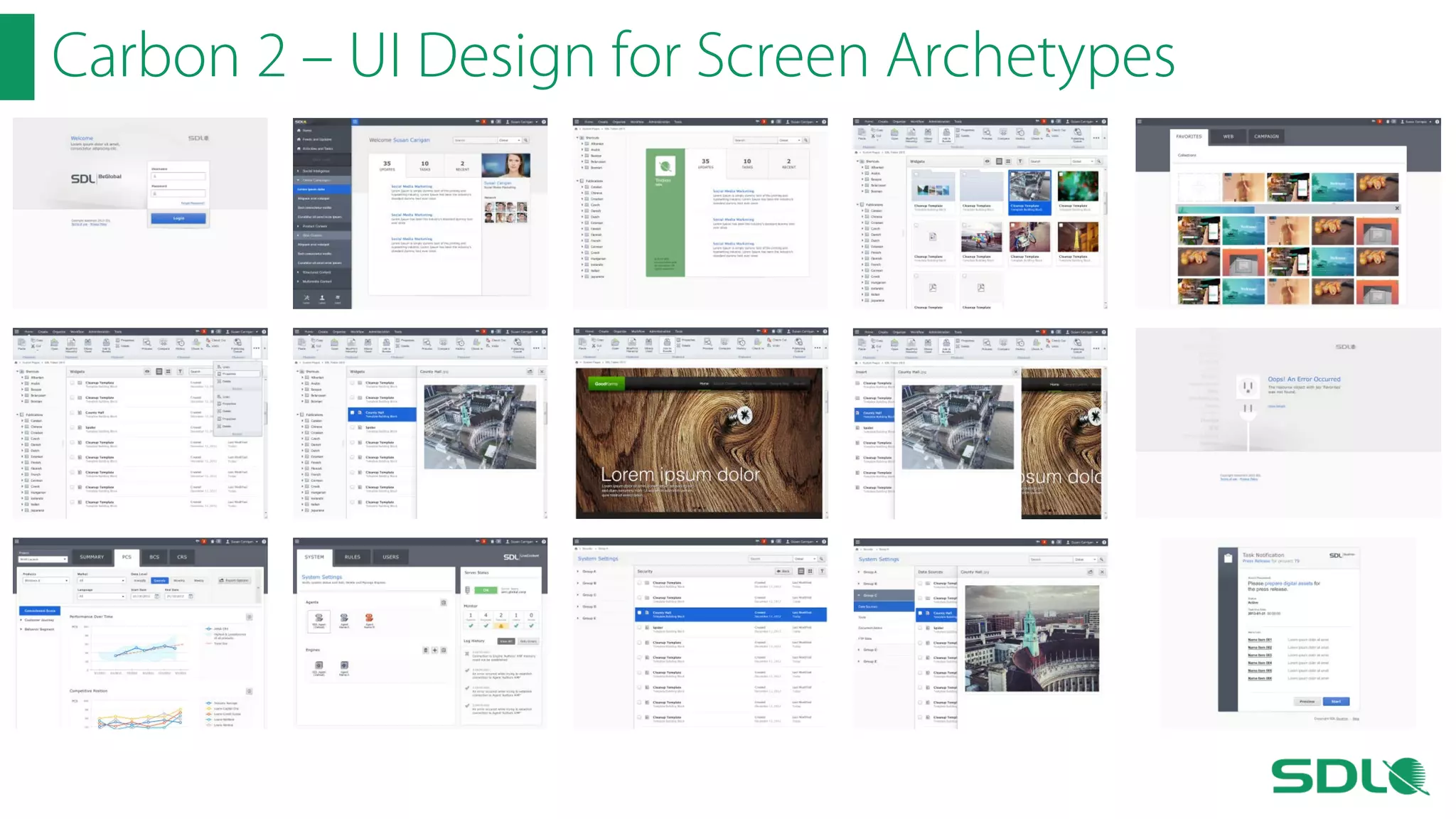
Carbon 2 – UI Design for Screen Archetypes
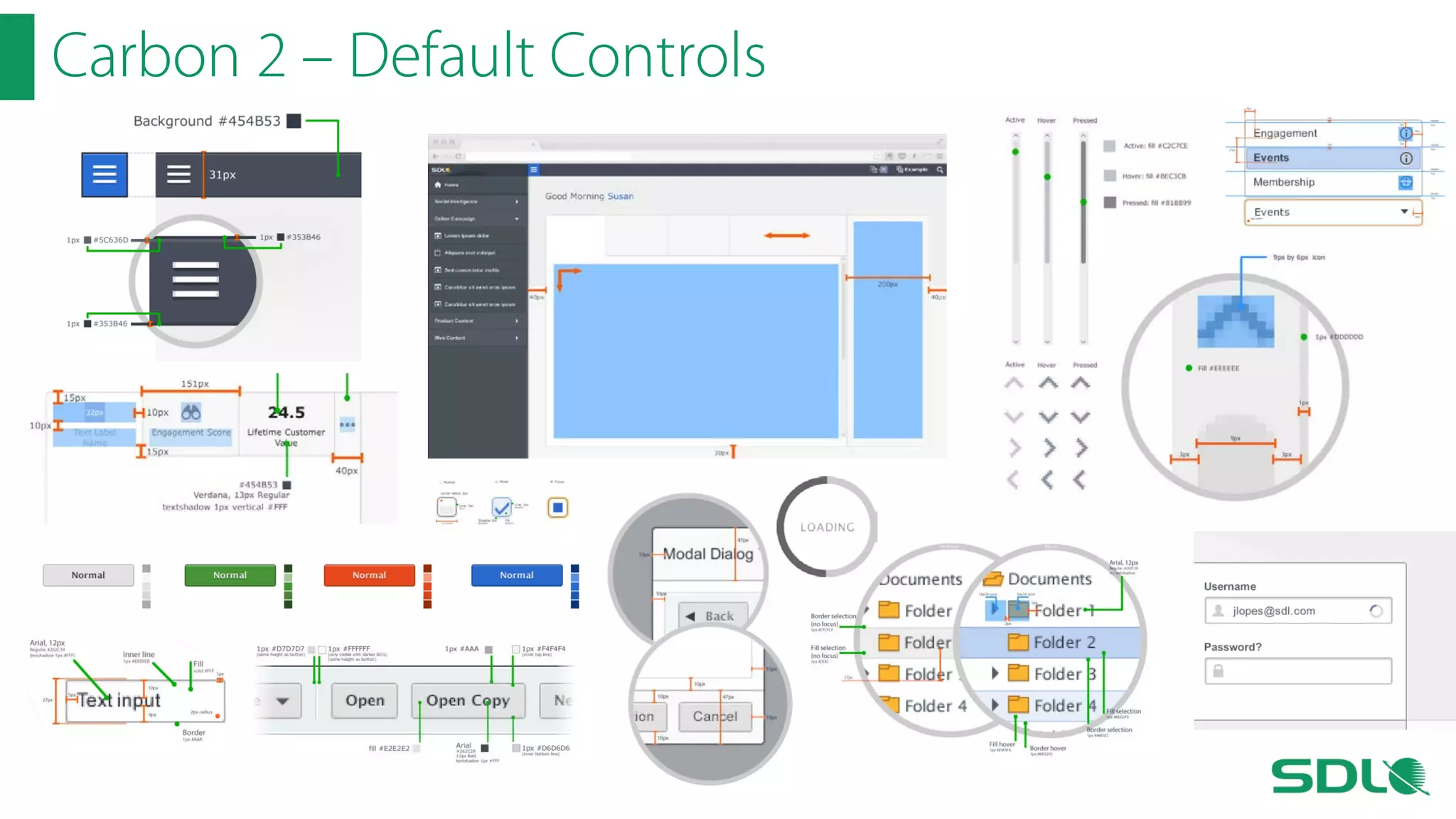
Carbon 2 – Default Controls
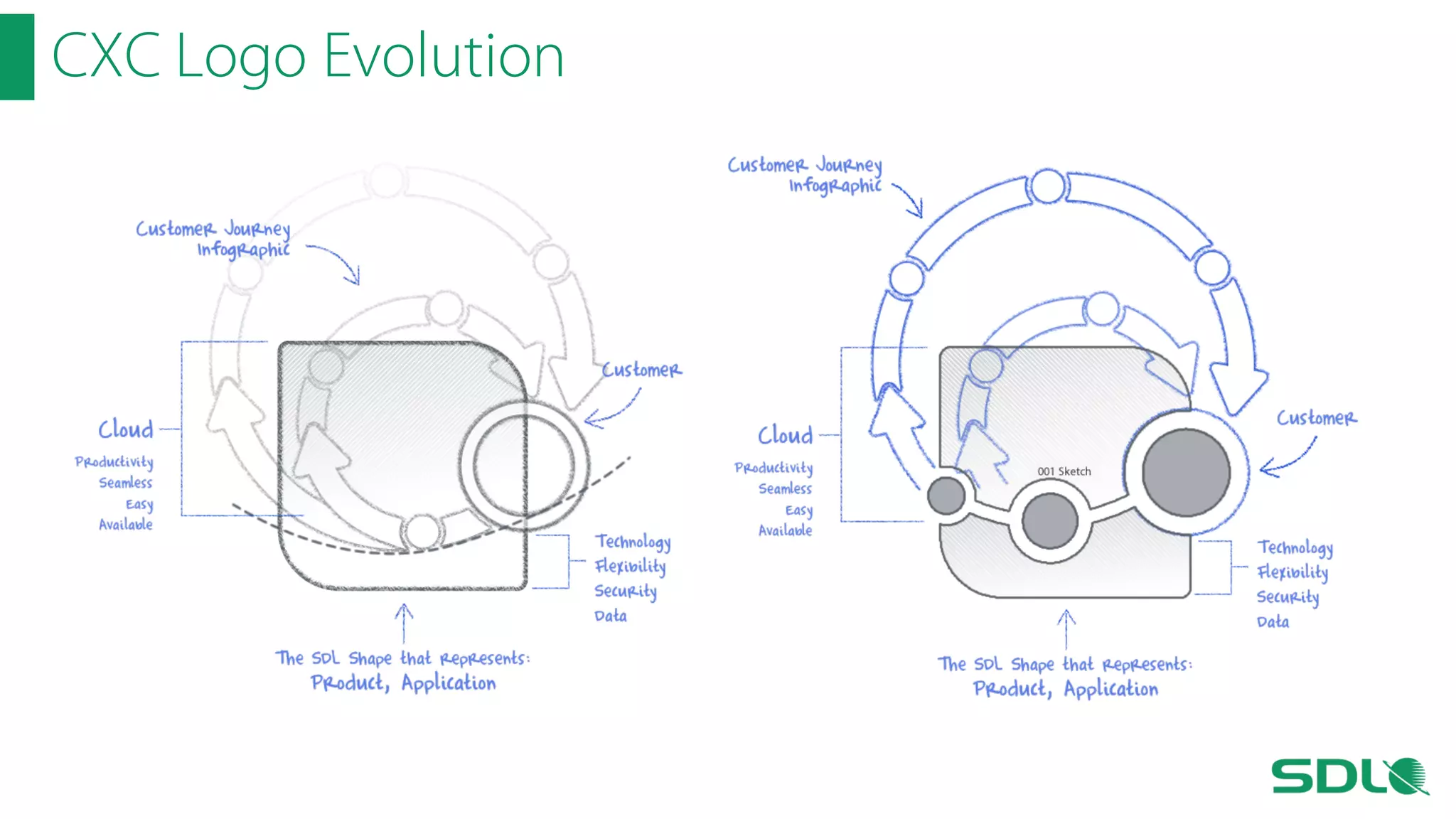
CXC Logo Evolution
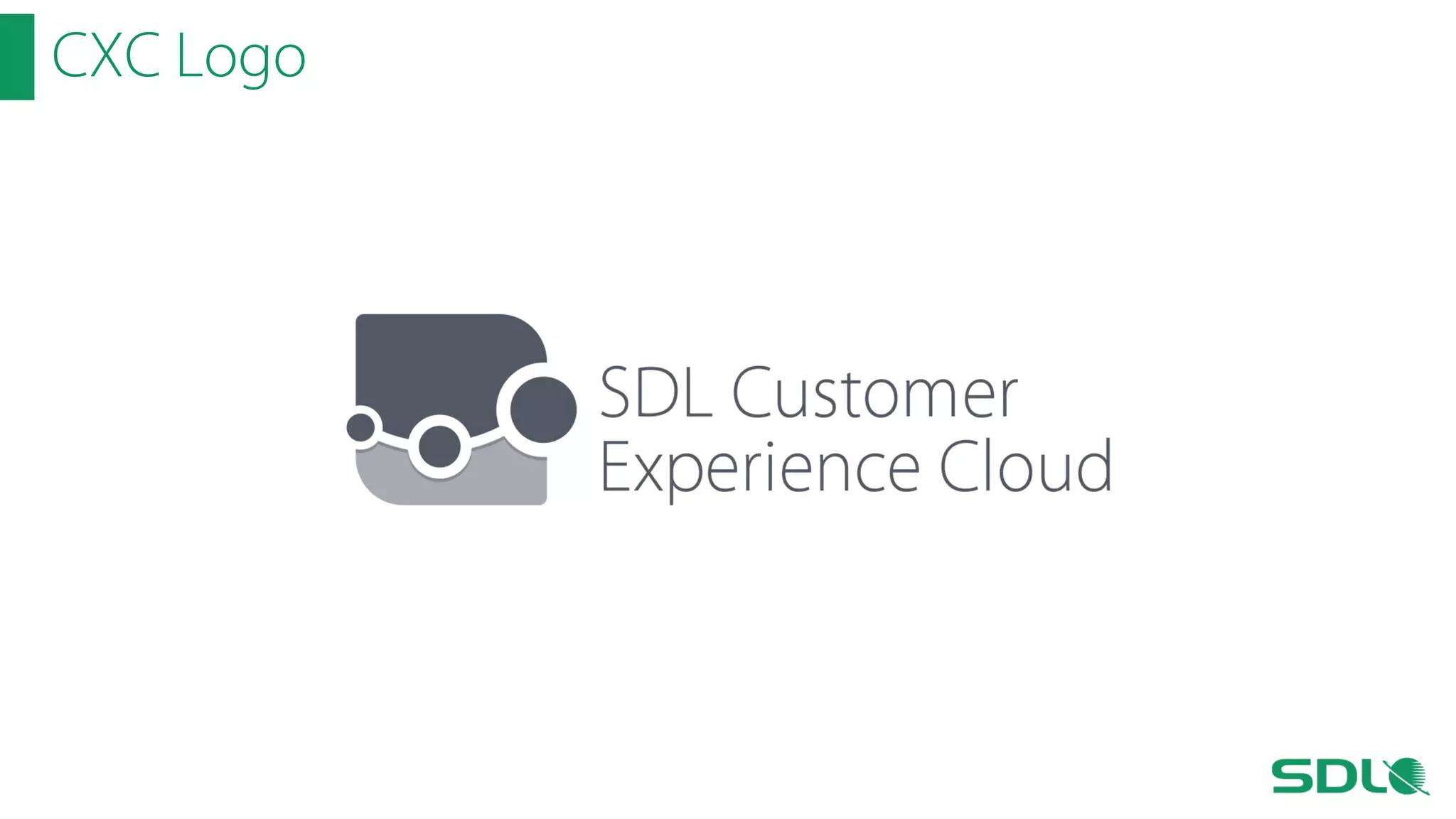
CXC Logo
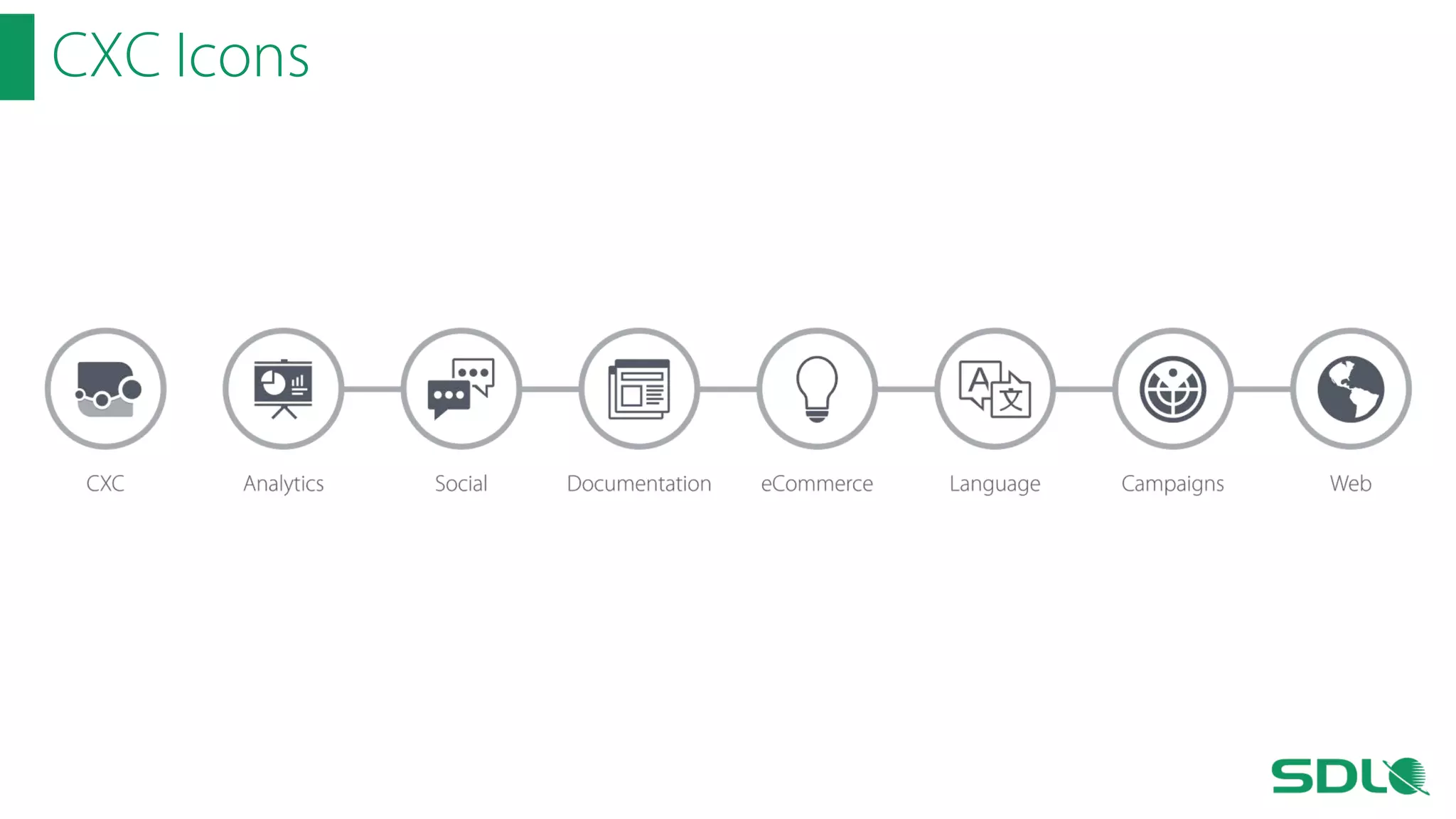
CXC Icons
It all comes together…

Design Applied to Products
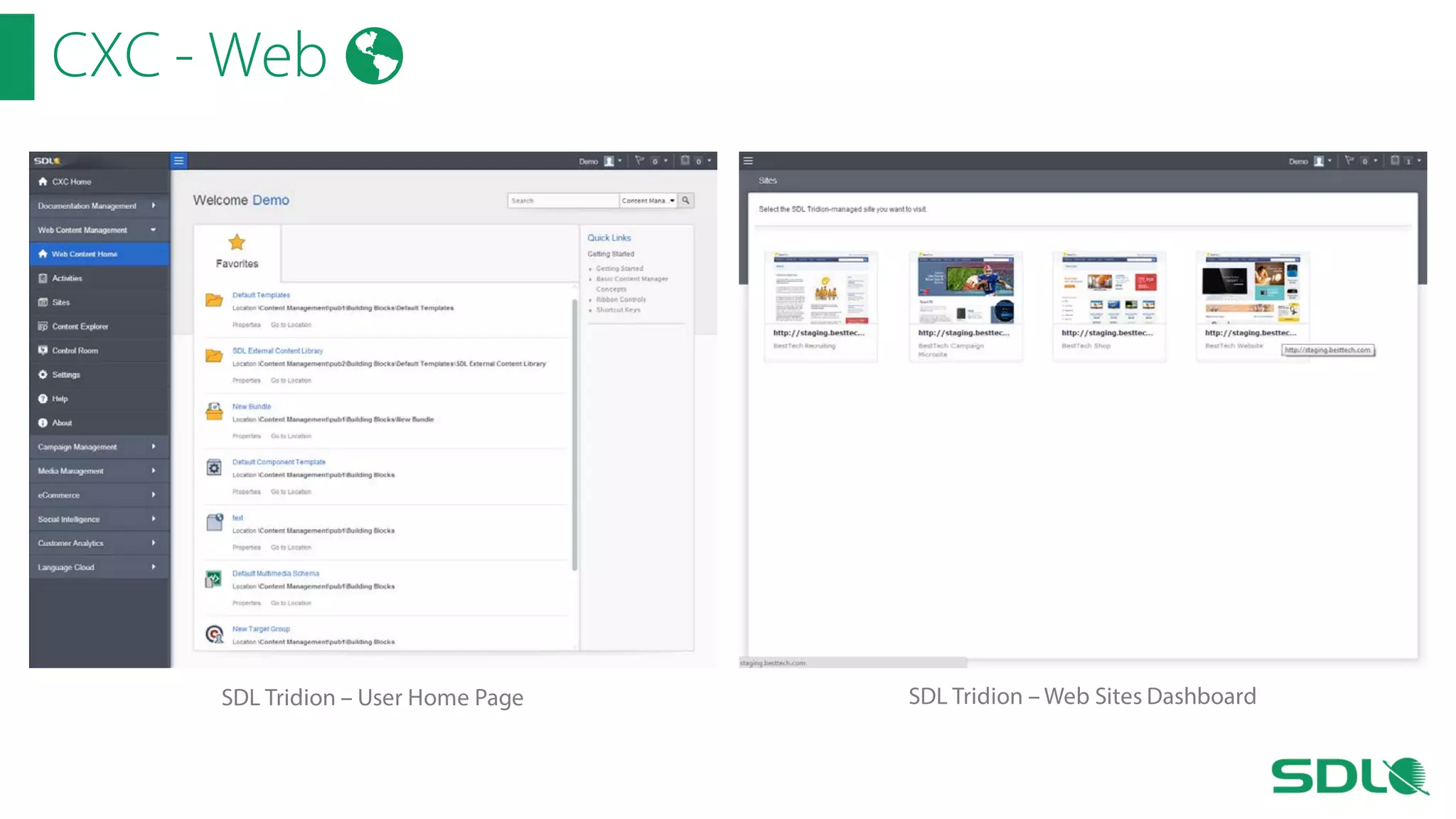
CXC - Web

SDL Tridion – User Home Page

SDL Tridion – Web Sites Dashboard
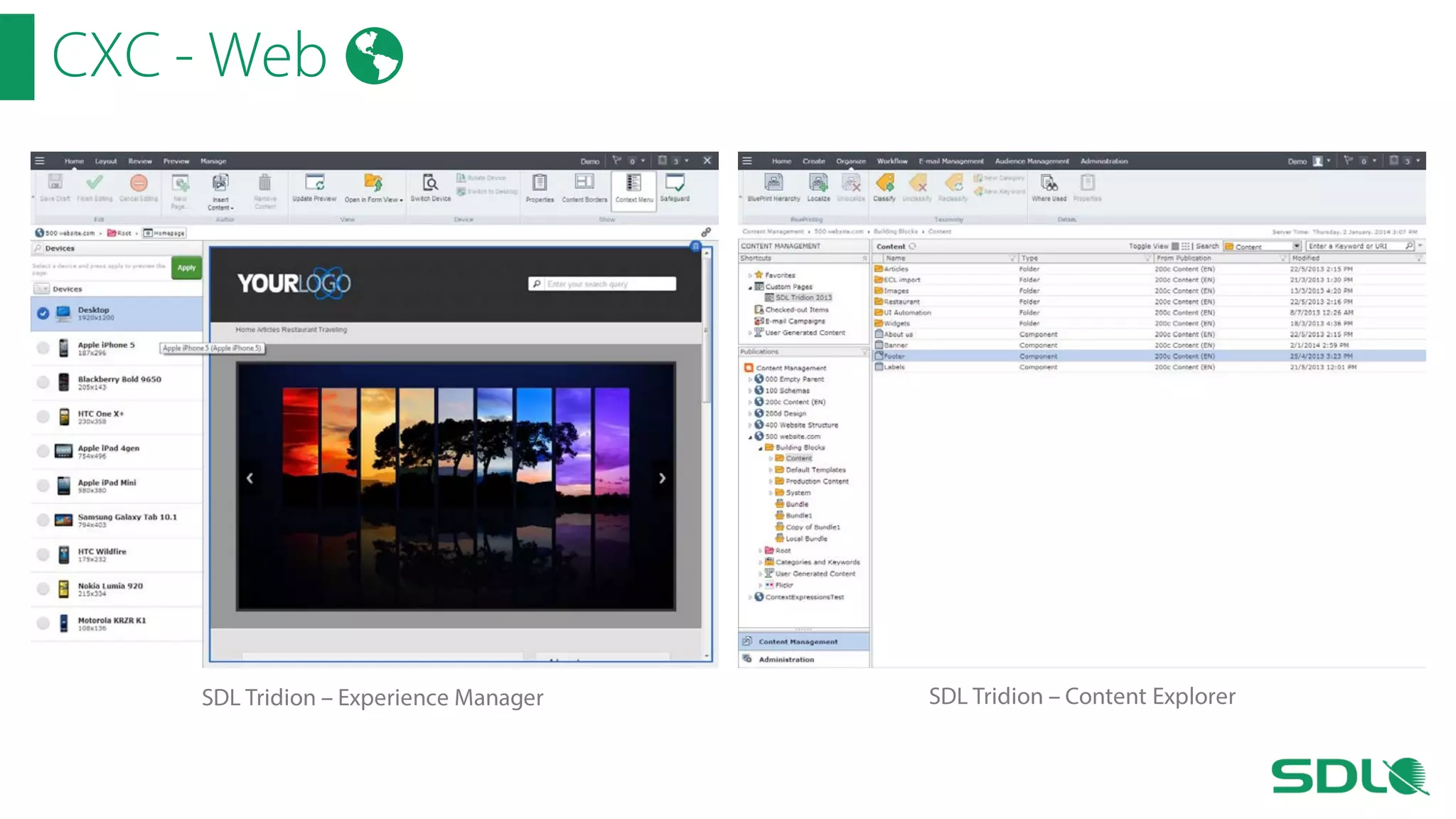
CXC - Web

SDL Tridion – Experience Manager

SDL Tridion – Content Explorer
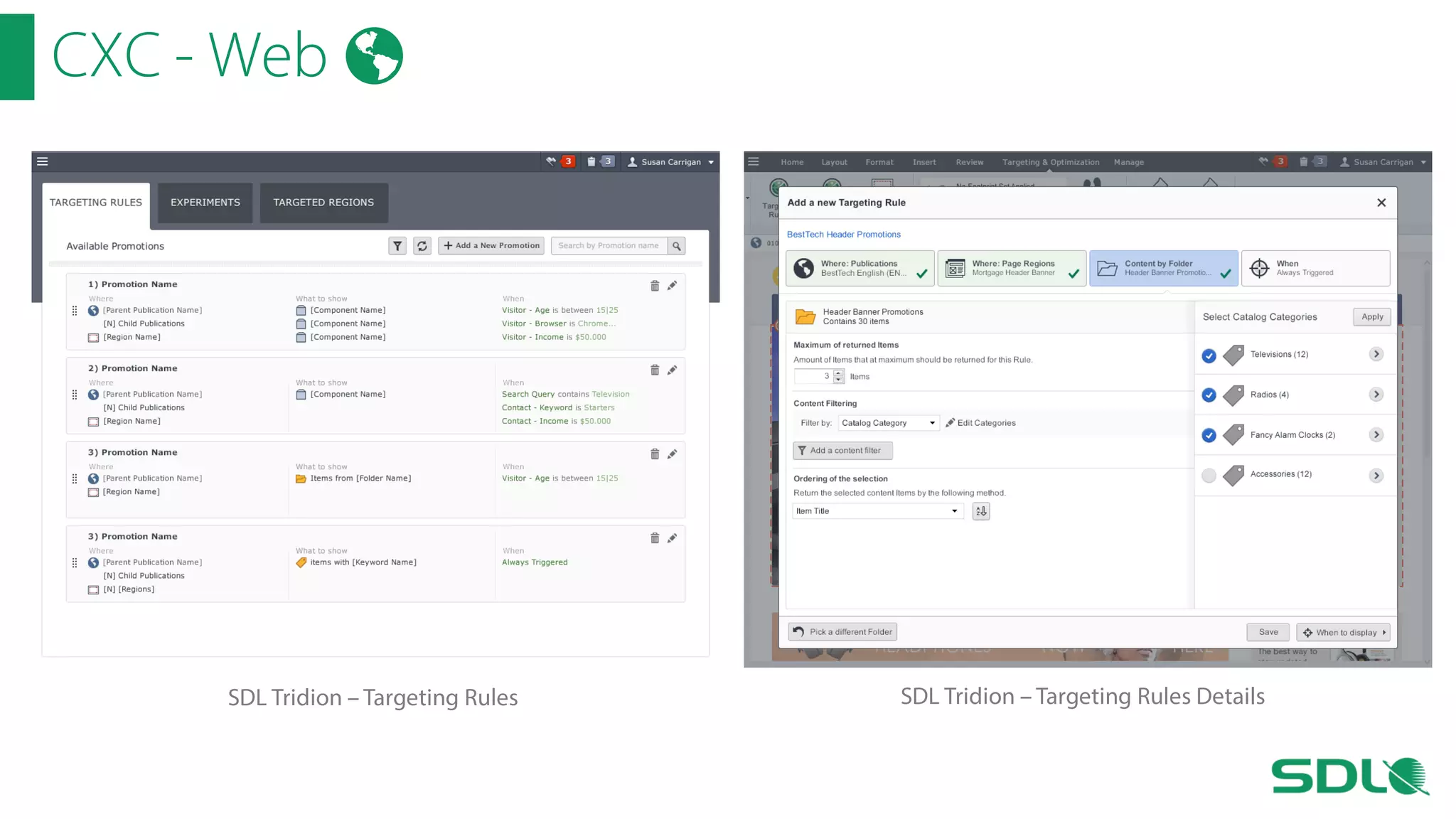
CXC - Web

SDL Tridion – Targeting Rules

SDL Tridion – Targeting Rules Details
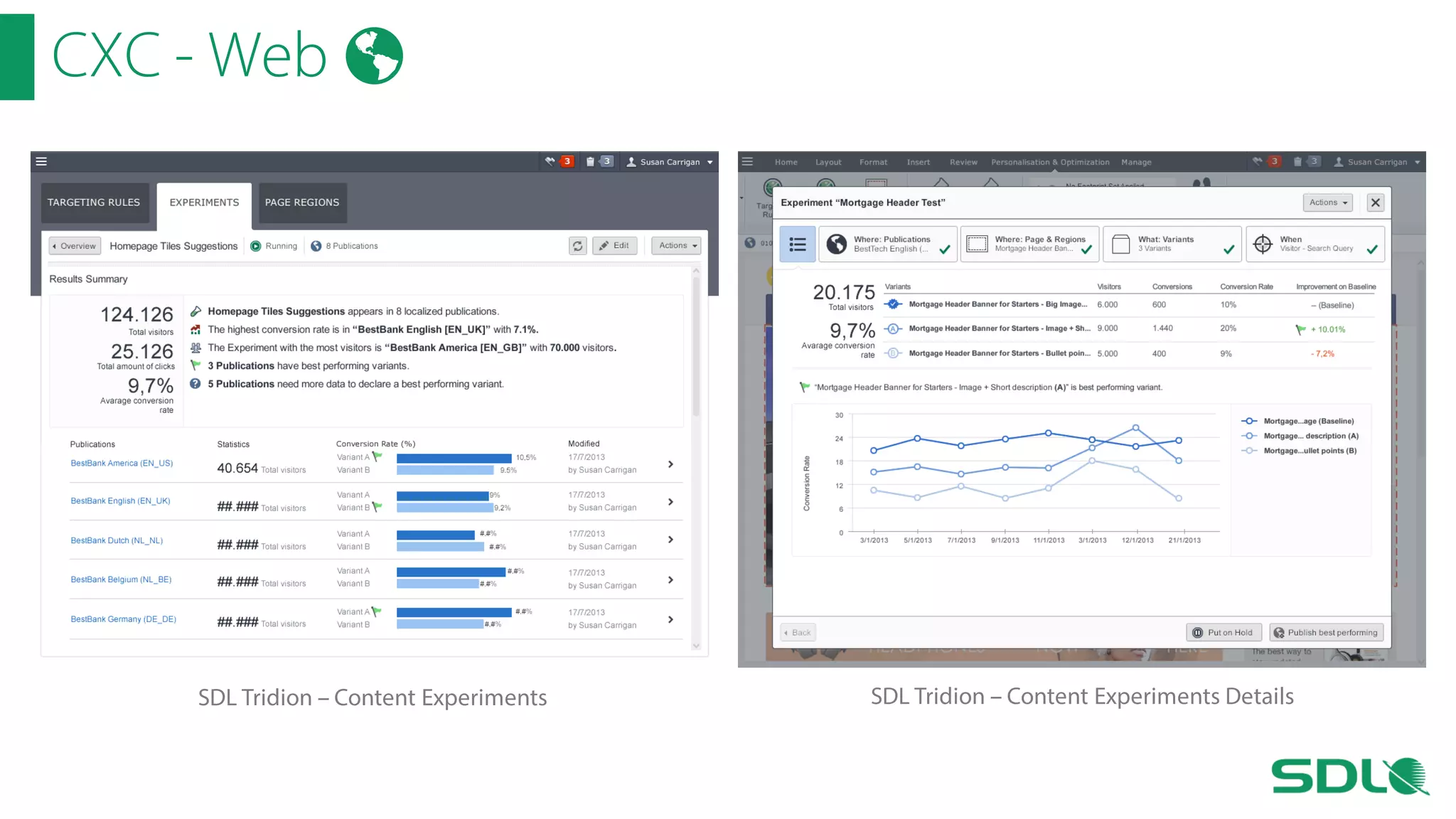
CXC - Web

SDL Tridion – Content Experiments

SDL Tridion – Content Experiments Details
CXC - Web

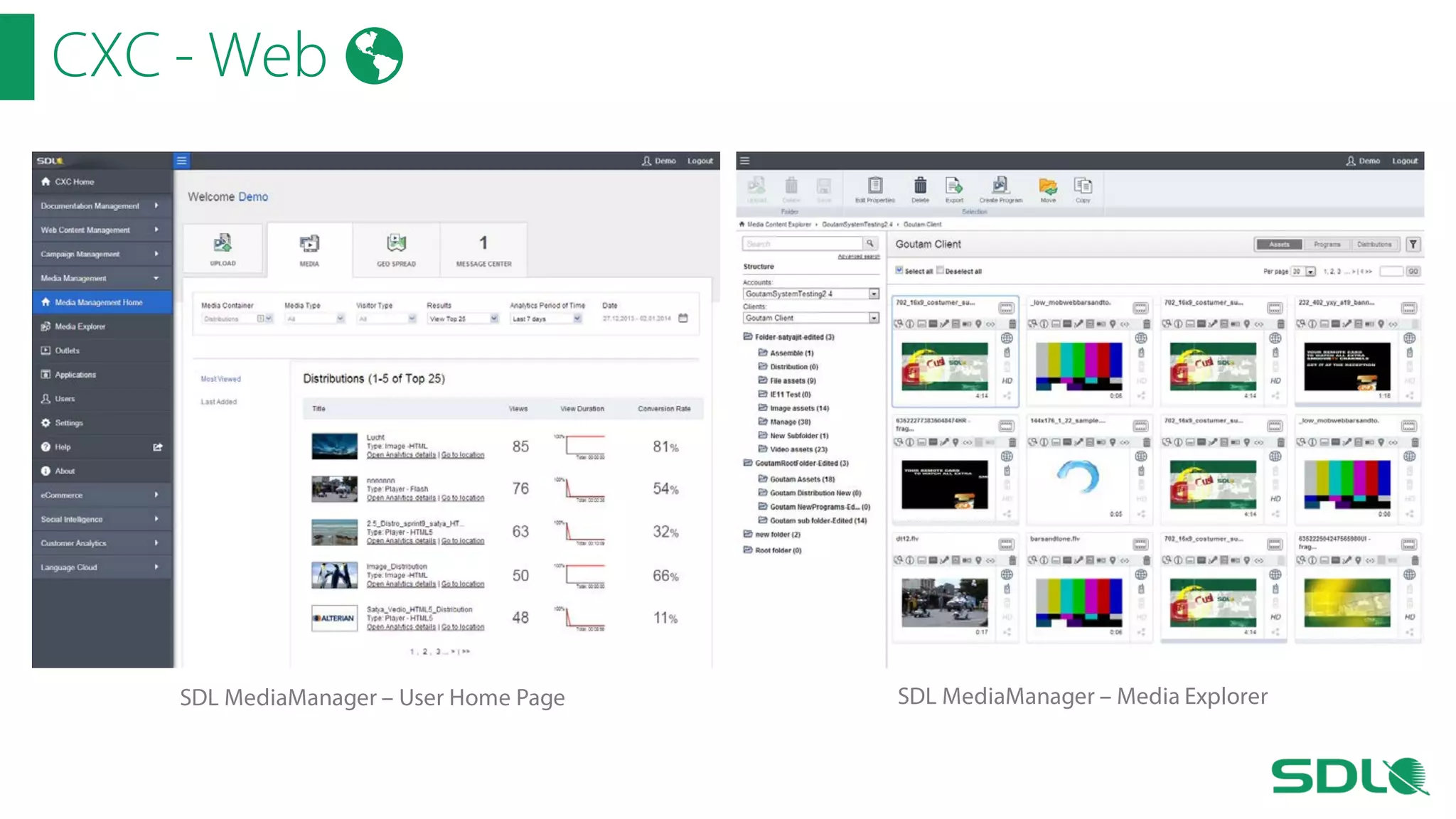
SDL MediaManager – User Home Page

SDL MediaManager – Media Explorer
CXC - Web

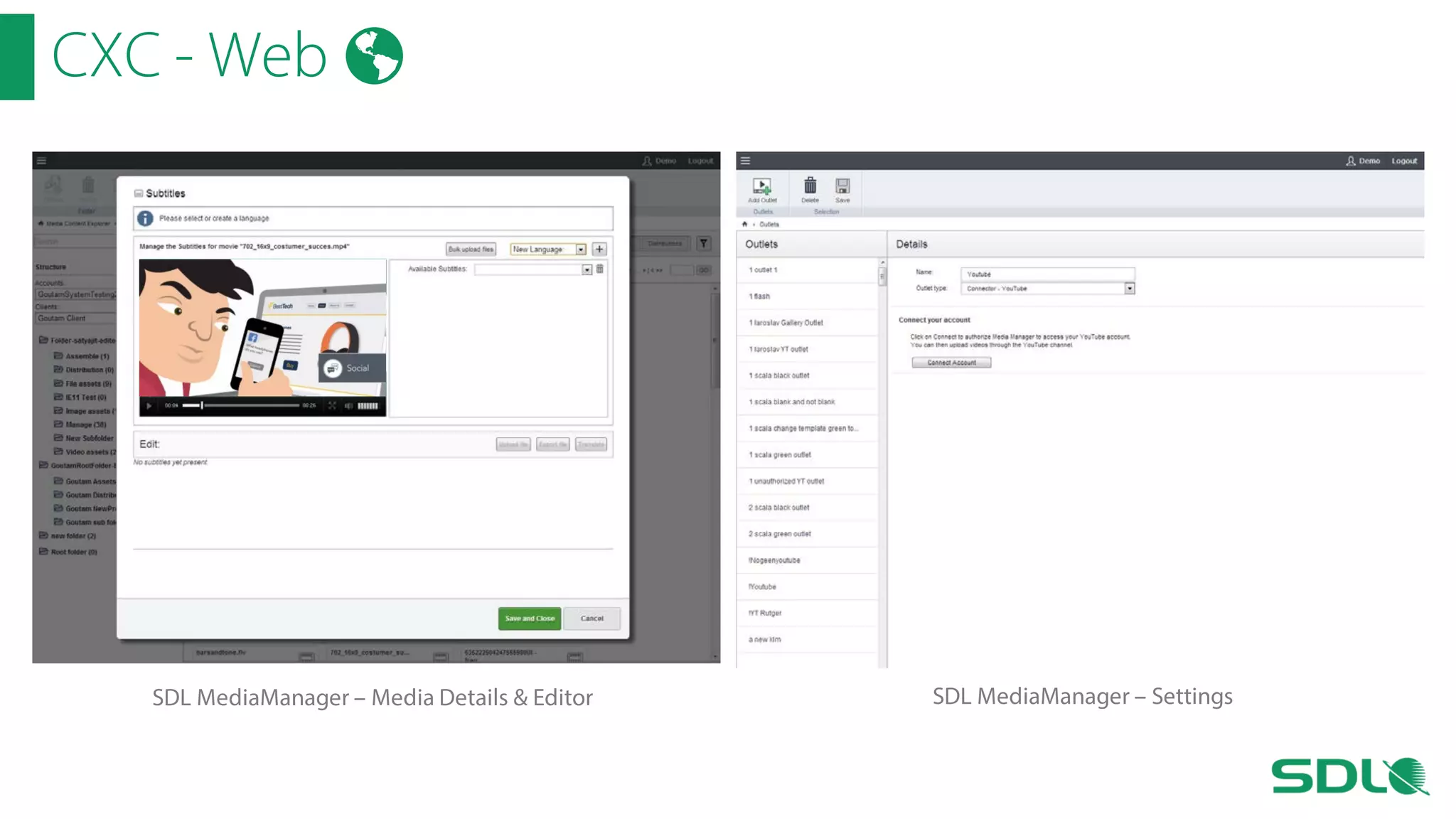
SDL MediaManager – Media Details & Editor

SDL MediaManager – Settings
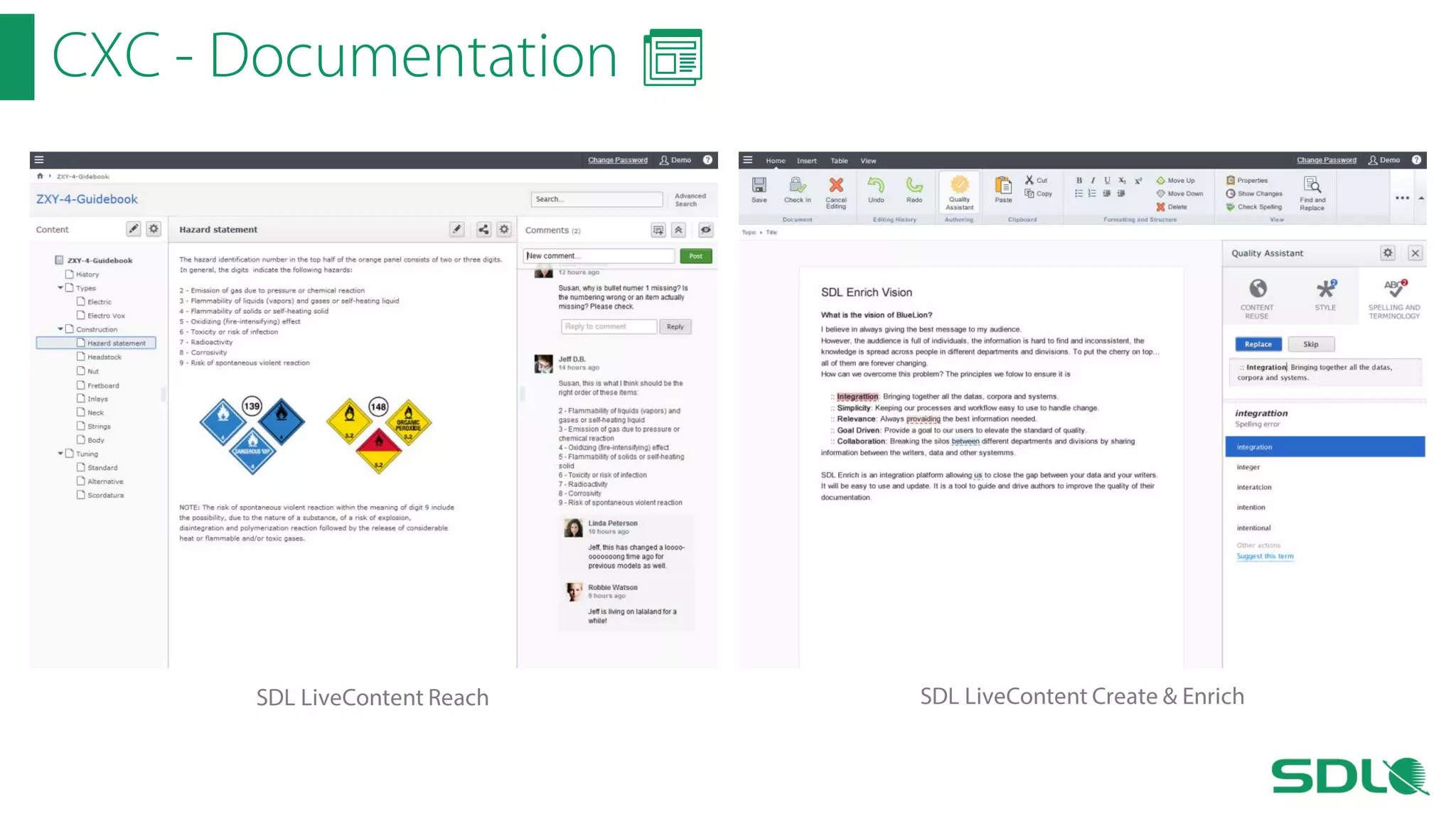
CXC - Documentation

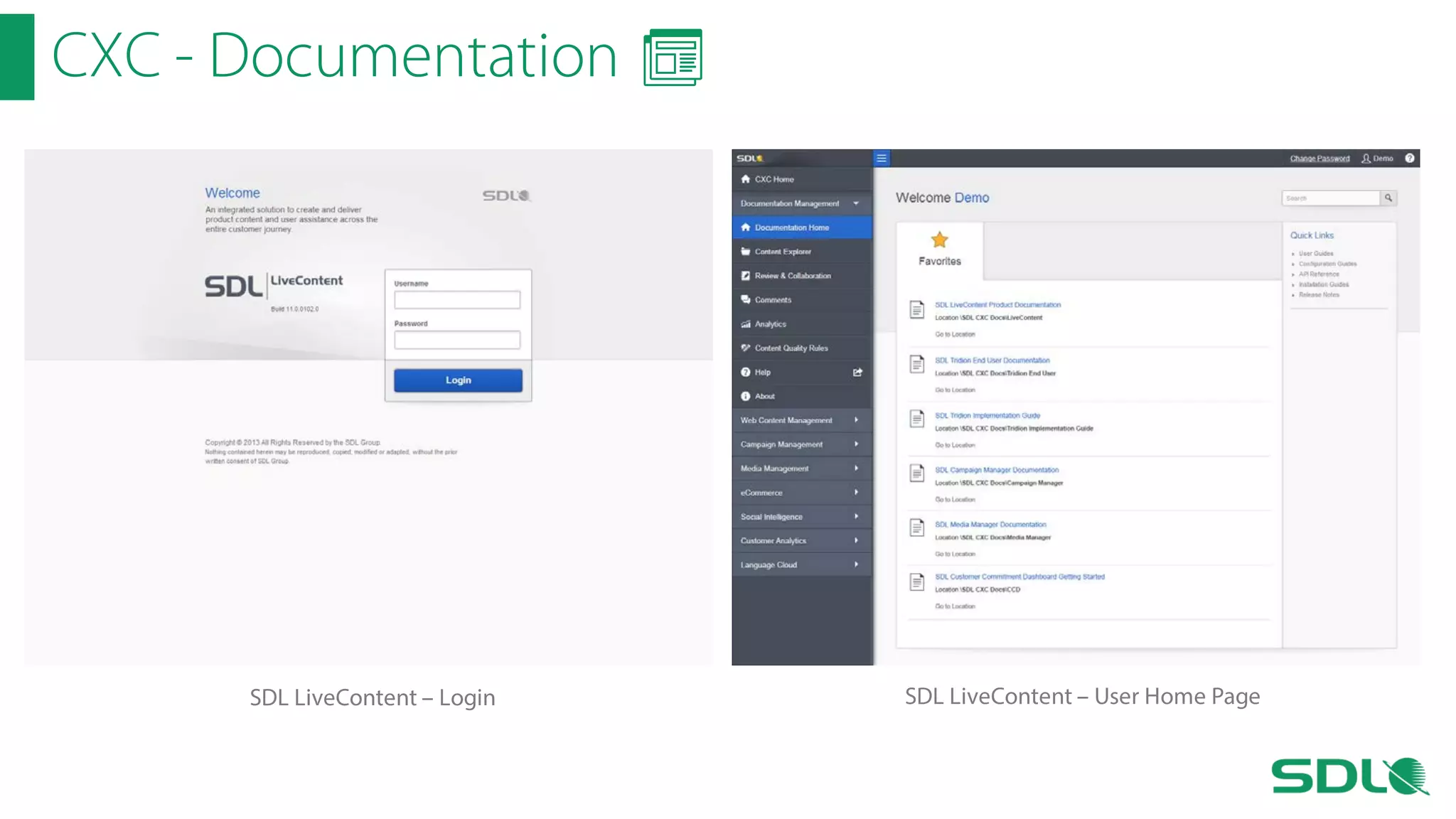
SDL LiveContent – Login

SDL LiveContent – User Home Page
CXC - Documentation

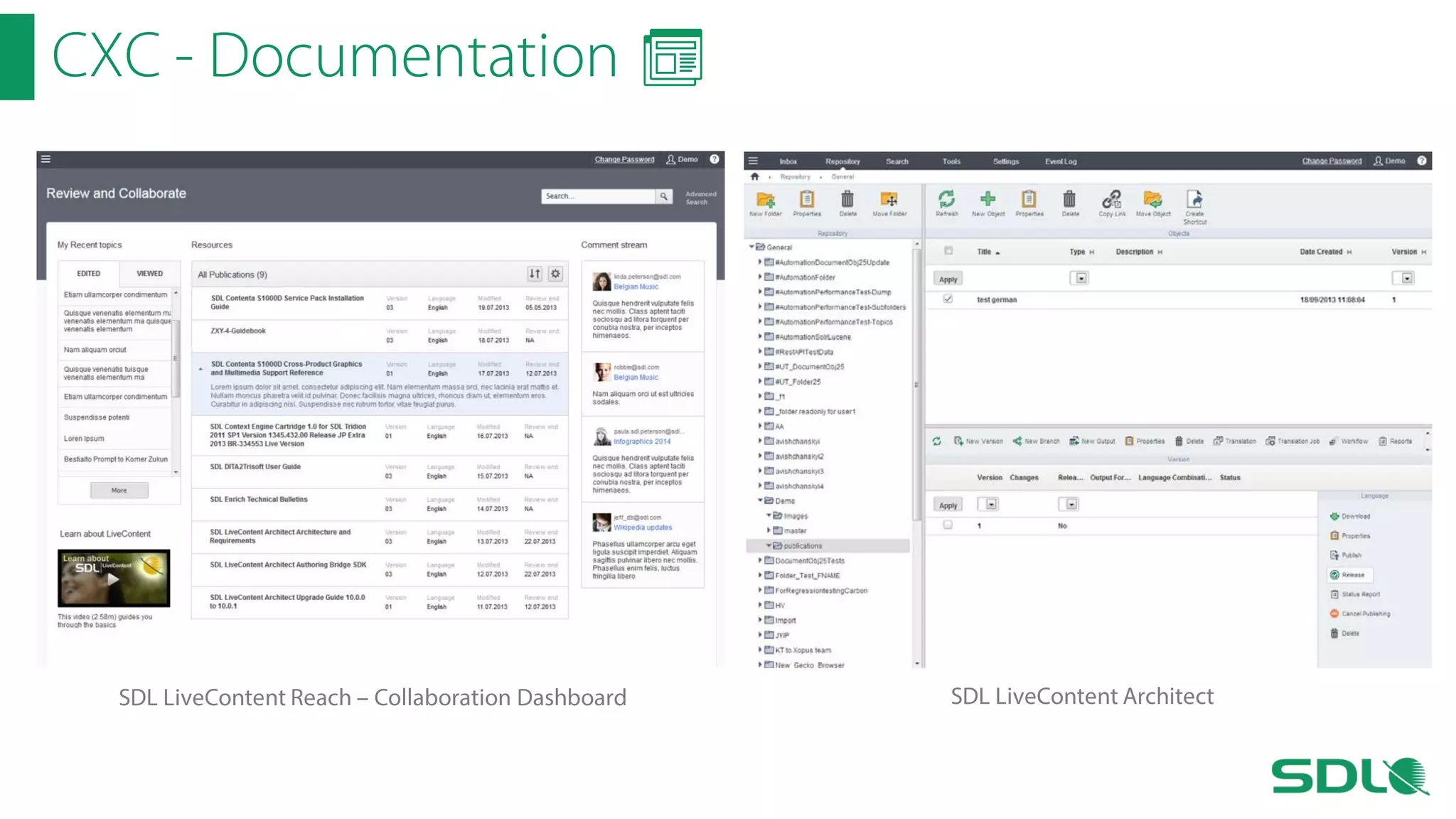
SDL LiveContent Reach – Collaboration Dashboard

SDL LiveContent Architect
CXC - Documentation

SDL LiveContent Reach

SDL LiveContent Create & Enrich
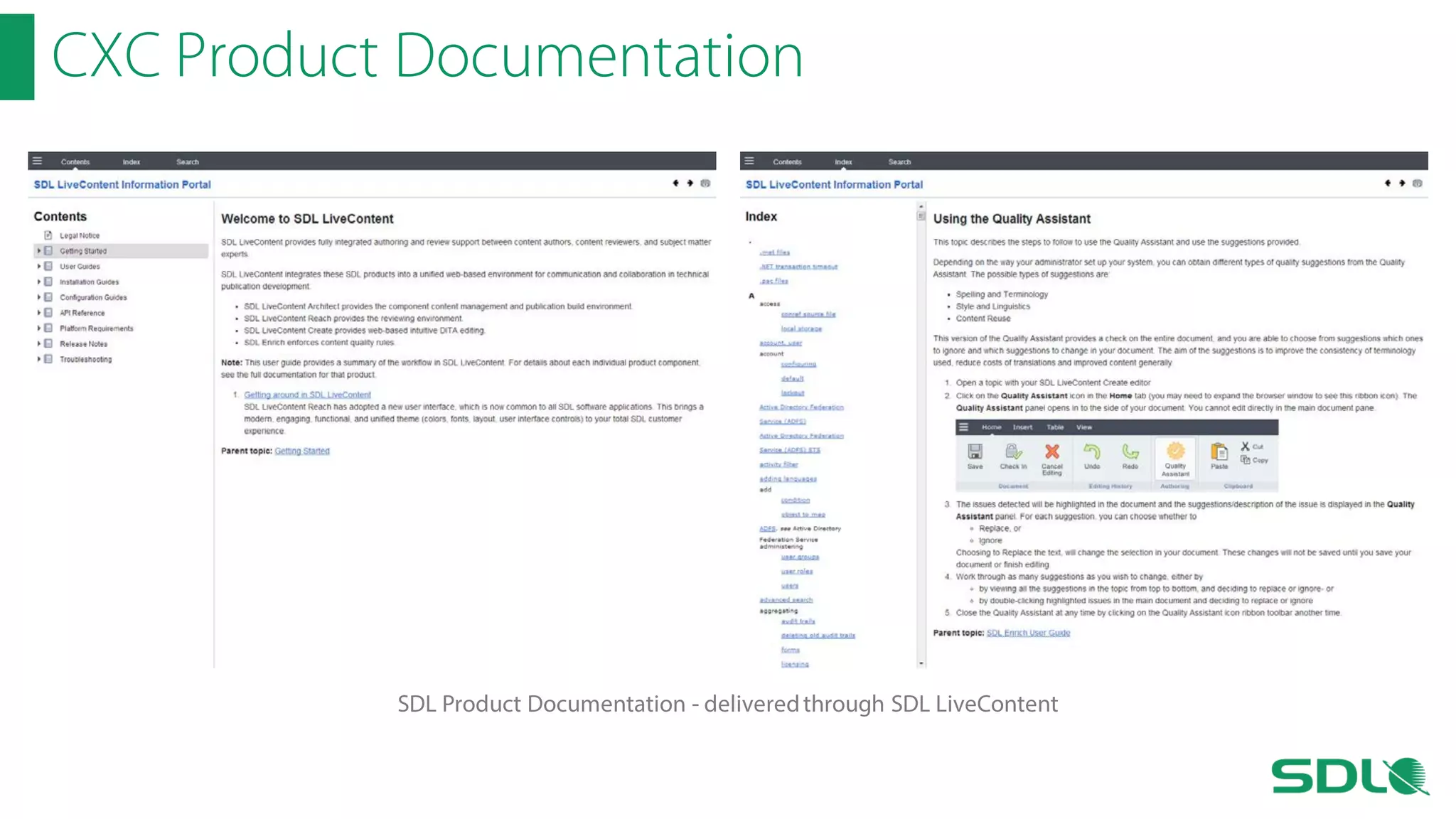
CXC Product Documentation

SDL Product Documentation - delivered through SDL LiveContent
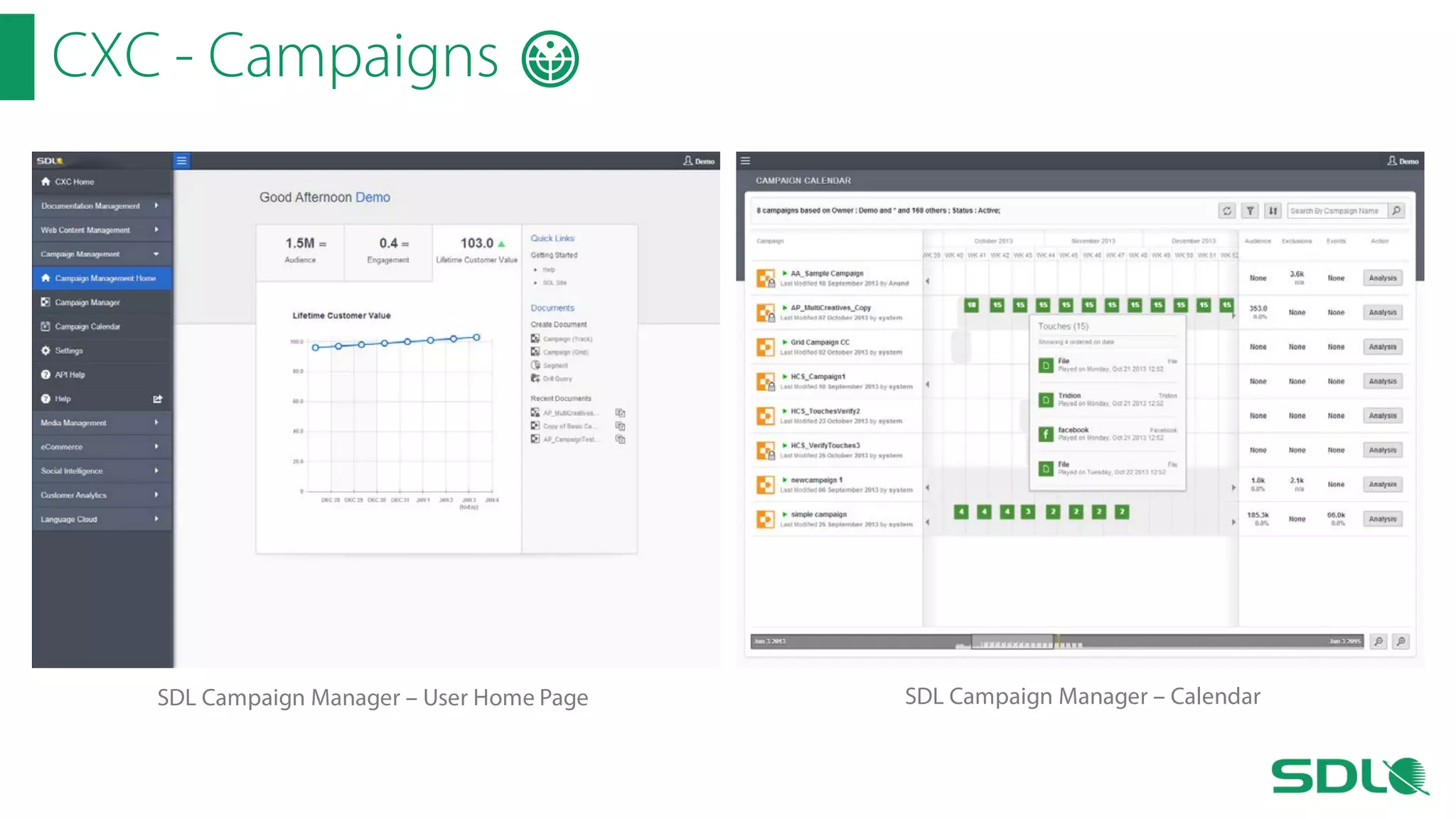
CXC - Campaigns

SDL Campaign Manager – User Home Page

SDL Campaign Manager – Calendar
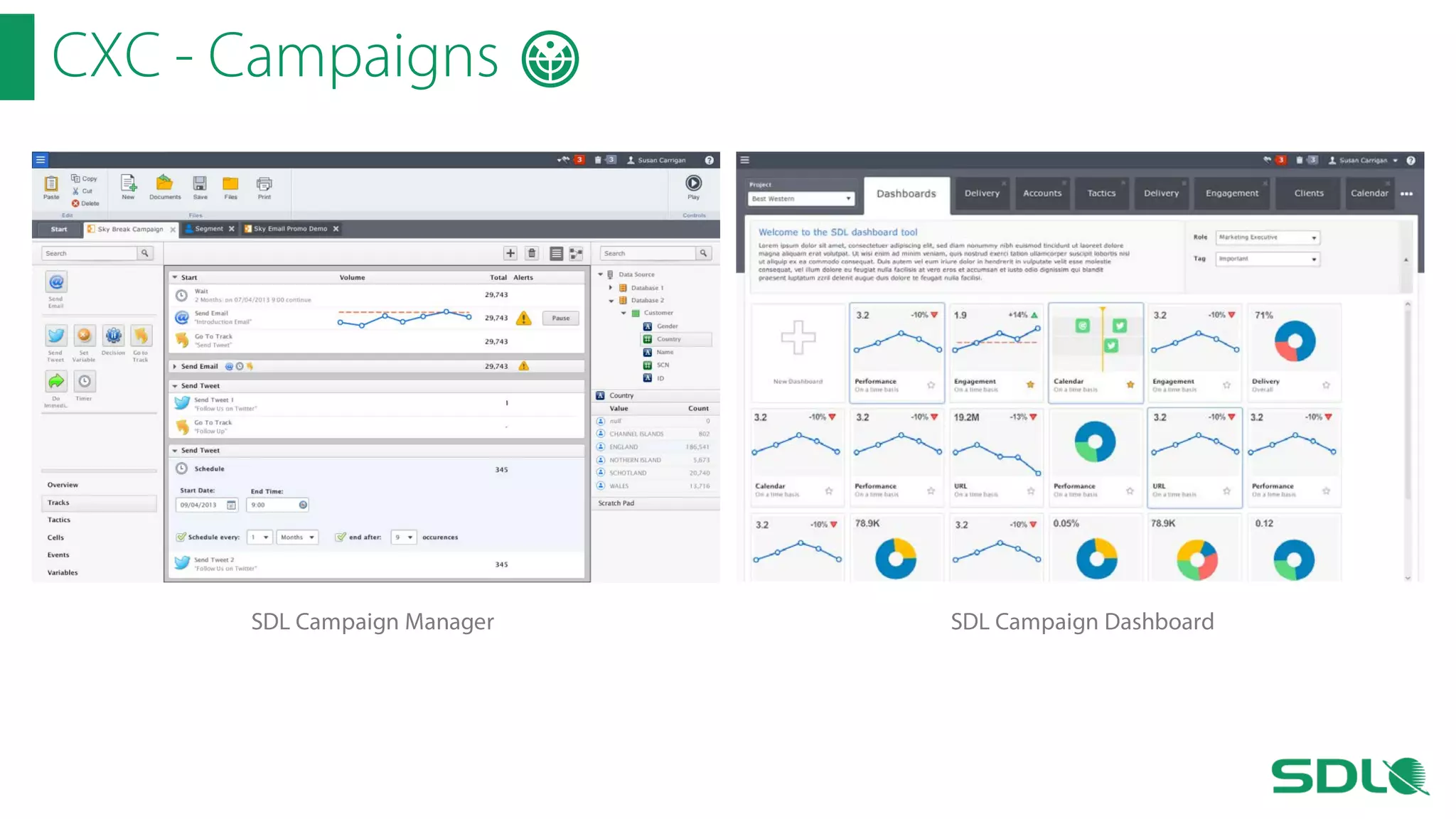
CXC - Campaigns

SDL Campaign Manager

SDL Campaign Dashboard
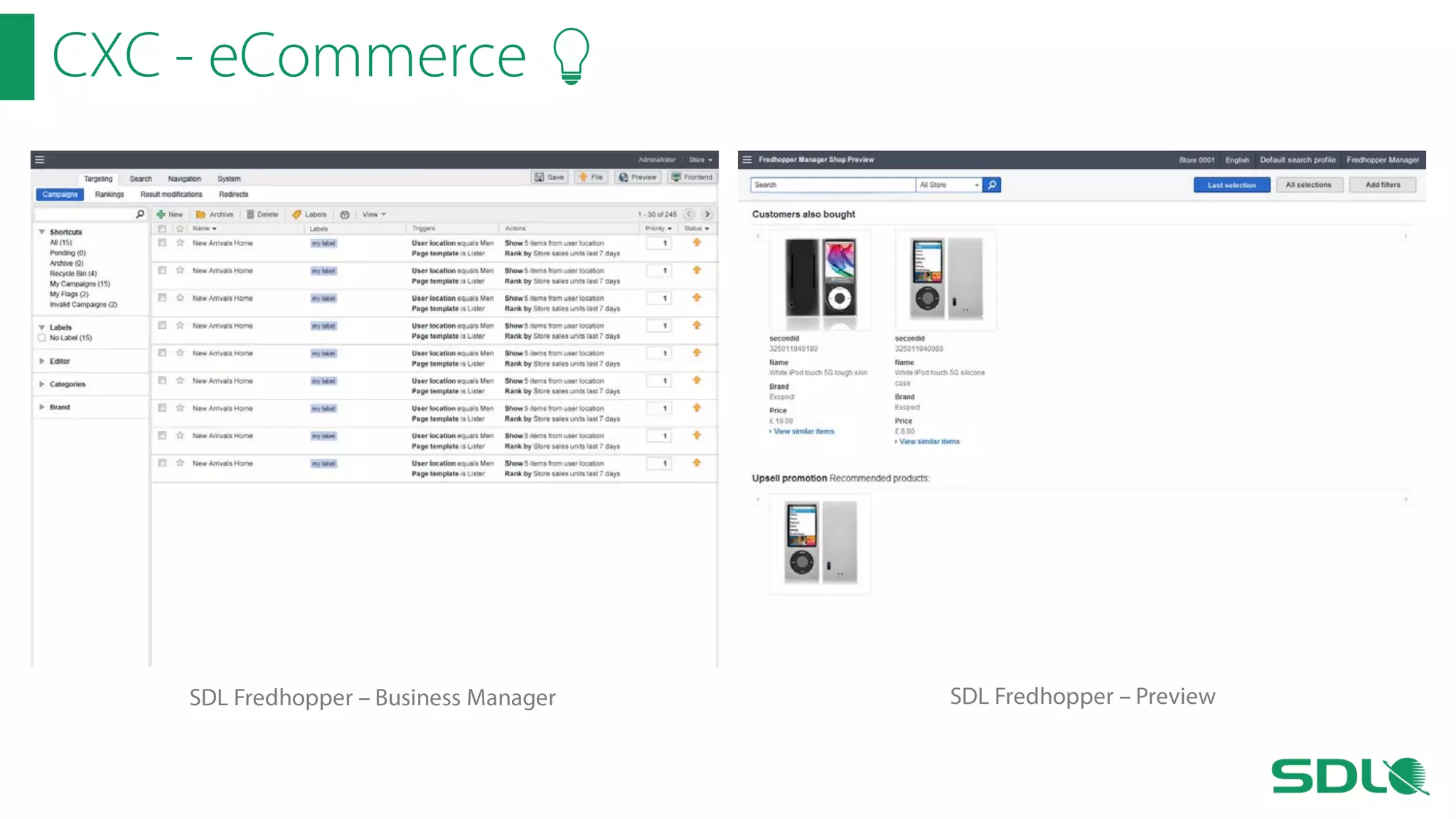
CXC - eCommerce

SDL Fredhopper – Business Manager

SDL Fredhopper – Preview
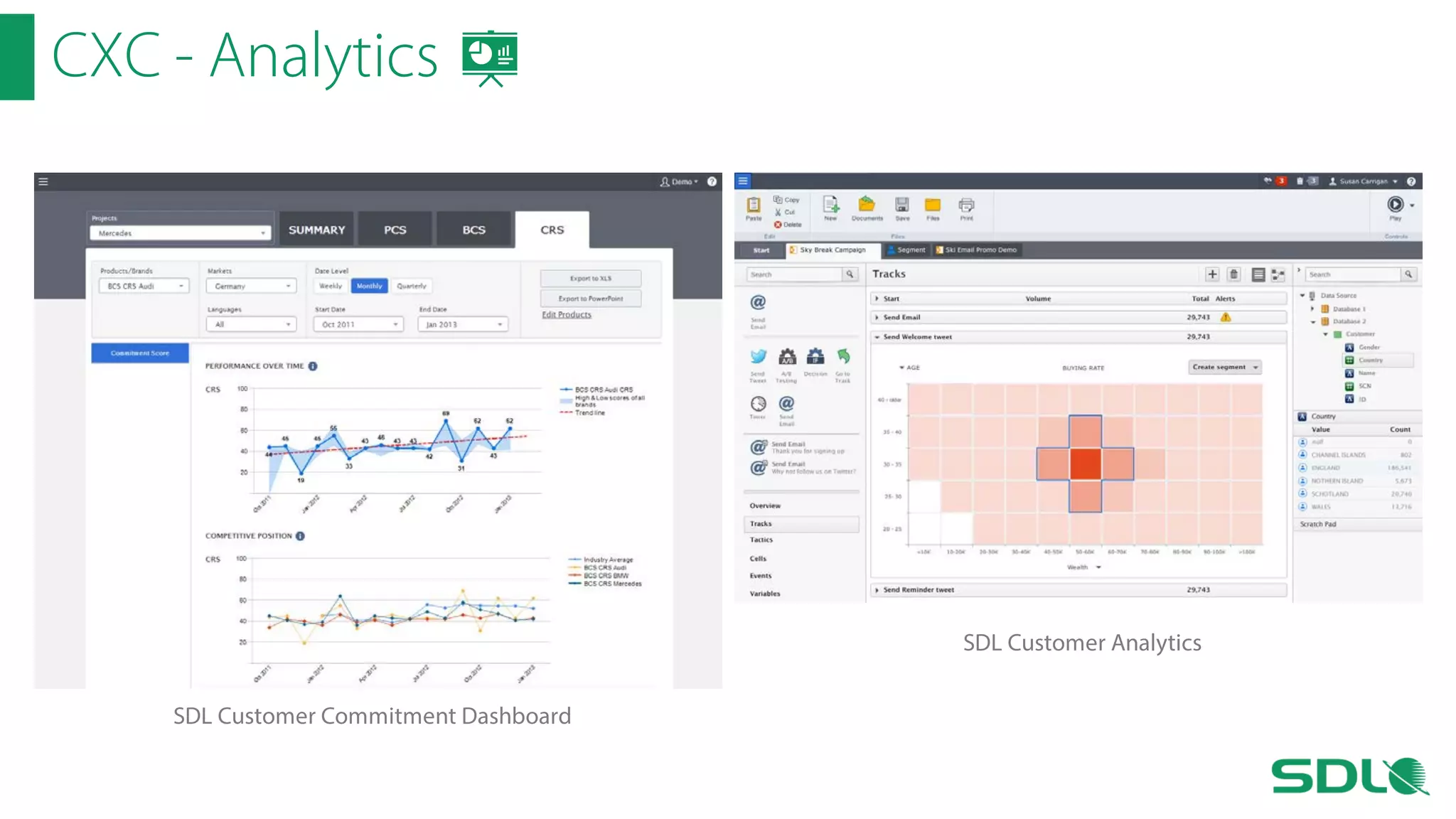
CXC - Analytics

SDL Customer Analytics
SDL Customer Commitment Dashboard
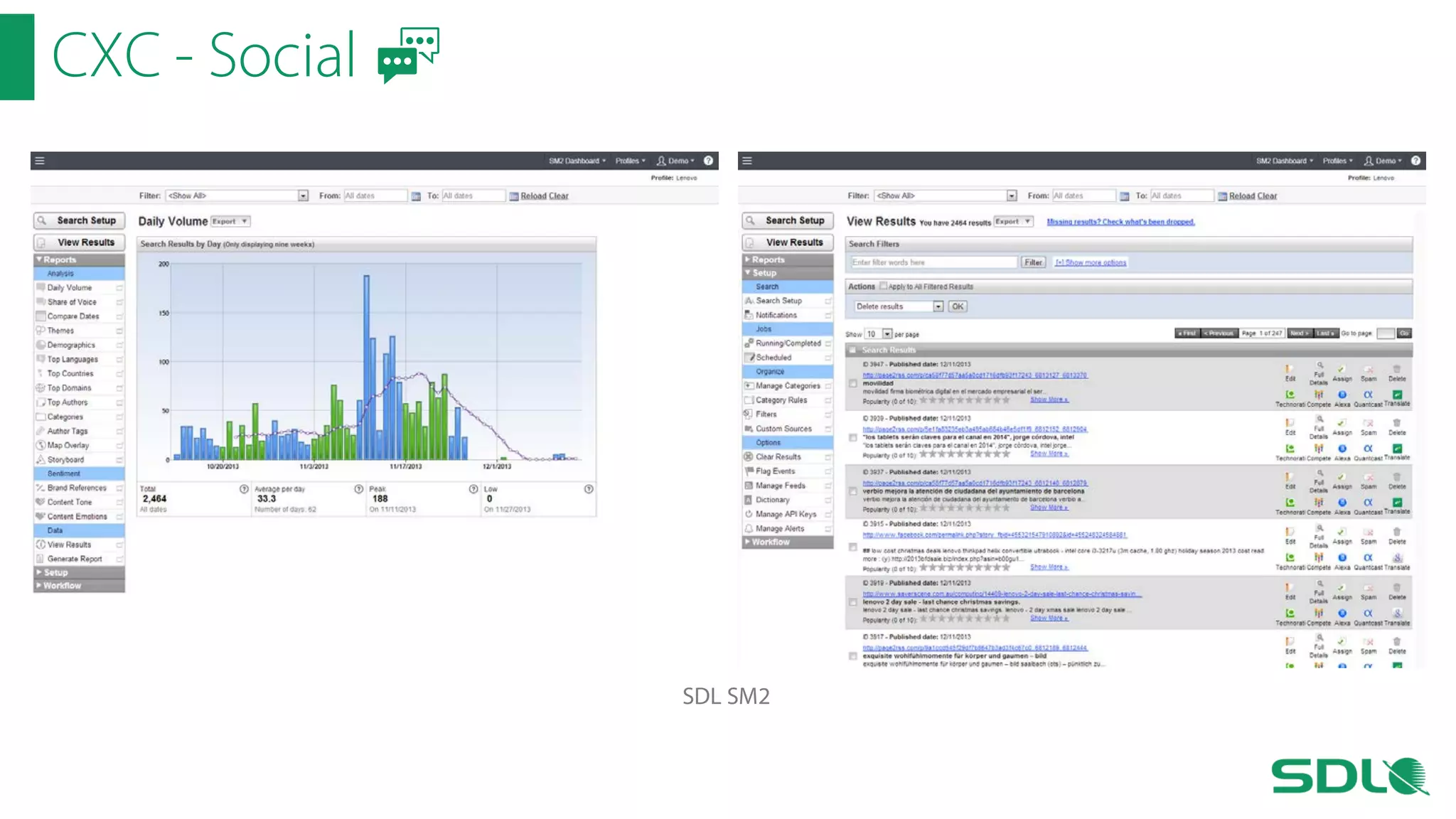
CXC - Social

SDL SM2
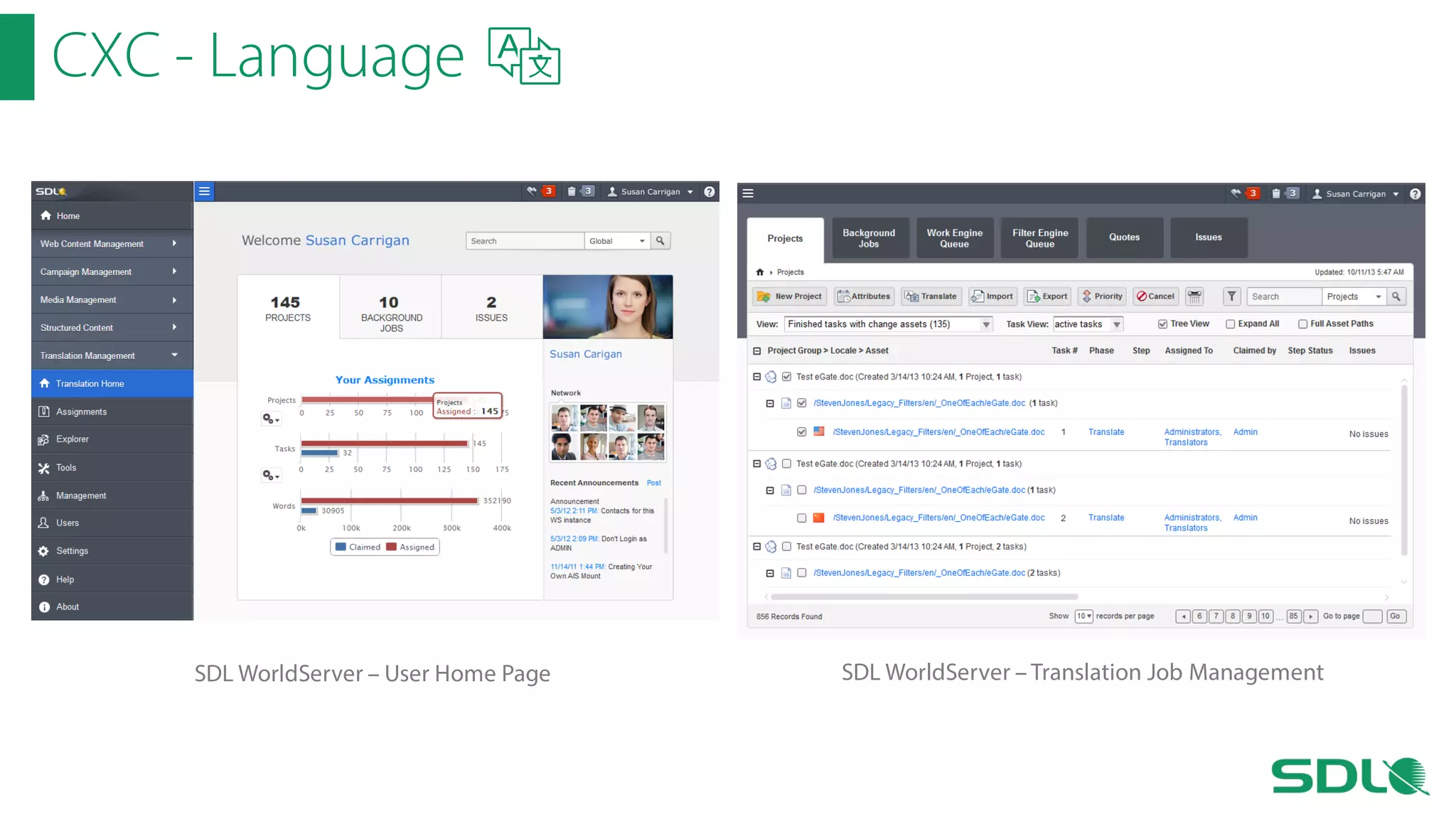
CXC - Language

SDL WorldServer – User Home Page

SDL WorldServer – Translation Job Management
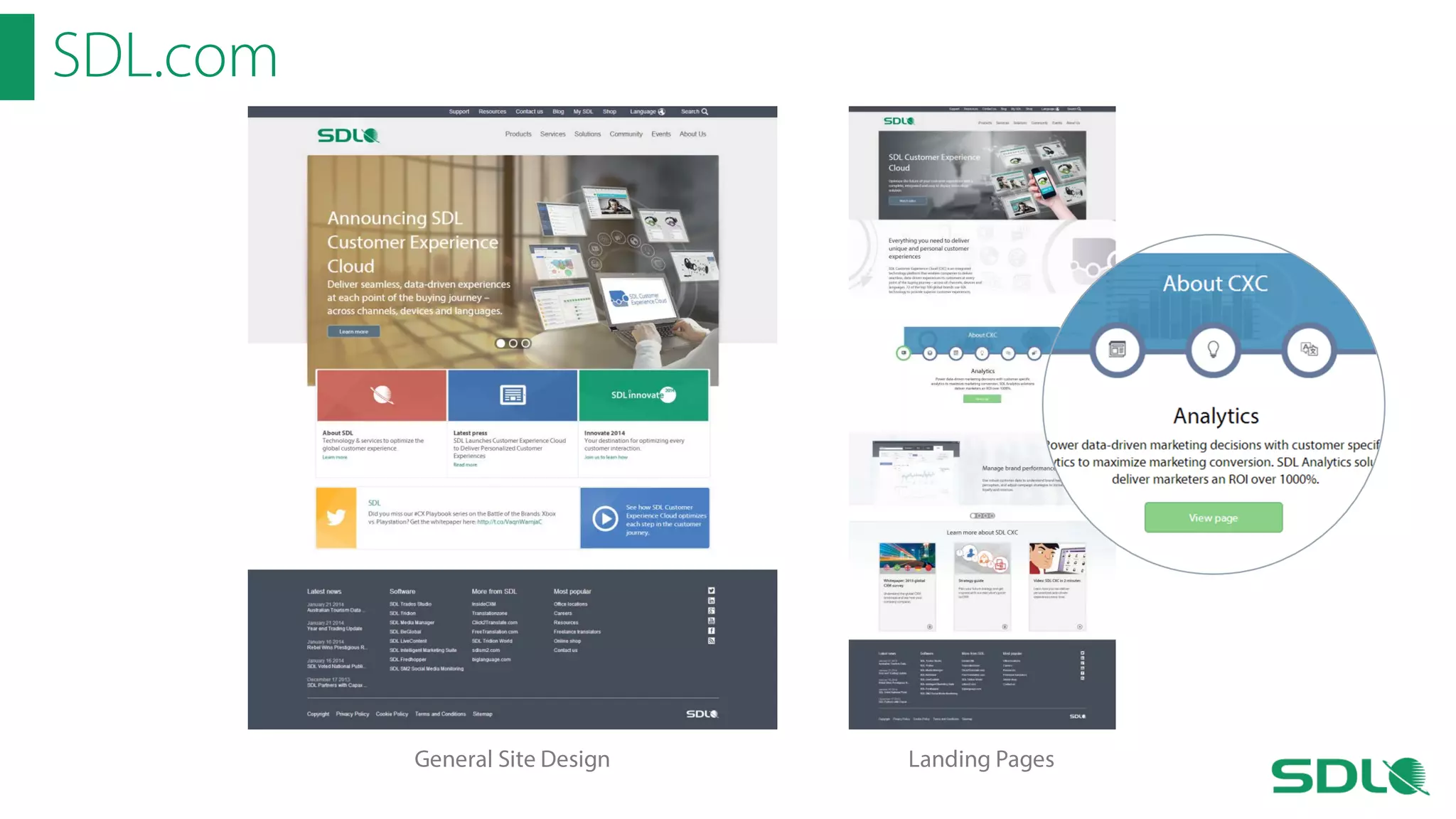
SDL.com

General Site Design

Landing Pages
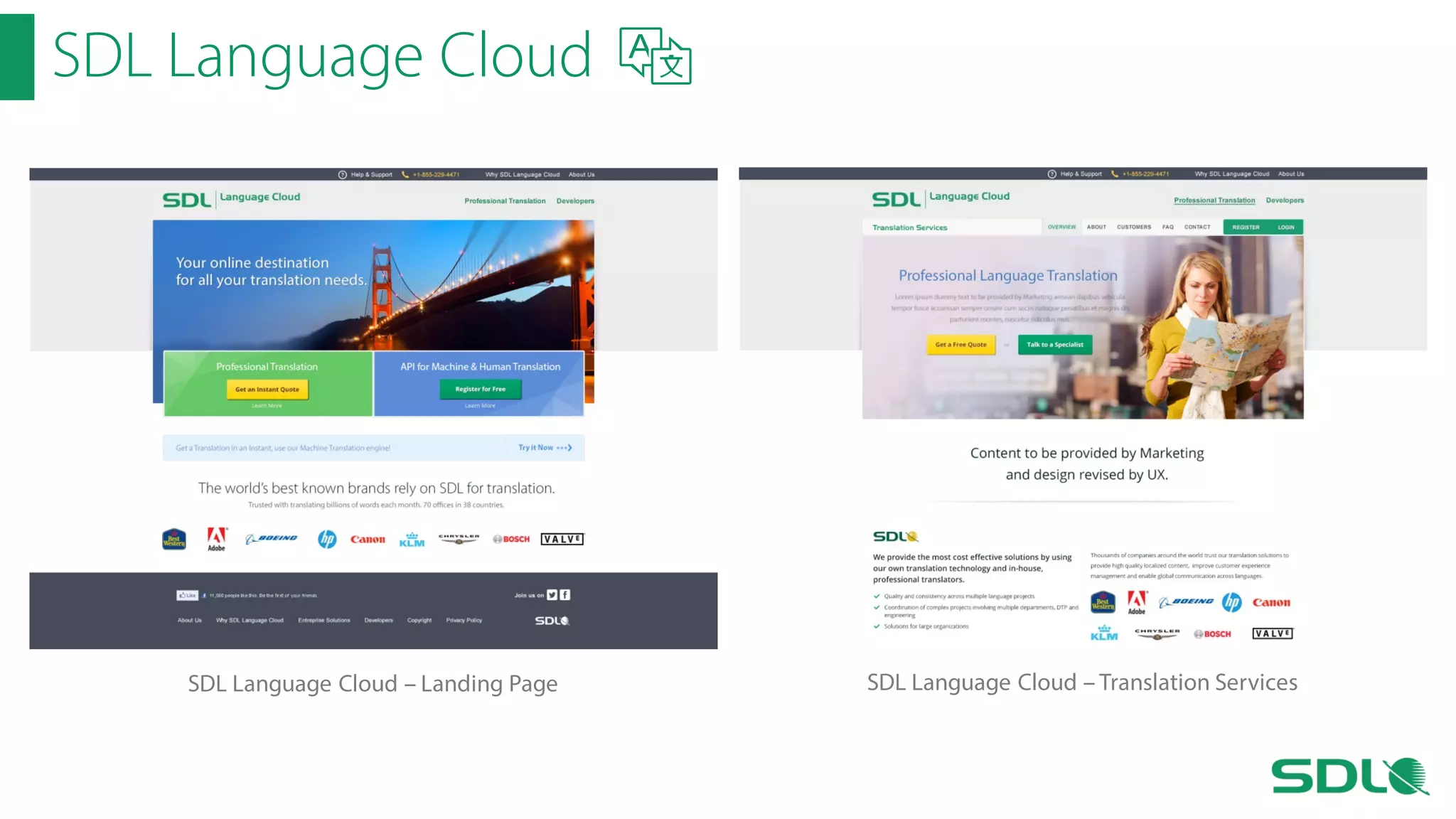
SDL Language Cloud

SDL Language Cloud – Landing Page

SDL Language Cloud – Translation Services
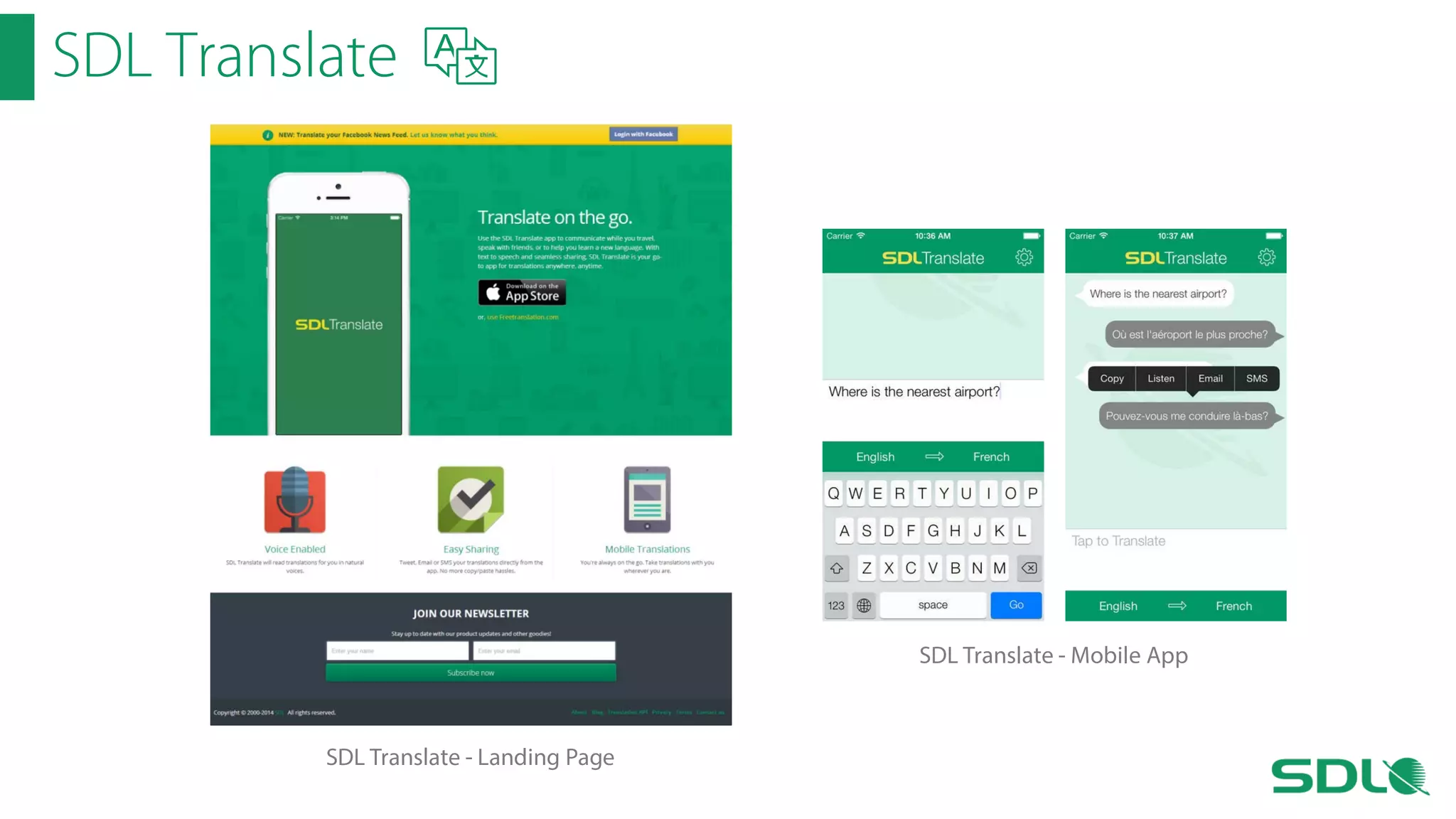
SDL Translate

SDL Translate - Mobile App

SDL Translate - Landing Page
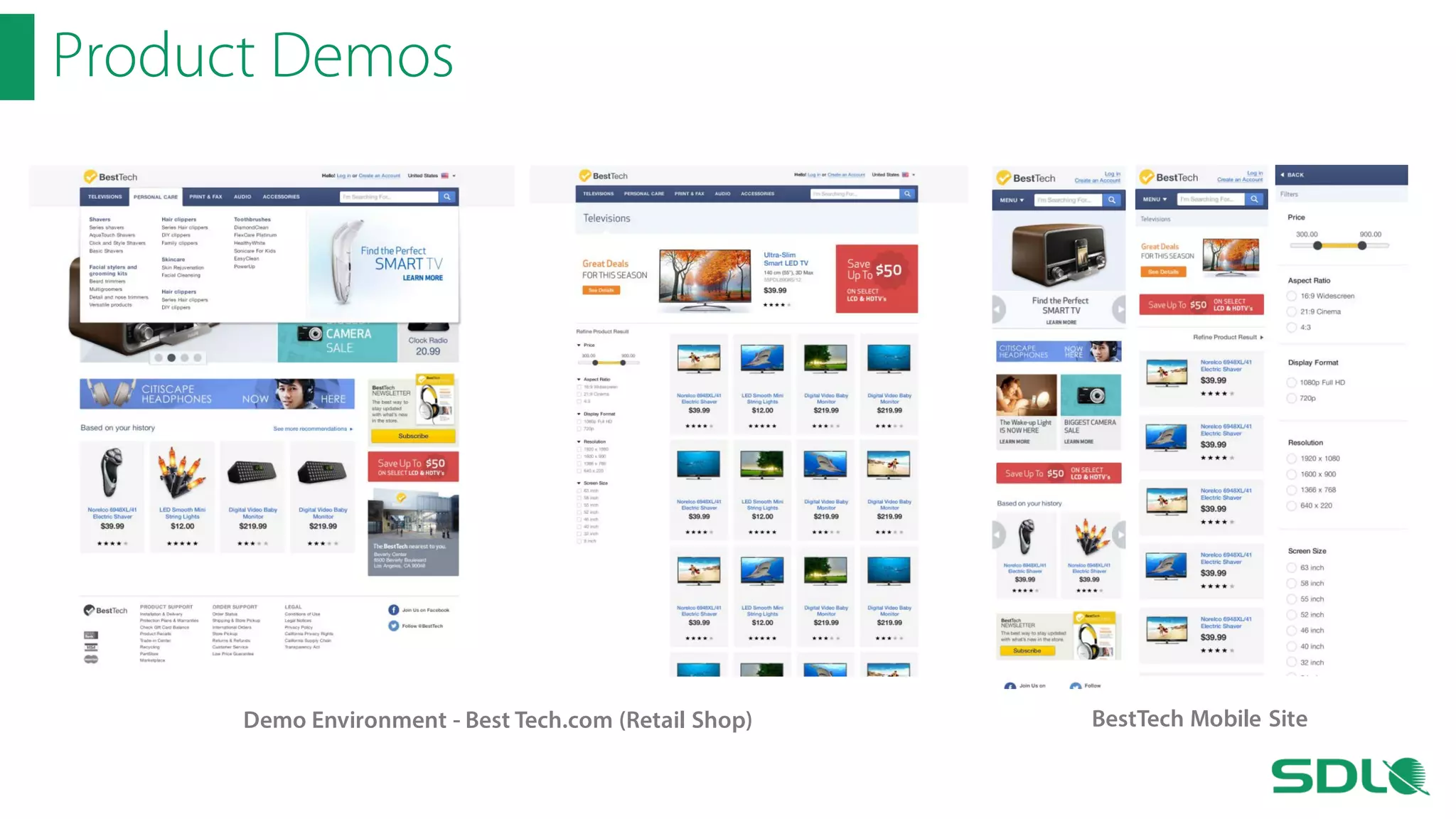
Product Demos

Demo Environment - Best Tech.com (Retail Shop)

BestTech Mobile Site
Summary
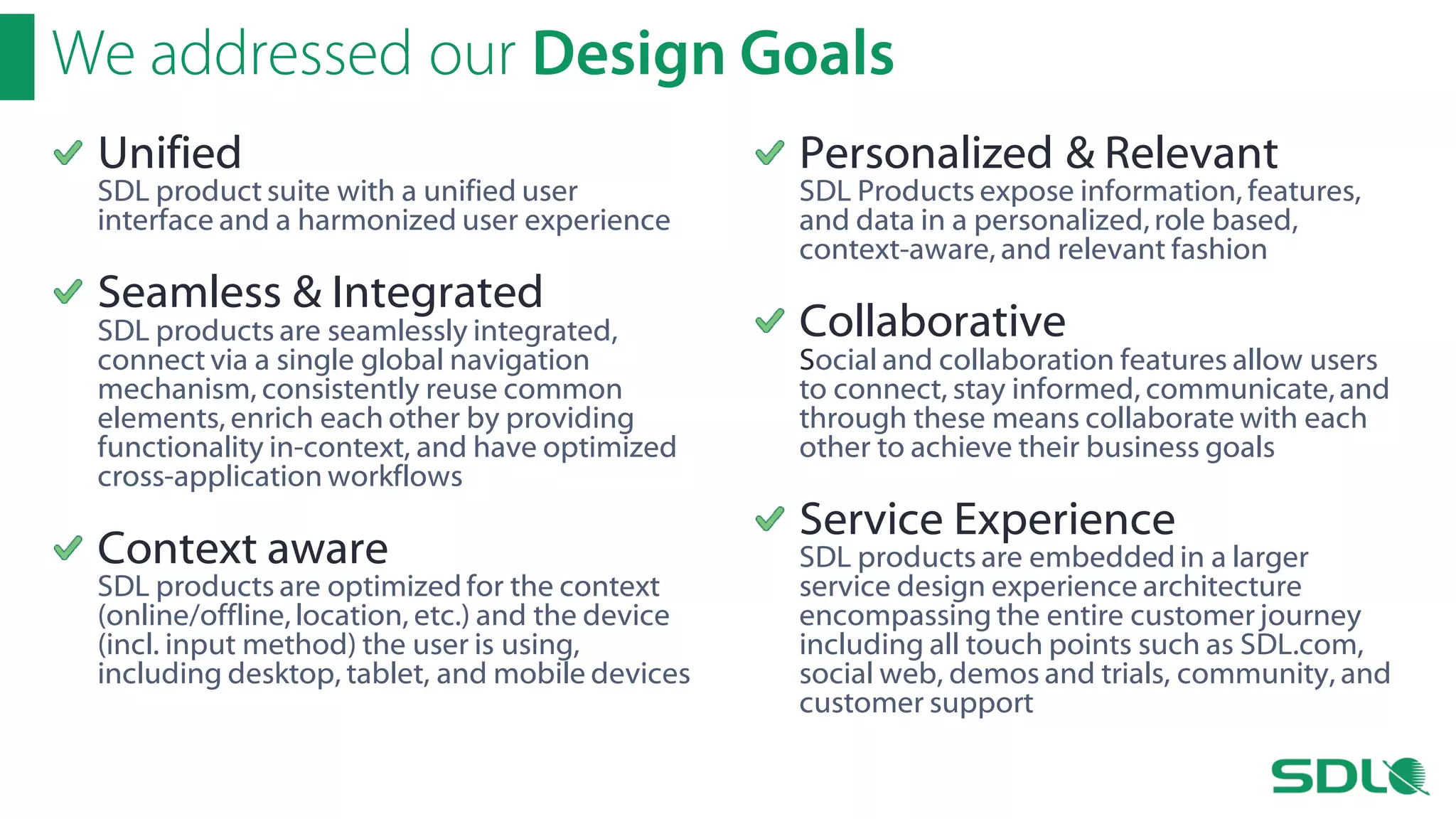
We addressed our Design Goals
Unified

SDL product suite with a unified user
interface and a harmonized user experience

Seamless & Integrated

SDL products are seamlessly integrated,
connect via a single global navigation
mechanism, consistently reuse common
elements, enrich each other by providing
functionality in-context, and have optimized
cross-application workflows

Context aware

SDL products are optimized for the context
(online/offline, location, etc.) and the device
(incl. input method) the user is using,
including desktop, tablet, and mobile devices

Personalized & Relevant

SDL Products expose information, features,
and data in a personalized, role based,
context-aware, and relevant fashion

Collaborative

Social and collaboration features allow users
to connect, stay informed, communicate, and
through these means collaborate with each
other to achieve their business goals

Service Experience

SDL products are embedded in a larger
service design experience architecture
encompassing the entire customer journey
including all touch points such as SDL.com,
social web, demos and trials, community, and
customer support
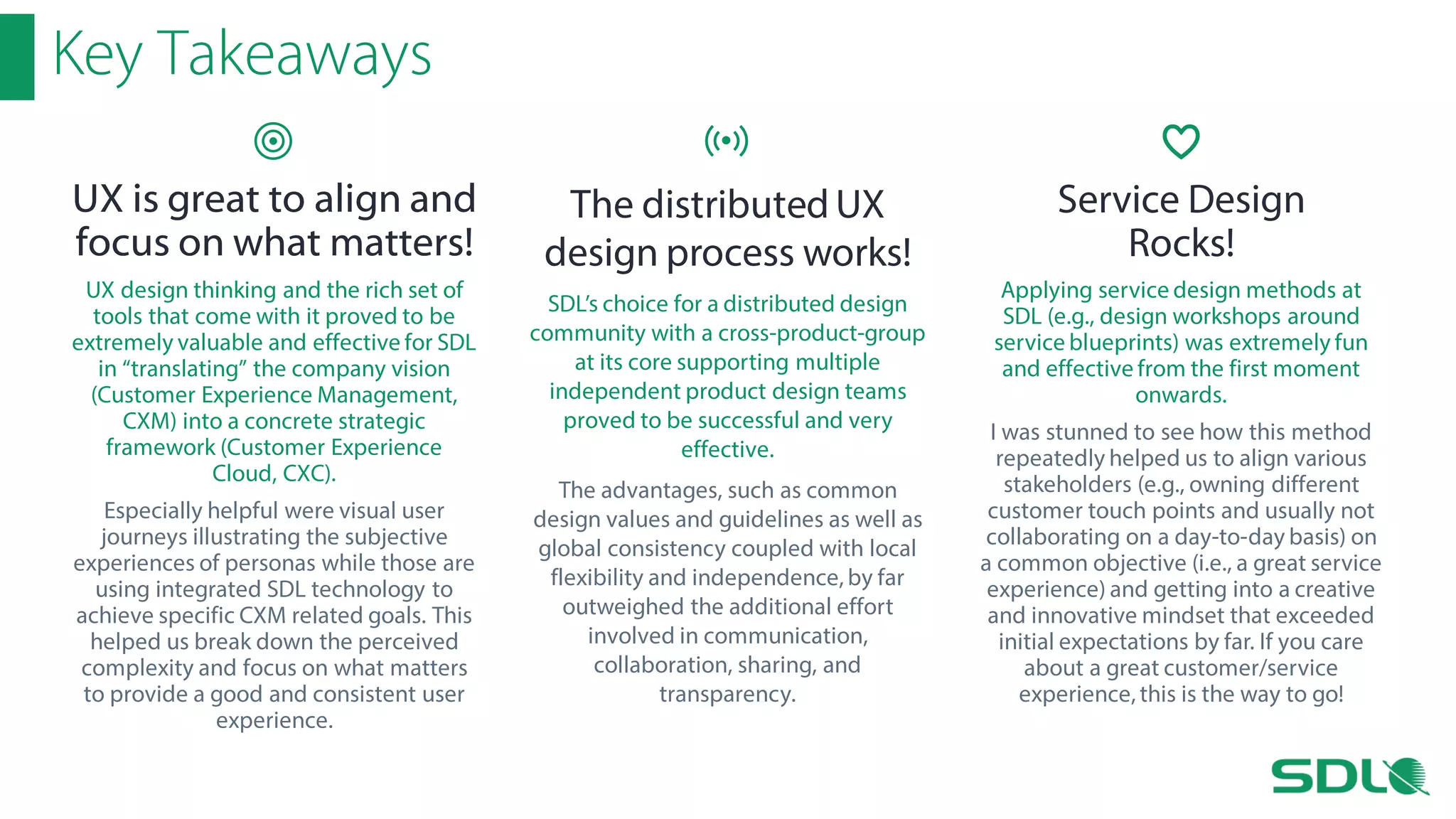
Key Takeaways
UX is great to align and
focus on what matters!
UX design thinking and the rich set of
tools that come with it proved to be
extremely valuable and effective for SDL
in “translating” the company vision
(Customer Experience Management,
CXM) into a concrete strategic
framework (Customer Experience
Cloud, CXC).
Especially helpful were visual user
journeys illustrating the subjective
experiences of personas while those are
using integrated SDL technology to
achieve specific CXM related goals. This
helped us break down the perceived
complexity and focus on what matters
to provide a good and consistent user
experience.

The distributed UX
design process works!
SDL’s choice for a distributed design
community with a cross-product-group
at its core supporting multiple
independent product design teams
proved to be successful and very
effective.
The advantages, such as common
design values and guidelines as well as
global consistency coupled with local
flexibility and independence, by far
outweighed the additional effort
involved in communication,
collaboration, sharing, and
transparency.

Service Design
Rocks!
Applying service design methods at
SDL (e.g., design workshops around
service blueprints) was extremely fun
and effective from the first moment
onwards.
I was stunned to see how this method
repeatedly helped us to align various
stakeholders (e.g., owning different
customer touch points and usually not
collaborating on a day-to-day basis) on
a common objective (i.e., a great service
experience) and getting into a creative
and innovative mindset that exceeded
initial expectations by far. If you care
about a great customer/service
experience, this is the way to go!
Thank You!
Questions, Feedback? Mail or Follow me!
Links and References
SDL Customer Experience Cloud
SDL Website
SDL Customer Experience Cloud
SDL Customer Experience Cloud Video
SDL Translate App

References
Meet Generation C: The Connected Customer (Brian Solis)
Enterprise Social Networking is More Than Facebook Behind a Firewall (Brian Solis)
Designing for Multi-touchpoint Experiences (Jamin Hegeman on Service Design)
Redesigning Google: how Larry Page engineered a beautiful revolution (The Verge)
A Rare Peek At The Guidelines That Dictate Google's Graphic Design (Fast Company Design)
proudly designed in

Amsterdam (NL) | Bristol (UK) | Cluj (RO) | Los Angeles (US) | Mechele (BE) | Seattle (US)

UX & UI Design behind SDL’s Customer Experience Cloud

  • 1.
    Designing the CXC UX& UI Design behind SDL’s Customer Experience Cloud Philipp Engel, Group UX Director, SDL
  • 2.
    This presentation illustratesthe journey SDL’s design community went through over the course of the last few years. As part of that process, UX design thinking proved to be an invaluable transformational element and an innovational catalyst in transforming a set of disconnected and separate products into one consistent service offering, the SDL Customer Experience Cloud.
  • 3.
  • 4.
    SDL in 2010- Disconnected UI’s and UX
  • 5.
    SDL in 2012– Aligned UI’s but disconnected UX
  • 6.
    The world changedfast, enterprises were slow to catch up…
  • 7.
    Some trends wesaw starting to affect the enterprise
  • 8.
    Some trends wesaw starting to affect the enterprise Generation C Connected all the time The Social Enterprise People, not files, are the center of activity Consumerization & Software as a Service Mobile Computing The rise of mobile PCs over desktop PCs Touch & Gesture Interaction as a primary input method
  • 9.
  • 10.
    One SDL Experience- Design Goals • Unified SDL product suite with a unified user interface and a harmonized user experience • Seamless & Integrated SDL products are seamlessly integrated, connect via a single global navigation mechanism, consistently reuse common elements, enrich each other by providing functionality in-context, and have optimized cross-application workflows • Context aware SDL products are optimized for the context (online/offline, location, etc.) and the device (incl. input method) the user is using, including desktop, tablet, and mobile devices • Personalized & Relevant SDL Products expose information, features, and data in a personalized, role based, contextaware, and relevant fashion • Collaborative Social and collaboration features allow users to connect, stay informed, communicate, and through these means collaborate with each other to achieve their business goals • Service Experience SDL products are embedded in a larger service design experience architecture encompassing the entire customer journey including all touch points such as SDL.com, social web, demos and trials, community, and customer support
  • 11.
    One SDL Experience– It’s a Journey! Customer Journey via Touchpoints Website Customer Domain & Product Content Manage Account Support & Documentation Demos, Videos, Webinars Community (Blogs & Forums) Products & Services Marketplaces, In-app Purchases
  • 12.
    One SDL Experience- Challenges • Aligning product roadmaps Different markets, industries, release cycles • Fast moving development teams Distributed development teams, all need to move fast, different team sizes, cultures, office locations, time zones, maturity level, etc. • Aligning UX design processes Centralized or decentralized structure? How to best support SCRUM teams? How to align but reduce dependencies ? How to avoid UX becoming the bottleneck? • Different UI technology Different HTML frameworks, Silverlight, Flash, desktop products • On-premise vs. cloud-based Some products on-premise, some cloud-based, some mixed (hybrid-cloud) • Different product types Some are 1) “tool boxes” that require implementation projects, 2) some work out of the box but require customization, 3) some SAAS Requires an approach that addresses goals while respecting these challenges
  • 13.
    How to getthere… Approach & Process
  • 14.
    Inspiration from adifferent field… High Fashion
  • 15.
    Inspiration from adifferent field… High Fashion Mass Collection
  • 16.
  • 17.
    More Inspiration: Google’sProject Kennedy Larry Page Project Kennedy became CEO of Google 2011 “hey everyone, we’re going to redesign all of our products, and we need it by this summer…” Cross-product initiative, vision and mandate to redesign all major apps and keep their design consistent within fast moving teams Product Design Teams Product teams act independently but with the goal to "balance the experience across all Google products with the need to move fast and deliver great solutions for our users” Design War Room Google’s senior designers gathered and decided on design principles and how to apply them UXA Team User Experience Alignment - Institutionalization of Project Kennedy principles, goal to develop common design language ”Focus on refinement, white space, cleanliness, elasticity, usefulness, and most of all simplicity”
  • 18.
    SDL UX DesignCommunity
  • 19.
    SDL UX DesignCommunity UX Community Central UX group to define guidelines and support Focus on strategy and reference designs Decentralized, independent, flexible UX teams Focus on products, projects, and detailed designs Our Manifesto Collaboration 1. We are open, collaborative, and support each other • Weekly UX Community Meeting 2. Because we are distributed we communicate and share a lot to create transparency • Yearly UX Summit 3. We see ourselves as a team, rather than solo players 4. We focus on results rather than on process 5. We work hard, but also celebrate victories! • Weekly UX Product Line Meetings • “UX Walls” in Team Spaces • All Designs on UX WIKI
  • 20.
    “Design is howit works” User Experience Design
  • 21.
  • 22.
    “The Frame Model” Alignmentof Product Strategy Persona based approach focusing on end-to-end CXM use cases Social Features Single sign-on, Feeds, Notifications, Updates, Workflow Assignments, etc. Unified & Flexible UI Touch/non-touch interaction Works cross-devices and platforms Different functionality on different devices Slide-in Navigation that “connects” different applications
  • 23.
    “The Frame Model”Concept Header with User Items Navigation Pane Content Area (Applications, Dashboards, Shared Sections)
  • 24.
    Navigation Pane -Design Iterations
  • 25.
    Screen Archetypes toAlign Interaction Models Existing Applications Screen Archetypes Screen Archetype for Task A Analysis of existing applications for patterns & commonalities (specifically screens that are different but share the same purpose, serve the same task) Screen Archetype for Task B Defining the default design for a particular task (e.g. browsing content , editing rich text, etc.) in a product in form of a default screen layout incl. interaction and behavior
  • 26.
    Screen Archetypes toAlign Interaction Models User Home Page Personalized home page of an application providing relevant information, data, and quick access to recent projects etc. Application Landing Pages Suggested actions or items to avoid empty list views
  • 27.
    Screen Archetypes toAlign Interaction Models Content Browsers Navigate (hierarchical) content structures & preview or open items Rich Text Editors Edit rich text in WYSIWYG fashion
  • 28.
    Screen Archetypes toAlign Interaction Models Collaboration Comments and reviews as part of workflows Media Editing Manage and publish multimedia
  • 29.
    Screen Archetypes toAlign Interaction Models Data Visualization Dashboards
  • 30.
  • 31.
    UX Design perProduct: Personas
  • 32.
    UX Design perProduct: UX Walls in Team Spaces
  • 33.
    UX Design perProduct: Scenarios & User Journeys
  • 34.
    Service Design User Experience ServiceExperience Experience between person and single touchpoint, usually a digital product Orchestrated experience between all parts of the service, from people to objects to places to interfaces From: Jamin Hegeman (Adaptive Path), Service Design Workshop - UX Week 2013
  • 35.
    Service Design From: JaminHegeman (Adaptive Path), Service Design Workshop - UX Week 2013
  • 36.
    Service Design Workshops:Service Blueprints
  • 37.
    A unique andrecognizable brand identity… Visual & UI Design
  • 38.
    Carbon 2 –Design Theme Branding Colors Icon Colors Typography Refreshed Logo User Interface Colors
  • 39.
    Carbon 2 –UI Icons New set of custom icons Huge new set of vector based icons, In two flavors (color and monochromatic), pixel-perfect PNG export in 2 sizes, SVG for high-resolution displays
  • 40.
    Carbon 2 –UI Design for Screen Archetypes
  • 41.
    Carbon 2 –Default Controls
  • 42.
  • 43.
  • 44.
  • 45.
    It all comestogether… Design Applied to Products
  • 46.
    CXC - Web SDLTridion – User Home Page SDL Tridion – Web Sites Dashboard
  • 47.
    CXC - Web SDLTridion – Experience Manager SDL Tridion – Content Explorer
  • 48.
    CXC - Web SDLTridion – Targeting Rules SDL Tridion – Targeting Rules Details
  • 49.
    CXC - Web SDLTridion – Content Experiments SDL Tridion – Content Experiments Details
  • 50.
    CXC - Web SDLMediaManager – User Home Page SDL MediaManager – Media Explorer
  • 51.
    CXC - Web SDLMediaManager – Media Details & Editor SDL MediaManager – Settings
  • 52.
    CXC - Documentation SDLLiveContent – Login SDL LiveContent – User Home Page
  • 53.
    CXC - Documentation SDLLiveContent Reach – Collaboration Dashboard SDL LiveContent Architect
  • 54.
    CXC - Documentation SDLLiveContent Reach SDL LiveContent Create & Enrich
  • 55.
    CXC Product Documentation SDLProduct Documentation - delivered through SDL LiveContent
  • 56.
    CXC - Campaigns SDLCampaign Manager – User Home Page SDL Campaign Manager – Calendar
  • 57.
    CXC - Campaigns SDLCampaign Manager SDL Campaign Dashboard
  • 58.
    CXC - eCommerce SDLFredhopper – Business Manager SDL Fredhopper – Preview
  • 59.
    CXC - Analytics SDLCustomer Analytics SDL Customer Commitment Dashboard
  • 60.
  • 61.
    CXC - Language SDLWorldServer – User Home Page SDL WorldServer – Translation Job Management
  • 62.
  • 63.
    SDL Language Cloud SDLLanguage Cloud – Landing Page SDL Language Cloud – Translation Services
  • 64.
    SDL Translate SDL Translate- Mobile App SDL Translate - Landing Page
  • 65.
    Product Demos Demo Environment- Best Tech.com (Retail Shop) BestTech Mobile Site
  • 66.
  • 67.
    We addressed ourDesign Goals Unified SDL product suite with a unified user interface and a harmonized user experience Seamless & Integrated SDL products are seamlessly integrated, connect via a single global navigation mechanism, consistently reuse common elements, enrich each other by providing functionality in-context, and have optimized cross-application workflows Context aware SDL products are optimized for the context (online/offline, location, etc.) and the device (incl. input method) the user is using, including desktop, tablet, and mobile devices Personalized & Relevant SDL Products expose information, features, and data in a personalized, role based, context-aware, and relevant fashion Collaborative Social and collaboration features allow users to connect, stay informed, communicate, and through these means collaborate with each other to achieve their business goals Service Experience SDL products are embedded in a larger service design experience architecture encompassing the entire customer journey including all touch points such as SDL.com, social web, demos and trials, community, and customer support
  • 68.
    Key Takeaways UX isgreat to align and focus on what matters! UX design thinking and the rich set of tools that come with it proved to be extremely valuable and effective for SDL in “translating” the company vision (Customer Experience Management, CXM) into a concrete strategic framework (Customer Experience Cloud, CXC). Especially helpful were visual user journeys illustrating the subjective experiences of personas while those are using integrated SDL technology to achieve specific CXM related goals. This helped us break down the perceived complexity and focus on what matters to provide a good and consistent user experience. The distributed UX design process works! SDL’s choice for a distributed design community with a cross-product-group at its core supporting multiple independent product design teams proved to be successful and very effective. The advantages, such as common design values and guidelines as well as global consistency coupled with local flexibility and independence, by far outweighed the additional effort involved in communication, collaboration, sharing, and transparency. Service Design Rocks! Applying service design methods at SDL (e.g., design workshops around service blueprints) was extremely fun and effective from the first moment onwards. I was stunned to see how this method repeatedly helped us to align various stakeholders (e.g., owning different customer touch points and usually not collaborating on a day-to-day basis) on a common objective (i.e., a great service experience) and getting into a creative and innovative mindset that exceeded initial expectations by far. If you care about a great customer/service experience, this is the way to go!
  • 69.
  • 70.
    Links and References SDLCustomer Experience Cloud SDL Website SDL Customer Experience Cloud SDL Customer Experience Cloud Video SDL Translate App References Meet Generation C: The Connected Customer (Brian Solis) Enterprise Social Networking is More Than Facebook Behind a Firewall (Brian Solis) Designing for Multi-touchpoint Experiences (Jamin Hegeman on Service Design) Redesigning Google: how Larry Page engineered a beautiful revolution (The Verge) A Rare Peek At The Guidelines That Dictate Google's Graphic Design (Fast Company Design)
  • 71.
    proudly designed in Amsterdam(NL) | Bristol (UK) | Cluj (RO) | Los Angeles (US) | Mechele (BE) | Seattle (US)