PLM and Data Management in 21st Century

Oleg Shilovitsky
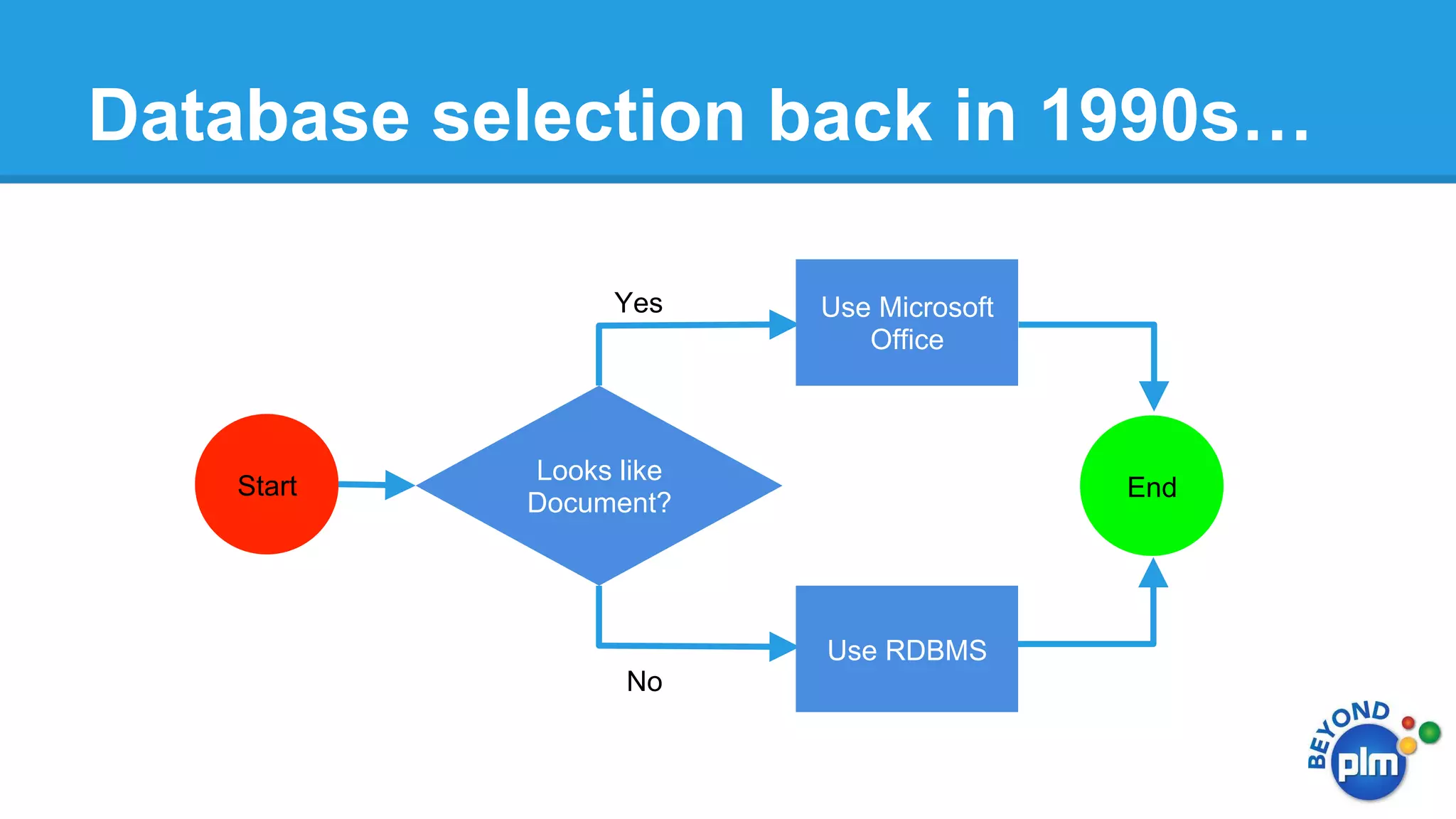
Database selection back in 1990s…
Yes

Start

Use Microsoft
Office

Looks like
Document?

No

End

Use RDBMS
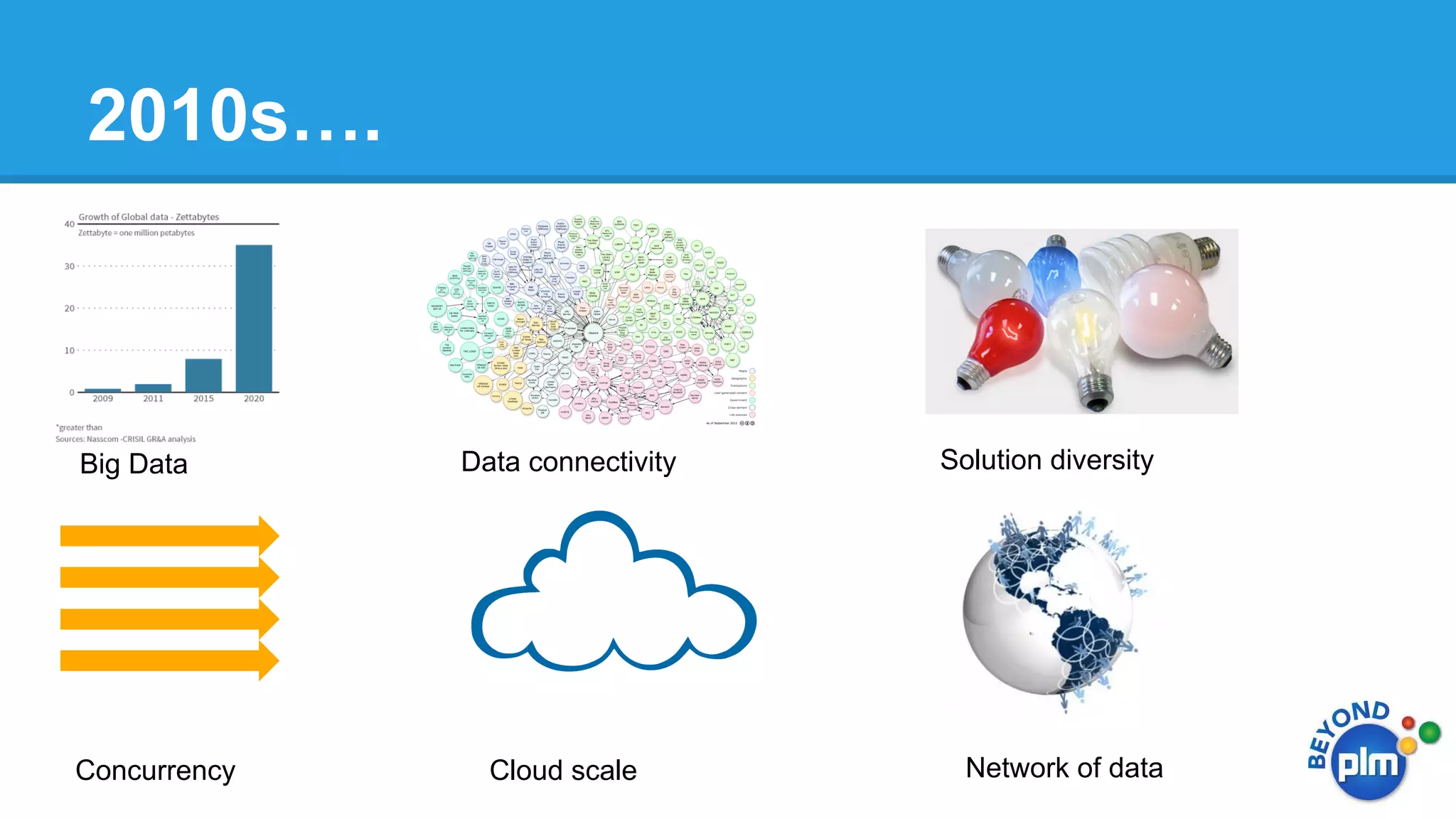
2010s….

Big Data

Concurrency

Data connectivity

Cloud scale

Solution diversity

Network of data
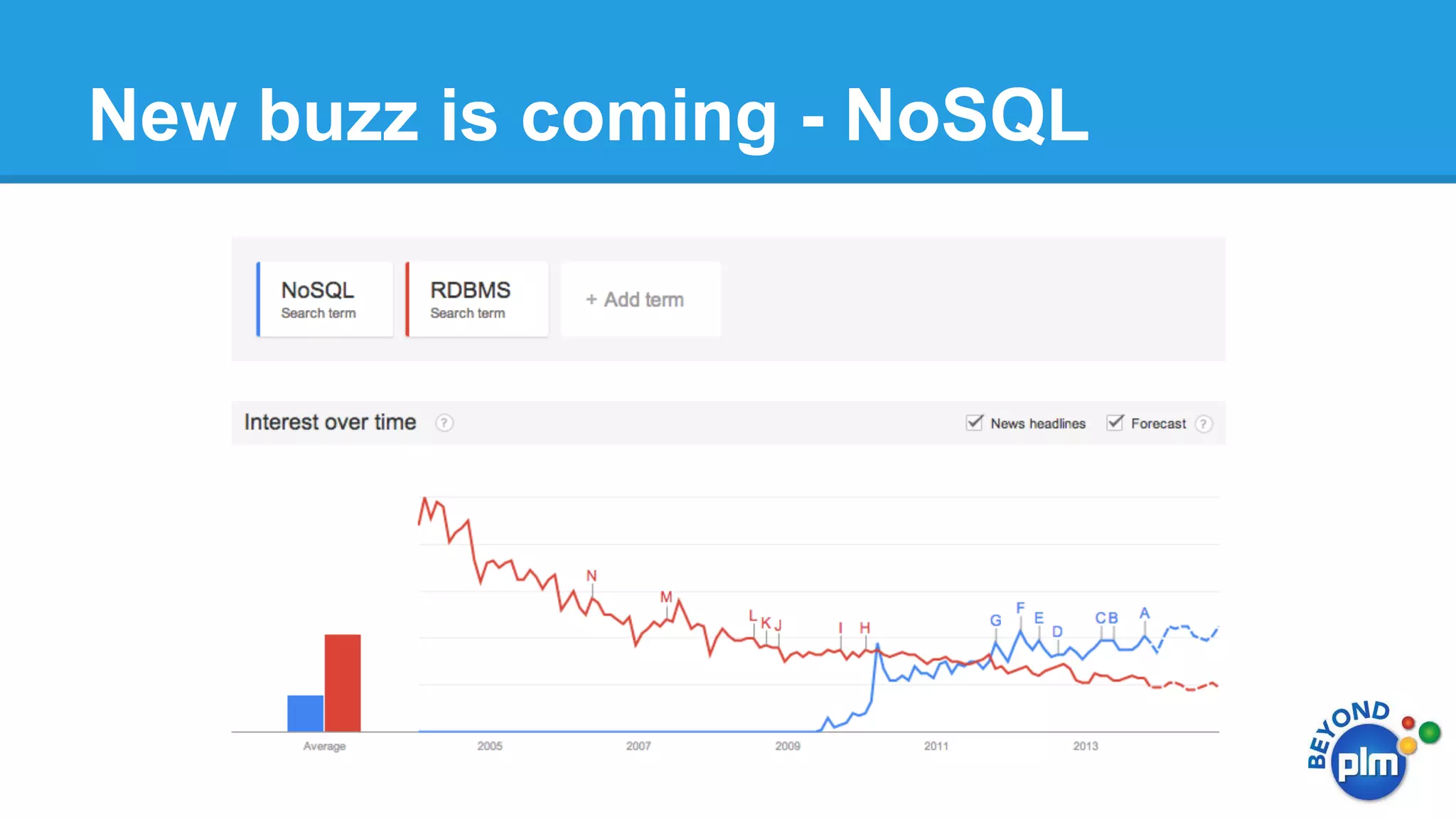
New buzz is coming - NoSQL
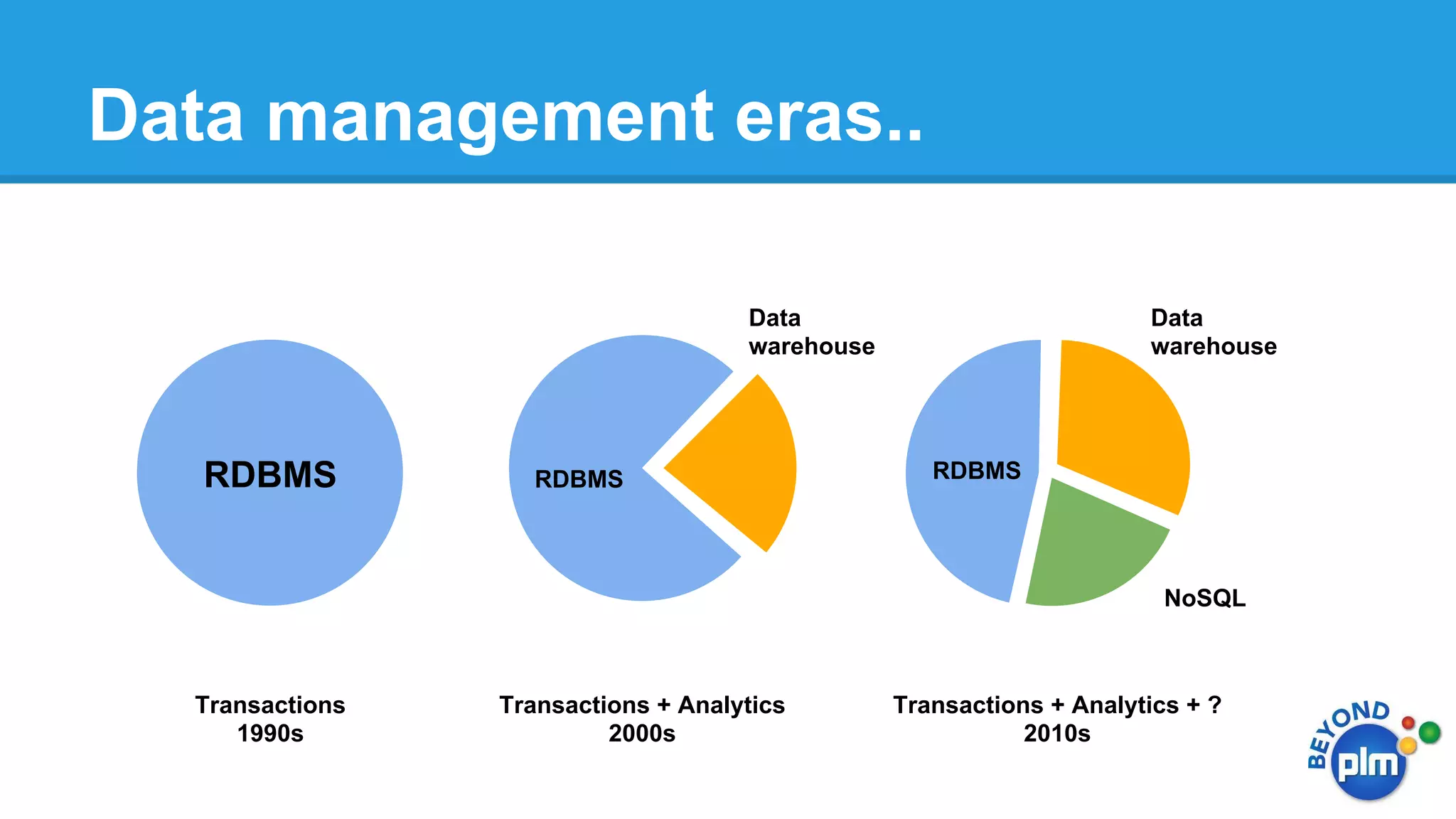
Data management eras..
Data
warehouse

RDBMS

RDBMS

Data
warehouse

RDBMS

NoSQL

Transactions
1990s

Transactions + Analytics
2000s

Transactions + Analytics + ?
2010s
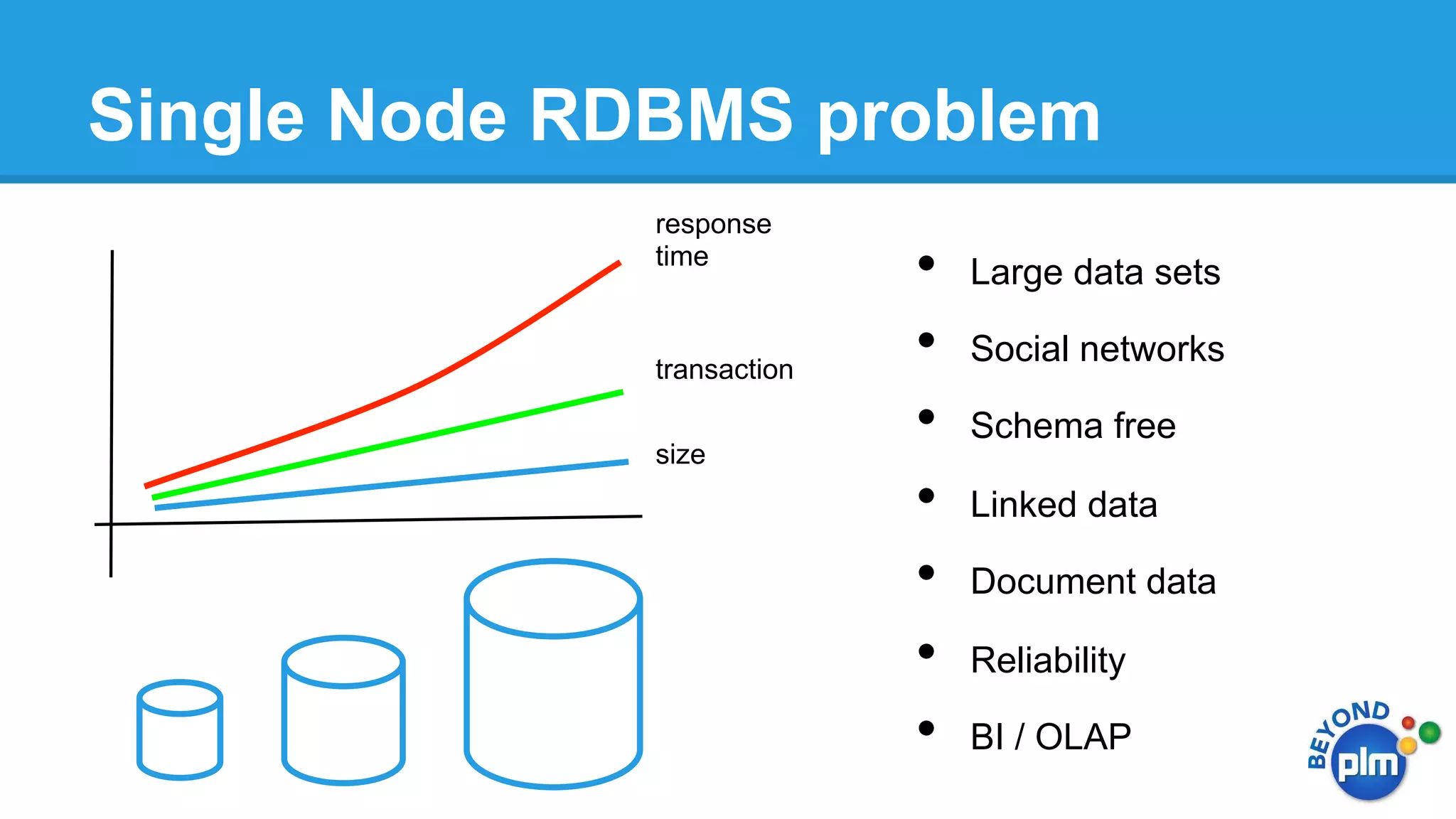
Single Node RDBMS problem
response
time

transaction
size

• 
• 
• 
• 
• 
• 
• 

Large data sets
Social networks
Schema free
Linked data
Document data
Reliability
BI / OLAP
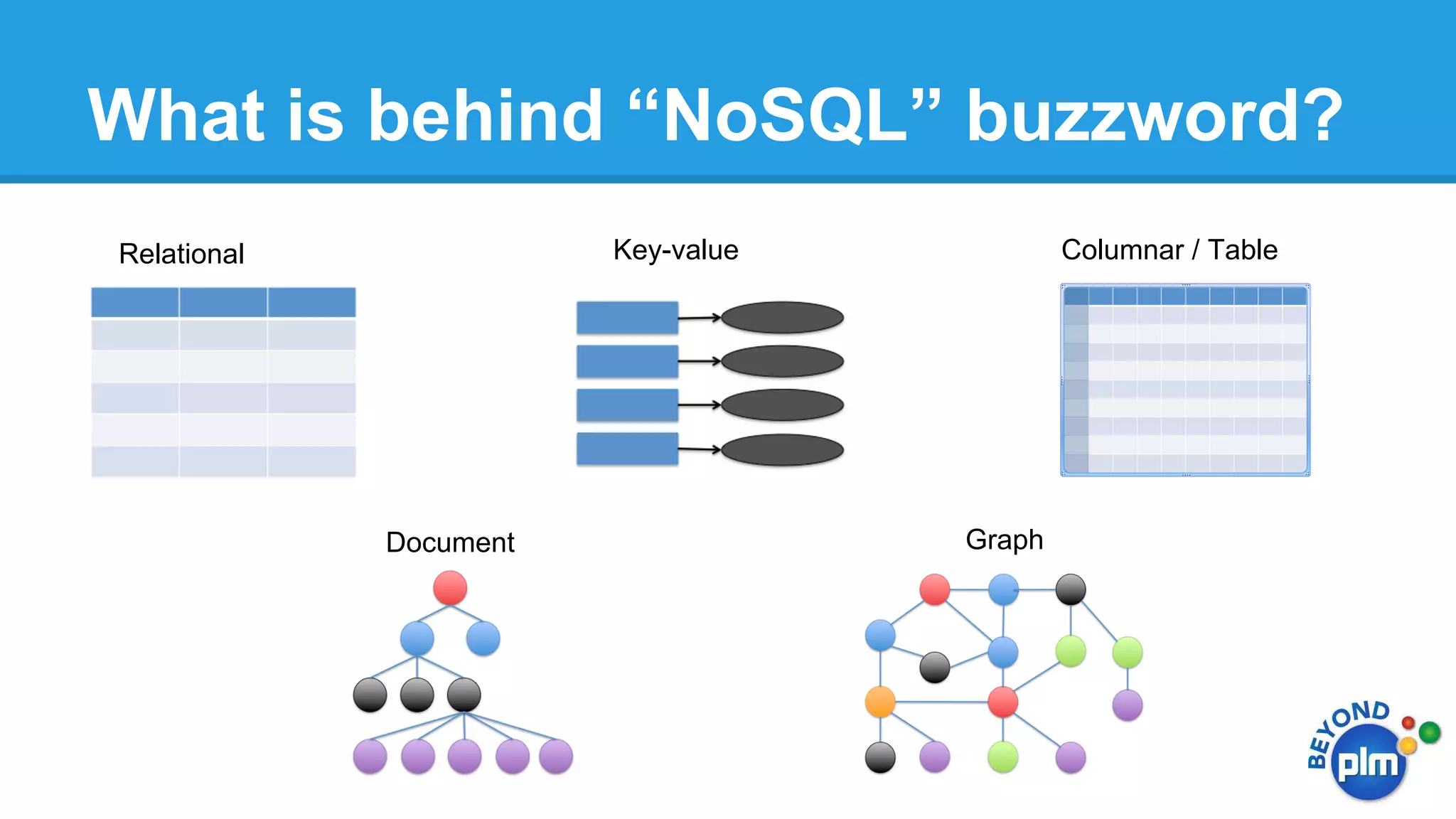
What is behind “NoSQL” buzzword?
Columnar / Table

Key-value

Relational

Document

Graph
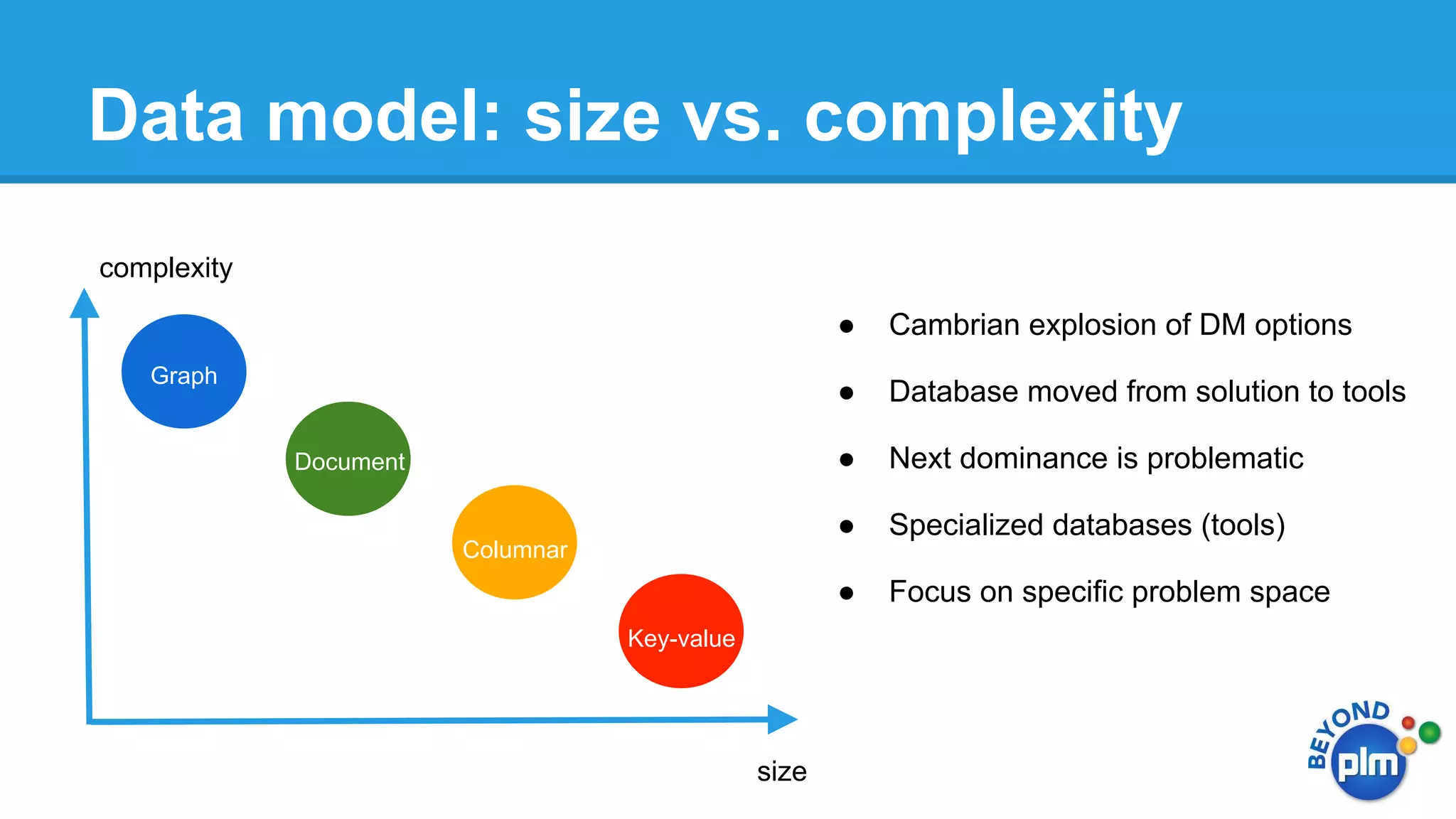
Data model: size vs. complexity
complexity

●  Cambrian explosion of DM options
Graph

●  Database moved from solution to tools
●  Next dominance is problematic

Document

●  Specialized databases (tools)

Columnar

●  Focus on specific problem space
Key-value

size
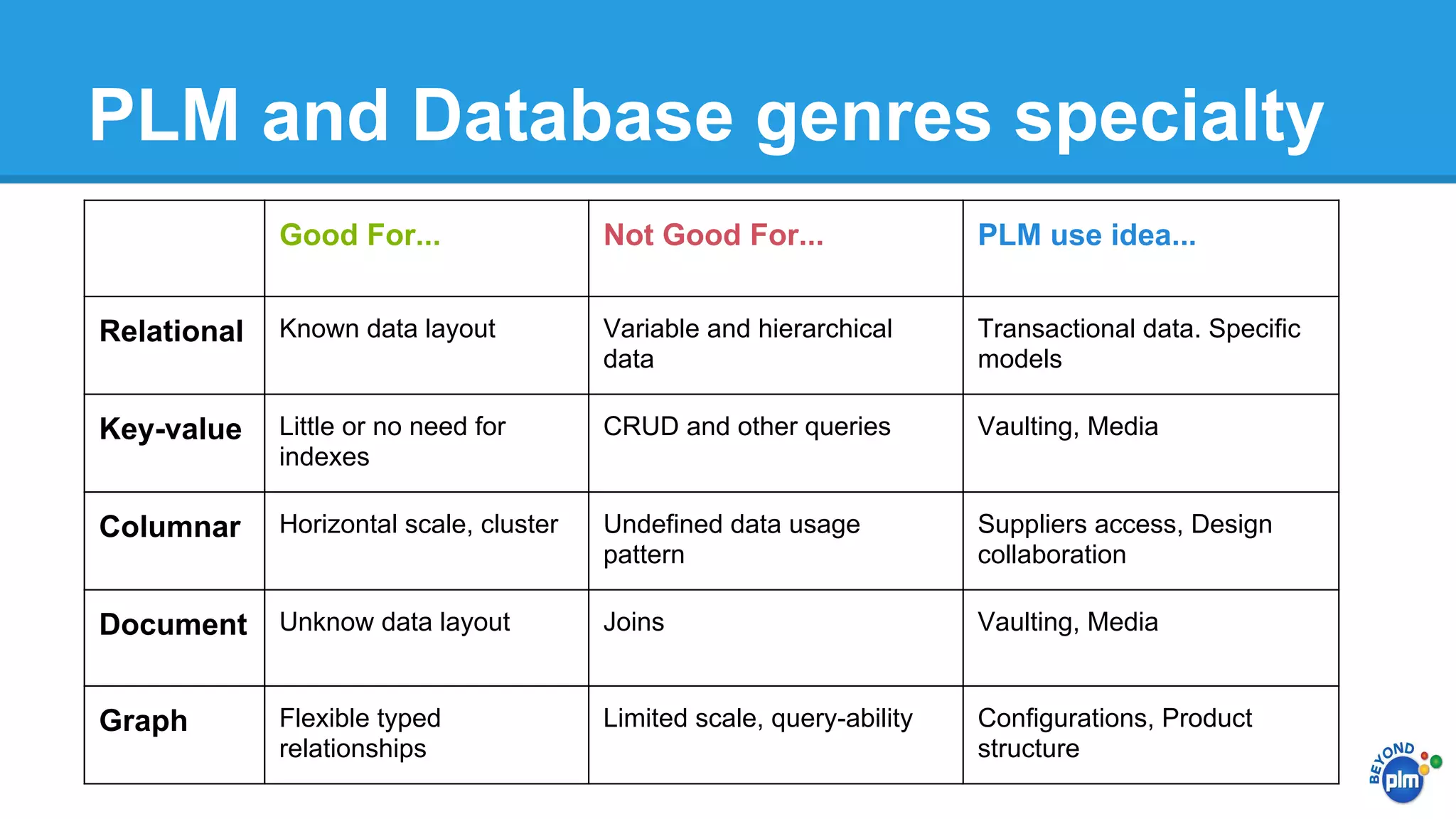
PLM and Database genres specialty
Good For...

Not Good For...

PLM use idea...

Relational

Known data layout

Variable and hierarchical
data

Transactional data. Specific
models

Key-value

Little or no need for
indexes

CRUD and other queries

Vaulting, Media

Columnar

Horizontal scale, cluster

Undefined data usage
pattern

Suppliers access, Design
collaboration

Document

Unknow data layout

Joins

Vaulting, Media

Graph

Flexible typed
relationships

Limited scale, query-ability

Configurations, Product
structure
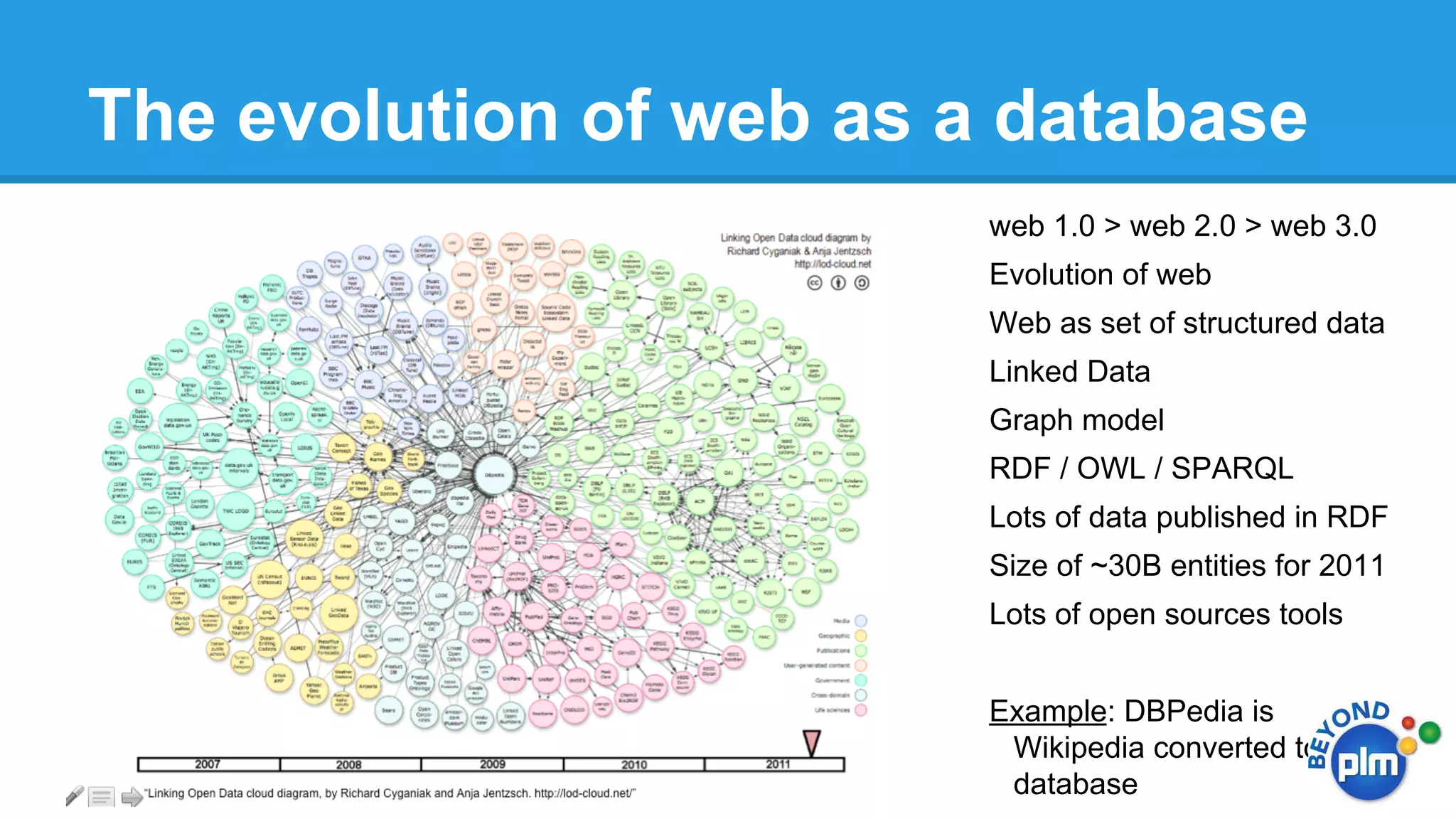
The evolution of web as a database
web 1.0 > web 2.0 > web 3.0
Evolution of web
Web as set of structured data
Linked Data
Graph model
RDF / OWL / SPARQL
Lots of data published in RDF
Size of ~30B entities for 2011
Lots of open sources tools
Example: DBPedia is
Wikipedia converted to Web
database
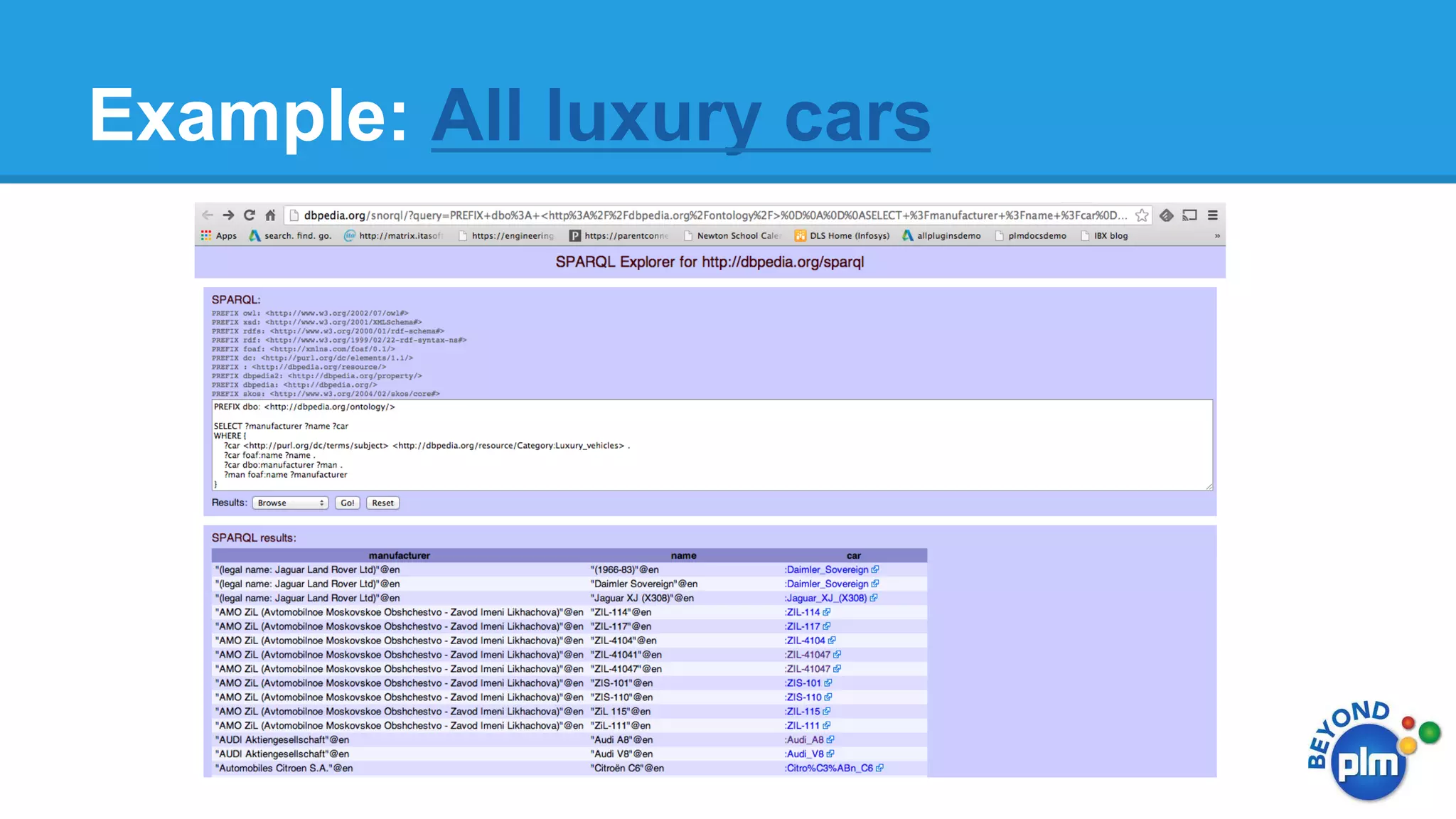
Example: All luxury cars
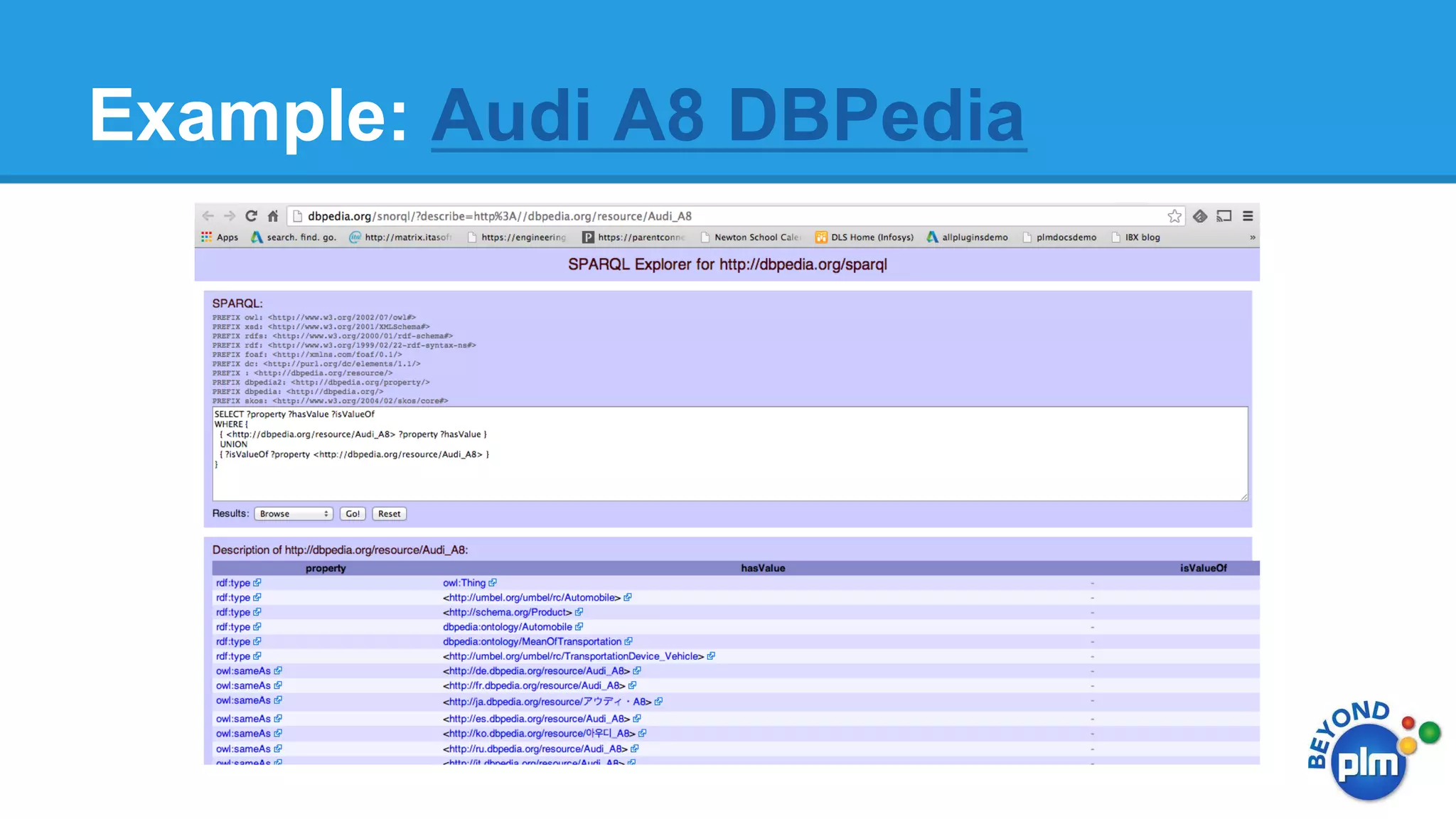
Example: Audi A8 DBPedia
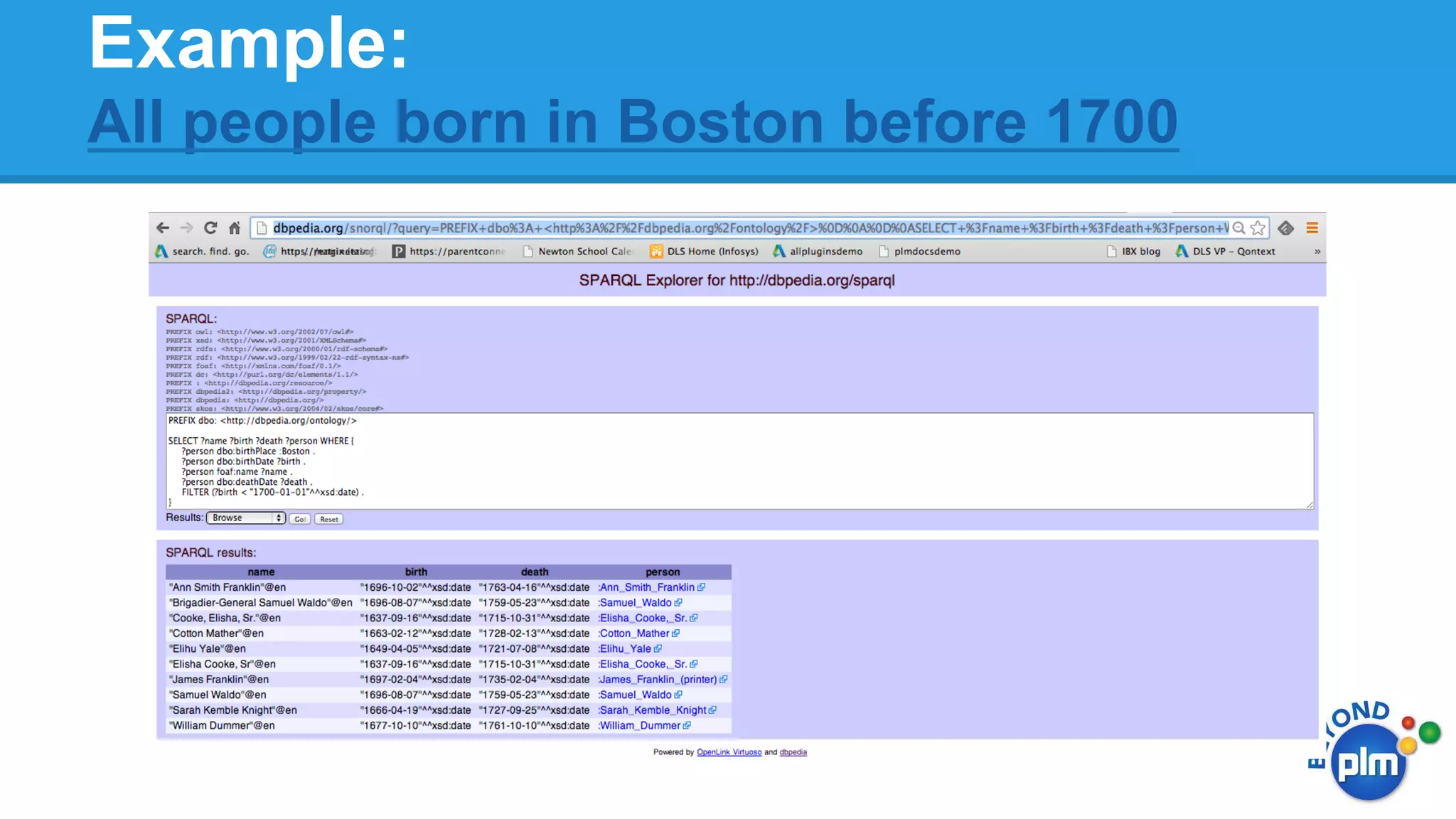
Example:
All people born in Boston before 1700
Thank you!

PLM and Data Management in 21st Century

  • 1.
    PLM and DataManagement in 21st Century Oleg Shilovitsky
  • 2.
    Database selection backin 1990s… Yes Start Use Microsoft Office Looks like Document? No End Use RDBMS
  • 3.
    2010s…. Big Data Concurrency Data connectivity Cloudscale Solution diversity Network of data
  • 4.
    New buzz iscoming - NoSQL
  • 5.
  • 6.
    Single Node RDBMSproblem response time transaction size •  •  •  •  •  •  •  Large data sets Social networks Schema free Linked data Document data Reliability BI / OLAP
  • 7.
    What is behind“NoSQL” buzzword? Columnar / Table Key-value Relational Document Graph
  • 8.
    Data model: sizevs. complexity complexity ●  Cambrian explosion of DM options Graph ●  Database moved from solution to tools ●  Next dominance is problematic Document ●  Specialized databases (tools) Columnar ●  Focus on specific problem space Key-value size
  • 9.
    PLM and Databasegenres specialty Good For... Not Good For... PLM use idea... Relational Known data layout Variable and hierarchical data Transactional data. Specific models Key-value Little or no need for indexes CRUD and other queries Vaulting, Media Columnar Horizontal scale, cluster Undefined data usage pattern Suppliers access, Design collaboration Document Unknow data layout Joins Vaulting, Media Graph Flexible typed relationships Limited scale, query-ability Configurations, Product structure
  • 10.
    The evolution ofweb as a database web 1.0 > web 2.0 > web 3.0 Evolution of web Web as set of structured data Linked Data Graph model RDF / OWL / SPARQL Lots of data published in RDF Size of ~30B entities for 2011 Lots of open sources tools Example: DBPedia is Wikipedia converted to Web database
  • 11.
  • 12.
  • 13.
    Example: All people bornin Boston before 1700
  • 14.