Chapter 3, Section 4 Soil and Vegetation
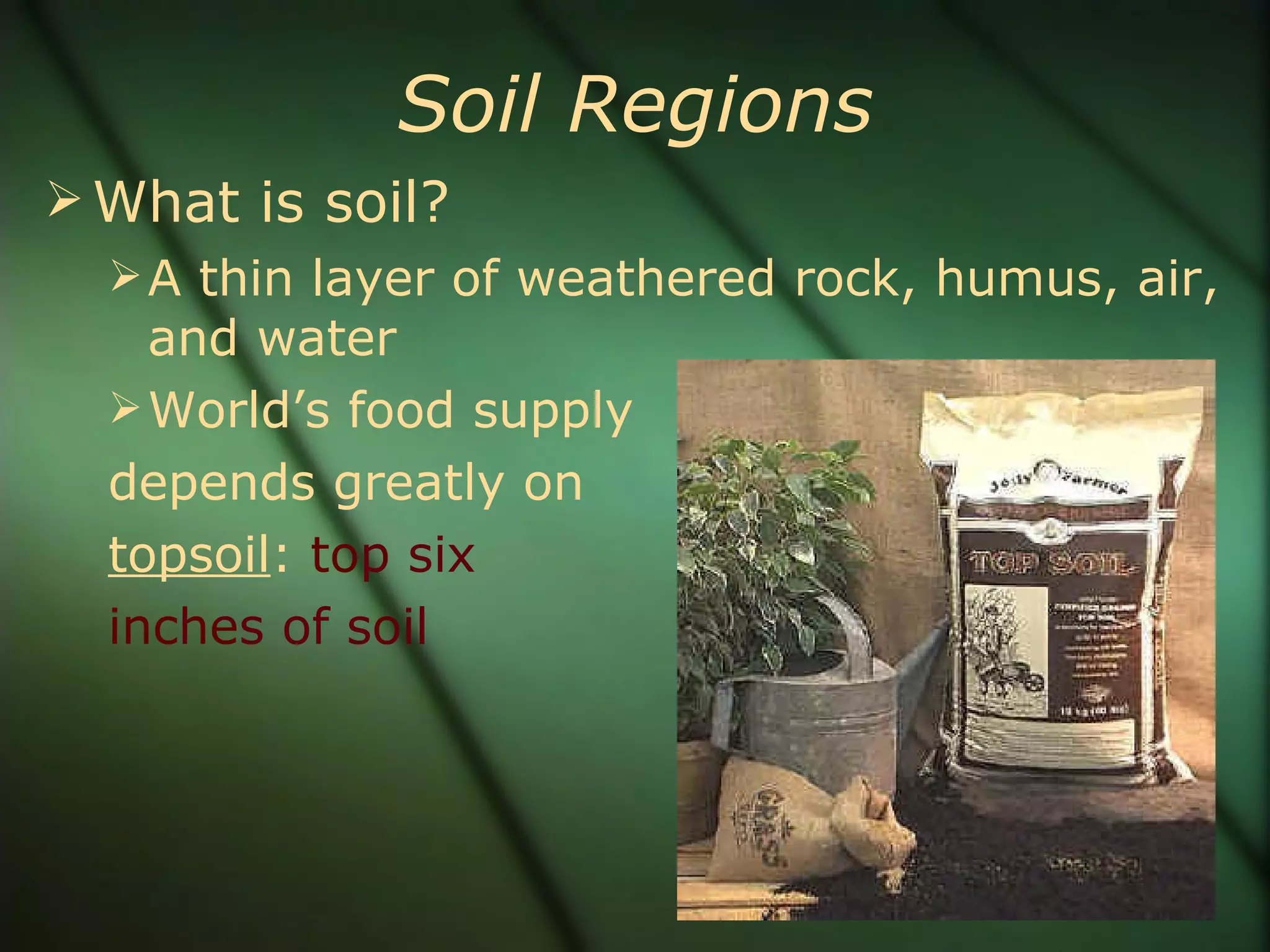
Soil Regions What is soil? A thin layer of weathered rock, humus, air, and water World’s food supply  depends greatly on  topsoil :  top six  inches of soil
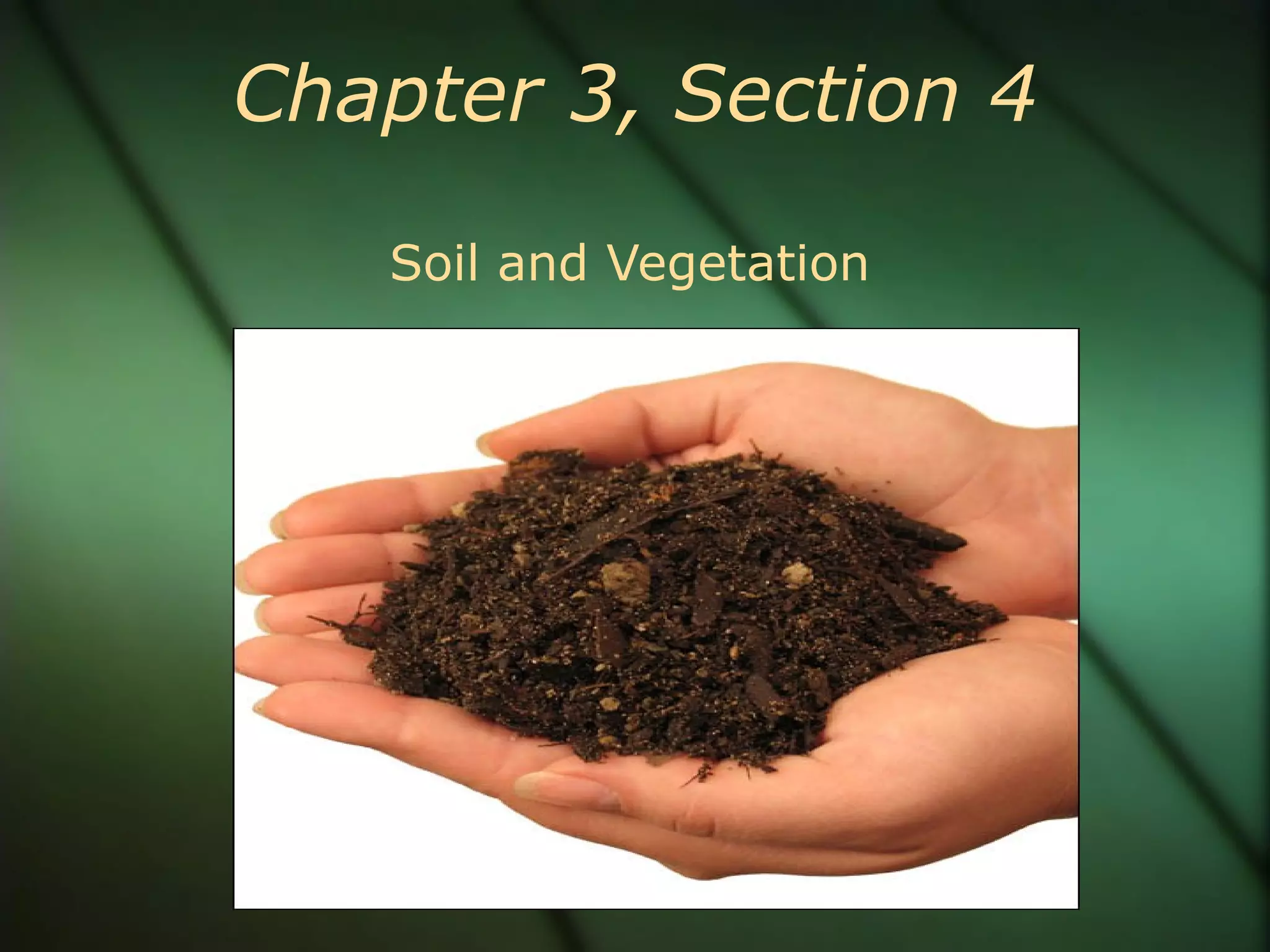
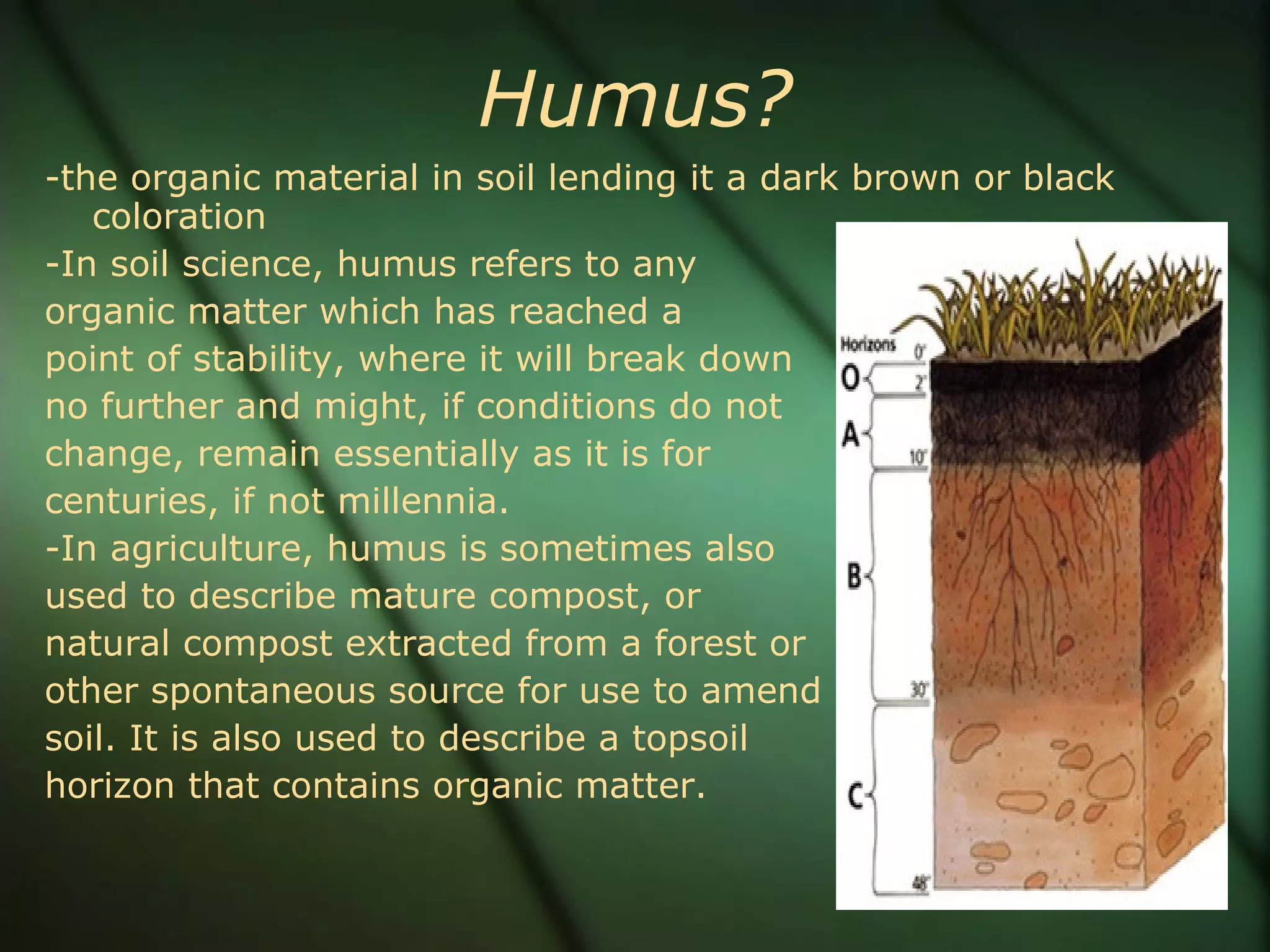
Humus? -the organic material in soil lending it a dark brown or black coloration -In soil science, humus refers to any  organic matter which has reached a  point of stability, where it will break down  no further and might, if conditions do not  change, remain essentially as it is for  centuries, if not millennia. -In agriculture, humus is sometimes also  used to describe mature compost, or  natural compost extracted from a forest or  other spontaneous source for use to amend  soil. It is also used to describe a topsoil  horizon that contains organic matter.
Vegetation Regions Different climatic zones = different vegetation regions Ecosystem : an interdependent community of plants and animals Biome : the ecosystem of a particular region There are typically four biomes: forest, grassland, desert, tundra
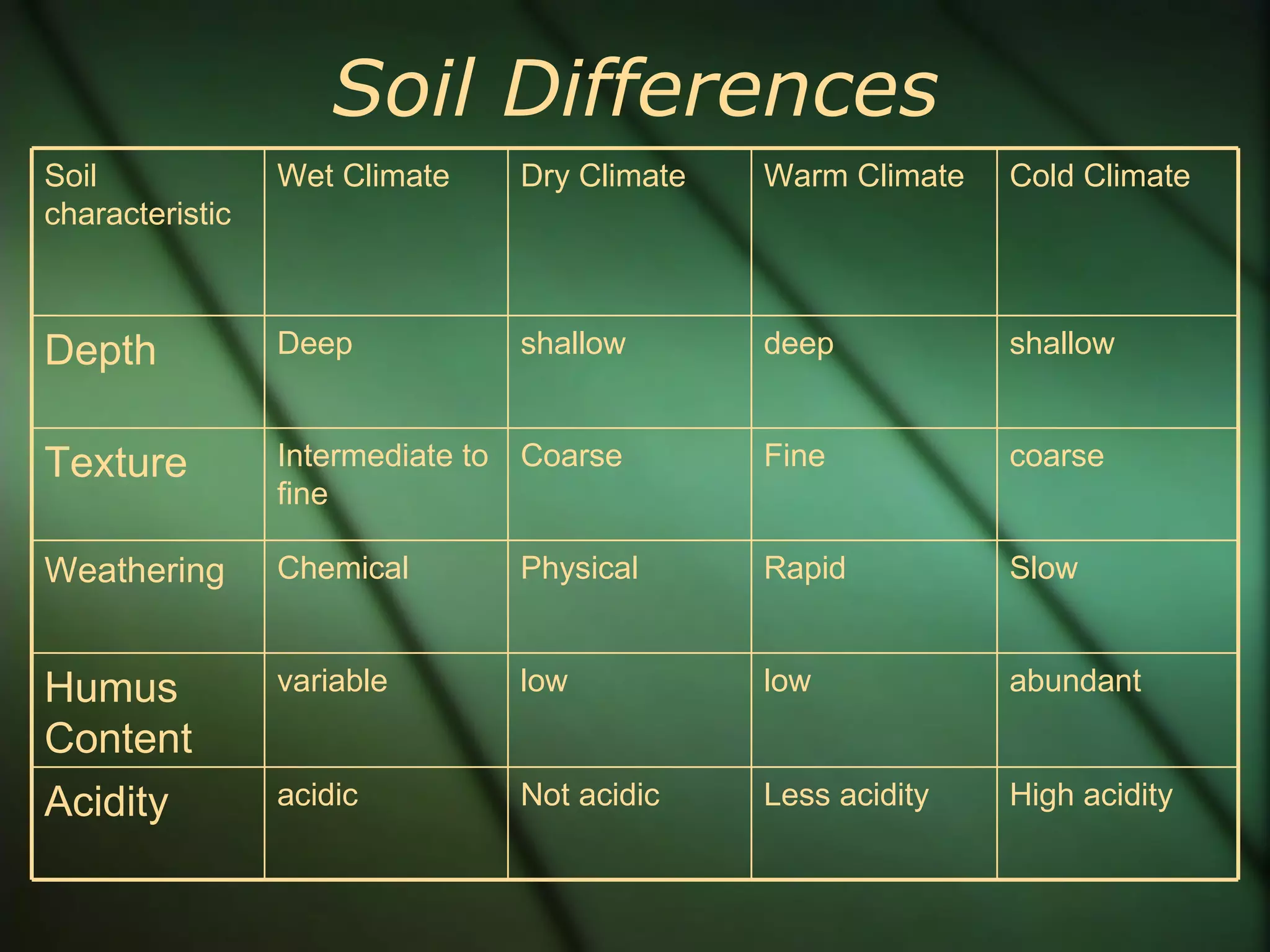
Soil Differences Soil characteristic Wet Climate Dry Climate Warm Climate Cold Climate Depth Deep shallow deep shallow Texture Intermediate to fine Coarse Fine coarse Weathering Chemical Physical Rapid Slow Humus Content variable low low abundant Acidity acidic Not acidic Less acidity High acidity
 
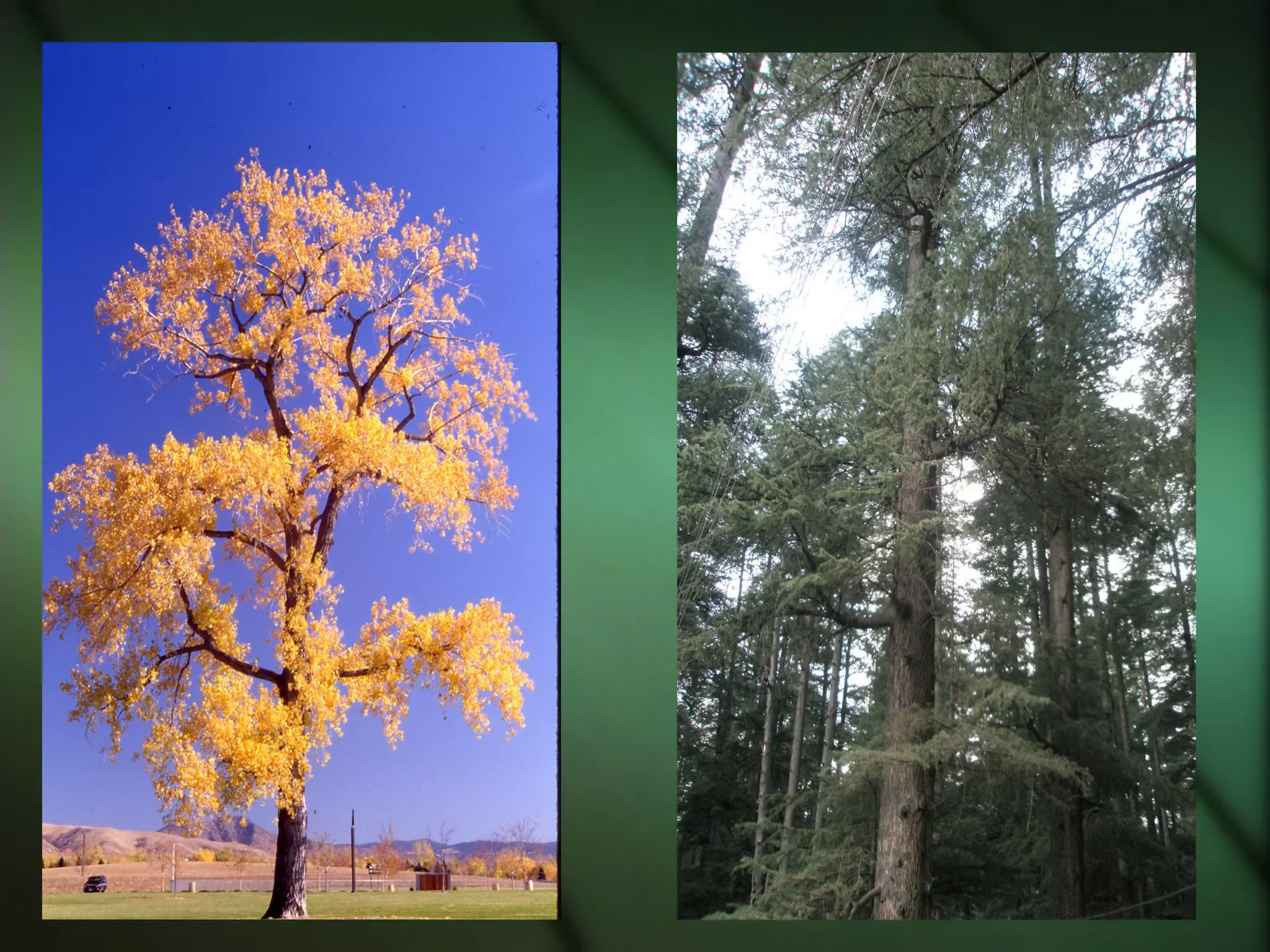
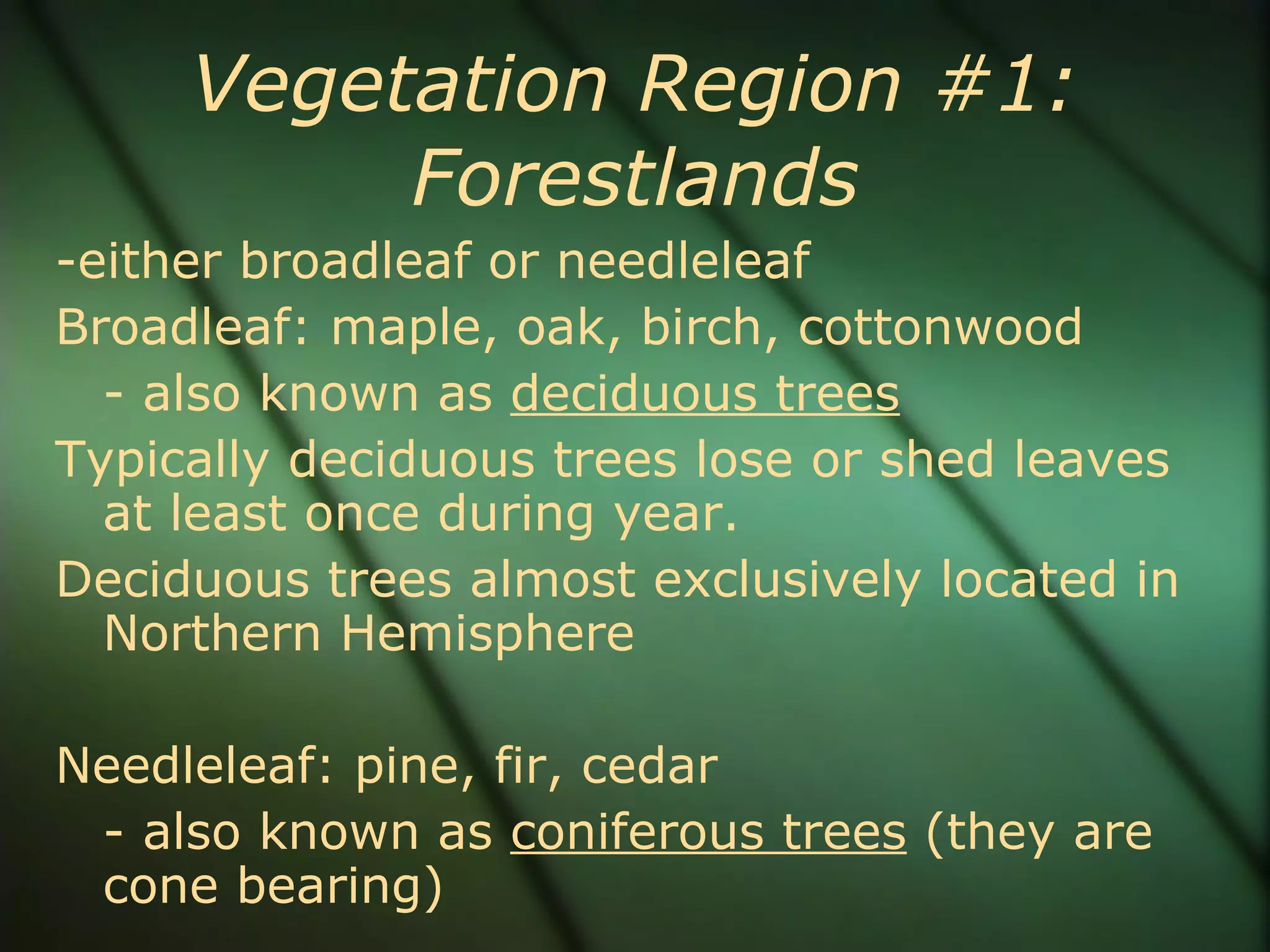
Vegetation Region #1: Forestlands -either broadleaf or needleleaf Broadleaf: maple, oak, birch, cottonwood  - also known as  deciduous trees Typically deciduous trees lose or shed leaves at least once during year. Deciduous trees almost exclusively located in Northern Hemisphere Needleleaf: pine, fir, cedar - also known as  coniferous trees  (they are cone bearing)
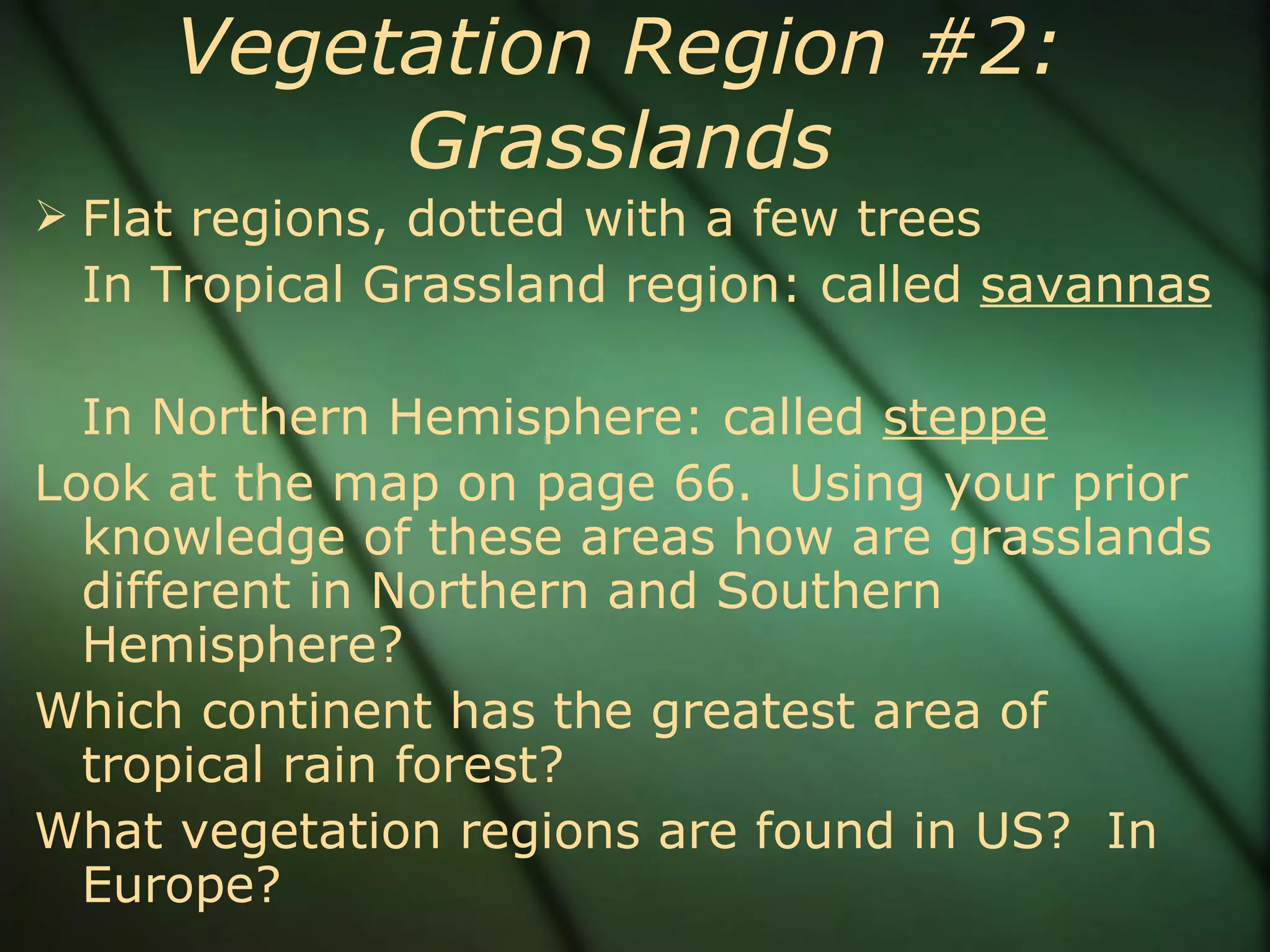
Vegetation Region #2: Grasslands Flat regions, dotted with a few trees In Tropical Grassland region: called  savannas In Northern Hemisphere: called  steppe Look at the map on page 66.  Using your prior knowledge of these areas how are grasslands different in Northern and Southern Hemisphere?  Which continent has the greatest area of tropical rain forest? What vegetation regions are found in US?  In Europe?
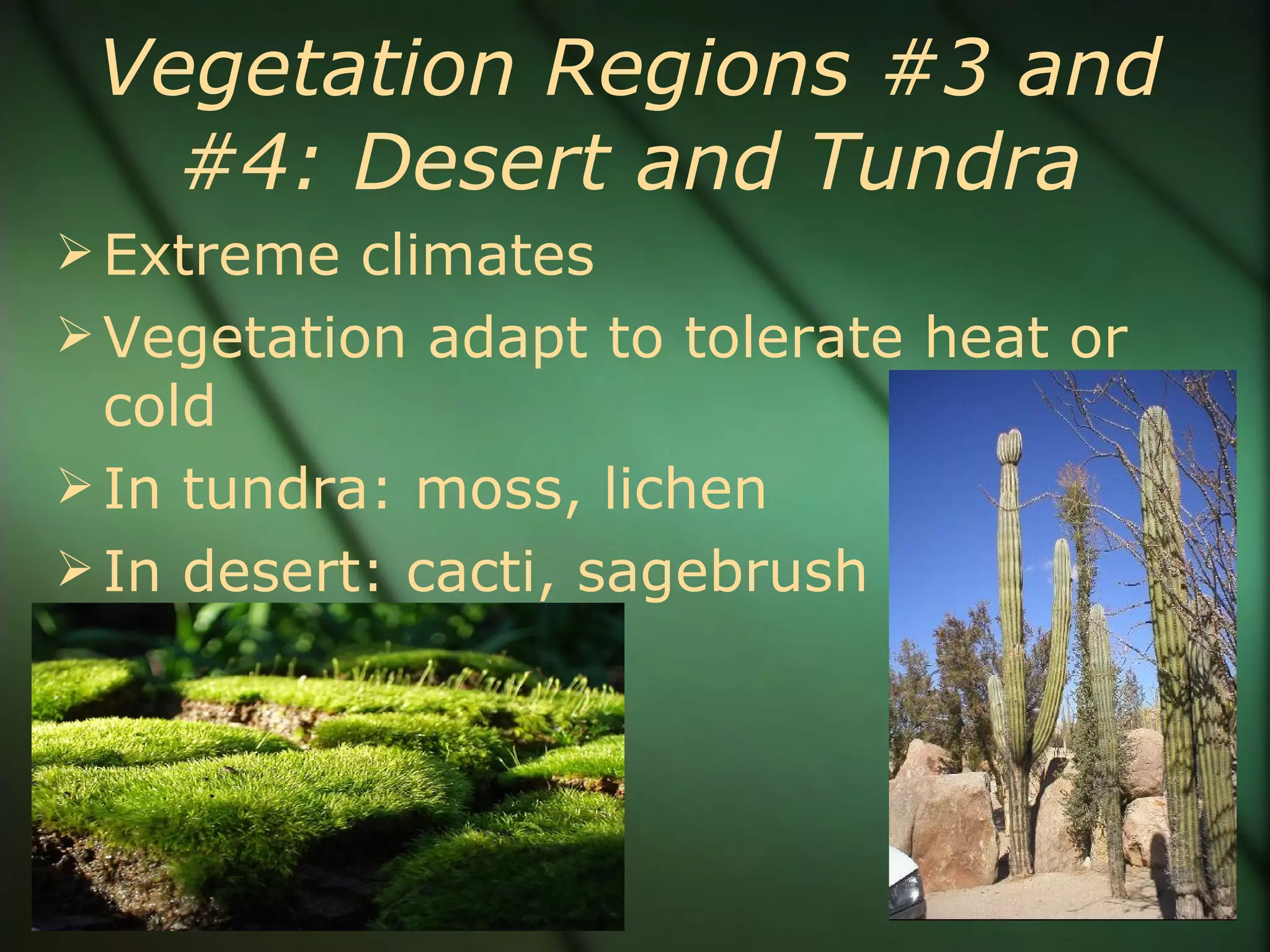
Vegetation Regions #3 and #4: Desert and Tundra Extreme climates Vegetation adapt to tolerate heat or cold In tundra: moss, lichen In desert: cacti, sagebrush
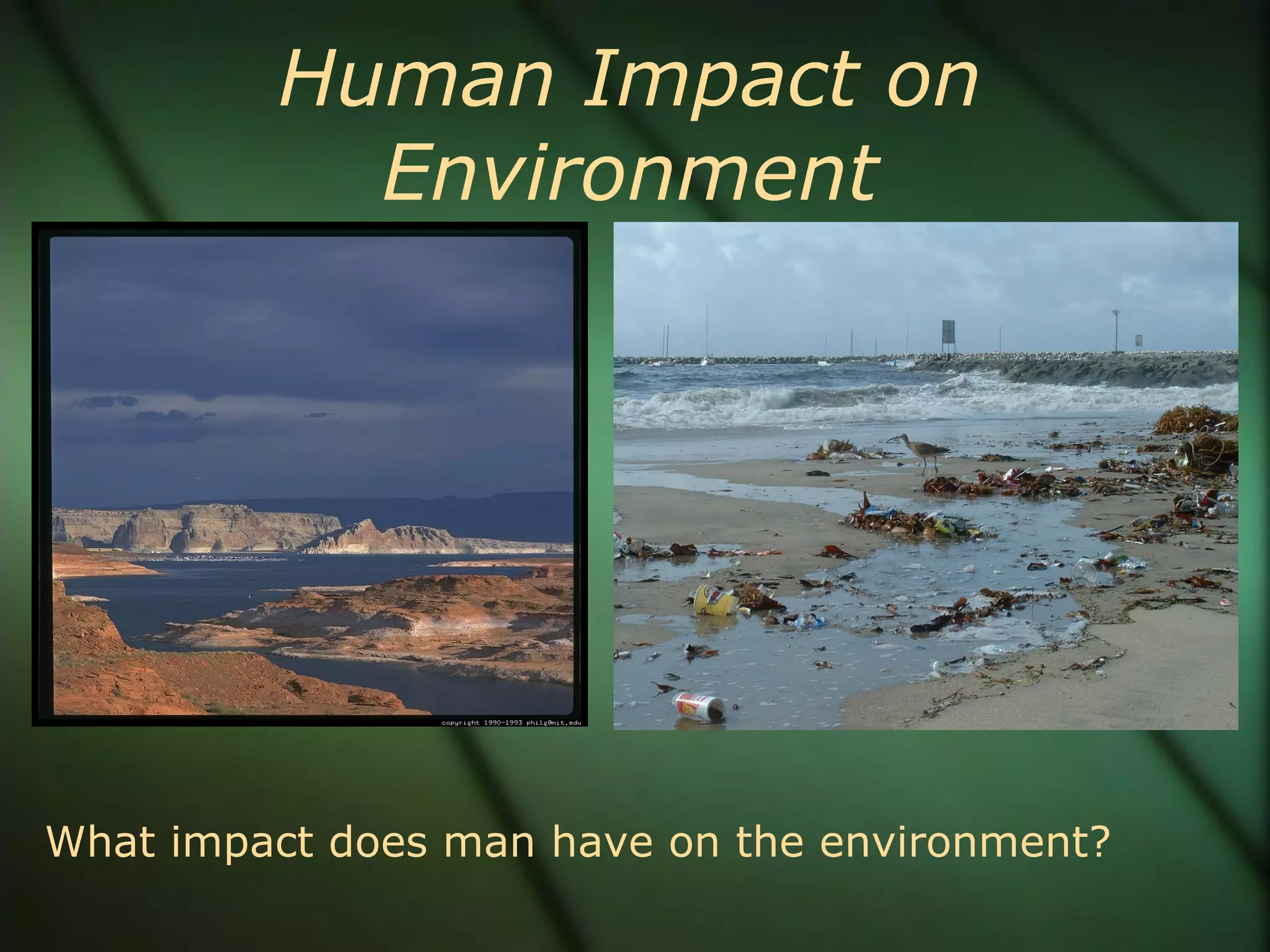
Human Impact on Environment What impact does man have on the environment?
Questions for thought What soil factors influence type of vegetation in a region? What is the difference between coniferous and deciduous trees? What is unique about vegetation in the desert and tundra regions?

Geo: Chapter Three, Section Four

  • 1.
    Chapter 3, Section4 Soil and Vegetation
  • 2.
    Soil Regions Whatis soil? A thin layer of weathered rock, humus, air, and water World’s food supply depends greatly on topsoil : top six inches of soil
  • 3.
    Humus? -the organicmaterial in soil lending it a dark brown or black coloration -In soil science, humus refers to any organic matter which has reached a point of stability, where it will break down no further and might, if conditions do not change, remain essentially as it is for centuries, if not millennia. -In agriculture, humus is sometimes also used to describe mature compost, or natural compost extracted from a forest or other spontaneous source for use to amend soil. It is also used to describe a topsoil horizon that contains organic matter.
  • 4.
    Vegetation Regions Differentclimatic zones = different vegetation regions Ecosystem : an interdependent community of plants and animals Biome : the ecosystem of a particular region There are typically four biomes: forest, grassland, desert, tundra
  • 5.
    Soil Differences Soilcharacteristic Wet Climate Dry Climate Warm Climate Cold Climate Depth Deep shallow deep shallow Texture Intermediate to fine Coarse Fine coarse Weathering Chemical Physical Rapid Slow Humus Content variable low low abundant Acidity acidic Not acidic Less acidity High acidity
  • 6.
  • 7.
    Vegetation Region #1:Forestlands -either broadleaf or needleleaf Broadleaf: maple, oak, birch, cottonwood - also known as deciduous trees Typically deciduous trees lose or shed leaves at least once during year. Deciduous trees almost exclusively located in Northern Hemisphere Needleleaf: pine, fir, cedar - also known as coniferous trees (they are cone bearing)
  • 8.
    Vegetation Region #2:Grasslands Flat regions, dotted with a few trees In Tropical Grassland region: called savannas In Northern Hemisphere: called steppe Look at the map on page 66. Using your prior knowledge of these areas how are grasslands different in Northern and Southern Hemisphere? Which continent has the greatest area of tropical rain forest? What vegetation regions are found in US? In Europe?
  • 9.
    Vegetation Regions #3and #4: Desert and Tundra Extreme climates Vegetation adapt to tolerate heat or cold In tundra: moss, lichen In desert: cacti, sagebrush
  • 10.
    Human Impact onEnvironment What impact does man have on the environment?
  • 11.
    Questions for thoughtWhat soil factors influence type of vegetation in a region? What is the difference between coniferous and deciduous trees? What is unique about vegetation in the desert and tundra regions?