Developing your Research
  Problem / Question
Critics of Education Research
• …the inefficient and unscientific methods
  used by educators in acquiring knowledge
  and solving their problems. An uncritical
  acceptance of authority opinion that is not
  supported by objective evidence and an
  overdependence upon personal experience
  have been characteristic of the educator’s
  problem solving techniques.
  – Will Borg and many others who echo his perspective
Critics of Education Research
• In pairs answer questions:
  – How would you assess the validity of the
    Borg position? Accurate? Inaccurate?
  – What are the reasons behind your
    position?
  – Does his criticism apply to your own
    proposed research?
Identifying Your Research
      Problem: Criteria
• It must sustain your interest
• It must be within your range of
  competence
• It must be manageable in size
• It must have some basis in theory
Your Research Problem:
          Criteria
• It must have the potential to make an
  original contribution
• It must be based on obtainable data
• It must permit you to demonstrate you
  independent mastery of both subject
  and research method
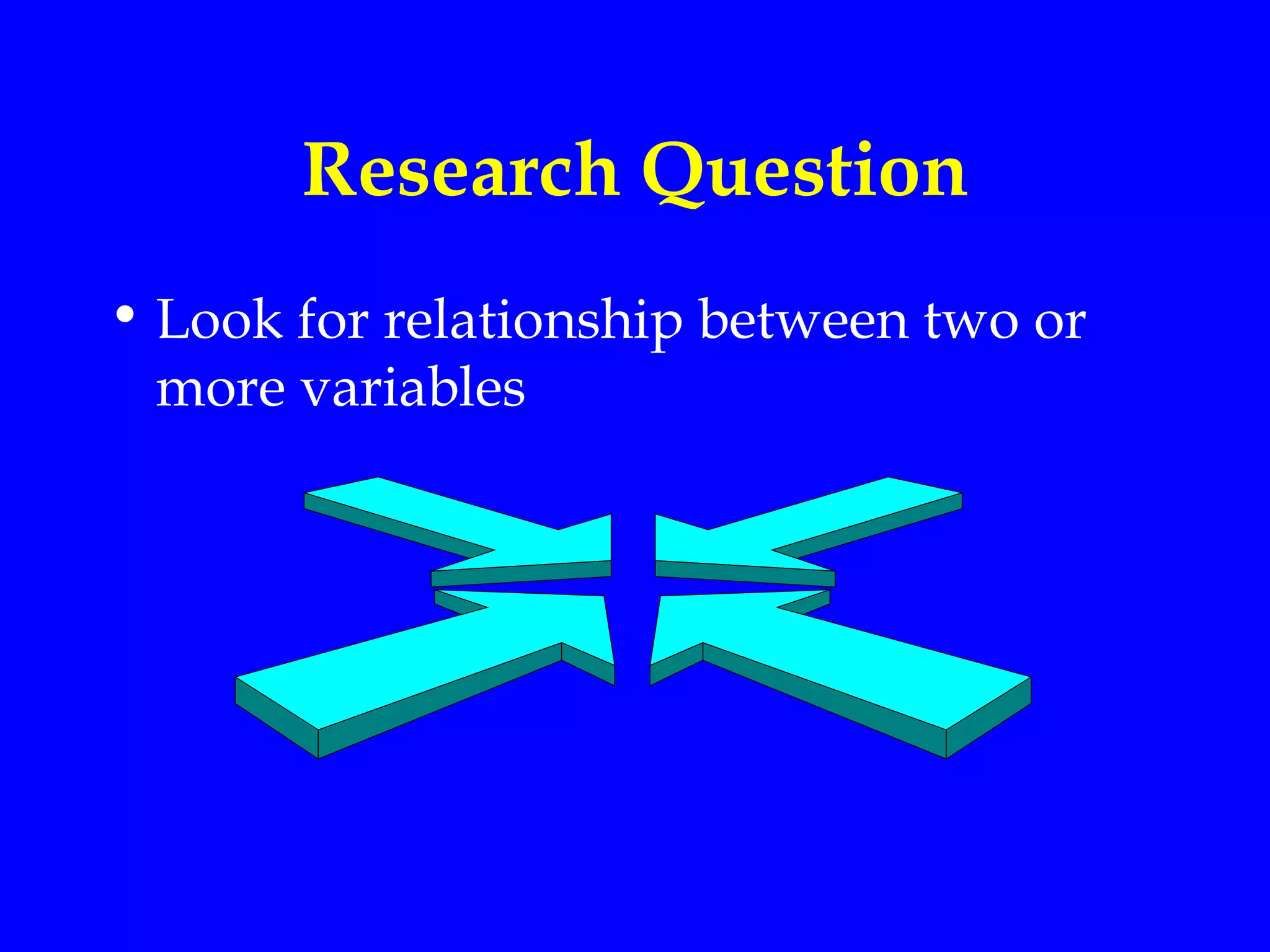
Research Question
• Look for relationship between two or
  more variables
Research Question Implies
          Relationship
•   Affect        •   Embed
•   Approximate   •   Identical
•   Associate     •   Indicate
•   Cause         •   Influence
•   Compare       •   Parallel
•   Depend        •   Influence
•   Divergent     •   Relate
•   Effect        •   Tension
Techniques to help you define your
   research topic and question
• Read the relevant literature
• Challenge assumptions
• Search for inconsistencies in literature
• Organize material you have read
• Talk to specialists
• Get the problem down on paper
• Read the relevant literature
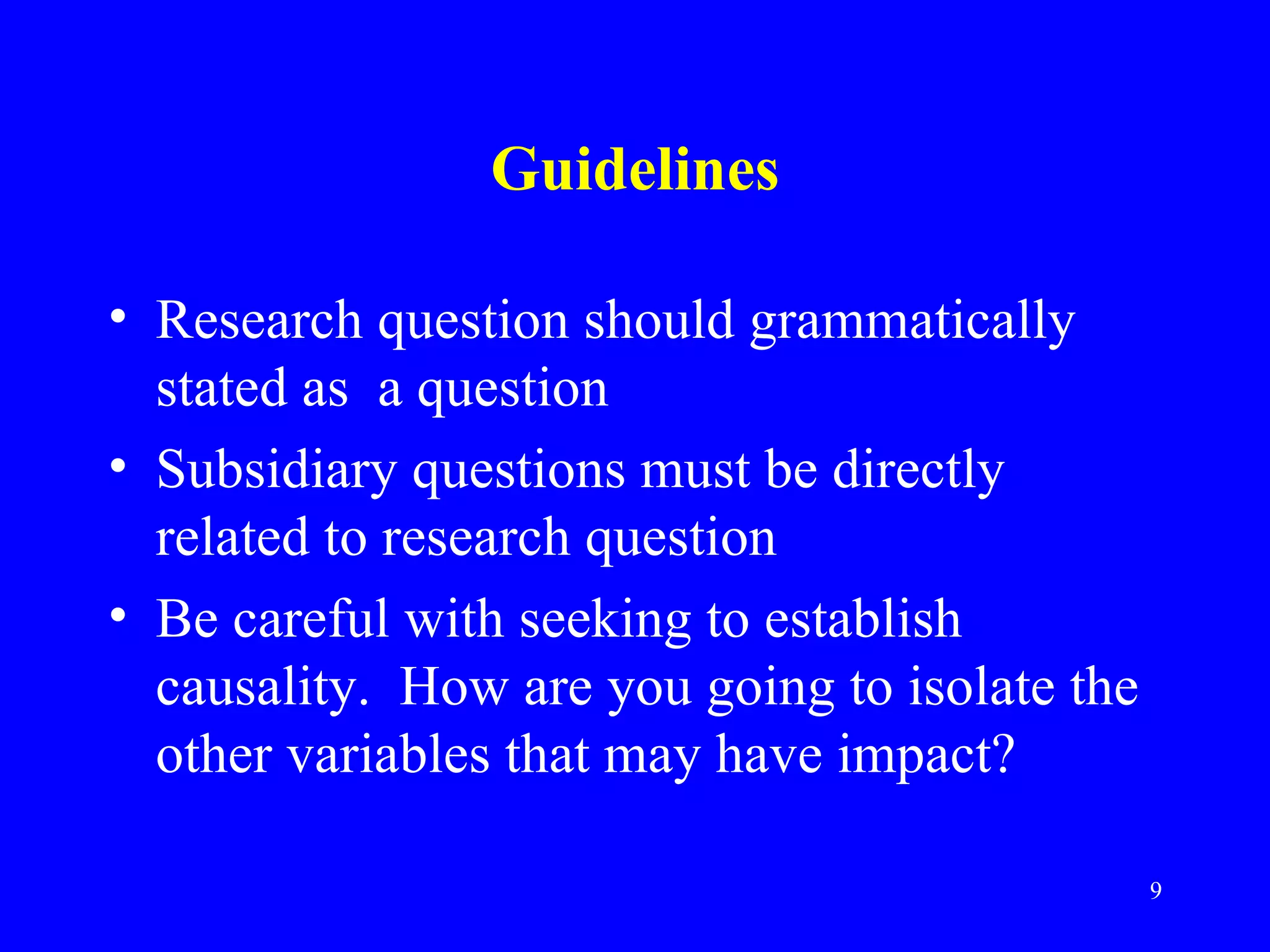
Guidelines

• Research question should grammatically
  stated as a question
• Subsidiary questions must be directly
  related to research question
• Be careful with seeking to establish
  causality. How are you going to isolate the
  other variables that may have impact?

                                                9
Guidelines

• Why surveying extremely small samples
  [<30]? Interviews better?
• do folks you intend to survey / interview
  actually have information you need? Can
  anyone tell you what someone else is
  thinking? Believing?
• Heavy emphasis upon perceptions? Of what
  value are perceptions?
                                          10
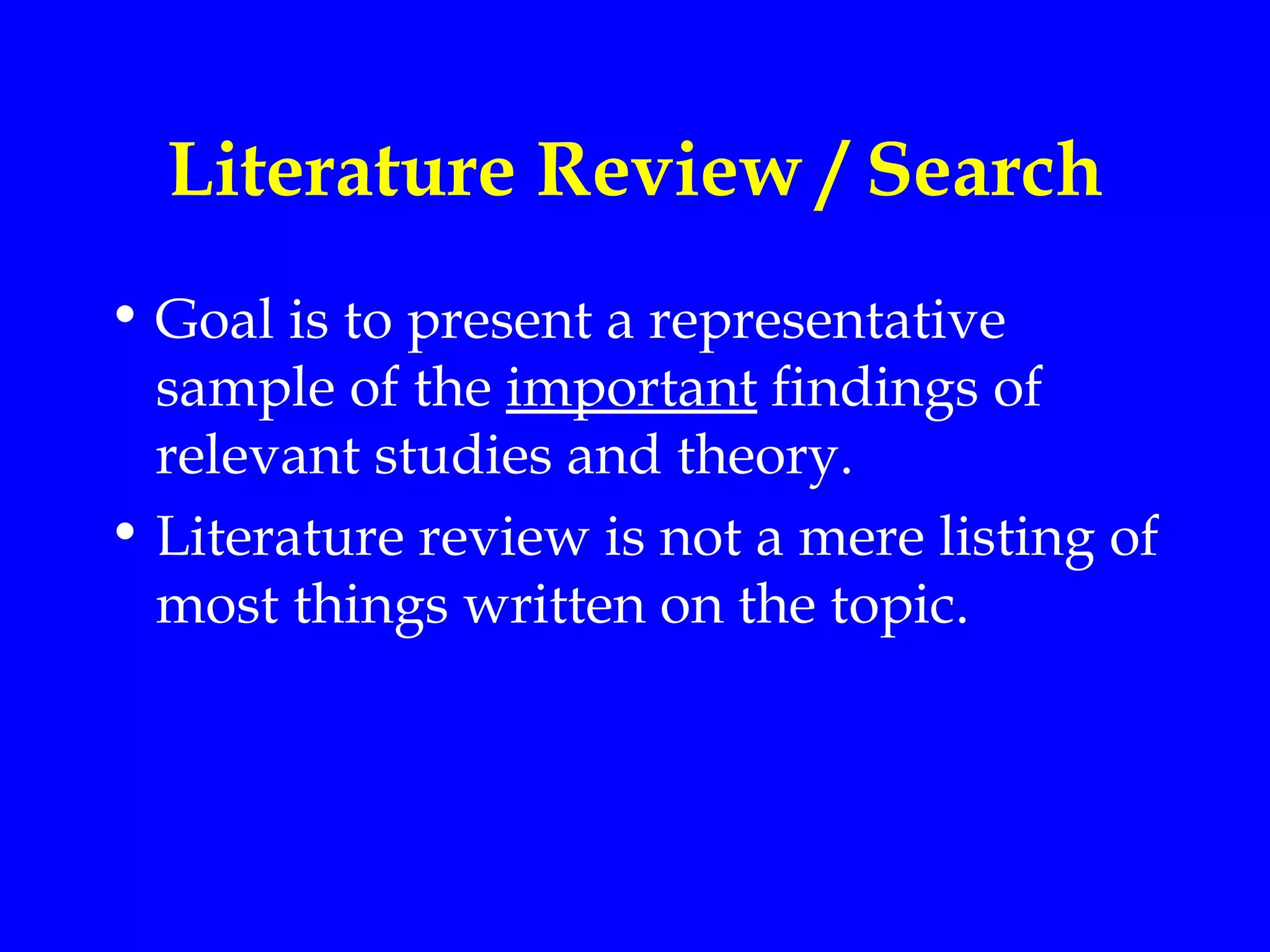
Literature Review / Search
• Goal is to present a representative
  sample of the important findings of
  relevant studies and theory.
• Literature review is not a mere listing of
  most things written on the topic.
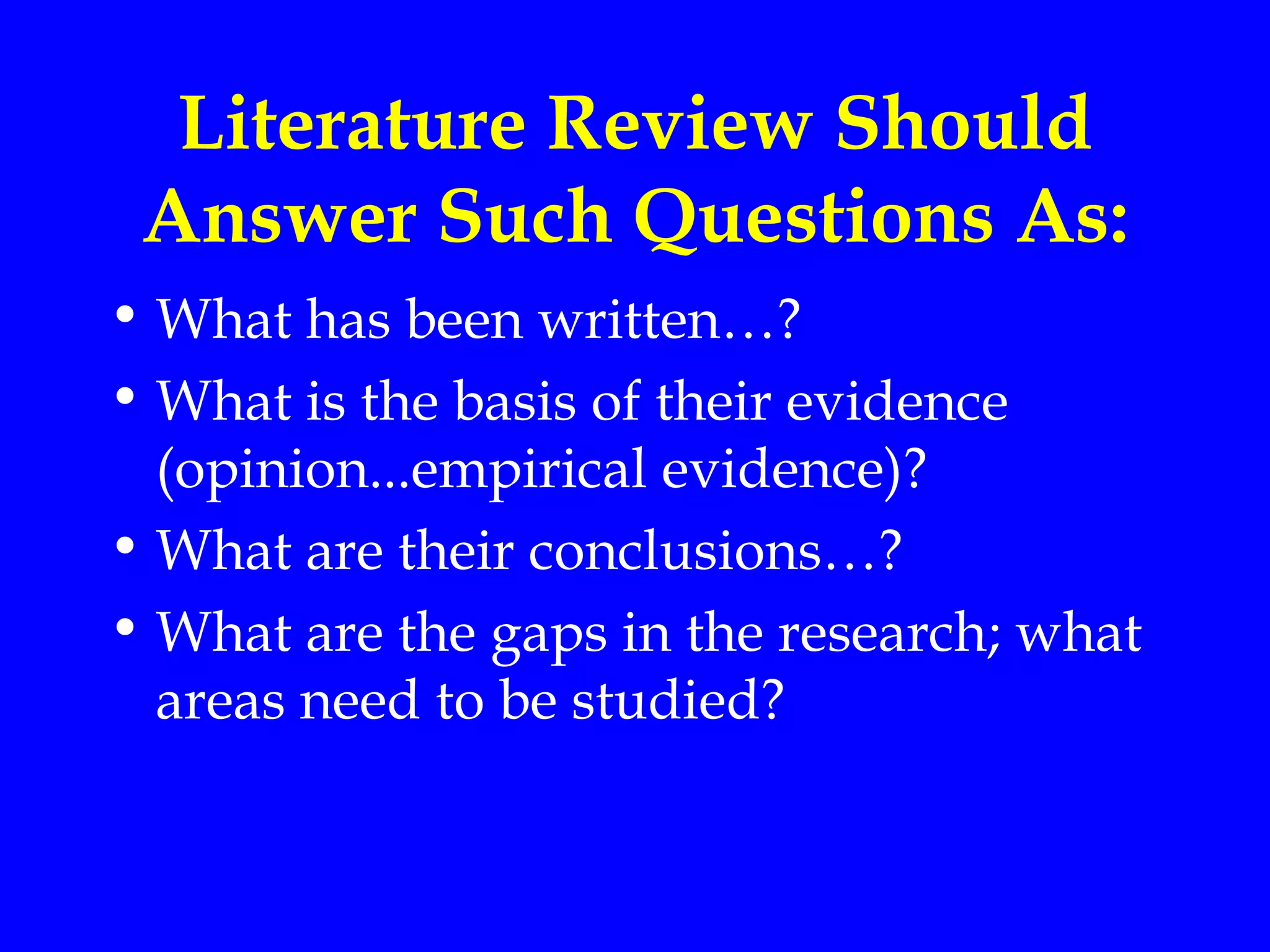
Literature Review Should
 Answer Such Questions As:
• What has been written…?
• What is the basis of their evidence
  (opinion...empirical evidence)?
• What are their conclusions…?
• What are the gaps in the research; what
  areas need to be studied?
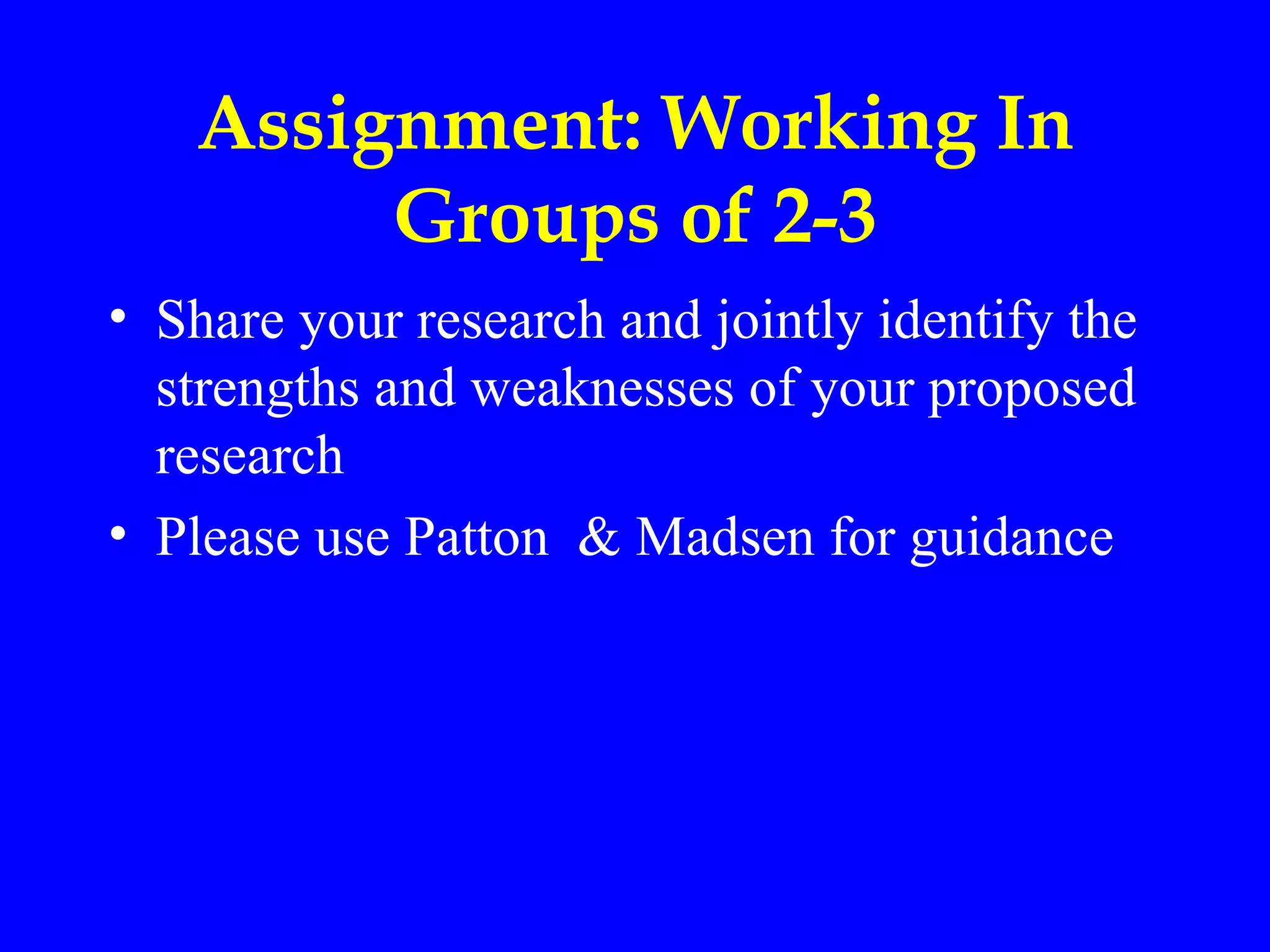
Assignment: Working In
        Groups of 2-3
• Share your research and jointly identify the
  strengths and weaknesses of your proposed
  research
• Please use Patton & Madsen for guidance
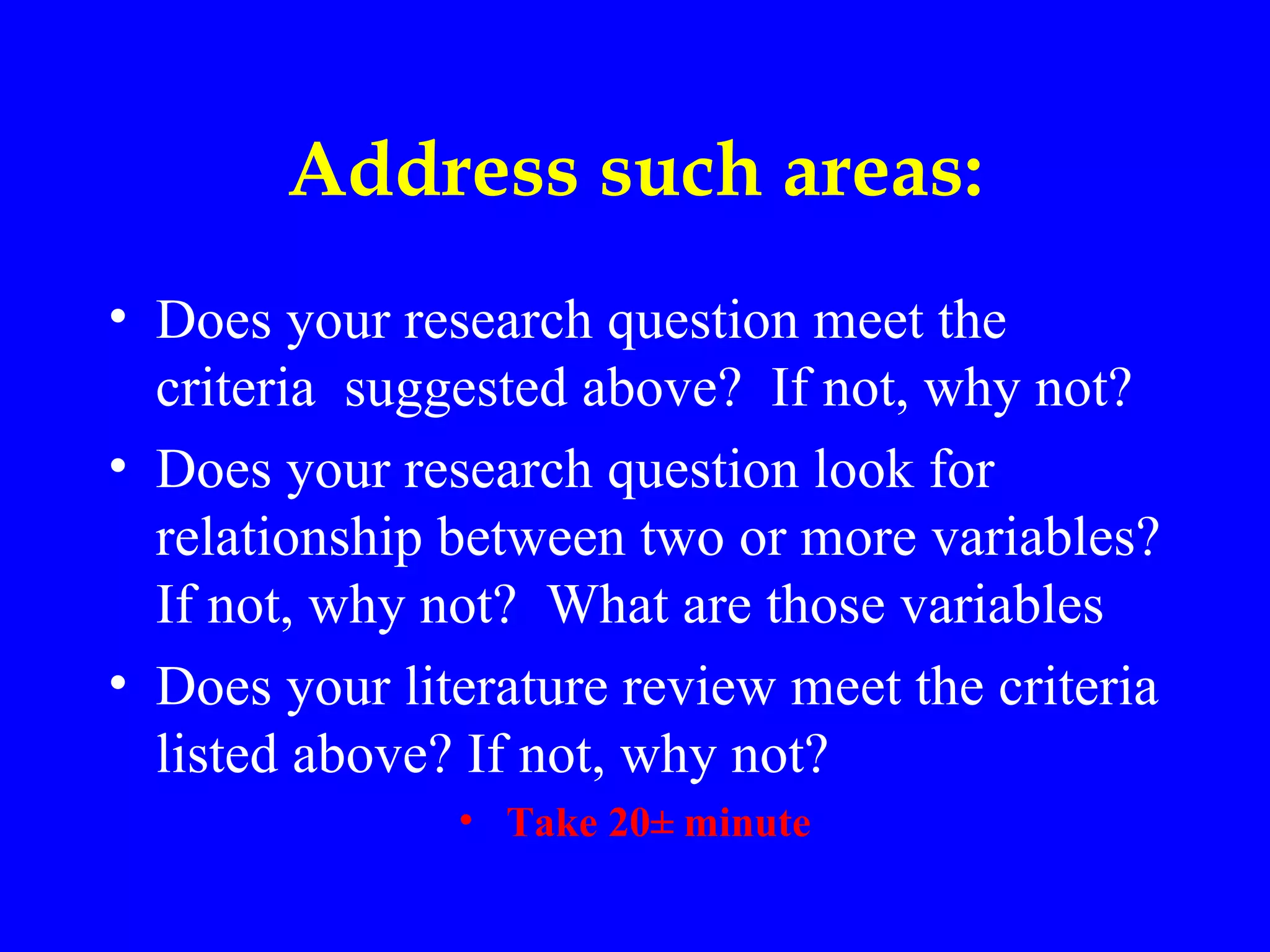
Address such areas:
• Does your research question meet the
  criteria suggested above? If not, why not?
• Does your research question look for
  relationship between two or more variables?
  If not, why not? What are those variables
• Does your literature review meet the criteria
  listed above? If not, why not?
               • Take 20± minute

Developing Research Question

  • 1.
    Developing your Research Problem / Question
  • 2.
    Critics of EducationResearch • …the inefficient and unscientific methods used by educators in acquiring knowledge and solving their problems. An uncritical acceptance of authority opinion that is not supported by objective evidence and an overdependence upon personal experience have been characteristic of the educator’s problem solving techniques. – Will Borg and many others who echo his perspective
  • 3.
    Critics of EducationResearch • In pairs answer questions: – How would you assess the validity of the Borg position? Accurate? Inaccurate? – What are the reasons behind your position? – Does his criticism apply to your own proposed research?
  • 4.
    Identifying Your Research Problem: Criteria • It must sustain your interest • It must be within your range of competence • It must be manageable in size • It must have some basis in theory
  • 5.
    Your Research Problem: Criteria • It must have the potential to make an original contribution • It must be based on obtainable data • It must permit you to demonstrate you independent mastery of both subject and research method
  • 6.
    Research Question • Lookfor relationship between two or more variables
  • 7.
    Research Question Implies Relationship • Affect • Embed • Approximate • Identical • Associate • Indicate • Cause • Influence • Compare • Parallel • Depend • Influence • Divergent • Relate • Effect • Tension
  • 8.
    Techniques to helpyou define your research topic and question • Read the relevant literature • Challenge assumptions • Search for inconsistencies in literature • Organize material you have read • Talk to specialists • Get the problem down on paper • Read the relevant literature
  • 9.
    Guidelines • Research questionshould grammatically stated as a question • Subsidiary questions must be directly related to research question • Be careful with seeking to establish causality. How are you going to isolate the other variables that may have impact? 9
  • 10.
    Guidelines • Why surveyingextremely small samples [<30]? Interviews better? • do folks you intend to survey / interview actually have information you need? Can anyone tell you what someone else is thinking? Believing? • Heavy emphasis upon perceptions? Of what value are perceptions? 10
  • 11.
    Literature Review /Search • Goal is to present a representative sample of the important findings of relevant studies and theory. • Literature review is not a mere listing of most things written on the topic.
  • 12.
    Literature Review Should Answer Such Questions As: • What has been written…? • What is the basis of their evidence (opinion...empirical evidence)? • What are their conclusions…? • What are the gaps in the research; what areas need to be studied?
  • 13.
    Assignment: Working In Groups of 2-3 • Share your research and jointly identify the strengths and weaknesses of your proposed research • Please use Patton & Madsen for guidance
  • 14.
    Address such areas: •Does your research question meet the criteria suggested above? If not, why not? • Does your research question look for relationship between two or more variables? If not, why not? What are those variables • Does your literature review meet the criteria listed above? If not, why not? • Take 20± minute