Matthew Buckland www.matthewbuckland.com GM: New Media, M&G Online future  web trends   innovation series 2007 with  jimmy wales IMG SRC: Flickr
the thing about predictions... IMG SRC: Flickr
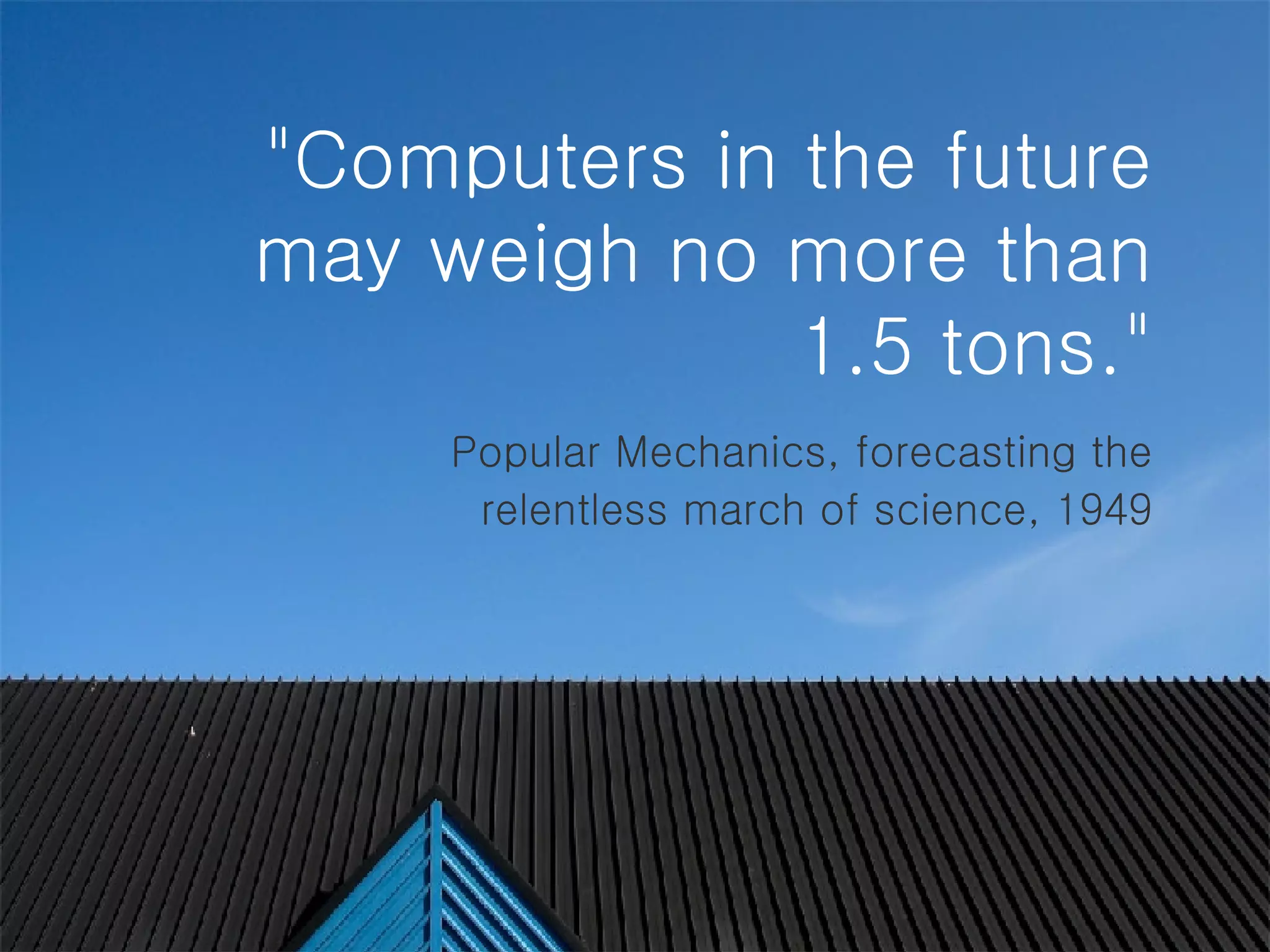
"Computers in the future may weigh no more than 1.5 tons."   Popular Mechanics, forecasting the relentless march of science, 1949
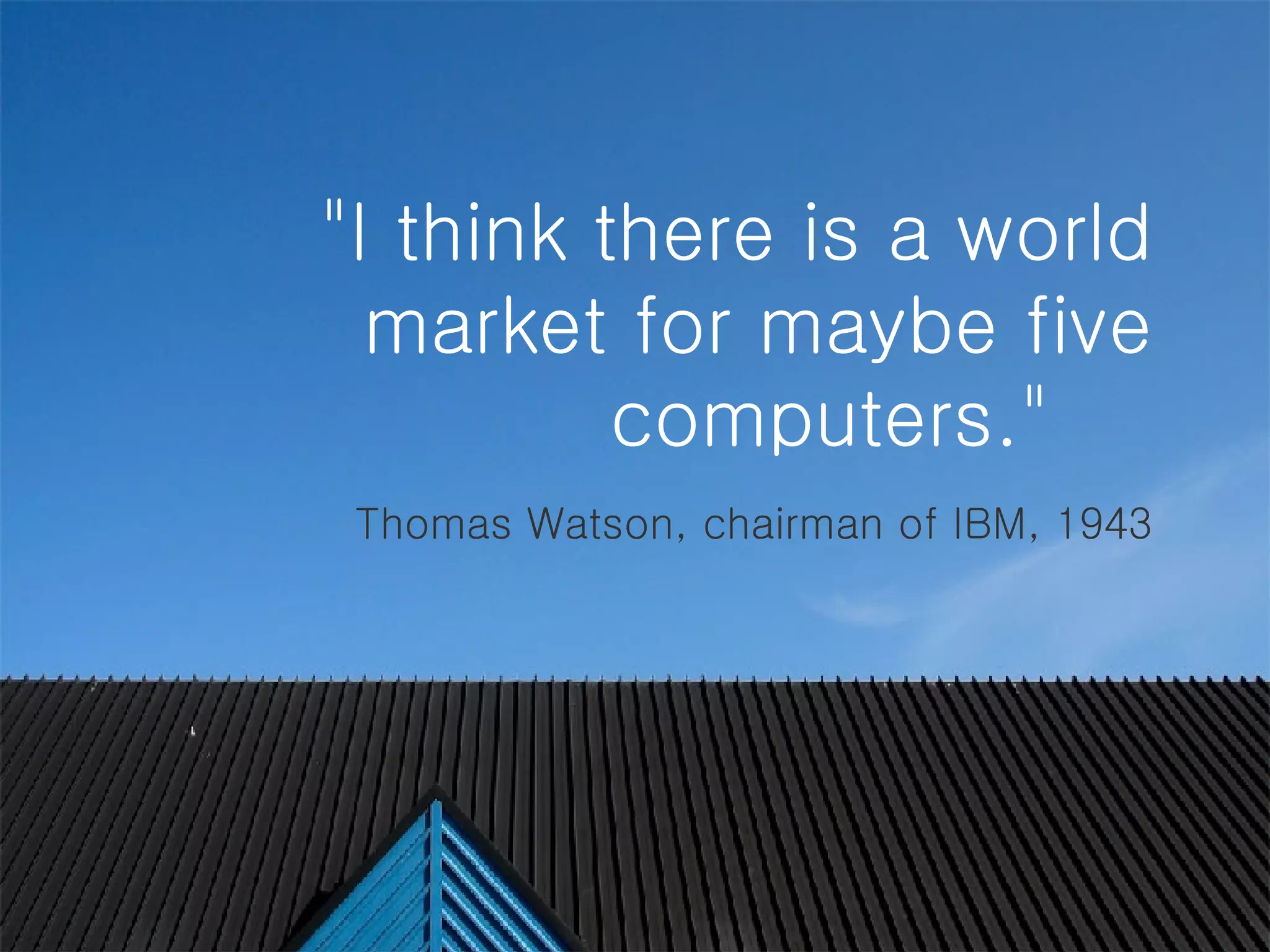
"I think there is a world market for maybe five computers."    Thomas Watson, chairman of IBM, 1943
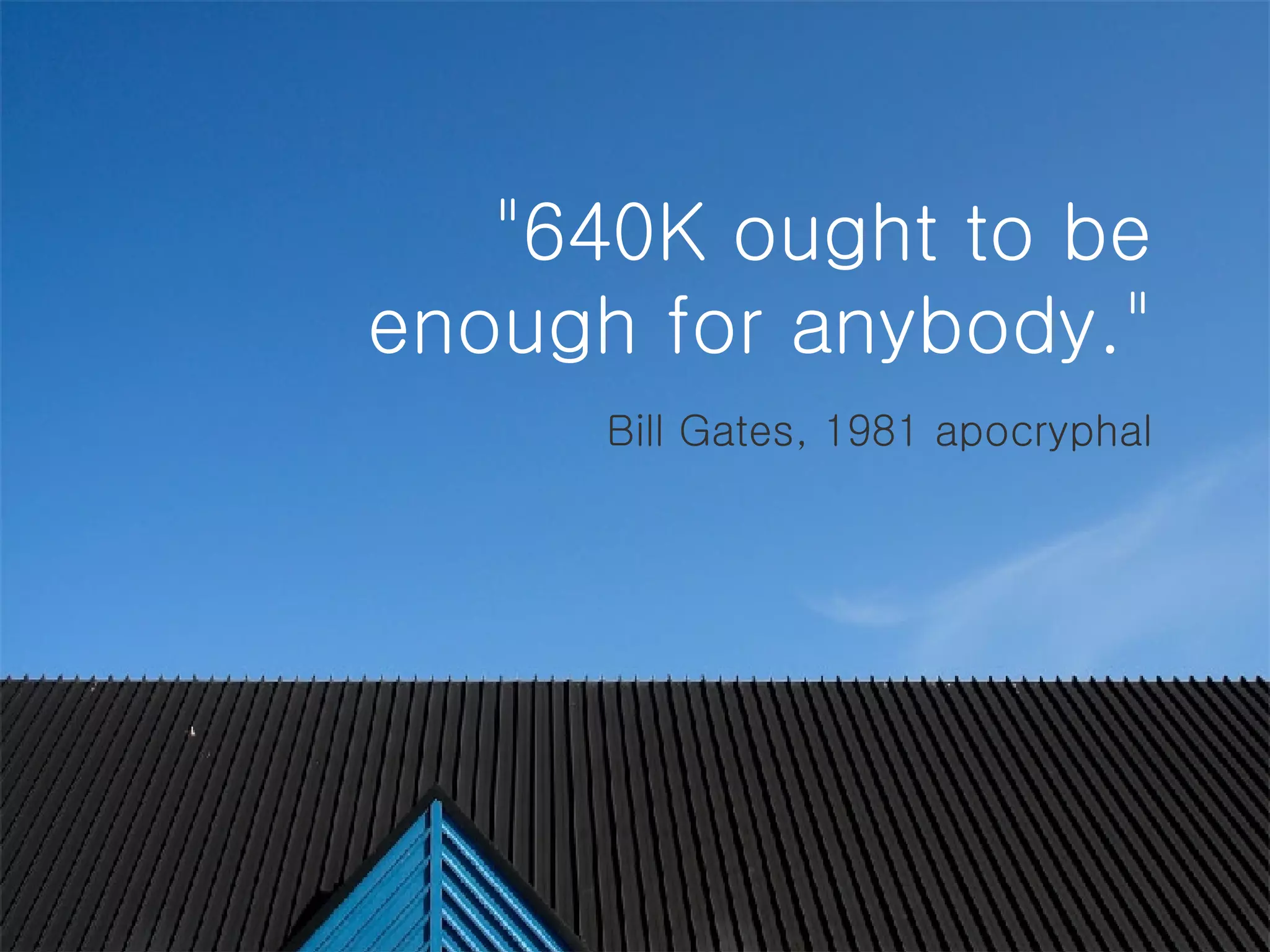
"640K ought to be enough for anybody."   Bill Gates, 1981 apocryphal
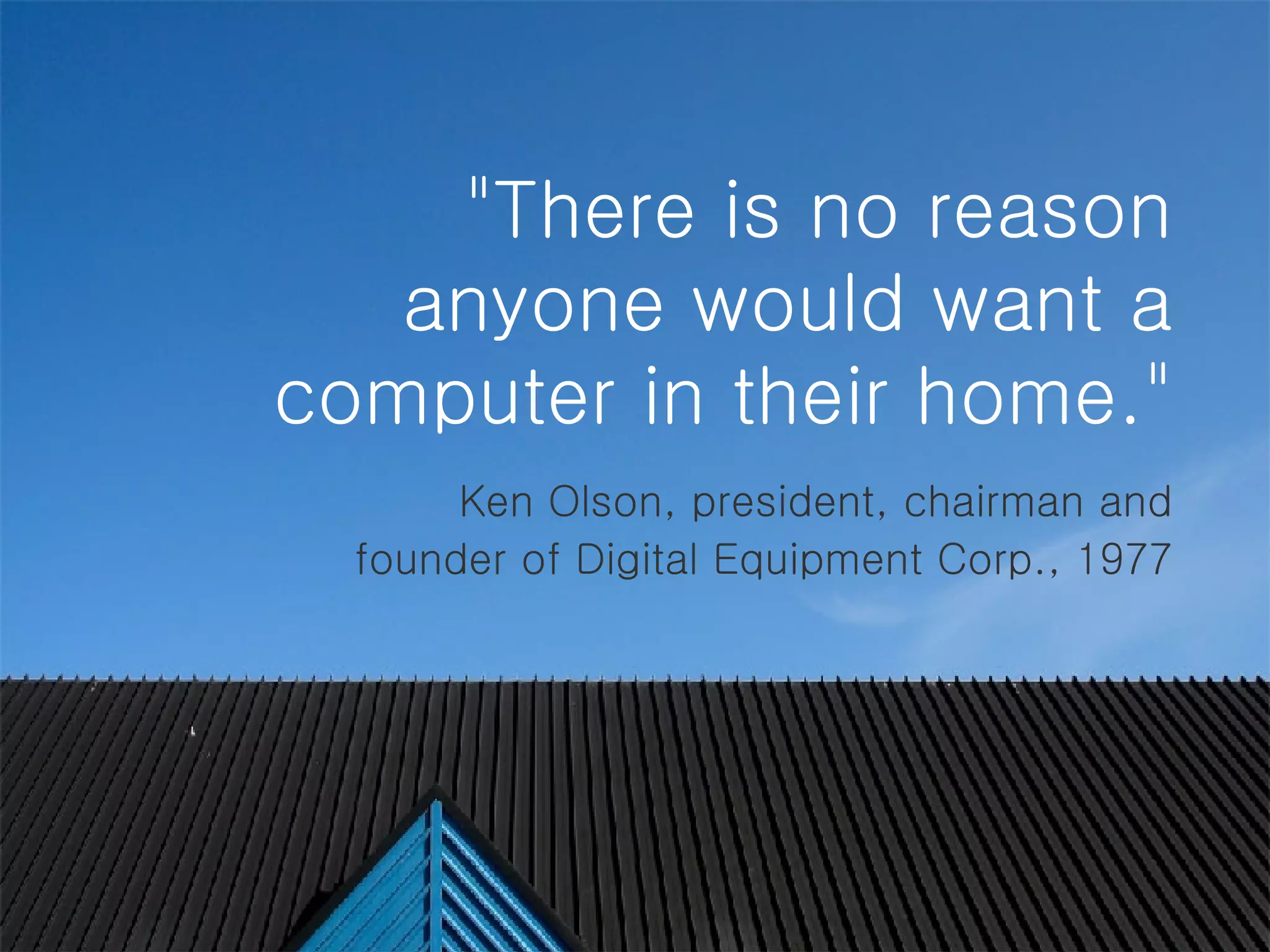
  "There is no reason anyone would want a computer in their home."   Ken Olson, president, chairman and founder of Digital Equipment Corp., 1977
internet  connectivity Dirt cheap, lightening fast & “always on” internet Computers light, dumb terminals: need net connection to work Most applications web-based for best efficiency IMG SRC: Flickr
all digital devices will be connected & networked From your car, radio, phone, fridge... “always on” An unconnected digital device will be a strange thing WiMax connected sunglasses with voice prompted HUD?
rise of the  mobile internet Rapid improvements in connectivity & screens Mobile to be dominant platform for connecting to net worldwide Japan: happened already (mostly surf web through phones) Voice calls powered by internet & SMS/Texts -> IM  Cellphones electronic wallets & banks = main method of payment Citizens vote for first time in elections via mobile phones?
rise of individual  & entrepreneur Open source = unprecedented access to code & applications Cheap to create business online & make own media Teenager in basement same opp. as worker in big company EXAMPLE: New mobile operating system (Android)?
strides against digital divide Developing world joins digital ecosystem via mobile phones Also become part of economy via cellphone wallet Mobile phones cheap & broadband ubiquitous Illiteracy issues overcome by video & audio streams Creates new areas of collaboration and education
almost no privacy  on the web Your data will be out there It will be ok because everyone will be in the same boat Seeing already with soc. networking services like FB
the rise of the  virtual universe Virtual worlds like Second life go mainstream Come to fore as graphic cards & broadband improve Potentially a visual alternative to the world wide web Standards: different worlds connect to each other seamlessly Virtual coup d’etat by SL citizens? Linden Labs cedes SL to democratically elected virtual govt
information pollution & overload Next big challenge is how to manage masses of information People will complain about "digital fatigue“ & digital noise Focus on developing filters & aggregators “ Switch-off" holidays regularly prescribed by your doctor Rise of anti-digital movements urging “get back to basics” In response to clutter, a second world wide web announced
more googles  & facebooks Google & Facebook finally get good competition Microsoft releases OS code and goes open source MS makes revenue by selling advertising & giving support Advertising is main bus. model (connecting sellers & buyers) Facebook becomes a virtual OS/desktop, with MS influence
decline of the  nation state? Govt has less influence & control than ever before Technologies threaten existing power & economic relationships Also: music industry has resisted digital audio and Napster But oppressive regimes clamp down on internet Some countries regress into dark ages
...and media?
media distribution  & production All media eventually delivered via internet  Hardly any specialist print, tv, radio media companies left All fully converged, broadcasting & publishing via the net Media on many digital platforms MEDIA MEDIA MEDIA MEDIA MEDIA   MEDIA MEDIA MEDIA MEDIA MEDIA  MEDIA MEDIA MEDIA
fragmented media environment Non-media players become de facto media companies Media world filled with new competitors Cellphone operators, handset makers -> media companies Vodacom stop aggregating, start producing own content Operators  already  big media companies (Voda: 1,4m users) Battle between media & cellphone companies looming MEDIA MEDIA MEDIA MEDIA MEDIA   MEDIA MEDIA MEDIA MEDIA MEDIA  MEDIA MEDIA MEDIA
now everyone is a media player Barrier to entry drops even more dramatically Rise of the reader and the consumer  Readers: publishers, broadcasters: competitors & collaborators Small, converged media challenge media conglomerates MEDIA MEDIA MEDIA MEDIA MEDIA   MEDIA MEDIA MEDIA MEDIA MEDIA  MEDIA MEDIA MEDIA
role of media changes Also content aggregators, facilitators Business model: capture audience via all means Media companies look to own channels: deals for own phones? Content portals -> web applications & services Social networks as well as content hubs MEDIA MEDIA MEDIA MEDIA MEDIA   MEDIA MEDIA MEDIA MEDIA MEDIA  MEDIA MEDIA MEDIA
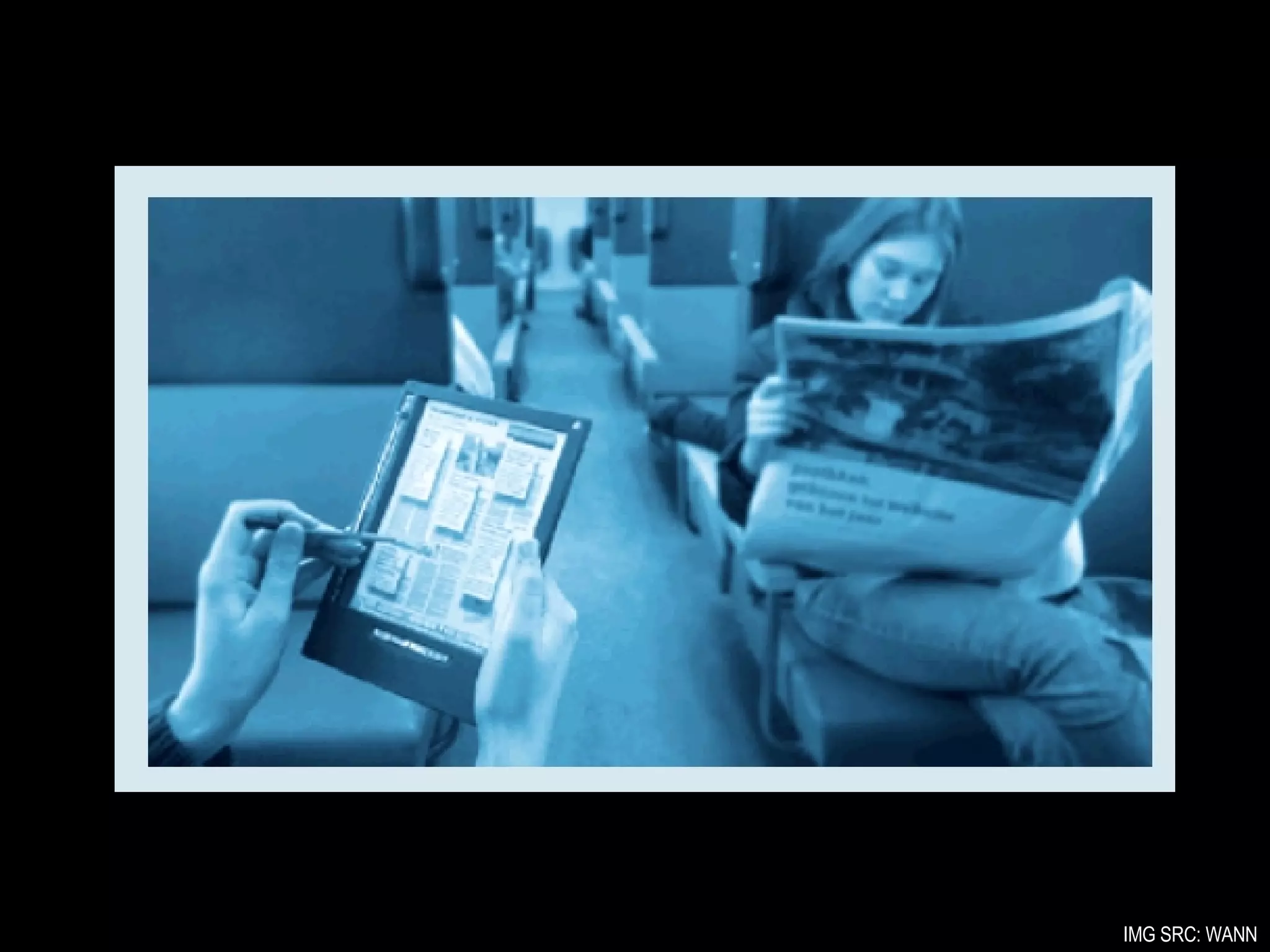
is this the  end of print? Books, newspapers magazines... Read on flexible digital boards, always connected  Websites & digital newspapers become “same thing” Newspapers smaller & niched, but not extinct Newspapers become expensive, luxury items A lifestyle item: buying an “experience”, part of “offtime” MEDIA MEDIA MEDIA MEDIA MEDIA   MEDIA MEDIA MEDIA MEDIA MEDIA  MEDIA MEDIA MEDIA
IMG SRC: WANN
...other developments
other trends for now & the future Semantic web entrenched Artificial intelligence Attention economy in full swing Sophisticated personalisation of content Location-based/mapping services common & mobile Virtualisation eg: Amazon’s EC2 & S3 services Web 14.0???...  ;-) SRC: Read Write/Web, Jaxon Rice, My blog
Forget capitalism and the class struggle... the  digital revolution is changing things far more dramatically than the hypemongers ever imagined... the move from a society dominated by print and broadcast mass media to the age of interactivity is  at least as dramatic as the move from feudalism to capitalism.   Netocracy,  by Jan Söderqvist and Alexander Bard (2001)   IMG SRC: Flickr
Driven by internet and mobile communications,  networks are turning into the major means of doing business ... Simply put,  networks will make the world go round.  So controlling the networks of this world will soon count for more than controlling the capital. Netocracy,  by Jan Söderqvist and Alexander Bard (2001)
thank you & questions also available @ www.slideshare.net/matthewbuckland contact @ [email_address]

Future Web Trends - at Innovation series with Jimmy Wales

  • 1.
    Matthew Buckland www.matthewbuckland.comGM: New Media, M&G Online future web trends innovation series 2007 with jimmy wales IMG SRC: Flickr
  • 2.
    the thing aboutpredictions... IMG SRC: Flickr
  • 3.
    "Computers in thefuture may weigh no more than 1.5 tons." Popular Mechanics, forecasting the relentless march of science, 1949
  • 4.
    "I think thereis a world market for maybe five computers." Thomas Watson, chairman of IBM, 1943
  • 5.
    "640K ought tobe enough for anybody." Bill Gates, 1981 apocryphal
  • 6.
    "Thereis no reason anyone would want a computer in their home." Ken Olson, president, chairman and founder of Digital Equipment Corp., 1977
  • 7.
    internet connectivityDirt cheap, lightening fast & “always on” internet Computers light, dumb terminals: need net connection to work Most applications web-based for best efficiency IMG SRC: Flickr
  • 8.
    all digital deviceswill be connected & networked From your car, radio, phone, fridge... “always on” An unconnected digital device will be a strange thing WiMax connected sunglasses with voice prompted HUD?
  • 9.
    rise of the mobile internet Rapid improvements in connectivity & screens Mobile to be dominant platform for connecting to net worldwide Japan: happened already (mostly surf web through phones) Voice calls powered by internet & SMS/Texts -> IM Cellphones electronic wallets & banks = main method of payment Citizens vote for first time in elections via mobile phones?
  • 10.
    rise of individual & entrepreneur Open source = unprecedented access to code & applications Cheap to create business online & make own media Teenager in basement same opp. as worker in big company EXAMPLE: New mobile operating system (Android)?
  • 11.
    strides against digitaldivide Developing world joins digital ecosystem via mobile phones Also become part of economy via cellphone wallet Mobile phones cheap & broadband ubiquitous Illiteracy issues overcome by video & audio streams Creates new areas of collaboration and education
  • 12.
    almost no privacy on the web Your data will be out there It will be ok because everyone will be in the same boat Seeing already with soc. networking services like FB
  • 13.
    the rise ofthe virtual universe Virtual worlds like Second life go mainstream Come to fore as graphic cards & broadband improve Potentially a visual alternative to the world wide web Standards: different worlds connect to each other seamlessly Virtual coup d’etat by SL citizens? Linden Labs cedes SL to democratically elected virtual govt
  • 14.
    information pollution &overload Next big challenge is how to manage masses of information People will complain about "digital fatigue“ & digital noise Focus on developing filters & aggregators “ Switch-off" holidays regularly prescribed by your doctor Rise of anti-digital movements urging “get back to basics” In response to clutter, a second world wide web announced
  • 15.
    more googles & facebooks Google & Facebook finally get good competition Microsoft releases OS code and goes open source MS makes revenue by selling advertising & giving support Advertising is main bus. model (connecting sellers & buyers) Facebook becomes a virtual OS/desktop, with MS influence
  • 16.
    decline of the nation state? Govt has less influence & control than ever before Technologies threaten existing power & economic relationships Also: music industry has resisted digital audio and Napster But oppressive regimes clamp down on internet Some countries regress into dark ages
  • 17.
  • 18.
    media distribution & production All media eventually delivered via internet Hardly any specialist print, tv, radio media companies left All fully converged, broadcasting & publishing via the net Media on many digital platforms MEDIA MEDIA MEDIA MEDIA MEDIA MEDIA MEDIA MEDIA MEDIA MEDIA MEDIA MEDIA MEDIA
  • 19.
    fragmented media environmentNon-media players become de facto media companies Media world filled with new competitors Cellphone operators, handset makers -> media companies Vodacom stop aggregating, start producing own content Operators already big media companies (Voda: 1,4m users) Battle between media & cellphone companies looming MEDIA MEDIA MEDIA MEDIA MEDIA MEDIA MEDIA MEDIA MEDIA MEDIA MEDIA MEDIA MEDIA
  • 20.
    now everyone isa media player Barrier to entry drops even more dramatically Rise of the reader and the consumer Readers: publishers, broadcasters: competitors & collaborators Small, converged media challenge media conglomerates MEDIA MEDIA MEDIA MEDIA MEDIA MEDIA MEDIA MEDIA MEDIA MEDIA MEDIA MEDIA MEDIA
  • 21.
    role of mediachanges Also content aggregators, facilitators Business model: capture audience via all means Media companies look to own channels: deals for own phones? Content portals -> web applications & services Social networks as well as content hubs MEDIA MEDIA MEDIA MEDIA MEDIA MEDIA MEDIA MEDIA MEDIA MEDIA MEDIA MEDIA MEDIA
  • 22.
    is this the end of print? Books, newspapers magazines... Read on flexible digital boards, always connected Websites & digital newspapers become “same thing” Newspapers smaller & niched, but not extinct Newspapers become expensive, luxury items A lifestyle item: buying an “experience”, part of “offtime” MEDIA MEDIA MEDIA MEDIA MEDIA MEDIA MEDIA MEDIA MEDIA MEDIA MEDIA MEDIA MEDIA
  • 23.
  • 24.
  • 25.
    other trends fornow & the future Semantic web entrenched Artificial intelligence Attention economy in full swing Sophisticated personalisation of content Location-based/mapping services common & mobile Virtualisation eg: Amazon’s EC2 & S3 services Web 14.0???... ;-) SRC: Read Write/Web, Jaxon Rice, My blog
  • 26.
    Forget capitalism andthe class struggle... the digital revolution is changing things far more dramatically than the hypemongers ever imagined... the move from a society dominated by print and broadcast mass media to the age of interactivity is at least as dramatic as the move from feudalism to capitalism. Netocracy, by Jan Söderqvist and Alexander Bard (2001) IMG SRC: Flickr
  • 27.
    Driven by internetand mobile communications, networks are turning into the major means of doing business ... Simply put, networks will make the world go round. So controlling the networks of this world will soon count for more than controlling the capital. Netocracy, by Jan Söderqvist and Alexander Bard (2001)
  • 28.
    thank you &questions also available @ www.slideshare.net/matthewbuckland contact @ [email_address]