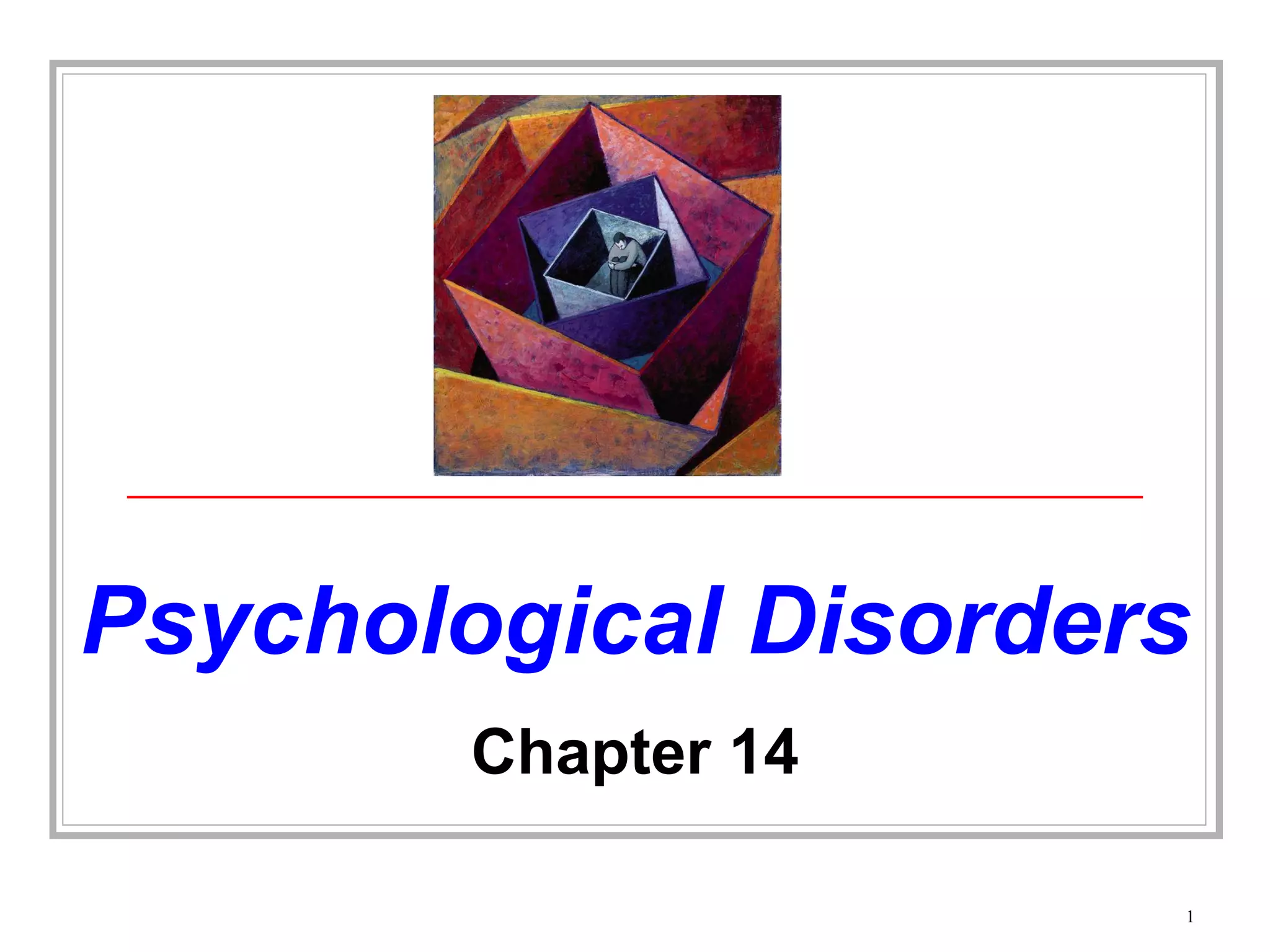
Psychological Disorders Chapter 14
Psychological Disorders I felt the need to clean my room … would spend four to five hours at it… At the time I loved doing it. Then I didn't want to do it any more, but I couldn’t stop… The clothes hung… two fingers apart… I touched my bedroom wall before leaving the house… I had constant anxiety… I thought I might be nuts. Marc, diagnosed with obsessive-compulsive disorder (from Summers, 1996)
Psychological Disorders People are fascinated by the exceptional, the unusual, and the abnormal. This fascination may be caused by two reasons: During various moments we feel, think, and act like an abnormal individual. Psychological disorders may bring unexplained physical symptoms, irrational fears, and suicidal thoughts.
Psychological Disorders To study the abnormal is the best way of understanding the normal. There are 450 million people suffering from psychological disorders (WHO, 2004). Depression and schizophrenia exist in all cultures of the world. William James (1842-1910)
Defining Psychological Disorders Mental health workers view  psychological disorders  as persistently harmful thoughts, feelings, and actions. When behavior is  deviant, distressful, and dysfunctional   psychiatrists and psychologists label it as disordered (Comer, 2004).
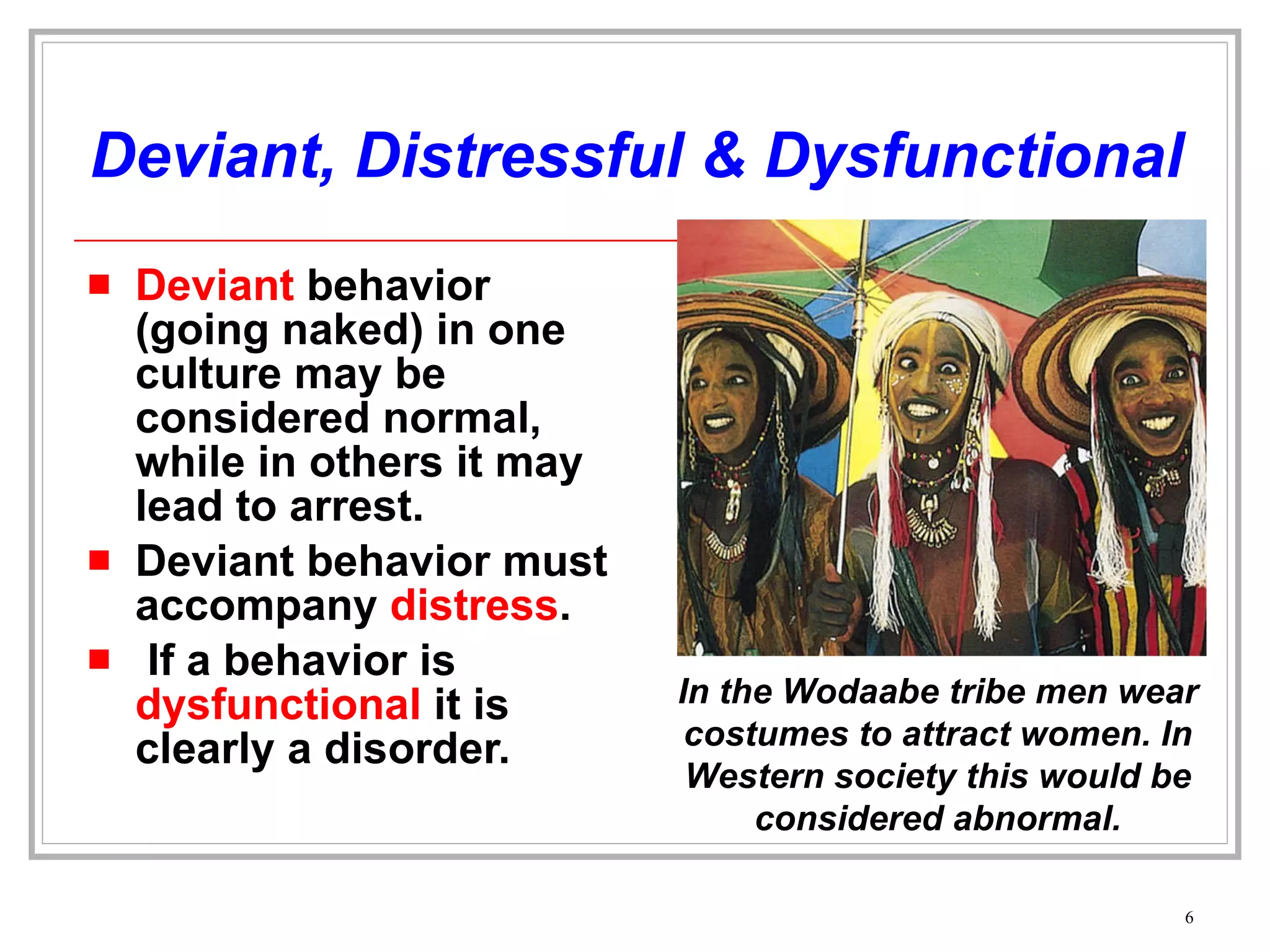
Deviant, Distressful & Dysfunctional Deviant  behavior (going naked) in one culture may be considered normal, while in others it may lead to arrest. Deviant behavior must accompany  distress . If a behavior is  dysfunctional  it is clearly a disorder. In the Wodaabe tribe men wear costumes to attract women. In Western society this would be considered abnormal.
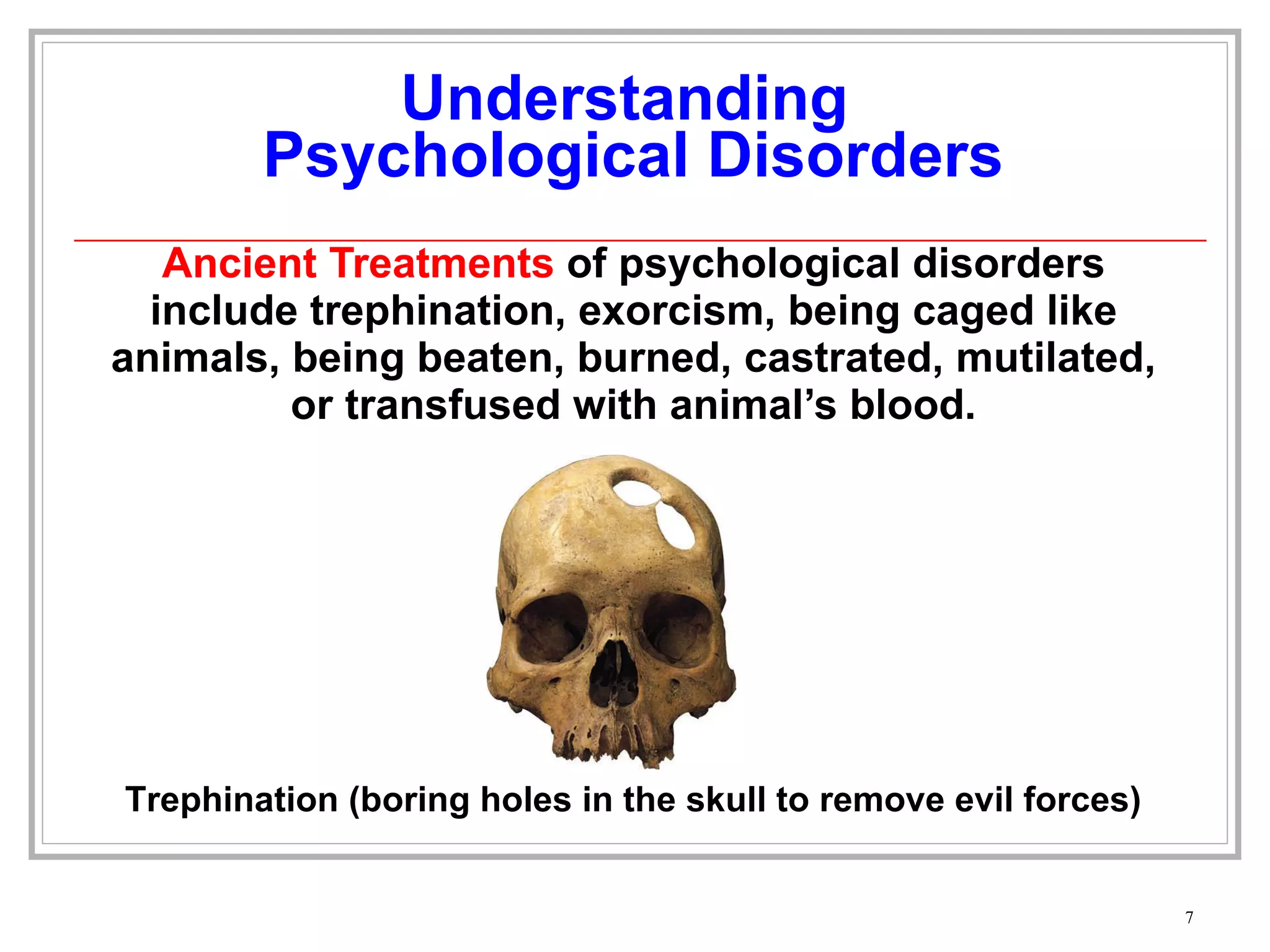
Understanding  Psychological Disorders Ancient Treatments  of psychological disorders include trephination, exorcism, being caged like animals, being beaten, burned, castrated, mutilated, or transfused with animal’s blood. Trephination (boring holes in the skull to remove evil forces)
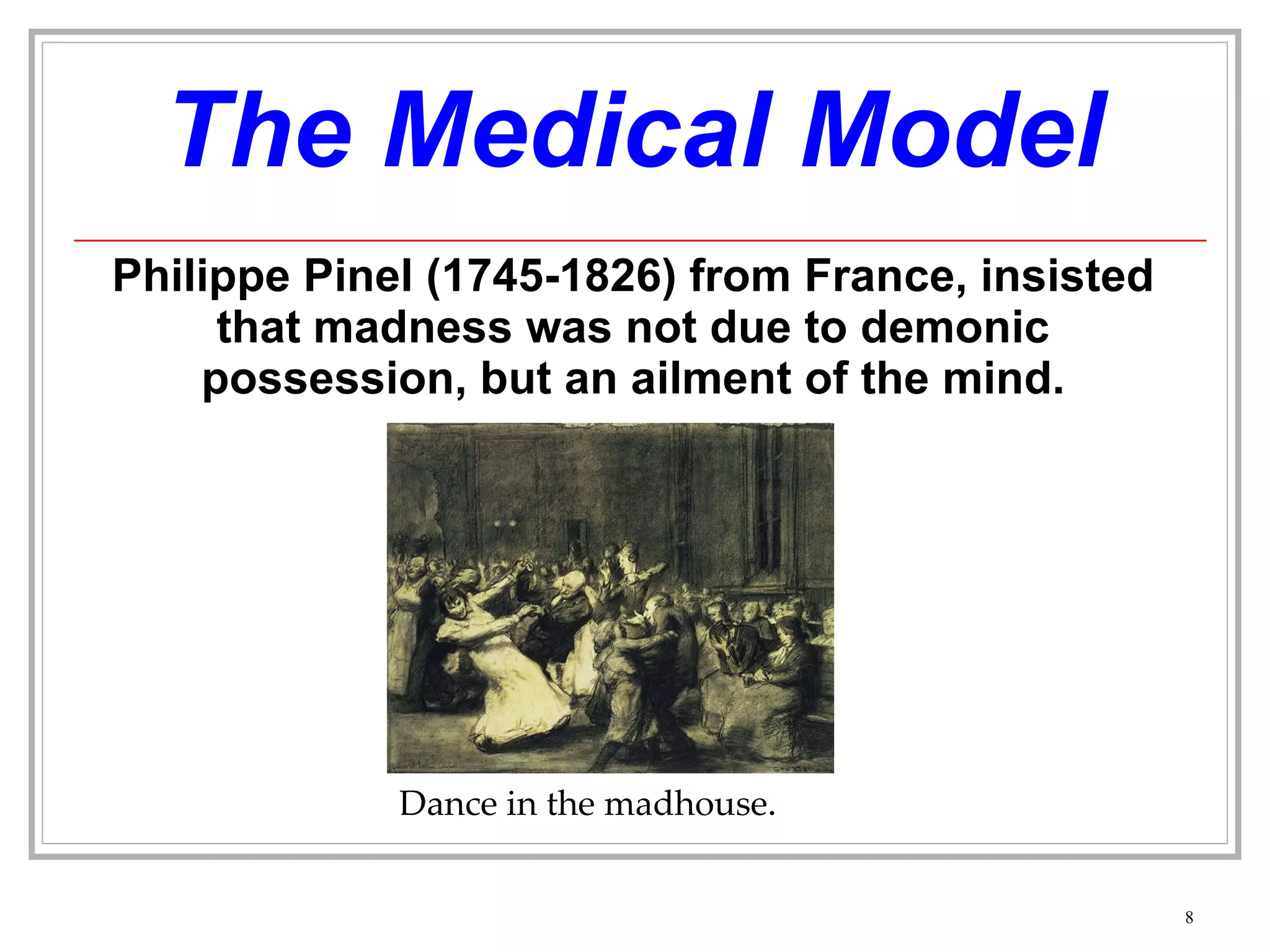
The Medical Model Philippe Pinel (1745-1826) from France, insisted that madness was not due to demonic possession, but an ailment of the mind. Dance in the madhouse.
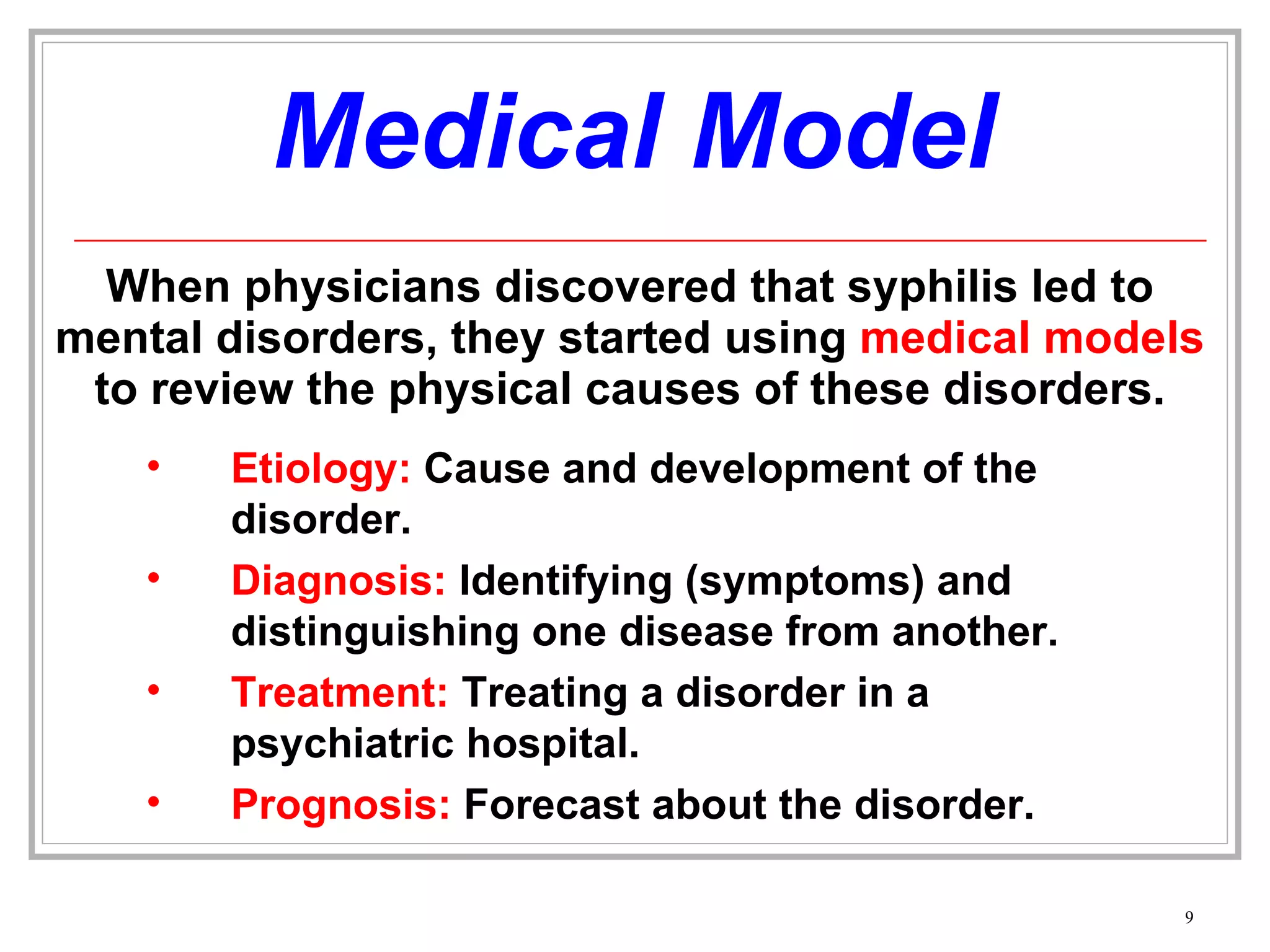
Medical Model When physicians discovered that syphilis led to mental disorders, they started using  medical models  to review the physical causes of these disorders. Etiology:  Cause and development of the disorder. Diagnosis:  Identifying (symptoms) and distinguishing one disease from another. Treatment:  Treating a disorder in a psychiatric hospital. Prognosis:  Forecast about the disorder.
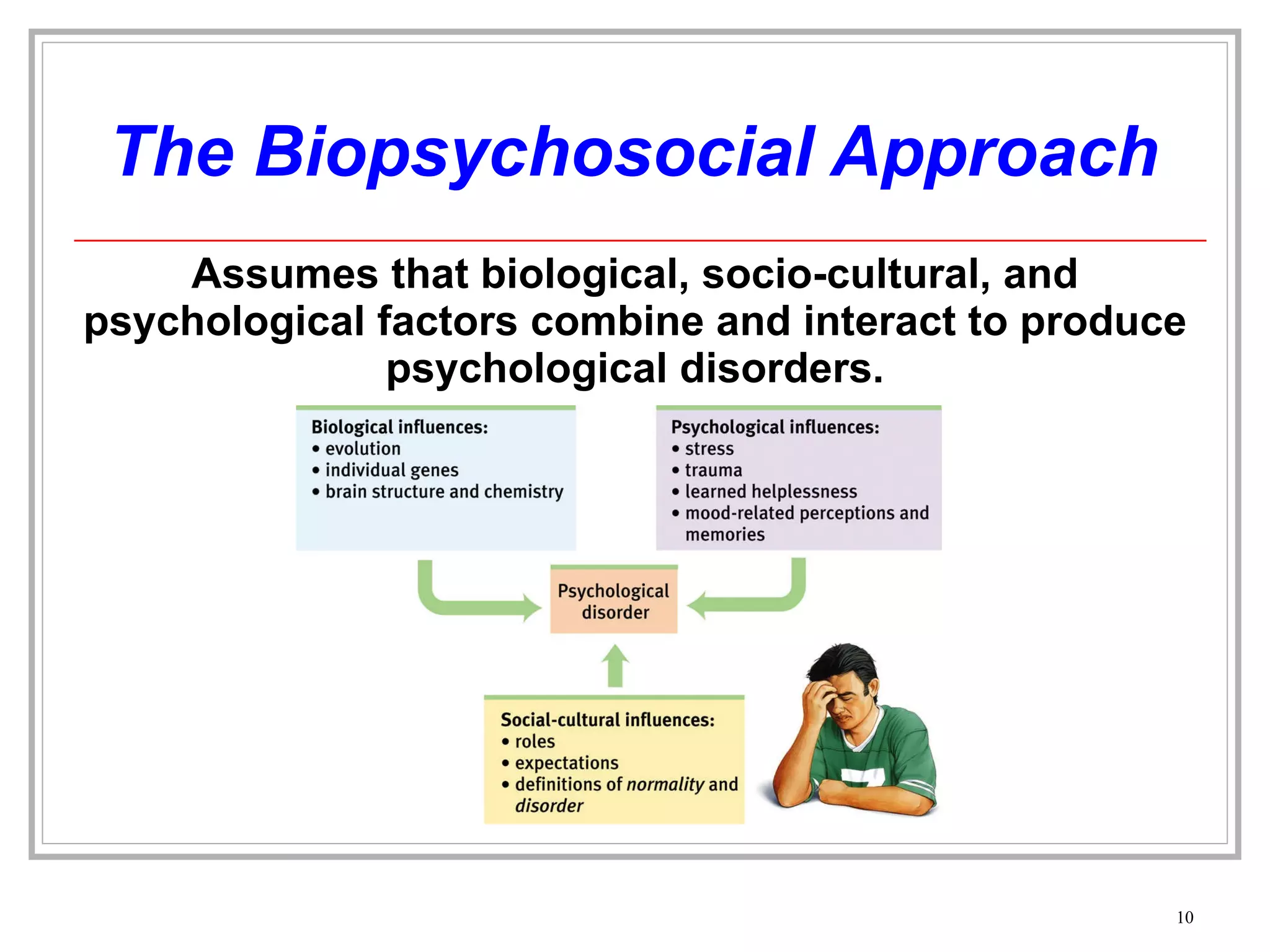
The Biopsychosocial Approach Assumes that biological, socio-cultural, and psychological factors combine and interact to produce psychological disorders.
Classifying  Psychological Disorders The American Psychiatric Association ( APA ) rendered a Diagnostic and Statistical Manual of Mental Disorders ( DSM ) to describe psychological disorders. The most recent edition,  DSM-IV-TR  (Text Revision, 2000), describes 400 psychological disorders compared to 60 in the 1950s.
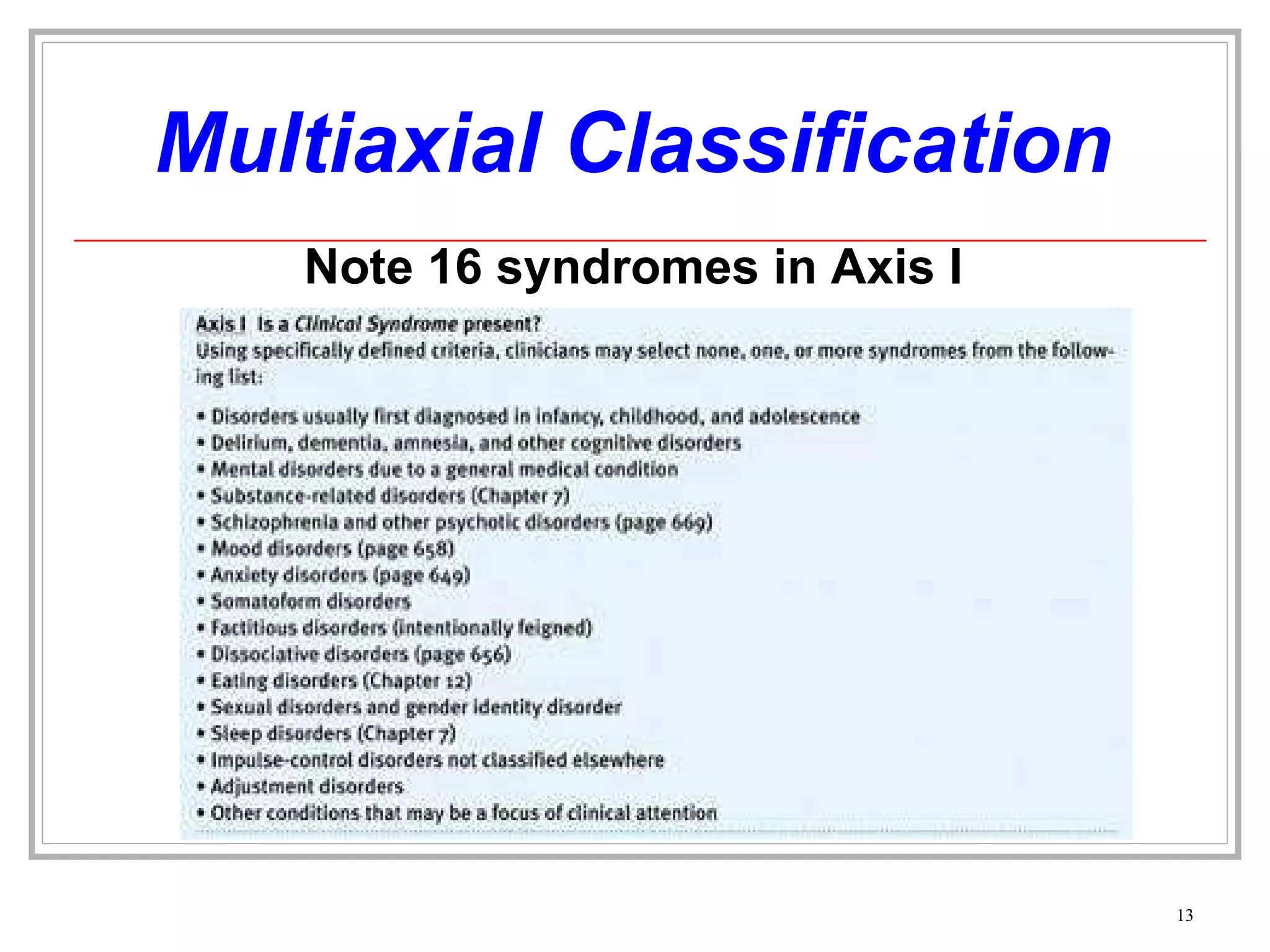
Multiaxial Classification Are  Psychosocial  or  Environmental Problems  (school or housing issues) also present? Axis IV What is the  Global Assessment  of the person’s functioning? Axis V Is a  General Medical Condition  (diabetes, hypertension or arthritis etc) also present? Axis III Is a  Personality Disorder  or  Mental Retardation  present? Axis II Is a  Clinical Syndrome  (cognitive, anxiety, mood disorders [16 syndromes]) present? Axis I
Multiaxial Classification Note 16 syndromes in Axis I
Multiaxial Classification Note Global Assessment for Axis V
Goals of DSM Describe (400) disorders. Determine how prevalent the disorder is. Disorders outlined by  DSM-IV  are reliable. Therefore, diagnoses by different professionals are similar. Others criticize DSM-IV for “putting any kind of behavior within the compass of psychiatry.”
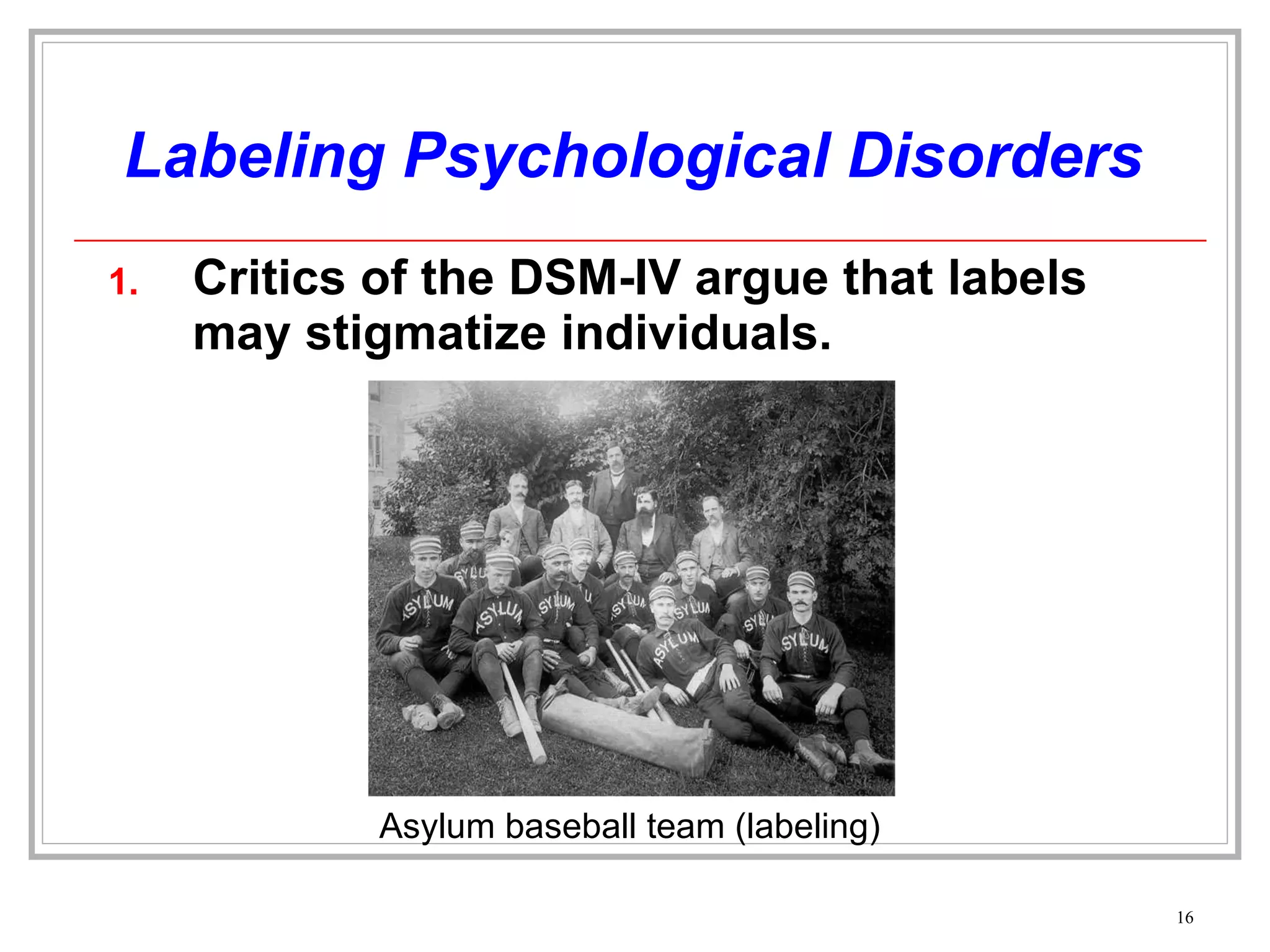
Labeling Psychological Disorders Critics of the DSM-IV argue that labels may stigmatize individuals. Asylum baseball team (labeling)
Labeling Psychological Disorders 2. Labels may be helpful for healthcare professionals when communicating with one another and establishing therapy.
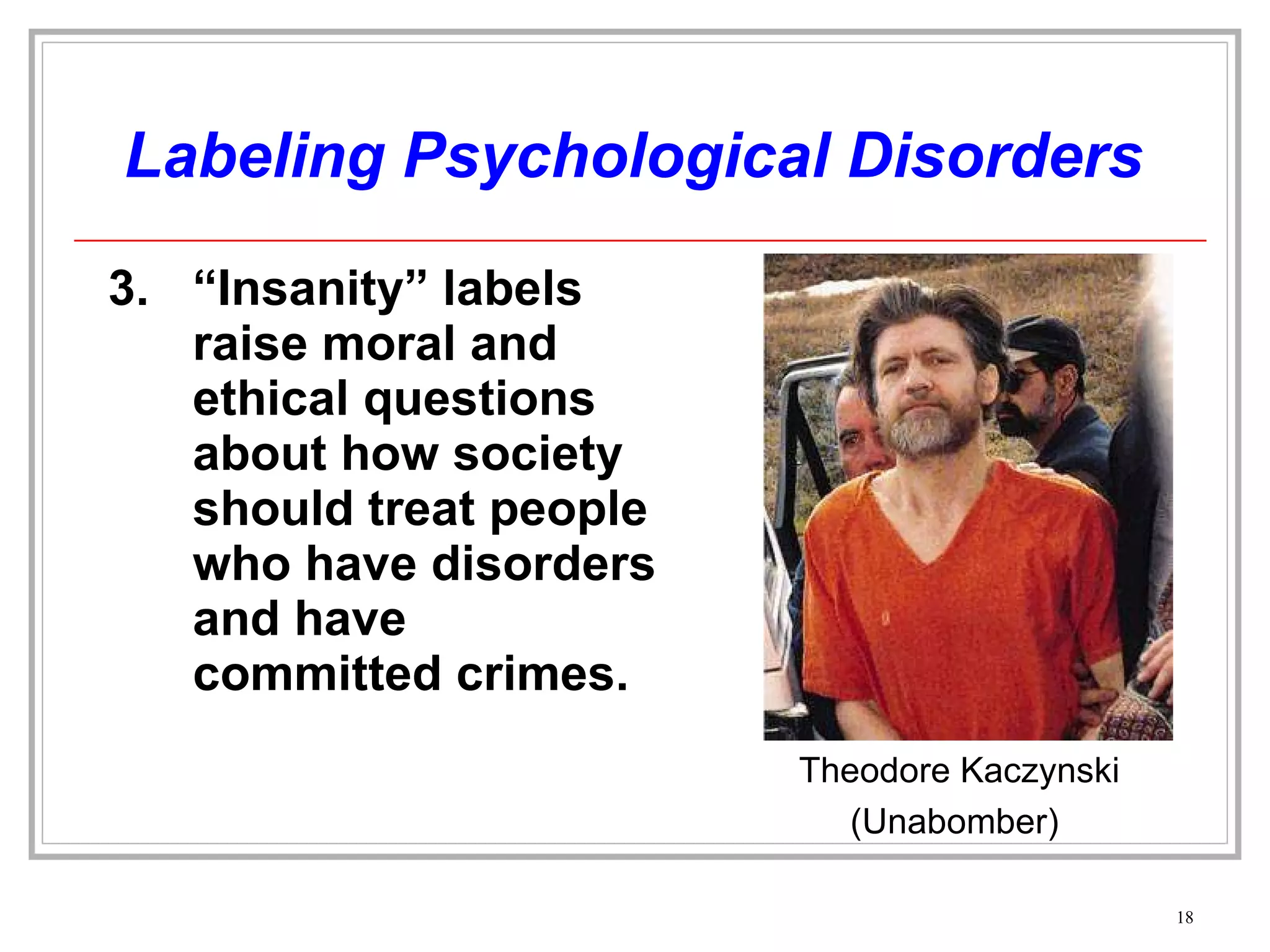
Labeling Psychological Disorders 3. “Insanity” labels raise moral and ethical questions about how society should treat people who have disorders and have committed crimes. Theodore Kaczynski (Unabomber)
Anxiety Disorders Feelings of excessive apprehension and anxiety. Generalized anxiety disorder Panic disorder Phobias Obsessive-compulsive disorder Post-traumatic stress disorder
Generalized Anxiety Disorder 1. Persistent and uncontrollable tenseness and apprehension. 2. Autonomic arousal. 3. Inability to identify or avoid the cause of certain feelings. Symptoms
Panic Disorder Minutes-long episodes of intense dread which may include feelings of terror, chest pains, choking, or other frightening sensations. Anxiety is a component of both disorders. It occurs more in the panic disorder, making people avoid situations that cause it. Symptoms
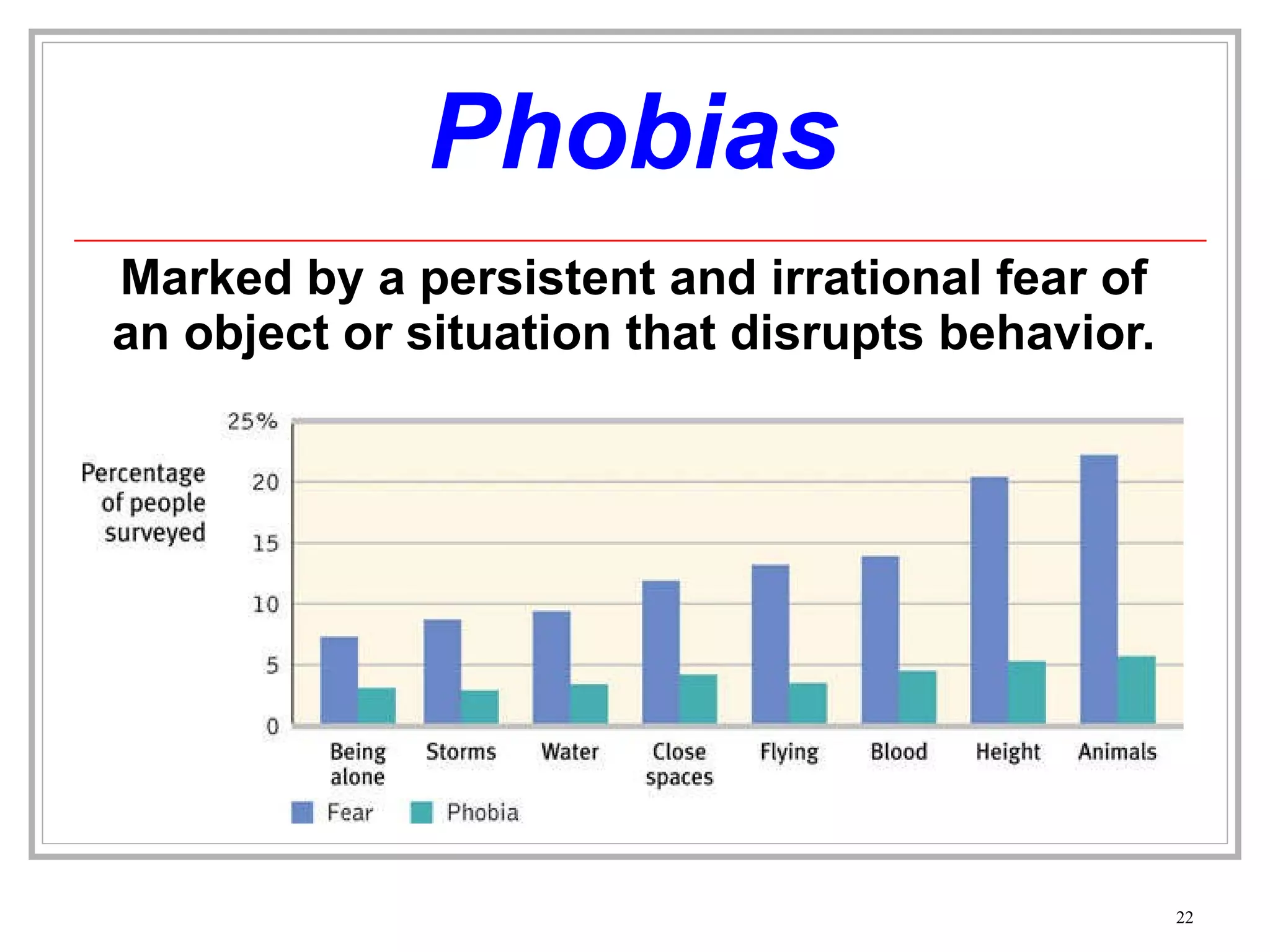
Phobias Marked by a persistent and irrational fear of an object or situation that disrupts behavior.
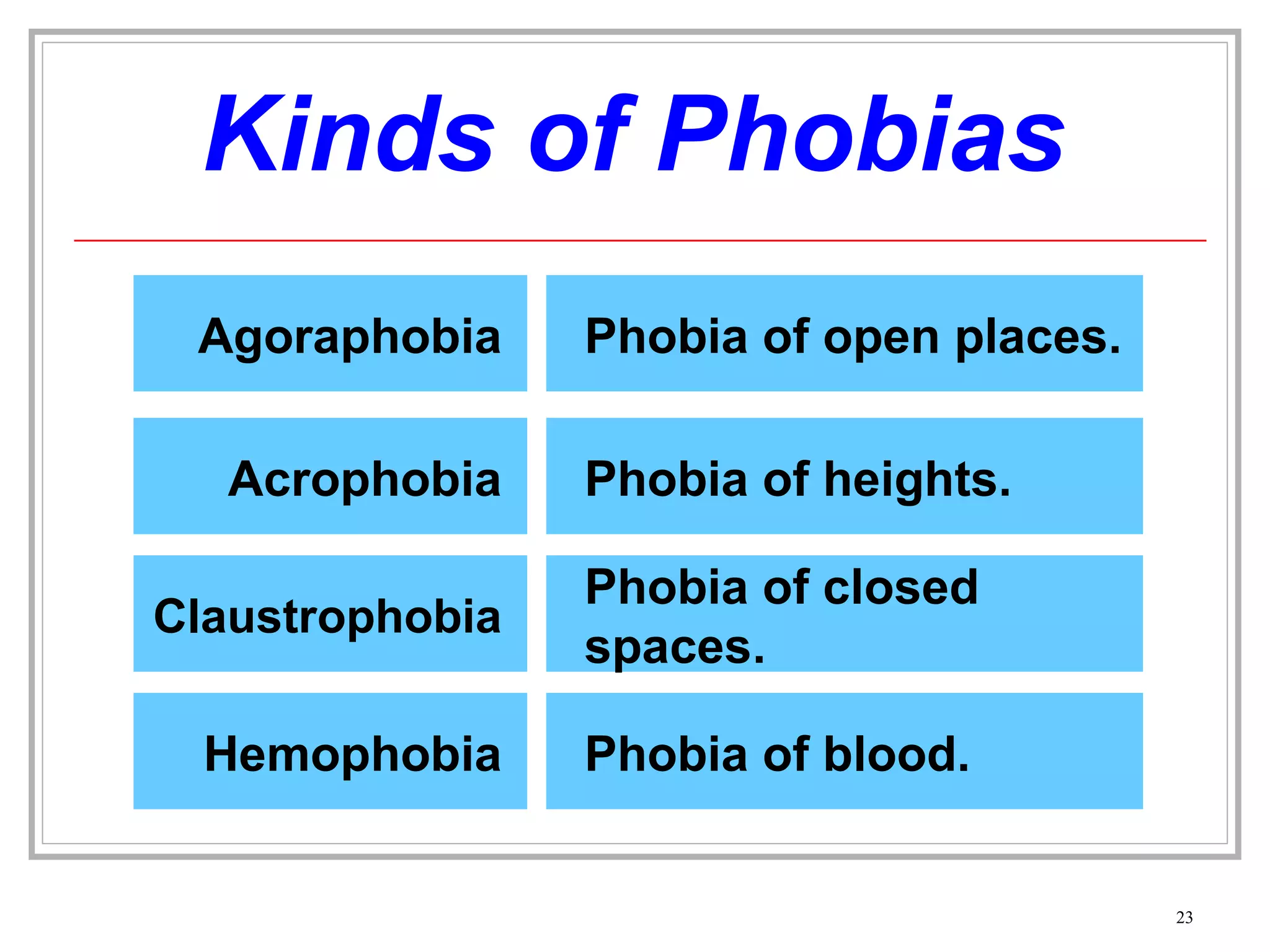
Kinds of Phobias Phobia of blood. Hemophobia Phobia of closed spaces. Claustrophobia Phobia of heights. Acrophobia Phobia of open places. Agoraphobia
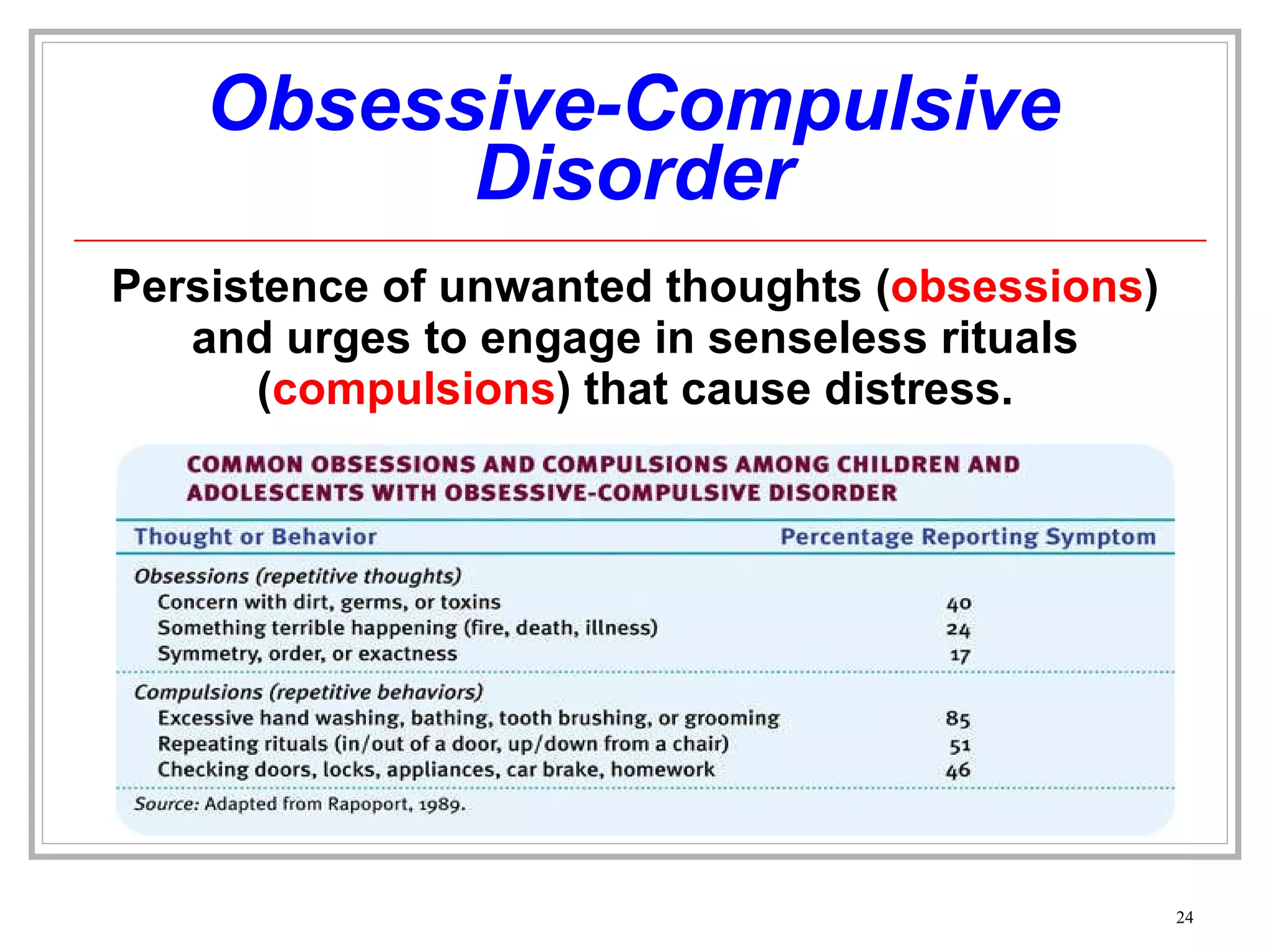
Obsessive-Compulsive Disorder Persistence of unwanted thoughts ( obsessions ) and urges to engage in senseless rituals ( compulsions ) that cause distress.
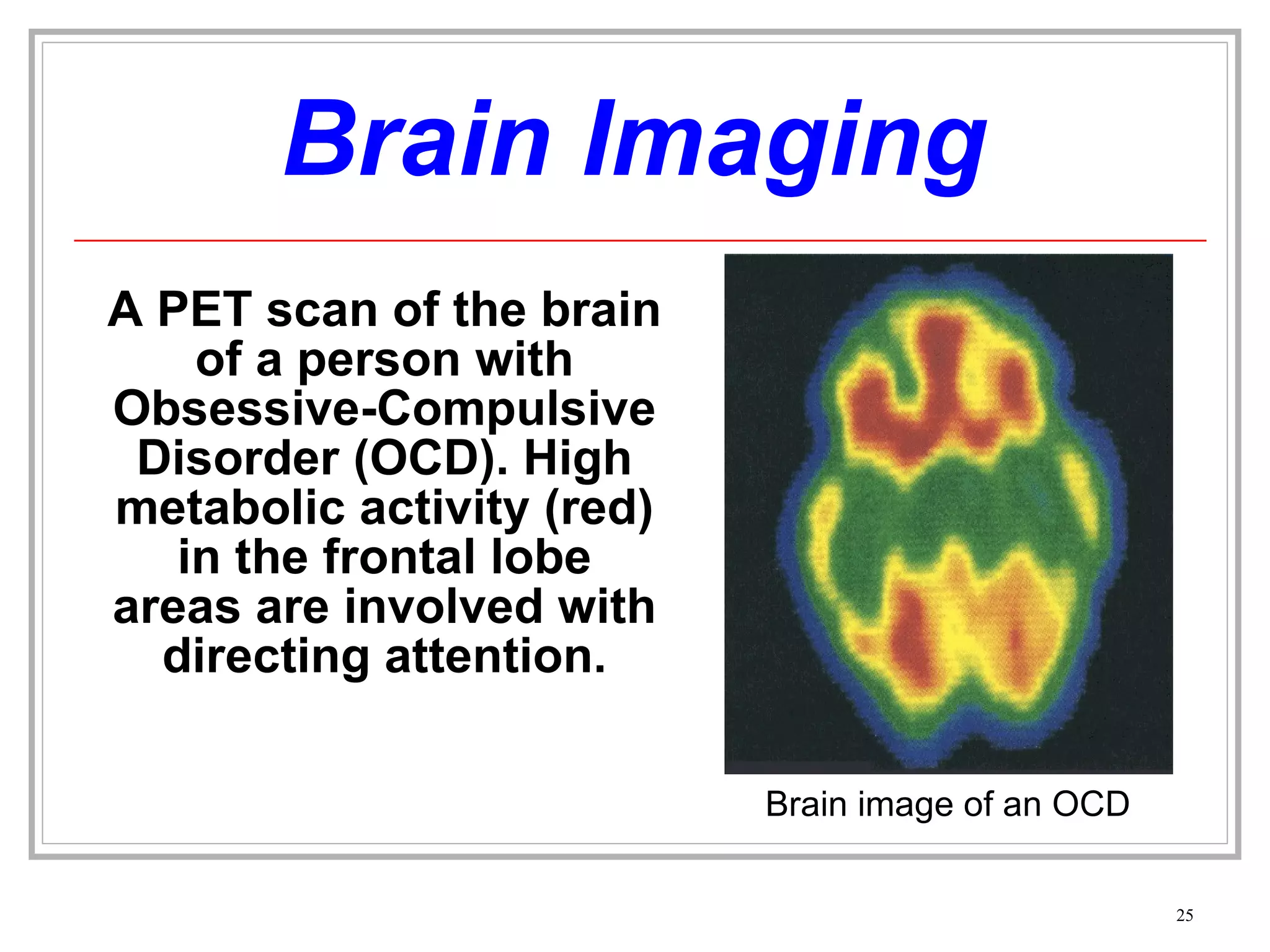
Brain Imaging A PET scan of the brain of a person with Obsessive-Compulsive Disorder (OCD). High metabolic activity (red) in the frontal lobe areas are involved with directing attention. Brain image of an OCD
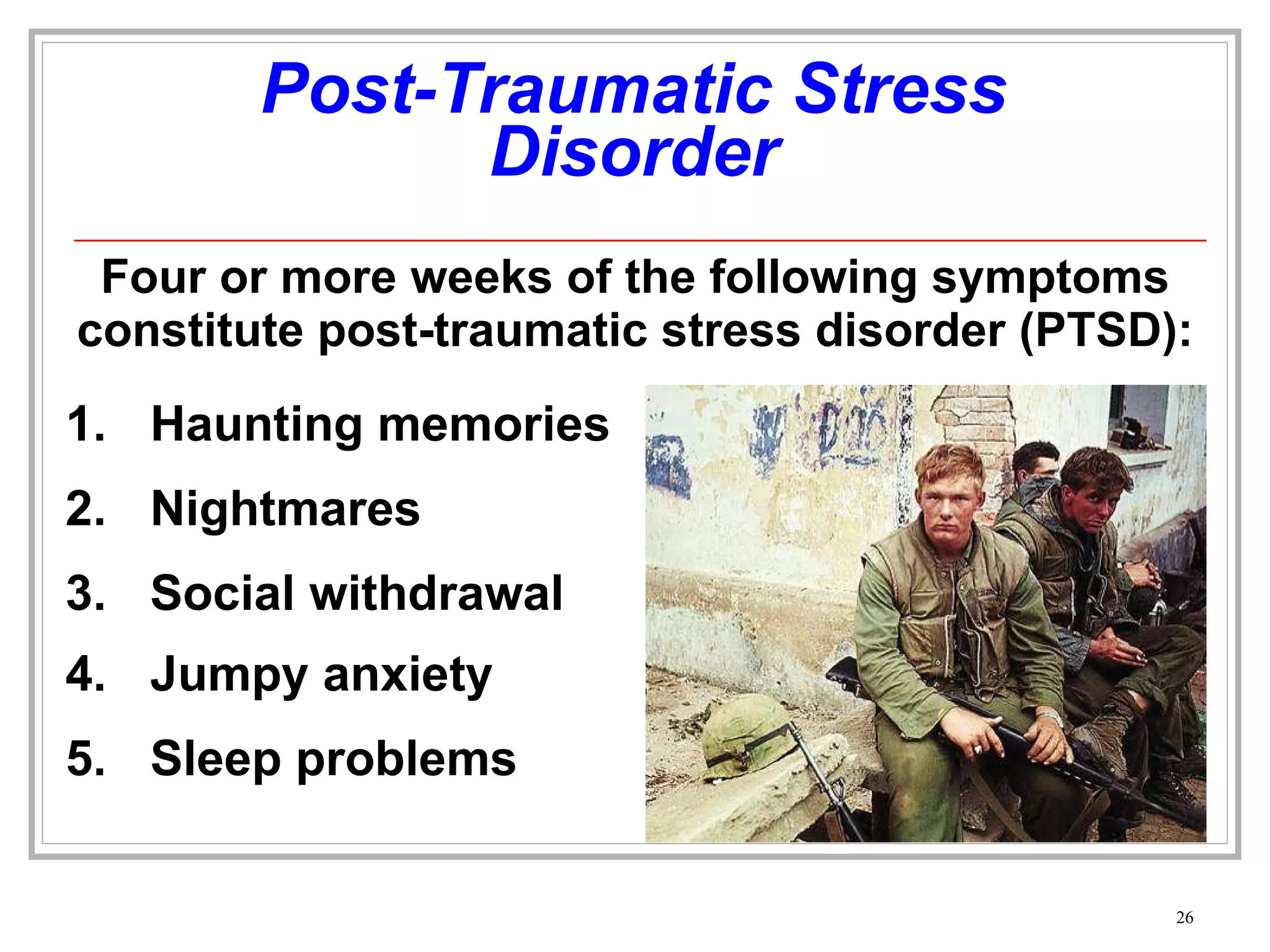
Post-Traumatic Stress Disorder Four or more weeks of the following symptoms constitute post-traumatic stress disorder (PTSD): Haunting memories 2. Nightmares 3. Social withdrawal 4. Jumpy anxiety 5. Sleep problems
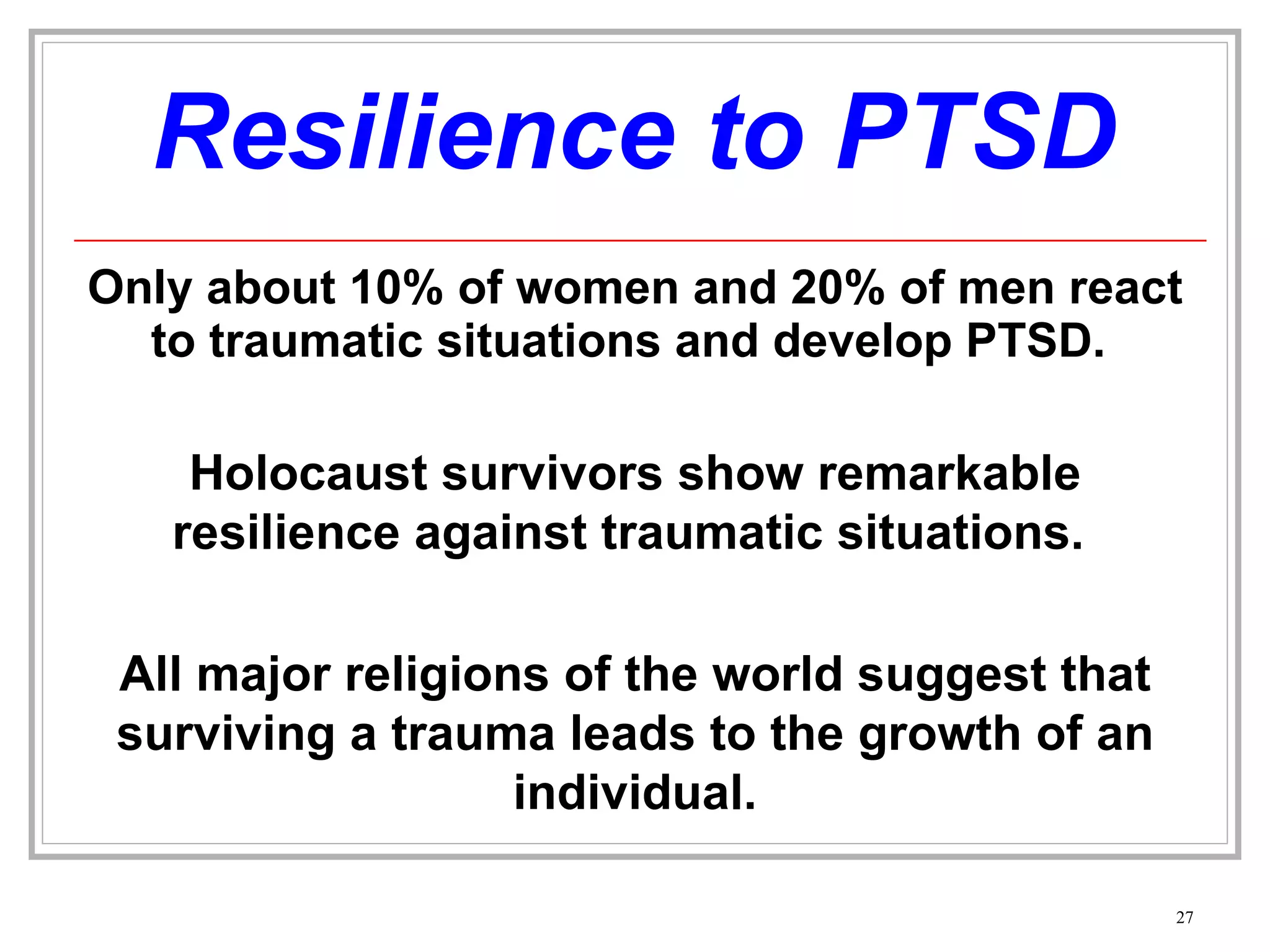
Resilience to PTSD Only about 10% of women and 20% of men react to traumatic situations and develop PTSD.  Holocaust survivors show remarkable resilience against traumatic situations.  All major religions of the world suggest that surviving a trauma leads to the growth of an individual.
Explaining Anxiety Disorders Freud suggested that we repress our painful and intolerable ideas, feelings, and thoughts, resulting in anxiety.
The Learning Perspective Learning theorists suggest that  fear conditioning  leads to anxiety. This anxiety then becomes associated with other objects or events (stimulus generalization) and is reinforced.
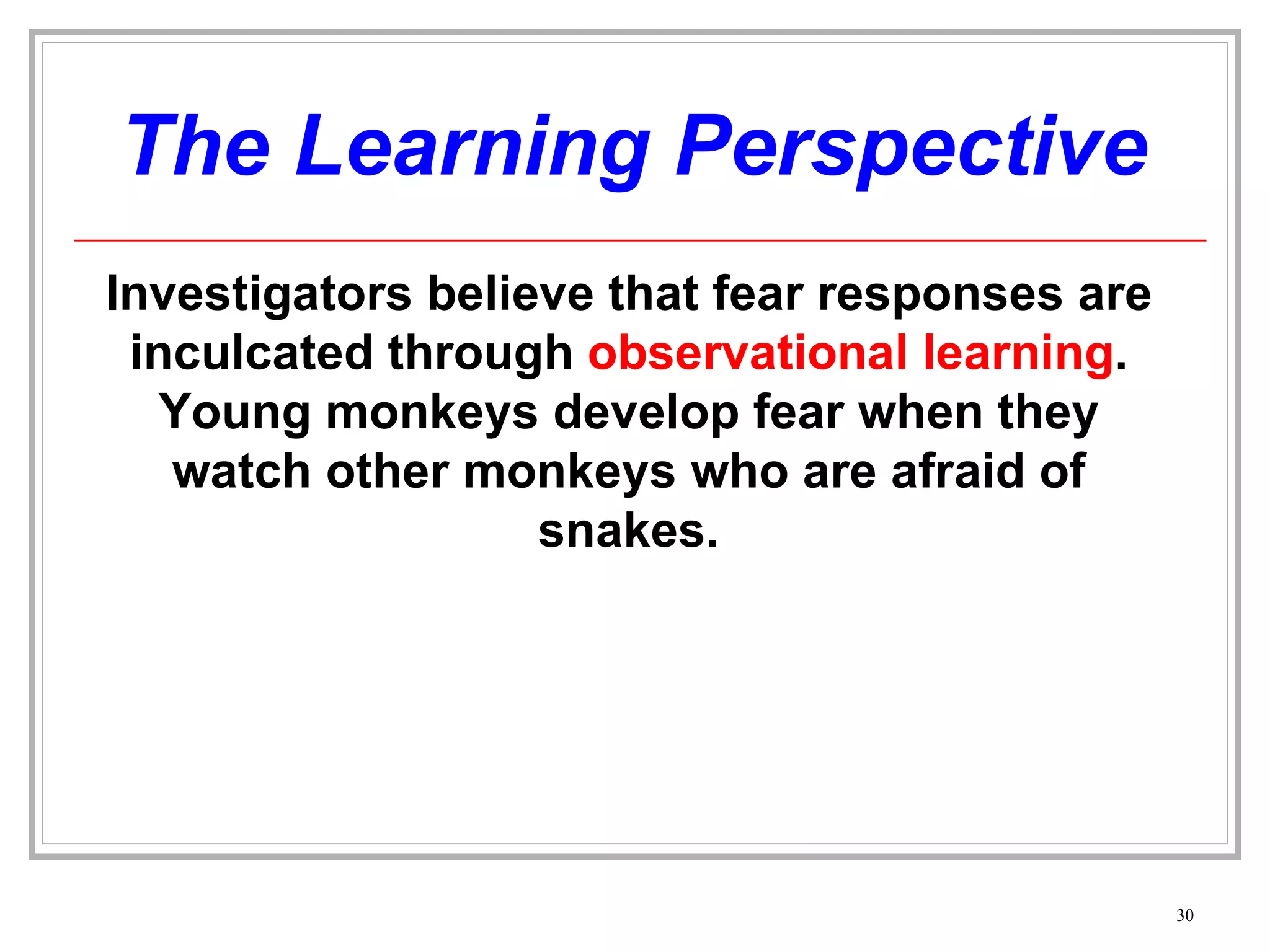
The Learning Perspective Investigators believe that fear responses are inculcated through  observational learning . Young monkeys develop fear when they watch other monkeys who are afraid of snakes.
The Biological Perspective Natural Selection  has led our ancestors to learn to fear snakes, spiders, and other animals. Therefore, fear preserves the species. Twin studies suggest that our  genes  may be partly responsible for developing fears and anxiety. Twins are more likely to share  phobias.
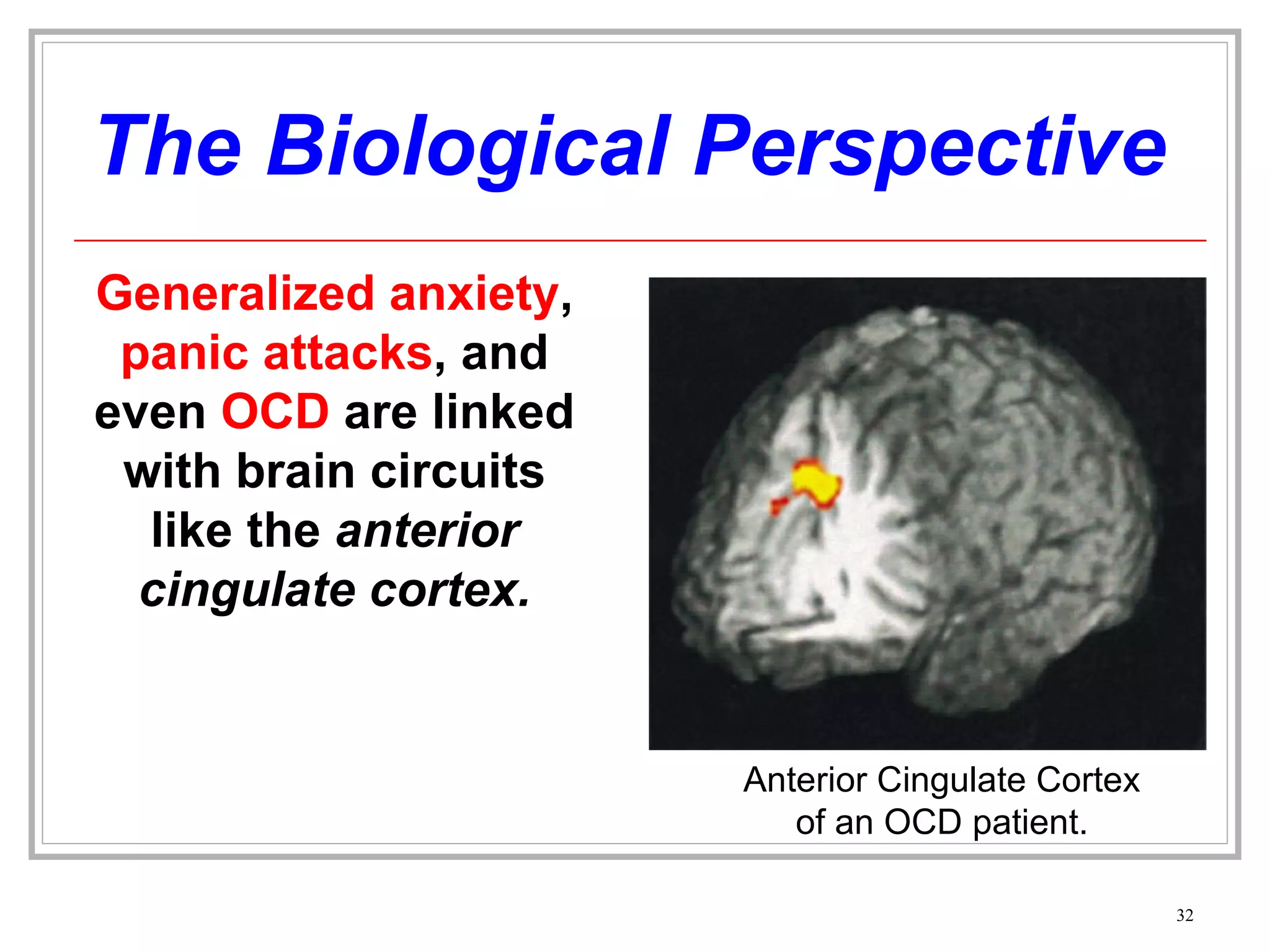
The Biological Perspective Generalized anxiety ,  panic attacks , and even  OCD  are linked with brain circuits like the  anterior cingulate cortex. Anterior Cingulate Cortex of an OCD patient.
Somatoform Disorders Physical symptoms that cannot be explained by a general medical condition.  The symptoms result from mental factors. Symptoms No physical causes found. 2. Physical or neurological impairment.  3. Normal bodily sensations exaggerated.
Somatoform Disorders Conversion Disorder When physical or neurological symptoms develop, when no physiological explanation can be found. Hypochondriasis A person interprets normal physical sensations as symptoms of a disease.
Dissociative Disorders Conscious awareness becomes separated (dissociated) from previous memories, thoughts, and feelings. Symptoms Having a sense of being unreal. 2. Being separated from the body. 3. Watching yourself as if in a movie.
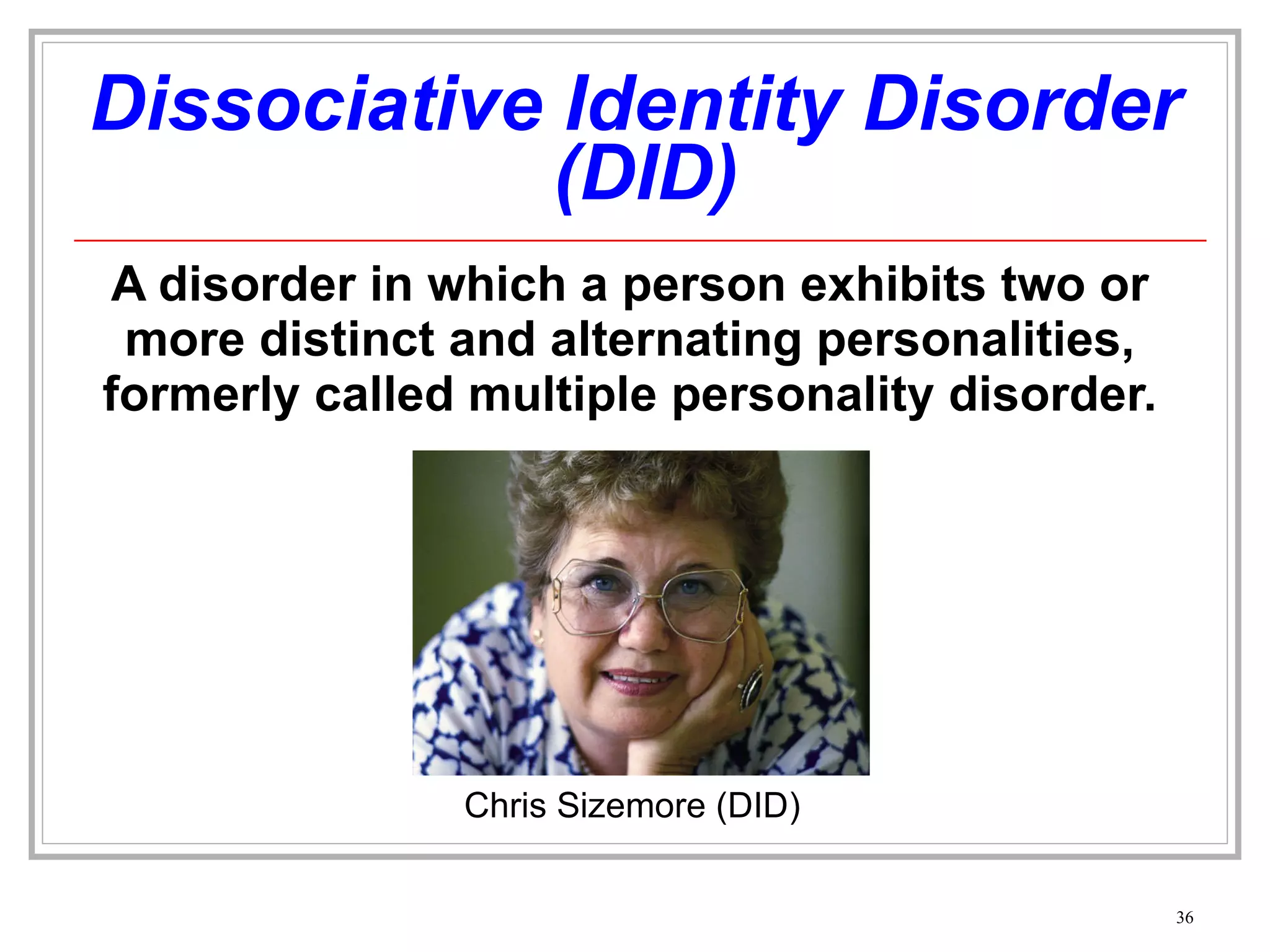
Dissociative Identity Disorder  (DID) A disorder in which a person exhibits two or more distinct and alternating personalities, formerly called multiple personality disorder. Chris Sizemore (DID)
DID Critics Critics argue that the diagnosis of DID increased in the late 20 th  century. DID has not been found in other countries. Critics’ Arguments Role-playing by people open to a therapist’s suggestion. 2. Learned response that reinforces reductions in anxiety.
Mood Disorders Emotional extremes of  mood disorders  come in two principal forms. Major depressive disorder Bipolar disorder
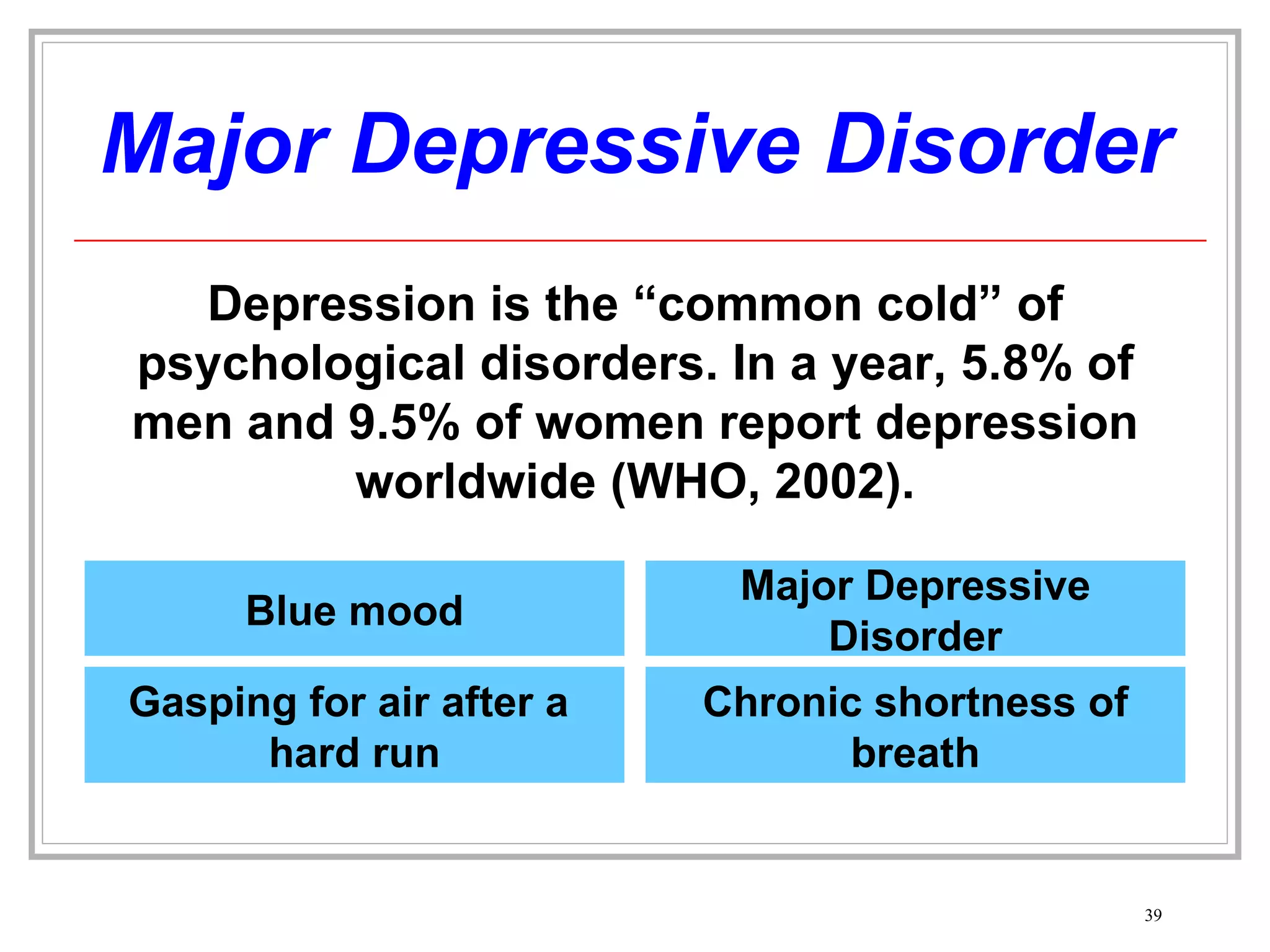
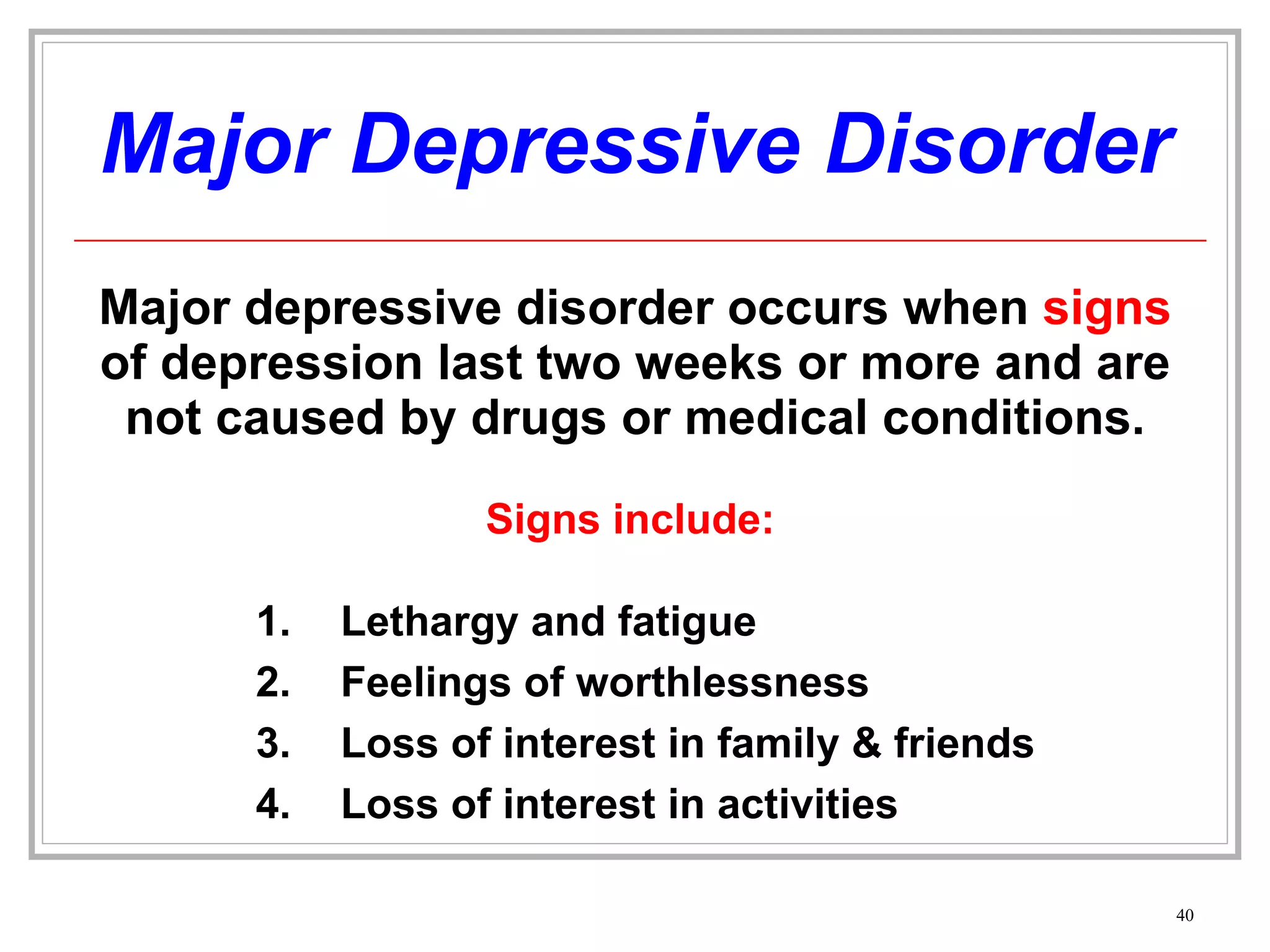
Major Depressive Disorder Depression is the “common cold” of psychological disorders. In a year, 5.8% of men and 9.5% of women report depression worldwide (WHO, 2002). Chronic shortness of breath Gasping for air after a  hard run Major Depressive Disorder Blue mood
Major Depressive Disorder Major depressive disorder occurs when  signs  of depression last two weeks or more and are not caused by drugs or medical conditions. Lethargy and fatigue Feelings of worthlessness Loss of interest in family & friends Loss of interest in activities Signs include:
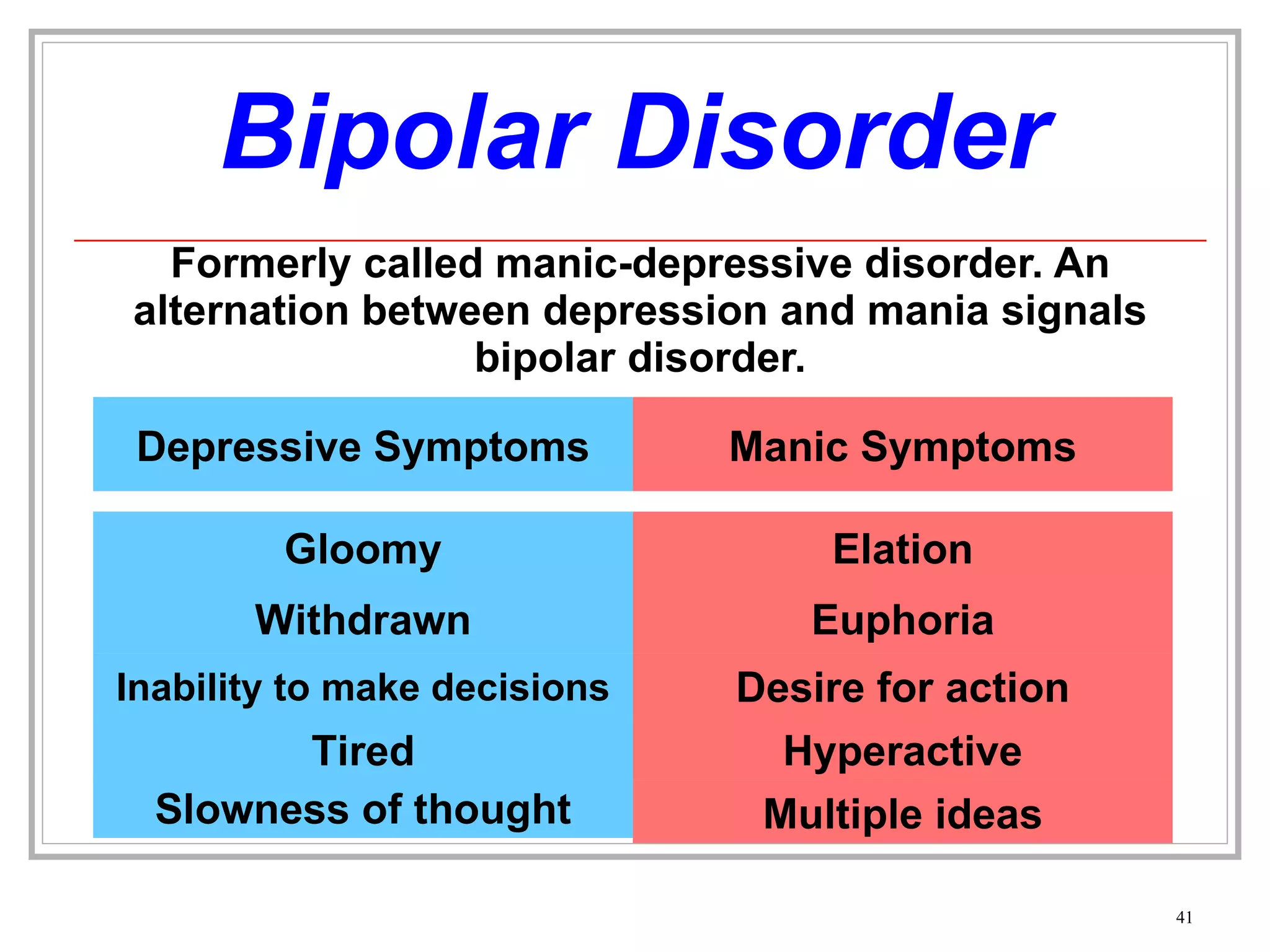
Bipolar Disorder Formerly called manic-depressive disorder. An alternation between depression and mania signals bipolar disorder. Multiple ideas Hyperactive Desire for action Euphoria Elation Manic Symptoms Slowness of thought Tired Inability to make decisions Withdrawn Gloomy Depressive Symptoms
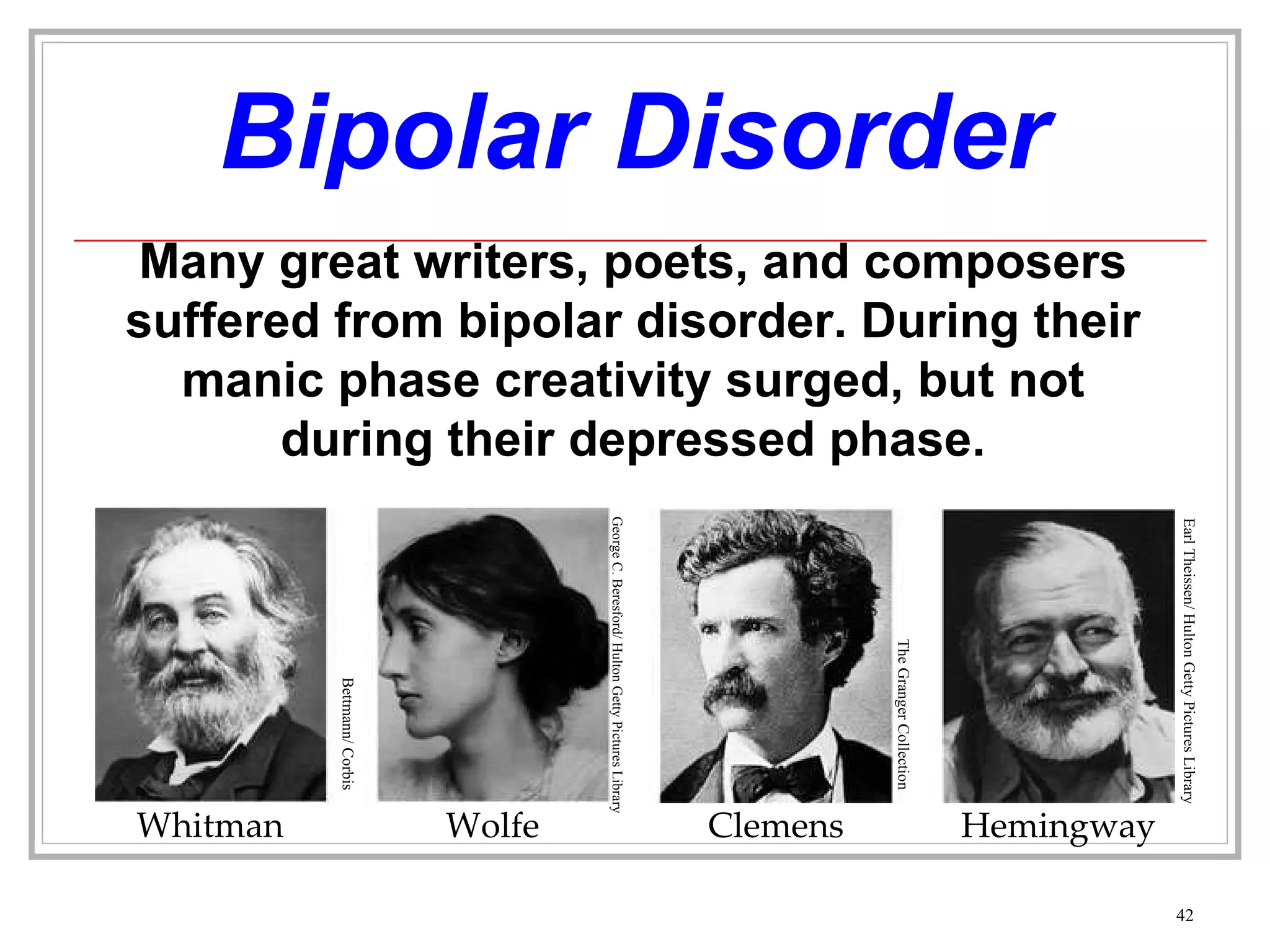
Bipolar Disorder Many great writers, poets, and composers suffered from bipolar disorder. During their manic phase creativity surged, but not during their depressed phase. Bettmann/ Corbis George C. Beresford/ Hulton Getty Pictures Library The Granger Collection Earl Theissen/ Hulton Getty Pictures Library Whitman Wolfe Clemens Hemingway
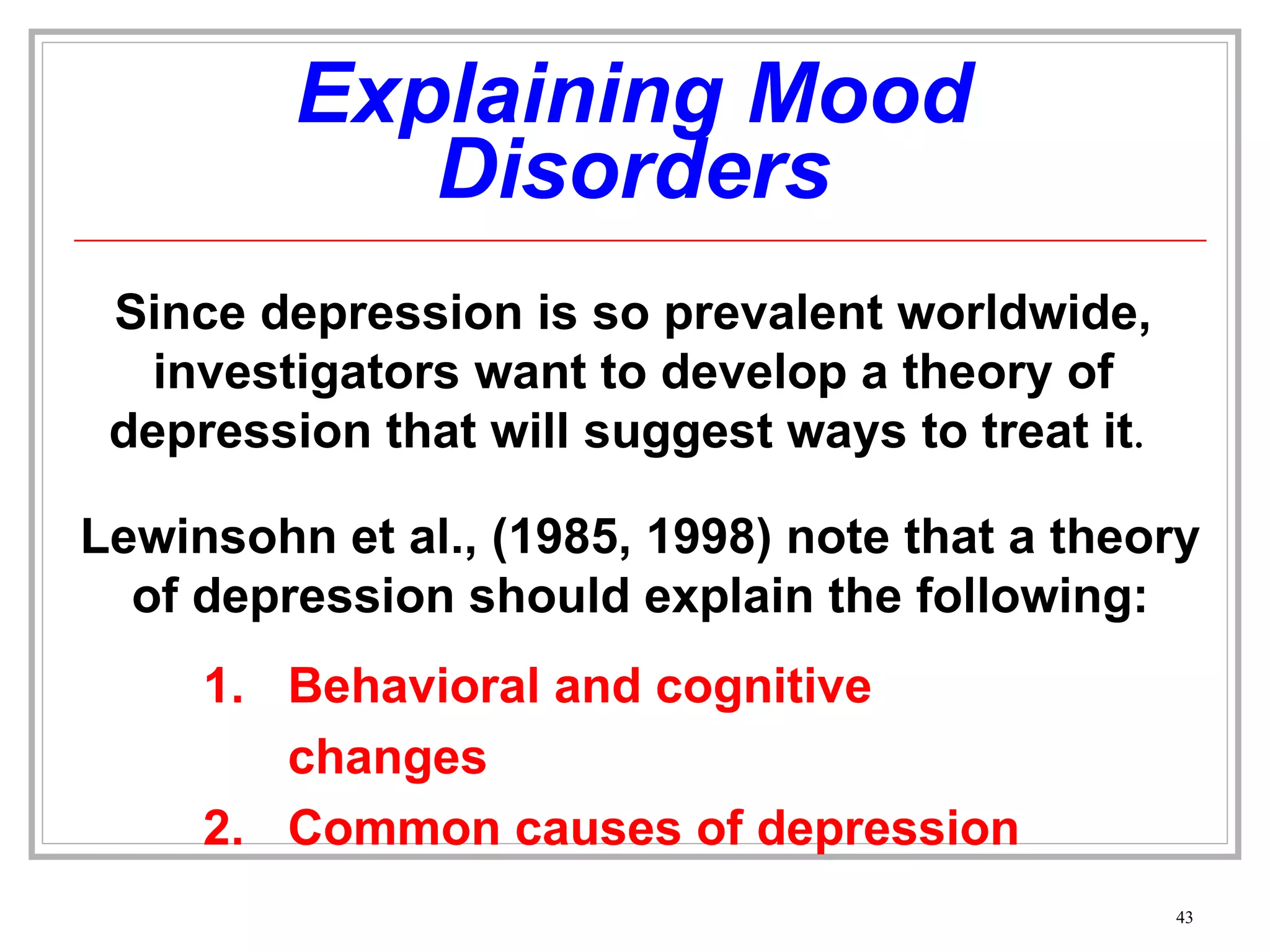
Explaining Mood Disorders Since depression is so prevalent worldwide, investigators want to develop a theory of depression that will suggest ways to treat it .  Lewinsohn et al., (1985, 1998) note that a theory of depression should explain the following: Behavioral and cognitive changes Common causes of depression
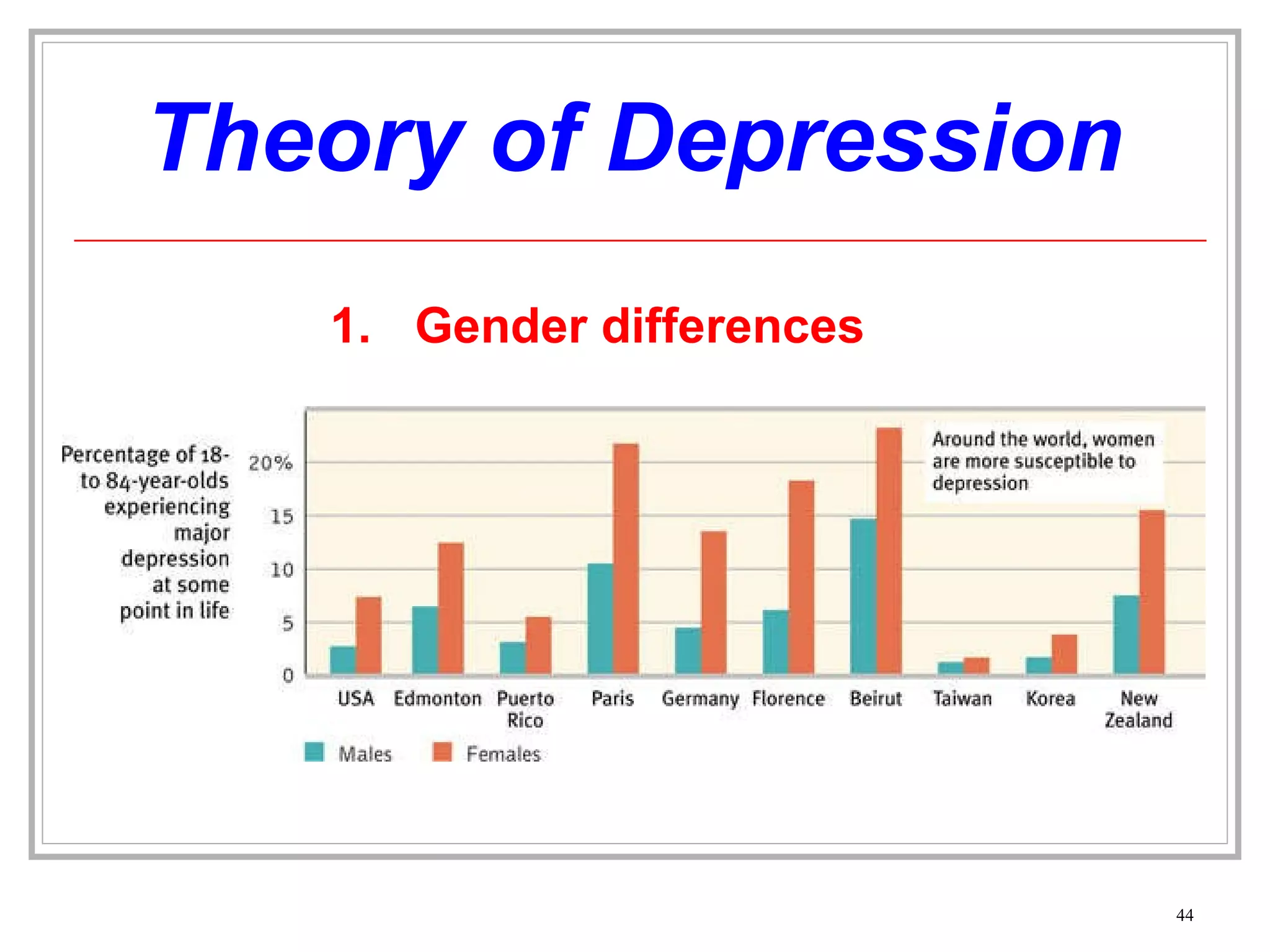
Theory of Depression Gender differences
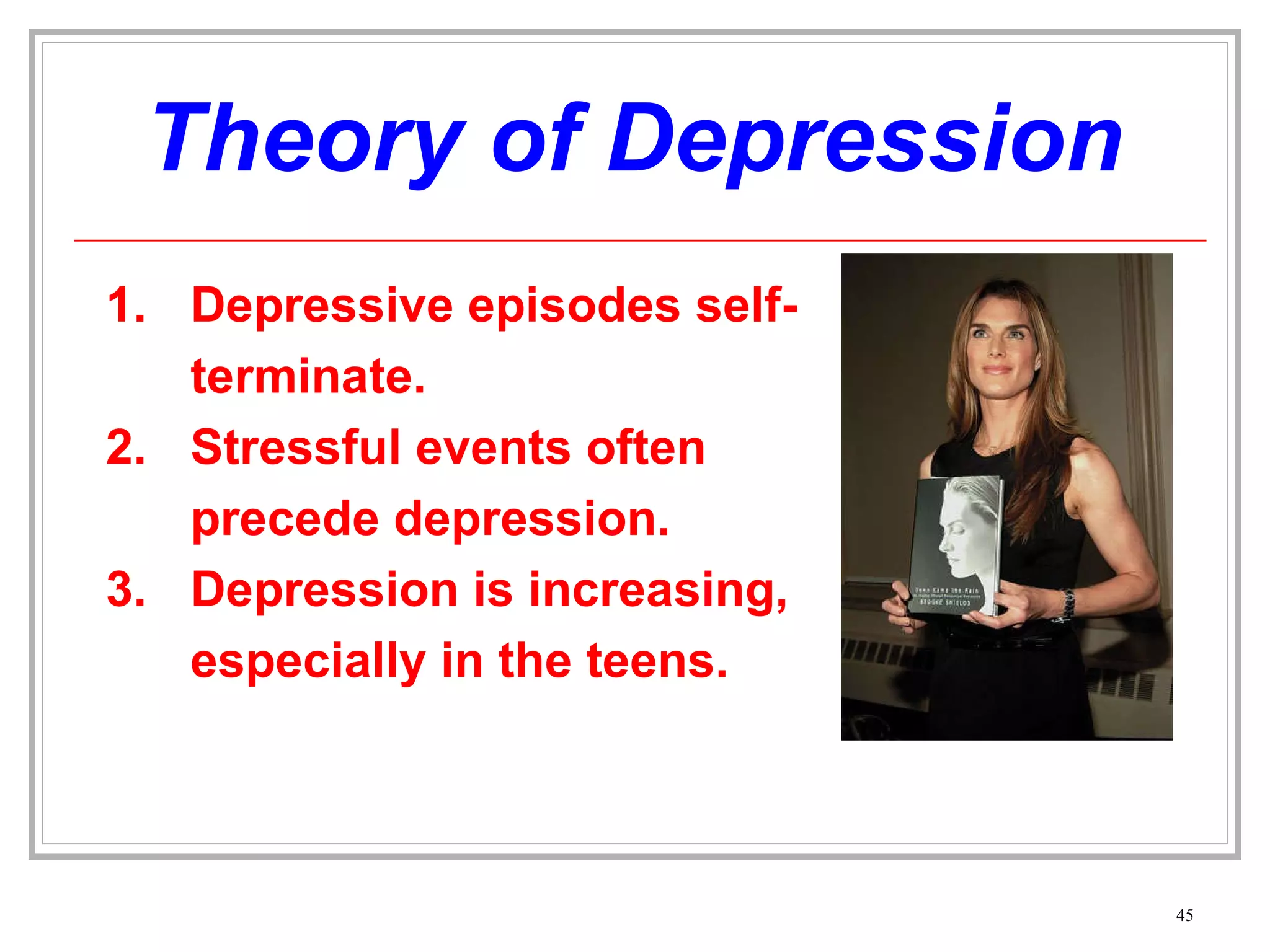
Theory of Depression Depressive episodes self-terminate. Stressful events often precede depression. Depression is increasing, especially in the teens.
Suicide The most severe form of behavioral response to depression is suicide. Each year some 1 million people commit suicide worldwide. National differences Racial differences Gender differences Age differences Other differences Suicide Statistics
Suicide
Biological Perspective Genetic Influences:  Mood disorders run in families. The rate of depression is higher in identical (50%) than fraternal twins (20%). Linkage analysis  and  association studies  link possible genes and dispositions for depression.
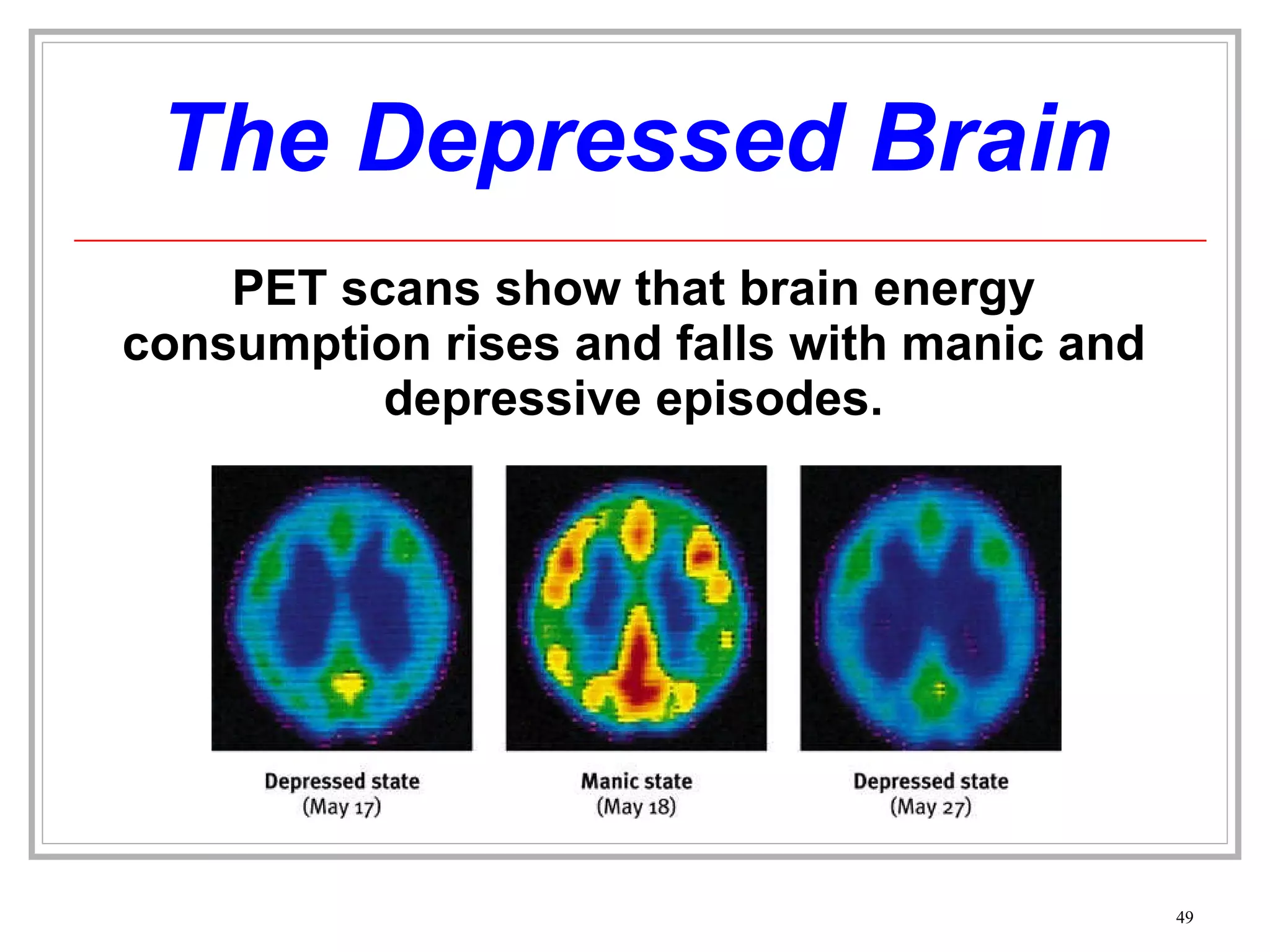
The Depressed Brain PET scans show that brain energy consumption rises and falls with manic and depressive episodes.
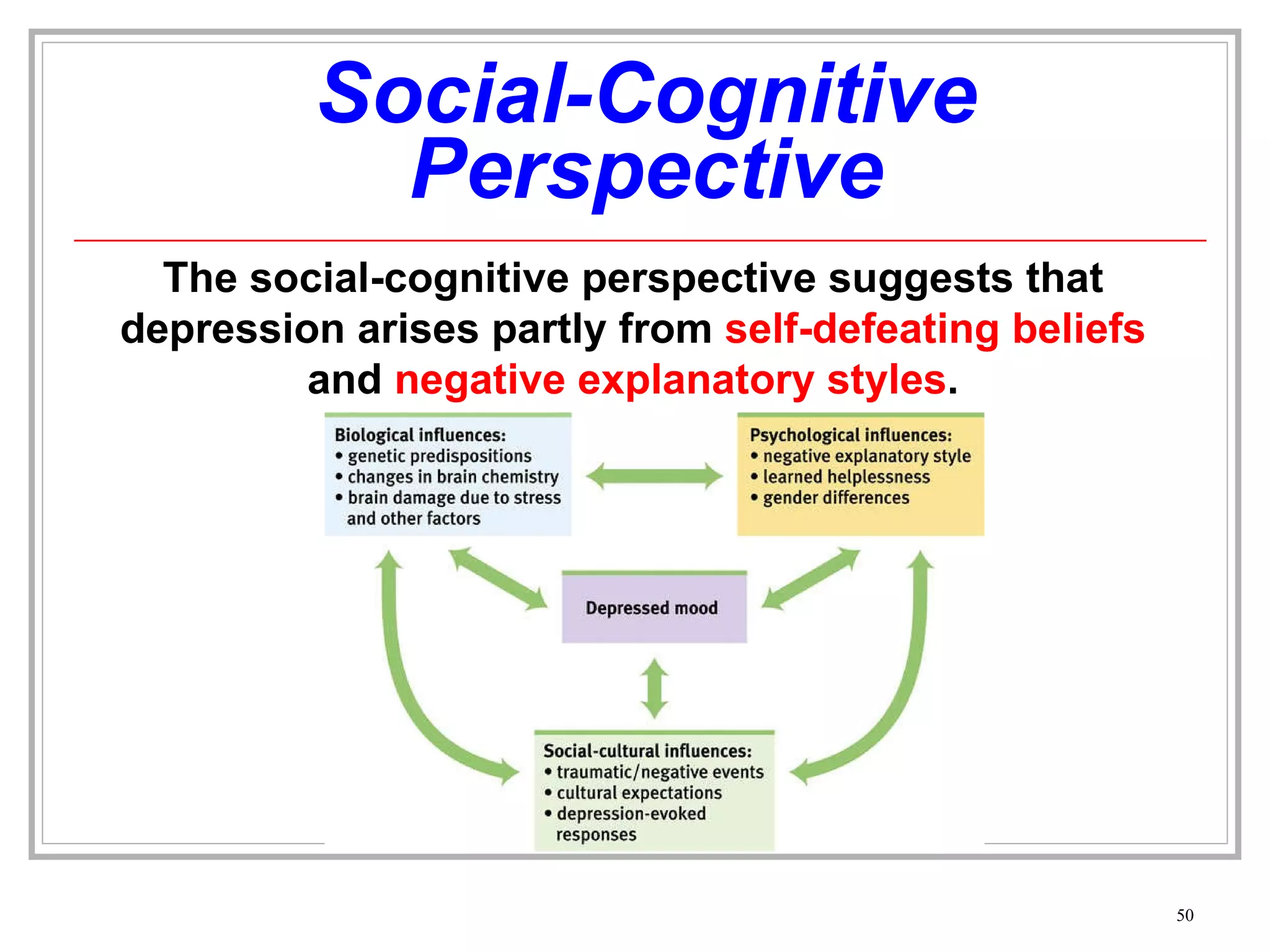
Social-Cognitive Perspective The social-cognitive perspective suggests that depression arises partly from  self-defeating beliefs  and  negative explanatory styles .
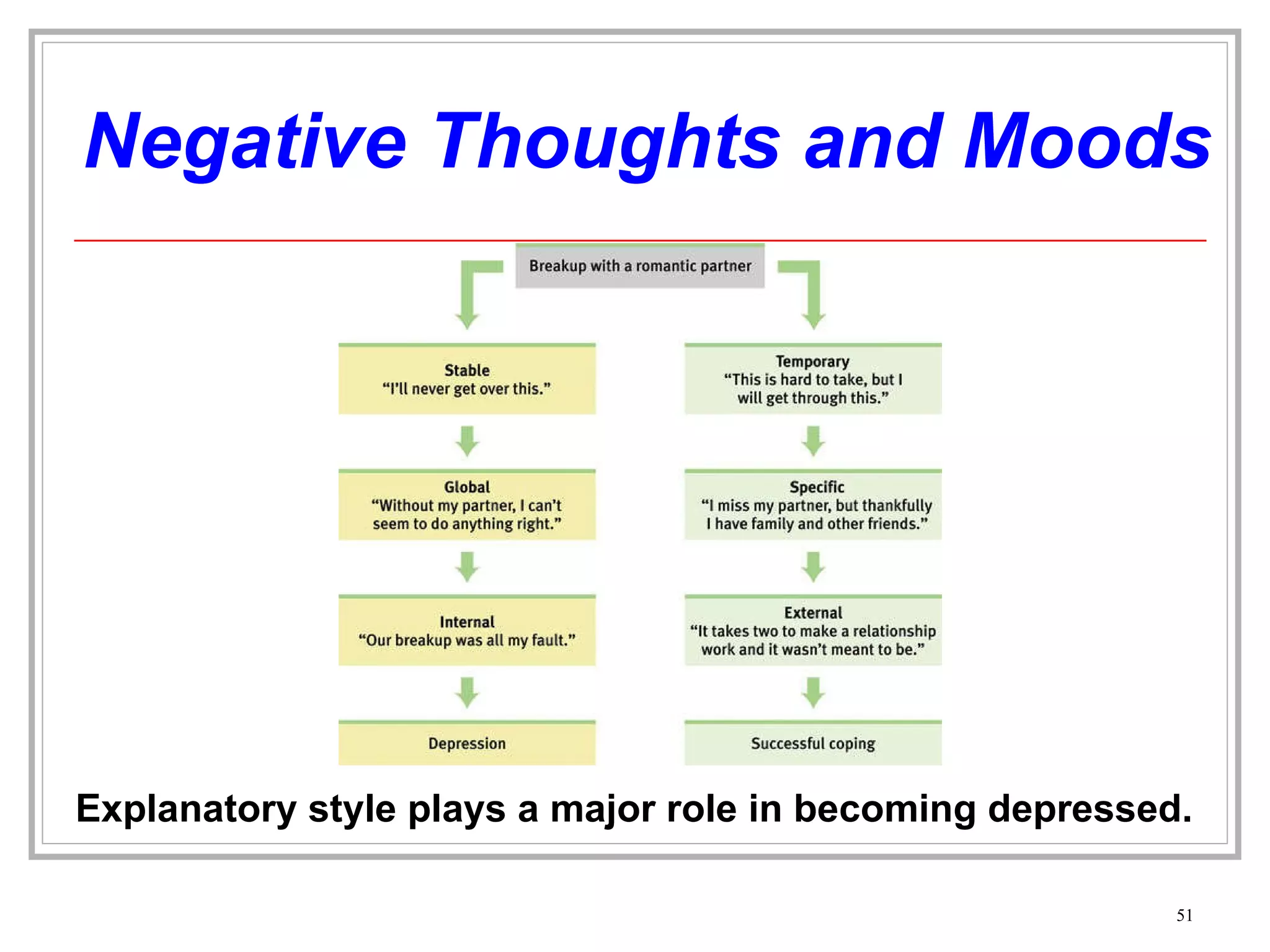
Negative Thoughts and Moods Explanatory style plays a major role in becoming depressed.
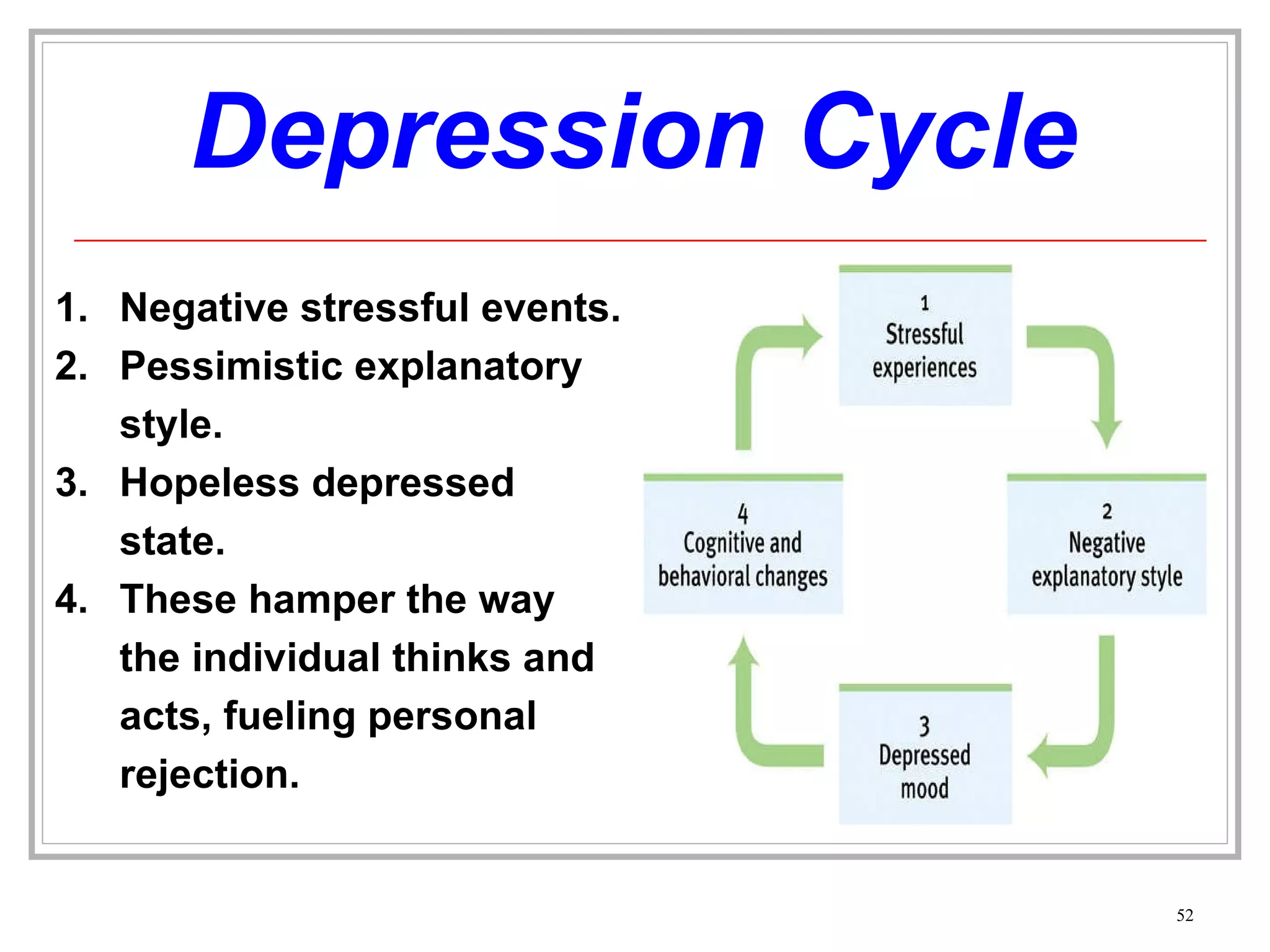
Depression Cycle Negative stressful events. Pessimistic explanatory style. Hopeless depressed state. These hamper the way the individual thinks and acts, fueling personal rejection.
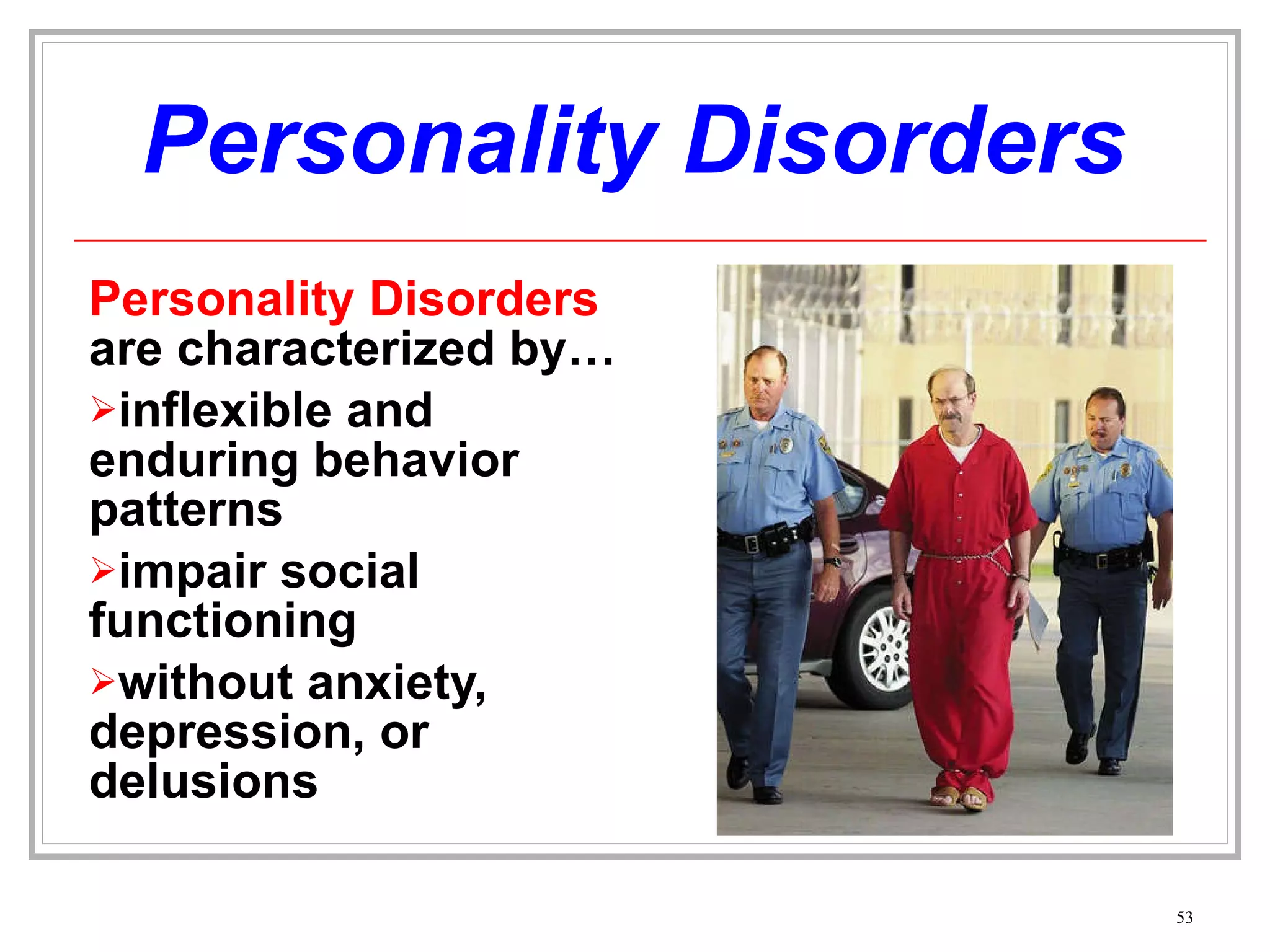
Personality Disorders Personality Disorders  are characterized by… inflexible and enduring behavior patterns impair social functioning without anxiety, depression, or delusions
Antisocial Personality Disorder A disorder in which… exhibits a lack of conscience for wrongdoing, even toward friends and family members usually men formerly called a  sociopath  or  psychopath
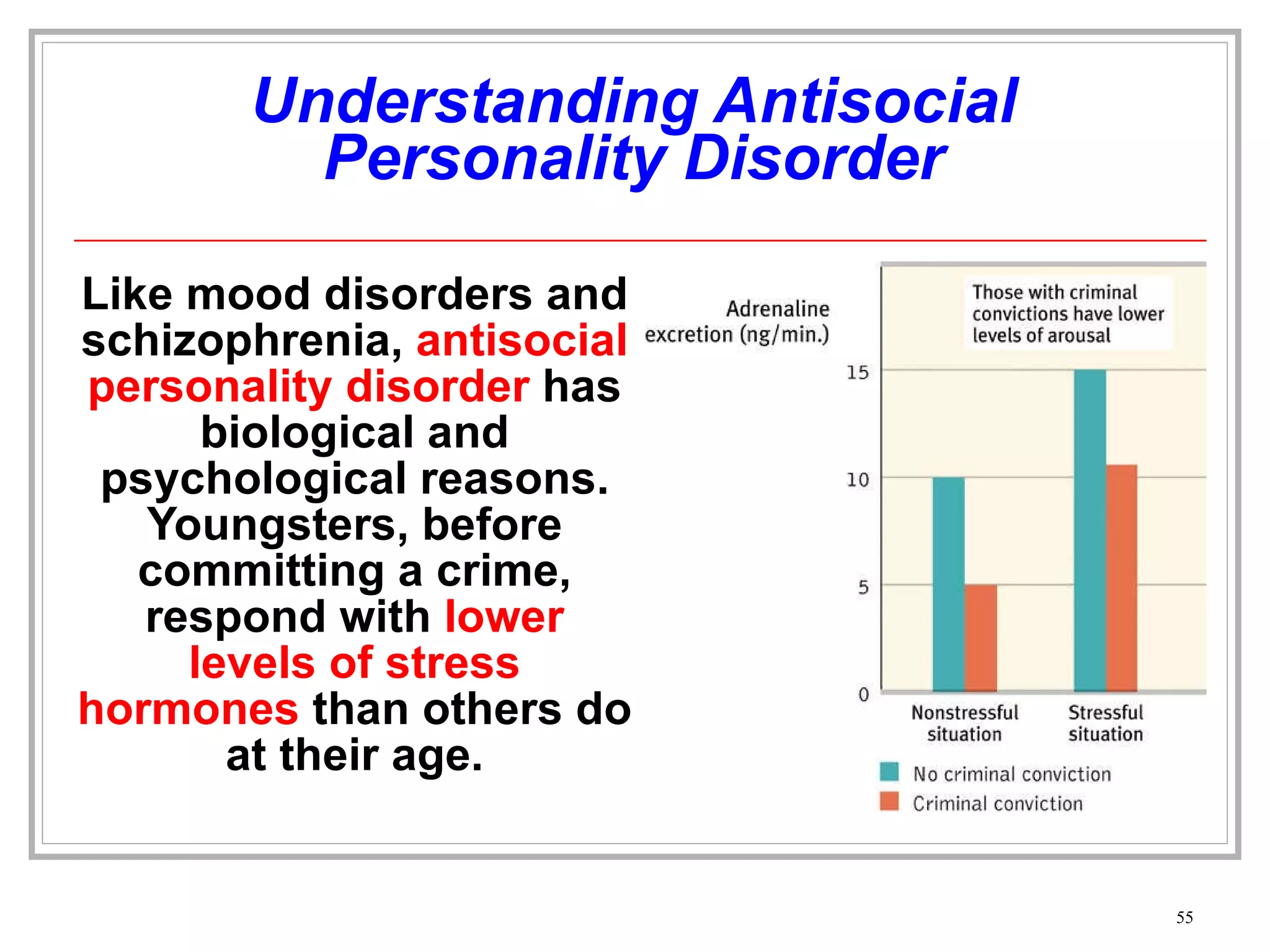
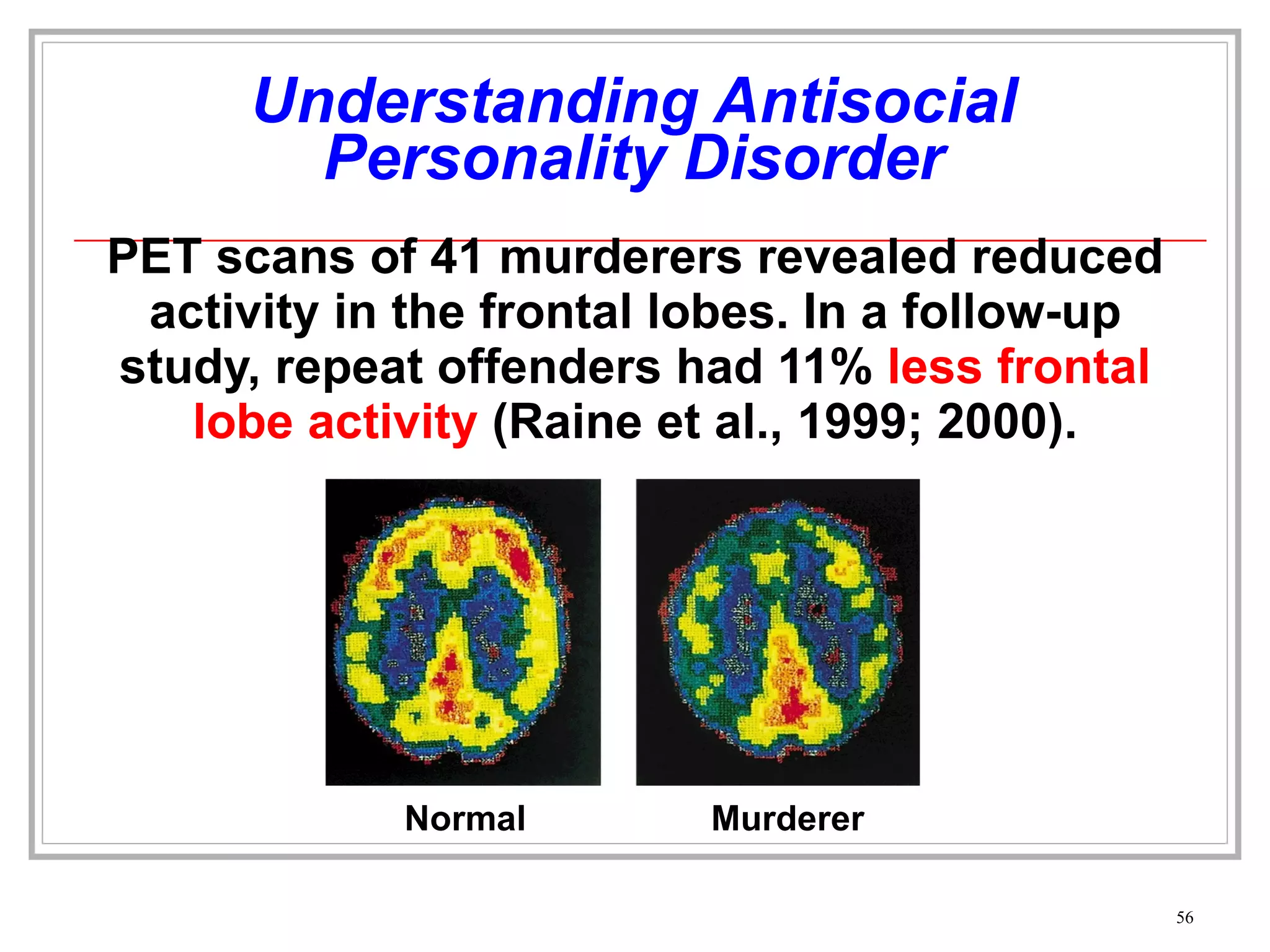
Understanding Antisocial Personality Disorder Like mood disorders and schizophrenia,  antisocial personality disorder  has biological and psychological reasons. Youngsters, before committing a crime, respond with  lower levels of stress hormones  than others do at their age.
Understanding Antisocial Personality Disorder PET scans of 41 murderers revealed reduced activity in the frontal lobes. In a follow-up study, repeat offenders had 11%  less frontal lobe activity  (Raine et al., 1999; 2000). Normal Murderer
Schizophrenia The literal translation is “split mind” which refers to a split from reality. A group of severe disorders characterized by the following: Disorganized and delusional thinking. Disturbed perceptions.  Inappropriate emotions and actions.
Symptoms of Schizophrenia Positive Symptoms the  presence  of inappropriate behaviors (hallucinations, disorganized or delusional talking) Negative Symptoms the  absence  of appropriate behaviors (expressionless faces, rigid bodies)
Disorganized & Delusional Thinking Other forms of delusions include, delusions of persecution (“someone is following me”) or grandeur (“I am a king”). This morning when I was at Hillside [Hospital], I was making a movie. I was surrounded by movie stars … I’m Mary Poppins. Is this room painted blue to get me upset? My grandmother died four weeks after my eighteenth birthday.” (Sheehan, 1982) This monologue illustrates fragmented, bizarre thinking with distorted beliefs called  delusions  (“I’m Mary Poppins”).
Disorganized & Delusional Thinking Many psychologists believe disorganized thoughts occur because of  selective attention  failure (fragmented and bizarre thoughts).
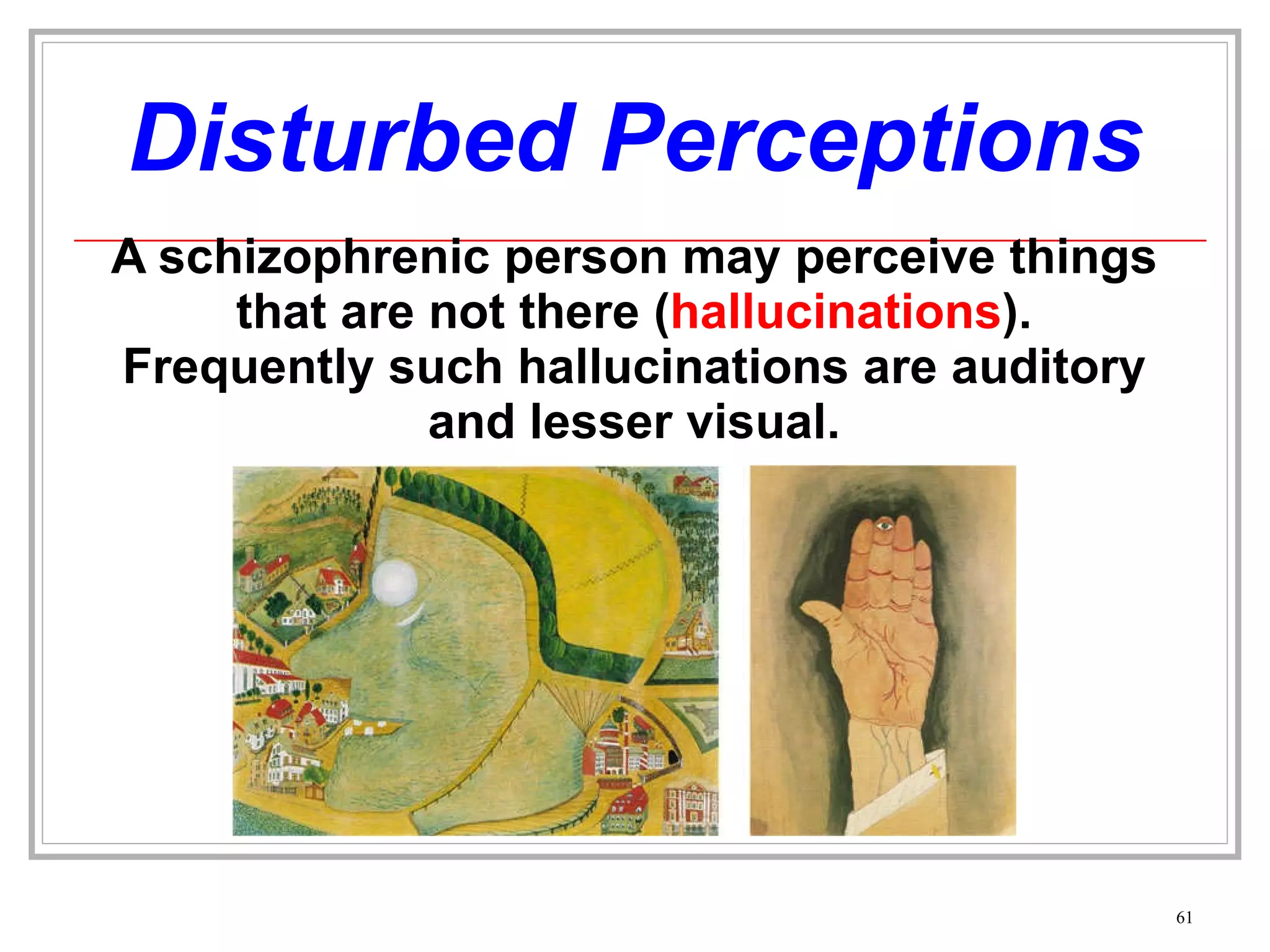
Disturbed Perceptions A schizophrenic person may perceive things that are not there ( hallucinations ). Frequently such hallucinations are auditory and lesser visual.
Inappropriate Emotions & Actions A schizophrenic person may laugh at the news of someone dying or show no emotion at all ( flat affect ). Patients with schizophrenia may continually rub an arm, rock a chair, or remain motionless for hours ( catatonic ).
Onset and Development of Schizophrenia Nearly 1 in a 100 suffer from schizophrenia, and throughout the world over 24 million people suffer from this disease (WHO, 2002). Schizophrenia strikes young people as they mature into adults. It affects men and women equally, but men suffer from it more severely than women.
Chronic and Acute Schizophrenia When schizophrenia is slow to develop ( chronic/process ) recovery is doubtful. Such schizophrenics usually display negative symptoms. When schizophrenia rapidly develops ( acute/reactive ) recovery is better. Such schizophrenics usually show positive symptoms.
Understanding Schizophrenia Schizophrenia is a disease of the brain exhibited by the symptoms of the mind. Dopamine Overactivity:  Researchers found that schizophrenic patients express higher levels of dopamine D4 receptors in the brain. Brain Abnormalities
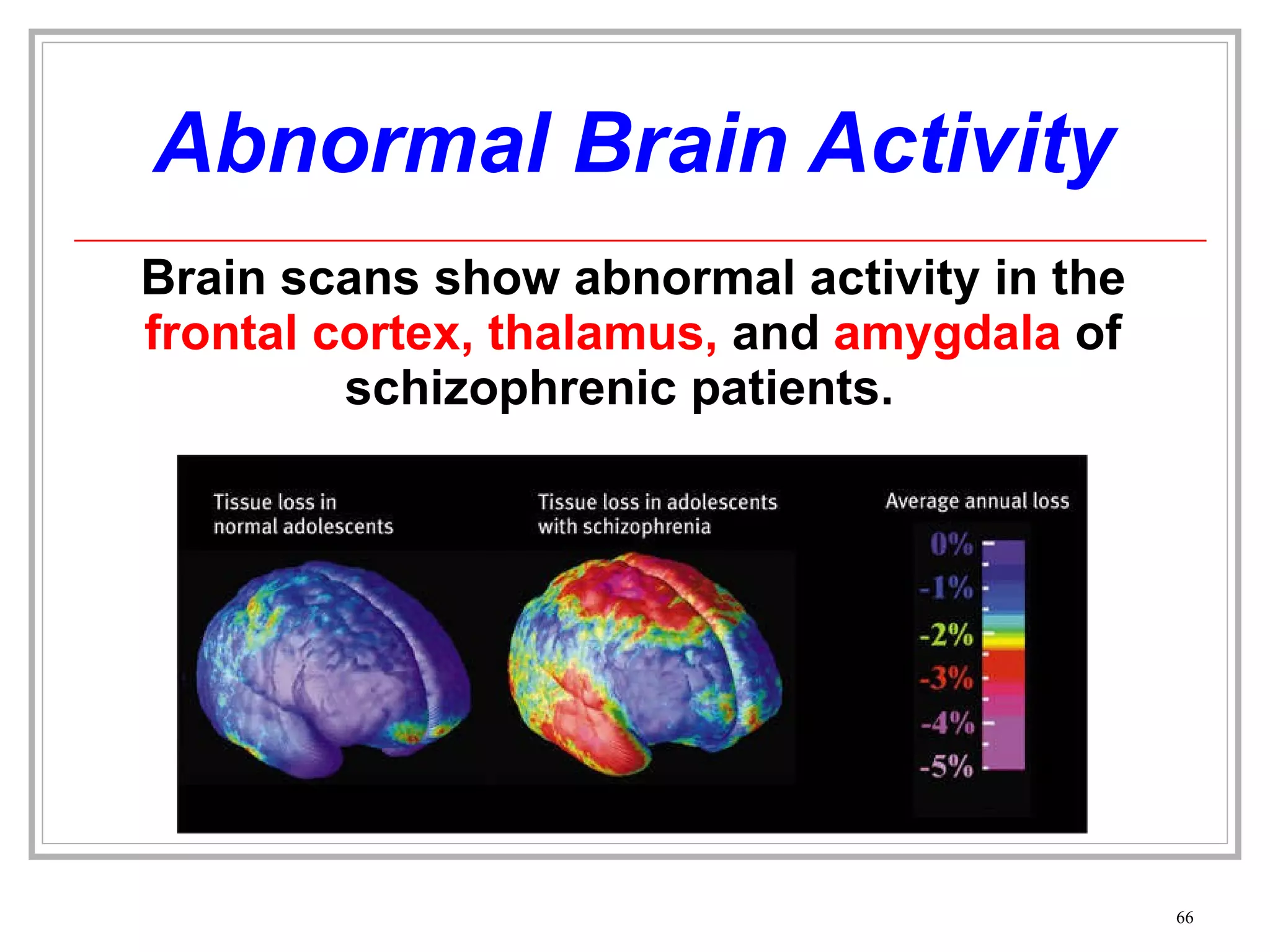
Abnormal Brain Activity Brain scans show abnormal activity in the  frontal cortex, thalamus,  and   amygdala  of schizophrenic patients.
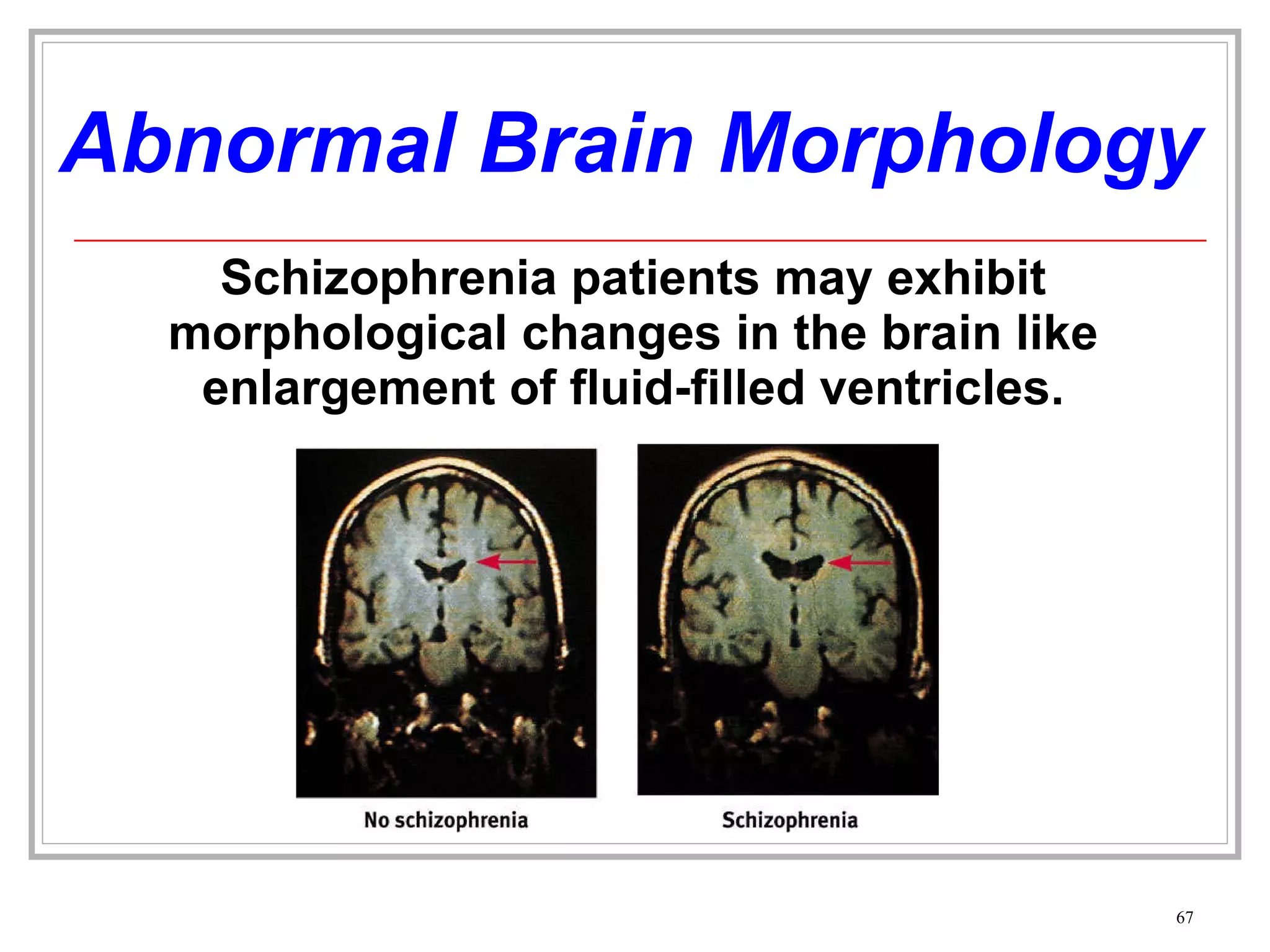
Abnormal Brain Morphology Schizophrenia patients may exhibit morphological changes in the brain like enlargement of fluid-filled ventricles.
Viral Infection Schizophrenia has also been observed in individuals who contracted a viral infection (flu) during the middle of their fetal development.
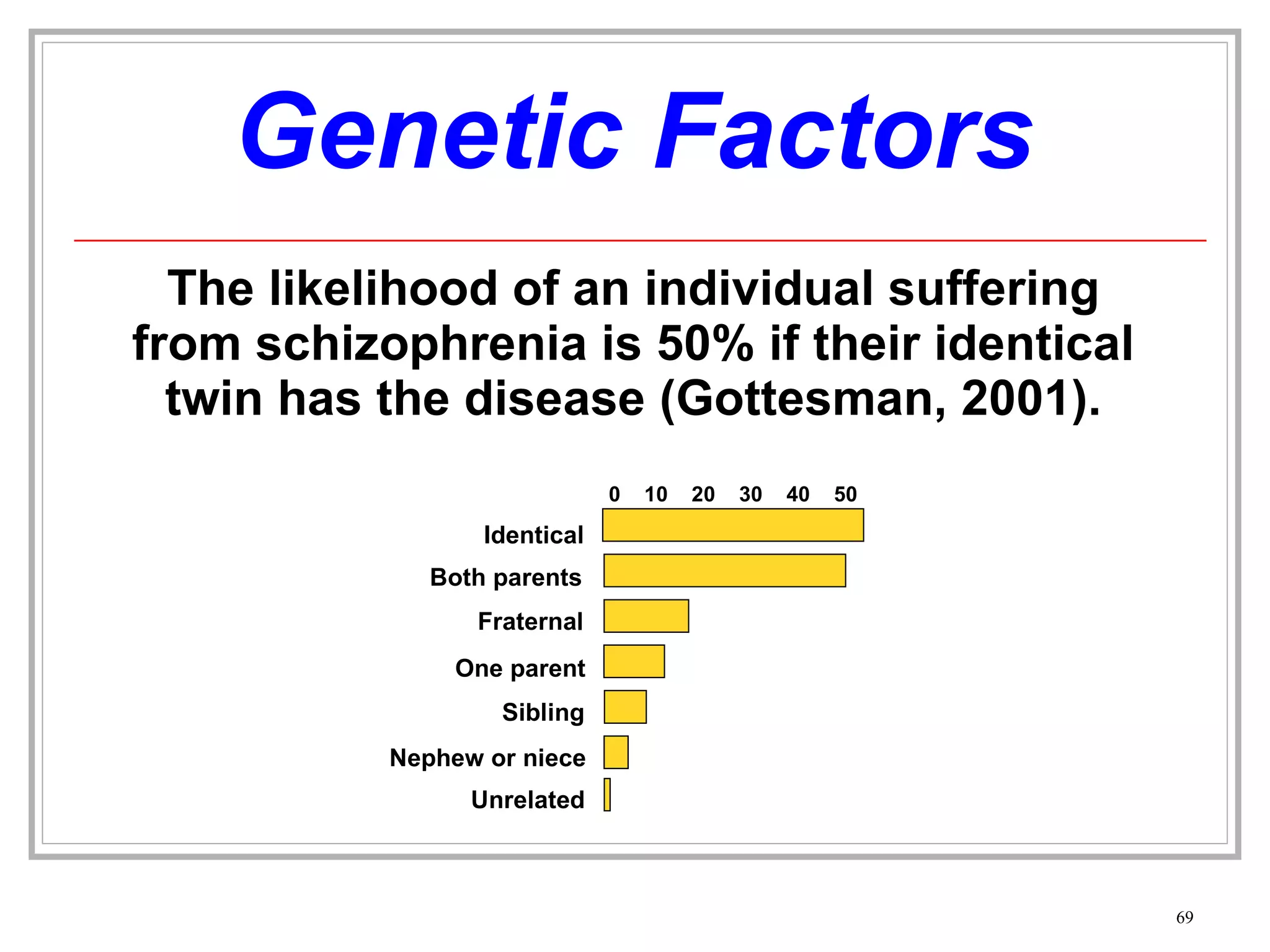
Genetic Factors The likelihood of an individual suffering from schizophrenia is 50% if their identical twin has the disease (Gottesman, 2001). 0  10  20  30  40  50 Identical Both parents Fraternal One parent Sibling Nephew or niece Unrelated
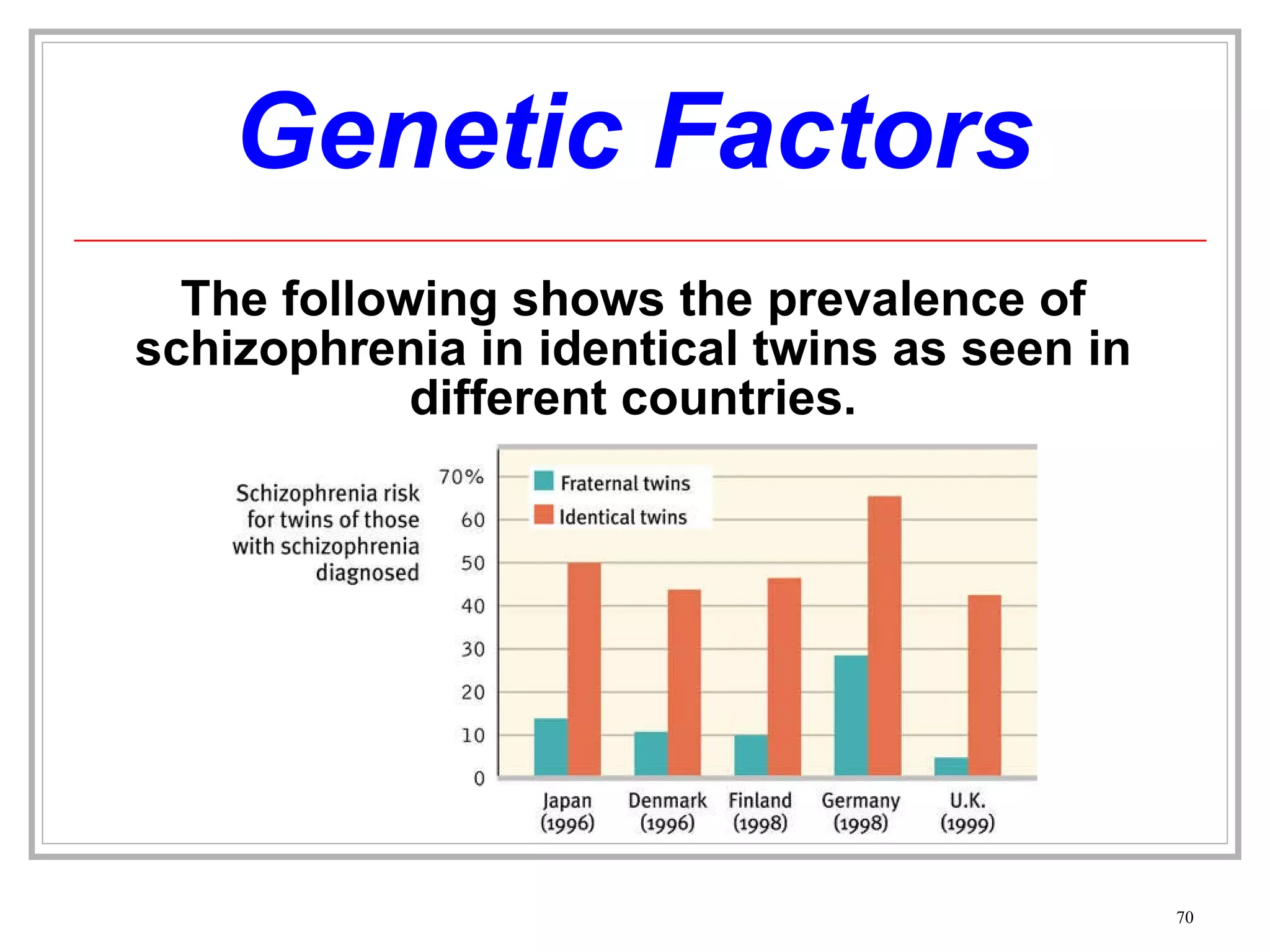
Genetic Factors The following shows the prevalence of schizophrenia in identical twins as seen in different countries.
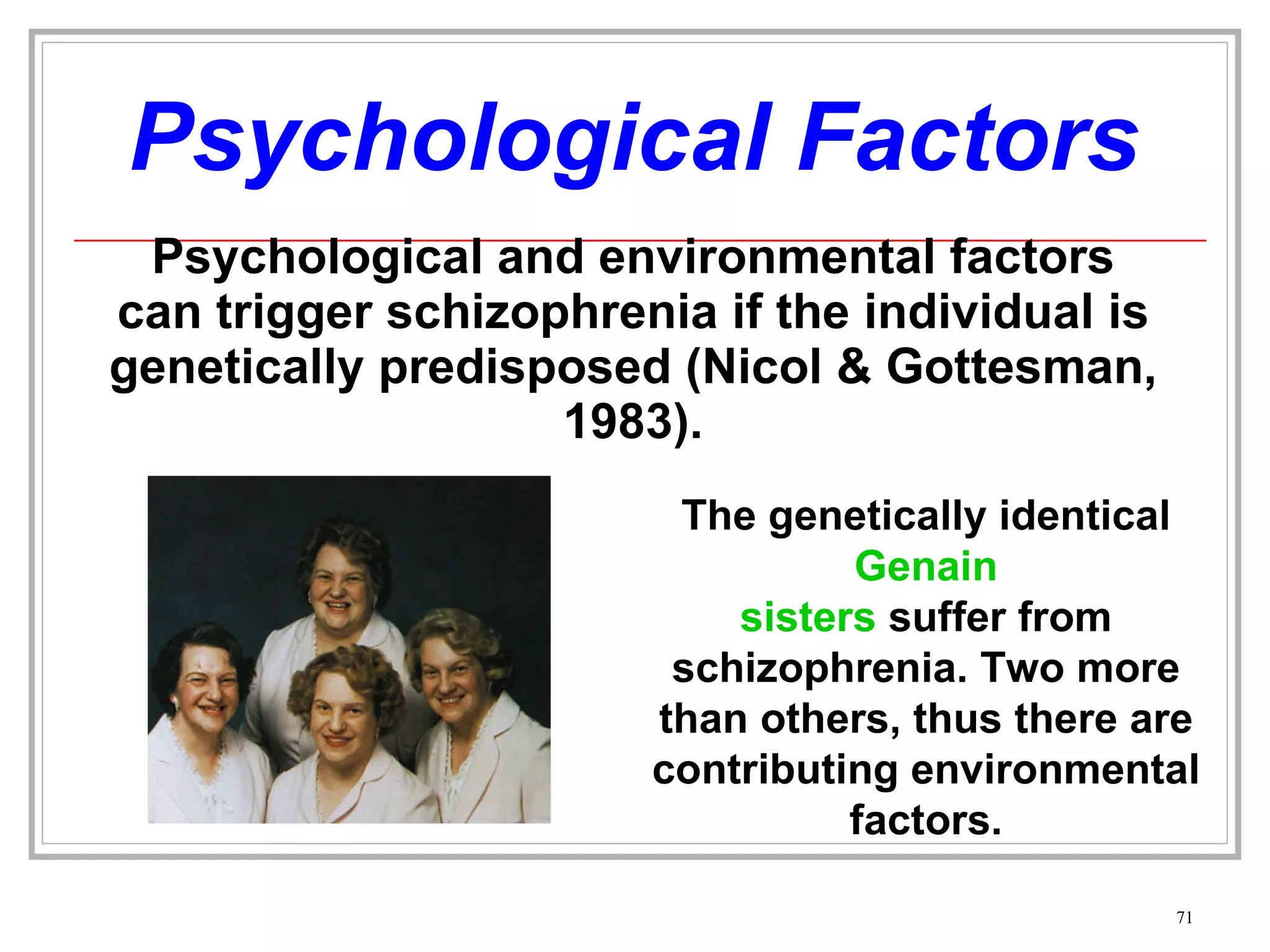
Psychological Factors Psychological and environmental factors can trigger schizophrenia if the individual is genetically predisposed (Nicol & Gottesman, 1983). The genetically identical  Genain sisters  suffer from schizophrenia. Two more than others, thus there are contributing environmental factors.
Rates of Psychological Disorders
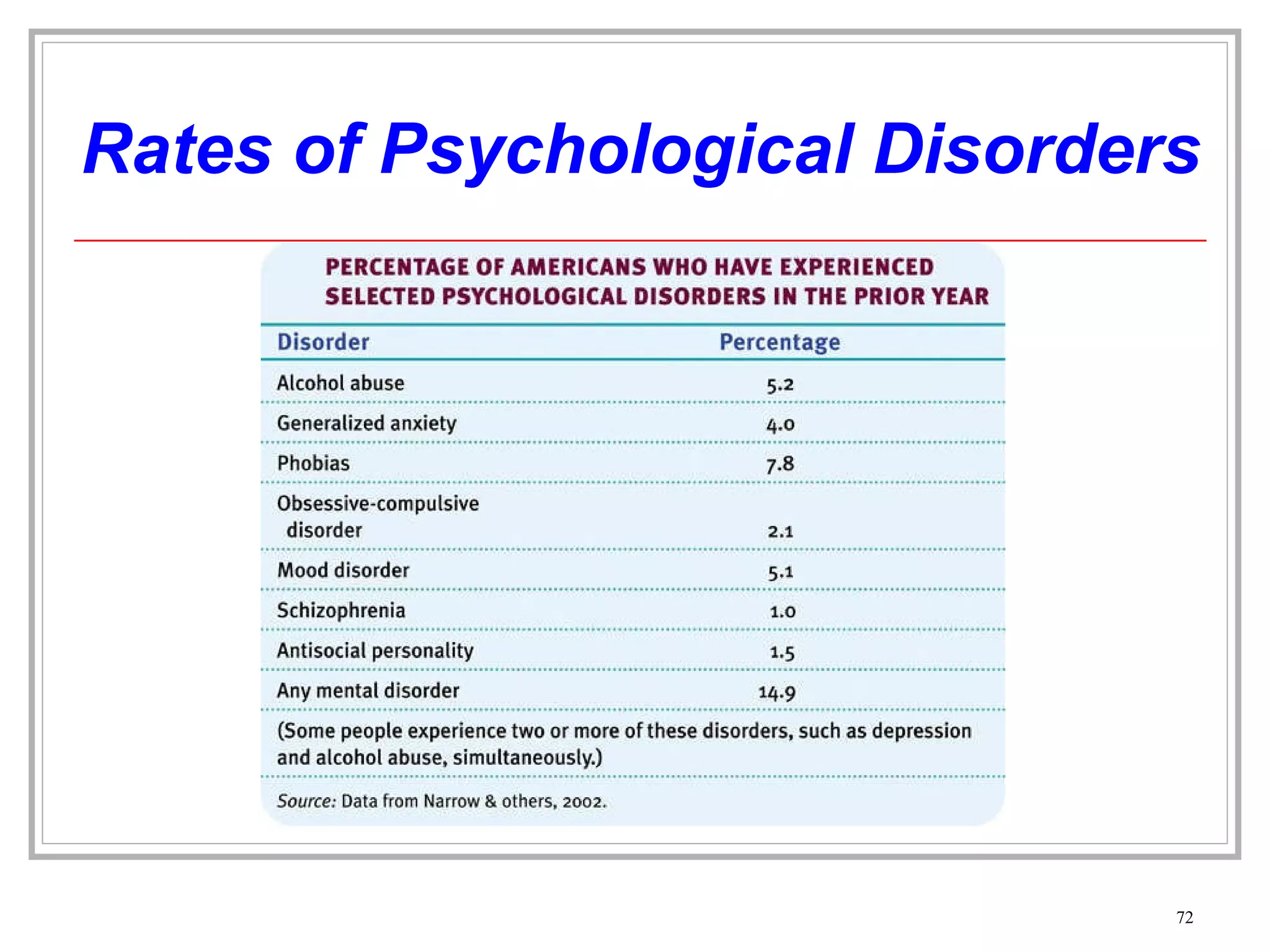
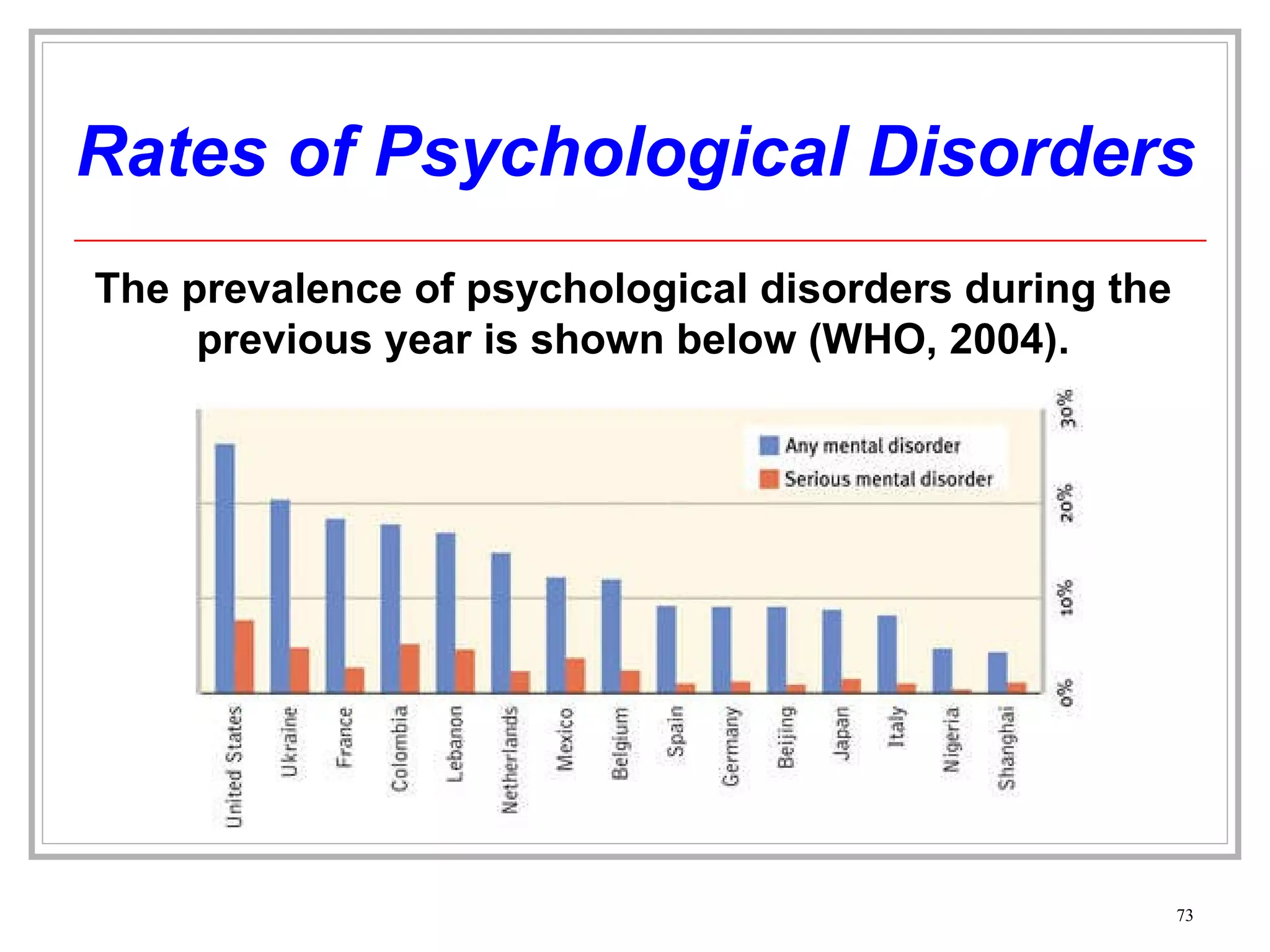
Rates of Psychological Disorders The prevalence of psychological disorders during the previous year is shown below (WHO, 2004).

Notes psychological disorders

  • 1.
  • 2.
    Psychological Disorders Ifelt the need to clean my room … would spend four to five hours at it… At the time I loved doing it. Then I didn't want to do it any more, but I couldn’t stop… The clothes hung… two fingers apart… I touched my bedroom wall before leaving the house… I had constant anxiety… I thought I might be nuts. Marc, diagnosed with obsessive-compulsive disorder (from Summers, 1996)
  • 3.
    Psychological Disorders Peopleare fascinated by the exceptional, the unusual, and the abnormal. This fascination may be caused by two reasons: During various moments we feel, think, and act like an abnormal individual. Psychological disorders may bring unexplained physical symptoms, irrational fears, and suicidal thoughts.
  • 4.
    Psychological Disorders Tostudy the abnormal is the best way of understanding the normal. There are 450 million people suffering from psychological disorders (WHO, 2004). Depression and schizophrenia exist in all cultures of the world. William James (1842-1910)
  • 5.
    Defining Psychological DisordersMental health workers view psychological disorders as persistently harmful thoughts, feelings, and actions. When behavior is deviant, distressful, and dysfunctional psychiatrists and psychologists label it as disordered (Comer, 2004).
  • 6.
    Deviant, Distressful &Dysfunctional Deviant behavior (going naked) in one culture may be considered normal, while in others it may lead to arrest. Deviant behavior must accompany distress . If a behavior is dysfunctional it is clearly a disorder. In the Wodaabe tribe men wear costumes to attract women. In Western society this would be considered abnormal.
  • 7.
    Understanding PsychologicalDisorders Ancient Treatments of psychological disorders include trephination, exorcism, being caged like animals, being beaten, burned, castrated, mutilated, or transfused with animal’s blood. Trephination (boring holes in the skull to remove evil forces)
  • 8.
    The Medical ModelPhilippe Pinel (1745-1826) from France, insisted that madness was not due to demonic possession, but an ailment of the mind. Dance in the madhouse.
  • 9.
    Medical Model Whenphysicians discovered that syphilis led to mental disorders, they started using medical models to review the physical causes of these disorders. Etiology: Cause and development of the disorder. Diagnosis: Identifying (symptoms) and distinguishing one disease from another. Treatment: Treating a disorder in a psychiatric hospital. Prognosis: Forecast about the disorder.
  • 10.
    The Biopsychosocial ApproachAssumes that biological, socio-cultural, and psychological factors combine and interact to produce psychological disorders.
  • 11.
    Classifying PsychologicalDisorders The American Psychiatric Association ( APA ) rendered a Diagnostic and Statistical Manual of Mental Disorders ( DSM ) to describe psychological disorders. The most recent edition, DSM-IV-TR (Text Revision, 2000), describes 400 psychological disorders compared to 60 in the 1950s.
  • 12.
    Multiaxial Classification Are Psychosocial or Environmental Problems (school or housing issues) also present? Axis IV What is the Global Assessment of the person’s functioning? Axis V Is a General Medical Condition (diabetes, hypertension or arthritis etc) also present? Axis III Is a Personality Disorder or Mental Retardation present? Axis II Is a Clinical Syndrome (cognitive, anxiety, mood disorders [16 syndromes]) present? Axis I
  • 13.
    Multiaxial Classification Note16 syndromes in Axis I
  • 14.
    Multiaxial Classification NoteGlobal Assessment for Axis V
  • 15.
    Goals of DSMDescribe (400) disorders. Determine how prevalent the disorder is. Disorders outlined by DSM-IV are reliable. Therefore, diagnoses by different professionals are similar. Others criticize DSM-IV for “putting any kind of behavior within the compass of psychiatry.”
  • 16.
    Labeling Psychological DisordersCritics of the DSM-IV argue that labels may stigmatize individuals. Asylum baseball team (labeling)
  • 17.
    Labeling Psychological Disorders2. Labels may be helpful for healthcare professionals when communicating with one another and establishing therapy.
  • 18.
    Labeling Psychological Disorders3. “Insanity” labels raise moral and ethical questions about how society should treat people who have disorders and have committed crimes. Theodore Kaczynski (Unabomber)
  • 19.
    Anxiety Disorders Feelingsof excessive apprehension and anxiety. Generalized anxiety disorder Panic disorder Phobias Obsessive-compulsive disorder Post-traumatic stress disorder
  • 20.
    Generalized Anxiety Disorder1. Persistent and uncontrollable tenseness and apprehension. 2. Autonomic arousal. 3. Inability to identify or avoid the cause of certain feelings. Symptoms
  • 21.
    Panic Disorder Minutes-longepisodes of intense dread which may include feelings of terror, chest pains, choking, or other frightening sensations. Anxiety is a component of both disorders. It occurs more in the panic disorder, making people avoid situations that cause it. Symptoms
  • 22.
    Phobias Marked bya persistent and irrational fear of an object or situation that disrupts behavior.
  • 23.
    Kinds of PhobiasPhobia of blood. Hemophobia Phobia of closed spaces. Claustrophobia Phobia of heights. Acrophobia Phobia of open places. Agoraphobia
  • 24.
    Obsessive-Compulsive Disorder Persistenceof unwanted thoughts ( obsessions ) and urges to engage in senseless rituals ( compulsions ) that cause distress.
  • 25.
    Brain Imaging APET scan of the brain of a person with Obsessive-Compulsive Disorder (OCD). High metabolic activity (red) in the frontal lobe areas are involved with directing attention. Brain image of an OCD
  • 26.
    Post-Traumatic Stress DisorderFour or more weeks of the following symptoms constitute post-traumatic stress disorder (PTSD): Haunting memories 2. Nightmares 3. Social withdrawal 4. Jumpy anxiety 5. Sleep problems
  • 27.
    Resilience to PTSDOnly about 10% of women and 20% of men react to traumatic situations and develop PTSD. Holocaust survivors show remarkable resilience against traumatic situations. All major religions of the world suggest that surviving a trauma leads to the growth of an individual.
  • 28.
    Explaining Anxiety DisordersFreud suggested that we repress our painful and intolerable ideas, feelings, and thoughts, resulting in anxiety.
  • 29.
    The Learning PerspectiveLearning theorists suggest that fear conditioning leads to anxiety. This anxiety then becomes associated with other objects or events (stimulus generalization) and is reinforced.
  • 30.
    The Learning PerspectiveInvestigators believe that fear responses are inculcated through observational learning . Young monkeys develop fear when they watch other monkeys who are afraid of snakes.
  • 31.
    The Biological PerspectiveNatural Selection has led our ancestors to learn to fear snakes, spiders, and other animals. Therefore, fear preserves the species. Twin studies suggest that our genes may be partly responsible for developing fears and anxiety. Twins are more likely to share phobias.
  • 32.
    The Biological PerspectiveGeneralized anxiety , panic attacks , and even OCD are linked with brain circuits like the anterior cingulate cortex. Anterior Cingulate Cortex of an OCD patient.
  • 33.
    Somatoform Disorders Physicalsymptoms that cannot be explained by a general medical condition. The symptoms result from mental factors. Symptoms No physical causes found. 2. Physical or neurological impairment. 3. Normal bodily sensations exaggerated.
  • 34.
    Somatoform Disorders ConversionDisorder When physical or neurological symptoms develop, when no physiological explanation can be found. Hypochondriasis A person interprets normal physical sensations as symptoms of a disease.
  • 35.
    Dissociative Disorders Consciousawareness becomes separated (dissociated) from previous memories, thoughts, and feelings. Symptoms Having a sense of being unreal. 2. Being separated from the body. 3. Watching yourself as if in a movie.
  • 36.
    Dissociative Identity Disorder (DID) A disorder in which a person exhibits two or more distinct and alternating personalities, formerly called multiple personality disorder. Chris Sizemore (DID)
  • 37.
    DID Critics Criticsargue that the diagnosis of DID increased in the late 20 th century. DID has not been found in other countries. Critics’ Arguments Role-playing by people open to a therapist’s suggestion. 2. Learned response that reinforces reductions in anxiety.
  • 38.
    Mood Disorders Emotionalextremes of mood disorders come in two principal forms. Major depressive disorder Bipolar disorder
  • 39.
    Major Depressive DisorderDepression is the “common cold” of psychological disorders. In a year, 5.8% of men and 9.5% of women report depression worldwide (WHO, 2002). Chronic shortness of breath Gasping for air after a hard run Major Depressive Disorder Blue mood
  • 40.
    Major Depressive DisorderMajor depressive disorder occurs when signs of depression last two weeks or more and are not caused by drugs or medical conditions. Lethargy and fatigue Feelings of worthlessness Loss of interest in family & friends Loss of interest in activities Signs include:
  • 41.
    Bipolar Disorder Formerlycalled manic-depressive disorder. An alternation between depression and mania signals bipolar disorder. Multiple ideas Hyperactive Desire for action Euphoria Elation Manic Symptoms Slowness of thought Tired Inability to make decisions Withdrawn Gloomy Depressive Symptoms
  • 42.
    Bipolar Disorder Manygreat writers, poets, and composers suffered from bipolar disorder. During their manic phase creativity surged, but not during their depressed phase. Bettmann/ Corbis George C. Beresford/ Hulton Getty Pictures Library The Granger Collection Earl Theissen/ Hulton Getty Pictures Library Whitman Wolfe Clemens Hemingway
  • 43.
    Explaining Mood DisordersSince depression is so prevalent worldwide, investigators want to develop a theory of depression that will suggest ways to treat it . Lewinsohn et al., (1985, 1998) note that a theory of depression should explain the following: Behavioral and cognitive changes Common causes of depression
  • 44.
    Theory of DepressionGender differences
  • 45.
    Theory of DepressionDepressive episodes self-terminate. Stressful events often precede depression. Depression is increasing, especially in the teens.
  • 46.
    Suicide The mostsevere form of behavioral response to depression is suicide. Each year some 1 million people commit suicide worldwide. National differences Racial differences Gender differences Age differences Other differences Suicide Statistics
  • 47.
  • 48.
    Biological Perspective GeneticInfluences: Mood disorders run in families. The rate of depression is higher in identical (50%) than fraternal twins (20%). Linkage analysis and association studies link possible genes and dispositions for depression.
  • 49.
    The Depressed BrainPET scans show that brain energy consumption rises and falls with manic and depressive episodes.
  • 50.
    Social-Cognitive Perspective Thesocial-cognitive perspective suggests that depression arises partly from self-defeating beliefs and negative explanatory styles .
  • 51.
    Negative Thoughts andMoods Explanatory style plays a major role in becoming depressed.
  • 52.
    Depression Cycle Negativestressful events. Pessimistic explanatory style. Hopeless depressed state. These hamper the way the individual thinks and acts, fueling personal rejection.
  • 53.
    Personality Disorders PersonalityDisorders are characterized by… inflexible and enduring behavior patterns impair social functioning without anxiety, depression, or delusions
  • 54.
    Antisocial Personality DisorderA disorder in which… exhibits a lack of conscience for wrongdoing, even toward friends and family members usually men formerly called a sociopath or psychopath
  • 55.
    Understanding Antisocial PersonalityDisorder Like mood disorders and schizophrenia, antisocial personality disorder has biological and psychological reasons. Youngsters, before committing a crime, respond with lower levels of stress hormones than others do at their age.
  • 56.
    Understanding Antisocial PersonalityDisorder PET scans of 41 murderers revealed reduced activity in the frontal lobes. In a follow-up study, repeat offenders had 11% less frontal lobe activity (Raine et al., 1999; 2000). Normal Murderer
  • 57.
    Schizophrenia The literaltranslation is “split mind” which refers to a split from reality. A group of severe disorders characterized by the following: Disorganized and delusional thinking. Disturbed perceptions. Inappropriate emotions and actions.
  • 58.
    Symptoms of SchizophreniaPositive Symptoms the presence of inappropriate behaviors (hallucinations, disorganized or delusional talking) Negative Symptoms the absence of appropriate behaviors (expressionless faces, rigid bodies)
  • 59.
    Disorganized & DelusionalThinking Other forms of delusions include, delusions of persecution (“someone is following me”) or grandeur (“I am a king”). This morning when I was at Hillside [Hospital], I was making a movie. I was surrounded by movie stars … I’m Mary Poppins. Is this room painted blue to get me upset? My grandmother died four weeks after my eighteenth birthday.” (Sheehan, 1982) This monologue illustrates fragmented, bizarre thinking with distorted beliefs called delusions (“I’m Mary Poppins”).
  • 60.
    Disorganized & DelusionalThinking Many psychologists believe disorganized thoughts occur because of selective attention failure (fragmented and bizarre thoughts).
  • 61.
    Disturbed Perceptions Aschizophrenic person may perceive things that are not there ( hallucinations ). Frequently such hallucinations are auditory and lesser visual.
  • 62.
    Inappropriate Emotions &Actions A schizophrenic person may laugh at the news of someone dying or show no emotion at all ( flat affect ). Patients with schizophrenia may continually rub an arm, rock a chair, or remain motionless for hours ( catatonic ).
  • 63.
    Onset and Developmentof Schizophrenia Nearly 1 in a 100 suffer from schizophrenia, and throughout the world over 24 million people suffer from this disease (WHO, 2002). Schizophrenia strikes young people as they mature into adults. It affects men and women equally, but men suffer from it more severely than women.
  • 64.
    Chronic and AcuteSchizophrenia When schizophrenia is slow to develop ( chronic/process ) recovery is doubtful. Such schizophrenics usually display negative symptoms. When schizophrenia rapidly develops ( acute/reactive ) recovery is better. Such schizophrenics usually show positive symptoms.
  • 65.
    Understanding Schizophrenia Schizophreniais a disease of the brain exhibited by the symptoms of the mind. Dopamine Overactivity: Researchers found that schizophrenic patients express higher levels of dopamine D4 receptors in the brain. Brain Abnormalities
  • 66.
    Abnormal Brain ActivityBrain scans show abnormal activity in the frontal cortex, thalamus, and amygdala of schizophrenic patients.
  • 67.
    Abnormal Brain MorphologySchizophrenia patients may exhibit morphological changes in the brain like enlargement of fluid-filled ventricles.
  • 68.
    Viral Infection Schizophreniahas also been observed in individuals who contracted a viral infection (flu) during the middle of their fetal development.
  • 69.
    Genetic Factors Thelikelihood of an individual suffering from schizophrenia is 50% if their identical twin has the disease (Gottesman, 2001). 0 10 20 30 40 50 Identical Both parents Fraternal One parent Sibling Nephew or niece Unrelated
  • 70.
    Genetic Factors Thefollowing shows the prevalence of schizophrenia in identical twins as seen in different countries.
  • 71.
    Psychological Factors Psychologicaland environmental factors can trigger schizophrenia if the individual is genetically predisposed (Nicol & Gottesman, 1983). The genetically identical Genain sisters suffer from schizophrenia. Two more than others, thus there are contributing environmental factors.
  • 72.
  • 73.
    Rates of PsychologicalDisorders The prevalence of psychological disorders during the previous year is shown below (WHO, 2004).

Editor's Notes

  • #6 Preview Question 1: How should we draw the line between normality and disorder?
  • #8 Preview Question 2: What perspectives can help us understand psychological disorders?
  • #12 Preview Question 3: How and why do clinicians classify psychological disorders?
  • #17 Preview Question 4: Why do some psychologists criticize the use of diagnostic labels?
  • #20 Preview Question 5: What are anxiety disorders, and how do they differ from ordinary worries and fears?
  • #29 Preview Question 6: What produces the thoughts and feelings that mark anxiety disorders?
  • #32 Preview Question 7: What are somatoform disorders?
  • #34 Preview Question 8: What are dissociative disorders, and why are they controversial?
  • #35 Preview Question 8: What are dissociative disorders, and why are they controversial?
  • #36 Preview Question 8: What are dissociative disorders, and why are they controversial?
  • #39 Preview Question 9: What are mood disorders, and what forms do they take?
  • #44 Preview Question 10: What causes mood disorders, and what might explain the Western world’s rising incidence of depression among youth and young adults?
  • #54 Preview Question 13: What characteristics are typical of personality disorders?
  • #59 Preview Question 11: What patterns of thinking, perceiving, feeling, and behaving characterize schizophrenia?
  • #66 Preview Question 12: What causes schizophrenia?
  • #73 Preview Question 14: How many people suffer, or have suffered, from a psychological disorder?