COSO and Internal AuditIjaz ur Rehman Qureshi
Session objectives By the end of the session you will be able to Understand how COSO links to our audit approachUnderstand the dimensions of the COSO cubeList the 5 internal control componentsDescribe the key considerations within each componentHave an awareness of COSO2
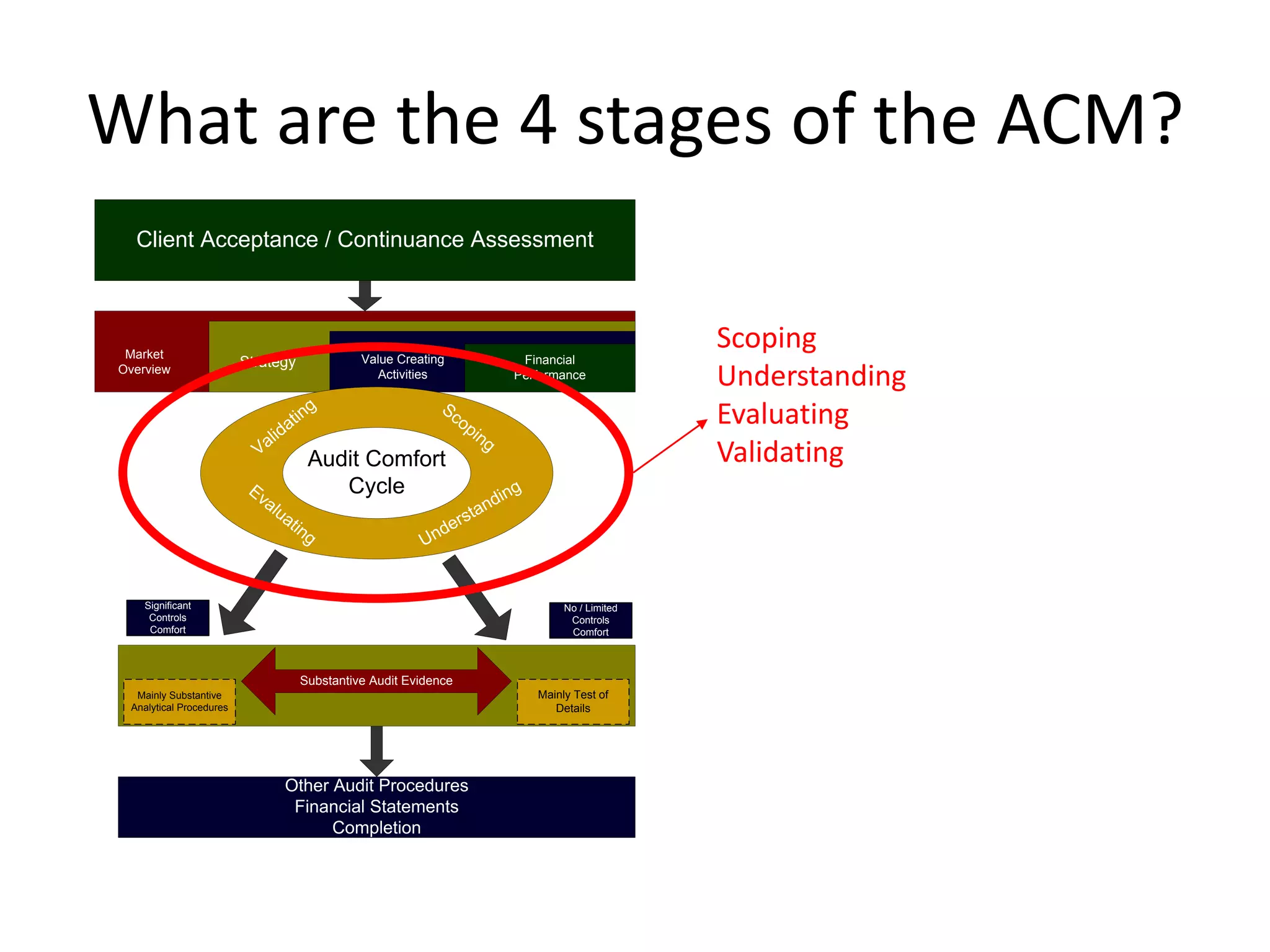
What are the 4 stages of the ACM?ScopingUnderstandingEvaluatingValidating
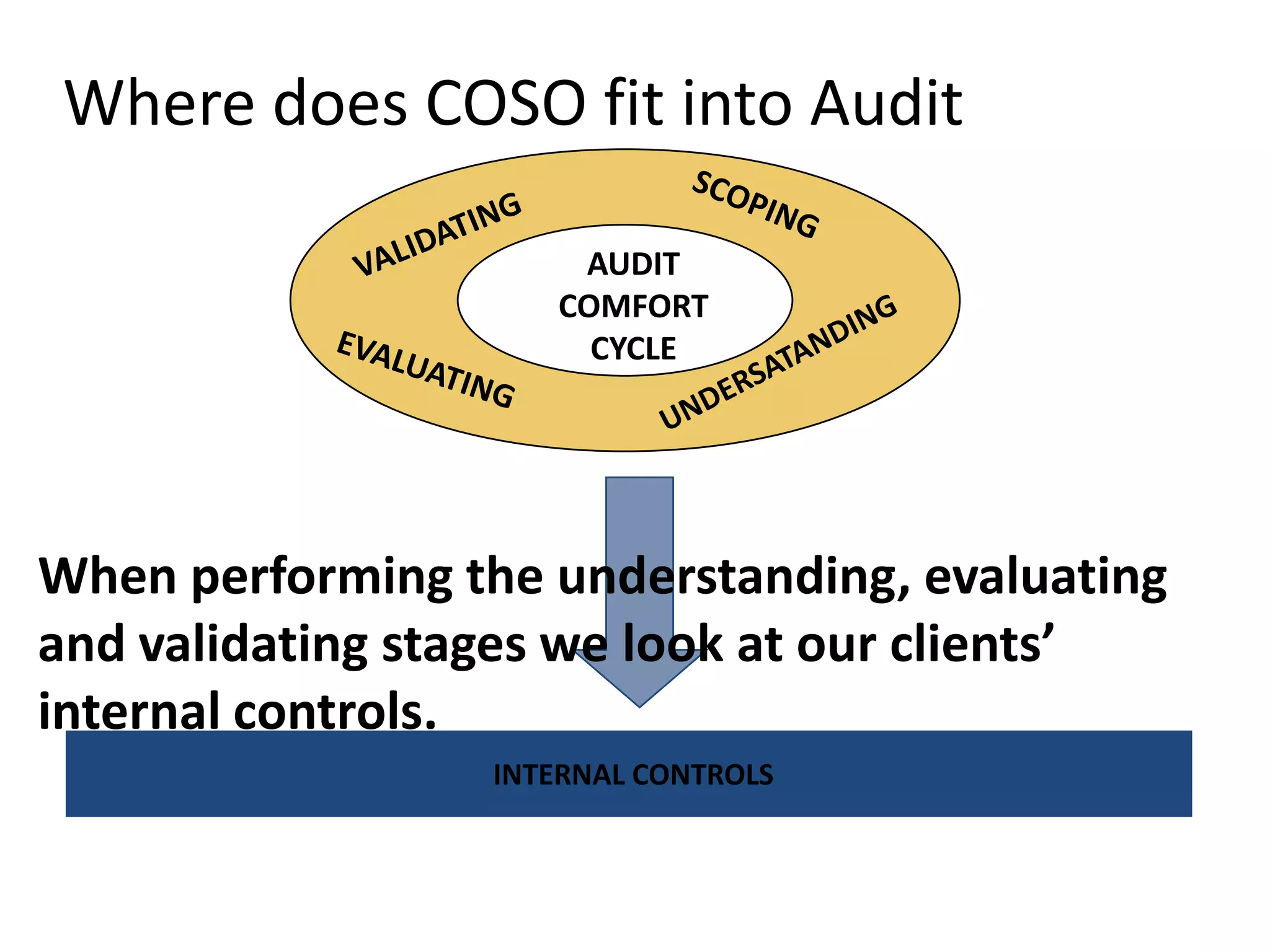
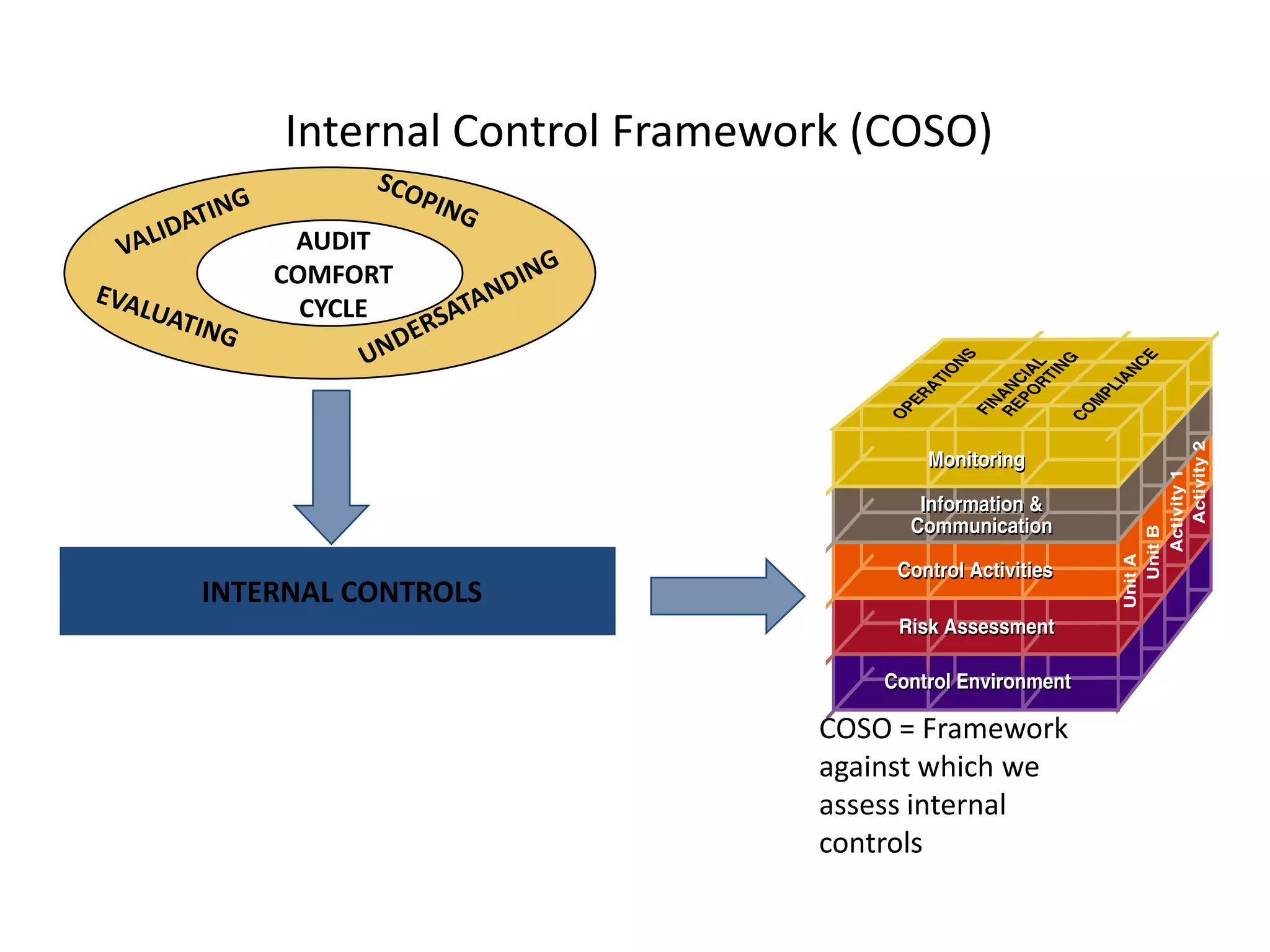
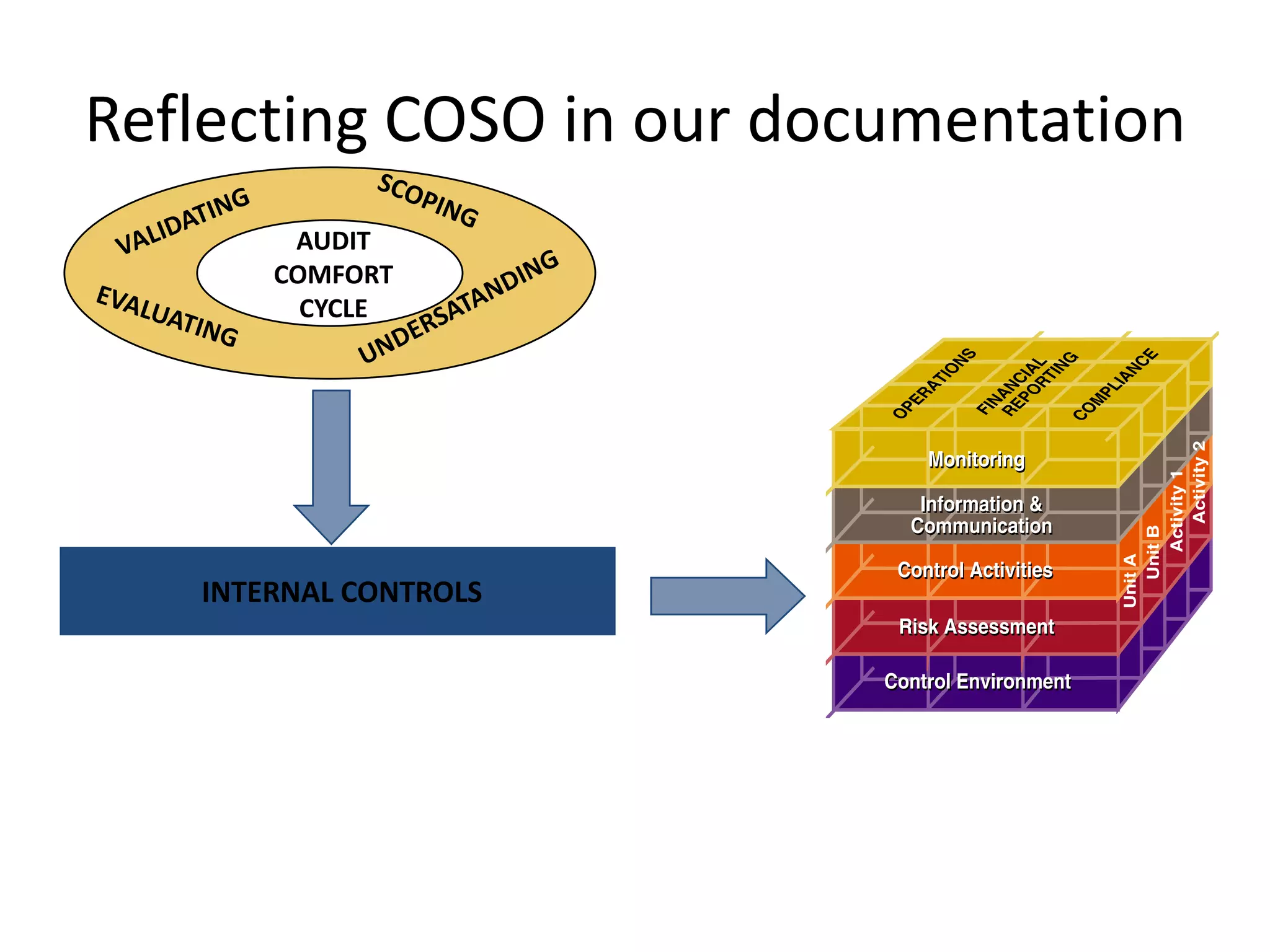
Where does COSO fit into AuditWhen performing the understanding, evaluating and validating stages we look at our clients’ internal controls.SCOPINGVALIDATINGAUDITCOMFORTCYCLEUNDERSATANDINGEVALUATINGINTERNALCONTROLS
Internal Control Framework (COSO)SCOPINGVALIDATINGAUDITCOMFORTCYCLEUNDERSATANDINGEVALUATINGINTERNALCONTROLSCOSO = Framework against which we assess internal controls
Who or what is COSO?The Committee of Sponsoring Organizations of the Treadway CommissionVoluntary, private sector organisation originally formed in 1985Dedicated to improving the quality of financial reporting through business ethics, effective internal controls and corporate governance.
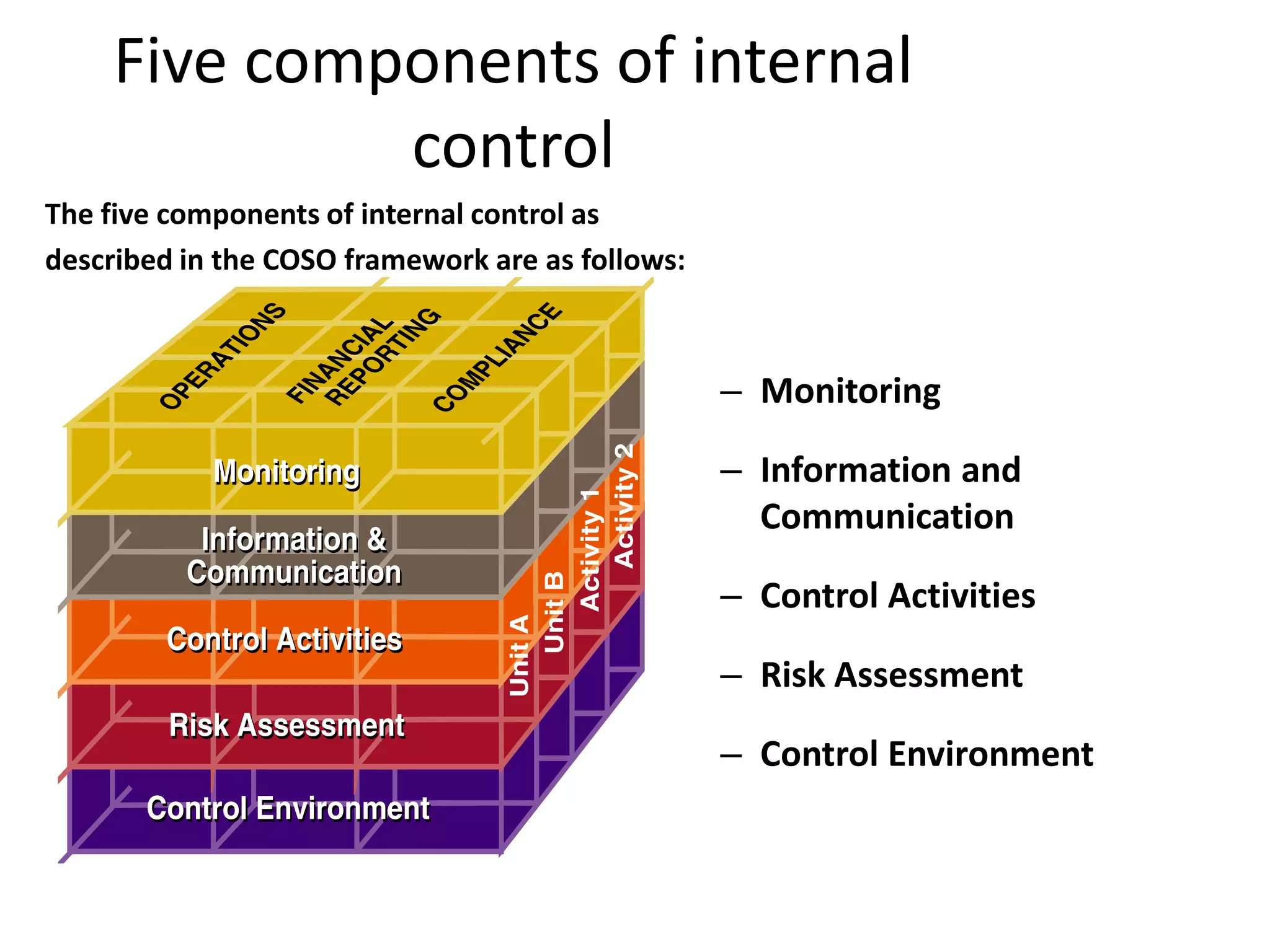
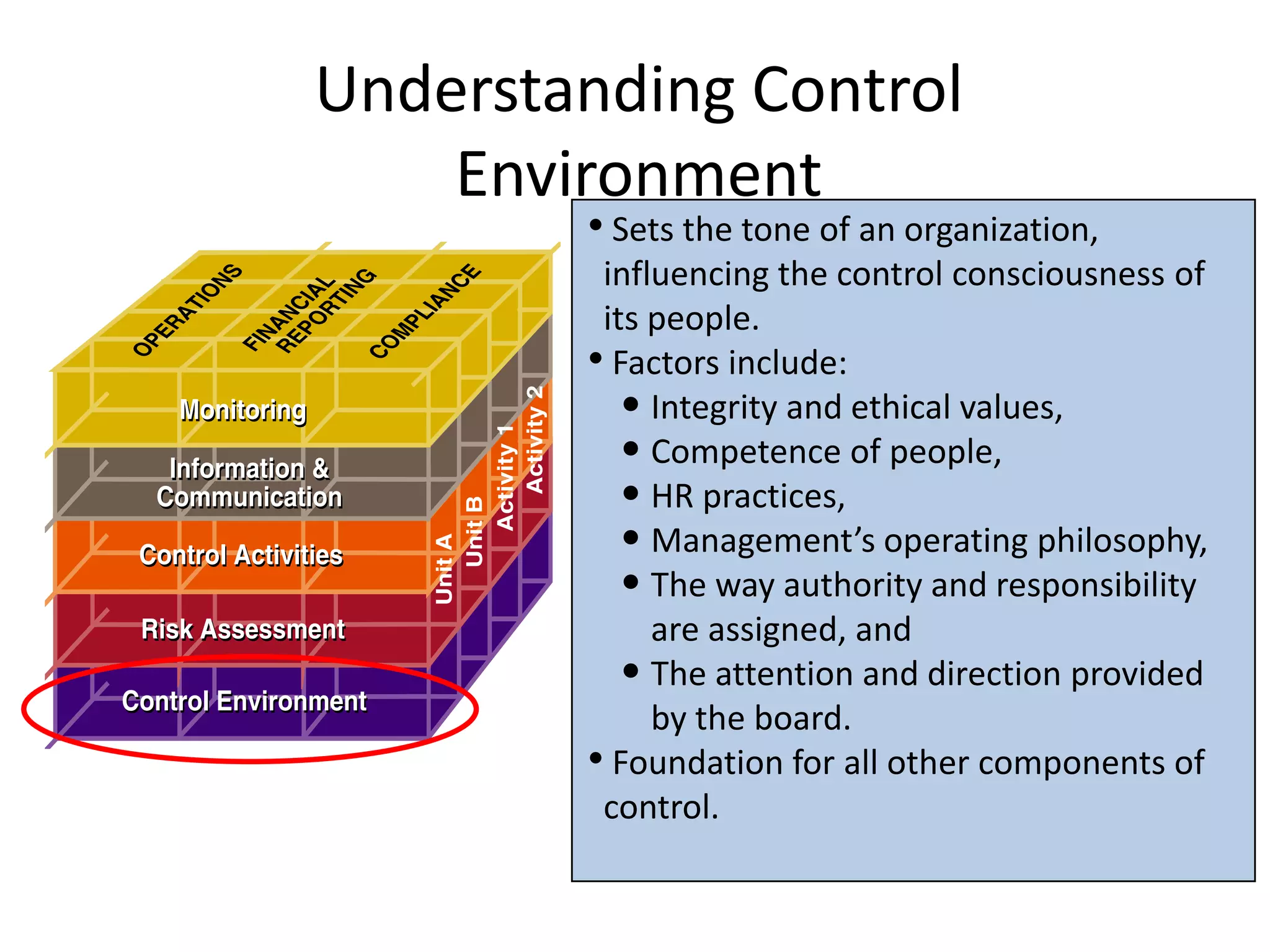
Five components of internal controlMonitoringInformation and CommunicationControl ActivitiesRisk AssessmentControl EnvironmentThe five components of internal control as described in the COSO framework are as follows:
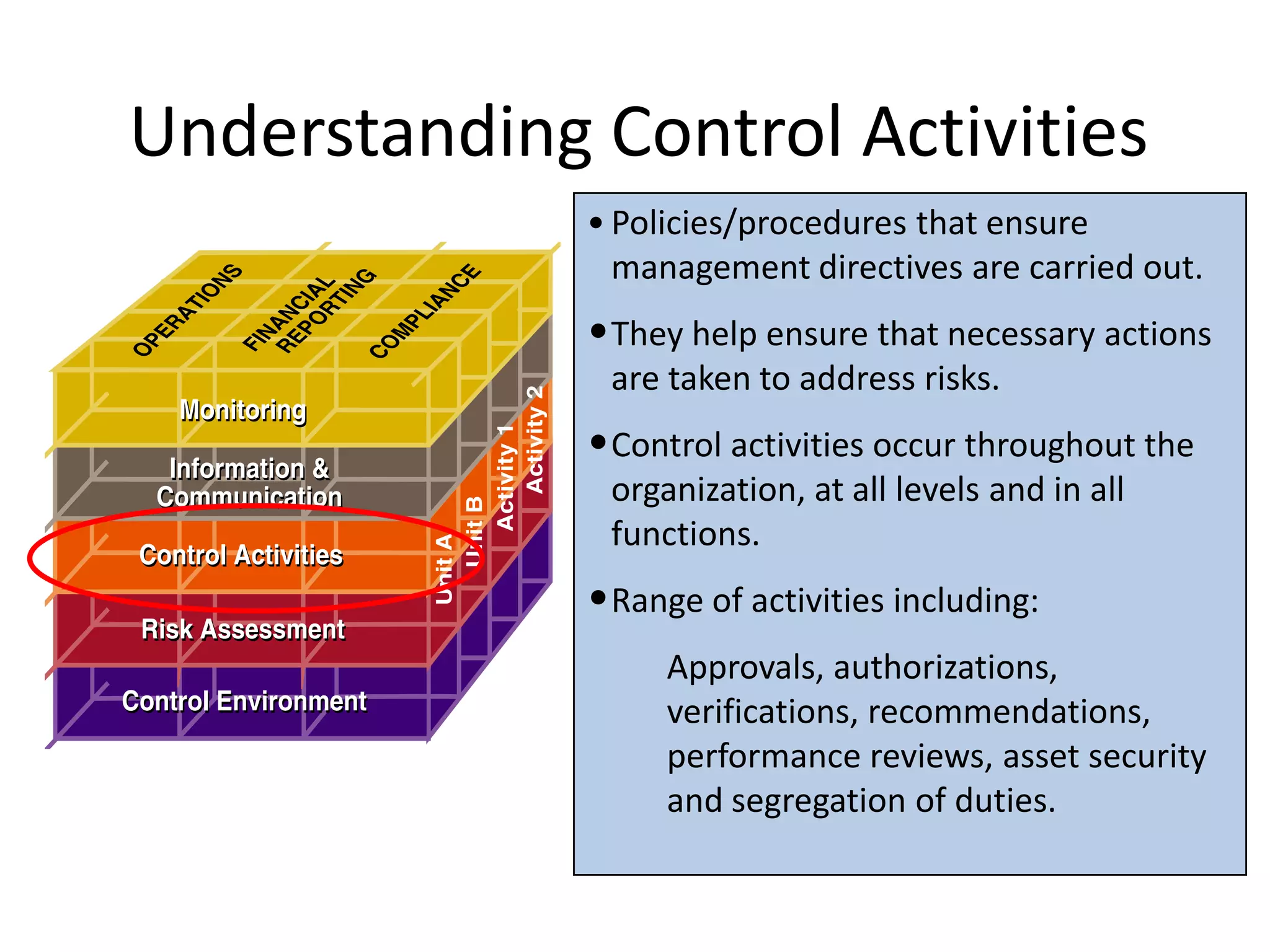
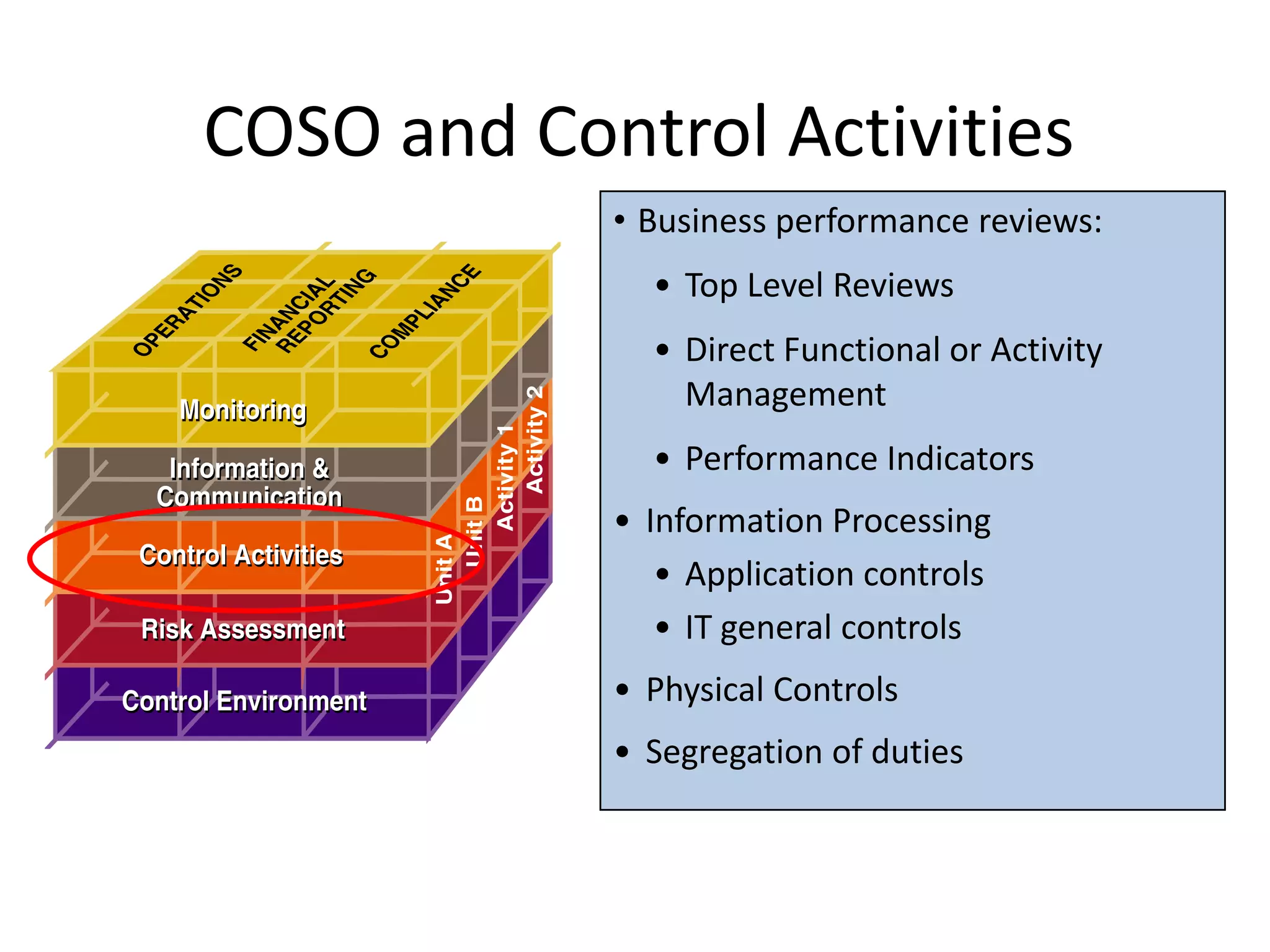
Understanding Control Activities Policies/procedures that ensure management directives are carried out.
They help ensure that necessary actions are taken to address risks.
Control activities occur throughout the organization, at all levels and in all functions.
Range of activities including:Approvals, authorizations, verifications, recommendations, performance reviews, asset security and segregation of duties.
COSO and Control Activities Business performance reviews:
Top Level Reviews
Direct Functional or Activity Management
Performance Indicators
 Information Processing
Application controls
IT general controls

Coso And Internal Audit

  • 1.
    COSO and InternalAuditIjaz ur Rehman Qureshi
  • 2.
    Session objectives Bythe end of the session you will be able to Understand how COSO links to our audit approachUnderstand the dimensions of the COSO cubeList the 5 internal control componentsDescribe the key considerations within each componentHave an awareness of COSO2
  • 3.
    What are the4 stages of the ACM?ScopingUnderstandingEvaluatingValidating
  • 4.
    Where does COSOfit into AuditWhen performing the understanding, evaluating and validating stages we look at our clients’ internal controls.SCOPINGVALIDATINGAUDITCOMFORTCYCLEUNDERSATANDINGEVALUATINGINTERNALCONTROLS
  • 5.
    Internal Control Framework(COSO)SCOPINGVALIDATINGAUDITCOMFORTCYCLEUNDERSATANDINGEVALUATINGINTERNALCONTROLSCOSO = Framework against which we assess internal controls
  • 6.
    Who or whatis COSO?The Committee of Sponsoring Organizations of the Treadway CommissionVoluntary, private sector organisation originally formed in 1985Dedicated to improving the quality of financial reporting through business ethics, effective internal controls and corporate governance.
  • 7.
    Five components ofinternal controlMonitoringInformation and CommunicationControl ActivitiesRisk AssessmentControl EnvironmentThe five components of internal control as described in the COSO framework are as follows:
  • 8.
    Understanding Control ActivitiesPolicies/procedures that ensure management directives are carried out.
  • 9.
    They help ensurethat necessary actions are taken to address risks.
  • 10.
    Control activities occurthroughout the organization, at all levels and in all functions.
  • 11.
    Range of activitiesincluding:Approvals, authorizations, verifications, recommendations, performance reviews, asset security and segregation of duties.
  • 12.
    COSO and ControlActivities Business performance reviews:
  • 13.
  • 14.
    Direct Functional orActivity Management
  • 15.
  • 16.
  • 17.
  • 18.
  • 19.
  • 20.
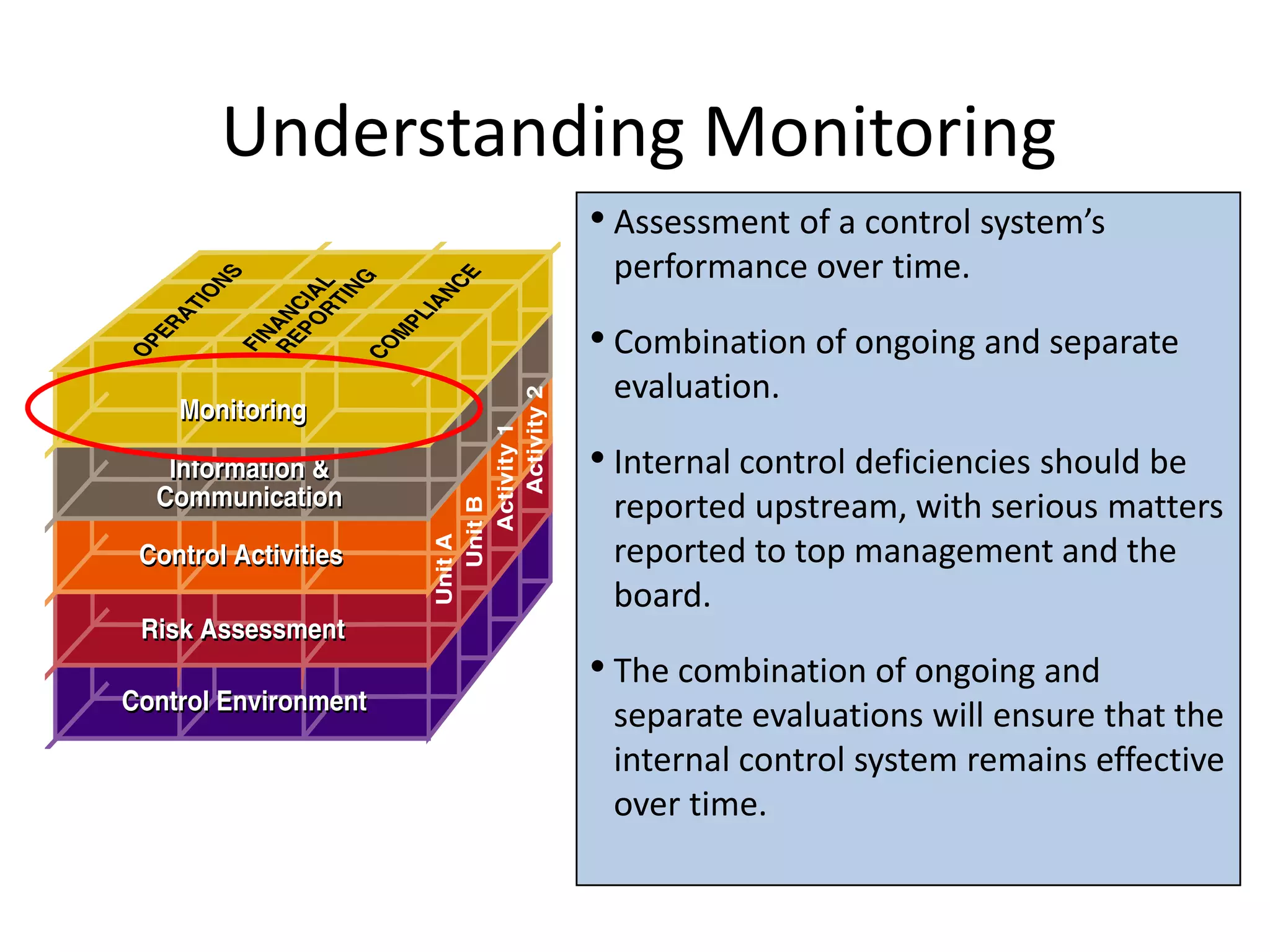
    Segregation ofduties Understanding Monitoring Assessment of a control system’s performance over time.
  • 21.
    Combination of ongoingand separate evaluation.
  • 22.
    Internal control deficienciesshould be reported upstream, with serious matters reported to top management and the board.
  • 23.
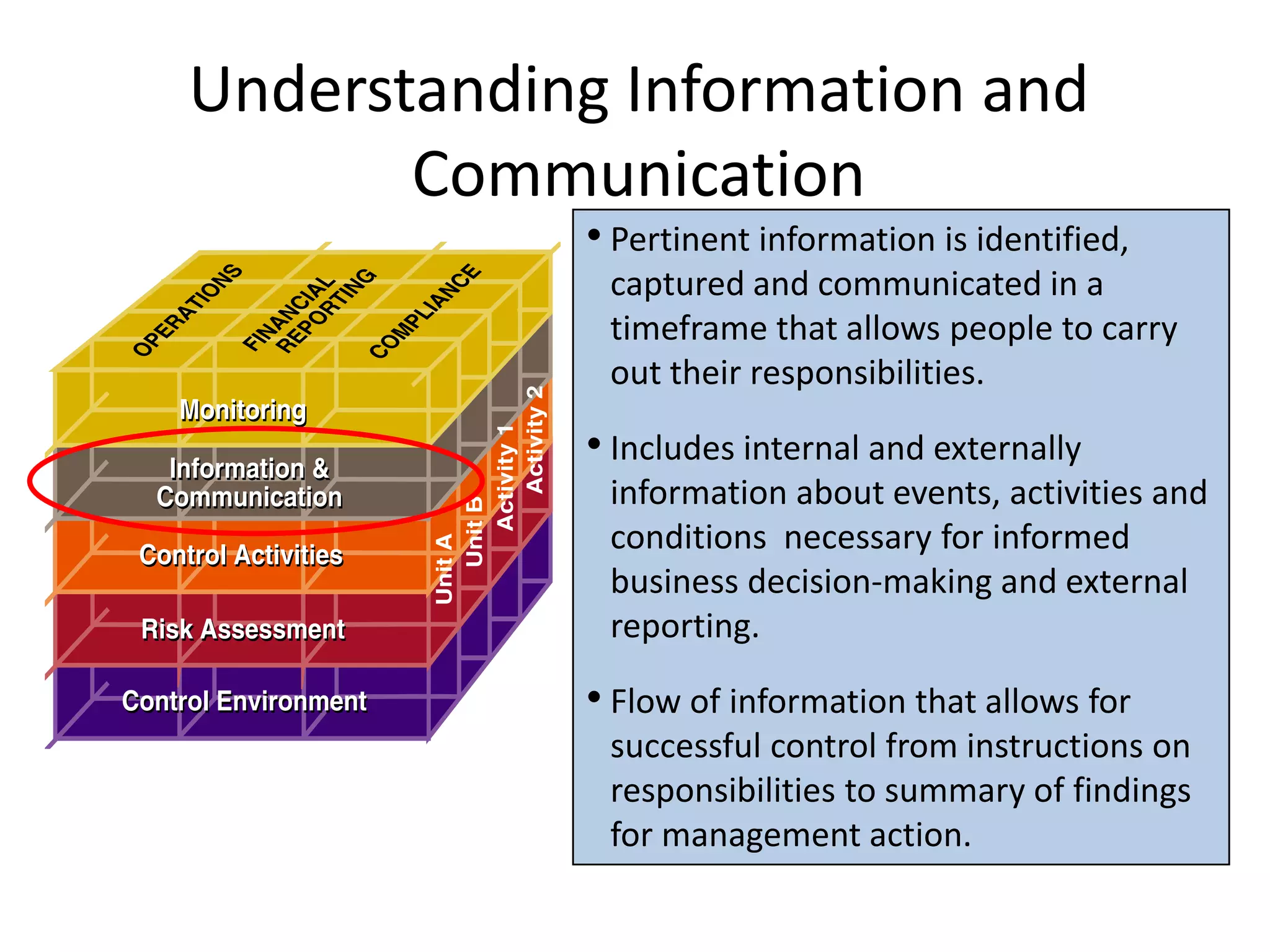
    The combination ofongoing and separate evaluations will ensure that the internal control system remains effective over time.Understanding Information andCommunication Pertinent information is identified, captured and communicated in a timeframe that allows people to carry out their responsibilities.
  • 24.
    Includes internal andexternally information about events, activities and conditions necessary for informed business decision-making and external reporting.
  • 25.
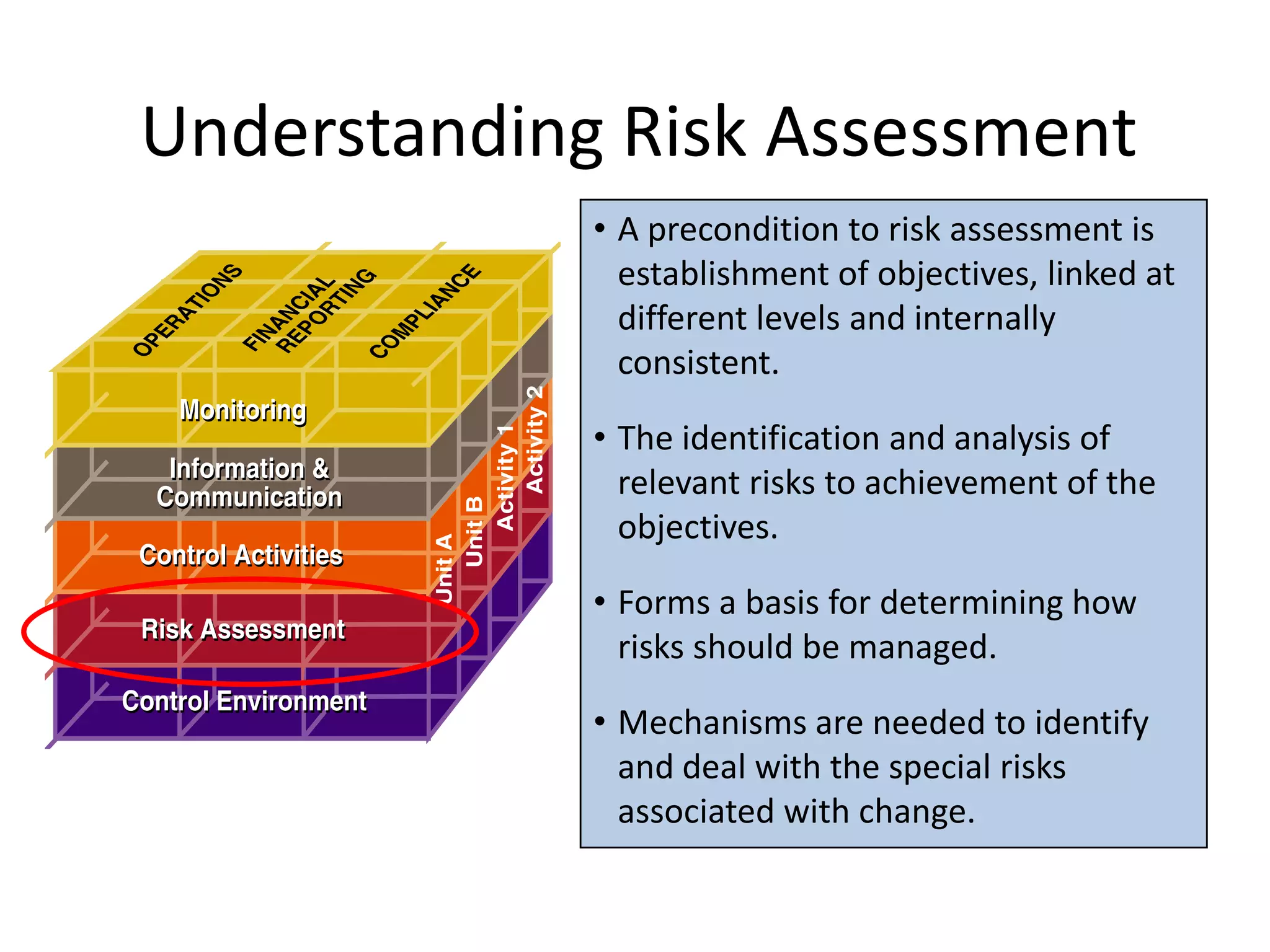
    Flow of informationthat allows for successful control from instructions on responsibilities to summary of findings for management action.Understanding Risk Assessment A precondition to risk assessment is establishment of objectives, linked at different levels and internally consistent.
  • 26.
    The identification andanalysis of relevant risks to achievement of the objectives.
  • 27.
    Forms a basisfor determining how risks should be managed.
  • 28.
    Mechanisms are neededto identify and deal with the special risks associated with change.Understanding ControlEnvironment Sets the tone of an organization, influencing the control consciousness of its people.
  • 29.
  • 30.
  • 31.
  • 32.
  • 33.
  • 34.
    The way authorityand responsibility are assigned, and
  • 35.
    The attention anddirection provided by the board.
  • 36.
    Foundation forall other components of control.Reflecting COSO in our documentationSCOPINGVALIDATINGAUDITCOMFORTCYCLEUNDERSATANDINGEVALUATINGINTERNALCONTROLS
  • 37.
    Enterprise Risk Management- COSO 2Enterprise Risk Management (ERM) model was developed.Incorporates the notion of risk administration, defined as a process designed to identify future events that can rebound in the future of the entity.Enterprise objectives defined in 4 categories:StrategicOperationalInformativeObservance
  • 38.
    ERM IncludesAlignment ofthe appetite of risk and strategy. It improves the answer to the waterings. It reduces surprises and operational losses. To take possession of opportunities.
  • 39.
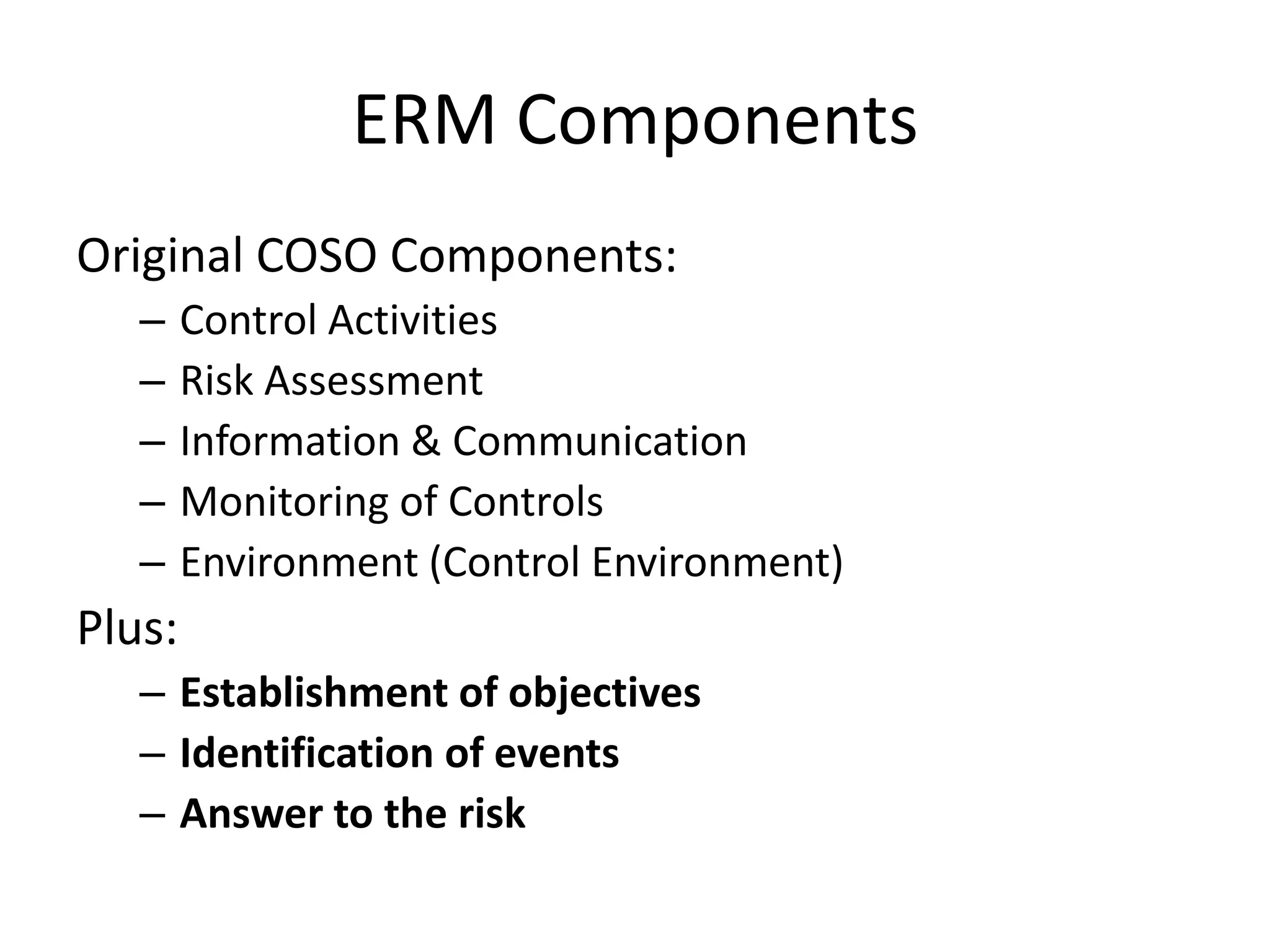
    ERM ComponentsOriginal COSOComponents:Control ActivitiesRisk AssessmentInformation & CommunicationMonitoring of ControlsEnvironment (Control Environment)Plus: Establishment of objectivesIdentification of eventsAnswer to the risk
  • 40.
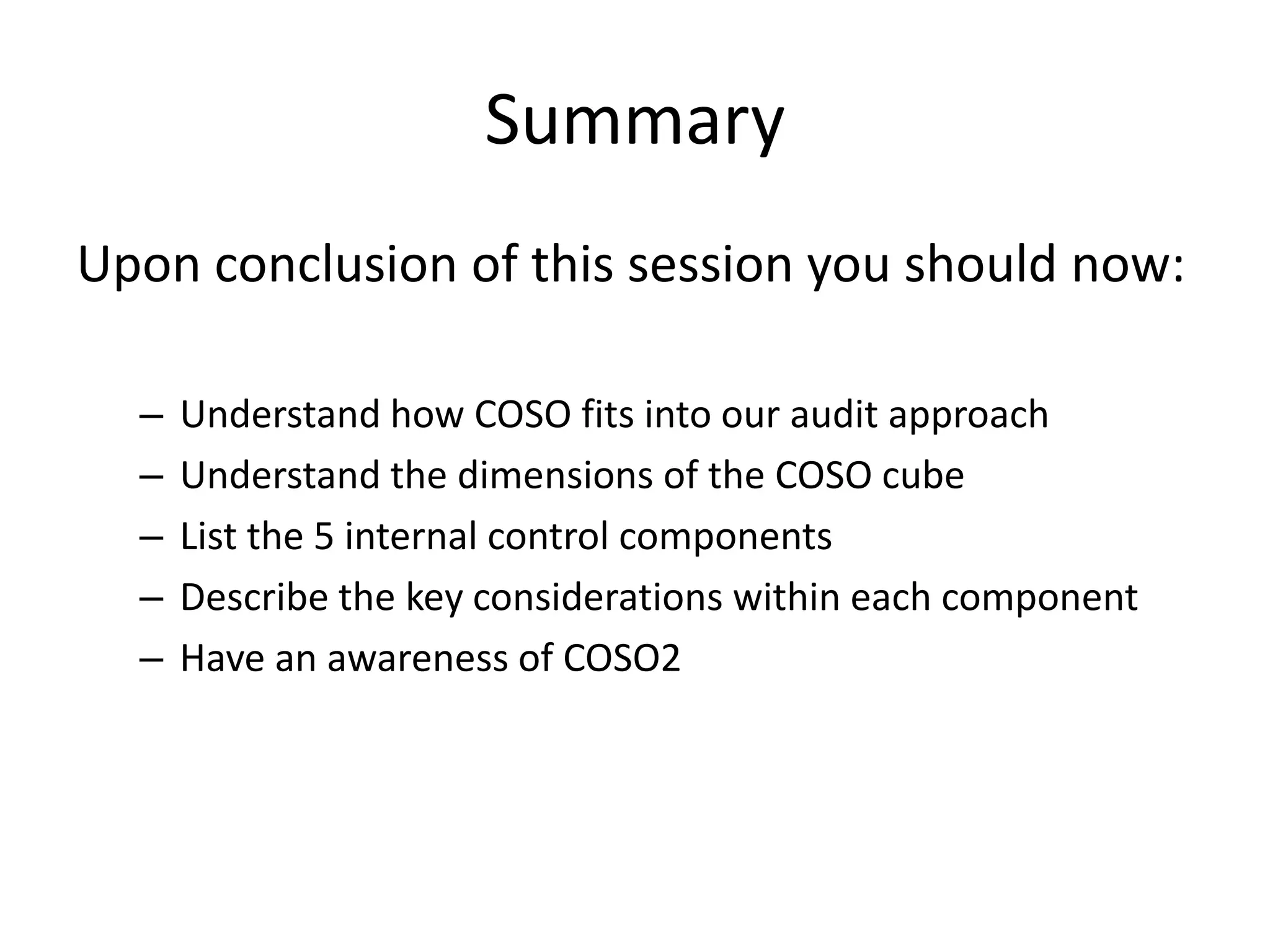
    SummaryUpon conclusion ofthis session you should now:Understand how COSO fits into our audit approachUnderstand the dimensions of the COSO cubeList the 5 internal control componentsDescribe the key considerations within each componentHave an awareness of COSO2