JACOB LAWRENCE Group Six
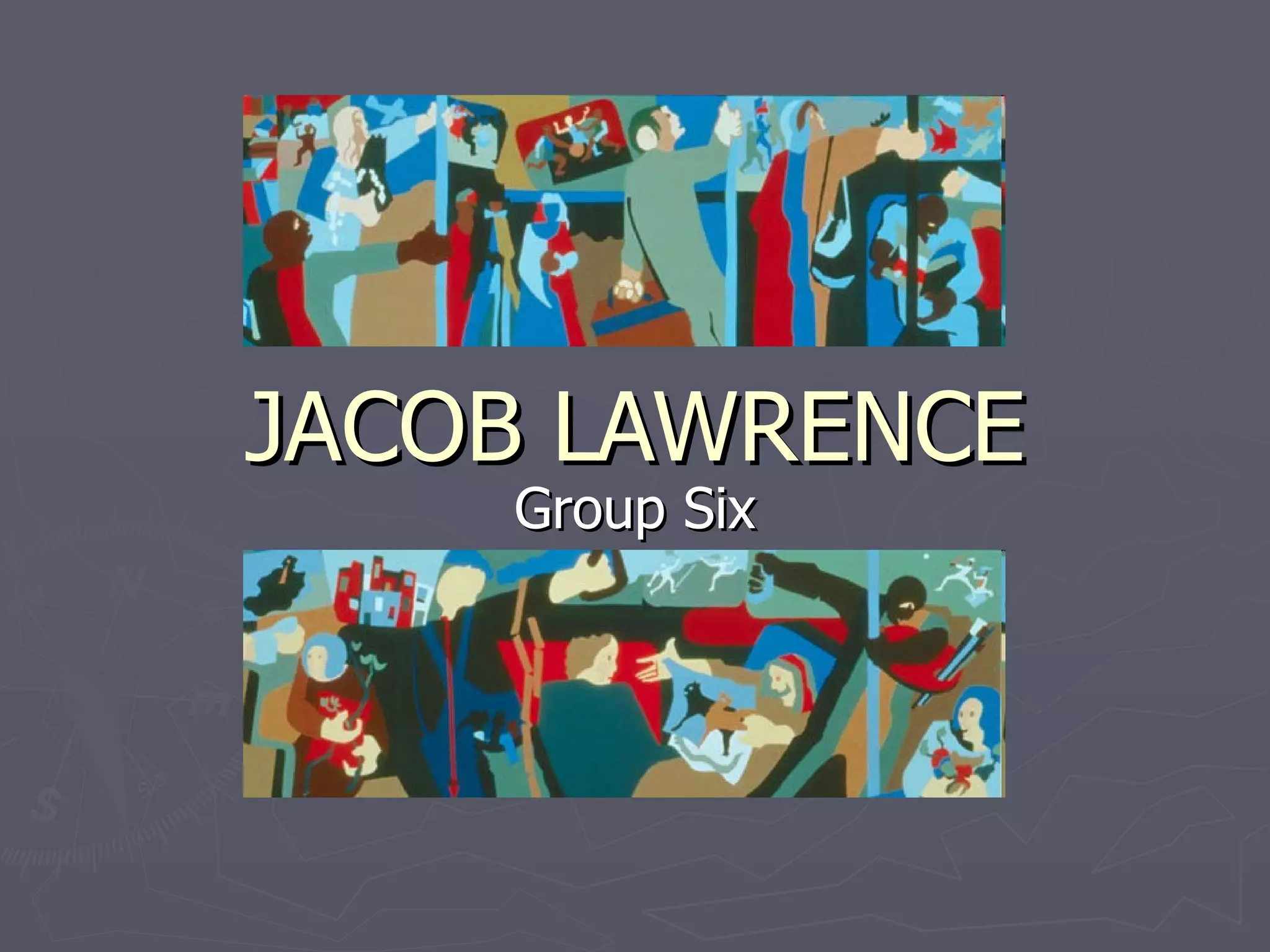
Jacob Lawrence Born in Atlantic City, New Jersey in 1917. Considered himself both an artist and an educator through his works that partially defined what has become known as the Harlem Renaissance. He is one of the leading American figurative artists, and the first to document African American history in widely-viewed, influential works of art.
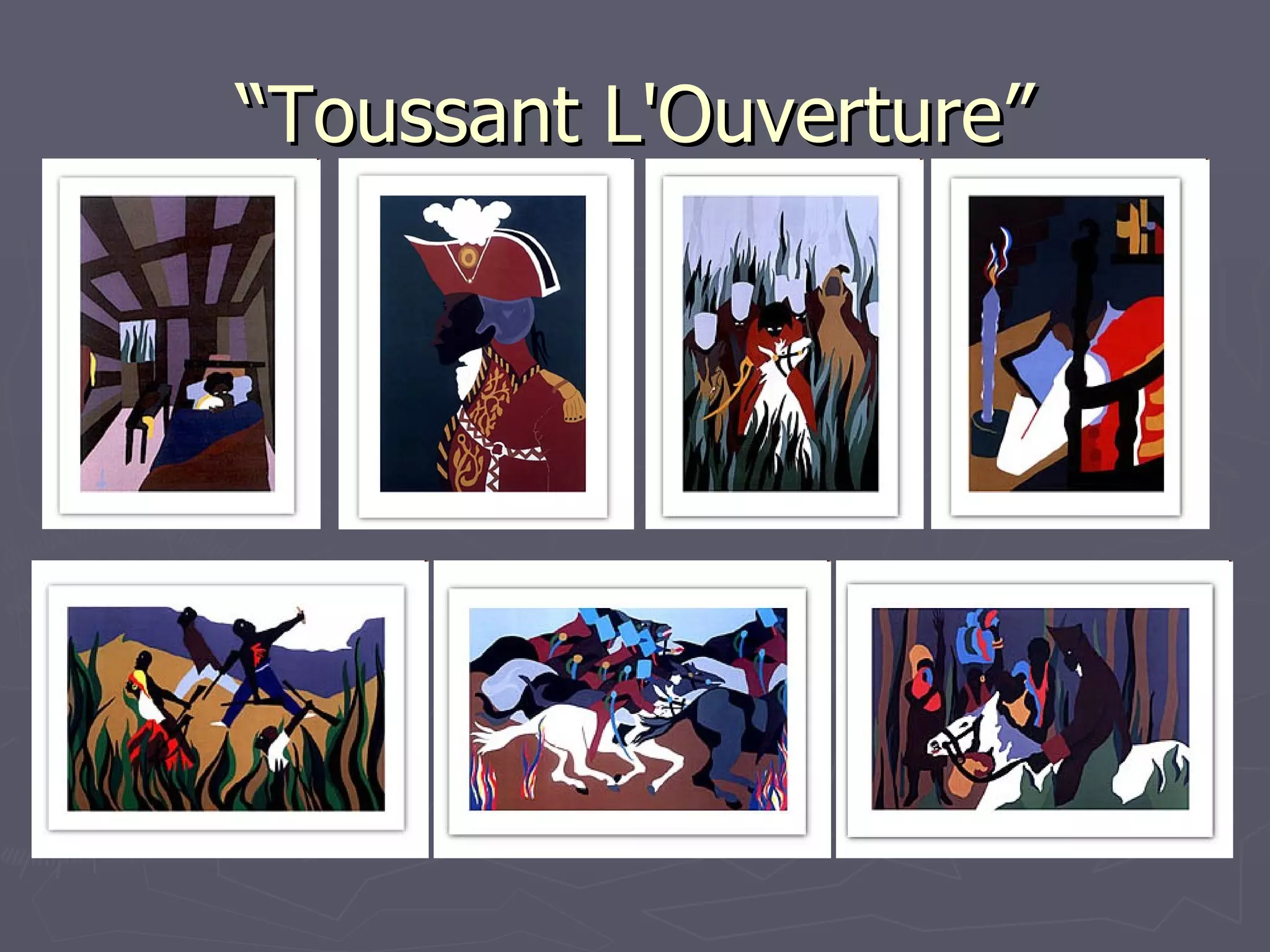
Jacob Lawrence He was originally inspired in 1924 when he moved to Harlem with his family. He found himself immersed in a vibrant, intellectual black culture.  At the age of 21, in 1937, he garnered fame for his “Toussant L'Ouverture Series”, which was composed of 41 separate works that depicted a successful Haitian slave rebellion through the life of L’Ouverture. At the age of 24, he became the first African American artist to have a permanent collection in the New York Museum of Modern Art.
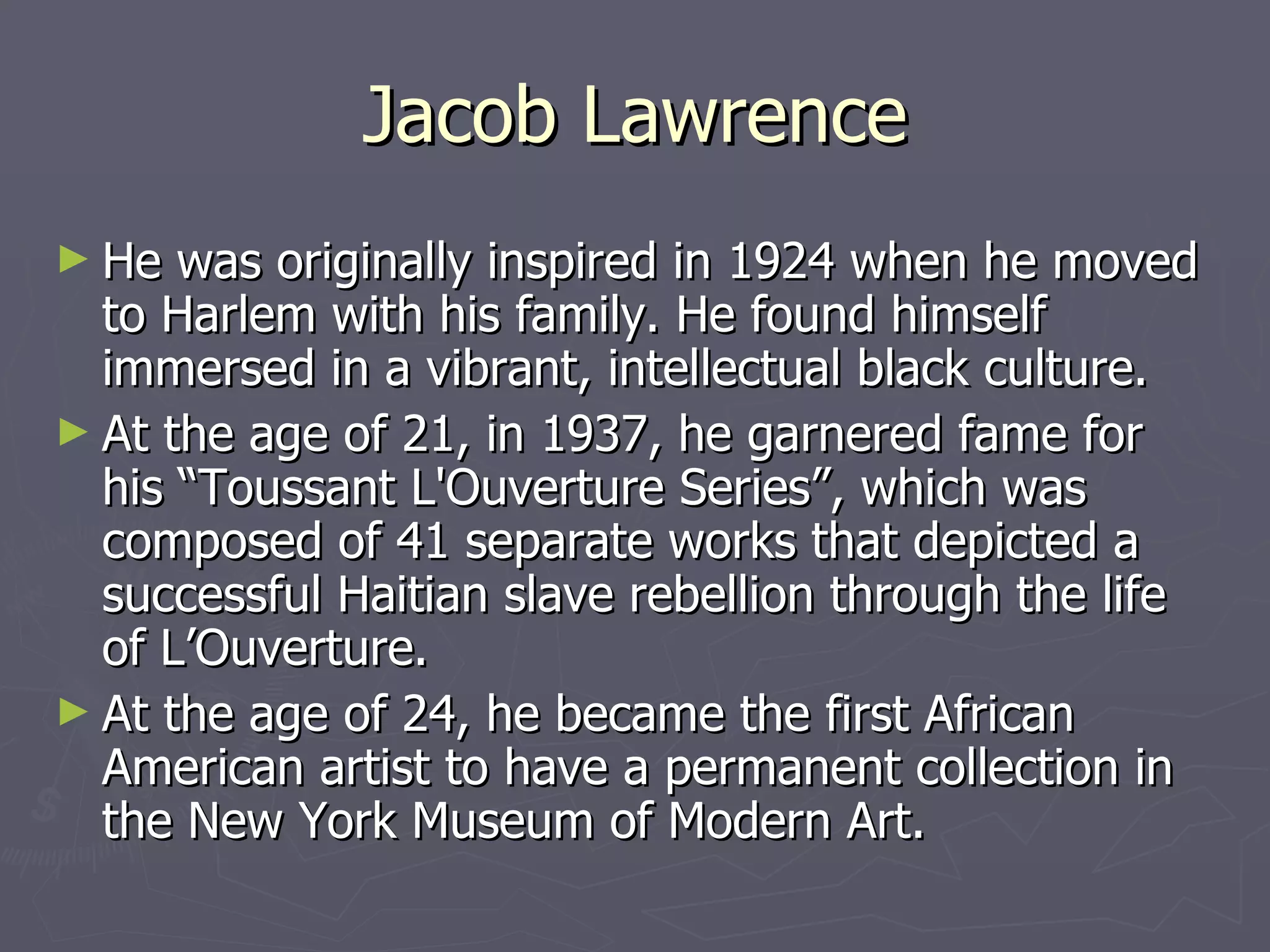
“ Toussant L'Ouverture”
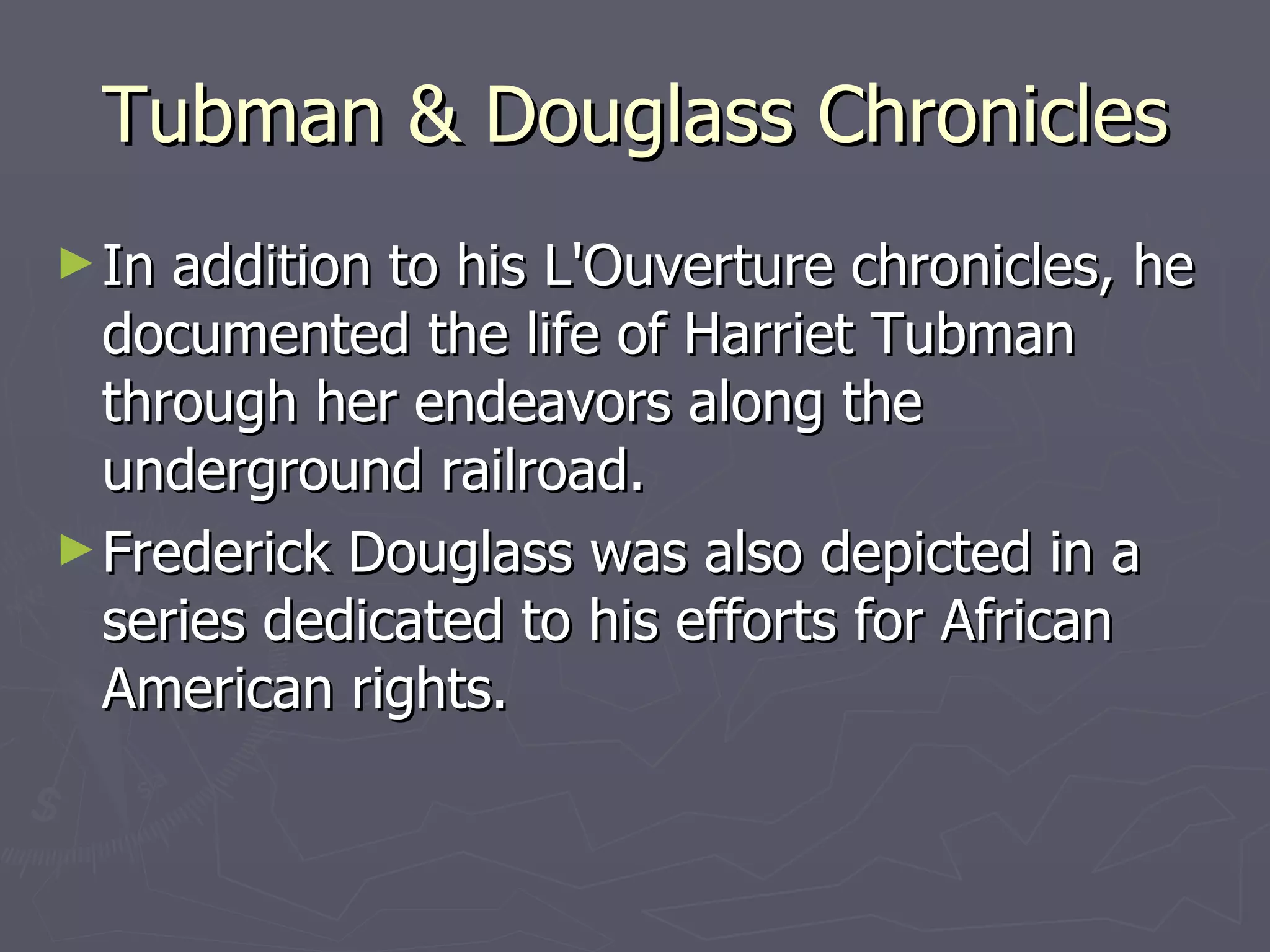
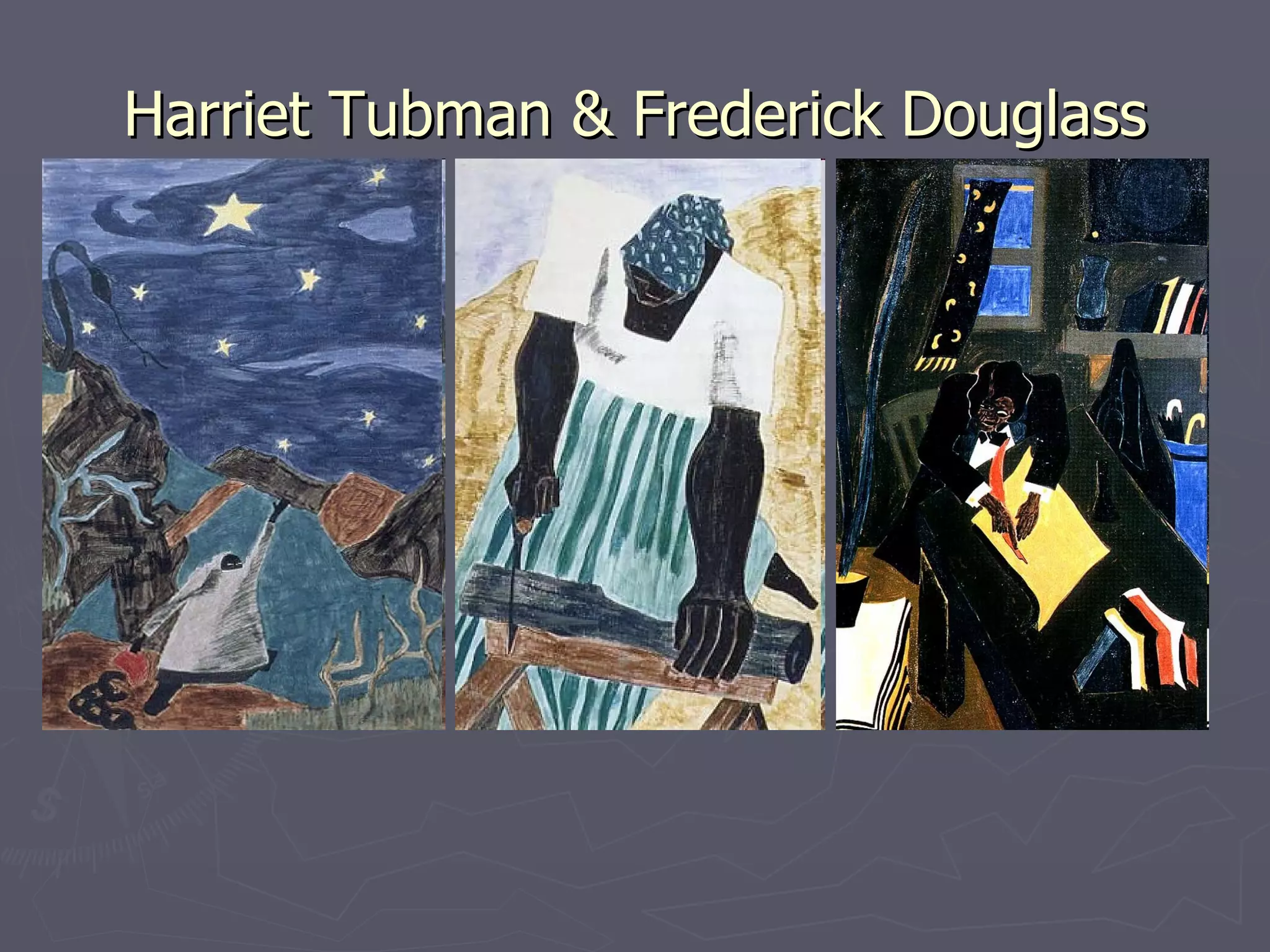
Tubman & Douglass Chronicles In addition to his L'Ouverture chronicles, he documented the life of Harriet Tubman through her endeavors along the underground railroad. Frederick Douglass was also depicted in a series dedicated to his efforts for African American rights.
Harriet Tubman & Frederick Douglass
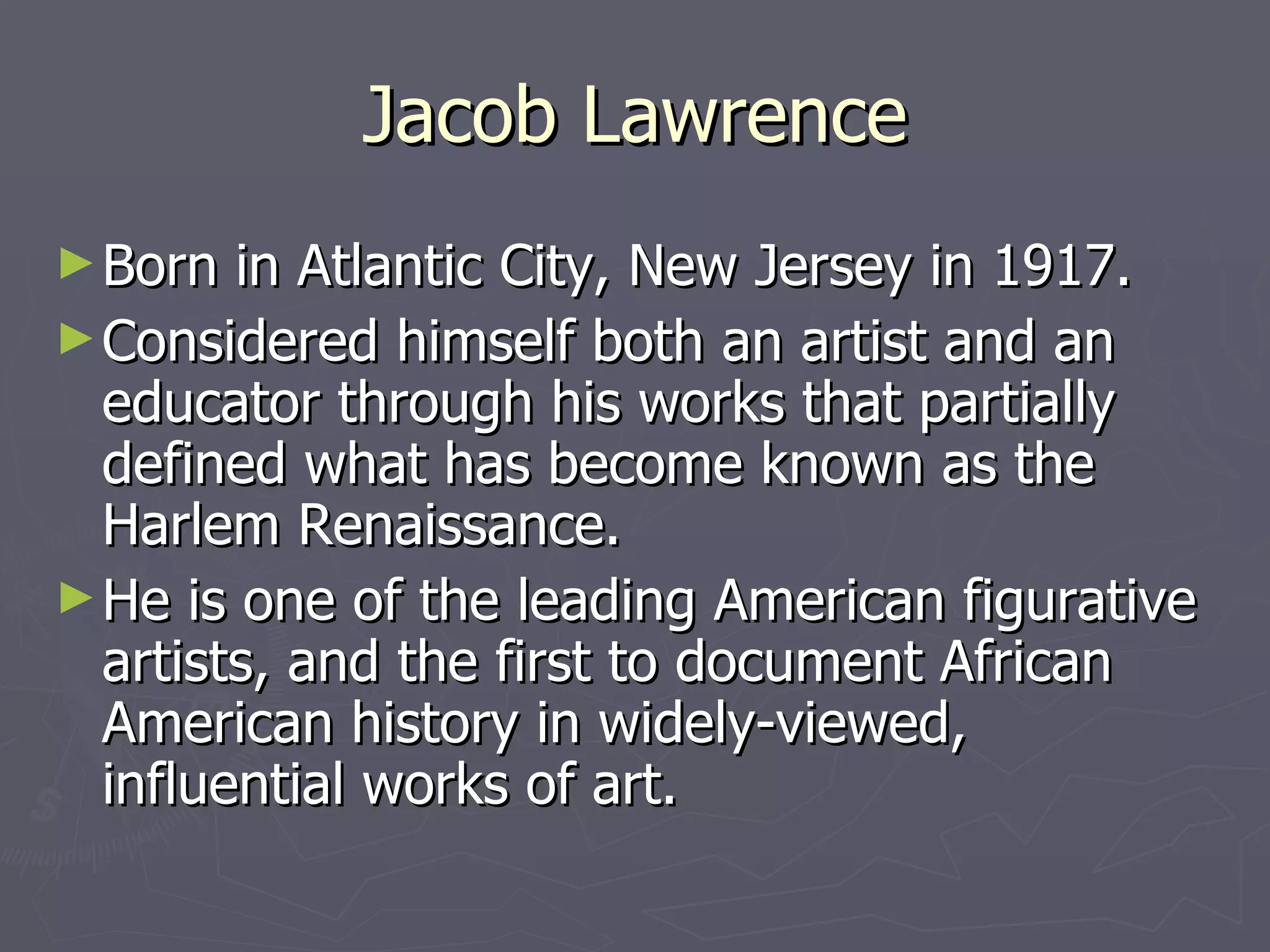
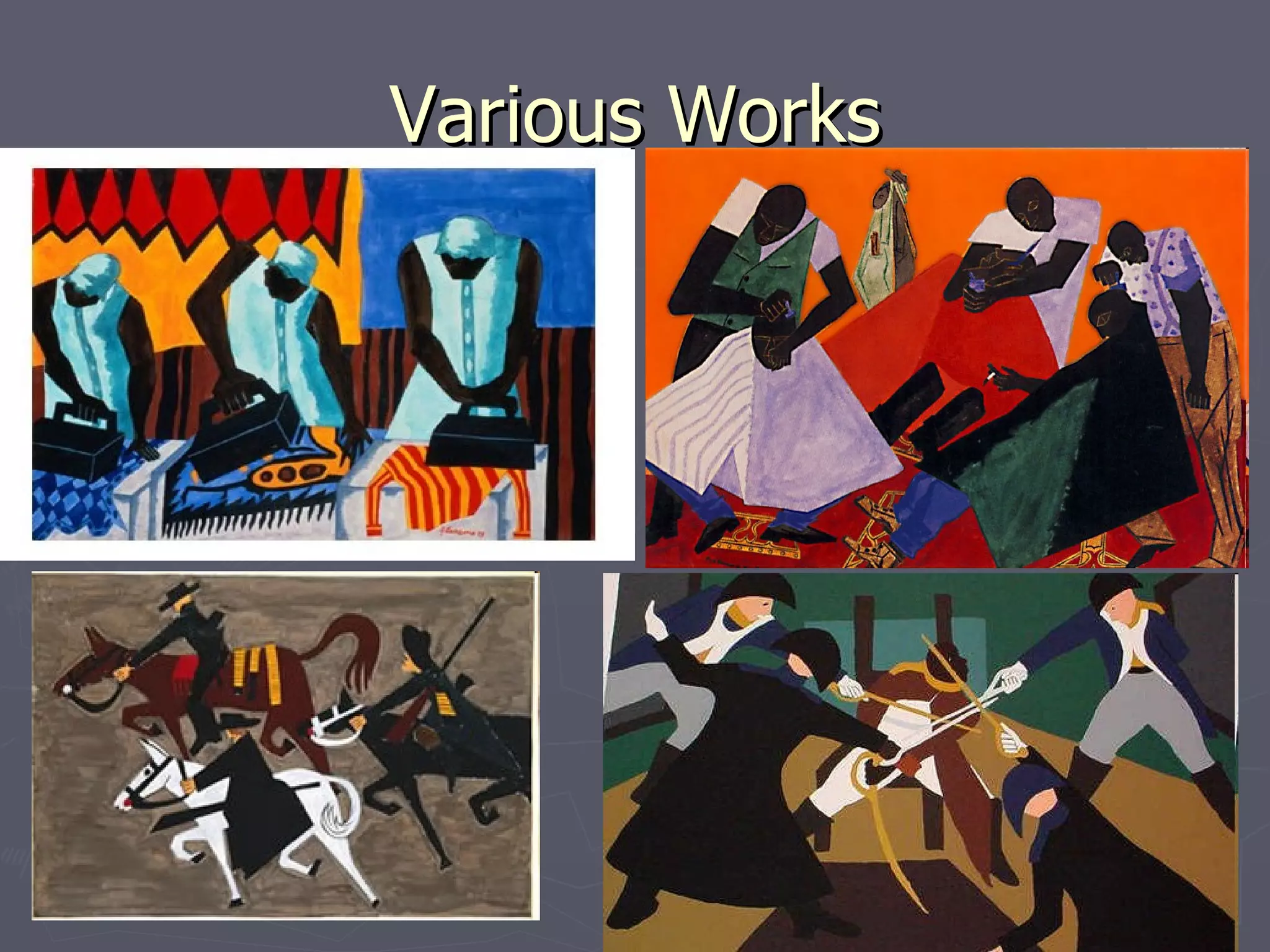
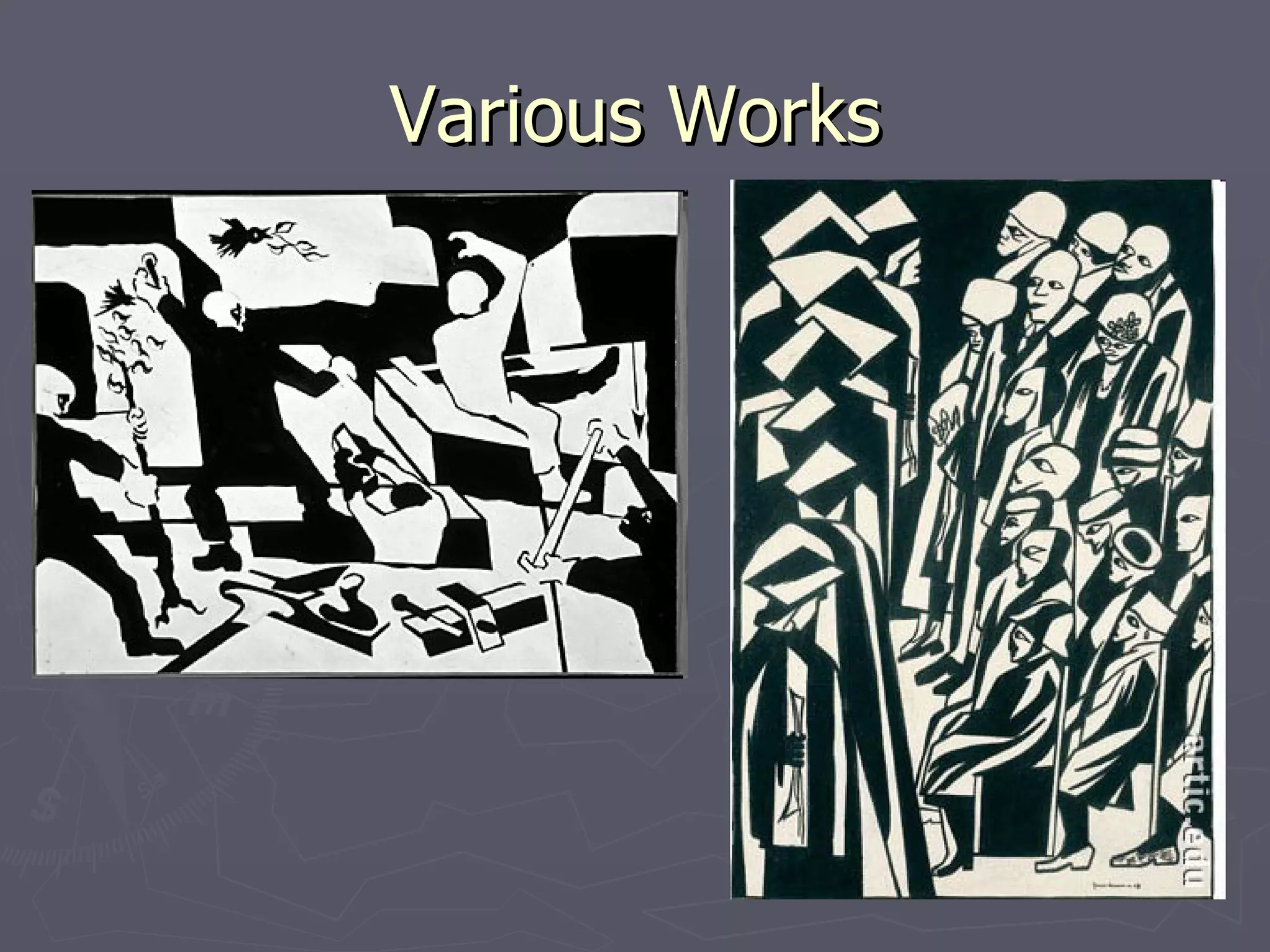
Influences & Technique Lawrence’s art has been linked to cubism, and is considered social realistic—he portrays narratives through the use of compilations of pieces that make up a storyline.  Lawrence’s influences are many, including Breughel, Daumier, William Edmonson, Giotto, Goya, William Gropper, George Grosz, Diego Rivera, and David Siqueiros. These artists have all used their respective works to channel and document human emotion through historical and cultural references.
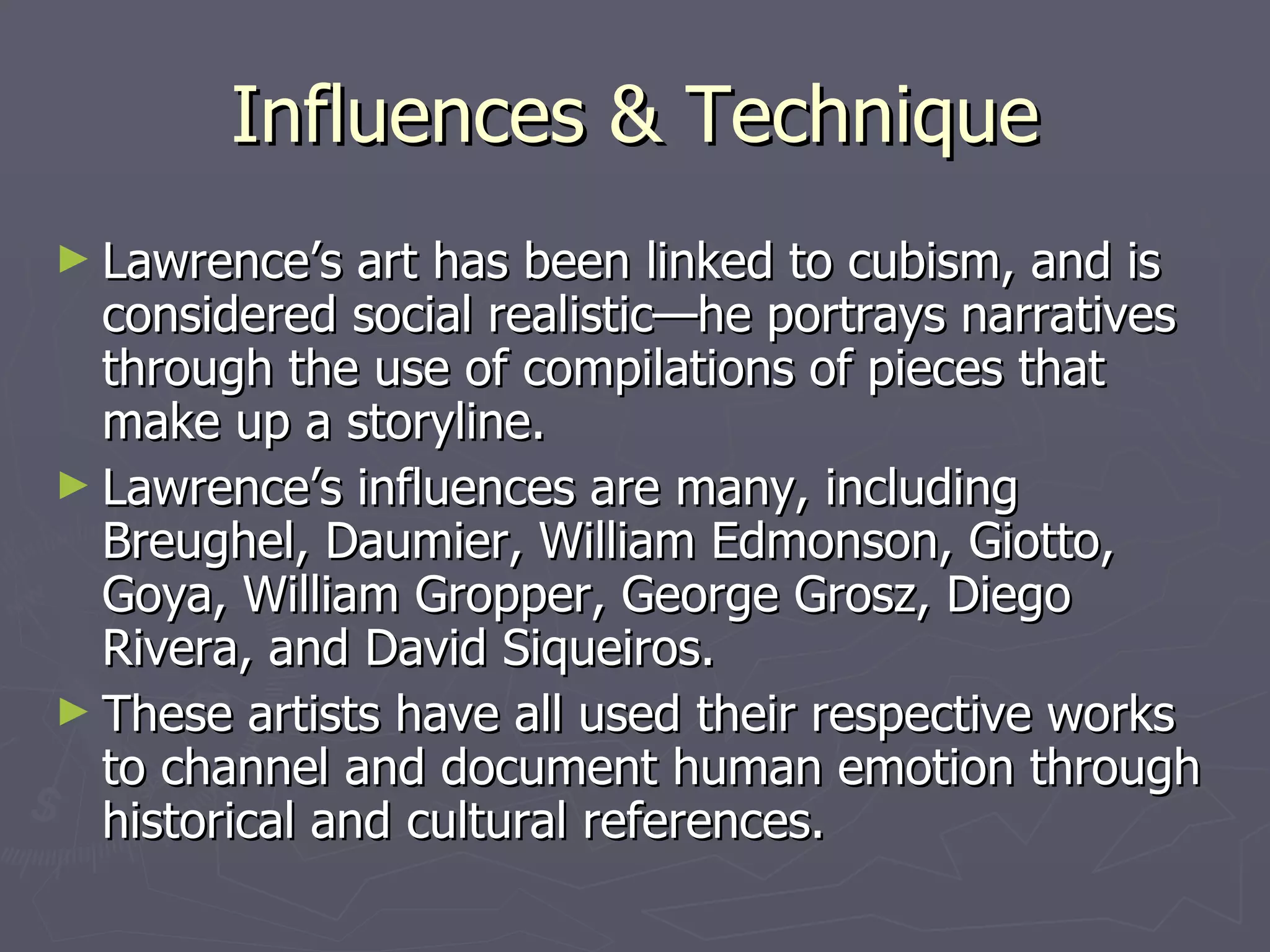
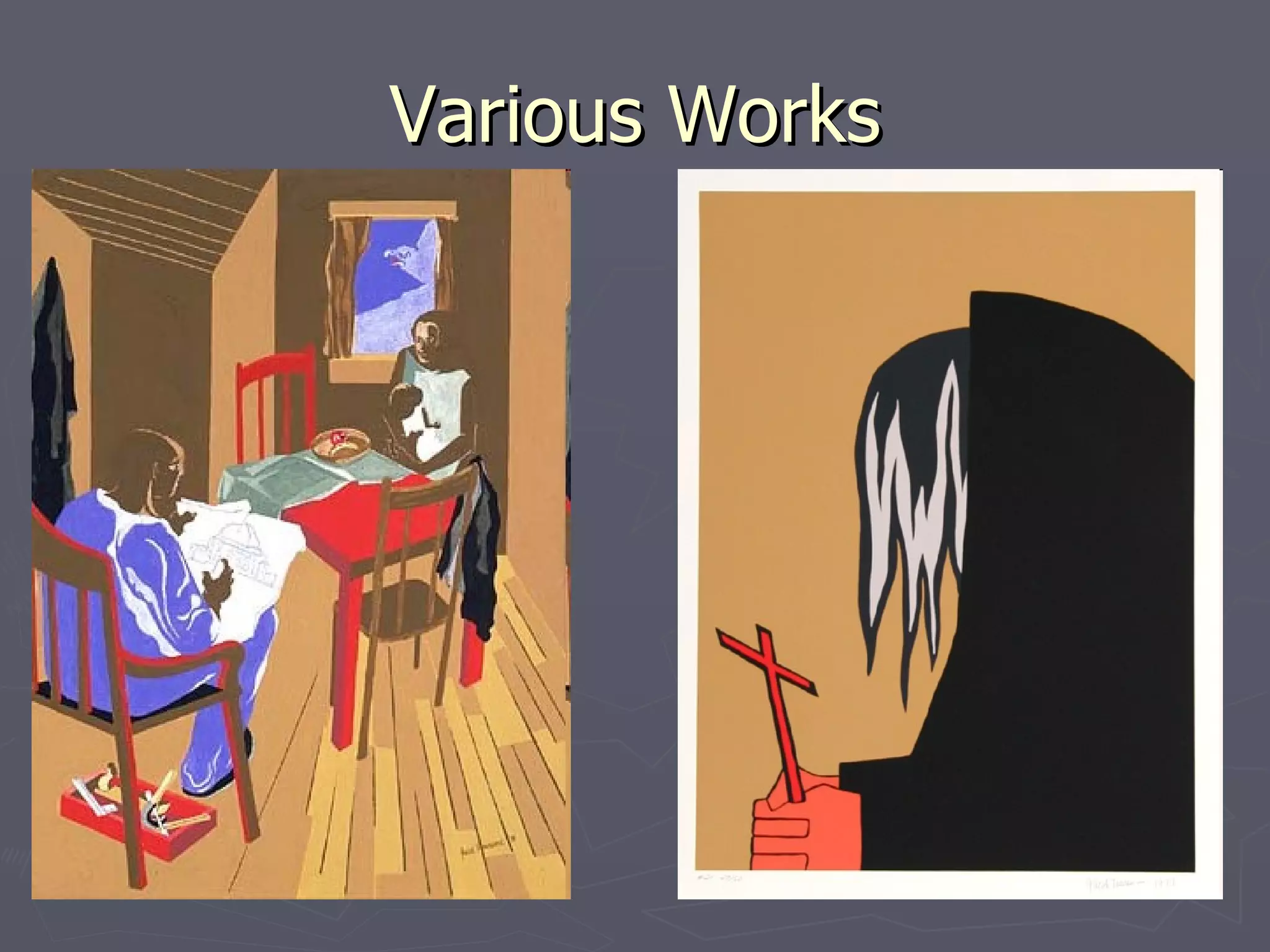
Various Works
Various Works
Various Works
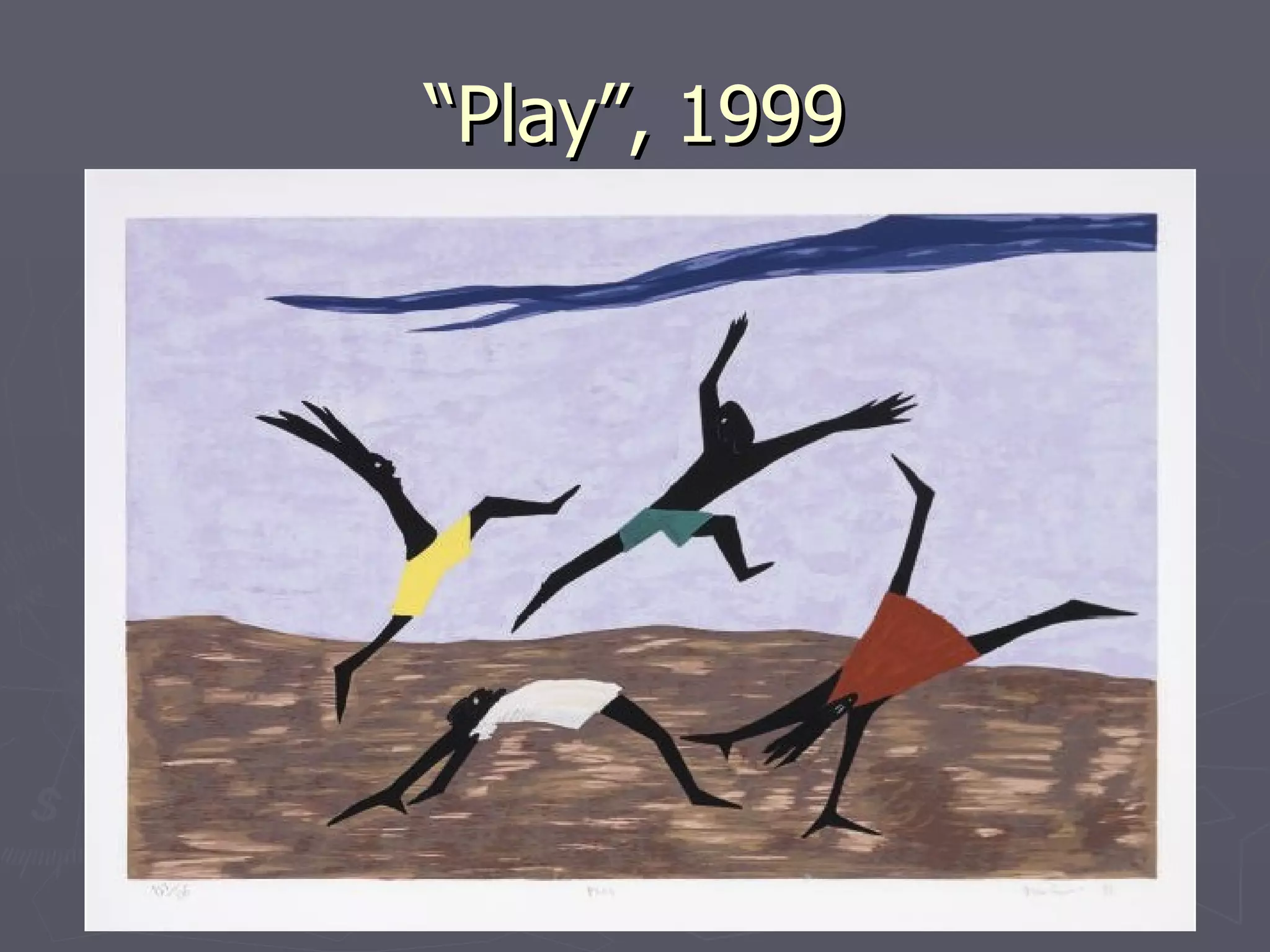
Later Life Lawrence continued to paint through his later years, completing new compilation narratives like “The Migration of the Negro”, and “The Life of John Brown”.  He grew to be the most mainstream, critically-acclaimed African American artist of the 20 th  century, known for his minimalist color usage, and his imaginative angling and perspectives often coupled with intense human emotion.  Jacob Lawrence painted his entire life until he died in 2000.
“Play”, 1999
WORKS CITED http://www.cs.washington.edu/building/art/JacobLawrence/ http://www.a-r-t.com/lawrence/LouvertureWeb/index.htm#images http://raggedclothcafe.com/2007/05/09/jacob-lawrence-by-jane-davila/

Jacob Lawrence

  • 1.
  • 2.
    Jacob Lawrence Bornin Atlantic City, New Jersey in 1917. Considered himself both an artist and an educator through his works that partially defined what has become known as the Harlem Renaissance. He is one of the leading American figurative artists, and the first to document African American history in widely-viewed, influential works of art.
  • 3.
    Jacob Lawrence Hewas originally inspired in 1924 when he moved to Harlem with his family. He found himself immersed in a vibrant, intellectual black culture. At the age of 21, in 1937, he garnered fame for his “Toussant L'Ouverture Series”, which was composed of 41 separate works that depicted a successful Haitian slave rebellion through the life of L’Ouverture. At the age of 24, he became the first African American artist to have a permanent collection in the New York Museum of Modern Art.
  • 4.
  • 5.
    Tubman & DouglassChronicles In addition to his L'Ouverture chronicles, he documented the life of Harriet Tubman through her endeavors along the underground railroad. Frederick Douglass was also depicted in a series dedicated to his efforts for African American rights.
  • 6.
    Harriet Tubman &Frederick Douglass
  • 7.
    Influences & TechniqueLawrence’s art has been linked to cubism, and is considered social realistic—he portrays narratives through the use of compilations of pieces that make up a storyline. Lawrence’s influences are many, including Breughel, Daumier, William Edmonson, Giotto, Goya, William Gropper, George Grosz, Diego Rivera, and David Siqueiros. These artists have all used their respective works to channel and document human emotion through historical and cultural references.
  • 8.
  • 9.
  • 10.
  • 11.
    Later Life Lawrencecontinued to paint through his later years, completing new compilation narratives like “The Migration of the Negro”, and “The Life of John Brown”. He grew to be the most mainstream, critically-acclaimed African American artist of the 20 th century, known for his minimalist color usage, and his imaginative angling and perspectives often coupled with intense human emotion. Jacob Lawrence painted his entire life until he died in 2000.
  • 12.
  • 13.
    WORKS CITED http://www.cs.washington.edu/building/art/JacobLawrence/http://www.a-r-t.com/lawrence/LouvertureWeb/index.htm#images http://raggedclothcafe.com/2007/05/09/jacob-lawrence-by-jane-davila/