Chapter 3
Needs Assessment
Copyright © 2010 by the McGraw-Hill Companies, Inc. All rights reserved.McGraw-Hill/Irwin
3-2
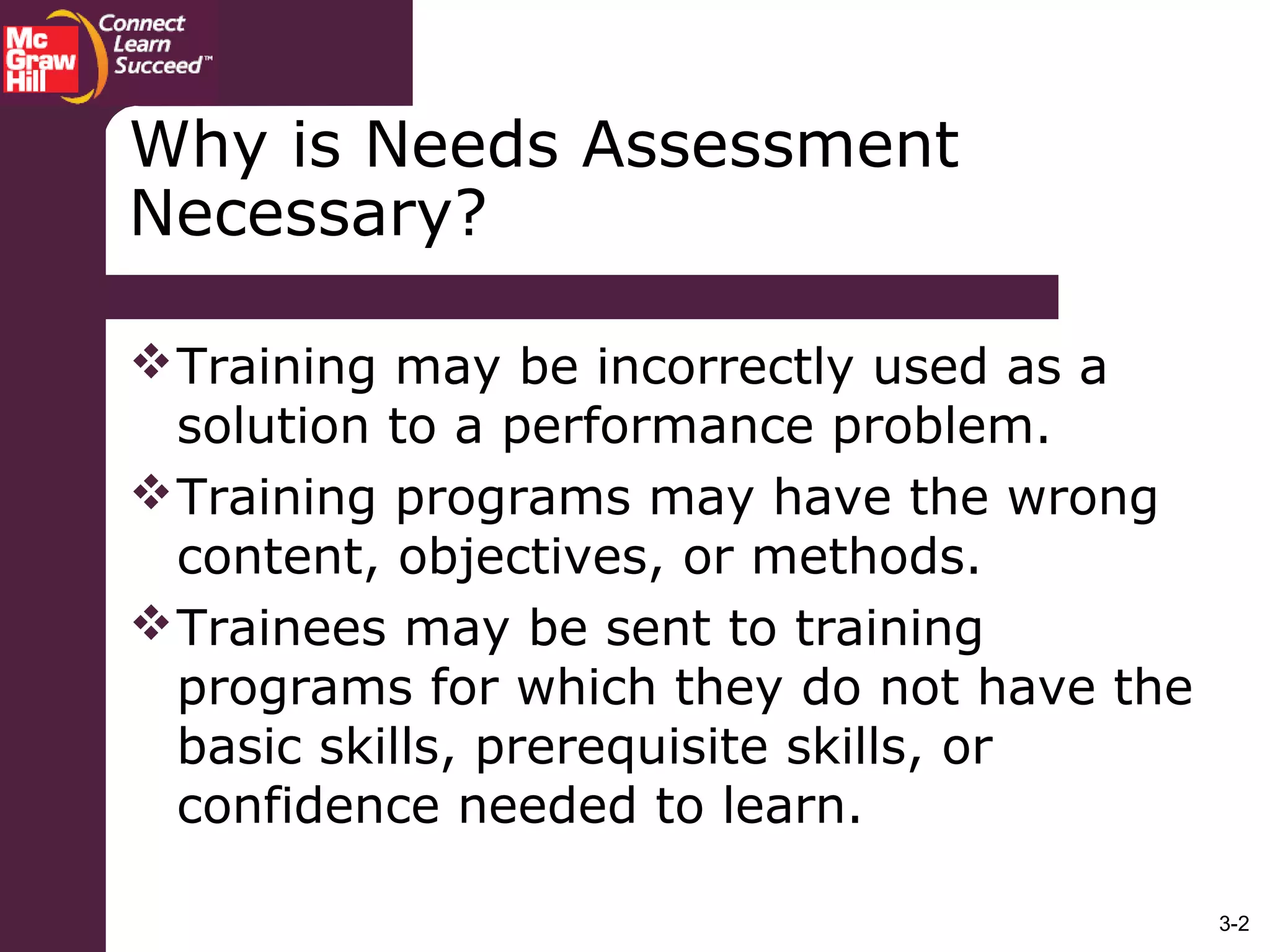
Training may be incorrectly used as a
solution to a performance problem.
Training programs may have the wrong
content, objectives, or methods.
Trainees may be sent to training
programs for which they do not have the
basic skills, prerequisite skills, or
confidence needed to learn.
Why is Needs Assessment
Necessary?
3-3
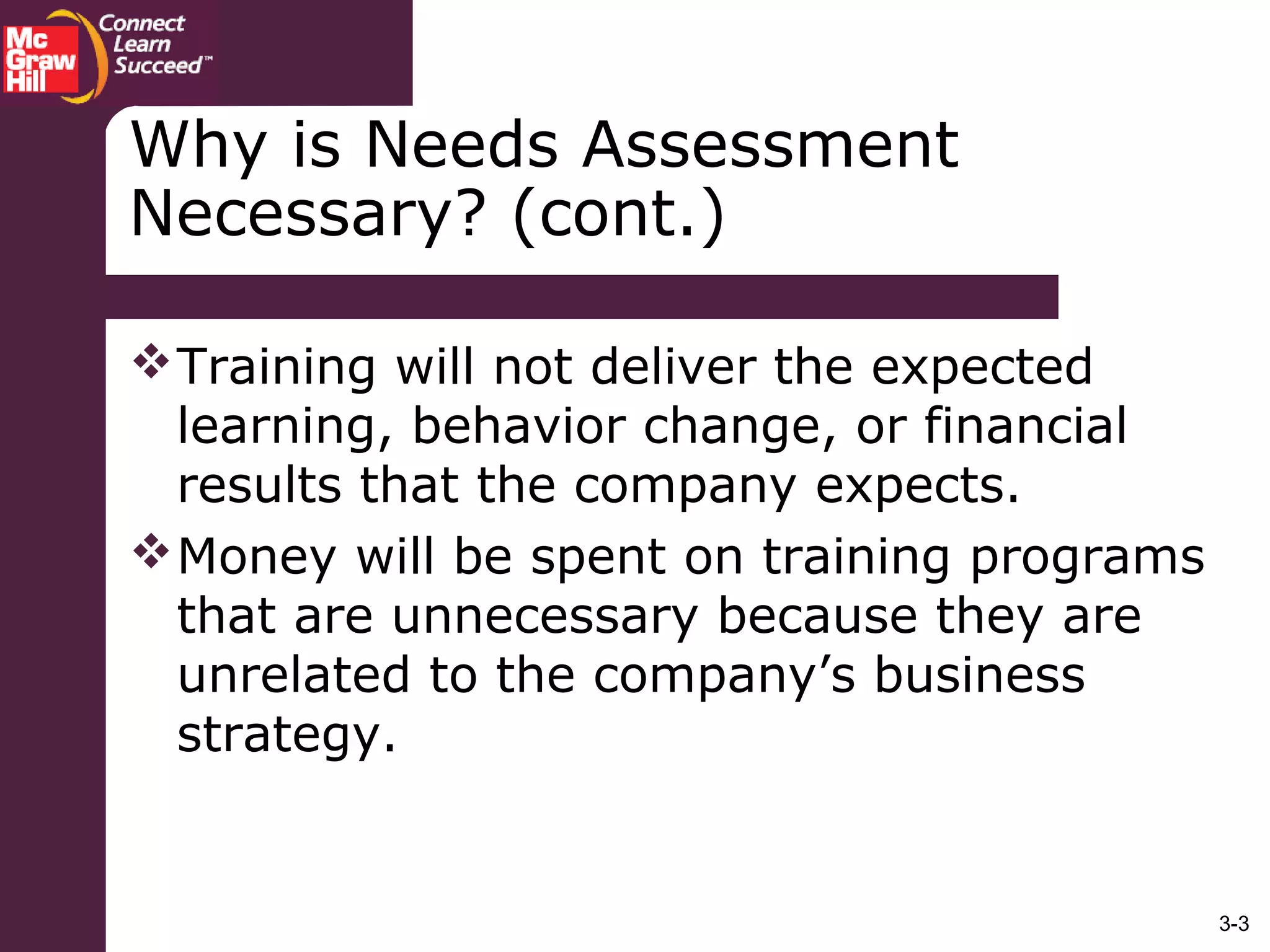
Training will not deliver the expected
learning, behavior change, or financial
results that the company expects.
Money will be spent on training programs
that are unnecessary because they are
unrelated to the company’s business
strategy.
Why is Needs Assessment
Necessary? (cont.)
3-4
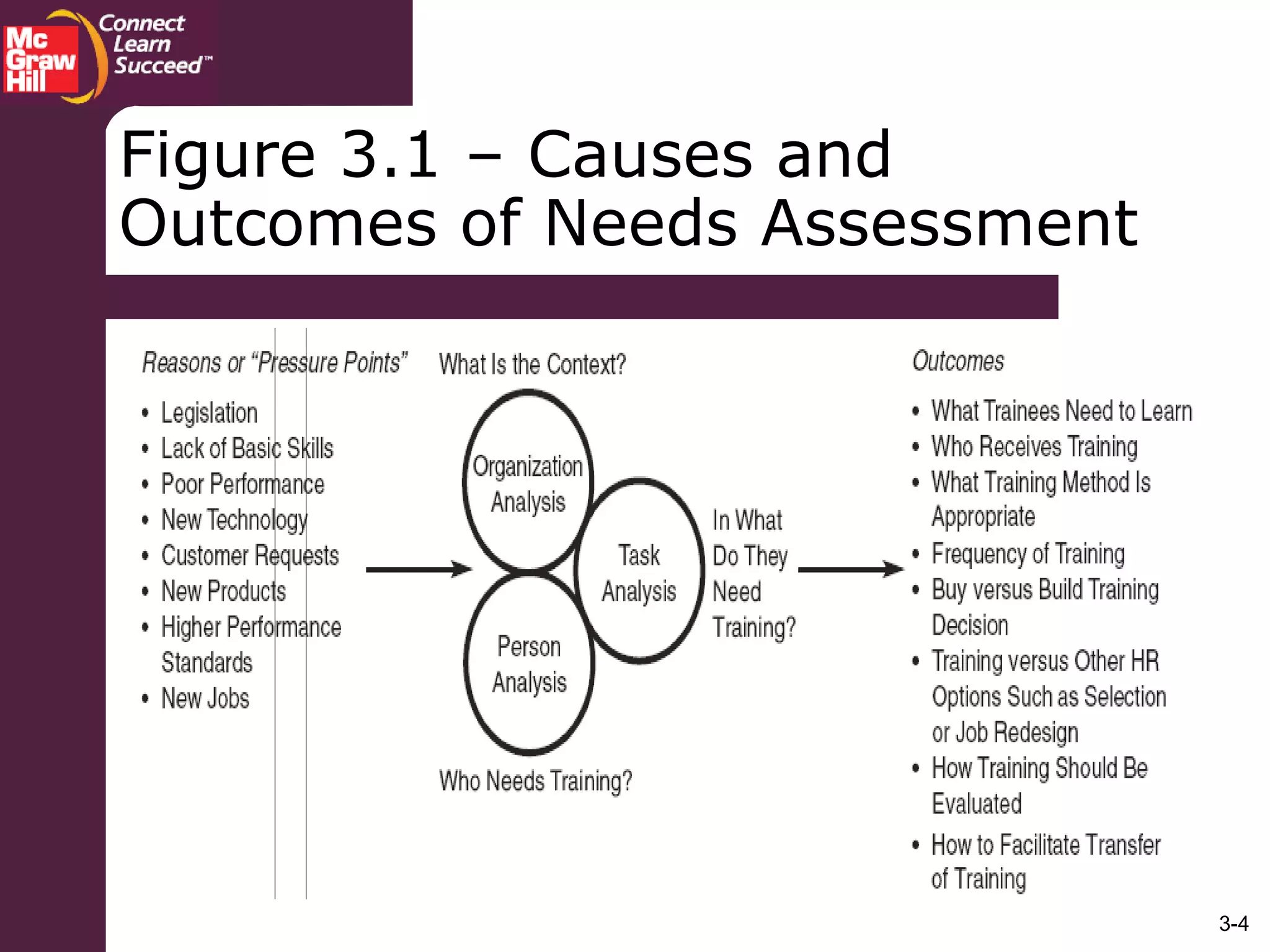
Figure 3.1 – Causes and
Outcomes of Needs Assessment
3-5
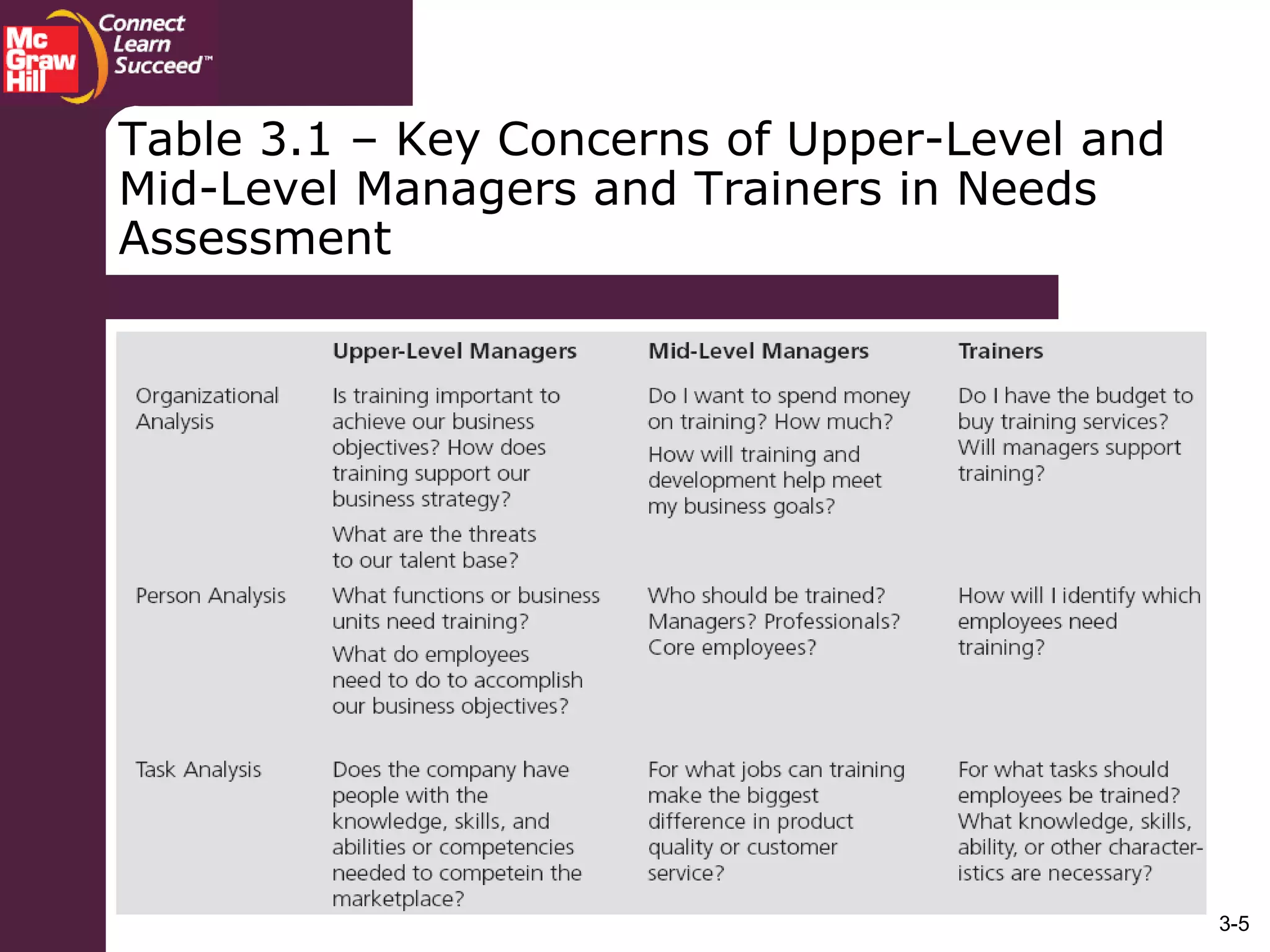
Table 3.1 – Key Concerns of Upper-Level and
Mid-Level Managers and Trainers in Needs
Assessment
3-6
Who Should Participate in Needs
Assessment (cont.)
It is important to get a sample of job
incumbents involved in the needs
assessment because:
they tend to be most knowledgeable about
the job.
they can be a great hindrance to the training
process if they do not feel they have had
input in the process.
Job incumbents – employees who are
currently performing the job.
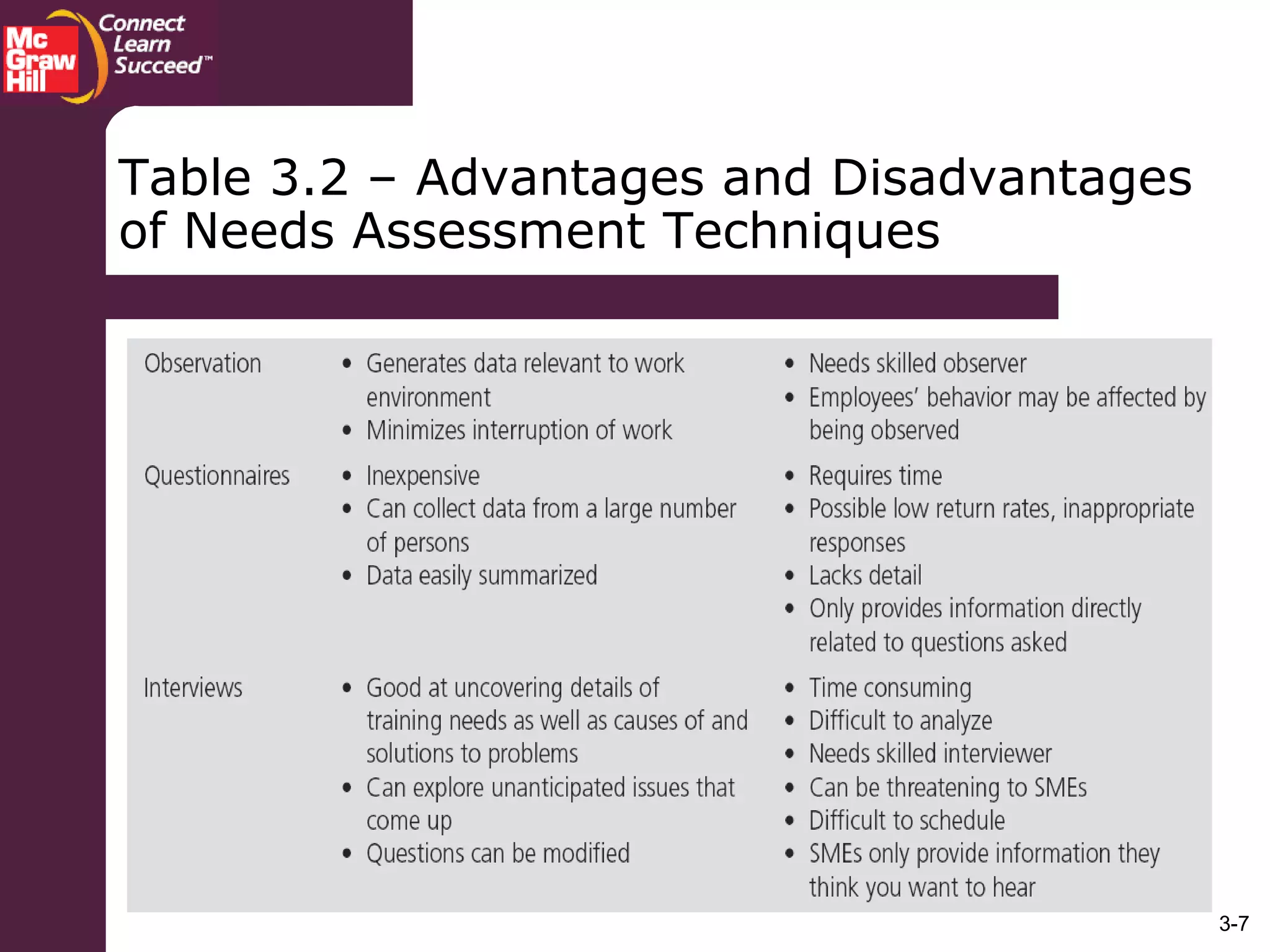
3-7
Table 3.2 – Advantages and Disadvantages
of Needs Assessment Techniques
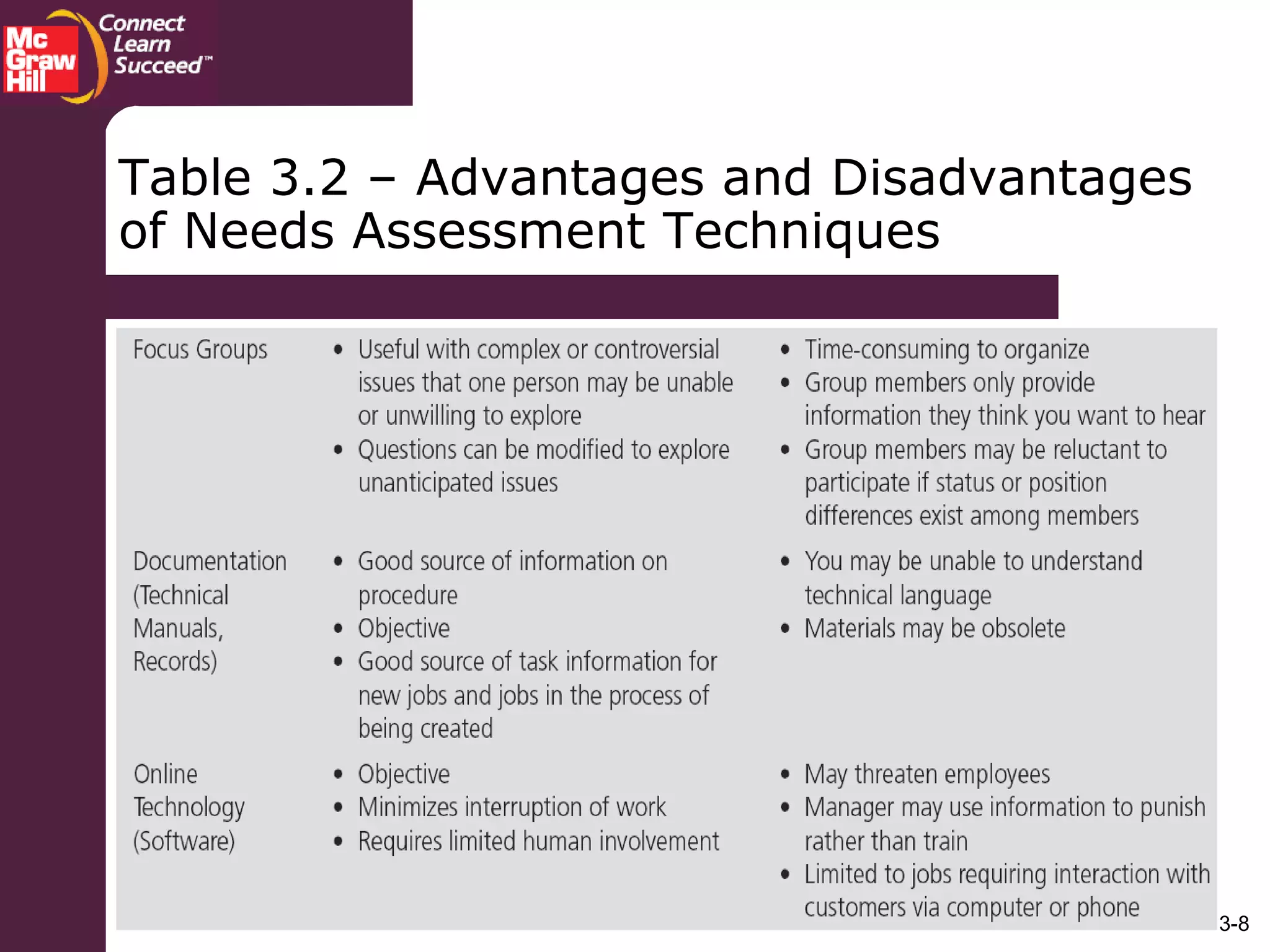
3-8
Table 3.2 – Advantages and Disadvantages
of Needs Assessment Techniques
3-9
Methods Used in Needs
Assessment
Because no one technique of conducting
needs assessment is superior to the
others, multiple methods are used.
Many companies are following
benchmarking – using information
about other companies’ training practices
to help determine the appropriate type,
level, and frequency of training.
3-10
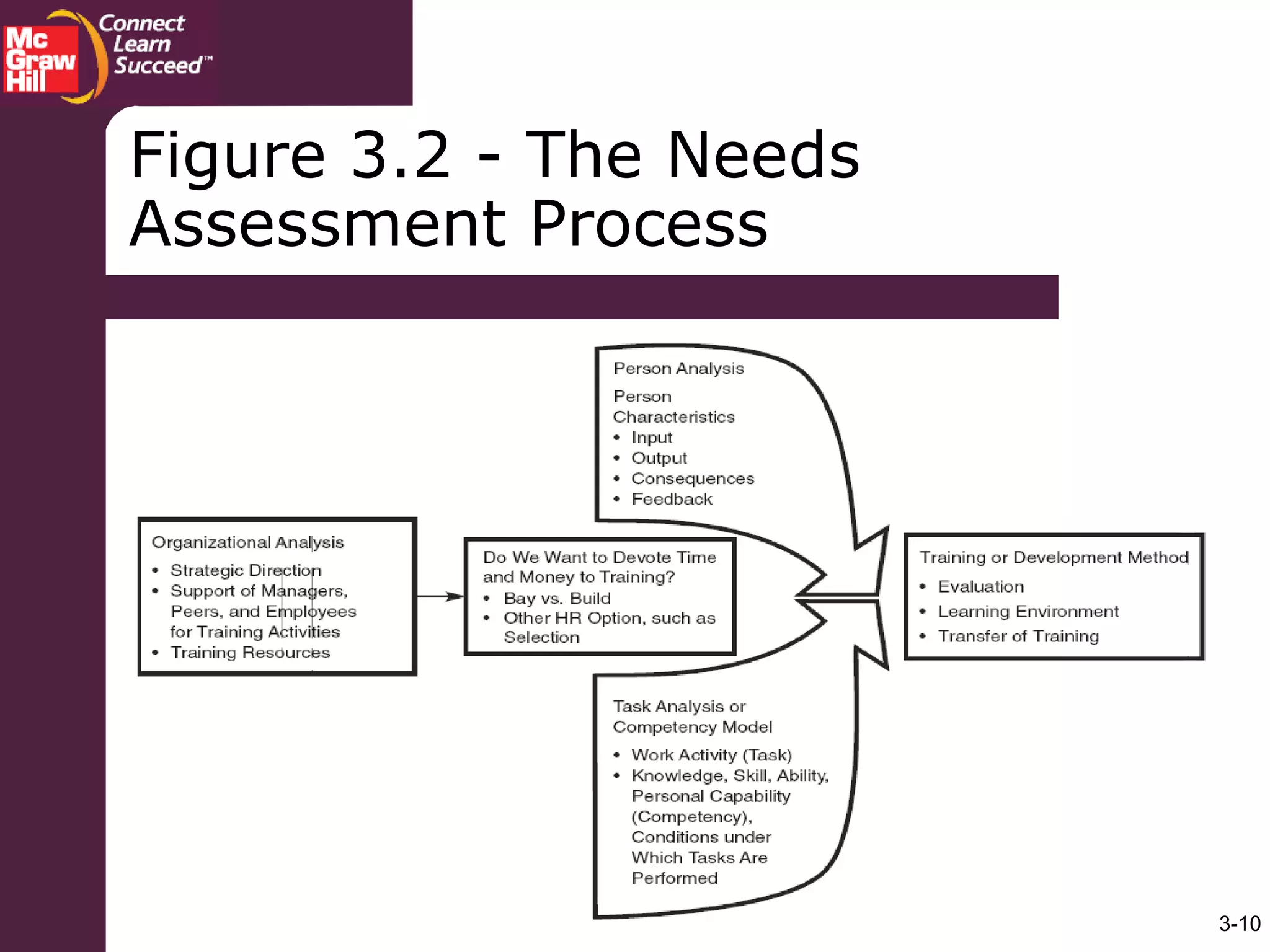
Figure 3.2 - The Needs
Assessment Process
3-11
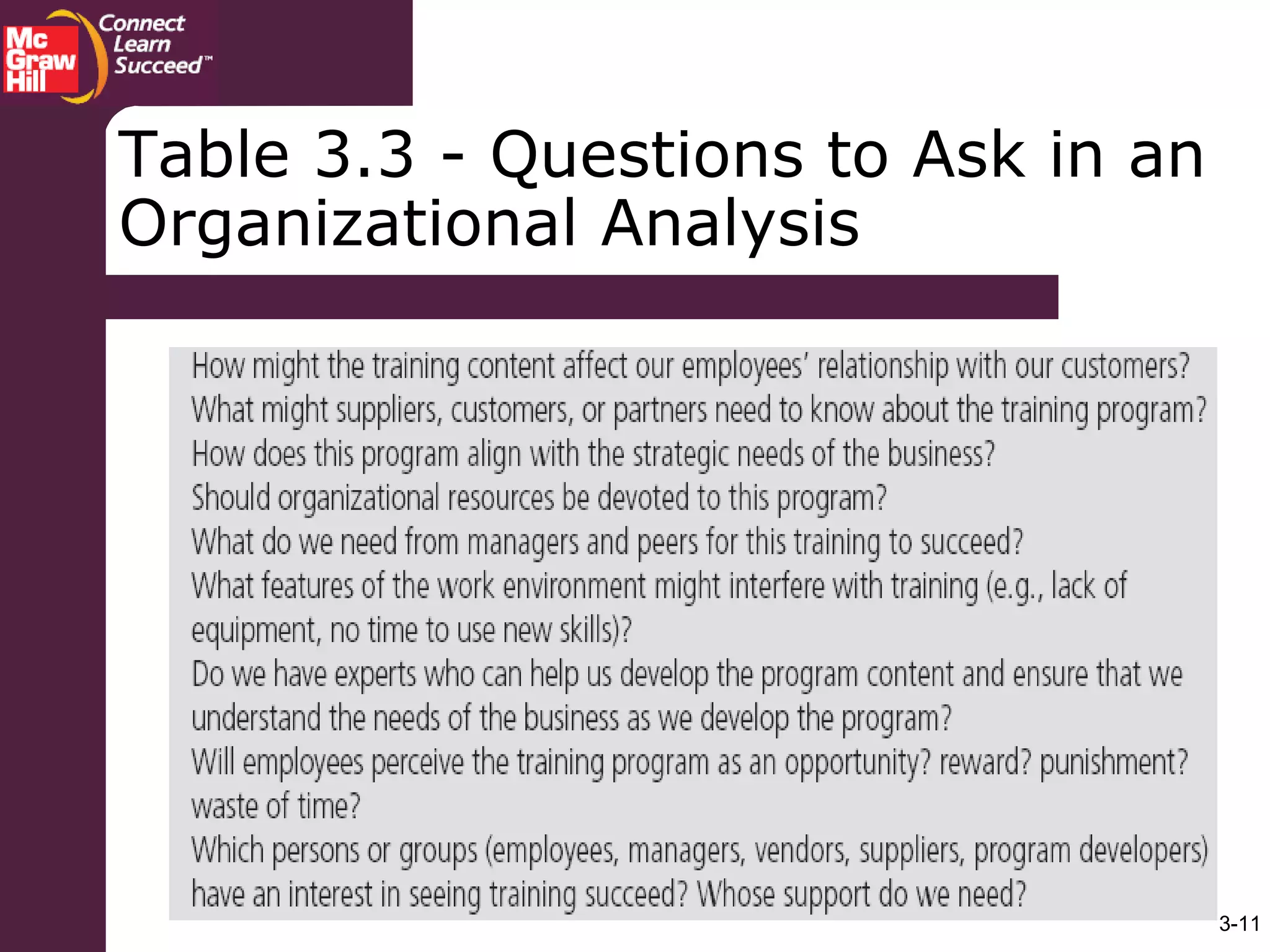
Table 3.3 - Questions to Ask in an
Organizational Analysis
3-12
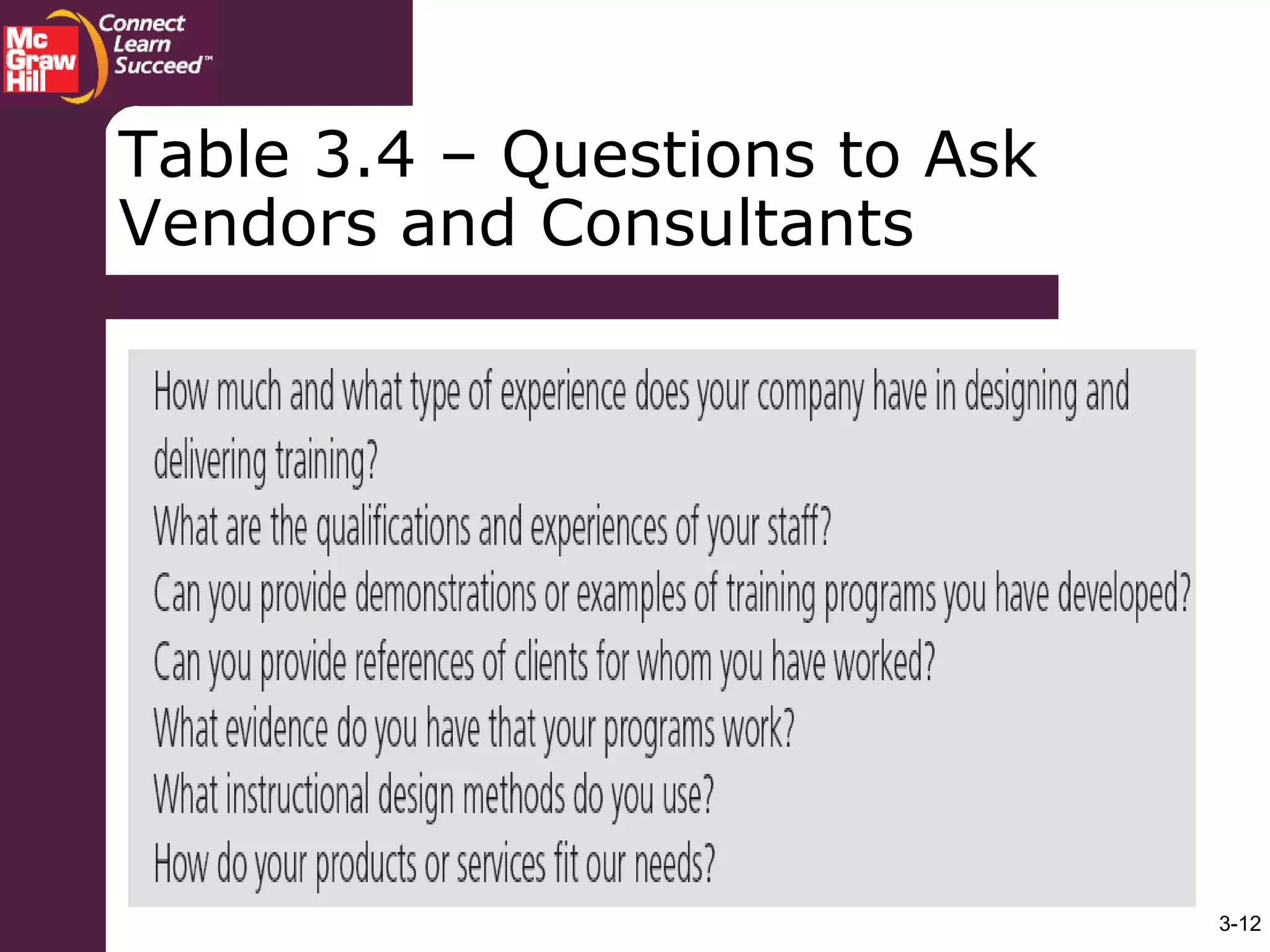
Table 3.4 – Questions to Ask
Vendors and Consultants
3-13
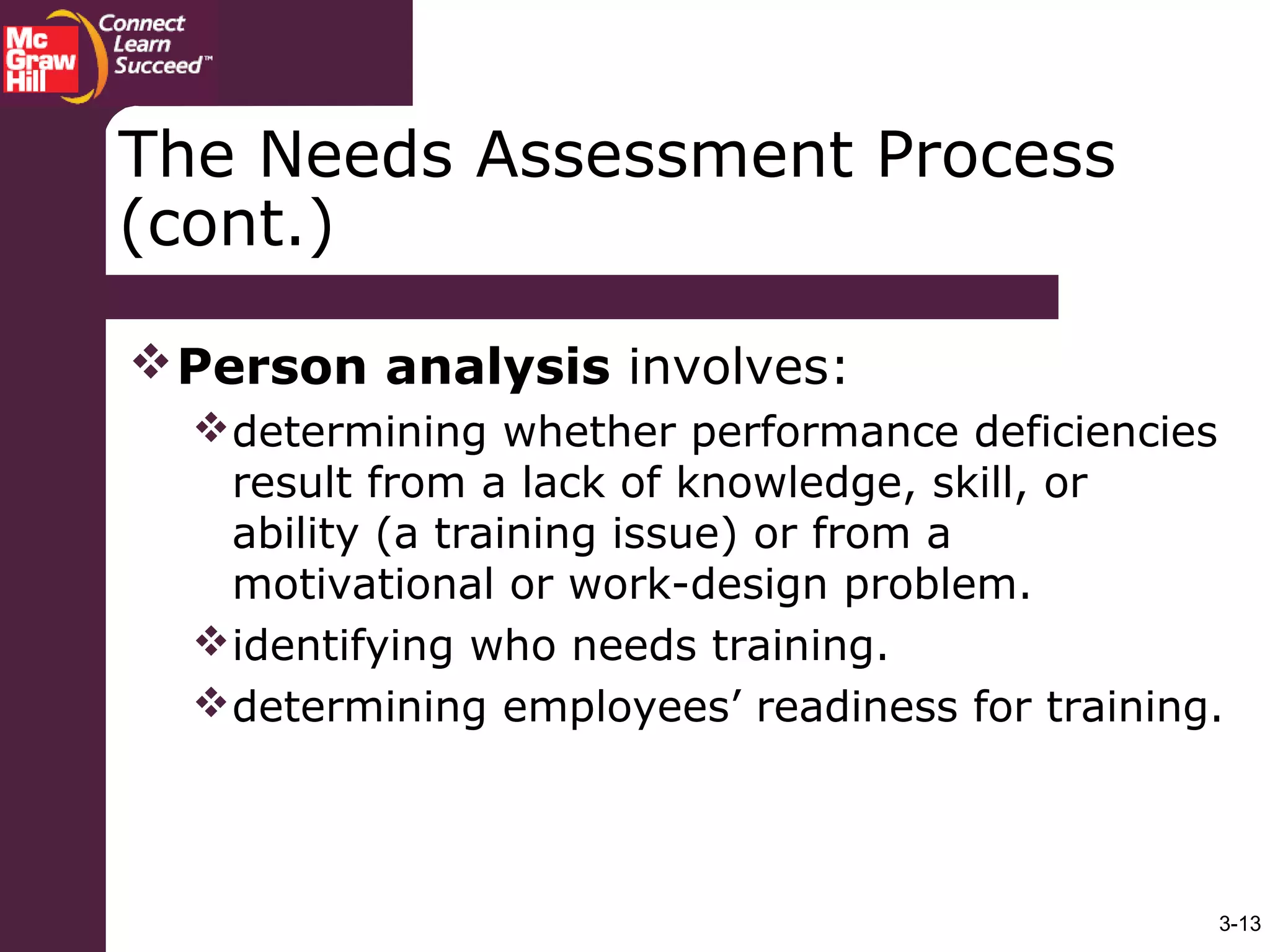
The Needs Assessment Process
(cont.)
Person analysis involves:
determining whether performance deficiencies
result from a lack of knowledge, skill, or
ability (a training issue) or from a
motivational or work-design problem.
identifying who needs training.
determining employees’ readiness for training.
3-14
The Needs Assessment Process
(cont.)
Readiness for training – refers to
whether:
employees have the personal characteristics
necessary to learn program content and apply
it on the job.
the work environment will facilitate learning
and not interfere with performance.
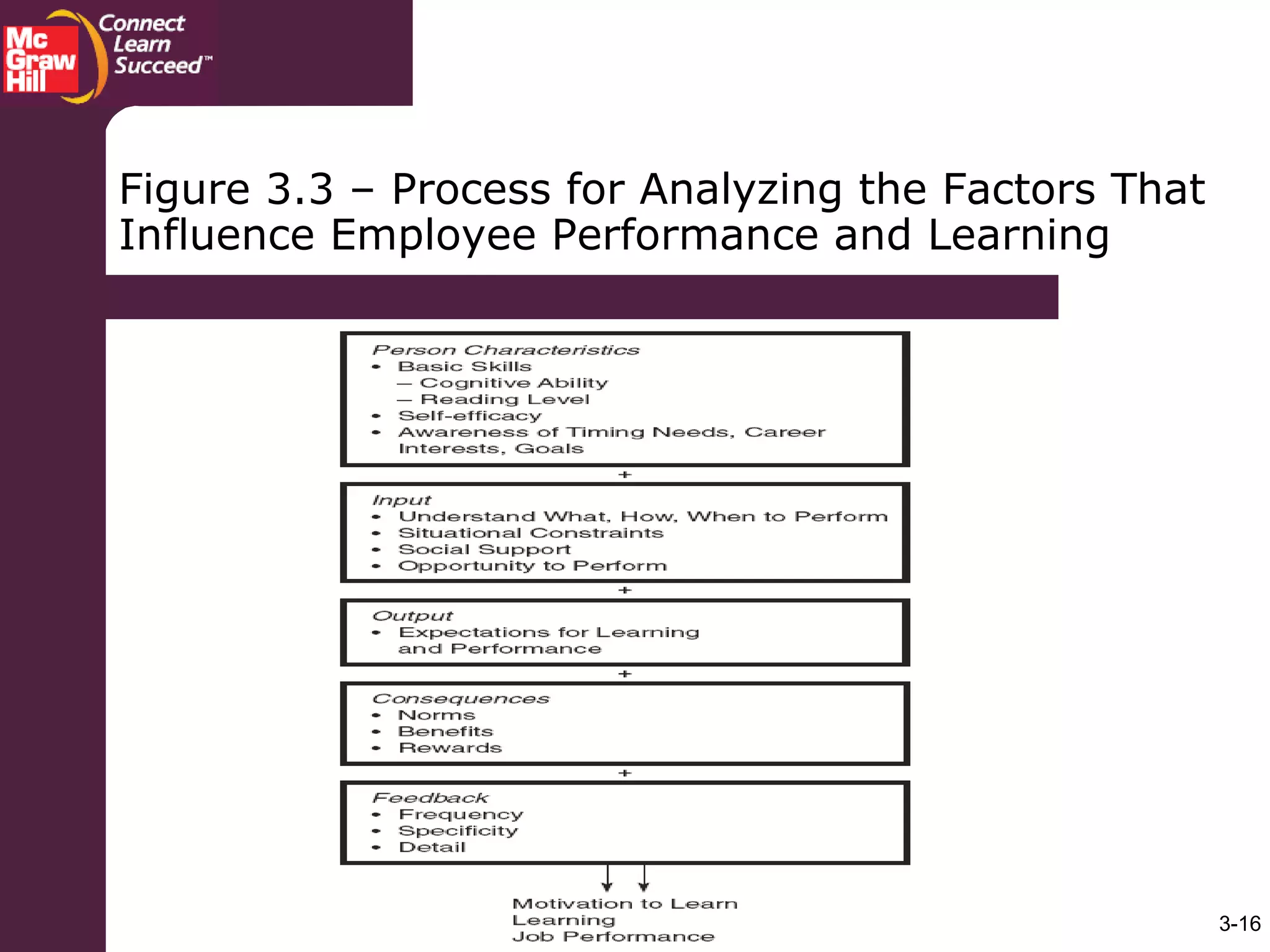
This process includes evaluating person
characteristics, input, output,
consequences, and feedback.
3-15
The Needs Assessment Process
(cont.)
A major pressure point for training is
substandard or poor performance.
Another potential indicator of the need for
training is if the job changes such that
current levels of performance need to be
improved or employees must be able to
complete new tasks.
3-16
Figure 3.3 – Process for Analyzing the Factors That
Influence Employee Performance and Learning
3-17
The Needs Assessment Process
(cont.)
Cognitive ability includes three
dimensions: verbal comprehension,
quantitative ability, and reasoning ability.
Readability refers to the difficulty level
of written materials; readability
assessment usually involves analysis of
sentence length and word difficulty.
3-18
The Needs Assessment Process
(cont.)
Employees’ self-efficacy level can be
increased by:
Letting employees know the purpose of
training.
Providing as much information as possible
about the training program and the purpose
of training prior to the actual training.
3-19
The Needs Assessment Process
(cont.)
Employees’ self-efficacy level can be
increased by:
Showing employees the training success of
their peers who are now in similar jobs.
Providing employees with feedback that
learning is under their control and they have
the ability and the responsibility to overcome
any learning difficulties they experience in the
program.
3-20
The Needs Assessment Process
(cont.)
To ensure that the work environment
enhances trainees’ motivation to learn:
Provide materials, time, job-related
information, and other work aids necessary
for employees to use new skills or behavior
before participating in training programs.
Speak positively about the company’s training
programs to employees.
3-21
The Needs Assessment Process
(cont.)
To ensure that the work environment
enhances trainees’ motivation to learn:
Encourage work-group members to involve
each other in trying to use new skills on the
job.
Provide employees with time and
opportunities to practice and apply new skills
or behaviors to their work.
3-22
The Needs Assessment Process
(cont.)
To determine whether training is needed
to solve a performance problem,
managers should assess the following:
Is the performance problem important? Does
it have the potential to cost the company a
significant amount of money from lost
productivity or customers?
Do the employees know how to perform
effectively?
Can the employees demonstrate the correct
knowledge or behavior?
3-23
The Needs Assessment Process
(cont.)
To determine whether training is needed
to solve a performance problem,
managers should assess the following:
Were performance expectations clear (input)?
Were there any obstacles to performance
such as faulty tools or equipment?
Were positive consequences offered for good
performance? Was good performance not
rewarded?
3-24
The Needs Assessment Process
(cont.)
To determine whether training is needed
to solve a performance problem,
managers should assess the following:
Did employees receive timely, relevant,
accurate, constructive, and specific feedback
about their performance?
Were other solutions such as job redesign or
transferring employees to other jobs too
expensive or unrealistic?
3-25
The Needs Assessment Process
(cont.)
Task analysis – identifies the important
tasks and knowledge, skills, and
behaviors that need to be emphasized in
training for employees to complete their
tasks.
Job – specific position requiring the
completion of certain tasks.
Task – employee’s work activity in a
specific job.
3-26
The Needs Assessment Process
(cont.)
Knowledge – includes facts or
procedures.
Skill – indicates competency in
performing a task.
Ability – includes the physical and
mental capacities to perform a task.
3-27
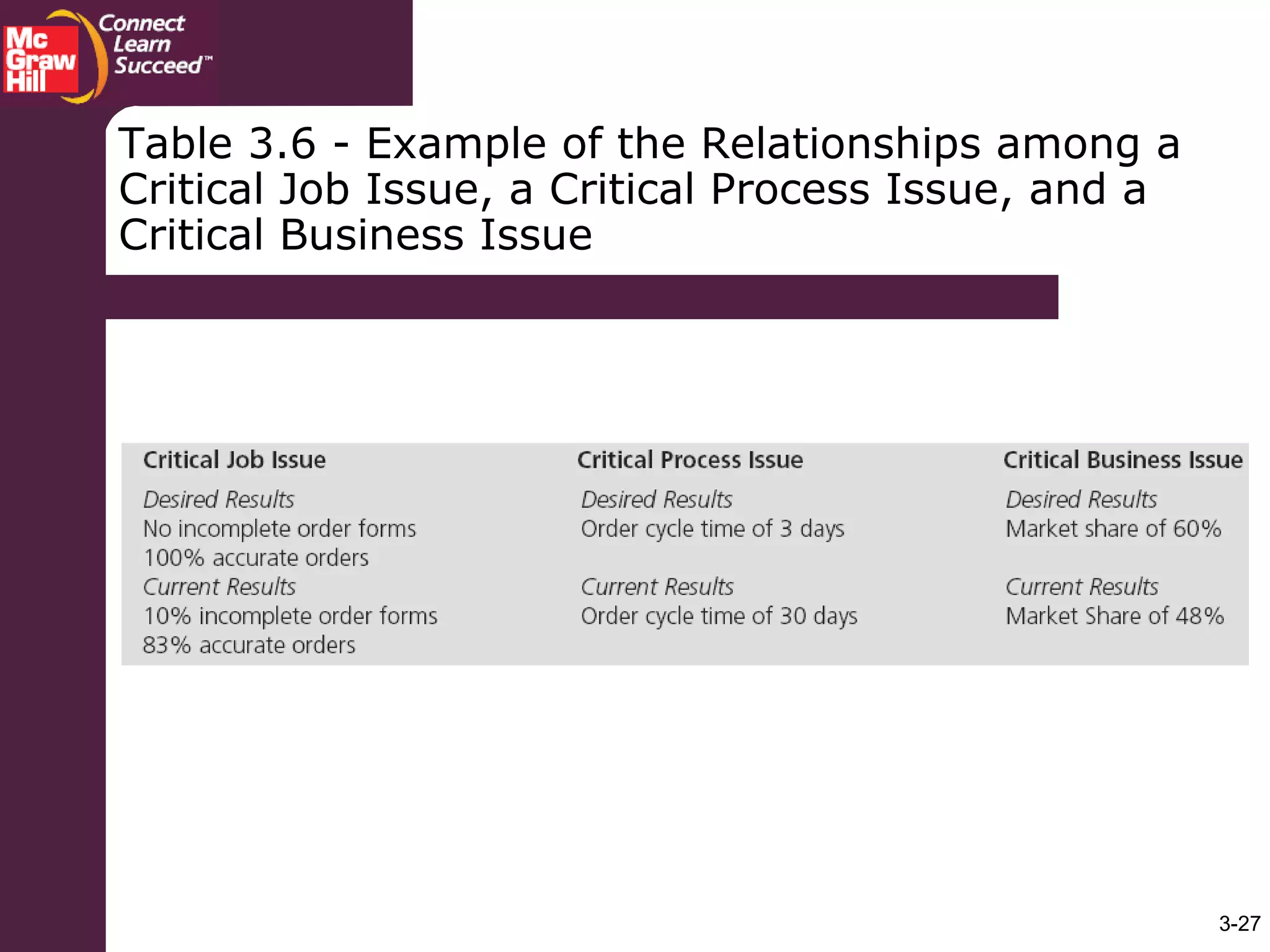
Table 3.6 - Example of the Relationships among a
Critical Job Issue, a Critical Process Issue, and a
Critical Business Issue
3-28
The Needs Assessment Process
(cont.)
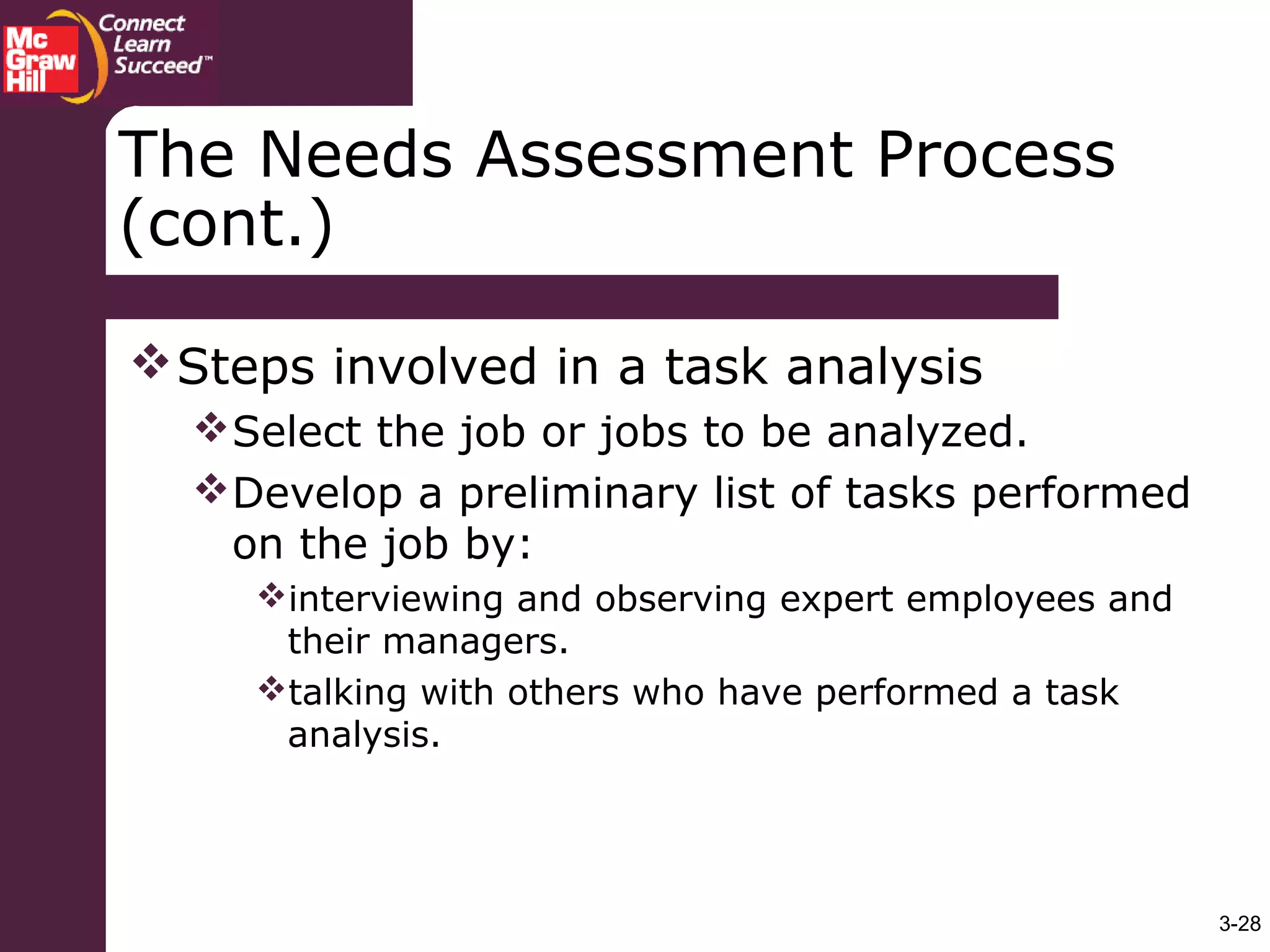
Steps involved in a task analysis
Select the job or jobs to be analyzed.
Develop a preliminary list of tasks performed
on the job by:
interviewing and observing expert employees and
their managers.
talking with others who have performed a task
analysis.
3-29
The Needs Assessment Process
(cont.)
Steps involved in a task analysis
Validate or confirm the preliminary list of
tasks.
Once the tasks have been identified, it is
important to identify the knowledge, skills, or
abilities necessary to successfully perform
each task.
3-30
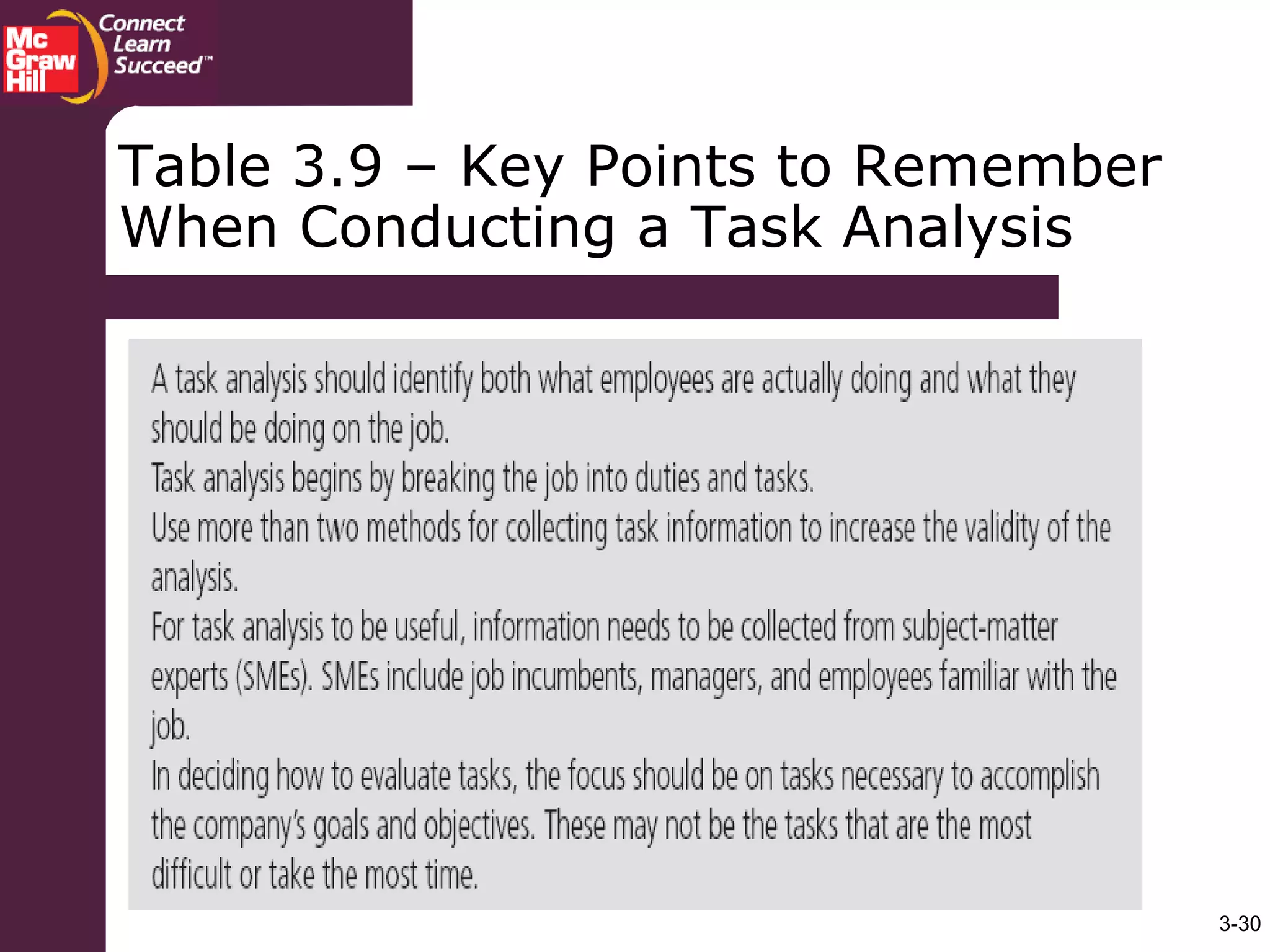
Table 3.9 – Key Points to Remember
When Conducting a Task Analysis
3-31
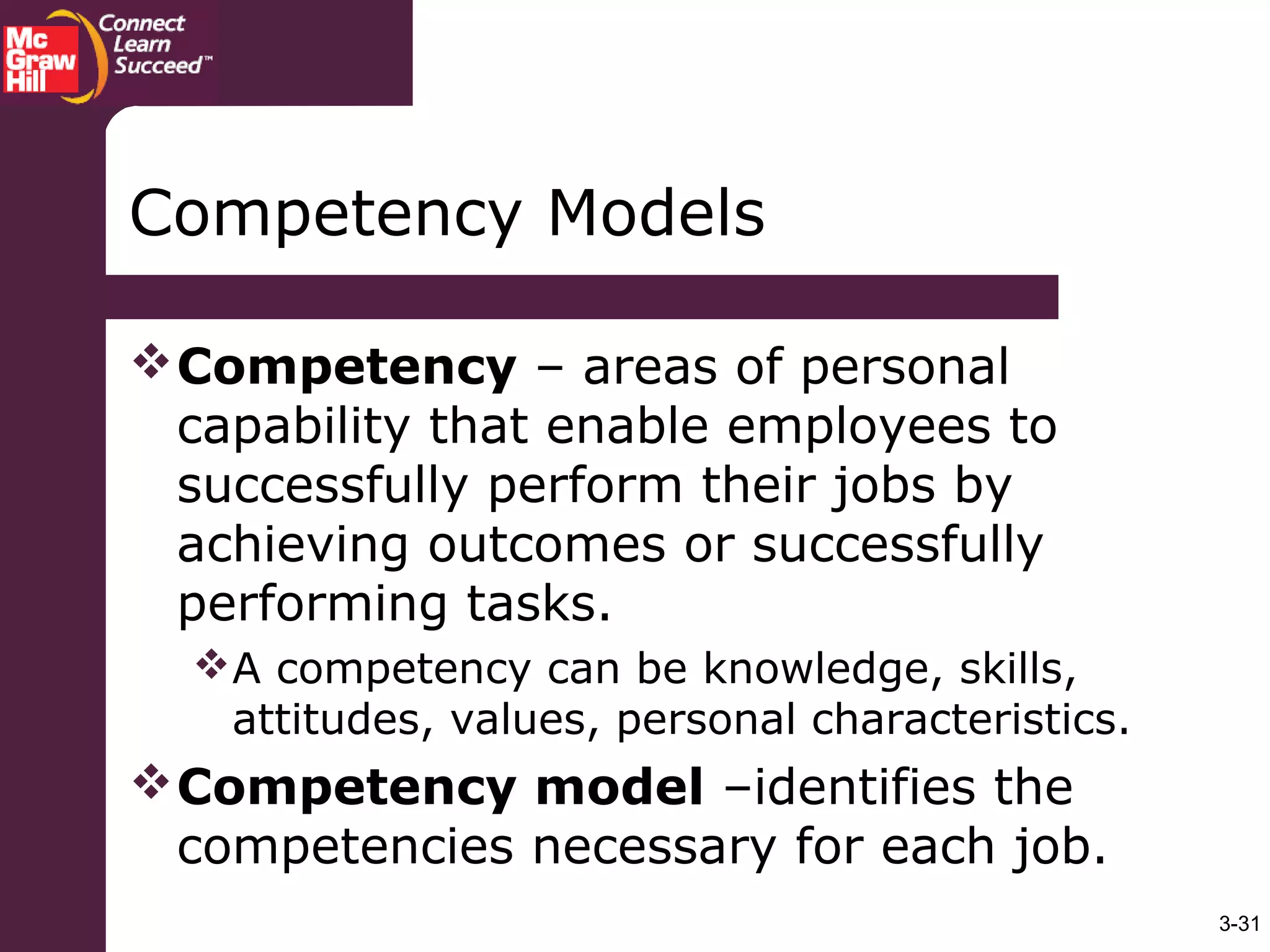
Competency – areas of personal
capability that enable employees to
successfully perform their jobs by
achieving outcomes or successfully
performing tasks.
A competency can be knowledge, skills,
attitudes, values, personal characteristics.
Competency model –identifies the
competencies necessary for each job.
Competency Models
3-32
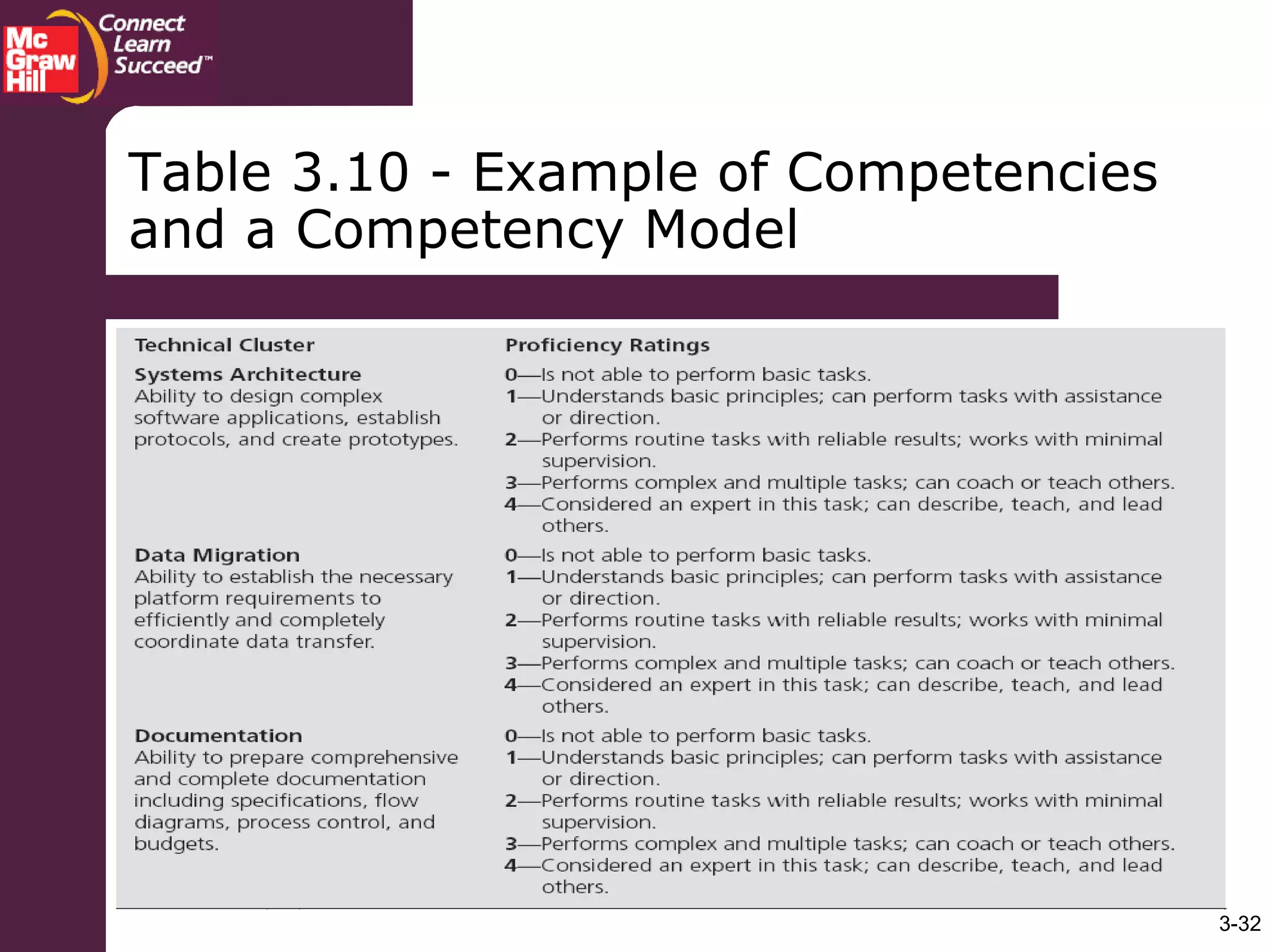
Table 3.10 - Example of Competencies
and a Competency Model
3-33
Figure 3.4 - Process Used in
Developing a Competency Model
3-34
Scope of Needs Assessment
Time constraints can limit the length and
detail obtained from a needs assessment.
A rapid needs assessment refers to a
needs assessment that is done quickly
and accurately, but without sacrificing the
quality of the process or the outcomes.
There are seven ways to conduct a rapid
needs assessment.

Chap003

  • 1.
    Chapter 3 Needs Assessment Copyright© 2010 by the McGraw-Hill Companies, Inc. All rights reserved.McGraw-Hill/Irwin
  • 2.
    3-2 Training may beincorrectly used as a solution to a performance problem. Training programs may have the wrong content, objectives, or methods. Trainees may be sent to training programs for which they do not have the basic skills, prerequisite skills, or confidence needed to learn. Why is Needs Assessment Necessary?
  • 3.
    3-3 Training will notdeliver the expected learning, behavior change, or financial results that the company expects. Money will be spent on training programs that are unnecessary because they are unrelated to the company’s business strategy. Why is Needs Assessment Necessary? (cont.)
  • 4.
    3-4 Figure 3.1 –Causes and Outcomes of Needs Assessment
  • 5.
    3-5 Table 3.1 –Key Concerns of Upper-Level and Mid-Level Managers and Trainers in Needs Assessment
  • 6.
    3-6 Who Should Participatein Needs Assessment (cont.) It is important to get a sample of job incumbents involved in the needs assessment because: they tend to be most knowledgeable about the job. they can be a great hindrance to the training process if they do not feel they have had input in the process. Job incumbents – employees who are currently performing the job.
  • 7.
    3-7 Table 3.2 –Advantages and Disadvantages of Needs Assessment Techniques
  • 8.
    3-8 Table 3.2 –Advantages and Disadvantages of Needs Assessment Techniques
  • 9.
    3-9 Methods Used inNeeds Assessment Because no one technique of conducting needs assessment is superior to the others, multiple methods are used. Many companies are following benchmarking – using information about other companies’ training practices to help determine the appropriate type, level, and frequency of training.
  • 10.
    3-10 Figure 3.2 -The Needs Assessment Process
  • 11.
    3-11 Table 3.3 -Questions to Ask in an Organizational Analysis
  • 12.
    3-12 Table 3.4 –Questions to Ask Vendors and Consultants
  • 13.
    3-13 The Needs AssessmentProcess (cont.) Person analysis involves: determining whether performance deficiencies result from a lack of knowledge, skill, or ability (a training issue) or from a motivational or work-design problem. identifying who needs training. determining employees’ readiness for training.
  • 14.
    3-14 The Needs AssessmentProcess (cont.) Readiness for training – refers to whether: employees have the personal characteristics necessary to learn program content and apply it on the job. the work environment will facilitate learning and not interfere with performance. This process includes evaluating person characteristics, input, output, consequences, and feedback.
  • 15.
    3-15 The Needs AssessmentProcess (cont.) A major pressure point for training is substandard or poor performance. Another potential indicator of the need for training is if the job changes such that current levels of performance need to be improved or employees must be able to complete new tasks.
  • 16.
    3-16 Figure 3.3 –Process for Analyzing the Factors That Influence Employee Performance and Learning
  • 17.
    3-17 The Needs AssessmentProcess (cont.) Cognitive ability includes three dimensions: verbal comprehension, quantitative ability, and reasoning ability. Readability refers to the difficulty level of written materials; readability assessment usually involves analysis of sentence length and word difficulty.
  • 18.
    3-18 The Needs AssessmentProcess (cont.) Employees’ self-efficacy level can be increased by: Letting employees know the purpose of training. Providing as much information as possible about the training program and the purpose of training prior to the actual training.
  • 19.
    3-19 The Needs AssessmentProcess (cont.) Employees’ self-efficacy level can be increased by: Showing employees the training success of their peers who are now in similar jobs. Providing employees with feedback that learning is under their control and they have the ability and the responsibility to overcome any learning difficulties they experience in the program.
  • 20.
    3-20 The Needs AssessmentProcess (cont.) To ensure that the work environment enhances trainees’ motivation to learn: Provide materials, time, job-related information, and other work aids necessary for employees to use new skills or behavior before participating in training programs. Speak positively about the company’s training programs to employees.
  • 21.
    3-21 The Needs AssessmentProcess (cont.) To ensure that the work environment enhances trainees’ motivation to learn: Encourage work-group members to involve each other in trying to use new skills on the job. Provide employees with time and opportunities to practice and apply new skills or behaviors to their work.
  • 22.
    3-22 The Needs AssessmentProcess (cont.) To determine whether training is needed to solve a performance problem, managers should assess the following: Is the performance problem important? Does it have the potential to cost the company a significant amount of money from lost productivity or customers? Do the employees know how to perform effectively? Can the employees demonstrate the correct knowledge or behavior?
  • 23.
    3-23 The Needs AssessmentProcess (cont.) To determine whether training is needed to solve a performance problem, managers should assess the following: Were performance expectations clear (input)? Were there any obstacles to performance such as faulty tools or equipment? Were positive consequences offered for good performance? Was good performance not rewarded?
  • 24.
    3-24 The Needs AssessmentProcess (cont.) To determine whether training is needed to solve a performance problem, managers should assess the following: Did employees receive timely, relevant, accurate, constructive, and specific feedback about their performance? Were other solutions such as job redesign or transferring employees to other jobs too expensive or unrealistic?
  • 25.
    3-25 The Needs AssessmentProcess (cont.) Task analysis – identifies the important tasks and knowledge, skills, and behaviors that need to be emphasized in training for employees to complete their tasks. Job – specific position requiring the completion of certain tasks. Task – employee’s work activity in a specific job.
  • 26.
    3-26 The Needs AssessmentProcess (cont.) Knowledge – includes facts or procedures. Skill – indicates competency in performing a task. Ability – includes the physical and mental capacities to perform a task.
  • 27.
    3-27 Table 3.6 -Example of the Relationships among a Critical Job Issue, a Critical Process Issue, and a Critical Business Issue
  • 28.
    3-28 The Needs AssessmentProcess (cont.) Steps involved in a task analysis Select the job or jobs to be analyzed. Develop a preliminary list of tasks performed on the job by: interviewing and observing expert employees and their managers. talking with others who have performed a task analysis.
  • 29.
    3-29 The Needs AssessmentProcess (cont.) Steps involved in a task analysis Validate or confirm the preliminary list of tasks. Once the tasks have been identified, it is important to identify the knowledge, skills, or abilities necessary to successfully perform each task.
  • 30.
    3-30 Table 3.9 –Key Points to Remember When Conducting a Task Analysis
  • 31.
    3-31 Competency – areasof personal capability that enable employees to successfully perform their jobs by achieving outcomes or successfully performing tasks. A competency can be knowledge, skills, attitudes, values, personal characteristics. Competency model –identifies the competencies necessary for each job. Competency Models
  • 32.
    3-32 Table 3.10 -Example of Competencies and a Competency Model
  • 33.
    3-33 Figure 3.4 -Process Used in Developing a Competency Model
  • 34.
    3-34 Scope of NeedsAssessment Time constraints can limit the length and detail obtained from a needs assessment. A rapid needs assessment refers to a needs assessment that is done quickly and accurately, but without sacrificing the quality of the process or the outcomes. There are seven ways to conduct a rapid needs assessment.