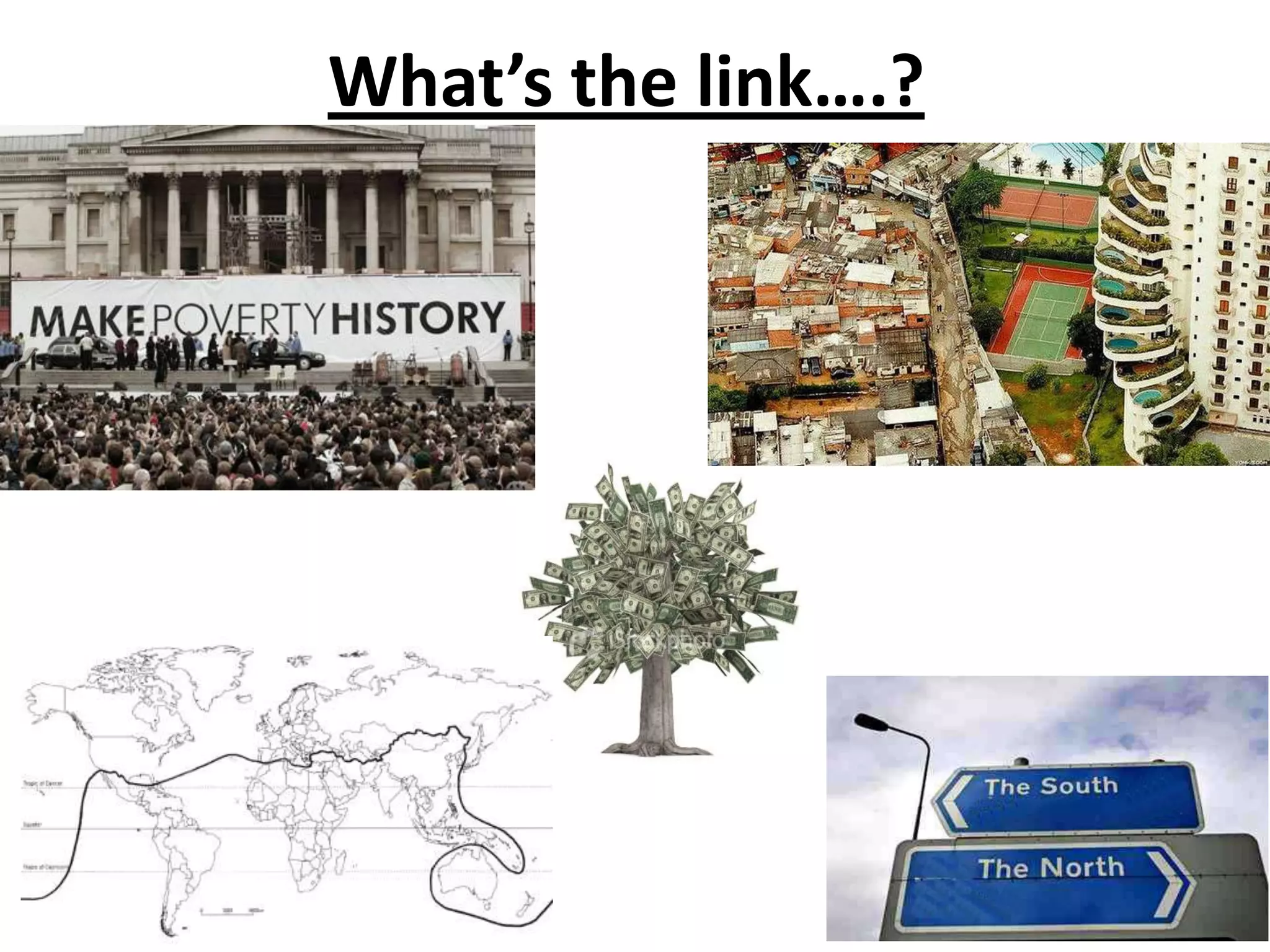
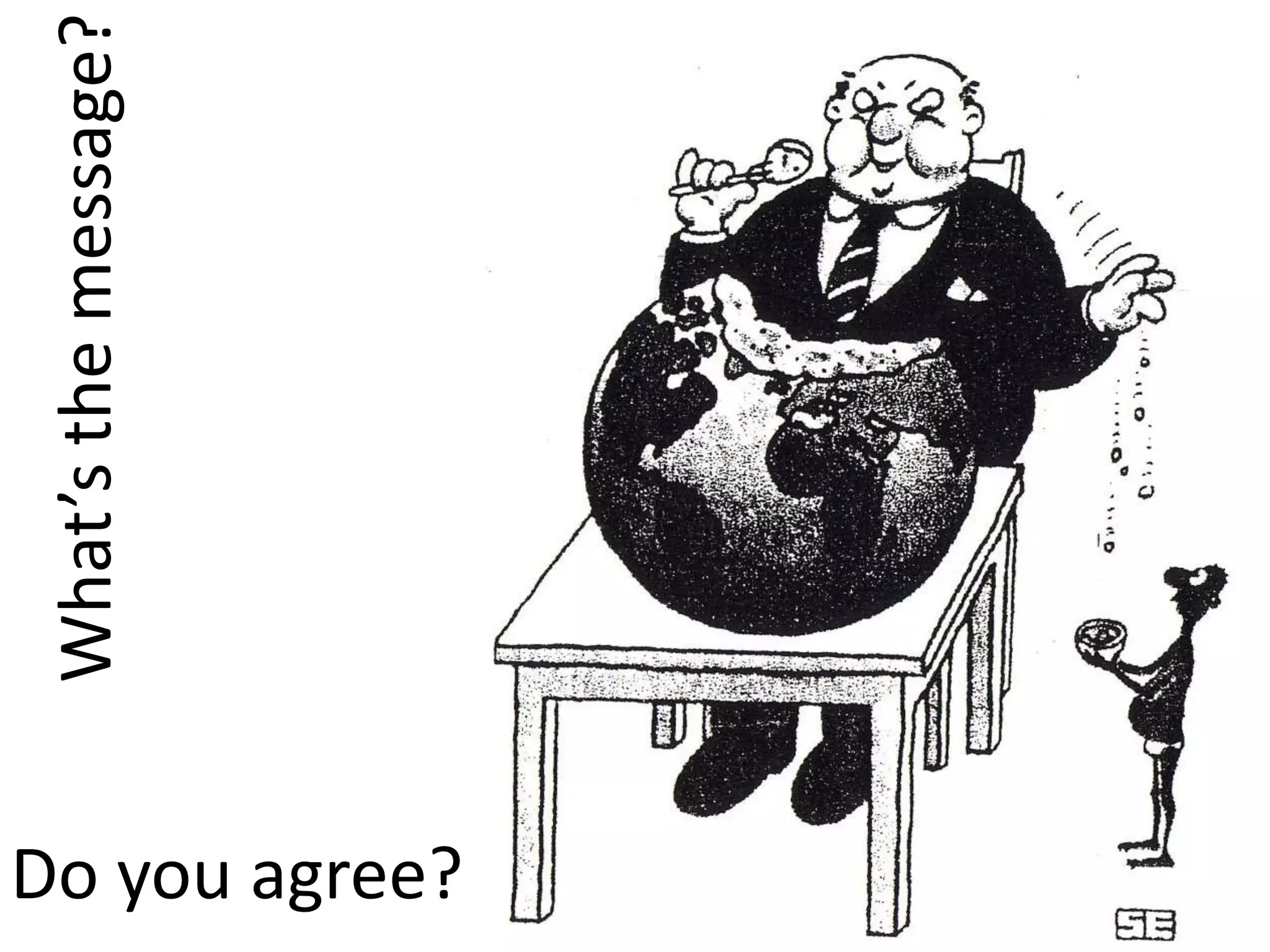
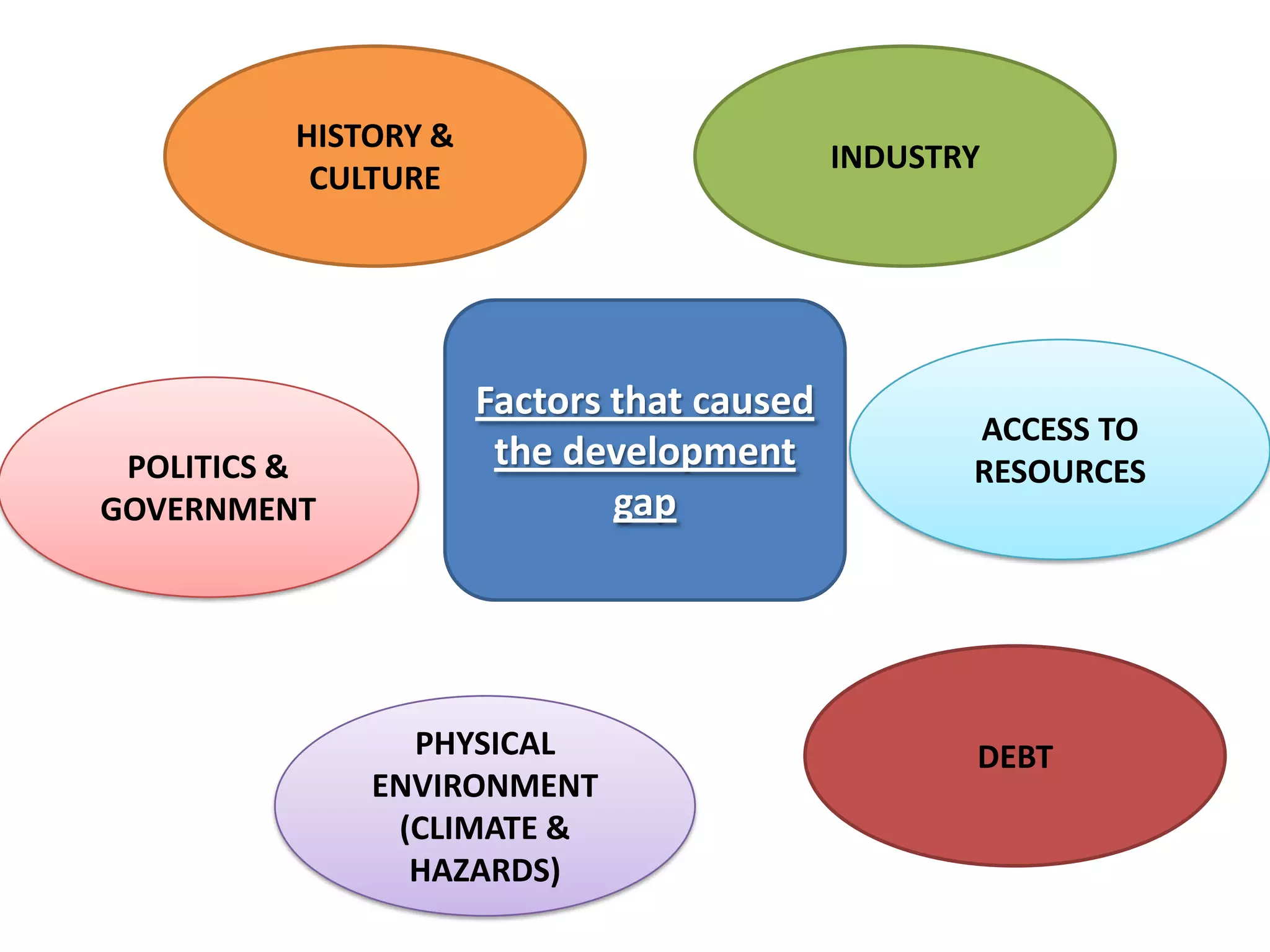
There is often a gap in levels of development between richer developed nations and poorer developing nations. This development gap can be influenced by a variety of factors including physical geography, access to resources, historical experiences, cultural practices, economics, politics, and debt levels. For example, landlocked countries may lack natural resources and face physical challenges like natural hazards. Former colonies were sometimes left in political and economic turmoil after independence. Civil wars can destroy infrastructure and displace populations. These multiple intersecting factors all contribute to differences in levels of development between nations over time.
THE DEVELOPMENT GAP
WAL:about the development gap
YWBAT: explain what is meant by the ‘gap’, identify factors
that influence development
3.
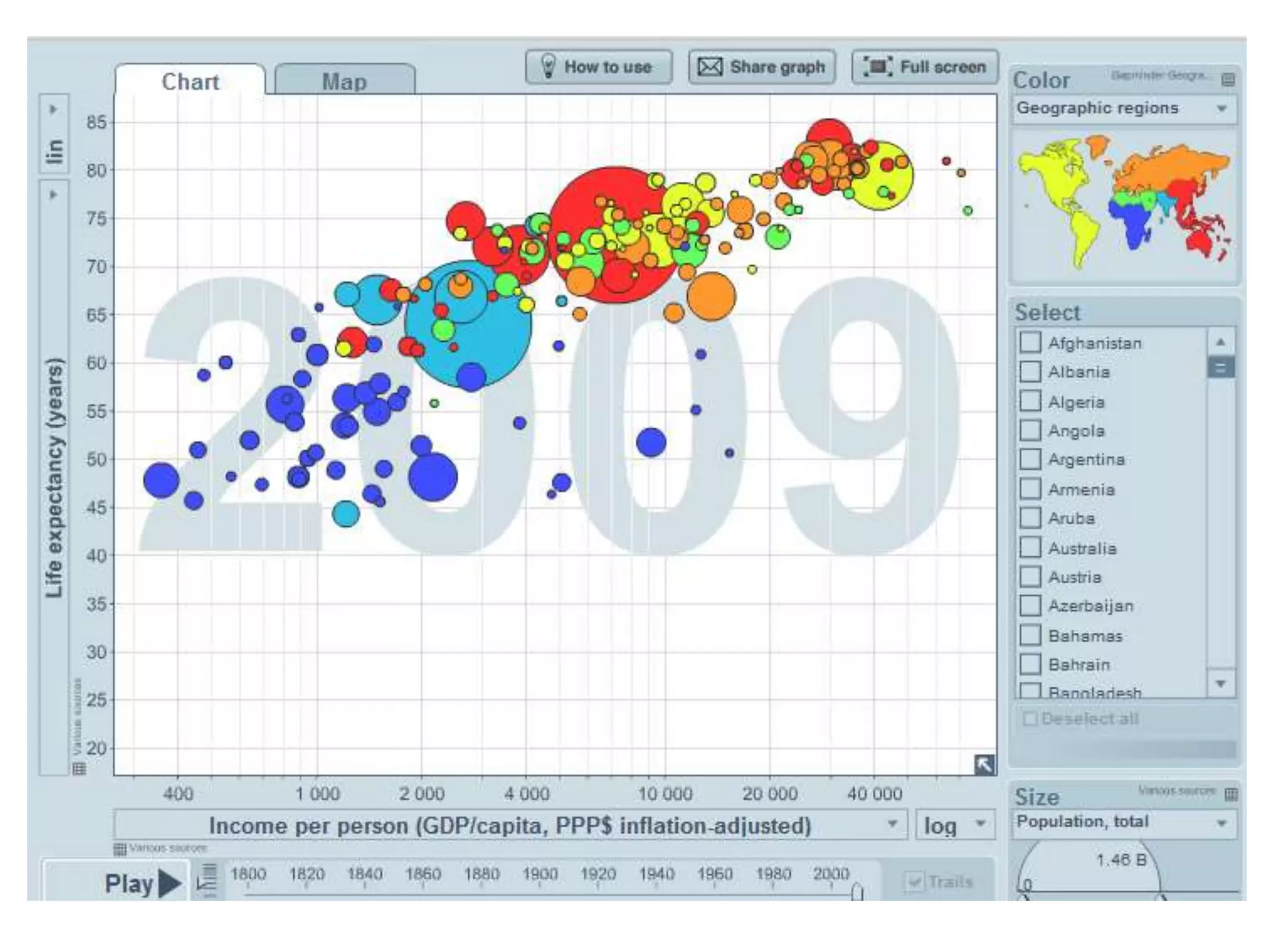
Hans Rosling :200 countries in 200 years
• Hans Rosling's 200 Countries, 200 Years, 4
Minutes
While you watch, consider:
• What is the pattern? How has the world
changed? What caused the changes?
• Self (1min) – Pair (2min) – Share
What caused thegap?
Why is there a gap between
developed and developing? North
and South? Rich and poor?
12.
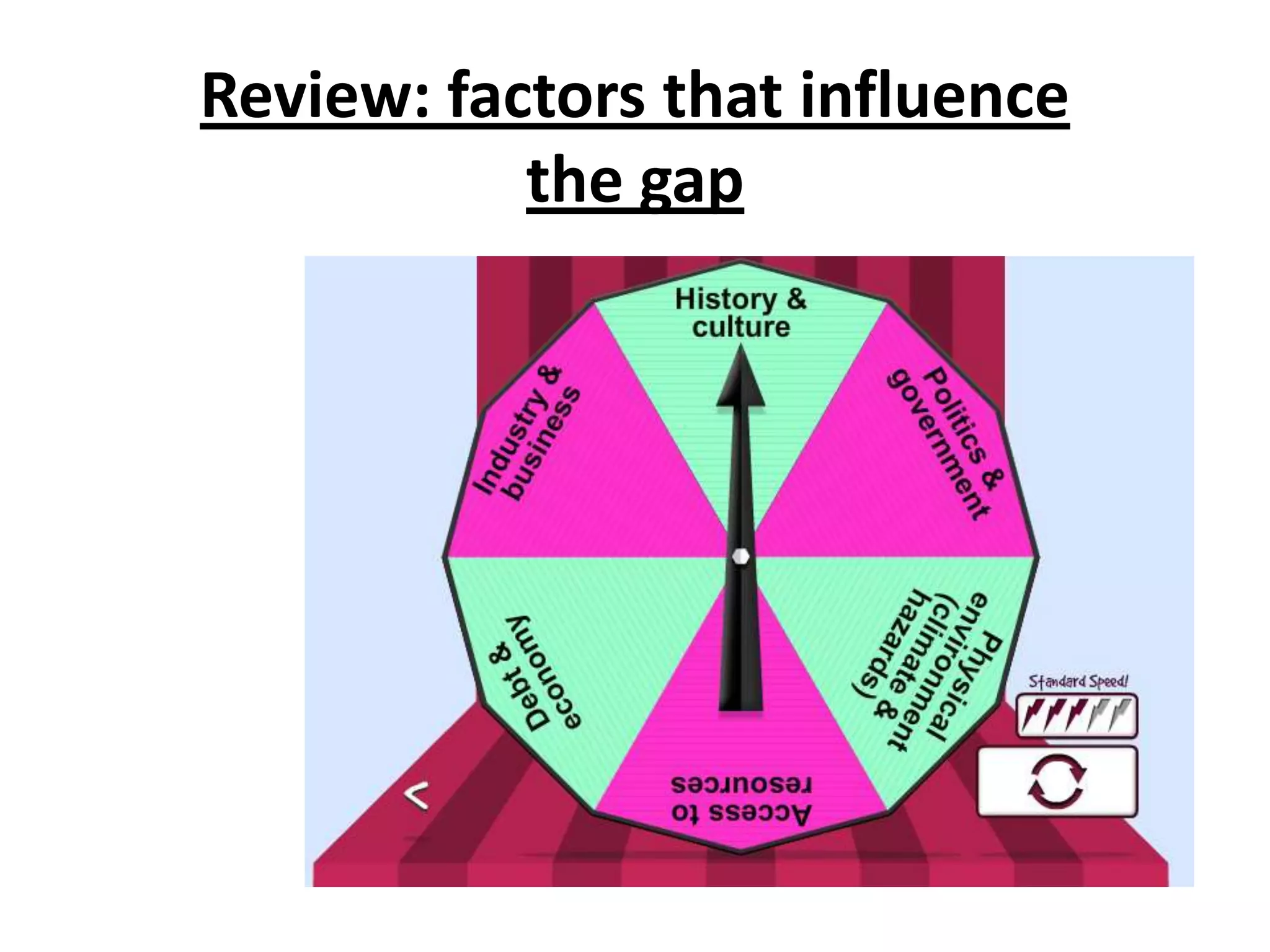
HISTORY &
INDUSTRY
CULTURE
Factors that caused
ACCESS TO
POLITICS & the development RESOURCES
GOVERNMENT gap
PHYSICAL DEBT
ENVIRONMENT
(CLIMATE &
HAZARDS)
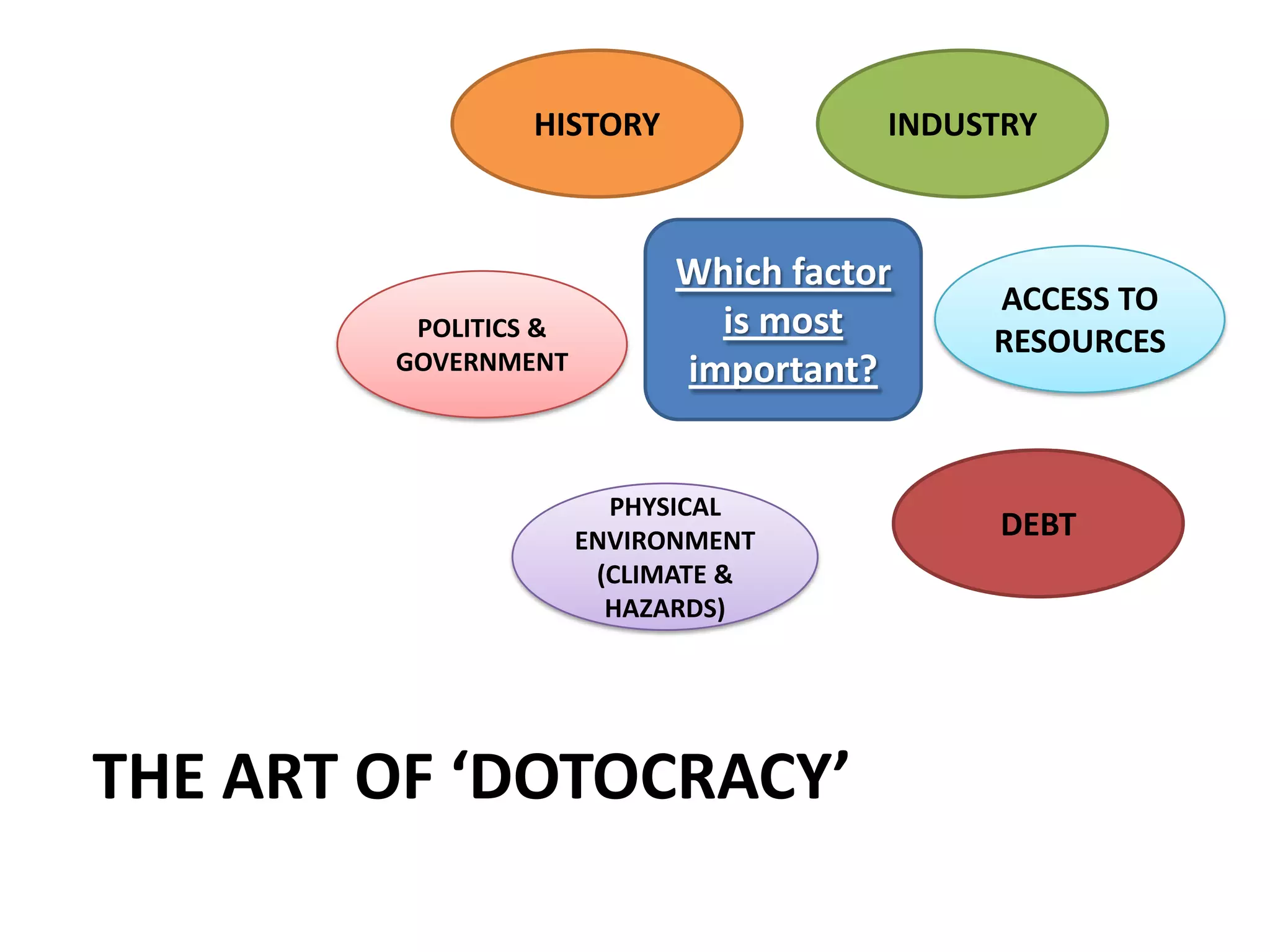
HISTORY INDUSTRY
Which factor
ACCESS TO
POLITICS & is most RESOURCES
GOVERNMENT important?
PHYSICAL
ENVIRONMENT
DEBT
(CLIMATE &
HAZARDS)
THE ART OF ‘DOTOCRACY’
16.
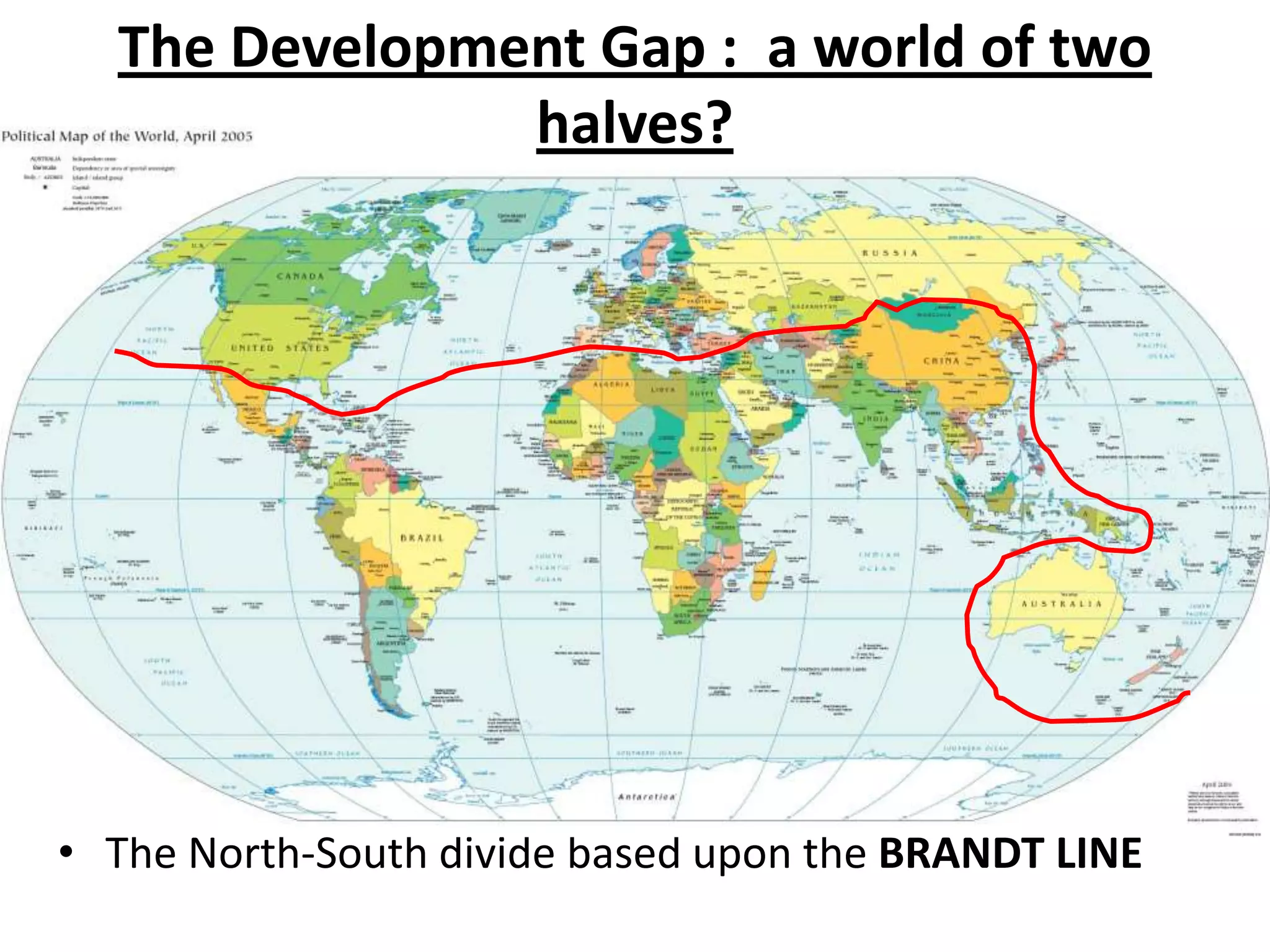
The Development Gap: a world of two
halves?
• The North-South divide based upon the BRANDT LINE
17.
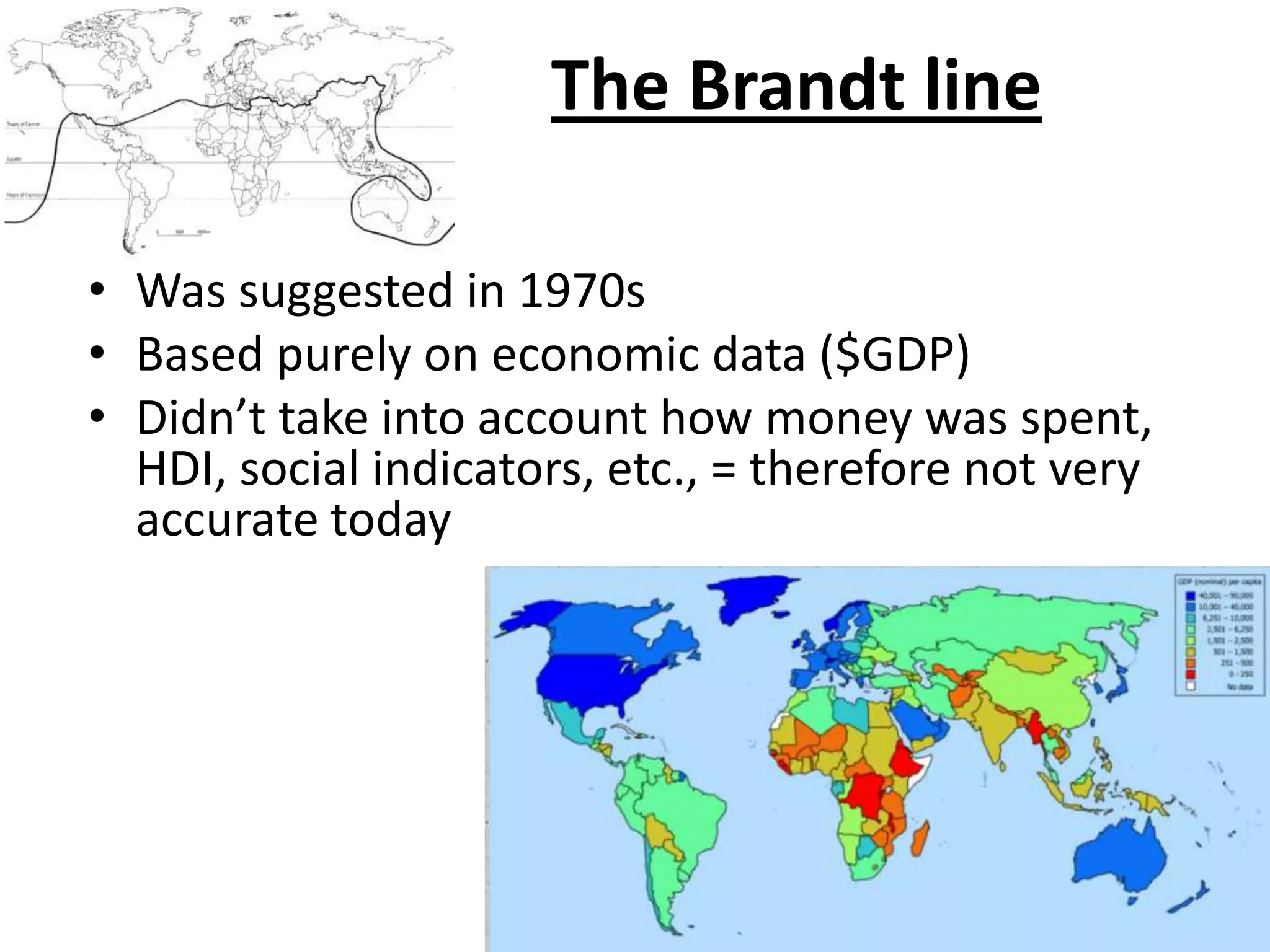
The Brandt line
•Was suggested in 1970s
• Based purely on economic data ($GDP)
• Didn’t take into account how money was spent,
HDI, social indicators, etc., = therefore not very
accurate today
18.
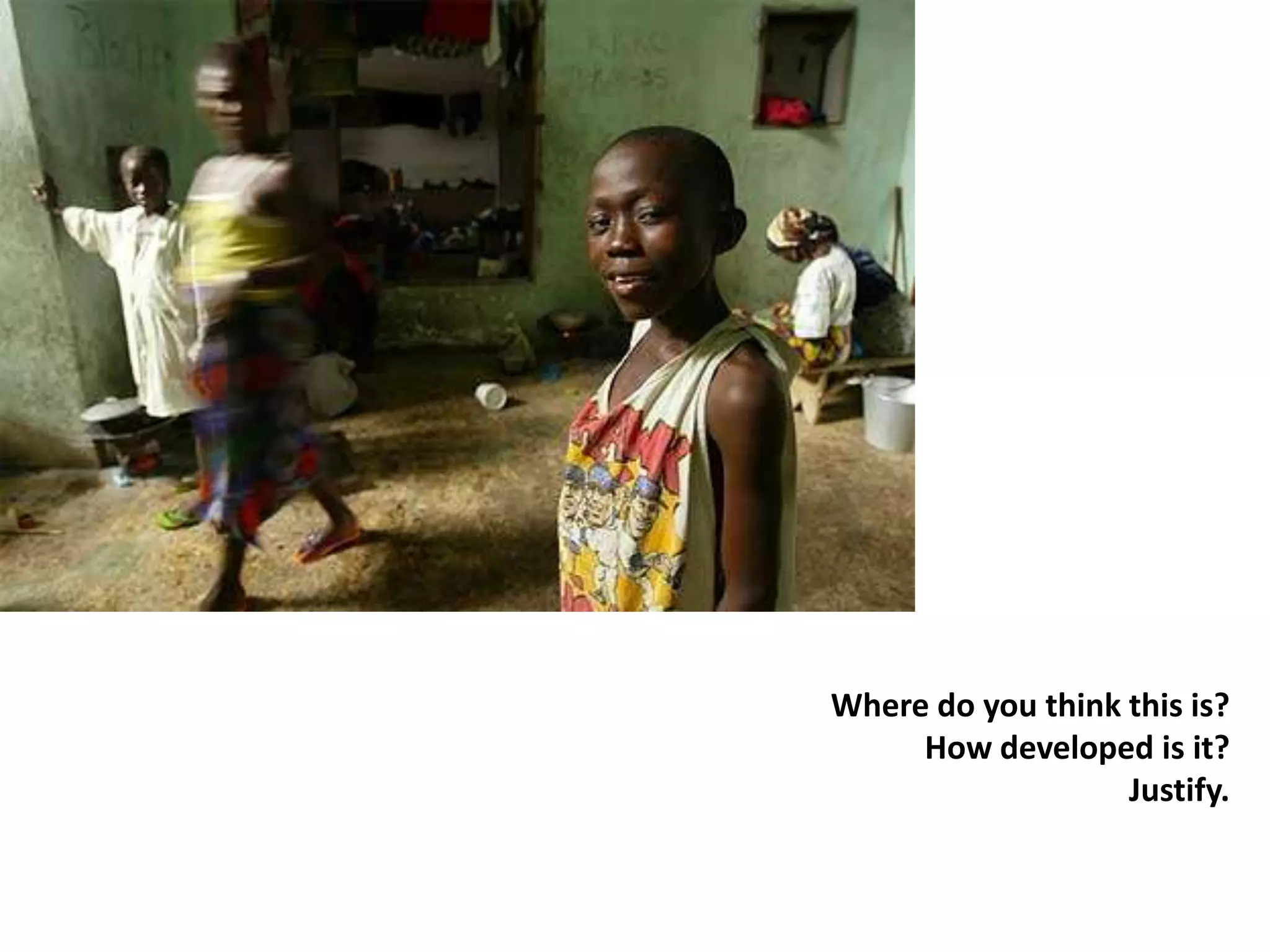
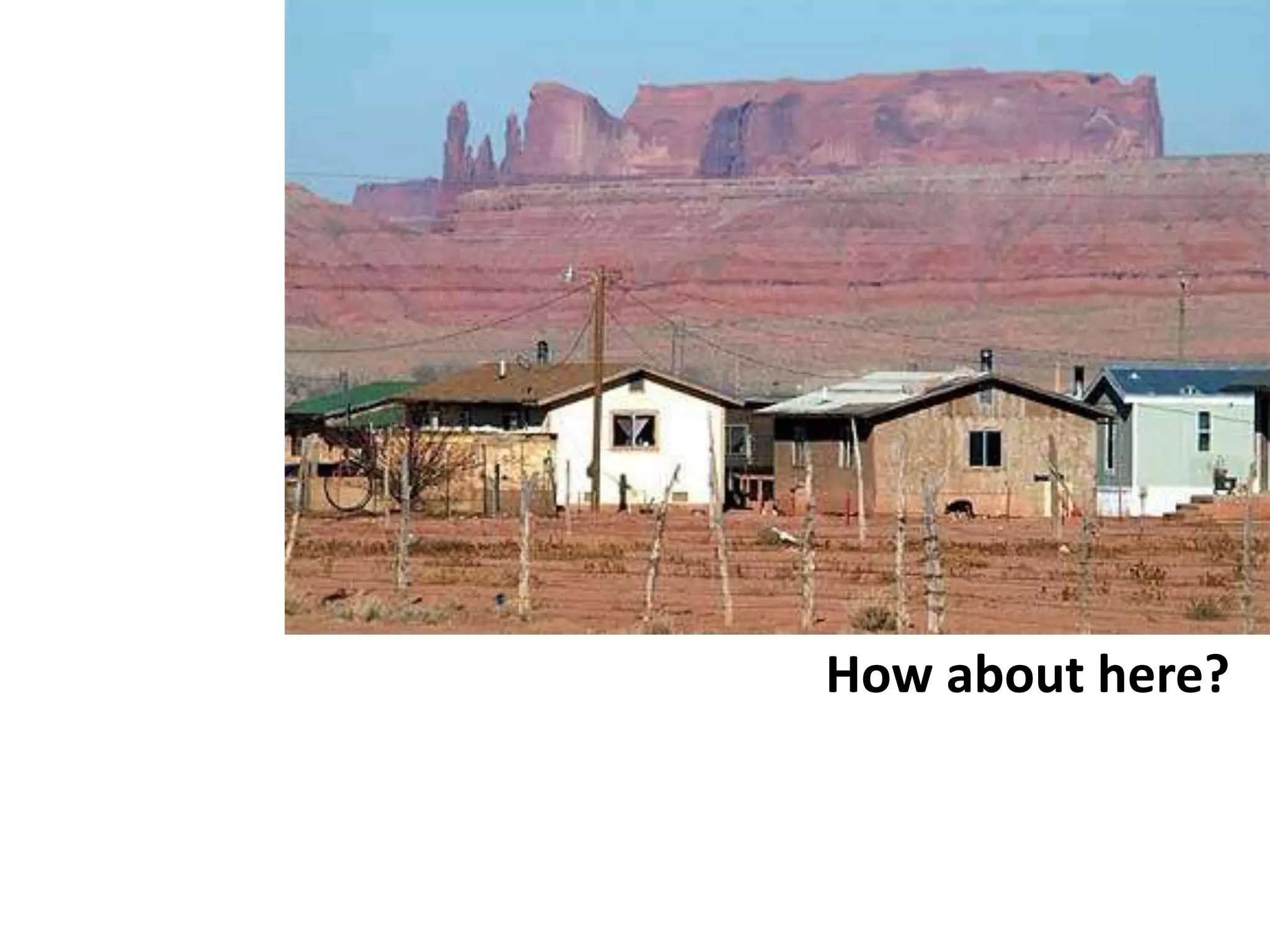
Where do youthink this is? MEDC / LEDC / NIC / LDC?
Answer = RUSSIA. MEDC. Is this what you would expect?
19.
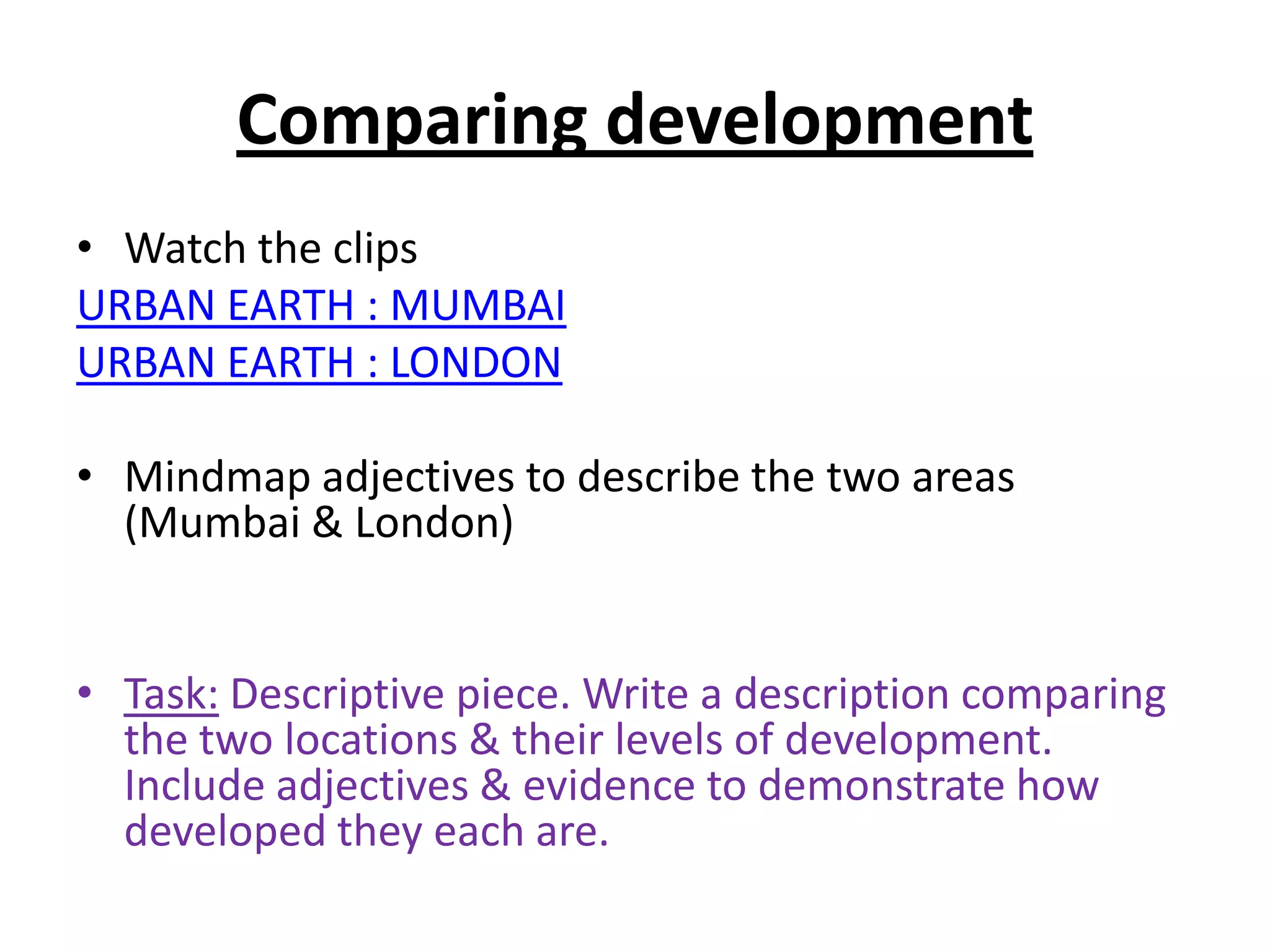
Comparing development
• Watchthe clips
URBAN EARTH : MUMBAI
URBAN EARTH : LONDON
• Mindmap adjectives to describe the two areas
(Mumbai & London)
• Task: Descriptive piece. Write a description comparing
the two locations & their levels of development.
Include adjectives & evidence to demonstrate how
developed they each are.
20.
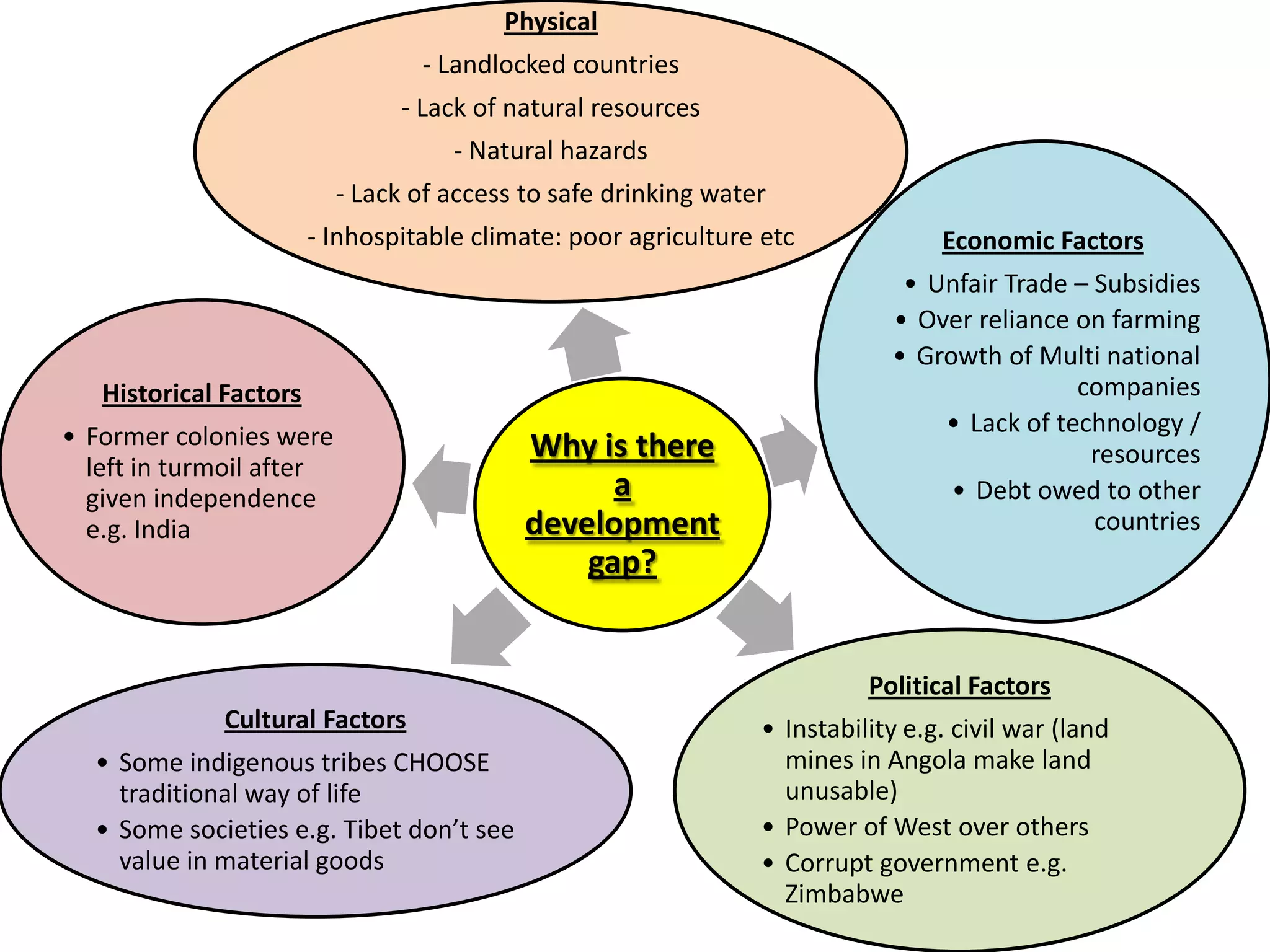
Physical
- Landlocked countries
- Lack of natural resources
- Natural hazards
- Lack of access to safe drinking water
- Inhospitable climate: poor agriculture etc Economic Factors
• Unfair Trade – Subsidies
• Over reliance on farming
• Growth of Multi national
Historical Factors companies
• Former colonies were • Lack of technology /
Why is there resources
left in turmoil after
given independence a • Debt owed to other
e.g. India development countries
gap?
Political Factors
Cultural Factors • Instability e.g. civil war (land
• Some indigenous tribes CHOOSE mines in Angola make land
traditional way of life unusable)
• Some societies e.g. Tibet don’t see • Power of West over others
value in material goods • Corrupt government e.g.
Zimbabwe
21.
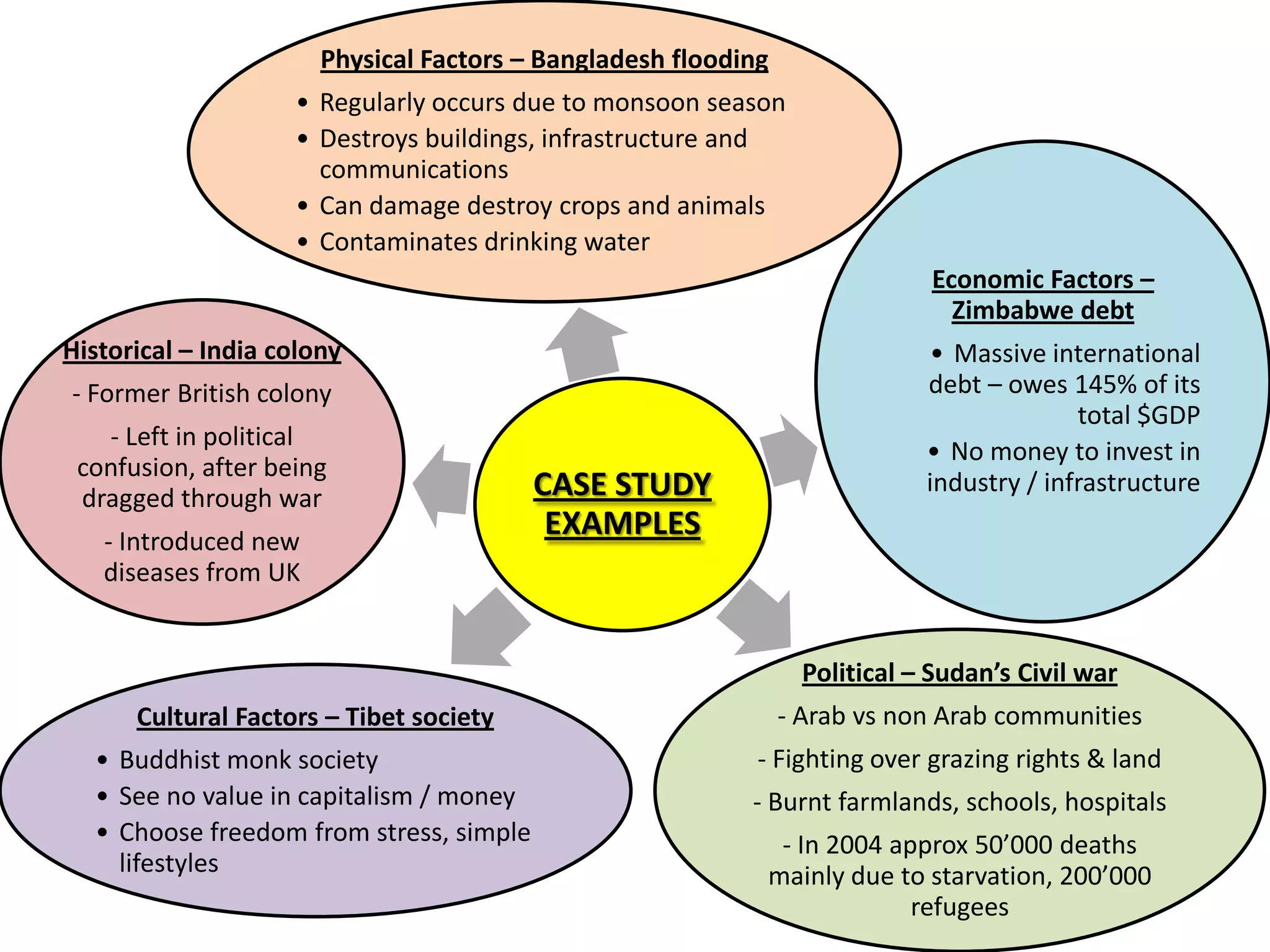
Physical Factors –Bangladesh flooding
• Regularly occurs due to monsoon season
• Destroys buildings, infrastructure and
communications
• Can damage destroy crops and animals
• Contaminates drinking water
Economic Factors –
Zimbabwe debt
Historical – India colony • Massive international
- Former British colony debt – owes 145% of its
total $GDP
- Left in political
• No money to invest in
confusion, after being
dragged through war CASE STUDY industry / infrastructure
- Introduced new
EXAMPLES
diseases from UK
Political – Sudan’s Civil war
Cultural Factors – Tibet society - Arab vs non Arab communities
• Buddhist monk society - Fighting over grazing rights & land
• See no value in capitalism / money - Burnt farmlands, schools, hospitals
• Choose freedom from stress, simple - In 2004 approx 50’000 deaths
lifestyles mainly due to starvation, 200’000
refugees
Editor's Notes
#20 Extension activity – was started in a previous lesson where they saw clips of urbanearth