Language techniques
info
There are 26 different language techniques in
this booklet, some you will know and some
you will not know. So for those you do not
know search them on the internet or ask your
teacher.
Onomatopoeia
An onomatopoeia is a word that sounds like
what it refers to.
For example,
Plop = refers to having a poo
Bang = refers to something banging
Generalization
Generalization doesn`t allow for individual
difference.
This means as a whole.
Everyone has the same say and view it does not
allow individual difference.
Assonance
Assonance is the repetition of vowel sounds
The vowels are
A
E
I
O
U
For example:
A apple awaited Austin. The repetition of the a sound.
Descriptive
Descriptive technique is describing something in
detail.
For example:
The old fragile women sat alone with nothing
but a scruffy black and white poodle.
Paradox
Paradox is the contradiction seemingly false at first but is
found to be true later on.
For example:
You cannot open the door the the quad (2:15pm)
Yes you can open the door to the quad (2:34pm)
This means someone said something earlier but said
something different later on. Like your mum saying you can
play out and your dad saying you cannot play out.
Instructive/Instructions
The instructive technique is to inform/enlighten
and instruct people.
For example:
“Get out of my house now!”
This is an instruction which is instructive
Euphemism
Euphemism is an acceptable/mild expression for
something not very nice.
For example:
Sucking a lemon is not very nice so you pull a
face. But some people pull not a face to say
“yuck that`s horribly” a face to say “yeah
that`s nice, but really it`s horrible”
Oxymoron
An oxymoron is when 2 words are placed next to each
other to show contrast.
For example;
Crash landing
Crash = hurt, flames
Landing = soft, comfortable
The contrast between them.
Personification
Personification means giving human qualities to
something that is lifeless.
For example;
The sun opened his eye with a sudden flash of light.
The sun cannot open a eye because it doesn`t have
one.
Parody
Parody means conscious imitation of another
word.
Search examples on the internet and write
below.
..........................................................................
..........................................................................
..........................................................................
..........................................................................
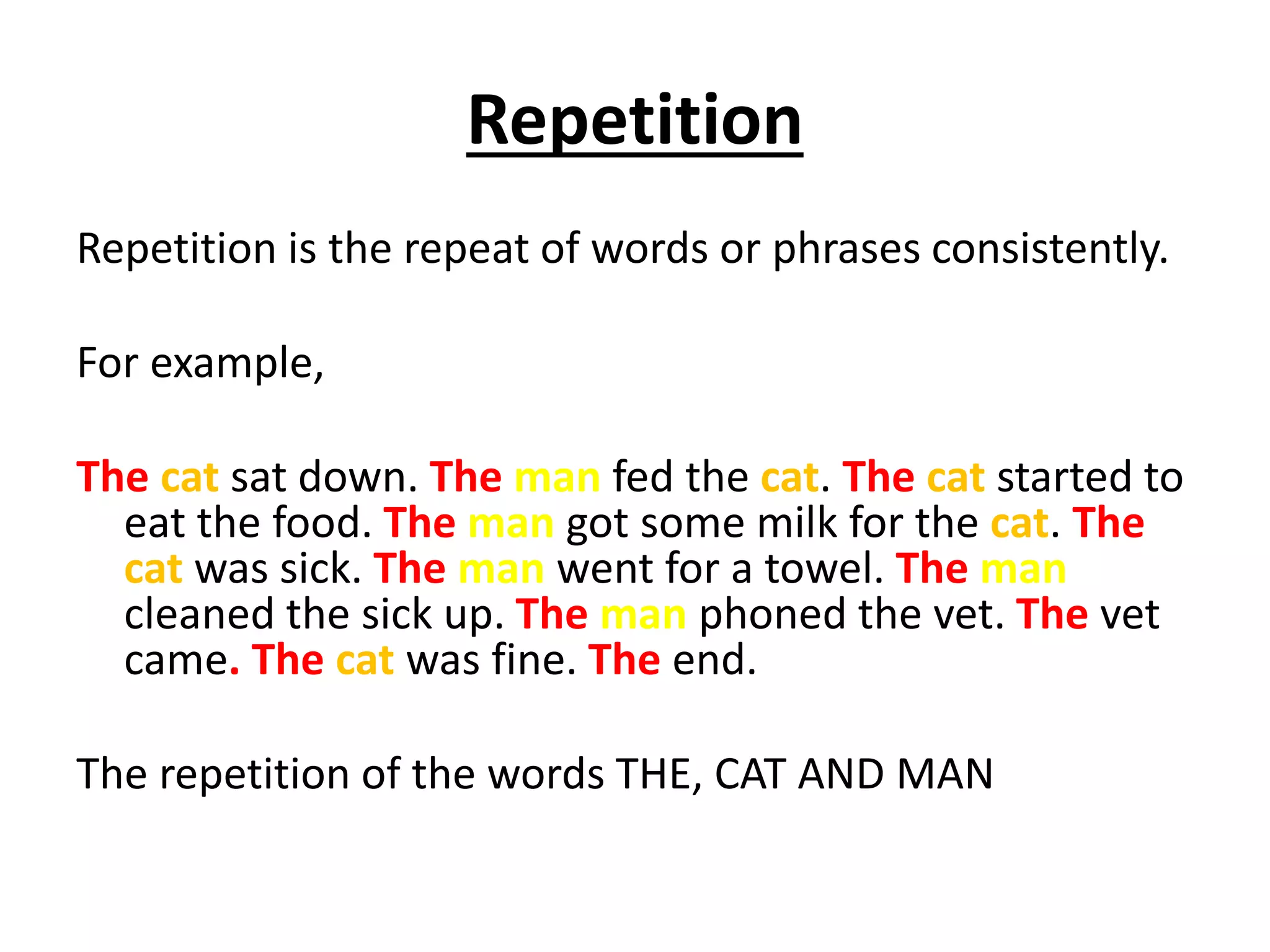
Repetition
Repetition is the repeat of words or phrases consistently.
For example,
The cat sat down. The man fed the cat. The cat started to
eat the food. The man got some milk for the cat. The
cat was sick. The man went for a towel. The man
cleaned the sick up. The man phoned the vet. The vet
came. The cat was fine. The end.
The repetition of the words THE, CAT AND MAN
Formal
Formal means conventional and sensible.
For example;
Dear jean
I am writing you to today to see how you are feeling. I
heard about your fall and wanted to make sure you
were well.
This is formal. Not teenage text like wuu2 and coz.
Denouement
Denouement is the resolution of the plot.
Search an example on the internet and write
below
..........................................................................
..........................................................................
..........................................................................
..........................................................................
Discourse
Discourse means the way of communication,
usually associated within a group.
For example;
Ill speak first then Adam will speak then Thomas
will speak and finally Beth will speak.
Emotive
Emotive means to create emotion
For example;
Jenny sitting next to her father has his eyes slowly
shut and he left her alone forever.
This creates a sad emotion and tension towards the
reader.
Hyperbole
Hyperbole is deliberate exaggeration for effect.
Over the top
For example;
She so was up set and so ugly. That girl had a
unicorn in her bag and was so lce, bbf, omg,
Jargon
Jargon means technical terms specific to a particular
subject.
For example;
The sun is made of 99.9 % hydrogen 00.1% helium and in
the core nuclear fusion takes place creating sunlight
which can take millions of years to reach us because
plasma can deflect light and send it back to where it
came from.
This is technical.
Metaphor
A metaphor is something that is said to be like
something.
For example;
Tracy your hair is like a bush.
Contrast
Contrast means to show difference when comparing.
For example;
The food in the canteen is fantastic with a variety of
dishes both for meat eaters and vegetarians. However,
not a lot of people like food from all around the world
so the kitchen looses business.
There has been a difference in comparing by not just
focusing on the good bit of the canteen.
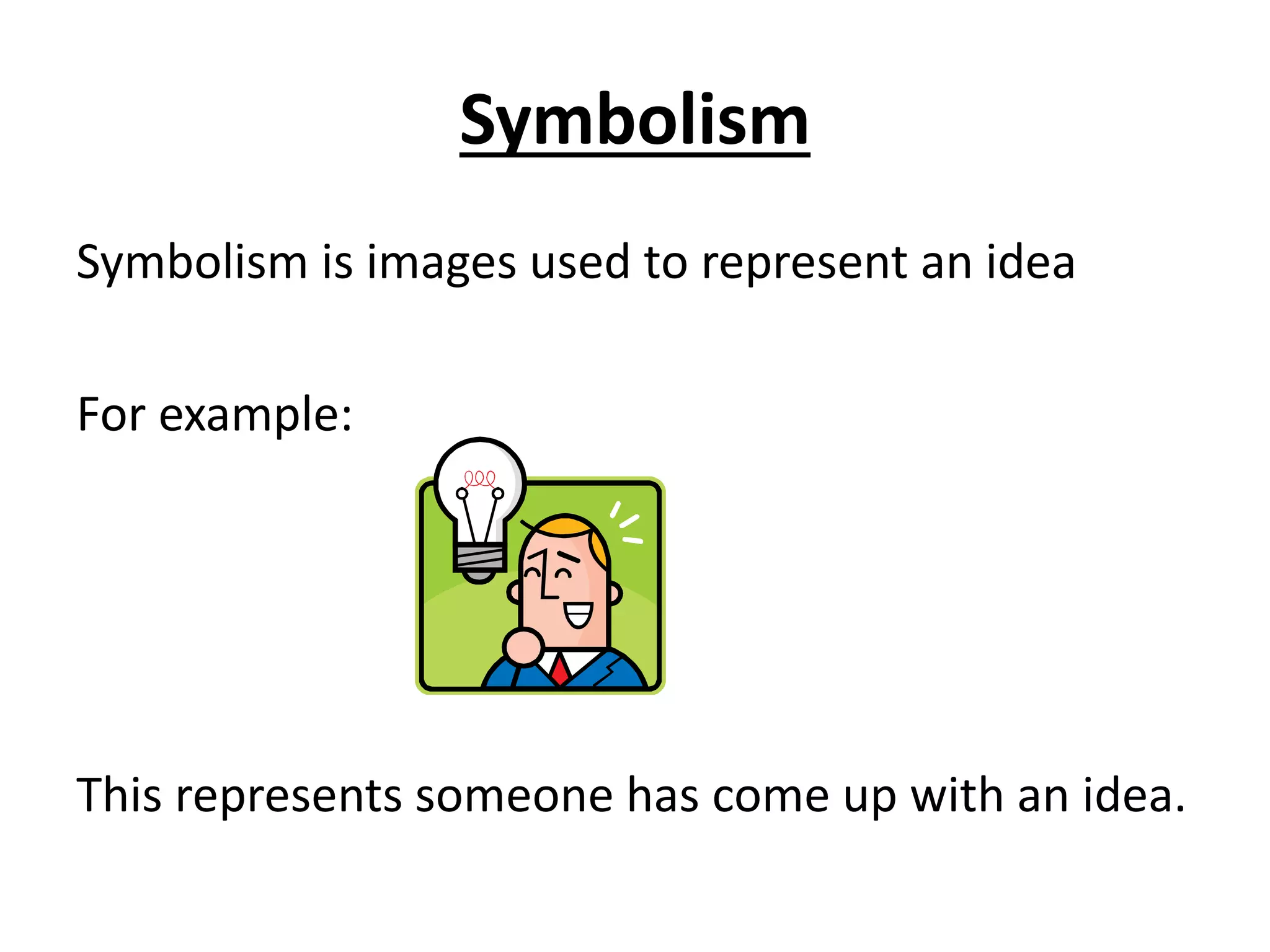
Symbolism
Symbolism is images used to represent an idea
For example:
This represents someone has come up with an idea.
Informal
Informal means more appropriate in spoken
language and not very sensible.
For example;
Hey up cus
How r u, wuu2, me nm. When u coming over coz
am off to shop for some fags yeah c u ltr coca.
Similes
Similes are words and sentences that show
something is similar.
For example;
Tracy your hair is similar to a bush.
That food wrapping is similar to that one.
It is not saying it is like it is saying it is similar
Rhetorical questions
Rhetorical questions are questions that do not
require a response.
For example;
What would you do if this homeless boy was you?
This does not require a response.
Tone
Tone is how something sounds
For example
“WHAT DO YOU MEAN IM ADOPTED!”
The capitals and exclamation mark give the tone
is shouting, and angry tone/impression.
Colloquial
Colloquial means relating to conversation.
For example;
“Jaglin court might be getting knocked down and
rebuilt” “where have you heard that” “Janet told
me at the shop”
We are relating to conversation by including
conversation and relating to a previous
conversation.
Alliteration
Alliteration is the repetition of sounds.
Harry`s hungry hippopotamus
The repetition of the h sound.

The 26 language techniques booklet

  • 1.
  • 2.
    info There are 26different language techniques in this booklet, some you will know and some you will not know. So for those you do not know search them on the internet or ask your teacher.
  • 3.
    Onomatopoeia An onomatopoeia isa word that sounds like what it refers to. For example, Plop = refers to having a poo Bang = refers to something banging
  • 4.
    Generalization Generalization doesn`t allowfor individual difference. This means as a whole. Everyone has the same say and view it does not allow individual difference.
  • 5.
    Assonance Assonance is therepetition of vowel sounds The vowels are A E I O U For example: A apple awaited Austin. The repetition of the a sound.
  • 6.
    Descriptive Descriptive technique isdescribing something in detail. For example: The old fragile women sat alone with nothing but a scruffy black and white poodle.
  • 7.
    Paradox Paradox is thecontradiction seemingly false at first but is found to be true later on. For example: You cannot open the door the the quad (2:15pm) Yes you can open the door to the quad (2:34pm) This means someone said something earlier but said something different later on. Like your mum saying you can play out and your dad saying you cannot play out.
  • 8.
    Instructive/Instructions The instructive techniqueis to inform/enlighten and instruct people. For example: “Get out of my house now!” This is an instruction which is instructive
  • 9.
    Euphemism Euphemism is anacceptable/mild expression for something not very nice. For example: Sucking a lemon is not very nice so you pull a face. But some people pull not a face to say “yuck that`s horribly” a face to say “yeah that`s nice, but really it`s horrible”
  • 10.
    Oxymoron An oxymoron iswhen 2 words are placed next to each other to show contrast. For example; Crash landing Crash = hurt, flames Landing = soft, comfortable The contrast between them.
  • 11.
    Personification Personification means givinghuman qualities to something that is lifeless. For example; The sun opened his eye with a sudden flash of light. The sun cannot open a eye because it doesn`t have one.
  • 12.
    Parody Parody means consciousimitation of another word. Search examples on the internet and write below. .......................................................................... .......................................................................... .......................................................................... ..........................................................................
  • 13.
    Repetition Repetition is therepeat of words or phrases consistently. For example, The cat sat down. The man fed the cat. The cat started to eat the food. The man got some milk for the cat. The cat was sick. The man went for a towel. The man cleaned the sick up. The man phoned the vet. The vet came. The cat was fine. The end. The repetition of the words THE, CAT AND MAN
  • 14.
    Formal Formal means conventionaland sensible. For example; Dear jean I am writing you to today to see how you are feeling. I heard about your fall and wanted to make sure you were well. This is formal. Not teenage text like wuu2 and coz.
  • 15.
    Denouement Denouement is theresolution of the plot. Search an example on the internet and write below .......................................................................... .......................................................................... .......................................................................... ..........................................................................
  • 16.
    Discourse Discourse means theway of communication, usually associated within a group. For example; Ill speak first then Adam will speak then Thomas will speak and finally Beth will speak.
  • 17.
    Emotive Emotive means tocreate emotion For example; Jenny sitting next to her father has his eyes slowly shut and he left her alone forever. This creates a sad emotion and tension towards the reader.
  • 18.
    Hyperbole Hyperbole is deliberateexaggeration for effect. Over the top For example; She so was up set and so ugly. That girl had a unicorn in her bag and was so lce, bbf, omg,
  • 19.
    Jargon Jargon means technicalterms specific to a particular subject. For example; The sun is made of 99.9 % hydrogen 00.1% helium and in the core nuclear fusion takes place creating sunlight which can take millions of years to reach us because plasma can deflect light and send it back to where it came from. This is technical.
  • 20.
    Metaphor A metaphor issomething that is said to be like something. For example; Tracy your hair is like a bush.
  • 21.
    Contrast Contrast means toshow difference when comparing. For example; The food in the canteen is fantastic with a variety of dishes both for meat eaters and vegetarians. However, not a lot of people like food from all around the world so the kitchen looses business. There has been a difference in comparing by not just focusing on the good bit of the canteen.
  • 22.
    Symbolism Symbolism is imagesused to represent an idea For example: This represents someone has come up with an idea.
  • 23.
    Informal Informal means moreappropriate in spoken language and not very sensible. For example; Hey up cus How r u, wuu2, me nm. When u coming over coz am off to shop for some fags yeah c u ltr coca.
  • 24.
    Similes Similes are wordsand sentences that show something is similar. For example; Tracy your hair is similar to a bush. That food wrapping is similar to that one. It is not saying it is like it is saying it is similar
  • 25.
    Rhetorical questions Rhetorical questionsare questions that do not require a response. For example; What would you do if this homeless boy was you? This does not require a response.
  • 26.
    Tone Tone is howsomething sounds For example “WHAT DO YOU MEAN IM ADOPTED!” The capitals and exclamation mark give the tone is shouting, and angry tone/impression.
  • 27.
    Colloquial Colloquial means relatingto conversation. For example; “Jaglin court might be getting knocked down and rebuilt” “where have you heard that” “Janet told me at the shop” We are relating to conversation by including conversation and relating to a previous conversation.
  • 28.
    Alliteration Alliteration is therepetition of sounds. Harry`s hungry hippopotamus The repetition of the h sound.