Bacteria
Eubacteria Phylum Cyanobacteria- Photosynthetic, colonized, specialized Phylum Spirochetes- Gram negative. Spirillia shaped, contains  Treponema pallidum - causes syphilis
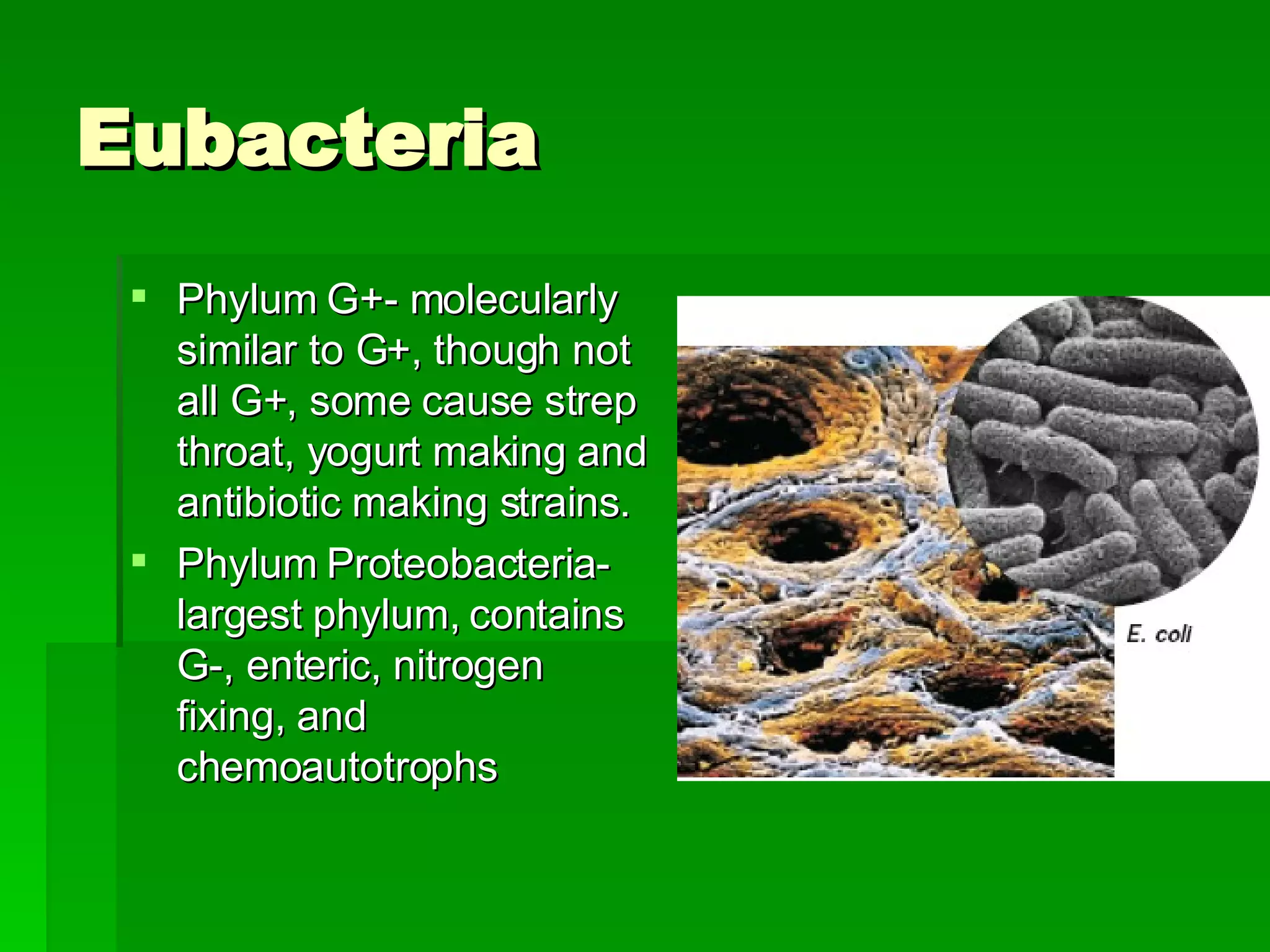
Eubacteria Phylum G+- molecularly similar to G+, though not all G+, some cause strep throat, yogurt making and antibiotic making strains.  Phylum Proteobacteria-largest phylum, contains G-, enteric, nitrogen fixing, and chemoautotrophs
Parts of a Prokaryotic Cell Cell wall-Protects and shapes Cell membrane- regulates movement of materials Cytoplasm- contains compounds that carry out life processes Capsule- protect and attach Pili-attach Endospores- dormant, hardy, non-reproductive structures
Nutrition   Most are autotrophic and can produce energy from almost anything Heterotrophic bacteria are usually saprophytes
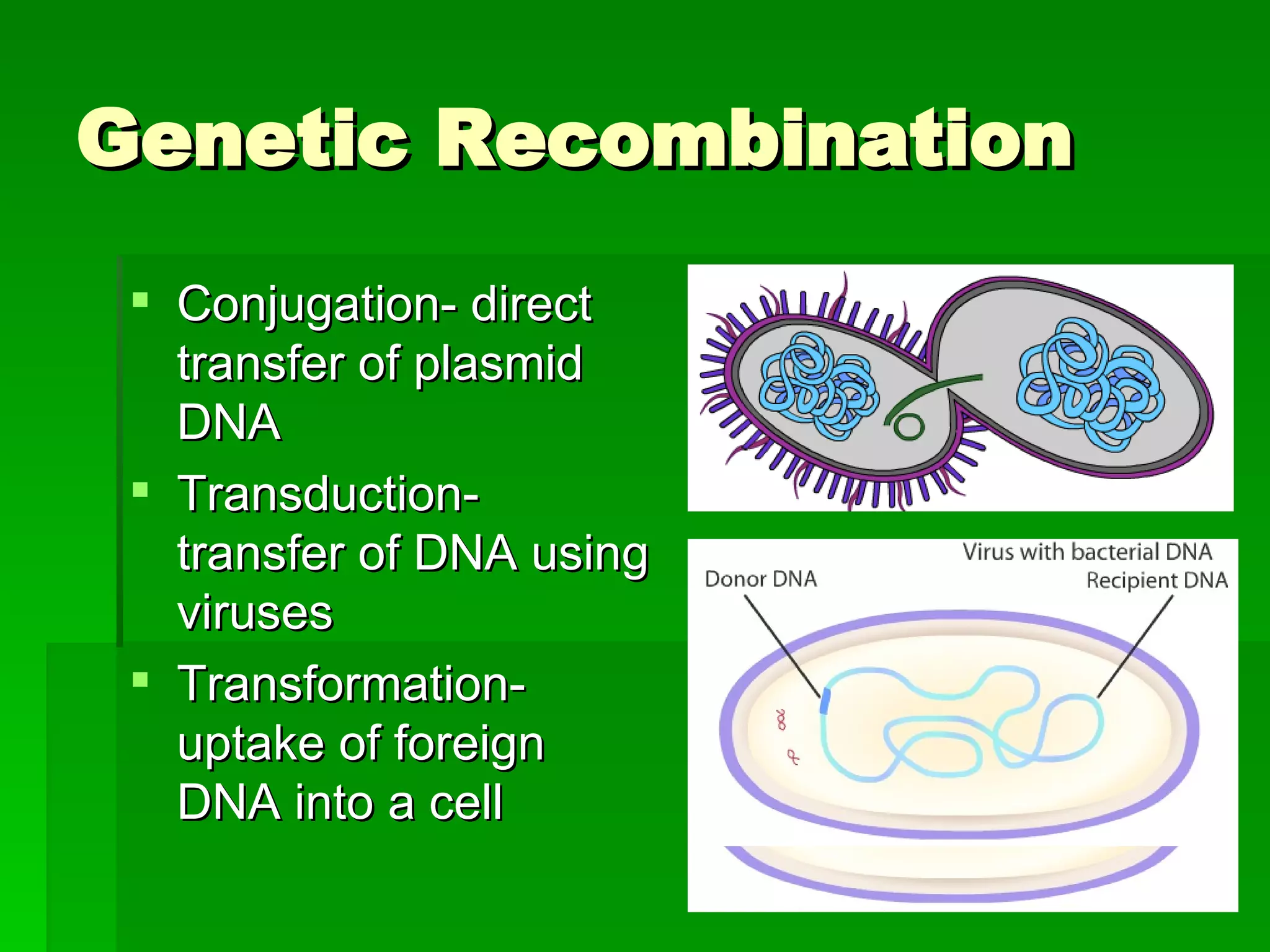
Genetic Recombination Conjugation- direct transfer of plasmid DNA Transduction- transfer of DNA using viruses Transformation- uptake of foreign DNA into a cell
Bacterial Diseases Three pathological means Exotoxins- proteins secreted by the bacterium Endotoxins- parts of the cell membrane and cell wall that the immune system reacts to Digestive Enzymes- hydrolyze body tissues
Antibiotics Used to kill, stop growth, or prevent synthesis of harmful proteins Stop cell metabolism, DNA Replication, Cell wall synthesis, protein synthesis Some strains have produced resistance to certain antibiotics
Useful  Bacteria Certain bacteria are used to make lots of things Antibiotics Cheeses Yogurt Pickles Sauerkraut Industrial

Bacteria2

  • 1.
  • 2.
    Eubacteria Phylum Cyanobacteria-Photosynthetic, colonized, specialized Phylum Spirochetes- Gram negative. Spirillia shaped, contains Treponema pallidum - causes syphilis
  • 3.
    Eubacteria Phylum G+-molecularly similar to G+, though not all G+, some cause strep throat, yogurt making and antibiotic making strains. Phylum Proteobacteria-largest phylum, contains G-, enteric, nitrogen fixing, and chemoautotrophs
  • 4.
    Parts of aProkaryotic Cell Cell wall-Protects and shapes Cell membrane- regulates movement of materials Cytoplasm- contains compounds that carry out life processes Capsule- protect and attach Pili-attach Endospores- dormant, hardy, non-reproductive structures
  • 5.
    Nutrition Most are autotrophic and can produce energy from almost anything Heterotrophic bacteria are usually saprophytes
  • 6.
    Genetic Recombination Conjugation-direct transfer of plasmid DNA Transduction- transfer of DNA using viruses Transformation- uptake of foreign DNA into a cell
  • 7.
    Bacterial Diseases Threepathological means Exotoxins- proteins secreted by the bacterium Endotoxins- parts of the cell membrane and cell wall that the immune system reacts to Digestive Enzymes- hydrolyze body tissues
  • 8.
    Antibiotics Used tokill, stop growth, or prevent synthesis of harmful proteins Stop cell metabolism, DNA Replication, Cell wall synthesis, protein synthesis Some strains have produced resistance to certain antibiotics
  • 9.
    Useful BacteriaCertain bacteria are used to make lots of things Antibiotics Cheeses Yogurt Pickles Sauerkraut Industrial