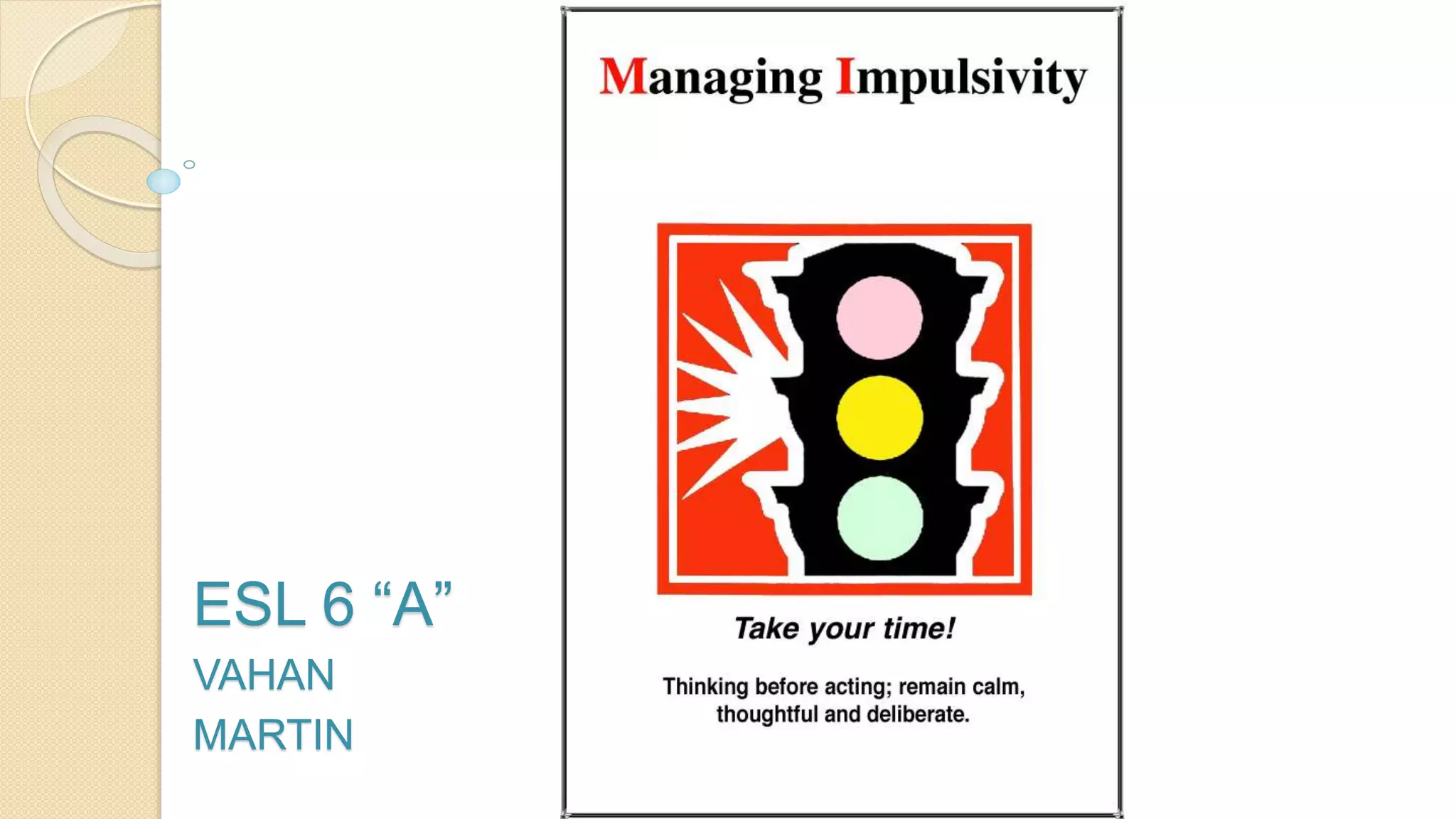
ESL 6 “A”
VAHAN
MARTIN
generally means THINK
before you ACT, which usually bases on social skill calls self-
control or self-regulation. To represent the meaning of MI, we’re
going to use the traffic light’s idea to show how managing our
behavior works, and what strategies are needed.
 Traffic Light:
 Stop
 Think
 Act
 Impulse control
 ManagementTechniques
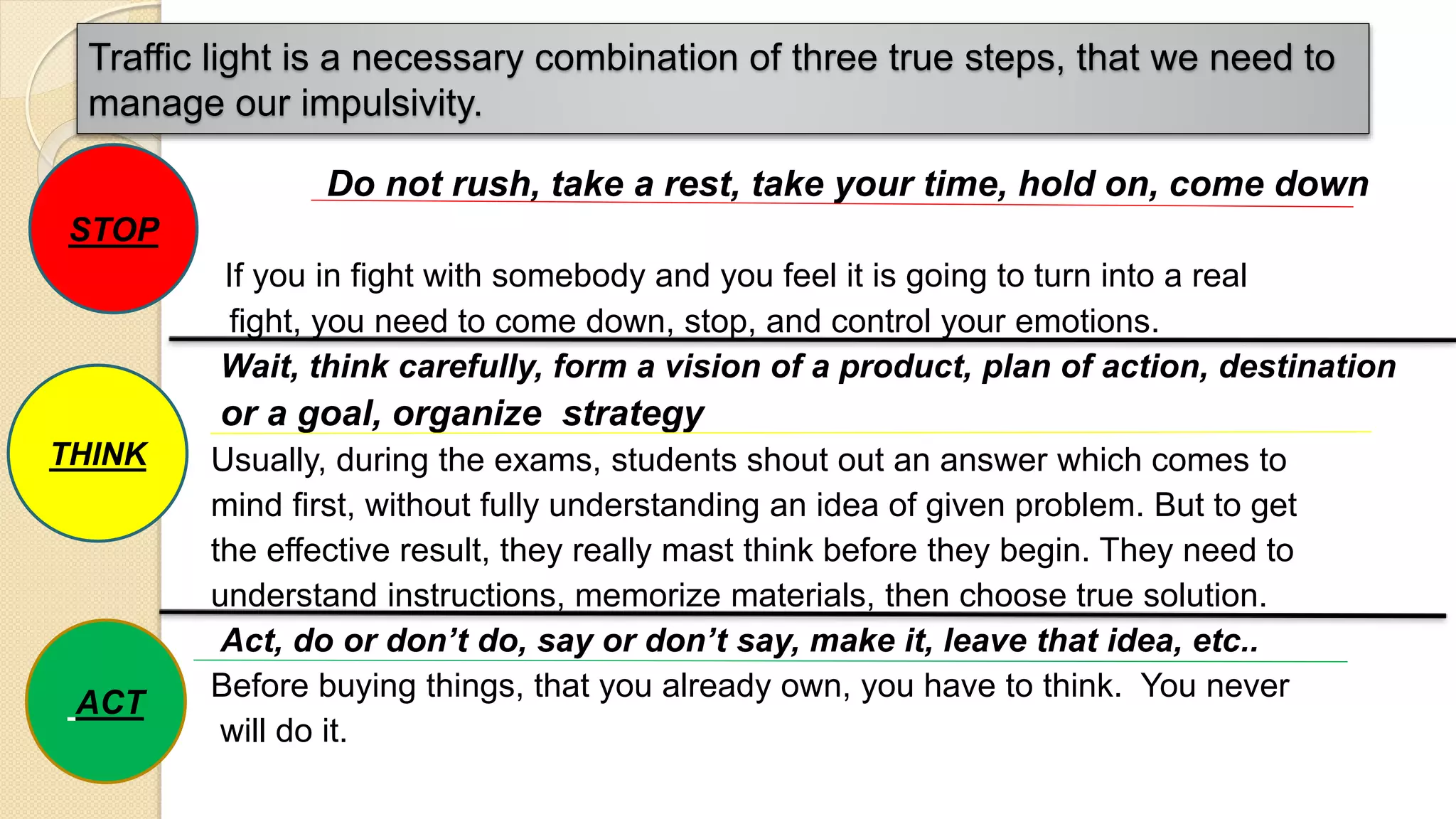
Traffic light is a necessary combination of three true steps, that we need to
manage our impulsivity.
Do not rush, take a rest, take your time, hold on, come down
etc..
If you in fight with somebody and you feel it is going to turn into a real
fight, you need to come down, stop, and control your emotions.
Wait, think carefully, form a vision of a product, plan of action, destination
or a goal, organize strategy
Usually, during the exams, students shout out an answer which comes to
mind first, without fully understanding an idea of given problem. But to get
the effective result, they really mast think before they begin. They need to
understand instructions, memorize materials, then choose true solution.
Act, do or don’t do, say or don’t say, make it, leave that idea, etc..
Before buying things, that you already own, you have to think. You never
will do it.
STOP
THINK
ACT
Impulse Control
There are a variety of impulsive behaviors
and management techniques there are
links with other habits
 Persistence : this all about having energy and focus
to keep trying and to revise you to approach when
something does not work.
 Managing impulsivity: It can be seen as the
background skill that helps the others work.
However this about not doing the first thing that
comes into your head. It is about being aware of
your feelings and evaluating your impulses.
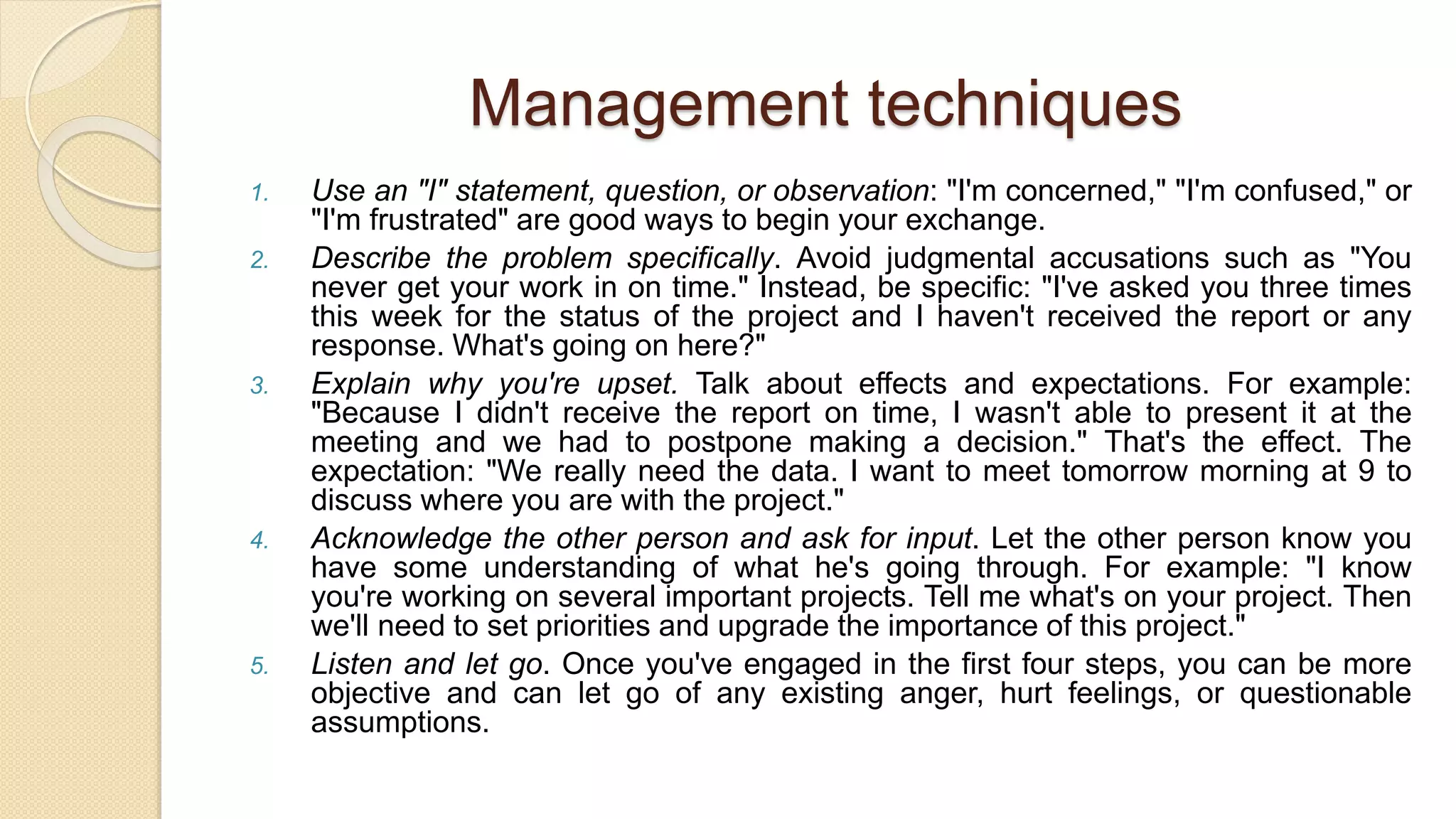
Management techniques
1. Use an "I" statement, question, or observation: "I'm concerned," "I'm confused," or
"I'm frustrated" are good ways to begin your exchange.
2. Describe the problem specifically. Avoid judgmental accusations such as "You
never get your work in on time." Instead, be specific: "I've asked you three times
this week for the status of the project and I haven't received the report or any
response. What's going on here?"
3. Explain why you're upset. Talk about effects and expectations. For example:
"Because I didn't receive the report on time, I wasn't able to present it at the
meeting and we had to postpone making a decision." That's the effect. The
expectation: "We really need the data. I want to meet tomorrow morning at 9 to
discuss where you are with the project."
4. Acknowledge the other person and ask for input. Let the other person know you
have some understanding of what he's going through. For example: "I know
you're working on several important projects. Tell me what's on your project. Then
we'll need to set priorities and upgrade the importance of this project."
5. Listen and let go. Once you've engaged in the first four steps, you can be more
objective and can let go of any existing anger, hurt feelings, or questionable
assumptions.
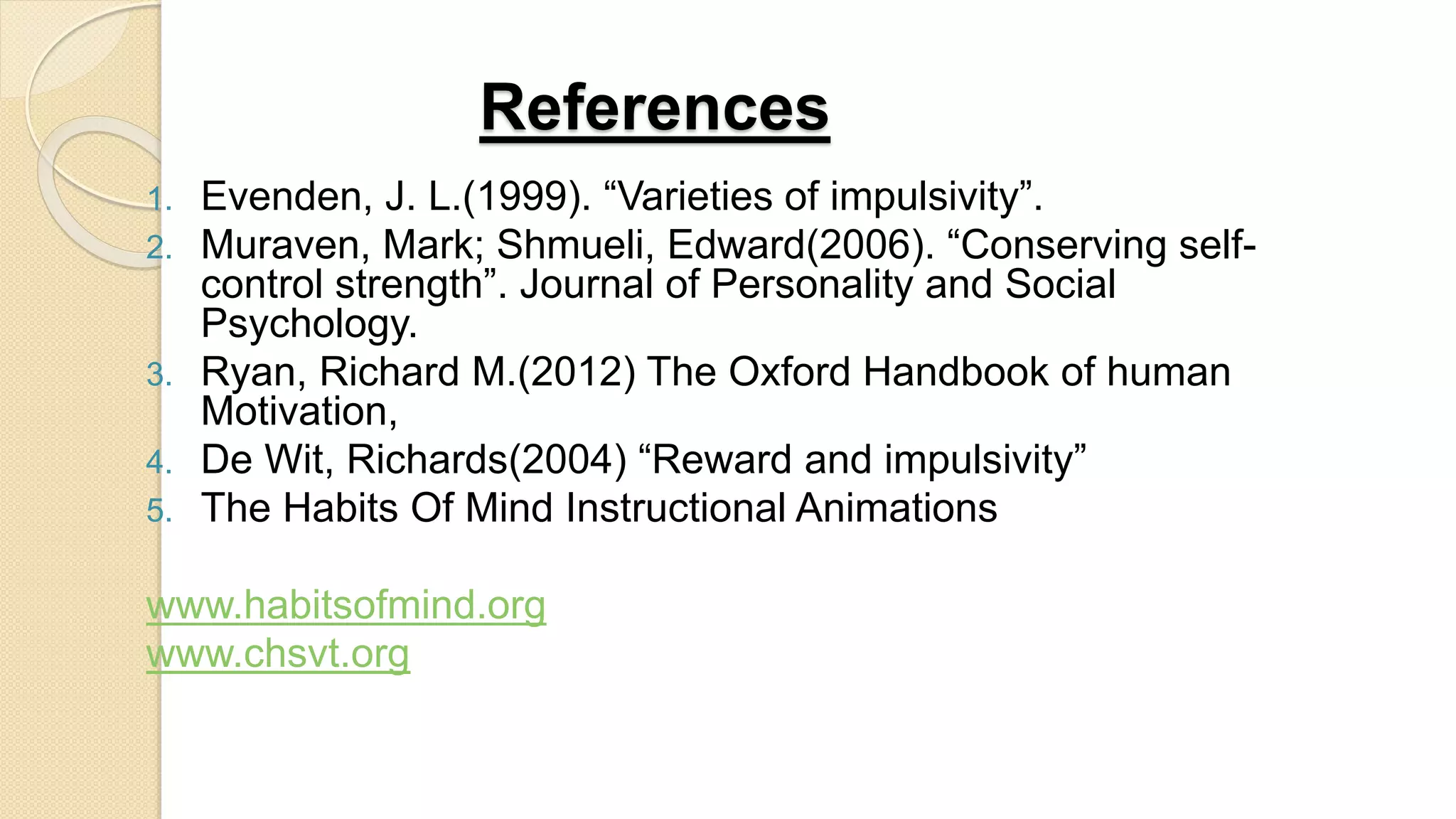
References
1. Evenden, J. L.(1999). “Varieties of impulsivity”.
2. Muraven, Mark; Shmueli, Edward(2006). “Conserving self-
control strength”. Journal of Personality and Social
Psychology.
3. Ryan, Richard M.(2012) The Oxford Handbook of human
Motivation,
4. De Wit, Richards(2004) “Reward and impulsivity”
5. The Habits Of Mind Instructional Animations
www.habitsofmind.org
www.chsvt.org

Managing impulsivity aaa

  • 1.
  • 2.
    generally means THINK beforeyou ACT, which usually bases on social skill calls self- control or self-regulation. To represent the meaning of MI, we’re going to use the traffic light’s idea to show how managing our behavior works, and what strategies are needed.  Traffic Light:  Stop  Think  Act  Impulse control  ManagementTechniques
  • 3.
    Traffic light isa necessary combination of three true steps, that we need to manage our impulsivity. Do not rush, take a rest, take your time, hold on, come down etc.. If you in fight with somebody and you feel it is going to turn into a real fight, you need to come down, stop, and control your emotions. Wait, think carefully, form a vision of a product, plan of action, destination or a goal, organize strategy Usually, during the exams, students shout out an answer which comes to mind first, without fully understanding an idea of given problem. But to get the effective result, they really mast think before they begin. They need to understand instructions, memorize materials, then choose true solution. Act, do or don’t do, say or don’t say, make it, leave that idea, etc.. Before buying things, that you already own, you have to think. You never will do it. STOP THINK ACT
  • 4.
    Impulse Control There area variety of impulsive behaviors and management techniques there are links with other habits  Persistence : this all about having energy and focus to keep trying and to revise you to approach when something does not work.  Managing impulsivity: It can be seen as the background skill that helps the others work. However this about not doing the first thing that comes into your head. It is about being aware of your feelings and evaluating your impulses.
  • 5.
    Management techniques 1. Usean "I" statement, question, or observation: "I'm concerned," "I'm confused," or "I'm frustrated" are good ways to begin your exchange. 2. Describe the problem specifically. Avoid judgmental accusations such as "You never get your work in on time." Instead, be specific: "I've asked you three times this week for the status of the project and I haven't received the report or any response. What's going on here?" 3. Explain why you're upset. Talk about effects and expectations. For example: "Because I didn't receive the report on time, I wasn't able to present it at the meeting and we had to postpone making a decision." That's the effect. The expectation: "We really need the data. I want to meet tomorrow morning at 9 to discuss where you are with the project." 4. Acknowledge the other person and ask for input. Let the other person know you have some understanding of what he's going through. For example: "I know you're working on several important projects. Tell me what's on your project. Then we'll need to set priorities and upgrade the importance of this project." 5. Listen and let go. Once you've engaged in the first four steps, you can be more objective and can let go of any existing anger, hurt feelings, or questionable assumptions.
  • 6.
    References 1. Evenden, J.L.(1999). “Varieties of impulsivity”. 2. Muraven, Mark; Shmueli, Edward(2006). “Conserving self- control strength”. Journal of Personality and Social Psychology. 3. Ryan, Richard M.(2012) The Oxford Handbook of human Motivation, 4. De Wit, Richards(2004) “Reward and impulsivity” 5. The Habits Of Mind Instructional Animations www.habitsofmind.org www.chsvt.org