 Taking an active and pro-active role in one’s own
overall health and wellness
 A framework for managing stress, life challenges,
professional burnout and compassion fatigue
 An empowerment process that creates balance and
equilibrium across our personal, social and work lives
 Any activity that we do deliberately in order to take
care of our physical, mental, emotional and spiritual
health and well-being
Self- Care:
Fatigue
Burnout
Dissatisfaction
Your
Stressful
Life
Self-
Sacrifice
Poor Self-
Care
Good
Self-Care
Satisfaction
Resilience
Importance
of Self-Care
Disengagement and
withdrawal responses
Results from chronic
neglect, self-sacrifice
Emotional exhaustion
Depersonalisation
(reduced empathy)
Reduced sense of
accomplishment
Losing your passion,
vision and purpose
Burnout
Five Core Components of Wellness
Ways to improve sleep can include:
•Creating a regular sleep schedule
•Limiting caffeine and sugar
•Utilizing relaxation practices to encourage
sleep
•Minimizing light or noise in your bedroom
•Getting proper nutrition
•Limiting activities prior to sleep, especially
cell phones, social media, etc.
Practice: Breath Awareness
Sleep
Diaphragmatic Breathing
Physical activity for 20-30 minutes each day helps in reducing your body’s
physical reaction to stress by relaxing tension. It also helps in releasing
negative thoughts, reducing anxiety and boosting your self-esteem.
Practices that support getting regular exercise include:
• Going to a gym or taking fitness classes
• Taking up yoga or tai chi
• Walking or hiking
• Taking a dance class
• Biking or swimming
• Martial arts
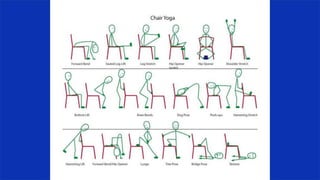
Practice: Yoga/Stretching
Exercise
Nourishing body, mind, emotions and spirit with is a key to long-
term recovery and wellness.
Practices that support eating well:
• A healthy eating plan that is right for you
• Replacing fast-food with whole foods and grains
• Becoming aware of food sensitivities e.g. gluten, dairy, soy, etc.
• Eating lots of fruits and vegetables
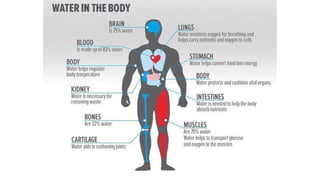
• Drinking plenty of water
• Not skipping meals or going longer than 3 - 4 hours without
eating or snacking
Practice: Drinking Water
Nutrition
Relaxation replenishes mental resources and allows the
body to recover. Making time to relax is essential for
recovery and wellness. The are many ways to practice
relaxation:
• Spending time in nature - walking, hiking
• Breathing exercises
• Meditation & Mindfulness
• Yoga
• Reading
• Journaling
• Listening to music
Practice: Music
Relaxation
There are many practices that cultivate a sense of
connection:
• Spiritual practices such as prayer, meditation, or
contemplation
• Participating in community
• Spending time with family and friends
• Accessing peer support or mentorship
• Connecting with self through meditation, journaling,
and self-reflection
• Spending time in nature
• Quiet Time
• Having fun!
Practice: Connecting with Nature
Connection
Questions to Check in with Yourself
and Boost Your Well-Being…
• What can I let go of that’s getting in the way of my health
and well-being, that’s no longer serving or supporting
me?
• Have I been letting myself feel my feelings?
• What can I learn from a mistake or not-so-great decision I
made this week?
• What am I feeling right now?
• What’s one way I can play today or this week?
• How can I soothe myself without
falling into the rabbit hole of
substances like alcohol?
• What inspires me?
• What can I forgive myself for?
• What can I thank myself for?
• What am I tired of? What can I do
about it?
• What can I create that I need or want
or dream of?
• How can I make my space a bit
cozier?
• Am I following anyone on social
media who makes me feel terrible
about myself?
• What’s a beautiful sight, scent, taste
or sound that I’ve experienced
lately? Or what sight, scent, taste or
sound do I want to experience? And
how can I experience it more often?
• What empowers me?
• What am I doing right now that I don’t
enjoy or maybe even makes me
miserable? Can I delegate it, ask for
help or simply forget it?
• Where am I hurting?
• Where am I healing?
• Who can I reach out to who might
need my support, who might need
someone to listen?
• How can I be kinder to myself right
now?
The most important part of self-care…
Do what positively works for you.
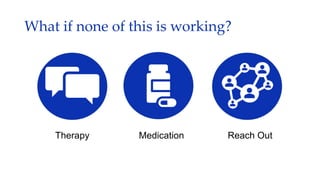
What if none of this is working?
Therapy Medication Reach Out
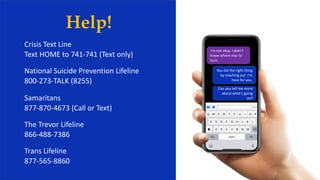
Help!
Crisis Text Line
Text HOME to 741-741 (Text only)
National Suicide Prevention Lifeline
800-273-TALK (8255)
Samaritans
877-870-4673 (Call or Text)
The Trevor Lifeline
866-488-7386
Trans Lifeline
877-565-8860
I’m not okay. I didn’t
know where else to
turn.
You did the right thing
by reaching out. I’m
here for you.
Can you tell me more
about what’s going
on?

Self care 101

  • 2.
     Taking anactive and pro-active role in one’s own overall health and wellness  A framework for managing stress, life challenges, professional burnout and compassion fatigue  An empowerment process that creates balance and equilibrium across our personal, social and work lives  Any activity that we do deliberately in order to take care of our physical, mental, emotional and spiritual health and well-being Self- Care:
  • 3.
  • 4.
    Disengagement and withdrawal responses Resultsfrom chronic neglect, self-sacrifice Emotional exhaustion Depersonalisation (reduced empathy) Reduced sense of accomplishment Losing your passion, vision and purpose Burnout
  • 5.
  • 6.
    Ways to improvesleep can include: •Creating a regular sleep schedule •Limiting caffeine and sugar •Utilizing relaxation practices to encourage sleep •Minimizing light or noise in your bedroom •Getting proper nutrition •Limiting activities prior to sleep, especially cell phones, social media, etc. Practice: Breath Awareness Sleep
  • 7.
  • 8.
    Physical activity for20-30 minutes each day helps in reducing your body’s physical reaction to stress by relaxing tension. It also helps in releasing negative thoughts, reducing anxiety and boosting your self-esteem. Practices that support getting regular exercise include: • Going to a gym or taking fitness classes • Taking up yoga or tai chi • Walking or hiking • Taking a dance class • Biking or swimming • Martial arts Practice: Yoga/Stretching Exercise
  • 10.
    Nourishing body, mind,emotions and spirit with is a key to long- term recovery and wellness. Practices that support eating well: • A healthy eating plan that is right for you • Replacing fast-food with whole foods and grains • Becoming aware of food sensitivities e.g. gluten, dairy, soy, etc. • Eating lots of fruits and vegetables • Drinking plenty of water • Not skipping meals or going longer than 3 - 4 hours without eating or snacking Practice: Drinking Water Nutrition
  • 12.
    Relaxation replenishes mentalresources and allows the body to recover. Making time to relax is essential for recovery and wellness. The are many ways to practice relaxation: • Spending time in nature - walking, hiking • Breathing exercises • Meditation & Mindfulness • Yoga • Reading • Journaling • Listening to music Practice: Music Relaxation
  • 13.
    There are manypractices that cultivate a sense of connection: • Spiritual practices such as prayer, meditation, or contemplation • Participating in community • Spending time with family and friends • Accessing peer support or mentorship • Connecting with self through meditation, journaling, and self-reflection • Spending time in nature • Quiet Time • Having fun! Practice: Connecting with Nature Connection
  • 14.
    Questions to Checkin with Yourself and Boost Your Well-Being… • What can I let go of that’s getting in the way of my health and well-being, that’s no longer serving or supporting me? • Have I been letting myself feel my feelings? • What can I learn from a mistake or not-so-great decision I made this week? • What am I feeling right now? • What’s one way I can play today or this week?
  • 15.
    • How canI soothe myself without falling into the rabbit hole of substances like alcohol? • What inspires me? • What can I forgive myself for? • What can I thank myself for? • What am I tired of? What can I do about it?
  • 16.
    • What canI create that I need or want or dream of? • How can I make my space a bit cozier? • Am I following anyone on social media who makes me feel terrible about myself? • What’s a beautiful sight, scent, taste or sound that I’ve experienced lately? Or what sight, scent, taste or sound do I want to experience? And how can I experience it more often? • What empowers me?
  • 17.
    • What amI doing right now that I don’t enjoy or maybe even makes me miserable? Can I delegate it, ask for help or simply forget it? • Where am I hurting? • Where am I healing? • Who can I reach out to who might need my support, who might need someone to listen? • How can I be kinder to myself right now?
  • 18.
    The most importantpart of self-care… Do what positively works for you.
  • 20.
    What if noneof this is working? Therapy Medication Reach Out
  • 21.
    Help! Crisis Text Line TextHOME to 741-741 (Text only) National Suicide Prevention Lifeline 800-273-TALK (8255) Samaritans 877-870-4673 (Call or Text) The Trevor Lifeline 866-488-7386 Trans Lifeline 877-565-8860 I’m not okay. I didn’t know where else to turn. You did the right thing by reaching out. I’m here for you. Can you tell me more about what’s going on?