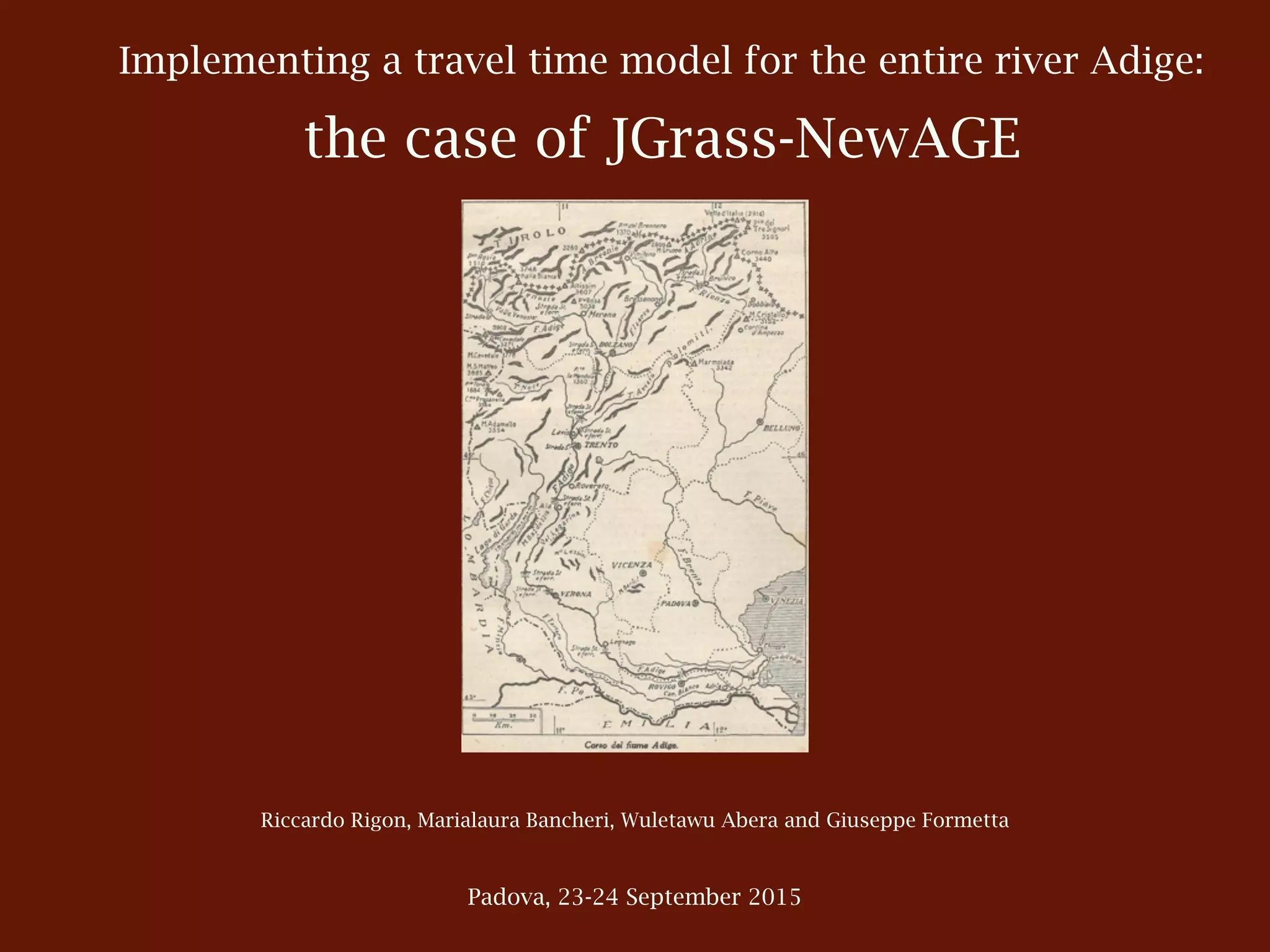
Implementing a travel time model for the entire river Adige:
the case of JGrass-NewAGE
Riccardo Rigon, Marialaura Bancheri, Wuletawu Abera and Giuseppe Formetta
Padova, 23-24 September 2015
!2
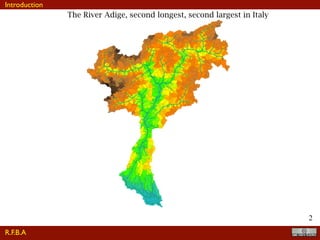
The River Adige, second longest, second largest in Italy
R.F.B.A
Introduction
!3
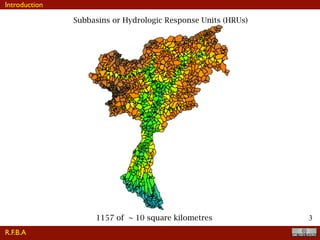
Subbasins or Hydrologic Response Units (HRUs)
1157 of ~ 10 square kilometres
R.F.B.A
Introduction
!4
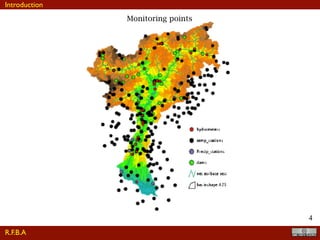
Monitoring points
R.F.B.A
Introduction
!5
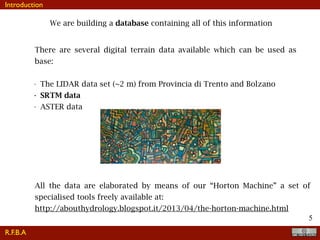
We are building a database containing all of this information
There are several digital terrain data available which can be used as
base:
• The LIDAR data set (~2 m) from Provincia di Trento and Bolzano
• SRTM data
• ASTER data
All the data are elaborated by means of our “Horton Machine” a set of
specialised tools freely available at:
http://abouthydrology.blogspot.it/2013/04/the-horton-machine.html
R.F.B.A
Introduction
!6
Modelling goals
• Modelling the whole hydrological cycle, runoff, discharge, ET,
snow but at an aggregated scale
• Possibly at operational level
• Giving travel time distributions
• Introducing human management
R.F.B.A
Introduction
!7
Modelling goals
We did it part of it a few times in the past 25 years
and we had to rebuild everything from the scratch every time
• This time we would like to build something that we should not rebuild
entirely
The design lines are in:
http://www.slideshare.net/GEOFRAMEcafe/geoframe-a-system-for-doing-hydrology-by-computer
R.F.B.A
Introduction
!8
Just a slide on this
CUAHSI BIANNUAL MEETING - BOULDER (CO) - JULY 14-16 2008
Object-oriented software development. O-O
programming is nothing new, but it has proven to be a successful
key to the design and implementation of modelling frameworks.
Models and data can be seen as objects and therefore they can
exploit properties such as encapsulation, polymorphism, data
abstraction and inheritance.
Component-oriented software development. Objects
(models and data) should be packaged in components, exposing for
re-use only their most important functions. Libraries of
components can then be re-used and efficiently integrated across
modelling frameworks.Yet, a certain degree of dependency of the
model component from the framework can actually hinder reuse.
NEW (well relatively) MODELING PARADIGMS
ModifiedfromRizzolietal.,2005
MODELLING BY COMPONENTS
http://www.slideshare.net/GEOFRAMEcafe/geoframe-a-system-for-doing-hydrology-by-computer
R.F.B.A
Introduction
!9
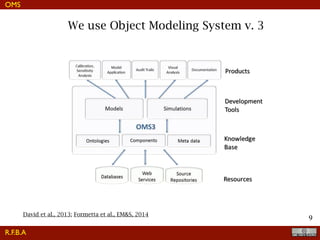
We use Object Modeling System v. 3
OMS
R.F.B.A
David et al., 2013; Formetta et al., EM&S, 2014
supporting parameter estimation and sensitivity/uncertainty anal-
ysis, output analysis (e.g., statistical evaluation and graphical visu-
alization) tools, modeling audit trails (i.e., reproducing model results
for legal purposes), and miscellaneous technical/user documenta-
tion. As with any EMF, fully embracing the OMS3 architecture
requires a commitment to a structured model development process
which may include the use of a version control system for model
source code management or databases to store audit trails. Such
features are important for institutionalized adoption of OMS3 but
less critical for adherence by a single modeler.
Most environmental modeling development projects do not have
the luxury of employing experienced software engineers or
computer scientists who are able to understand and apply complex
design patterns, UML diagrams, and advanced object-oriented
techniques such as parameterized types, higher level data struc-
tures and/or object composition. The use of object-oriented design
principles for modeling can be productive for a specific modeling
project that has limited need for external reuse and extensibility.
Extensive use of object-oriented design principles can be difficult
for scientists to adopt in that adoption often entails a steep learning
Fig. 1. OMS3 principle framework architecture.
!10
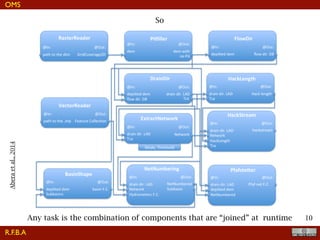
So
Any task is the combination of components that are “joined” at runtime
R.F.B.A
OMS
Aberaetal.,2014
!11
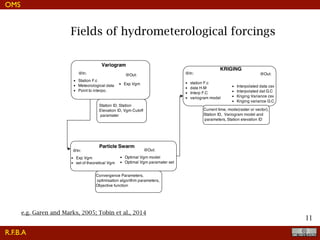
Fields of hydrometerological forcings
R.F.B.A
OMS
e.g. Garen and Marks, 2005; Tobin et al., 2014
!12
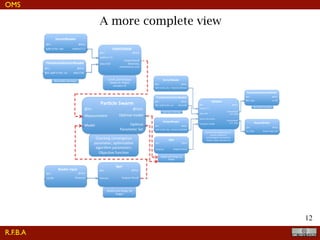
5.5 Semivariogram estimate and Krigings application and verification
Figure 5.4: Workflow of kriging parameter estimation and interpolation. The red dashed lines
represent the connections between the OMS3 models. The blue dashed lines represent the connection
between components in each model. After computing the experimental variogram, the Particle
Swarm algorithm is used to estimate the theoretical model parameters. Finally the kriging algorithm
runs.R.F.B.A
OMS
A more complete view
!13
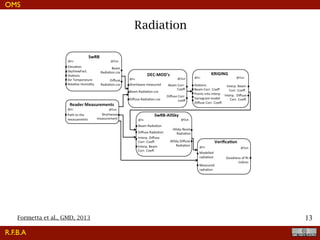
G. Formetta et al.: Modeling shortwave solar radiation using the JGrass-NewAge system 919
Fig. 1. OMS3 SWRB components of JGrass-NewAge and flowchart
to model shortwave radiation at the terrain surface with generic sky
conditions. Where not specified, quantity in input or output must be
intended as a spatial field for any instant of simulation time. ”Mea-
sured” refers to a quantity that is measured at a meteorological sta-
tion. The components, besides the specfied files received in input,
include an appropriate set of parameter values.
figure
Fig. 1. OMS3 SWRB components of JGrass-NewAge and flowchart to model shortwave radiation at the terrain surface with generic sky
conditions. Where not specified, quantity in input or output must be intended as a spatial field for any instant of simulation time. “Measured”
refers to a quantity that is measured at a meteorological station. The components, besides the specified files received in input, include an
appropriate set of parameter values.
3 Applications
The capability of the model was tested by combining four
NewAge JGrass components within a OMS script: the
SwRB, the (radiation decomposition model) DEC-MOD’s,
The Little Washita River basin (611 km2) is located in
southwestern Oklahoma, between Chickasha and Lawton
and its main hydrological and geological features are pre-
sented in Allen and Naney (1991). The elevation range
is between 300 m and 500 m a.s.l., the main land uses are
Radiation
R.F.B.A
OMS
Formetta et al., GMD, 2013
!14
Radiation
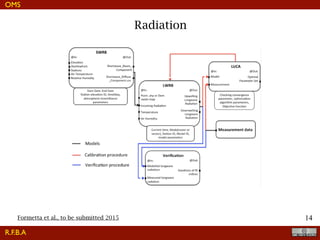
clearness index (black line in figure1). Model outputs are the raster maps or time-series of longwave radiation
(DL and UL). Those data could be used by the evapotranspiration or the snow water equivalents components.
Moreover, the LWRB component could be connected to the NewAge and OMS3 calibration algorithm in order
to estimate the best model parameters values (red line in figure 1). Finally, the verification procedure is done
connecting the LWRB component to verification component (red line in figure 1).
Figure 1: OMS3 LWRB components of NewAge-JGrass and the flowchart to model longwave radiation.
5
R.F.B.A
Formetta et al., to be submitted 2015
OMS
!15
Snowfall-Rainfall separation
R.F.B.A
Something new here !!!
Abera et al., to be submitted 2015
!16
Snow Budget
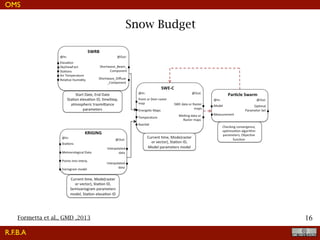
Fig. 12. The SWE-C integration in the NewAge System showing
connections with the short wave radiation component and kriging
interpolation algorithm. Connection with the Particle Swarm Opti-
mization algorithm is in red dashed line.
R.F.B.A
OMS
Formetta et al., GMD ,2013
!17
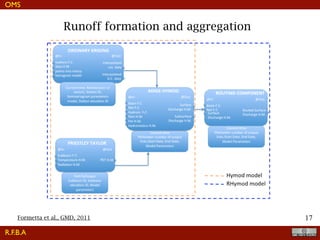
Runoff formation and aggregation
is performed. Two river basins are used for the test and modeled in a three di↵erent delineations
by using one (DL1), three (DL3) and twenty (DL20) HRU’s. Two modeling solutions were set
up: Hymod and RHymod in fig.(7.9).
Figure 7.9: Modelling solutions: Hymod (in red dashed line) and RHymod (in blued dashed line).
The modeling solution RHymod includes: the Pristley-Taylor component for the evapo-R.F.B.A
Formetta et al., GMD, 2011
OMS
The business as usual
Riccardo Rigon, Marialaura Bancheri, Wuletawu Abera and Giuseppe Formetta
Padova, 23-24 September 2015
!19
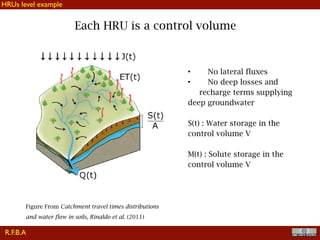
Each HRU is a control volume
• No lateral fluxes
• No deep losses and
recharge terms supplying
deep groundwater
S(t) : Water storage in the
control volume V
M(t) : Solute storage in the
control volume V
Figure From Catchment travel times distributions
and water flow in soils, Rinaldo et al. (2011)
HRUs level example
R.F.B.A
!20
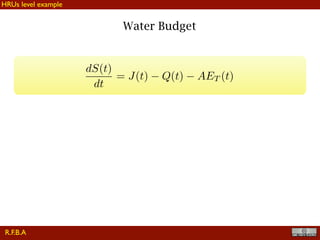
Water Budget
dS(t)
dt
= J(t) Q(t) AET (t)
R.F.B.A
HRUs level example
!21
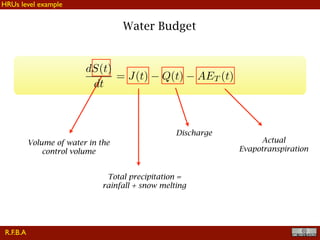
Water Budget
Volume of water in the
control volume
Total precipitation =
rainfall + snow melting
Discharge
Actual
Evapotranspiration
dS(t)
dt
= J(t) Q(t) AET (t)
R.F.B.A
HRUs level example
!22
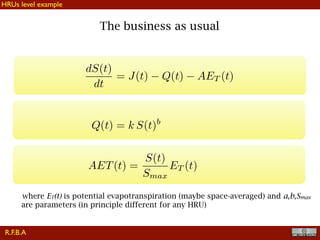
The business as usual
dS(t)
dt
= J(t) Q(t) AET (t)
AET(t) =
S(t)
Smax
ET (t)
where ET(t) is potential evapotranspiration (maybe space-averaged) and a,b,Smax
are parameters (in principle different for any HRU)
Q(t) = k S(t)b
R.F.B.A
HRUs level example
!23
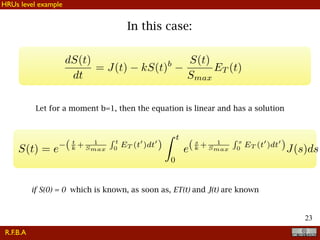
In this case:
Let for a moment b=1, then the equation is linear and has a solution
dS(t)
dt
= J(t) kS(t)b S(t)
Smax
ET (t)
S(t) = e ( t
k + 1
Smax
R t
0
ET (t0
)dt0
)
Z t
0
e(s
k + 1
Smax
R s
0
ET (t0
)dt0
)J(s)ds
if S(0) = 0 which is known, as soon as, ET(t) and J(t) are known
R.F.B.A
HRUs level example
!24
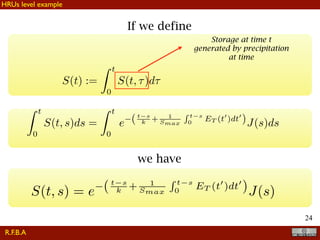
If we define
S(t) :=
Z t
0
S(t, ⌧)d⌧
Storage at time t
generated by precipitation
at time
Z t
0
S(t, s)ds =
Z t
0
e (t s
k + 1
Smax
R t s
0
ET (t0
)dt0
)J(s)ds
we have
S(t, s) = e (t s
k + 1
Smax
R t s
0
ET (t0
)dt0
)J(s)
R.F.B.A
HRUs level example
!25
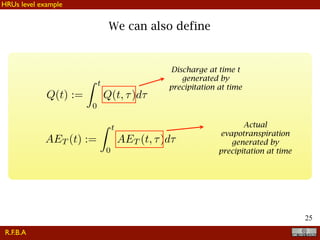
Q(t) :=
Z t
0
Q(t, ⌧)d⌧
AET (t) :=
Z t
0
AET (t, ⌧)d⌧
Discharge at time t
generated by
precipitation at time
Actual
evapotranspiration
generated by
precipitation at time
We can also define
R.F.B.A
HRUs level example
!26
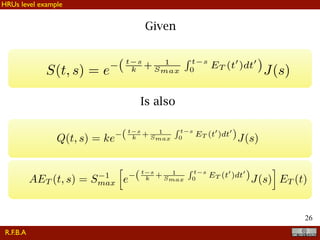
Is also
Q(t, s) = ke (t s
k + 1
Smax
R t s
0
ET (t0
)dt0
)J(s)
AET (t, s) = S 1
max
h
e (t s
k + 1
Smax
R t s
0
ET (t0
)dt0
)J(s)
i
ET (t)
Given
S(t, s) = e (t s
k + 1
Smax
R t s
0
ET (t0
)dt0
)J(s)
R.F.B.A
HRUs level example
Travel/Residence times
do we need it ?
Riccardo Rigon, Marialaura Bancheri, Wuletawu Abera and Giuseppe Formetta
Padova, 23-24 September 2015
A.Bonomi
!28
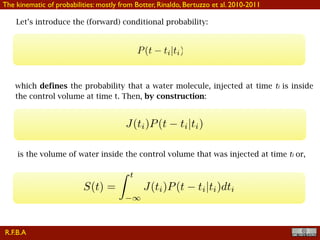
Let’s introduce the (forward) conditional probability:
The kinematic of probabilities: mostly from Botter, Rinaldo, Bertuzzo et al. 2010-2011
which defines the probability that a water molecule, injected at time ti is inside
the control volume at time t. Then, by construction:
J(ti)P(t ti|ti)
is the volume of water inside the control volume that was injected at time ti or,
R.F.B.A
!29
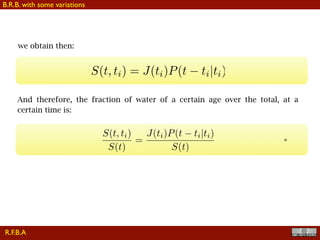
And therefore, the fraction of water of a certain age over the total, at a
certain time is:
we obtain then:
*
R.F.B.A
B.R.B. with some variations
!30
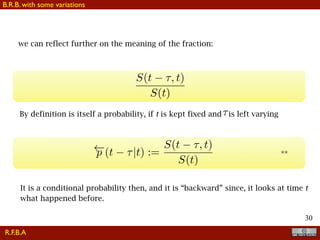
we can reflect further on the meaning of the fraction:
S(t ⌧, t)
S(t)
By definition is itself a probability, if t is kept fixed and is left varying⌧
p (t ⌧|t) :=
S(t ⌧, t)
S(t)
It is a conditional probability then, and it is “backward” since, it looks at time t
what happened before.
**
R.F.B.A
B.R.B. with some variations
!31
From the two relations * and **, we can obtain:
S(t) p (t ⌧|t) = P(t ⌧|⌧)J(⌧)
Which seems a version of the Niemi’s theorem (1977) which
reads instead
Q(t) p (t ⌧|t) = p(t ⌧|⌧)J(⌧)
REALLY TRUE ? I CONFESS I DERIVE IT TWO DAYS AGO, AND IT COULD BE WRONG
R.F.B.A
B.R.B. with some variations
!32
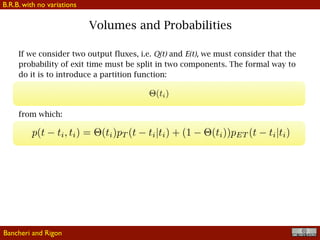
If we consider two output fluxes, i.e. Q(t) and E(t), we must consider that the
probability of exit time must be split in two components. The formal way to
do it is to introduce a partition function:
from which:
Bancheri and Rigon
Volumes and Probabilities
B.R.B. with no variations
!33
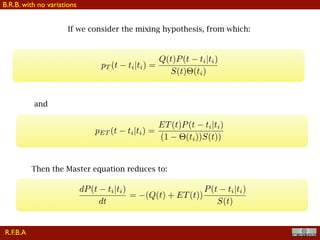
If we consider the mixing hypothesis, from which:
and
Then the Master equation reduces to:
R.F.B.A
B.R.B. with no variations
!34
Is a linear partial differential equation which is integrable.
[If we make the assumptions explicated before, Q(t), ET(t) and S(t) can be
assumed to be known]
The logical initial condition is:
And the solution is:
R.F.B.A
B.R.B. with no variations
Is
!35
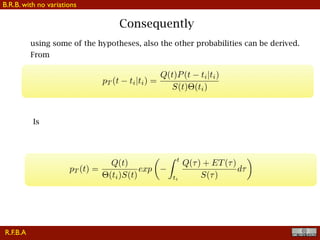
Consequently
using some of the hypotheses, also the other probabilities can be derived.
From
R.F.B.A
B.R.B. with no variations
!36
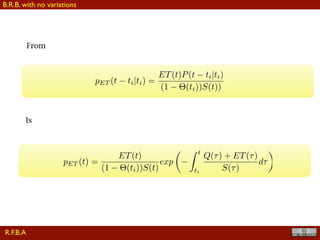
From
Is
R.F.B.A
B.R.B. with no variations
!37
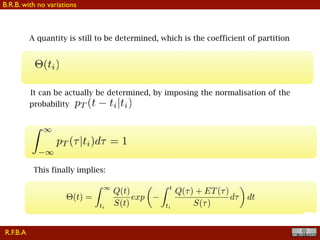
A quantity is still to be determined, which is the coefficient of partition
It can be actually be determined, by imposing the normalisation of the
probability
This finally implies:
R.F.B.A
B.R.B. with no variations
!38
NOTE
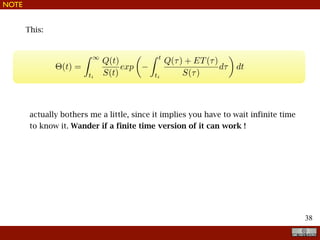
This:
actually bothers me a little, since it implies you have to wait infinite time
to know it. Wander if a finite time version of it can work !
NAHymod
the Hymod implementation of JGrass-NewAGE
September, 2015
R. Rigon, G. Formetta, M. Bancheri, W.Abera
S.Bertoni,2006?
!40
What Hymod does
Moore, 1985
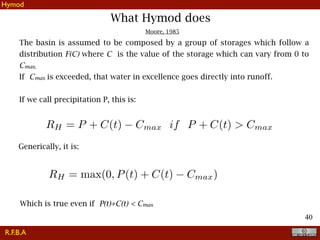
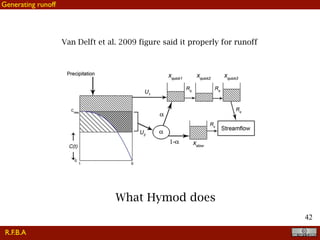
The basin is assumed to be composed by a group of storages which follow a
distribution F(C) where C is the value of the storage which can vary from 0 to
Cmax.
If Cmax is exceeded, that water in excellence goes directly into runoff.
If we call precipitation P, this is:
RH = P + C(t) Cmax if P + C(t) > Cmax
Generically, it is:
RH = max(0, P(t) + C(t) Cmax)
Which is true even if P(t)+C(t) < Cmax
R.F.B.A
Hymod
!41
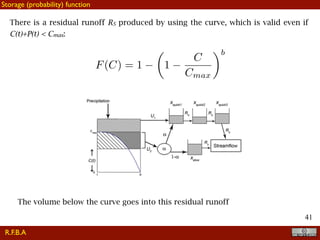
There is a residual runoff RS produced by using the curve, which is valid even if
C(t)+P(t) < Cmax:
F(C) = 1
✓
1
C
Cmax
◆b
The volume below the curve goes into this residual runoff
R.F.B.A
Storage (probability) function
!42
Van Delft et al. 2009 figure said it properly for runoff
R.F.B.A
Generating runoff
What Hymod does
!43
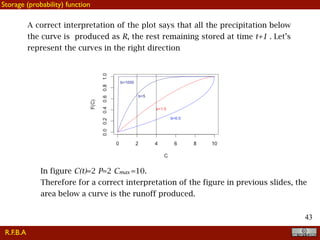
In figure C(t)=2 P=2 Cmax =10.
Therefore for a correct interpretation of the figure in previous slides, the
area below a curve is the runoff produced.
A correct interpretation of the plot says that all the precipitation below
the curve is produced as R, the rest remaining stored at time t+1 . Let’s
represent the curves in the right direction
R.F.B.A
Storage (probability) function
!44
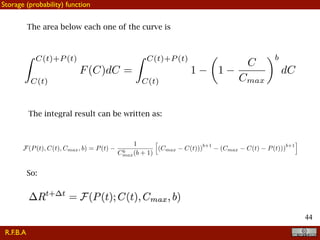
The area below each one of the curve is
The integral result can be written as:
Z C(t)+P (t)
C(t)
F(C)dC =
Z C(t)+P (t)
C(t)
1
✓
1
C
Cmax
◆b
dC
F(P(t), C(t), Cmax, b) = P(t)
1
Cb
max(b + 1)
h
(Cmax C(t)))
b+1
(Cmax C(t) P(t)))
b+1
i
R.F.B.A
Storage (probability) function
So:
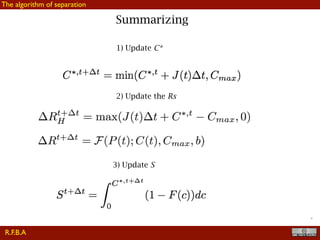
!45
1) Update C*
Summarizing
2) Update the Rs
3) Update S
R.F.B.A
The algorithm of separation
!46
Introducing AET
S(t) continuously increases unless ET acts. In this case there is a fourth step:
Where the left arrow means assignment, and AET is the actual ET
AET(t) =
S(t)
Smax
ET (t)
R.F.B.A
The algorithm of separation
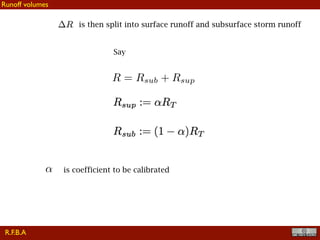
Say
↵ is coefficient to be calibrated
R = Rsub + Rsup
R.F.B.A
Runoff volumes
is then split into surface runoff and subsurface storm runoff
!48
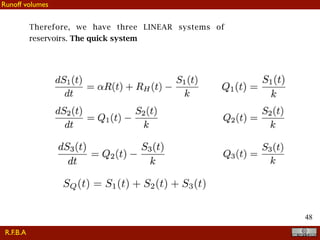
Therefore, we have three LINEAR systems of
reservoirs. The quick system
SQ(t) = S1(t) + S2(t) + S3(t)
R.F.B.A
Runoff volumes
!49
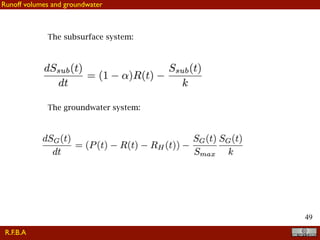
The subsurface system:
The groundwater system:
R.F.B.A
Runoff volumes and groundwater
!50
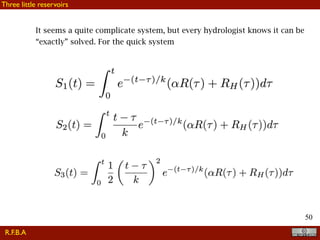
It seems a quite complicate system, but every hydrologist knows it can be
“exactly” solved. For the quick system
R.F.B.A
Three little reservoirs
!51
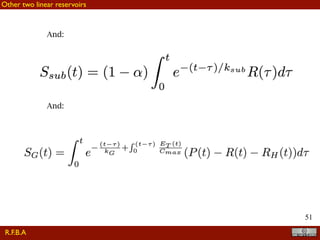
And:
And:
R.F.B.A
Other two linear reservoirs
!52
For what regards the numerics
Is certainly dubious that using the convolutions would
be faster that integrating directly the differential
equations.
However, they can be used to test some simplified case,
and that’s nice.
R.F.B.A
Travel/Residence times after Hymod
Riccardo Rigon, Marialaura Bancheri, Wuletawu Abera and Giuseppe Formetta
Padova, 23-24 September 2015
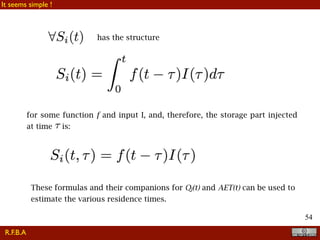
!54
has the structure
for some function f and input I, and, therefore, the storage part injected
at time is:
These formulas and their companions for Qi(t) and AET(t) can be used to
estimate the various residence times.
R.F.B.A
It seems simple !
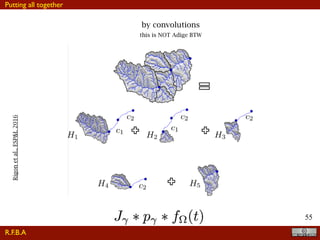
!55
Putting all together
by convolutions
this is NOT Adige BTW
R.F.B.A
Rigonetal.,ESP&L2016
So what we expect from all of this ?
Riccardo Rigon, Marialaura Bancheri, Wuletawu Abera and Giuseppe Formetta
Padova, 23-24 September 2015
MichelangeloB.
!57
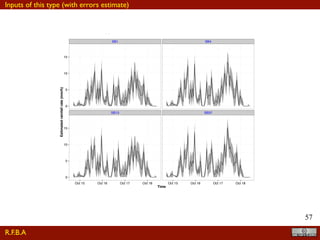
Inputs of this type (with errors estimate)
(a)
Time
0
Oct 15 Oct 16 Oct 17 Oct 18
(b)
SB1 SB4
SB13 SB37
0
5
10
15
0
5
10
15
Oct 15 Oct 16 Oct 17 Oct 18 Oct 15 Oct 16 Oct 17 Oct 18
Time
Estimatedrainfallrate(mm/h)
(c)
Figure 10: Spatial rainfall variability in subbasin aggregated approach: (a) variability in the estimated total rainfall (the code number in the
subbasin represents the subbasin number, while the color shows the total rainfall distribution), (b) comparison of four selected time series subbasin
rainfall estimates, and (c) further analysis on the kriging estimation error used to estimate the confidence interval of the estimates for some selected
subbasins. The analysis is based on Oct 16, 1996 event.
R.F.B.A
!58
mperature
an eleva-
icated by
etermined
ers repre-
ile range.
aps sam-
HRU 1 HRU 4
HRU 13 HRU 37
0
10
20
0
10
20
Sep 02 Sep 04 Sep 06 Sep 08 Sep 10 Sep 02 Sep 04 Sep 06 Sep 08 Sep 10
Time (h)
Temprature(^(o)c/h)
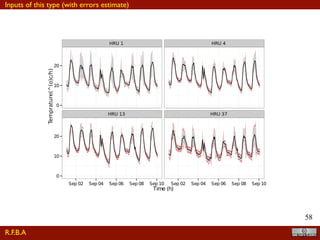
Figure 13: Estimated time-series temperature and associated kriging
estimation and sampling errors for selected subbasins (1,4,13,37) for
sept 1-10, 2002.The black solid line shows the estimated temperature
values, while gray area is the estimation plus or minus of kriging stan-
R.F.B.A
Inputs of this type (with errors estimate)
!59
racy is considered acceptable for the long term water balance
analysis in this study. This could also be due to di↵erence in
the temporal and spatial scale between the model and MODIS
data.
HRU1 HRU4
HRU13 HRU37
0
2
4
6
0
2
4
6
Feb 21 06:00 Feb 21 12:00 Feb 21 18:00 Feb 22 00:00 Feb 22 06:00 Feb 21 06:00 Feb 21 12:00 Feb 21 18:00 Feb 22 00:00 Feb 22 06:00
time
Rainfall/snowpartition(mm/hour)
Precip Type
Snowfall,Js
Rainfall,JR
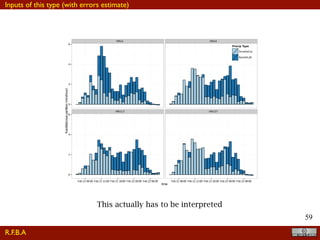
Figure 15: Comparison of four selected HRUs (HRU 1, 4, 13, 37) time
series snowfall separation estimates during Feb 21-22, 2004 event.
Modeling at HRU level, as it is the aggregation of each point within
the HRu that can be characterized by pure snowfall or pure rainfall or
snow-water mix event, the water-snow mixing is more physically and
statistically meaningful.
portrays at figure 8
elevation have high
elling than at low el
responsible for high
approach, could com
cipitation during sn
5. Summary and o
In this study a s
oped and deployed
get. These range fr
umes at which the
input forcings, to th
each of the hydrolo
the errors made (ass
been performed. W
ducible by sharing
from information in
Considering Pos
Italy, this study test
terpolation and sem
rainfall anount and
of semivariogram m
main di↵erent in th
R.F.B.A
Inputs of this type (with errors estimate)
This actually has to be interpreted
!60
0
100
200
300
2012−01−01 2012−02−01 2012−03−01 2012−04−01 2012−05−01 2012−06−01 2012−07−01 2012−08−01 2012−09−01 2012−10−01 2012−11−01 2012−12−01
monthly
J(mm)
−100
0
100
200
300
10-2011
11-2011
12-2011
01-2012
02-2012
03-2012
04-2012
05-2012
06-2012
07-2012
08-2012
09-2012
Months
Watercomponent:Q,ET,S(mm)
Q
ET
S
components
R.F.B.A
Outputs of this type (with errors estimate)
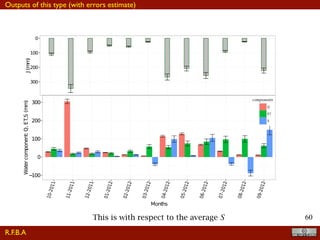
This is with respect to the average S
!61
0
1000
2000
1995−01−011996−01−011997−01−011998−01−011999−01−012000−01−012001−01−012002−01−012003−01−012004−01−012005−01−012006−01−012007−01−012008−01−012009−01−012010−01−012011−01−012012−01−01
yearly
J(mm)
−500
0
500
1000
1500
2000
94/95
95/96
96/97
97/98
98/99
99/00
00/01
01/02
02/03
03/04
04/05
05/06
06/07
07/08
08/09
09/10
10/11
11/12
Year
Watercomponent:Q,ET,S(mm)
Q
ET
S
components
R.F.B.A
Outputs of this type (with errors estimate)
!62
NOTE
We have problems with Evapotranspiration actually !
R.F.B.A
At hourly time scale, just the fact that in Hymod withdraw ET from the
lower storage, prevent us to have oscillating discharge. Penman-Monteith
or Priestley-Taylor approaches cannot be applied “tout-court” to a coarse-
grained model*. Some way to integrate them in space is needed.
At yearly time, radiation driven approaches tend to underestimate ET
variability (still respecting the global water budget).
TO BE CONTINUED …
A single BIG reservoir for each HRU is clearly not enough discriminating
* See the good old and overlooked Bertoldi et al, JHM, 2006
!63
FINALLY
We will be able to give proper total amounts of
budget. But it will be pretty sure that
travel times distributions given with HYMOD
will be wrong. (But we have alternative ready)
That’s actually a great result from which we can
move on easily in JGrass-NewAGE, by adopting
different partitions of the storages, and maybe
by using some storage selection function.
R.F.B.A
!64
Find this presentation at
http://abouthydrology.blogspot.com
Ulrici,2000?
Other material at
Questions ?
R. Rigon

Adige modelling

  • 1.
    Implementing a traveltime model for the entire river Adige: the case of JGrass-NewAGE Riccardo Rigon, Marialaura Bancheri, Wuletawu Abera and Giuseppe Formetta Padova, 23-24 September 2015
  • 2.
    !2 The River Adige,second longest, second largest in Italy R.F.B.A Introduction
  • 3.
    !3 Subbasins or HydrologicResponse Units (HRUs) 1157 of ~ 10 square kilometres R.F.B.A Introduction
  • 4.
  • 5.
    !5 We are buildinga database containing all of this information There are several digital terrain data available which can be used as base: • The LIDAR data set (~2 m) from Provincia di Trento and Bolzano • SRTM data • ASTER data All the data are elaborated by means of our “Horton Machine” a set of specialised tools freely available at: http://abouthydrology.blogspot.it/2013/04/the-horton-machine.html R.F.B.A Introduction
  • 6.
    !6 Modelling goals • Modellingthe whole hydrological cycle, runoff, discharge, ET, snow but at an aggregated scale • Possibly at operational level • Giving travel time distributions • Introducing human management R.F.B.A Introduction
  • 7.
    !7 Modelling goals We didit part of it a few times in the past 25 years and we had to rebuild everything from the scratch every time • This time we would like to build something that we should not rebuild entirely The design lines are in: http://www.slideshare.net/GEOFRAMEcafe/geoframe-a-system-for-doing-hydrology-by-computer R.F.B.A Introduction
  • 8.
    !8 Just a slideon this CUAHSI BIANNUAL MEETING - BOULDER (CO) - JULY 14-16 2008 Object-oriented software development. O-O programming is nothing new, but it has proven to be a successful key to the design and implementation of modelling frameworks. Models and data can be seen as objects and therefore they can exploit properties such as encapsulation, polymorphism, data abstraction and inheritance. Component-oriented software development. Objects (models and data) should be packaged in components, exposing for re-use only their most important functions. Libraries of components can then be re-used and efficiently integrated across modelling frameworks.Yet, a certain degree of dependency of the model component from the framework can actually hinder reuse. NEW (well relatively) MODELING PARADIGMS ModifiedfromRizzolietal.,2005 MODELLING BY COMPONENTS http://www.slideshare.net/GEOFRAMEcafe/geoframe-a-system-for-doing-hydrology-by-computer R.F.B.A Introduction
  • 9.
    !9 We use ObjectModeling System v. 3 OMS R.F.B.A David et al., 2013; Formetta et al., EM&S, 2014 supporting parameter estimation and sensitivity/uncertainty anal- ysis, output analysis (e.g., statistical evaluation and graphical visu- alization) tools, modeling audit trails (i.e., reproducing model results for legal purposes), and miscellaneous technical/user documenta- tion. As with any EMF, fully embracing the OMS3 architecture requires a commitment to a structured model development process which may include the use of a version control system for model source code management or databases to store audit trails. Such features are important for institutionalized adoption of OMS3 but less critical for adherence by a single modeler. Most environmental modeling development projects do not have the luxury of employing experienced software engineers or computer scientists who are able to understand and apply complex design patterns, UML diagrams, and advanced object-oriented techniques such as parameterized types, higher level data struc- tures and/or object composition. The use of object-oriented design principles for modeling can be productive for a specific modeling project that has limited need for external reuse and extensibility. Extensive use of object-oriented design principles can be difficult for scientists to adopt in that adoption often entails a steep learning Fig. 1. OMS3 principle framework architecture.
  • 10.
    !10 So Any task isthe combination of components that are “joined” at runtime R.F.B.A OMS Aberaetal.,2014
  • 11.
    !11 Fields of hydrometerologicalforcings R.F.B.A OMS e.g. Garen and Marks, 2005; Tobin et al., 2014
  • 12.
    !12 5.5 Semivariogram estimateand Krigings application and verification Figure 5.4: Workflow of kriging parameter estimation and interpolation. The red dashed lines represent the connections between the OMS3 models. The blue dashed lines represent the connection between components in each model. After computing the experimental variogram, the Particle Swarm algorithm is used to estimate the theoretical model parameters. Finally the kriging algorithm runs.R.F.B.A OMS A more complete view
  • 13.
    !13 G. Formetta etal.: Modeling shortwave solar radiation using the JGrass-NewAge system 919 Fig. 1. OMS3 SWRB components of JGrass-NewAge and flowchart to model shortwave radiation at the terrain surface with generic sky conditions. Where not specified, quantity in input or output must be intended as a spatial field for any instant of simulation time. ”Mea- sured” refers to a quantity that is measured at a meteorological sta- tion. The components, besides the specfied files received in input, include an appropriate set of parameter values. figure Fig. 1. OMS3 SWRB components of JGrass-NewAge and flowchart to model shortwave radiation at the terrain surface with generic sky conditions. Where not specified, quantity in input or output must be intended as a spatial field for any instant of simulation time. “Measured” refers to a quantity that is measured at a meteorological station. The components, besides the specified files received in input, include an appropriate set of parameter values. 3 Applications The capability of the model was tested by combining four NewAge JGrass components within a OMS script: the SwRB, the (radiation decomposition model) DEC-MOD’s, The Little Washita River basin (611 km2) is located in southwestern Oklahoma, between Chickasha and Lawton and its main hydrological and geological features are pre- sented in Allen and Naney (1991). The elevation range is between 300 m and 500 m a.s.l., the main land uses are Radiation R.F.B.A OMS Formetta et al., GMD, 2013
  • 14.
    !14 Radiation clearness index (blackline in figure1). Model outputs are the raster maps or time-series of longwave radiation (DL and UL). Those data could be used by the evapotranspiration or the snow water equivalents components. Moreover, the LWRB component could be connected to the NewAge and OMS3 calibration algorithm in order to estimate the best model parameters values (red line in figure 1). Finally, the verification procedure is done connecting the LWRB component to verification component (red line in figure 1). Figure 1: OMS3 LWRB components of NewAge-JGrass and the flowchart to model longwave radiation. 5 R.F.B.A Formetta et al., to be submitted 2015 OMS
  • 15.
    !15 Snowfall-Rainfall separation R.F.B.A Something newhere !!! Abera et al., to be submitted 2015
  • 16.
    !16 Snow Budget Fig. 12.The SWE-C integration in the NewAge System showing connections with the short wave radiation component and kriging interpolation algorithm. Connection with the Particle Swarm Opti- mization algorithm is in red dashed line. R.F.B.A OMS Formetta et al., GMD ,2013
  • 17.
    !17 Runoff formation andaggregation is performed. Two river basins are used for the test and modeled in a three di↵erent delineations by using one (DL1), three (DL3) and twenty (DL20) HRU’s. Two modeling solutions were set up: Hymod and RHymod in fig.(7.9). Figure 7.9: Modelling solutions: Hymod (in red dashed line) and RHymod (in blued dashed line). The modeling solution RHymod includes: the Pristley-Taylor component for the evapo-R.F.B.A Formetta et al., GMD, 2011 OMS
  • 18.
    The business asusual Riccardo Rigon, Marialaura Bancheri, Wuletawu Abera and Giuseppe Formetta Padova, 23-24 September 2015
  • 19.
    !19 Each HRU isa control volume • No lateral fluxes • No deep losses and recharge terms supplying deep groundwater S(t) : Water storage in the control volume V M(t) : Solute storage in the control volume V Figure From Catchment travel times distributions and water flow in soils, Rinaldo et al. (2011) HRUs level example R.F.B.A
  • 20.
    !20 Water Budget dS(t) dt = J(t)Q(t) AET (t) R.F.B.A HRUs level example
  • 21.
    !21 Water Budget Volume ofwater in the control volume Total precipitation = rainfall + snow melting Discharge Actual Evapotranspiration dS(t) dt = J(t) Q(t) AET (t) R.F.B.A HRUs level example
  • 22.
    !22 The business asusual dS(t) dt = J(t) Q(t) AET (t) AET(t) = S(t) Smax ET (t) where ET(t) is potential evapotranspiration (maybe space-averaged) and a,b,Smax are parameters (in principle different for any HRU) Q(t) = k S(t)b R.F.B.A HRUs level example
  • 23.
    !23 In this case: Letfor a moment b=1, then the equation is linear and has a solution dS(t) dt = J(t) kS(t)b S(t) Smax ET (t) S(t) = e ( t k + 1 Smax R t 0 ET (t0 )dt0 ) Z t 0 e(s k + 1 Smax R s 0 ET (t0 )dt0 )J(s)ds if S(0) = 0 which is known, as soon as, ET(t) and J(t) are known R.F.B.A HRUs level example
  • 24.
    !24 If we define S(t):= Z t 0 S(t, ⌧)d⌧ Storage at time t generated by precipitation at time Z t 0 S(t, s)ds = Z t 0 e (t s k + 1 Smax R t s 0 ET (t0 )dt0 )J(s)ds we have S(t, s) = e (t s k + 1 Smax R t s 0 ET (t0 )dt0 )J(s) R.F.B.A HRUs level example
  • 25.
    !25 Q(t) := Z t 0 Q(t,⌧)d⌧ AET (t) := Z t 0 AET (t, ⌧)d⌧ Discharge at time t generated by precipitation at time Actual evapotranspiration generated by precipitation at time We can also define R.F.B.A HRUs level example
  • 26.
    !26 Is also Q(t, s)= ke (t s k + 1 Smax R t s 0 ET (t0 )dt0 )J(s) AET (t, s) = S 1 max h e (t s k + 1 Smax R t s 0 ET (t0 )dt0 )J(s) i ET (t) Given S(t, s) = e (t s k + 1 Smax R t s 0 ET (t0 )dt0 )J(s) R.F.B.A HRUs level example
  • 27.
    Travel/Residence times do weneed it ? Riccardo Rigon, Marialaura Bancheri, Wuletawu Abera and Giuseppe Formetta Padova, 23-24 September 2015 A.Bonomi
  • 28.
    !28 Let’s introduce the(forward) conditional probability: The kinematic of probabilities: mostly from Botter, Rinaldo, Bertuzzo et al. 2010-2011 which defines the probability that a water molecule, injected at time ti is inside the control volume at time t. Then, by construction: J(ti)P(t ti|ti) is the volume of water inside the control volume that was injected at time ti or, R.F.B.A
  • 29.
    !29 And therefore, thefraction of water of a certain age over the total, at a certain time is: we obtain then: * R.F.B.A B.R.B. with some variations
  • 30.
    !30 we can reflectfurther on the meaning of the fraction: S(t ⌧, t) S(t) By definition is itself a probability, if t is kept fixed and is left varying⌧ p (t ⌧|t) := S(t ⌧, t) S(t) It is a conditional probability then, and it is “backward” since, it looks at time t what happened before. ** R.F.B.A B.R.B. with some variations
  • 31.
    !31 From the tworelations * and **, we can obtain: S(t) p (t ⌧|t) = P(t ⌧|⌧)J(⌧) Which seems a version of the Niemi’s theorem (1977) which reads instead Q(t) p (t ⌧|t) = p(t ⌧|⌧)J(⌧) REALLY TRUE ? I CONFESS I DERIVE IT TWO DAYS AGO, AND IT COULD BE WRONG R.F.B.A B.R.B. with some variations
  • 32.
    !32 If we considertwo output fluxes, i.e. Q(t) and E(t), we must consider that the probability of exit time must be split in two components. The formal way to do it is to introduce a partition function: from which: Bancheri and Rigon Volumes and Probabilities B.R.B. with no variations
  • 33.
    !33 If we considerthe mixing hypothesis, from which: and Then the Master equation reduces to: R.F.B.A B.R.B. with no variations
  • 34.
    !34 Is a linearpartial differential equation which is integrable. [If we make the assumptions explicated before, Q(t), ET(t) and S(t) can be assumed to be known] The logical initial condition is: And the solution is: R.F.B.A B.R.B. with no variations
  • 35.
    Is !35 Consequently using some ofthe hypotheses, also the other probabilities can be derived. From R.F.B.A B.R.B. with no variations
  • 36.
  • 37.
    !37 A quantity isstill to be determined, which is the coefficient of partition It can be actually be determined, by imposing the normalisation of the probability This finally implies: R.F.B.A B.R.B. with no variations
  • 38.
    !38 NOTE This: actually bothers mea little, since it implies you have to wait infinite time to know it. Wander if a finite time version of it can work !
  • 39.
    NAHymod the Hymod implementationof JGrass-NewAGE September, 2015 R. Rigon, G. Formetta, M. Bancheri, W.Abera S.Bertoni,2006?
  • 40.
    !40 What Hymod does Moore,1985 The basin is assumed to be composed by a group of storages which follow a distribution F(C) where C is the value of the storage which can vary from 0 to Cmax. If Cmax is exceeded, that water in excellence goes directly into runoff. If we call precipitation P, this is: RH = P + C(t) Cmax if P + C(t) > Cmax Generically, it is: RH = max(0, P(t) + C(t) Cmax) Which is true even if P(t)+C(t) < Cmax R.F.B.A Hymod
  • 41.
    !41 There is aresidual runoff RS produced by using the curve, which is valid even if C(t)+P(t) < Cmax: F(C) = 1 ✓ 1 C Cmax ◆b The volume below the curve goes into this residual runoff R.F.B.A Storage (probability) function
  • 42.
    !42 Van Delft etal. 2009 figure said it properly for runoff R.F.B.A Generating runoff What Hymod does
  • 43.
    !43 In figure C(t)=2P=2 Cmax =10. Therefore for a correct interpretation of the figure in previous slides, the area below a curve is the runoff produced. A correct interpretation of the plot says that all the precipitation below the curve is produced as R, the rest remaining stored at time t+1 . Let’s represent the curves in the right direction R.F.B.A Storage (probability) function
  • 44.
    !44 The area beloweach one of the curve is The integral result can be written as: Z C(t)+P (t) C(t) F(C)dC = Z C(t)+P (t) C(t) 1 ✓ 1 C Cmax ◆b dC F(P(t), C(t), Cmax, b) = P(t) 1 Cb max(b + 1) h (Cmax C(t))) b+1 (Cmax C(t) P(t))) b+1 i R.F.B.A Storage (probability) function So:
  • 45.
    !45 1) Update C* Summarizing 2)Update the Rs 3) Update S R.F.B.A The algorithm of separation
  • 46.
    !46 Introducing AET S(t) continuouslyincreases unless ET acts. In this case there is a fourth step: Where the left arrow means assignment, and AET is the actual ET AET(t) = S(t) Smax ET (t) R.F.B.A The algorithm of separation
  • 47.
    Say ↵ is coefficientto be calibrated R = Rsub + Rsup R.F.B.A Runoff volumes is then split into surface runoff and subsurface storm runoff
  • 48.
    !48 Therefore, we havethree LINEAR systems of reservoirs. The quick system SQ(t) = S1(t) + S2(t) + S3(t) R.F.B.A Runoff volumes
  • 49.
    !49 The subsurface system: Thegroundwater system: R.F.B.A Runoff volumes and groundwater
  • 50.
    !50 It seems aquite complicate system, but every hydrologist knows it can be “exactly” solved. For the quick system R.F.B.A Three little reservoirs
  • 51.
  • 52.
    !52 For what regardsthe numerics Is certainly dubious that using the convolutions would be faster that integrating directly the differential equations. However, they can be used to test some simplified case, and that’s nice. R.F.B.A
  • 53.
    Travel/Residence times afterHymod Riccardo Rigon, Marialaura Bancheri, Wuletawu Abera and Giuseppe Formetta Padova, 23-24 September 2015
  • 54.
    !54 has the structure forsome function f and input I, and, therefore, the storage part injected at time is: These formulas and their companions for Qi(t) and AET(t) can be used to estimate the various residence times. R.F.B.A It seems simple !
  • 55.
    !55 Putting all together byconvolutions this is NOT Adige BTW R.F.B.A Rigonetal.,ESP&L2016
  • 56.
    So what weexpect from all of this ? Riccardo Rigon, Marialaura Bancheri, Wuletawu Abera and Giuseppe Formetta Padova, 23-24 September 2015 MichelangeloB.
  • 57.
    !57 Inputs of thistype (with errors estimate) (a) Time 0 Oct 15 Oct 16 Oct 17 Oct 18 (b) SB1 SB4 SB13 SB37 0 5 10 15 0 5 10 15 Oct 15 Oct 16 Oct 17 Oct 18 Oct 15 Oct 16 Oct 17 Oct 18 Time Estimatedrainfallrate(mm/h) (c) Figure 10: Spatial rainfall variability in subbasin aggregated approach: (a) variability in the estimated total rainfall (the code number in the subbasin represents the subbasin number, while the color shows the total rainfall distribution), (b) comparison of four selected time series subbasin rainfall estimates, and (c) further analysis on the kriging estimation error used to estimate the confidence interval of the estimates for some selected subbasins. The analysis is based on Oct 16, 1996 event. R.F.B.A
  • 58.
    !58 mperature an eleva- icated by etermined ersrepre- ile range. aps sam- HRU 1 HRU 4 HRU 13 HRU 37 0 10 20 0 10 20 Sep 02 Sep 04 Sep 06 Sep 08 Sep 10 Sep 02 Sep 04 Sep 06 Sep 08 Sep 10 Time (h) Temprature(^(o)c/h) Figure 13: Estimated time-series temperature and associated kriging estimation and sampling errors for selected subbasins (1,4,13,37) for sept 1-10, 2002.The black solid line shows the estimated temperature values, while gray area is the estimation plus or minus of kriging stan- R.F.B.A Inputs of this type (with errors estimate)
  • 59.
    !59 racy is consideredacceptable for the long term water balance analysis in this study. This could also be due to di↵erence in the temporal and spatial scale between the model and MODIS data. HRU1 HRU4 HRU13 HRU37 0 2 4 6 0 2 4 6 Feb 21 06:00 Feb 21 12:00 Feb 21 18:00 Feb 22 00:00 Feb 22 06:00 Feb 21 06:00 Feb 21 12:00 Feb 21 18:00 Feb 22 00:00 Feb 22 06:00 time Rainfall/snowpartition(mm/hour) Precip Type Snowfall,Js Rainfall,JR Figure 15: Comparison of four selected HRUs (HRU 1, 4, 13, 37) time series snowfall separation estimates during Feb 21-22, 2004 event. Modeling at HRU level, as it is the aggregation of each point within the HRu that can be characterized by pure snowfall or pure rainfall or snow-water mix event, the water-snow mixing is more physically and statistically meaningful. portrays at figure 8 elevation have high elling than at low el responsible for high approach, could com cipitation during sn 5. Summary and o In this study a s oped and deployed get. These range fr umes at which the input forcings, to th each of the hydrolo the errors made (ass been performed. W ducible by sharing from information in Considering Pos Italy, this study test terpolation and sem rainfall anount and of semivariogram m main di↵erent in th R.F.B.A Inputs of this type (with errors estimate) This actually has to be interpreted
  • 60.
    !60 0 100 200 300 2012−01−01 2012−02−01 2012−03−012012−04−01 2012−05−01 2012−06−01 2012−07−01 2012−08−01 2012−09−01 2012−10−01 2012−11−01 2012−12−01 monthly J(mm) −100 0 100 200 300 10-2011 11-2011 12-2011 01-2012 02-2012 03-2012 04-2012 05-2012 06-2012 07-2012 08-2012 09-2012 Months Watercomponent:Q,ET,S(mm) Q ET S components R.F.B.A Outputs of this type (with errors estimate) This is with respect to the average S
  • 61.
  • 62.
    !62 NOTE We have problemswith Evapotranspiration actually ! R.F.B.A At hourly time scale, just the fact that in Hymod withdraw ET from the lower storage, prevent us to have oscillating discharge. Penman-Monteith or Priestley-Taylor approaches cannot be applied “tout-court” to a coarse- grained model*. Some way to integrate them in space is needed. At yearly time, radiation driven approaches tend to underestimate ET variability (still respecting the global water budget). TO BE CONTINUED … A single BIG reservoir for each HRU is clearly not enough discriminating * See the good old and overlooked Bertoldi et al, JHM, 2006
  • 63.
    !63 FINALLY We will beable to give proper total amounts of budget. But it will be pretty sure that travel times distributions given with HYMOD will be wrong. (But we have alternative ready) That’s actually a great result from which we can move on easily in JGrass-NewAGE, by adopting different partitions of the storages, and maybe by using some storage selection function. R.F.B.A
  • 64.
    !64 Find this presentationat http://abouthydrology.blogspot.com Ulrici,2000? Other material at Questions ? R. Rigon