SIOC: Semantic Web for  Social Media Sites Uldis Bojārs BarCamp Ireland 3 Dublin - April 21, 2007
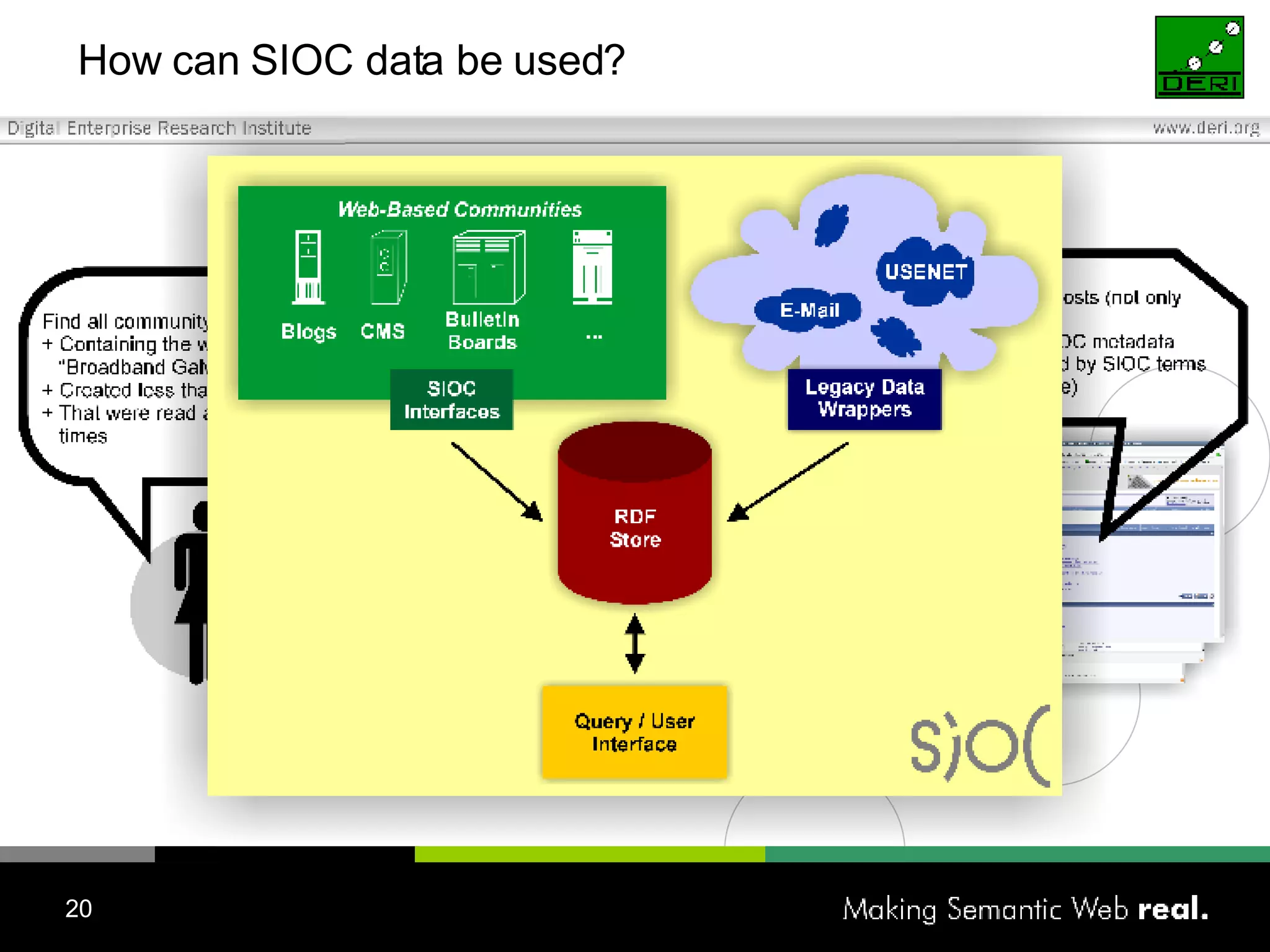
Why Semantic Web? Semantic Web  f acilitates : Innovation in Social Tools Provides rich, structured data from Social Media Sites: Blogs, Bulletin boards, Wikis, ... Data that can be used in: Web 2.0 applications (Mash-Ups, ...) Social Media integration and search
What is Semantic Web? Layer o n  the Web –   precise, structured information  on : Objects on the web and in  the  real world Relations between them Resource Description Framework (RDF) Foundation of  the Semantic Web Graph  with  objects (nodes) and relations between them Easy Integration of  Data Data of different nature  (FOAF, SKOS, RSS, …) SIOC – model of data – for social media sites
What is DERI? Digital Enterprise Research Institute Established at NUI Galway in June 2003 One of the largest “Semantic Web” research institutes About €25 million in funding from EU FP6, SFI, EI Now has 80 members (staff and students) Three main research clusters: Semantic Web Semantic Web Services E-Learning with Semantics About 100 project partners
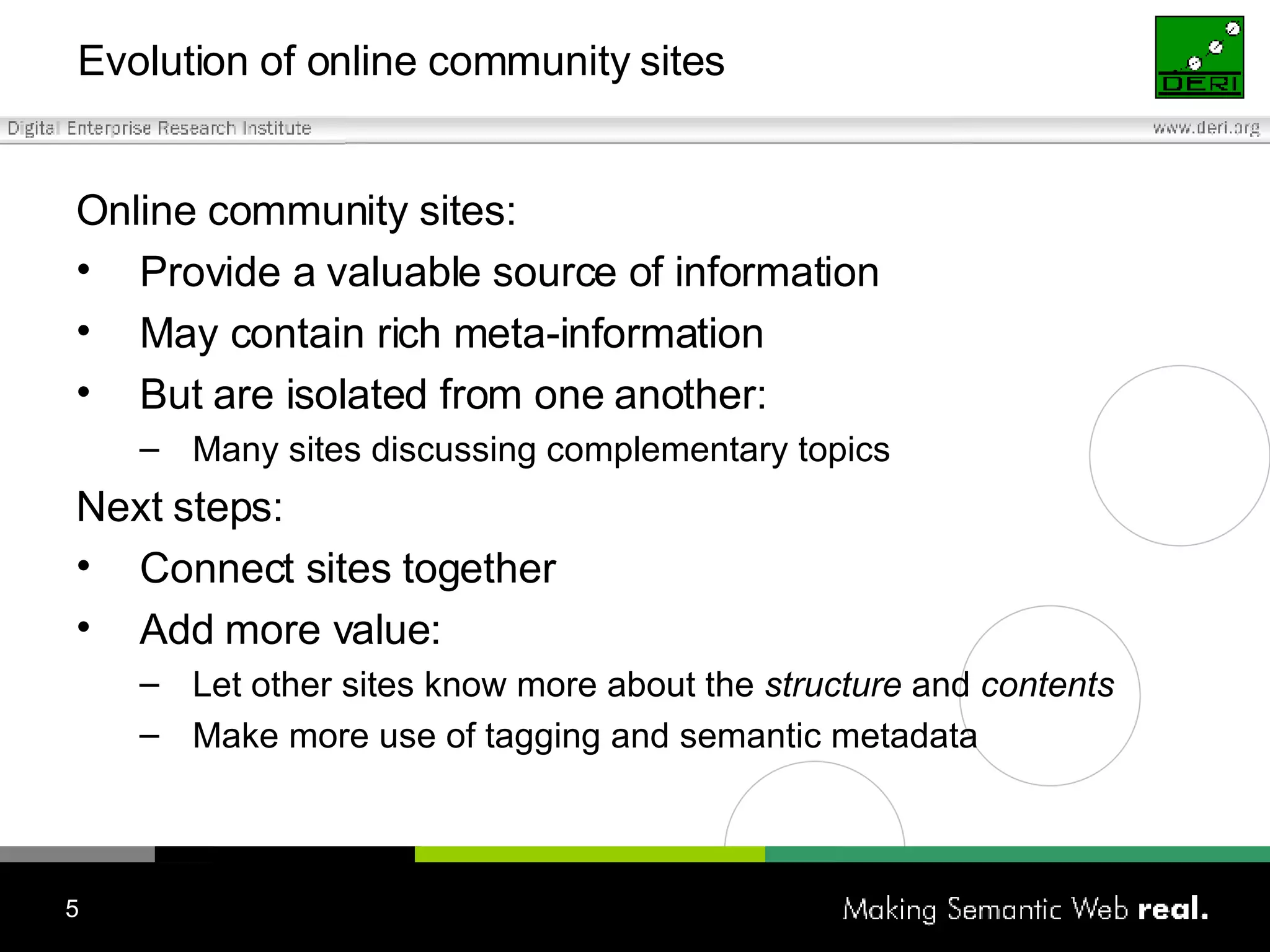
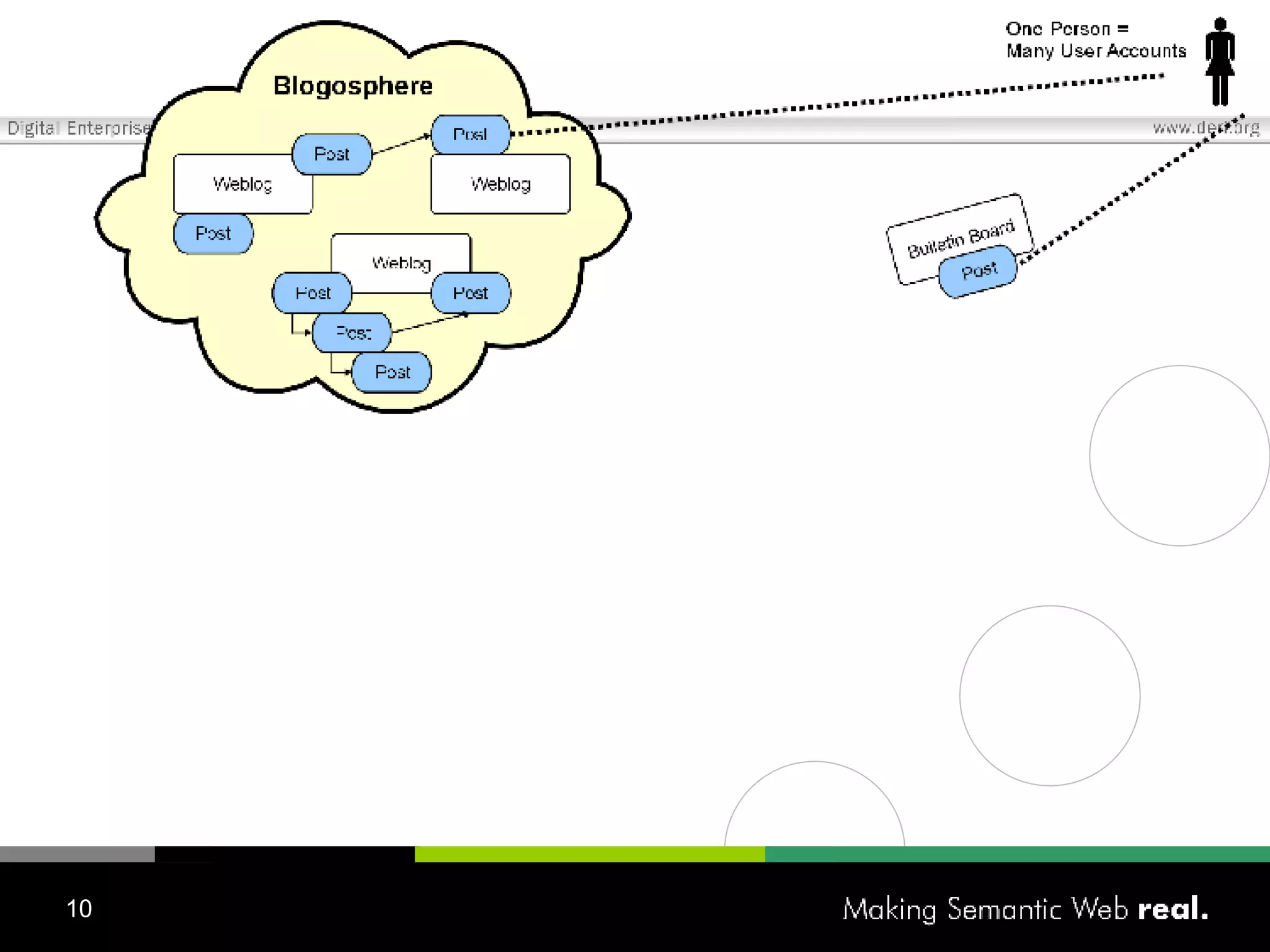
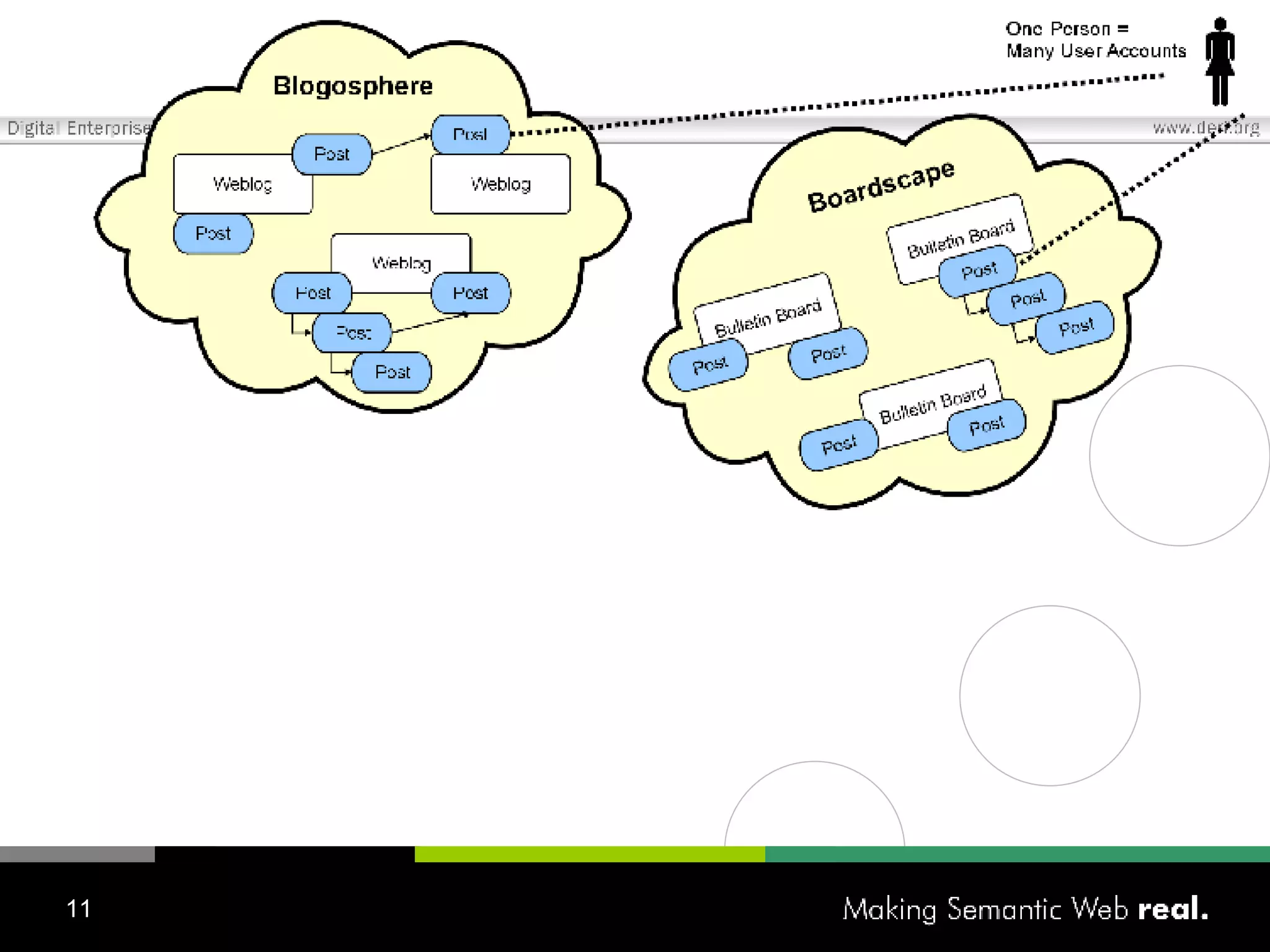
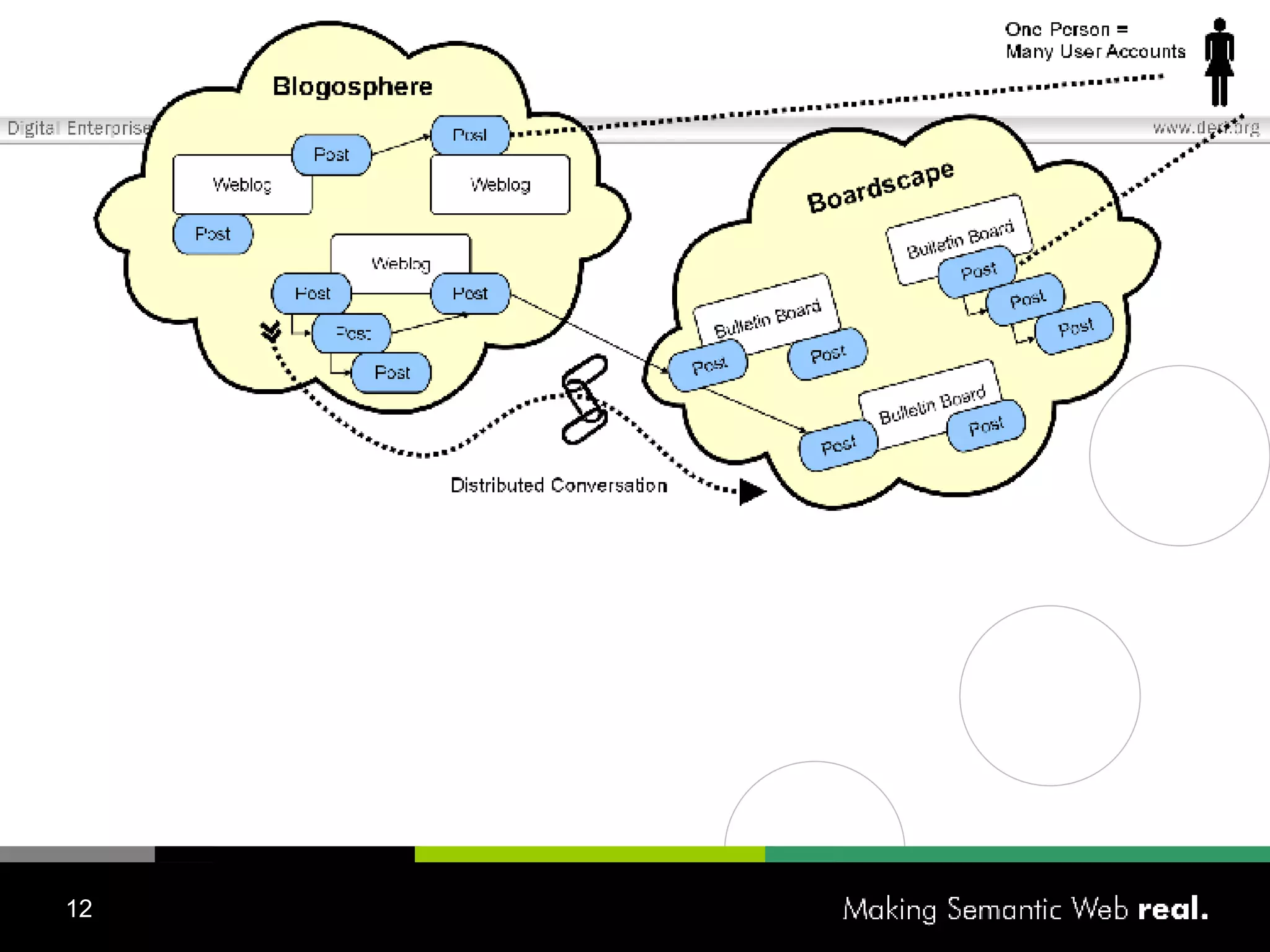
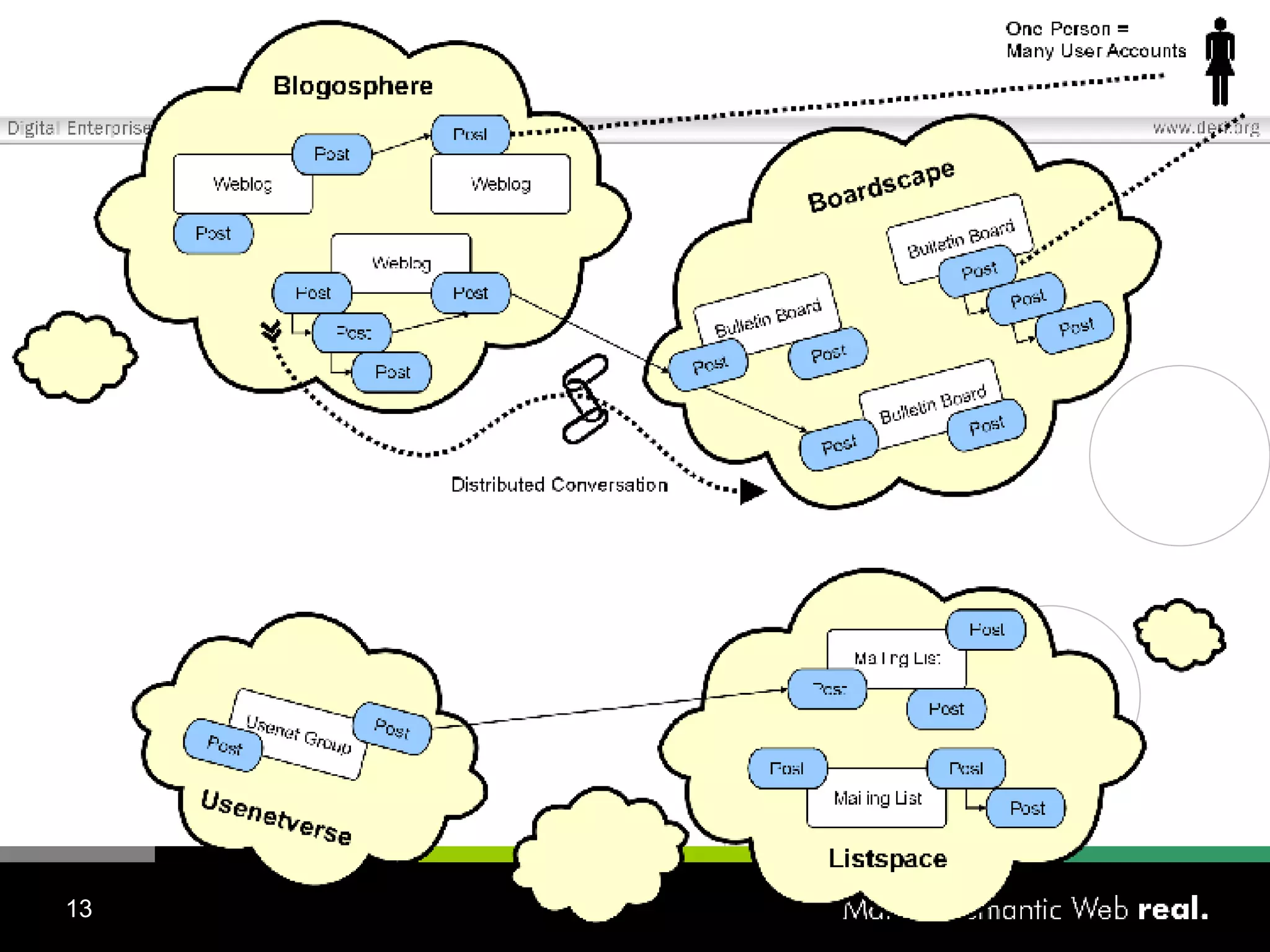
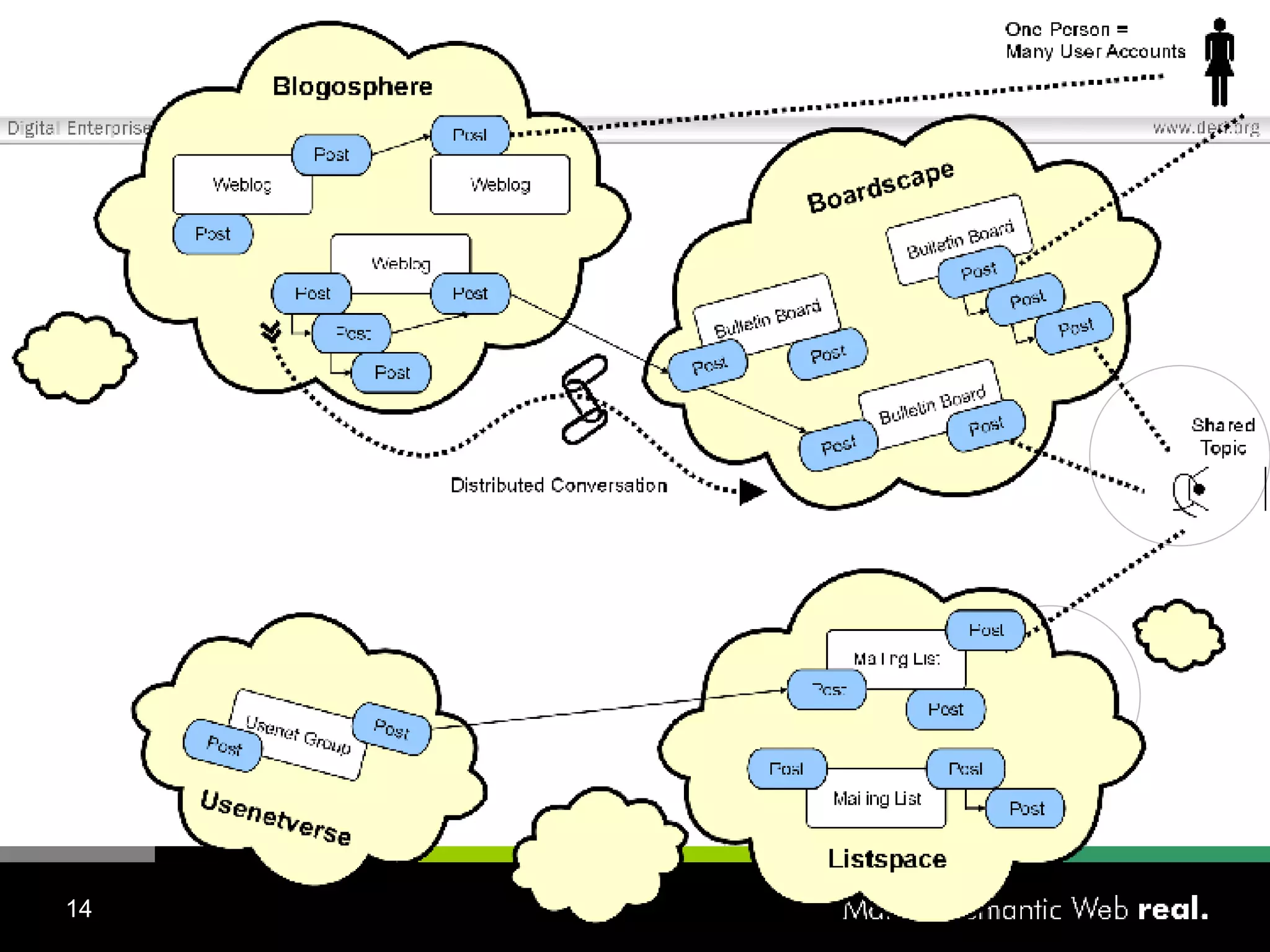
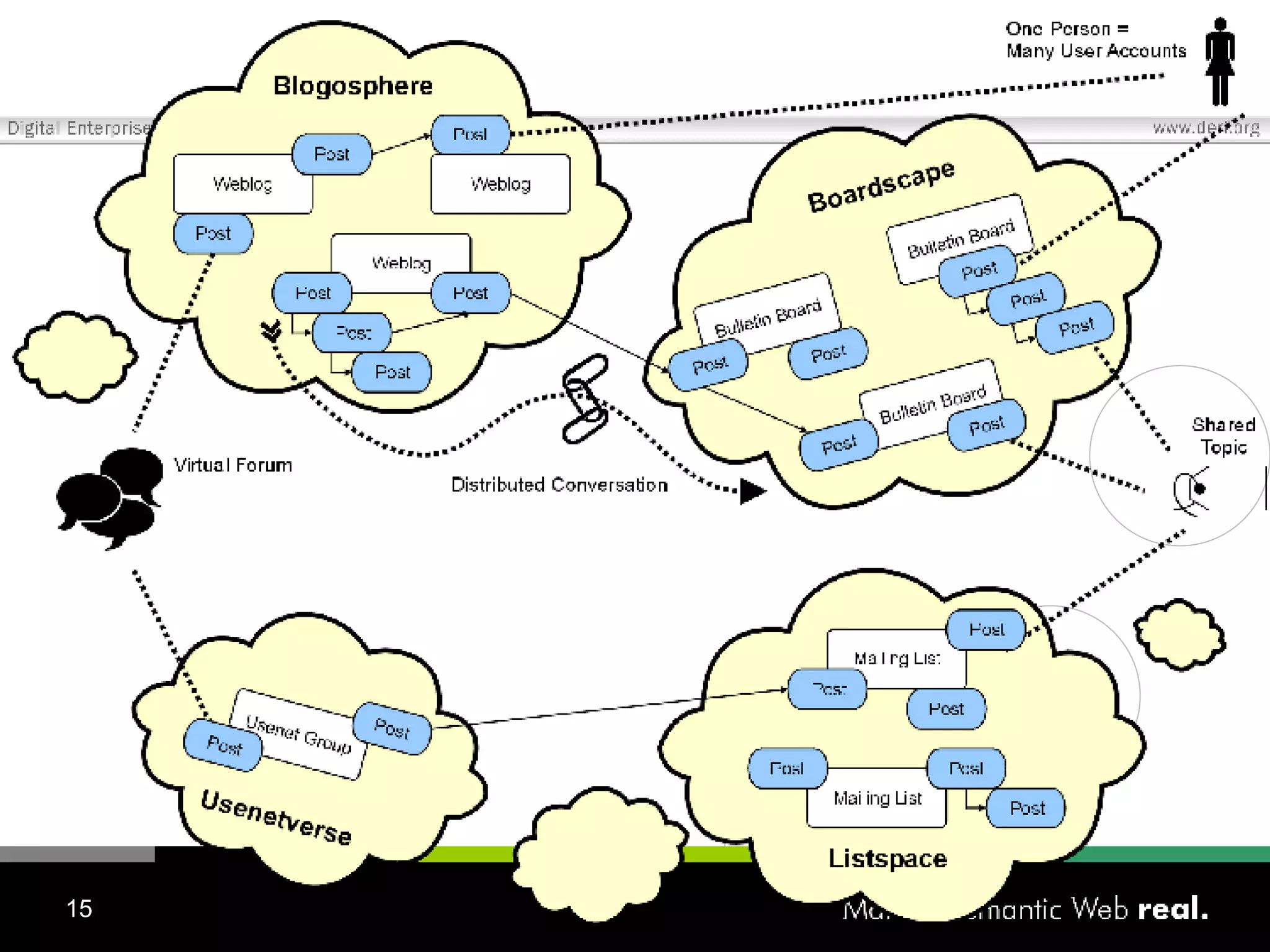
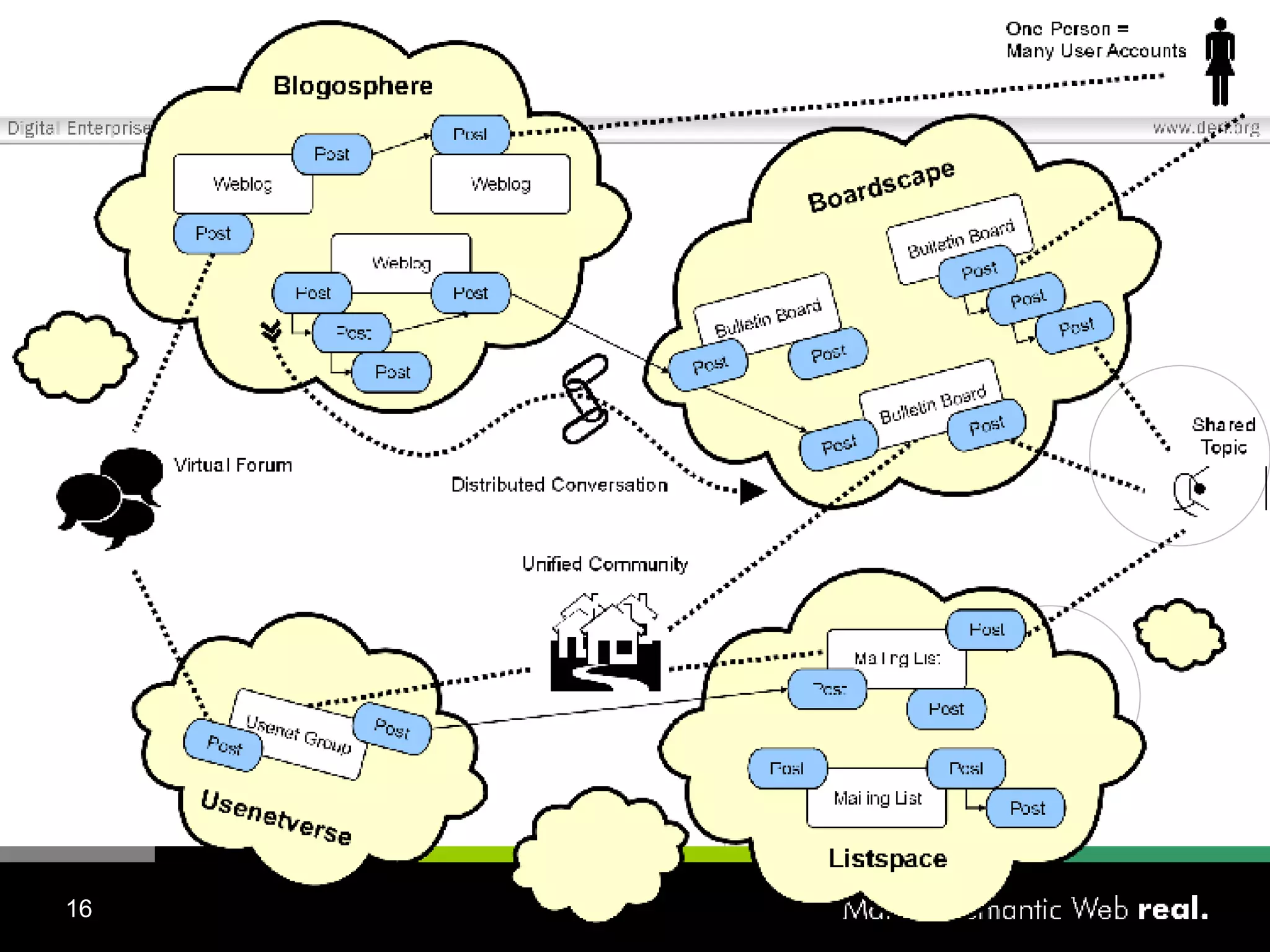
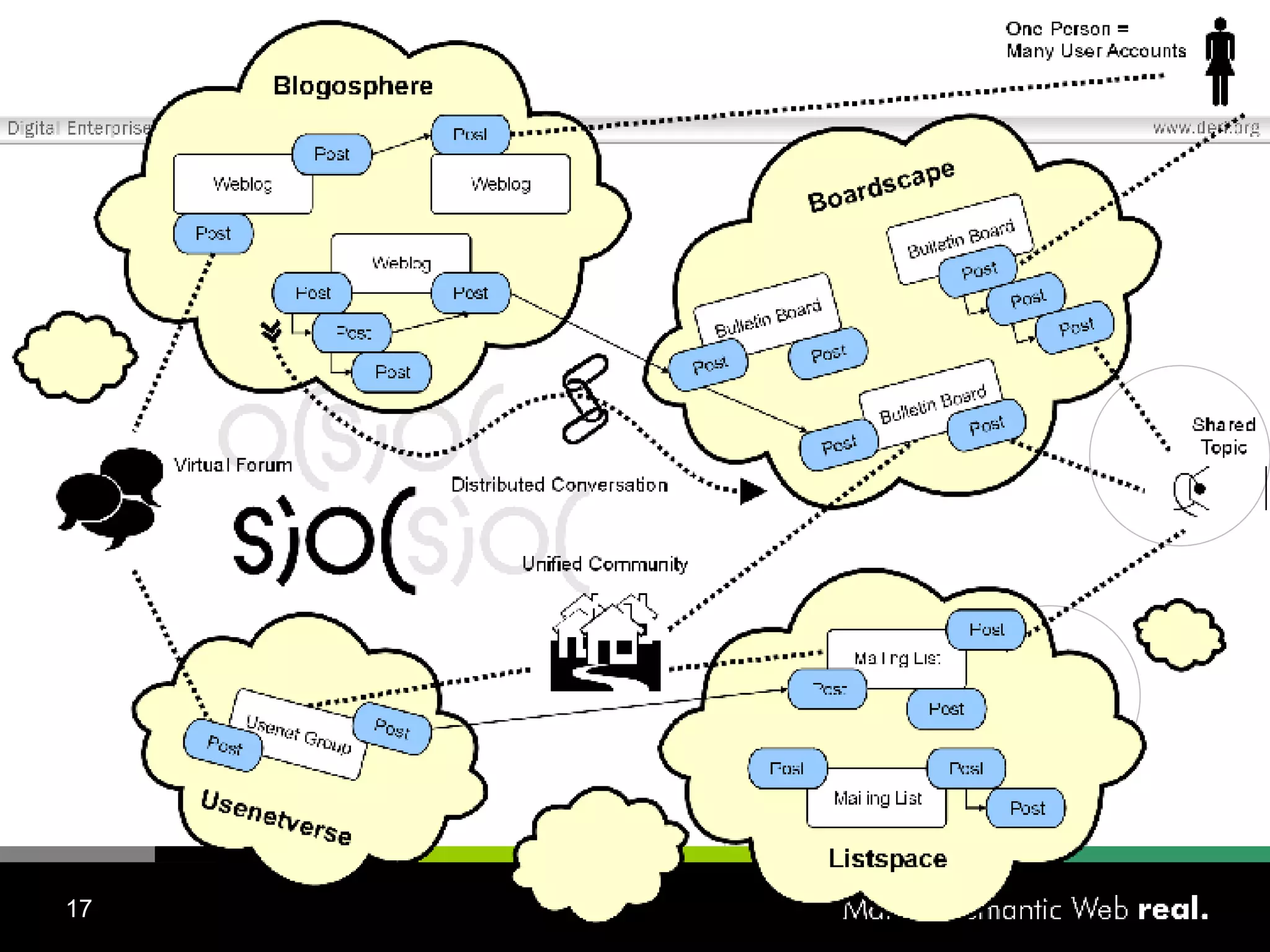
Evolution of online community sites Online community sites: Provide a valuable source of information May contain rich meta-information  But are isolated from one another: Many sites discussing complementary topics Next steps: Connect sites together Add more value: Let other sites know more about the  structure  and  contents Make more use of tagging and semantic metadata
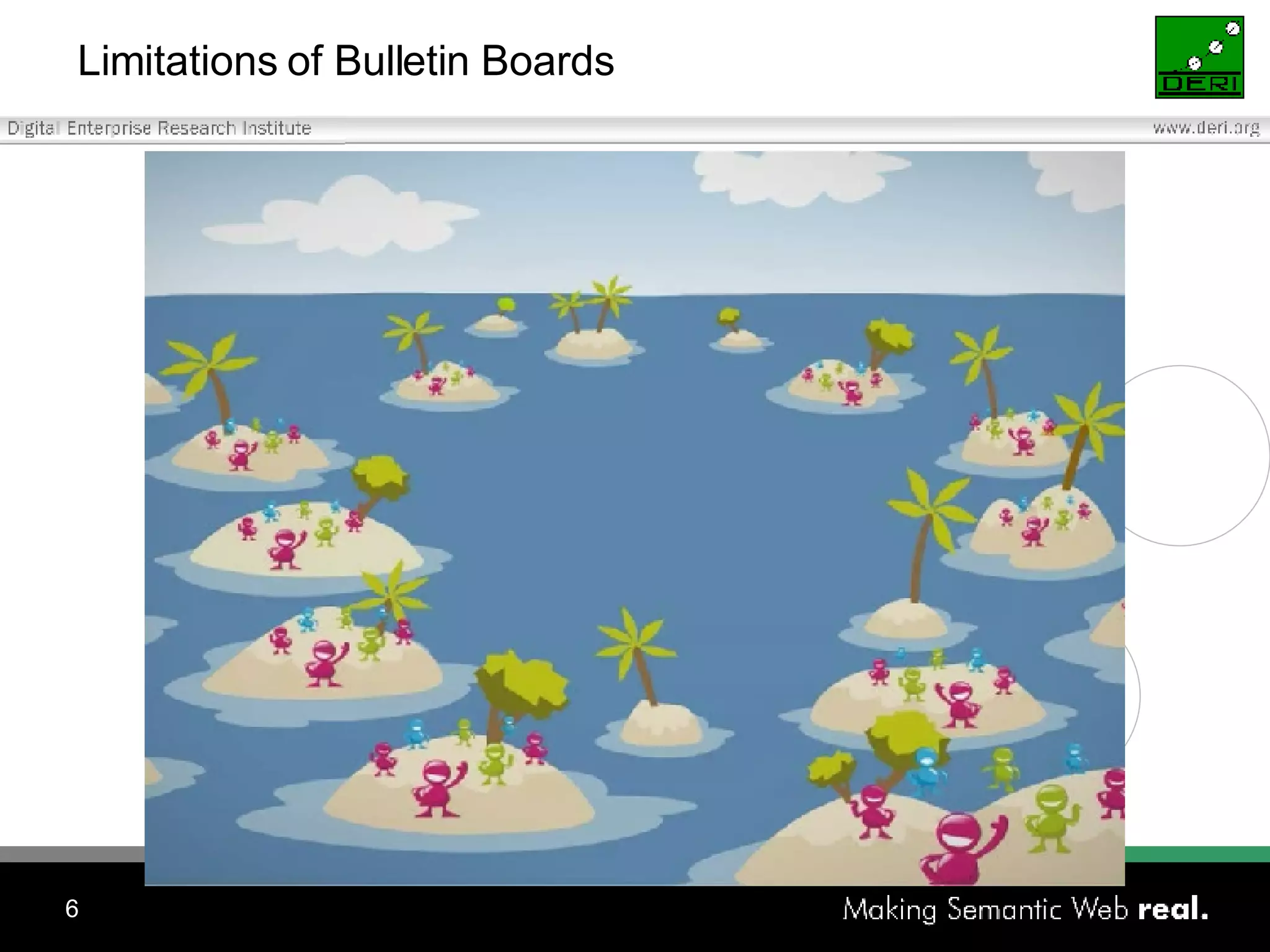
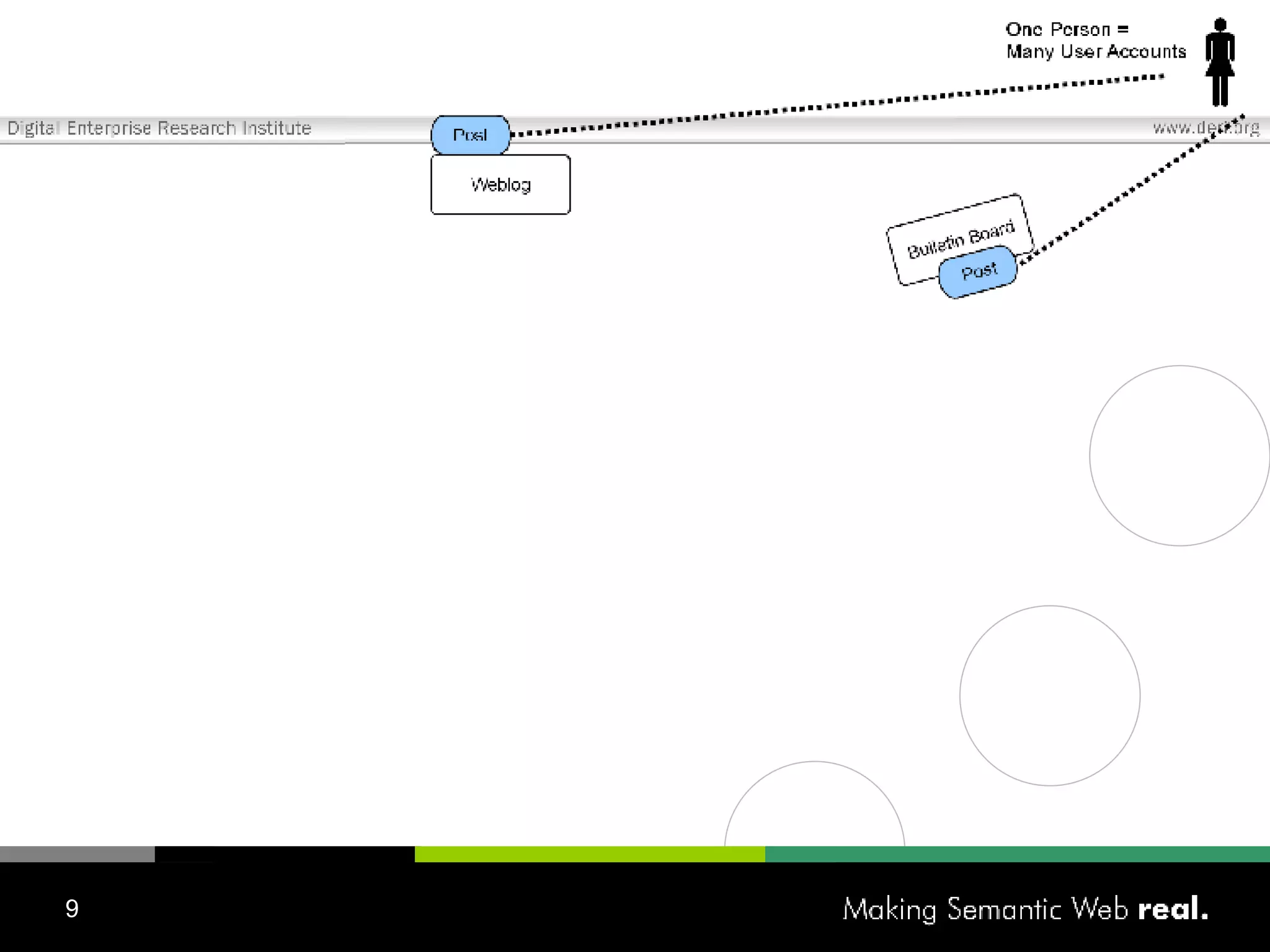
Limitations of Bulletin Boards
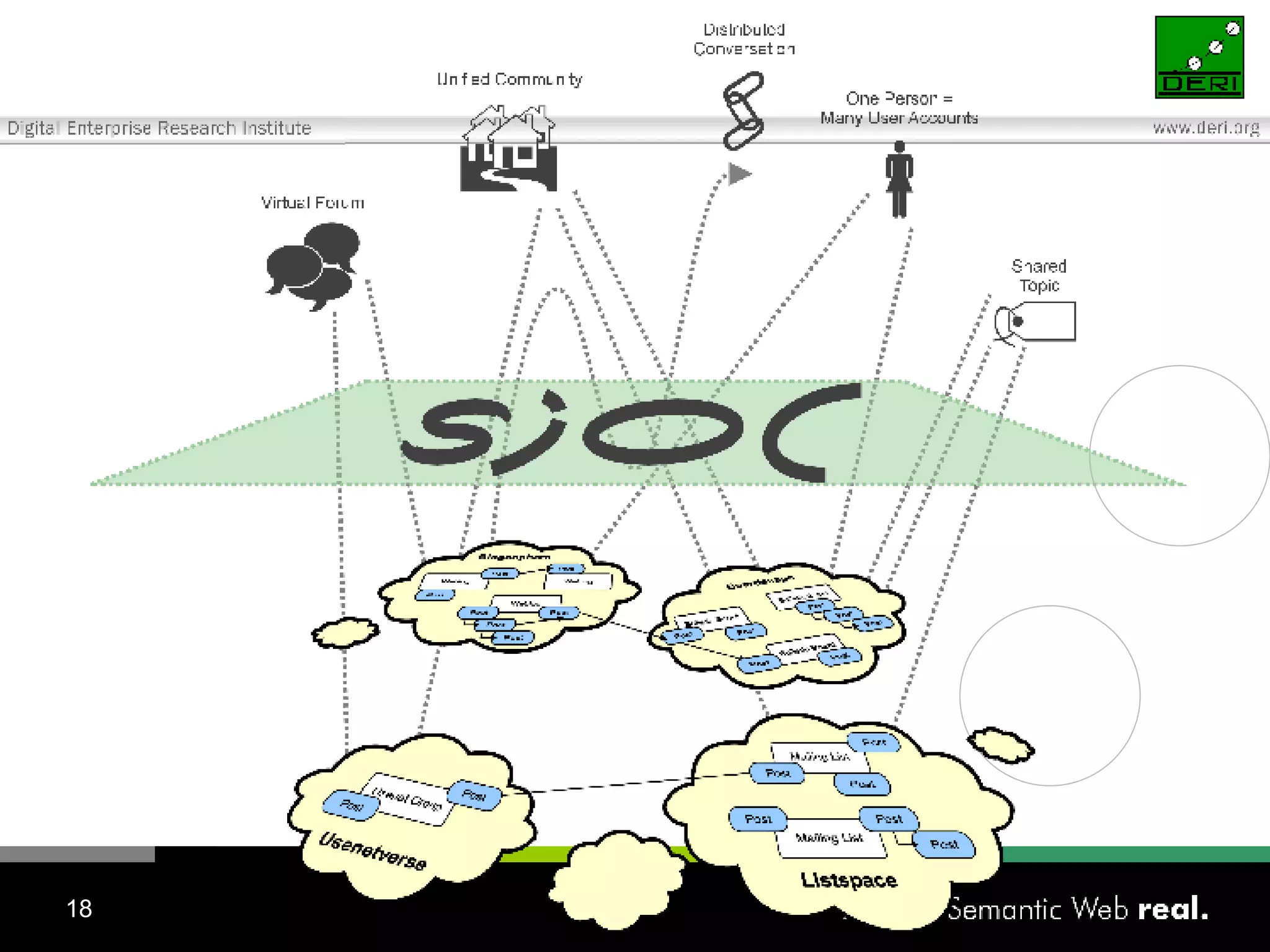
What is SIOC? Semantically-Interlinked Online Communities (SIOC) Connecting forums, posts from many types of online communities (blogs, forums, mailing lists, etc.) Interesting possibilities: Distributed linked conversations Decentralised discussion channels and communities “ I […] think the concept is HOT” – Robert  Douglass, Drupal Developer “ It just dawned on me that the burgeoning SIOC-o-sphere (online communities exporting and exposing content via SIOC Ontology) is actually: Blogosphere 2.0” – Kingsley Idehen, Founder and CEO of OpenLink Software


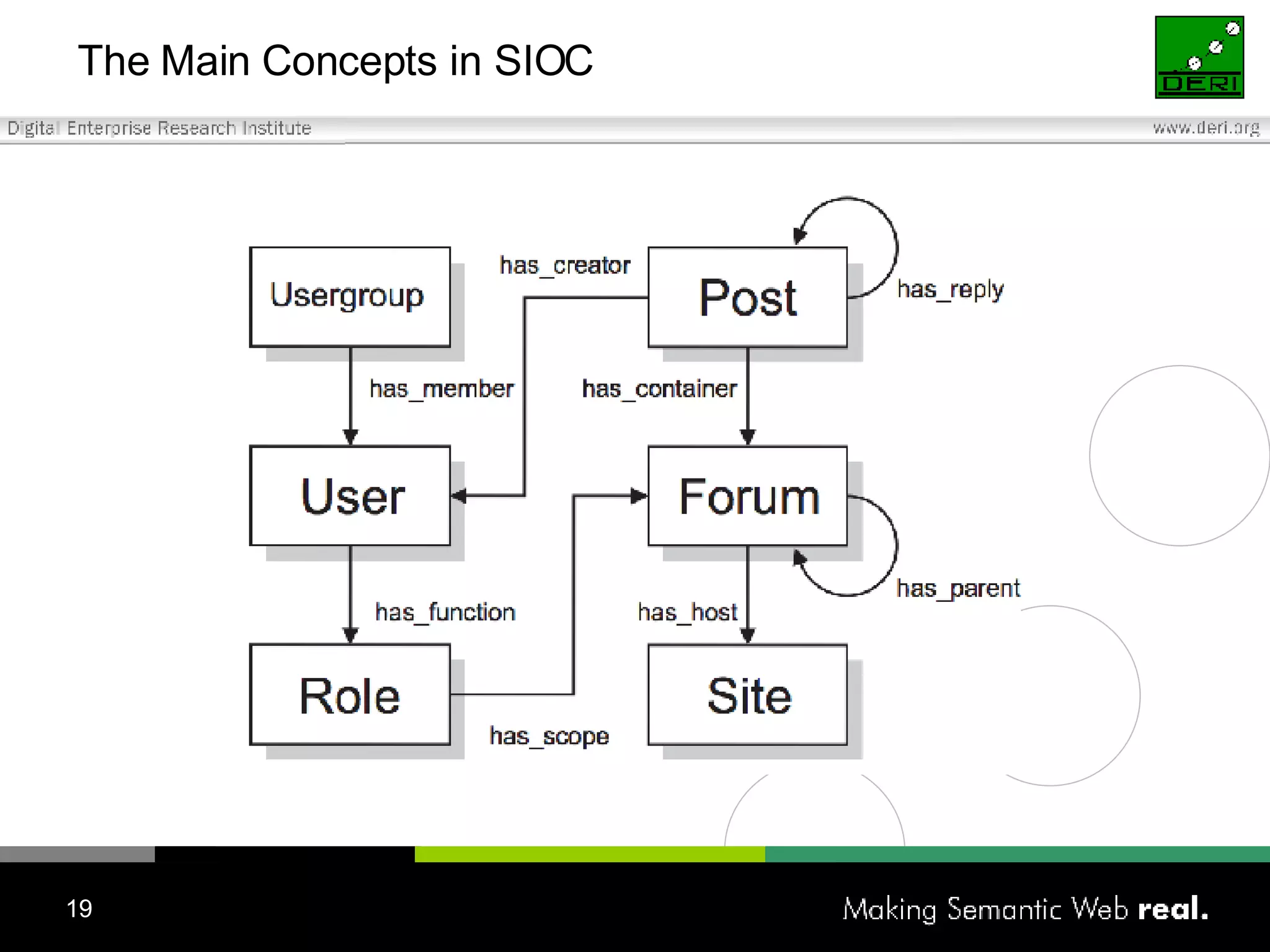
The Main Concepts in SIOC
How can SIOC data be used?
SIOC Tools and Data Demo of a  WordPress SIOC plugin + Semantic Radar Firefox extension Now we’ve got the data.
SIOC Tools and Data Demo : WordPress SIOC plugin Creates data “pages” for all blog pages Now we’ve got the data.
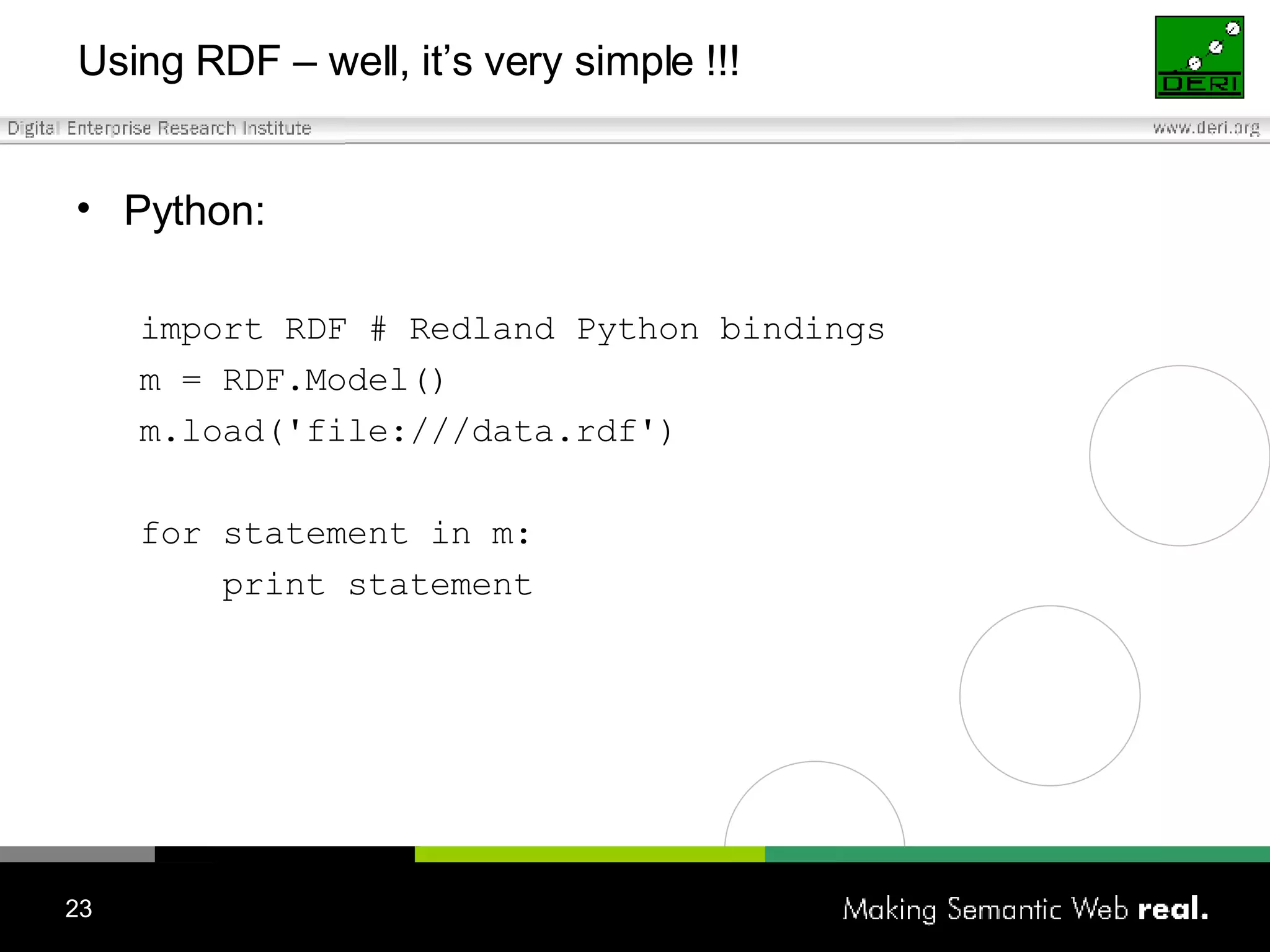
Using RDF – well, it’s very simple !!! Python: import RDF  # Redland Python bindings m = RDF.Model() m.load('file:///data.rdf')   for statement in m: print statement
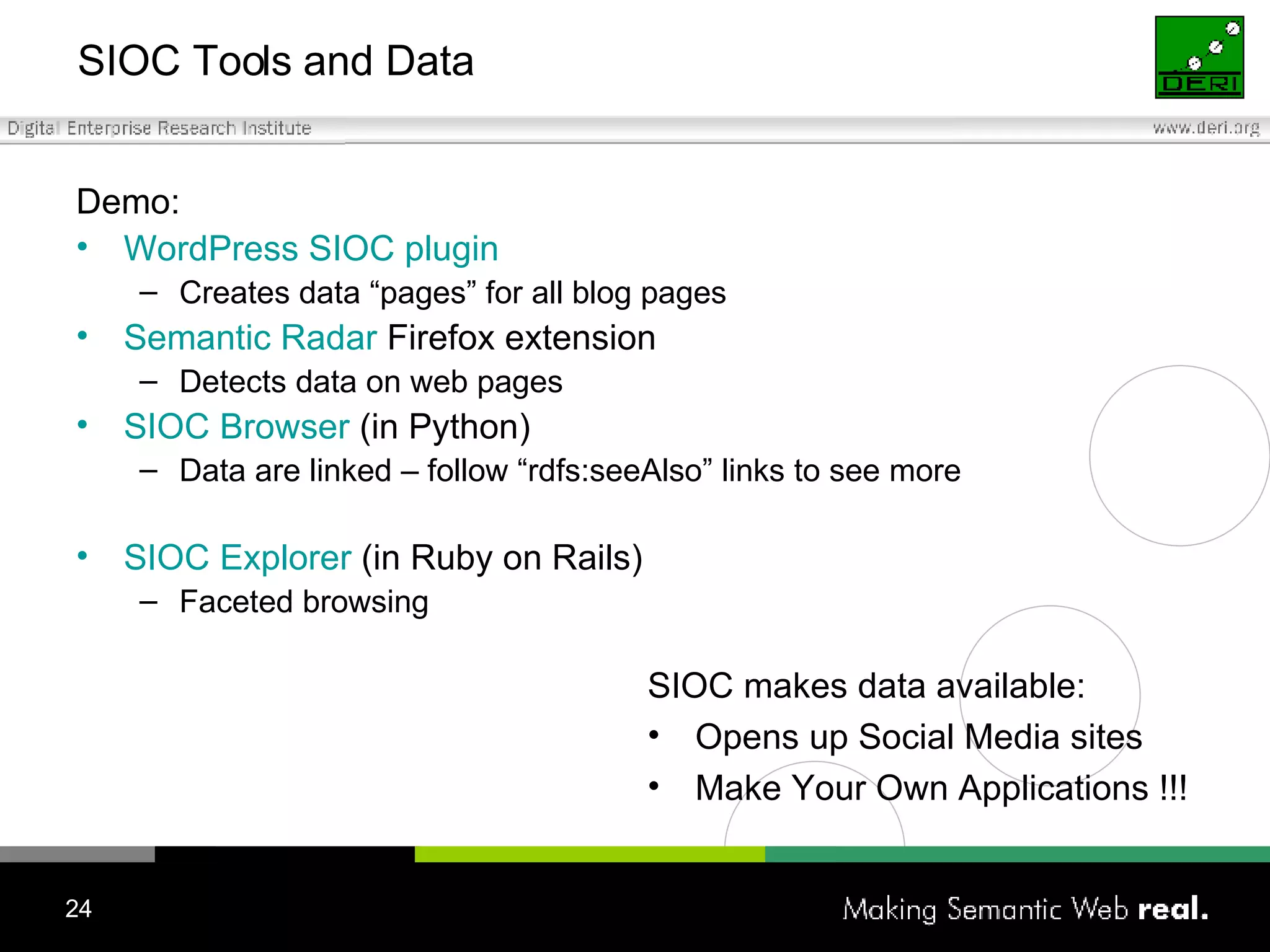
SIOC Tools and Data Demo : WordPress SIOC plugin Creates data “pages” for all blog pages Semantic Radar  Firefox extension Detects data on web pages SIOC Browser  (in Python) Data are linked – follow “rdfs:seeAlso” links to see more SIOC Explorer  (in Ruby on Rails) Faceted browsing SIOC makes data available : Opens up Social Media sites Make Your Own Applications !!!
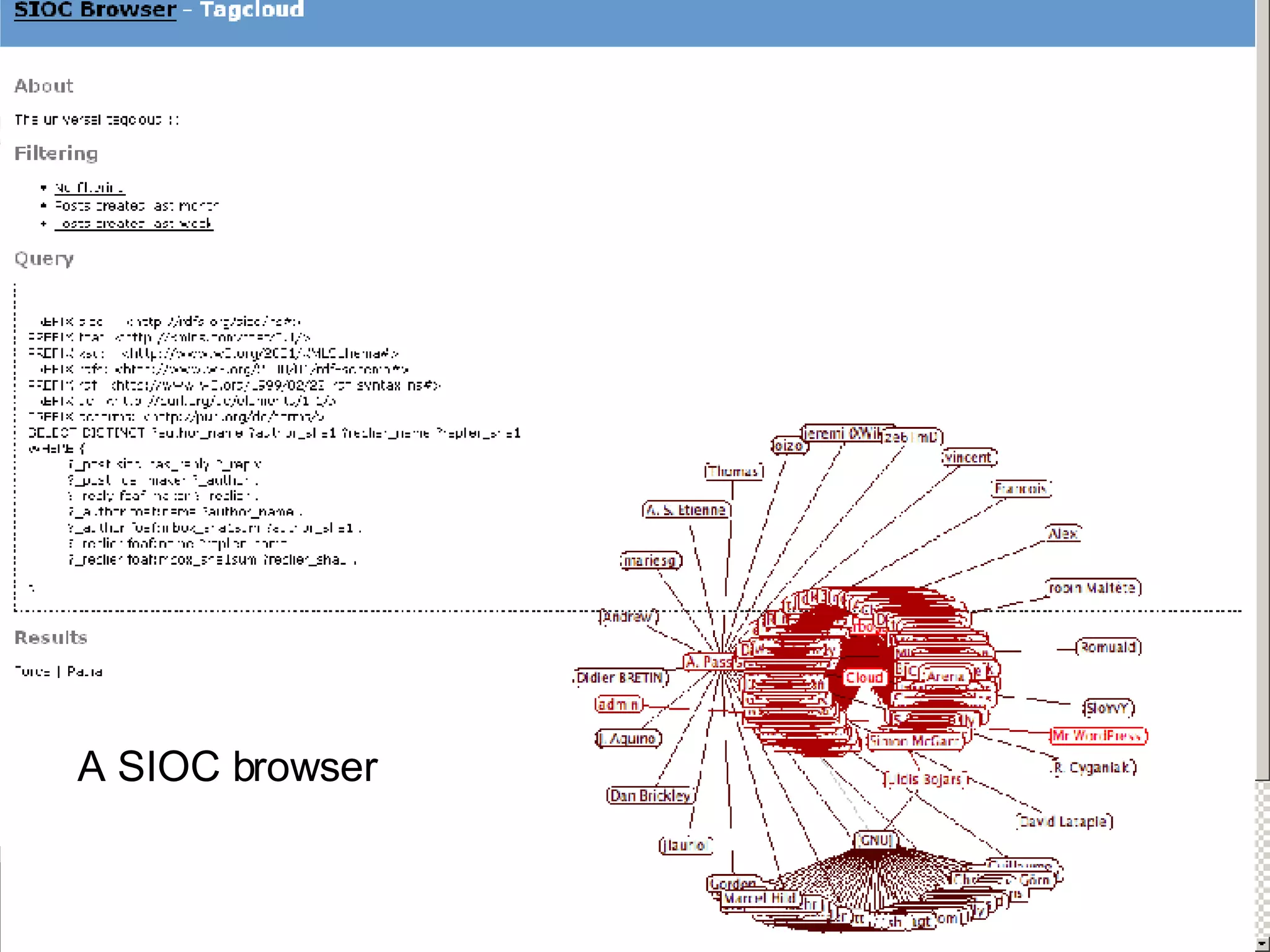
SIOC browser (4) A SIOC browser
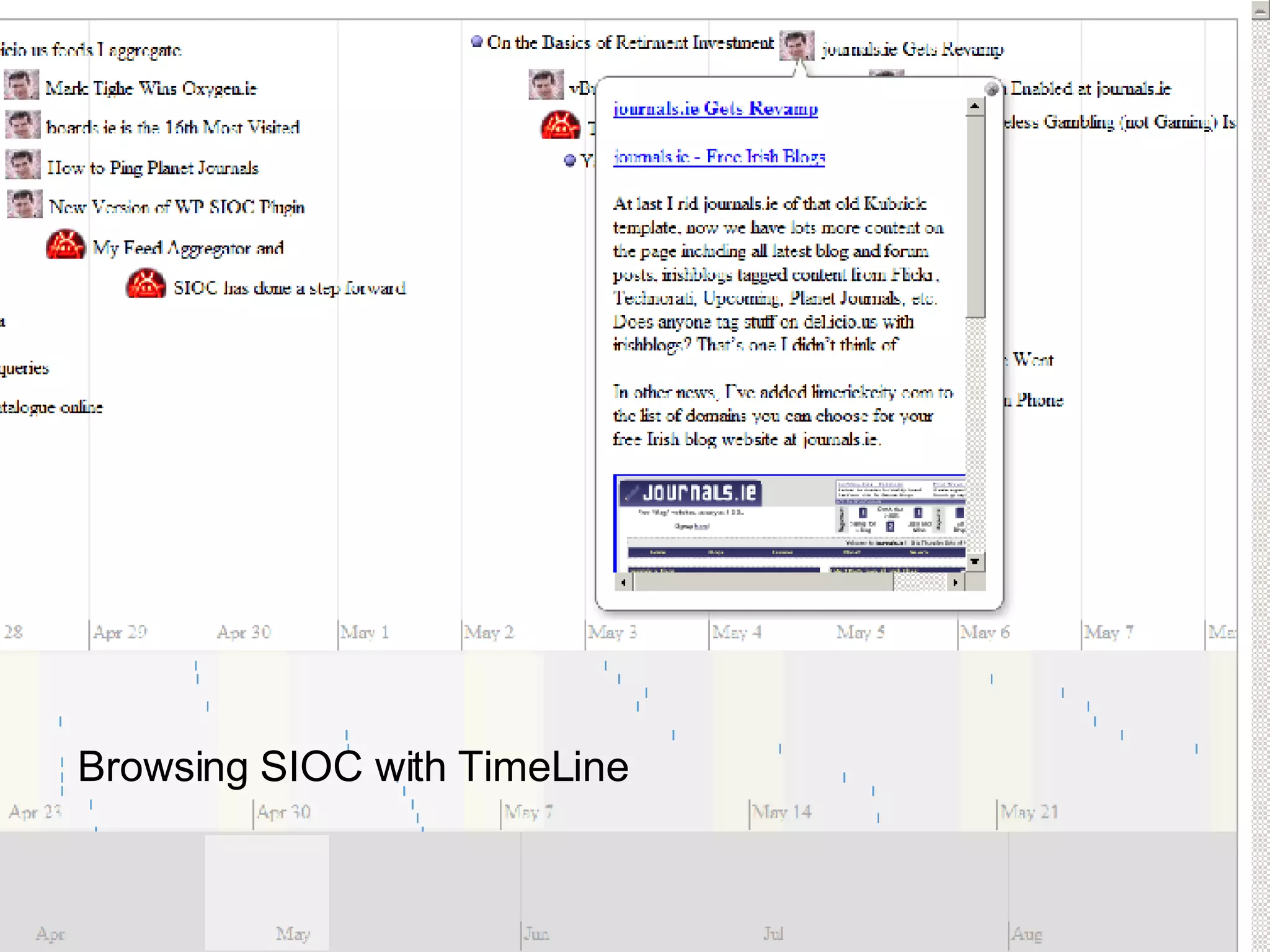
Browsing SIOC with TimeLine
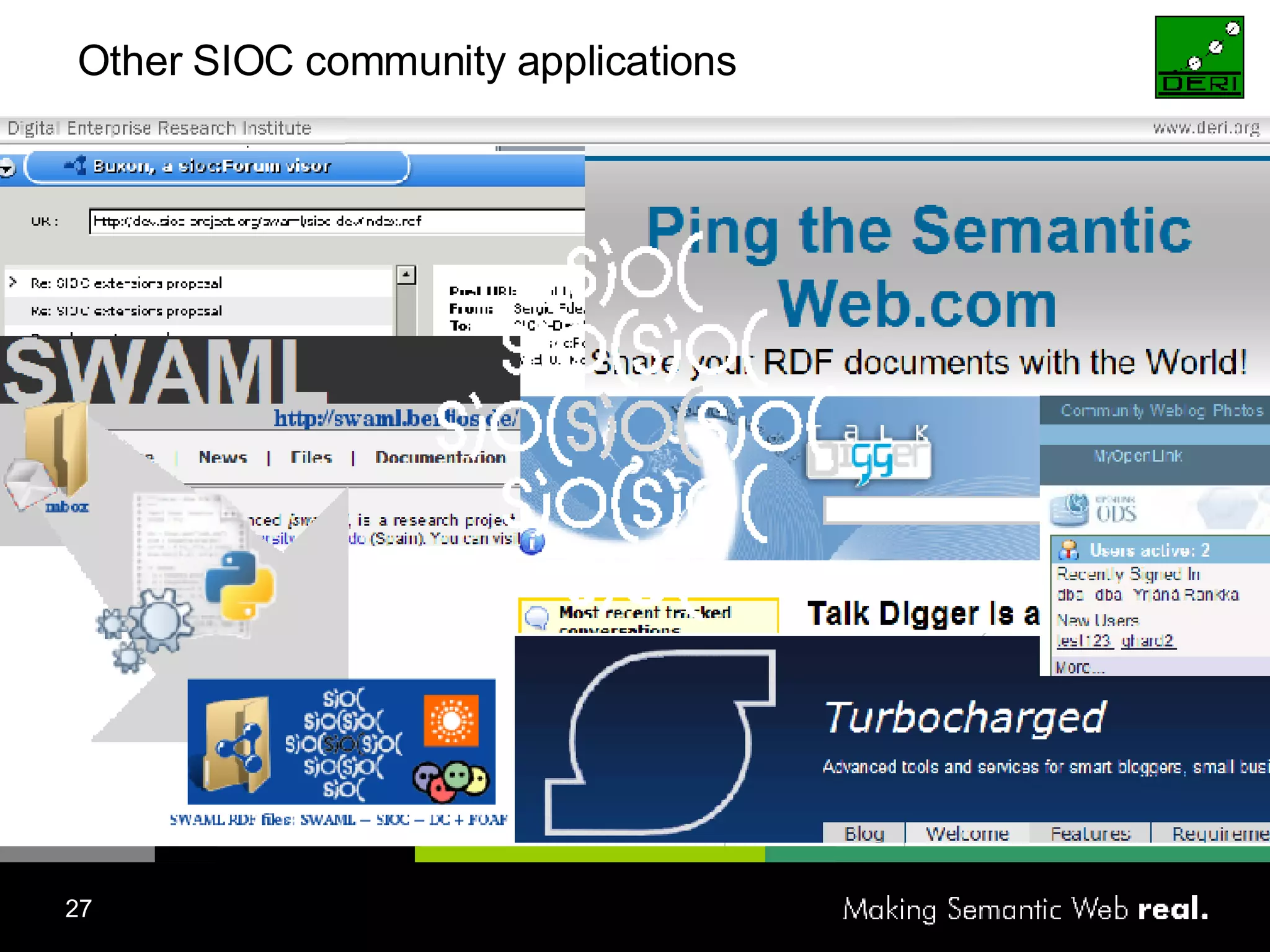
Other  SIOC  community  applications
The path to Semantic Web 2.0 The Semantic Web effort is mainly towards producing standards and recommendations that will  interlink applications The Web 2.0 meme is about  providing user applications Not mutually exclusive: http://www.oreillynet.com/xml/blog/2005/10/is_web_20_killing_the_semantic.html With a little effort, many Web 2.0 applications can and do use Semantic Web technologies to great benefit Take  Web 2.0 and combine  them  with the Semantic Web
Thank You! SIOC http://sioc-project.org / SIOC-Dev mailing list on Google Groups Semantic Web FAQ http://www.w3.org/2001/sw/SW-FAQ RDF Tools: Redland (...), Jena (Java), ActiveRDF (Ruby), ... Blog:  http://captsolo.net/info/ E-mail:  [email_address]  (aka CaptSolo)

SIOC: Semantic Web for Social Media Sites

  • 1.
    SIOC: Semantic Webfor Social Media Sites Uldis Bojārs BarCamp Ireland 3 Dublin - April 21, 2007
  • 2.
    Why Semantic Web?Semantic Web f acilitates : Innovation in Social Tools Provides rich, structured data from Social Media Sites: Blogs, Bulletin boards, Wikis, ... Data that can be used in: Web 2.0 applications (Mash-Ups, ...) Social Media integration and search
  • 3.
    What is SemanticWeb? Layer o n the Web – precise, structured information on : Objects on the web and in the real world Relations between them Resource Description Framework (RDF) Foundation of the Semantic Web Graph with objects (nodes) and relations between them Easy Integration of Data Data of different nature (FOAF, SKOS, RSS, …) SIOC – model of data – for social media sites
  • 4.
    What is DERI?Digital Enterprise Research Institute Established at NUI Galway in June 2003 One of the largest “Semantic Web” research institutes About €25 million in funding from EU FP6, SFI, EI Now has 80 members (staff and students) Three main research clusters: Semantic Web Semantic Web Services E-Learning with Semantics About 100 project partners
  • 5.
    Evolution of onlinecommunity sites Online community sites: Provide a valuable source of information May contain rich meta-information But are isolated from one another: Many sites discussing complementary topics Next steps: Connect sites together Add more value: Let other sites know more about the structure and contents Make more use of tagging and semantic metadata
  • 6.
  • 7.
    What is SIOC?Semantically-Interlinked Online Communities (SIOC) Connecting forums, posts from many types of online communities (blogs, forums, mailing lists, etc.) Interesting possibilities: Distributed linked conversations Decentralised discussion channels and communities “ I […] think the concept is HOT” – Robert Douglass, Drupal Developer “ It just dawned on me that the burgeoning SIOC-o-sphere (online communities exporting and exposing content via SIOC Ontology) is actually: Blogosphere 2.0” – Kingsley Idehen, Founder and CEO of OpenLink Software
  • 8.
  • 9.
  • 10.
  • 11.
  • 12.
  • 13.
  • 14.
  • 15.
  • 16.
  • 17.
  • 18.
  • 19.
  • 20.
    How can SIOCdata be used?
  • 21.
    SIOC Tools andData Demo of a WordPress SIOC plugin + Semantic Radar Firefox extension Now we’ve got the data.
  • 22.
    SIOC Tools andData Demo : WordPress SIOC plugin Creates data “pages” for all blog pages Now we’ve got the data.
  • 23.
    Using RDF –well, it’s very simple !!! Python: import RDF # Redland Python bindings m = RDF.Model() m.load('file:///data.rdf') for statement in m: print statement
  • 24.
    SIOC Tools andData Demo : WordPress SIOC plugin Creates data “pages” for all blog pages Semantic Radar Firefox extension Detects data on web pages SIOC Browser (in Python) Data are linked – follow “rdfs:seeAlso” links to see more SIOC Explorer (in Ruby on Rails) Faceted browsing SIOC makes data available : Opens up Social Media sites Make Your Own Applications !!!
  • 25.
    SIOC browser (4)A SIOC browser
  • 26.
  • 27.
    Other SIOC community applications
  • 28.
    The path toSemantic Web 2.0 The Semantic Web effort is mainly towards producing standards and recommendations that will interlink applications The Web 2.0 meme is about providing user applications Not mutually exclusive: http://www.oreillynet.com/xml/blog/2005/10/is_web_20_killing_the_semantic.html With a little effort, many Web 2.0 applications can and do use Semantic Web technologies to great benefit Take Web 2.0 and combine them with the Semantic Web
  • 29.
    Thank You! SIOChttp://sioc-project.org / SIOC-Dev mailing list on Google Groups Semantic Web FAQ http://www.w3.org/2001/sw/SW-FAQ RDF Tools: Redland (...), Jena (Java), ActiveRDF (Ruby), ... Blog: http://captsolo.net/info/ E-mail: [email_address] (aka CaptSolo)