An introduction to   Web2.0 Claire Back
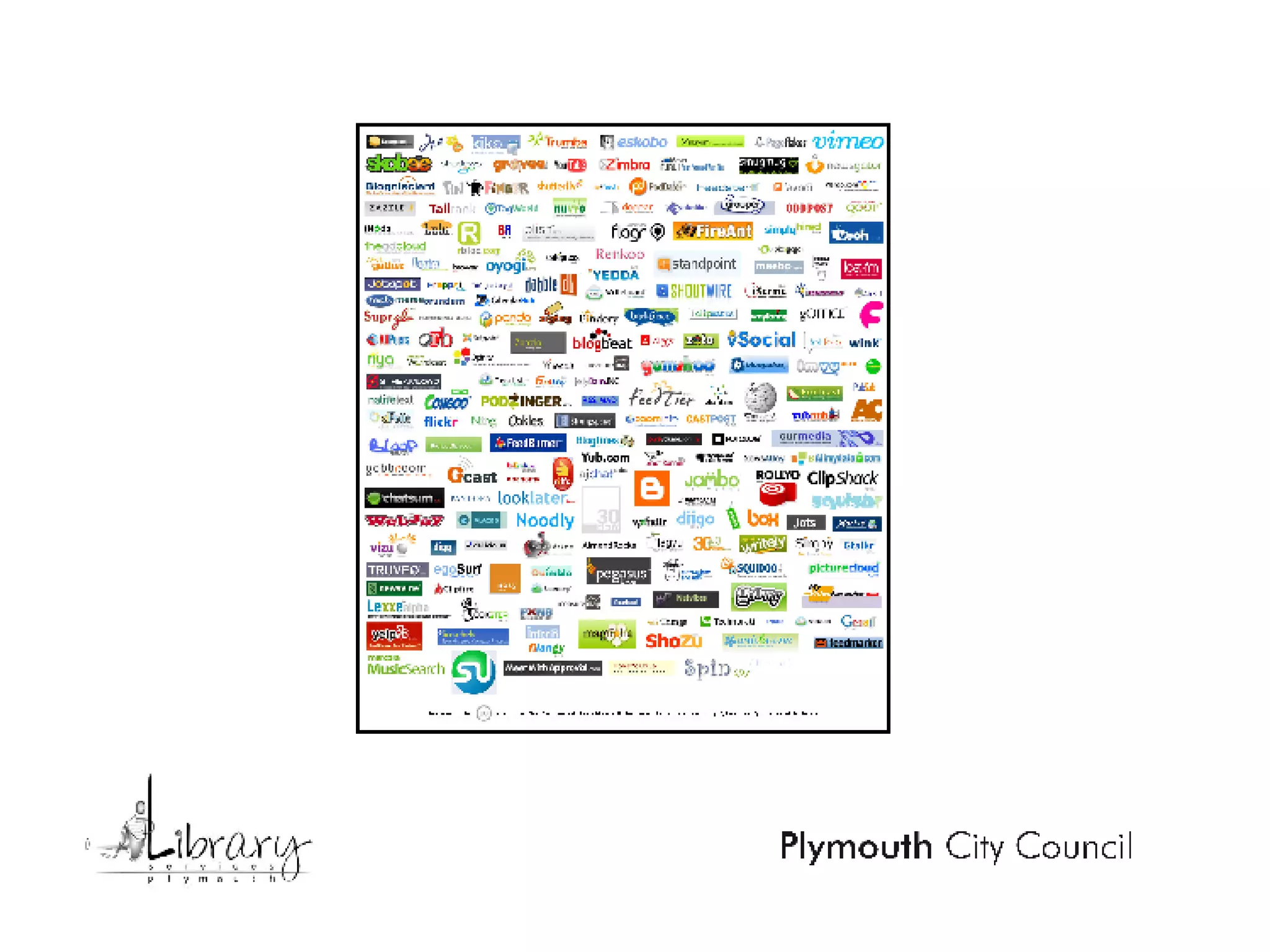
What is Web2.0? A perceived second generation of web-based communities and hosted services – such as social-networking sites, wikis and folksonomies – which aim to facilitate collaboration and sharing between users.  Although the term suggests a new version of the World Wide Web, it does not refer to an update to any technical specifications, but to changes in the ways software developers and end-users use the web. http://en.wikipedia.org/wiki/Web2.0
 
Characteristics of Web2.0 Read/write web Web as a platform Permanent beta  Open source  Radical trust
Terminology associated with Web2.0 RSS blogs wikis feeds mash-ups social networking tagging folksonomies API tag cloud social software podcasts
Blogging Online diary/journal Brief entries arranged in reverse chronological order Most recent entry at the top Quick and easy way to publish content online Ability to comment
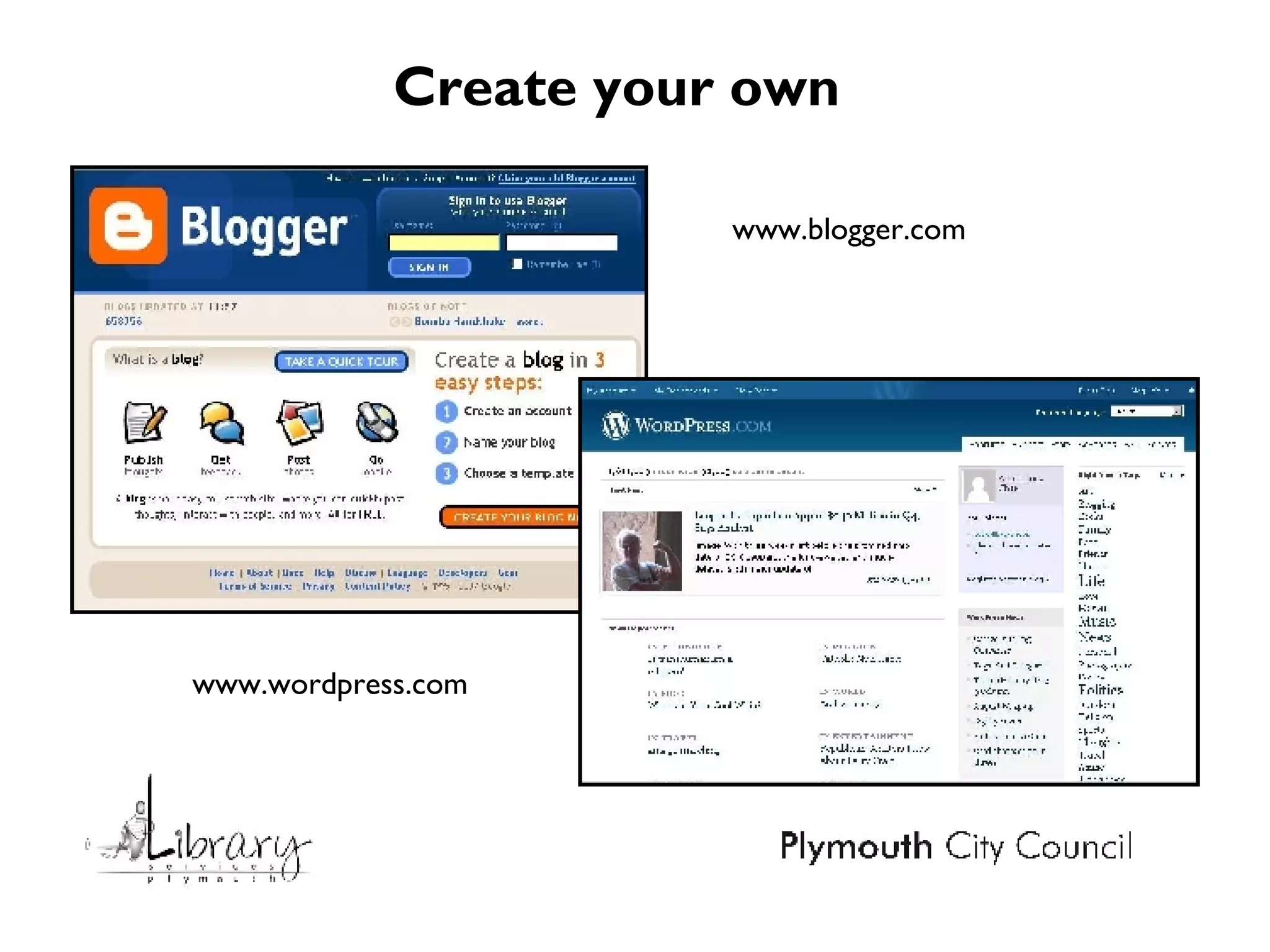
Create your own  www.blogger.com www.wordpress.com
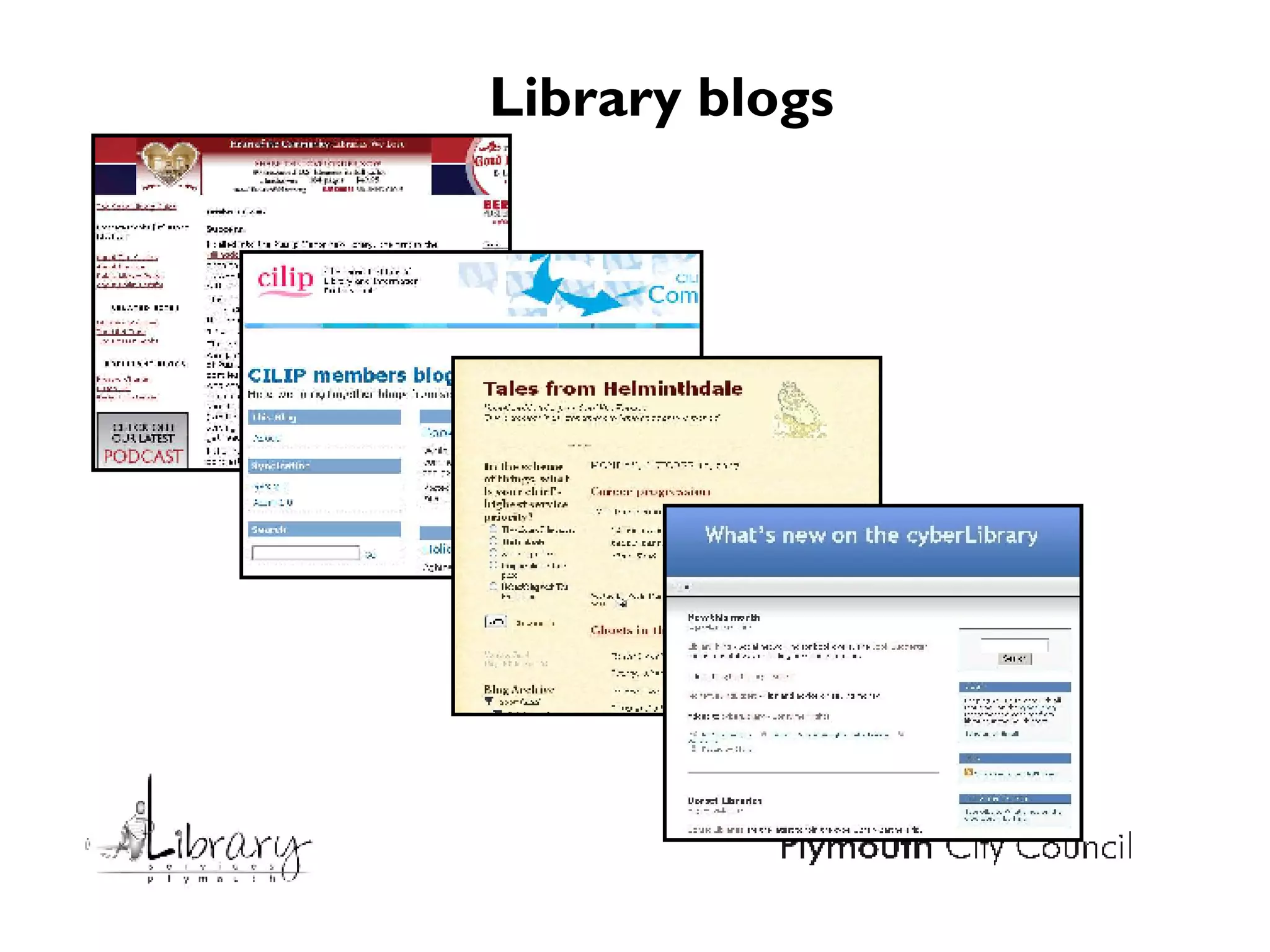
Library blogs
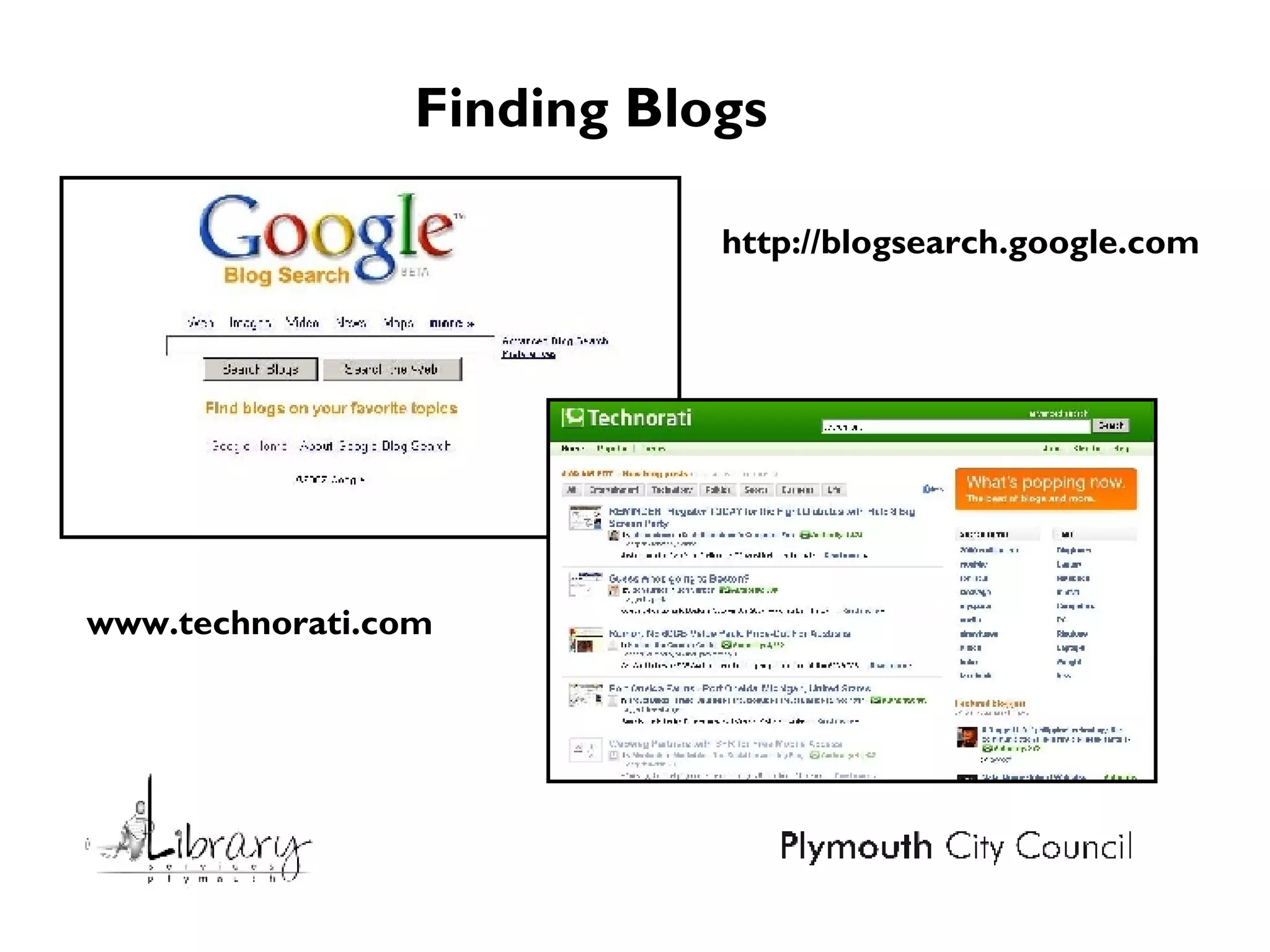
Finding Blogs http://blogsearch.google.com www.technorati.com
Really Simple Syndication/Rich Site  Summary Also known as news feeds Allows you to be notified when new content appears without having to visit a site. Easy way to receive updates from your favourite sites or blogs Can save you a lot of time RSS
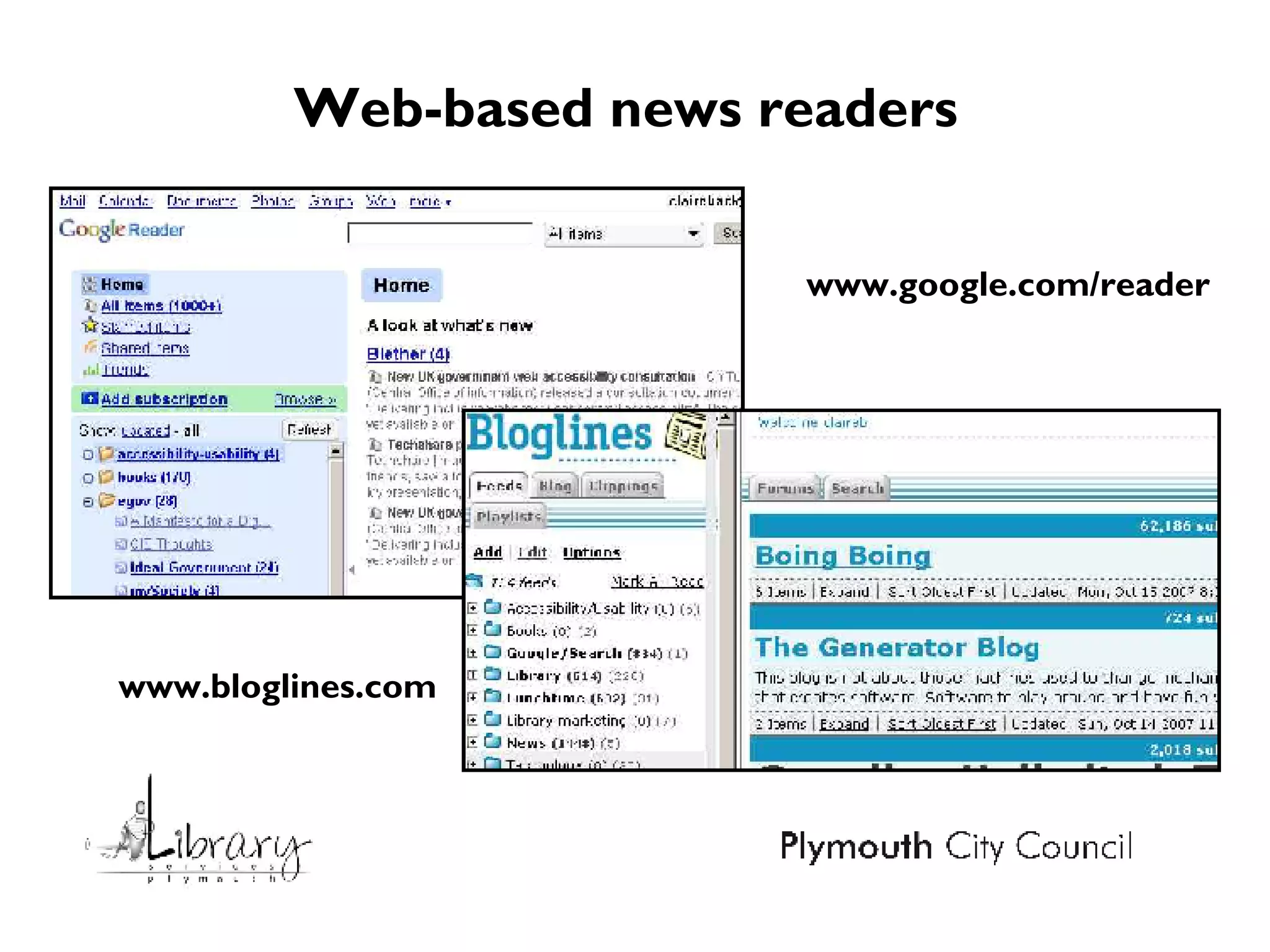
Web-based news readers www.google.com/reader www.bloglines.com
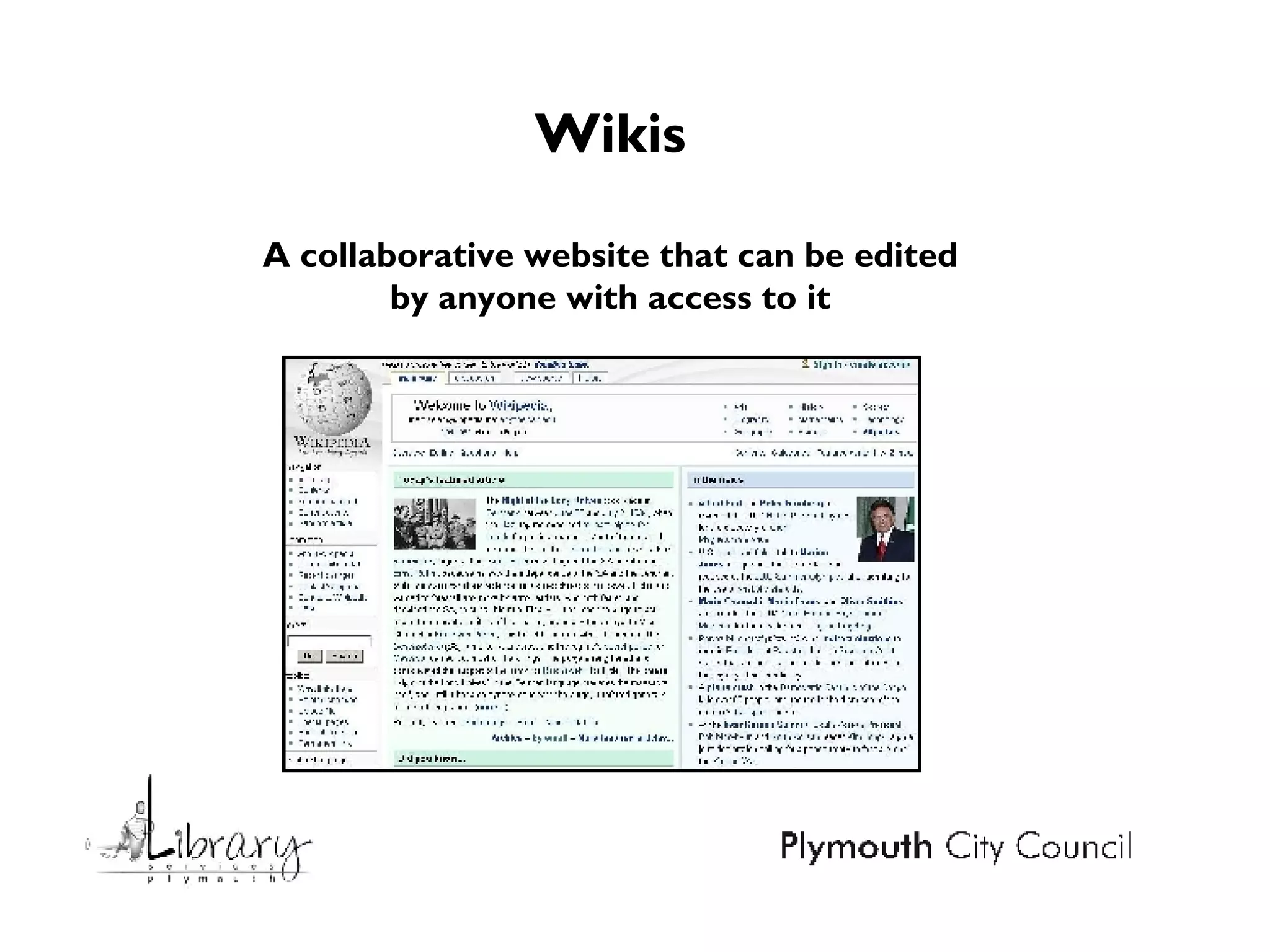
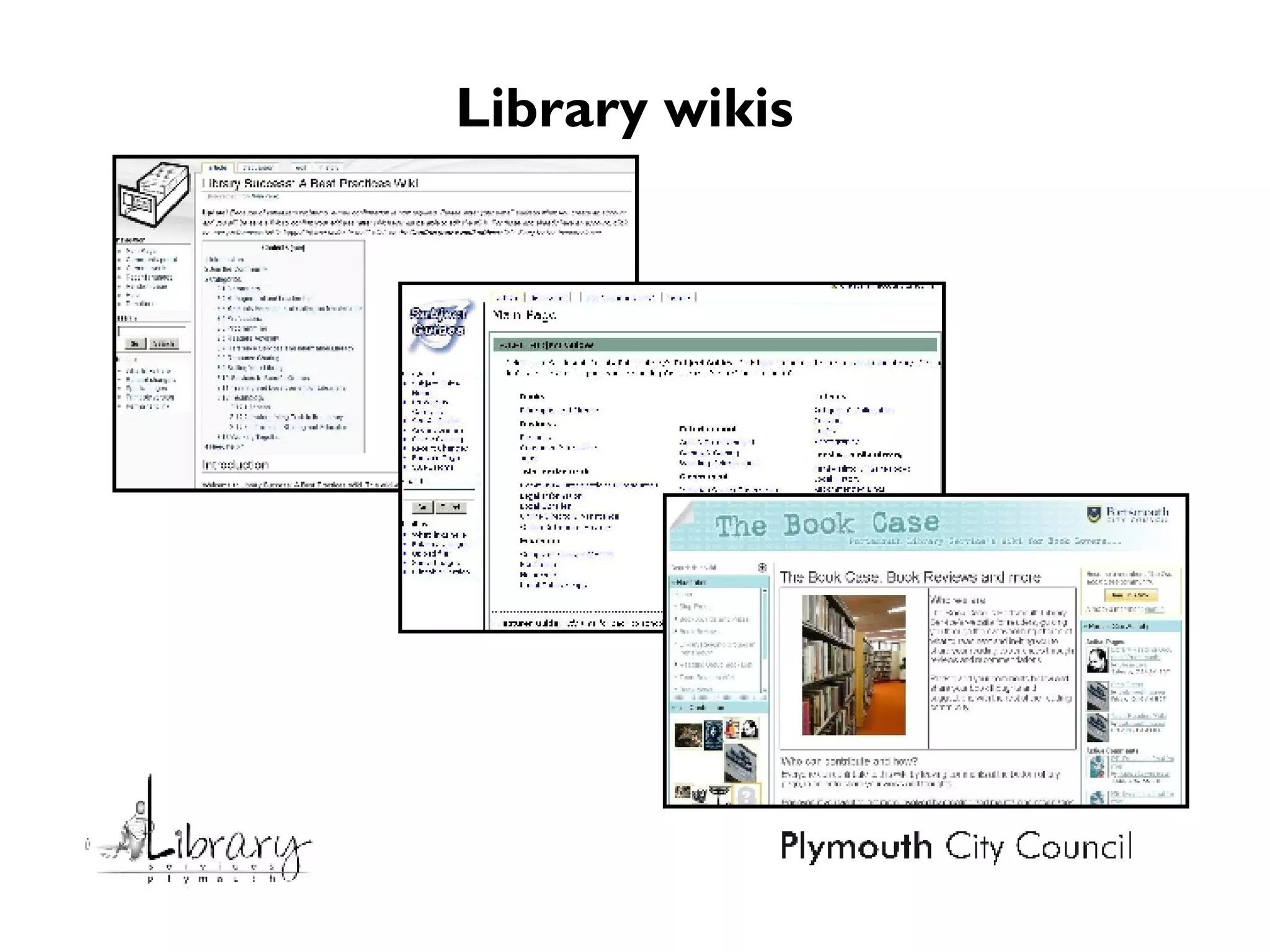
Wikis A collaborative website that can be edited by anyone with access to it
Library wikis
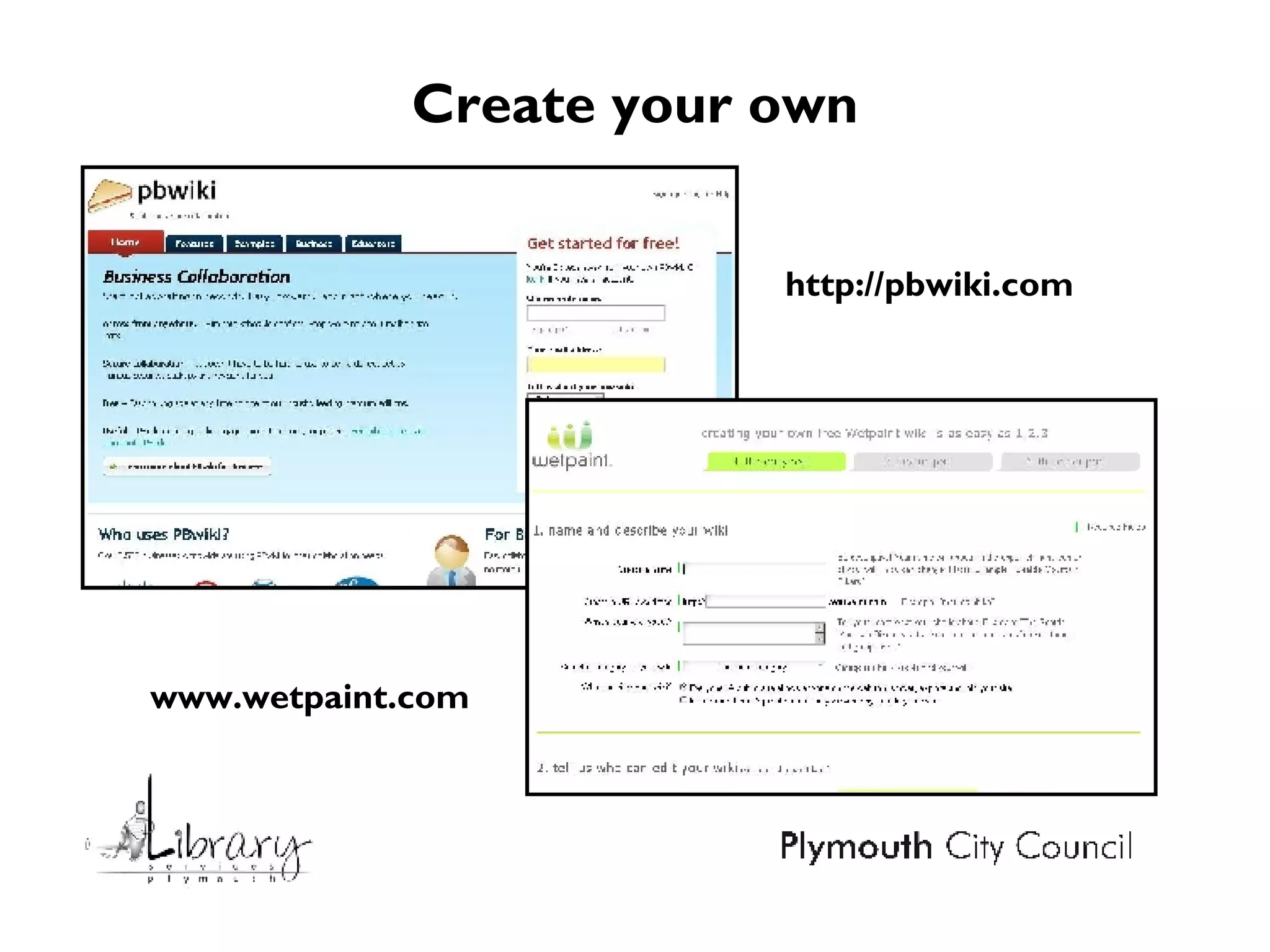
Create your own http://pbwiki.com www.wetpaint.com
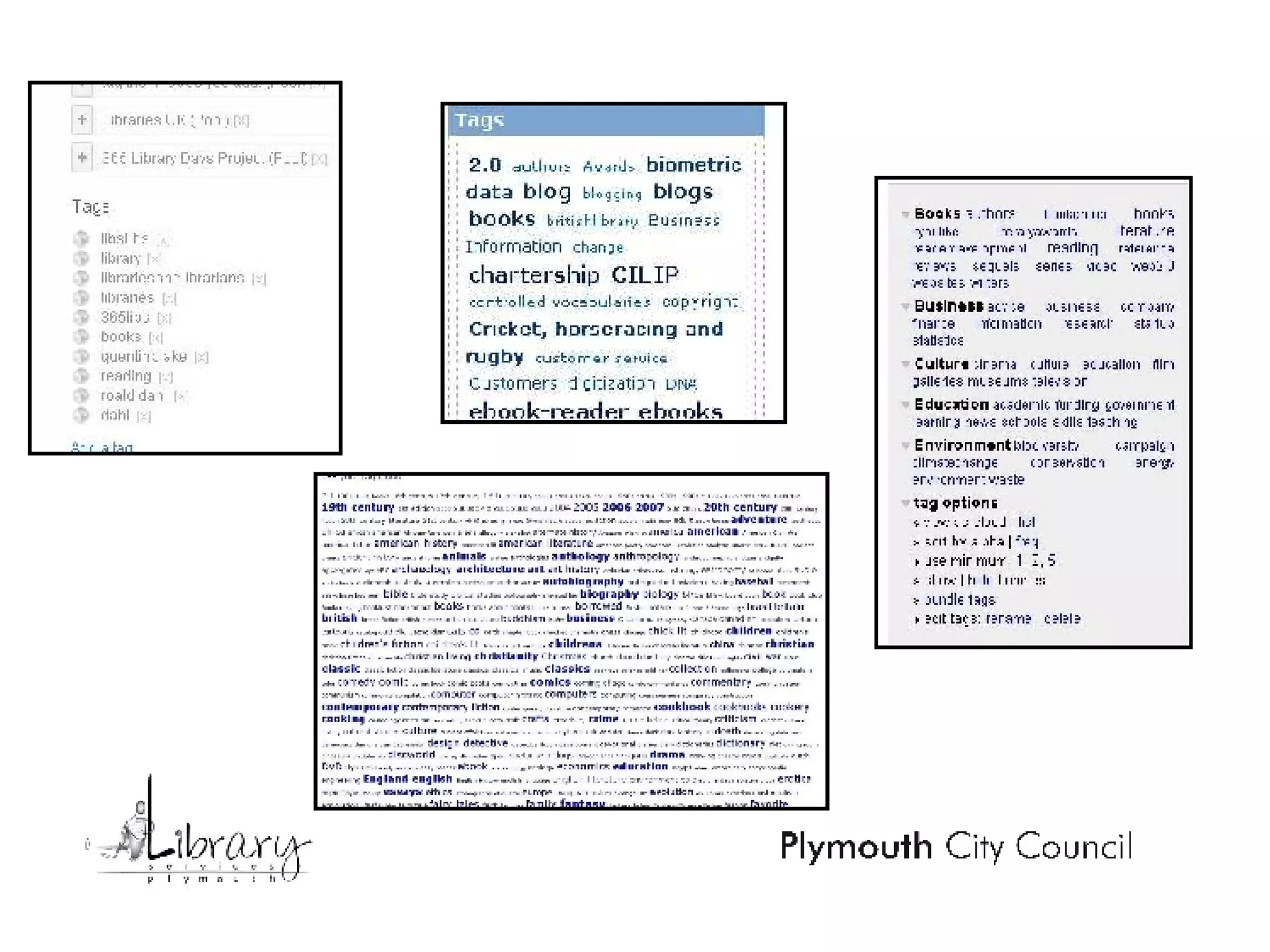
Tagging and Folksonomies Tag – keyword associated with or assigned to a piece of information Informal, chosen by the author/creator or by consumers/viewers/community Folksonomy – social/collaborative tagging
 
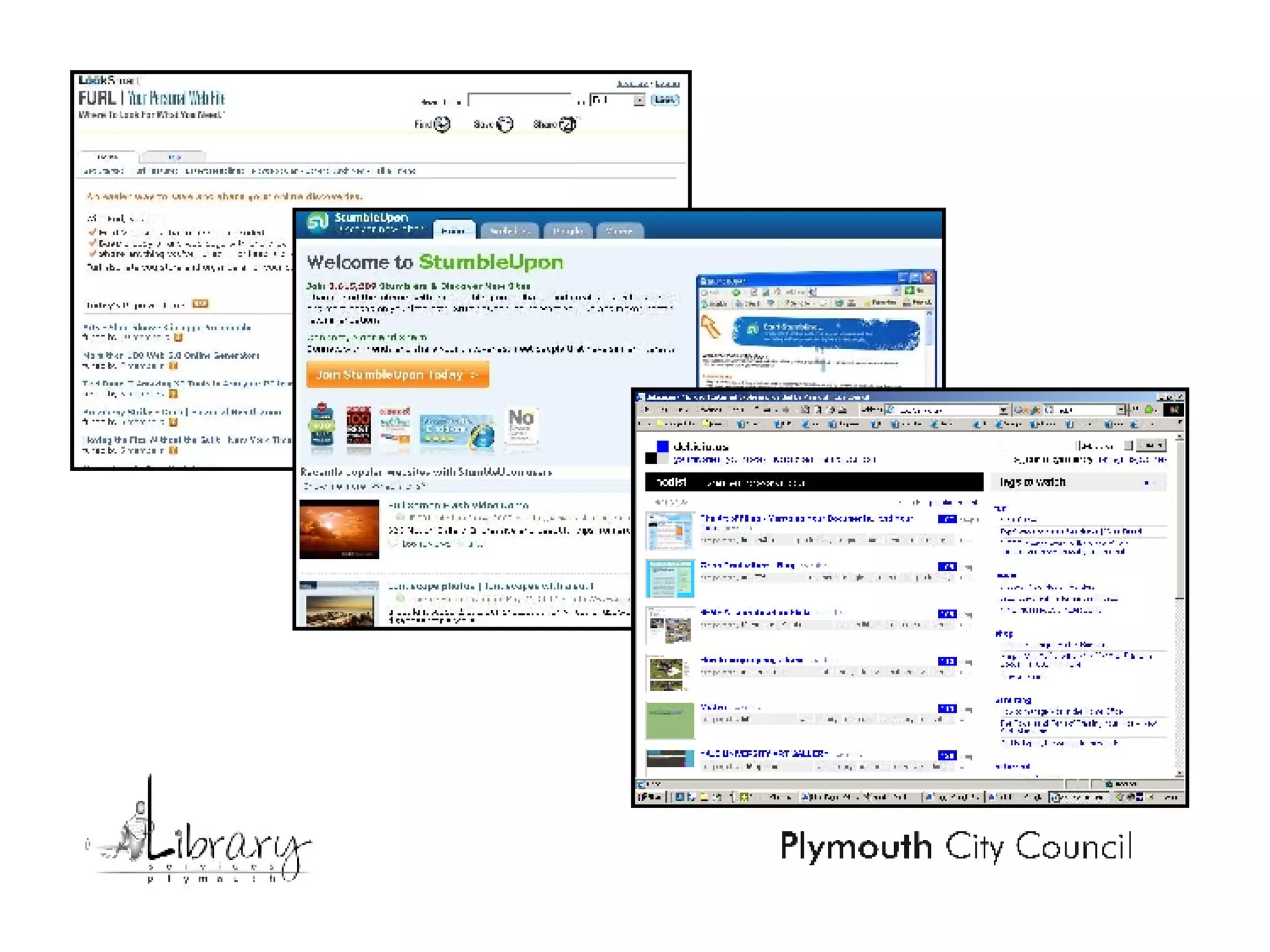
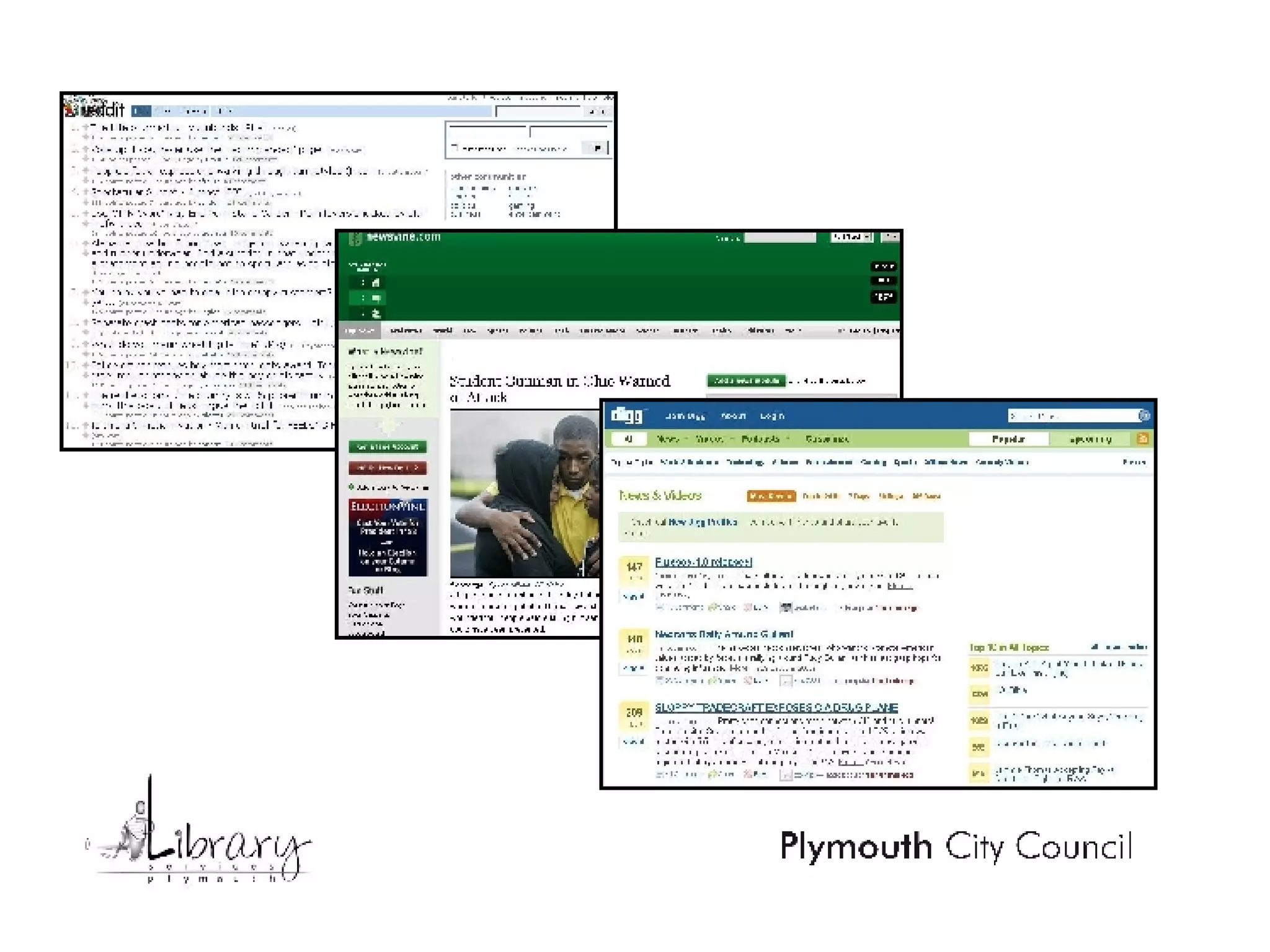
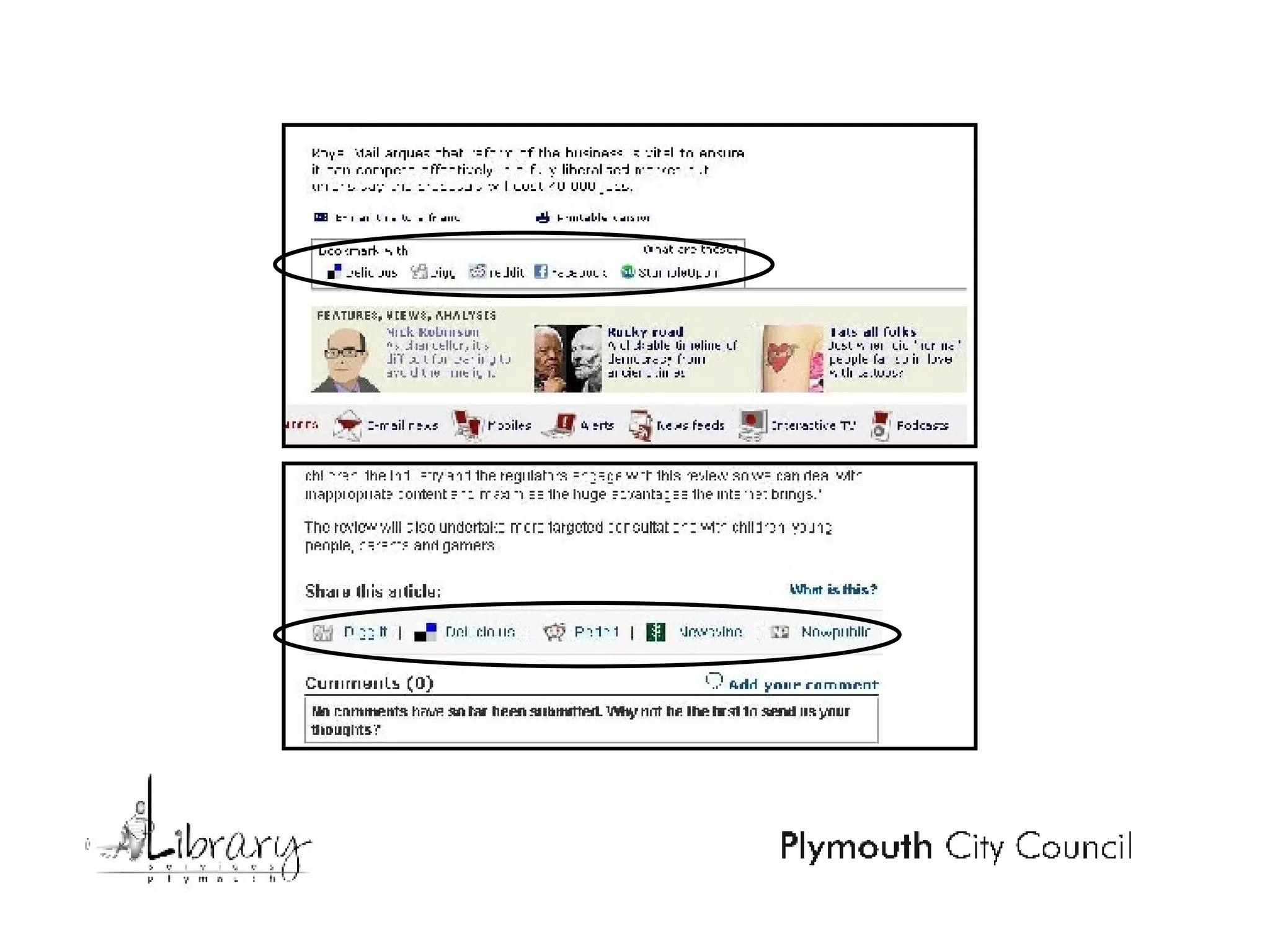
Social bookmarking Store your bookmarks/favourites online Share with others See what others have bookmarked Usually organised by tags


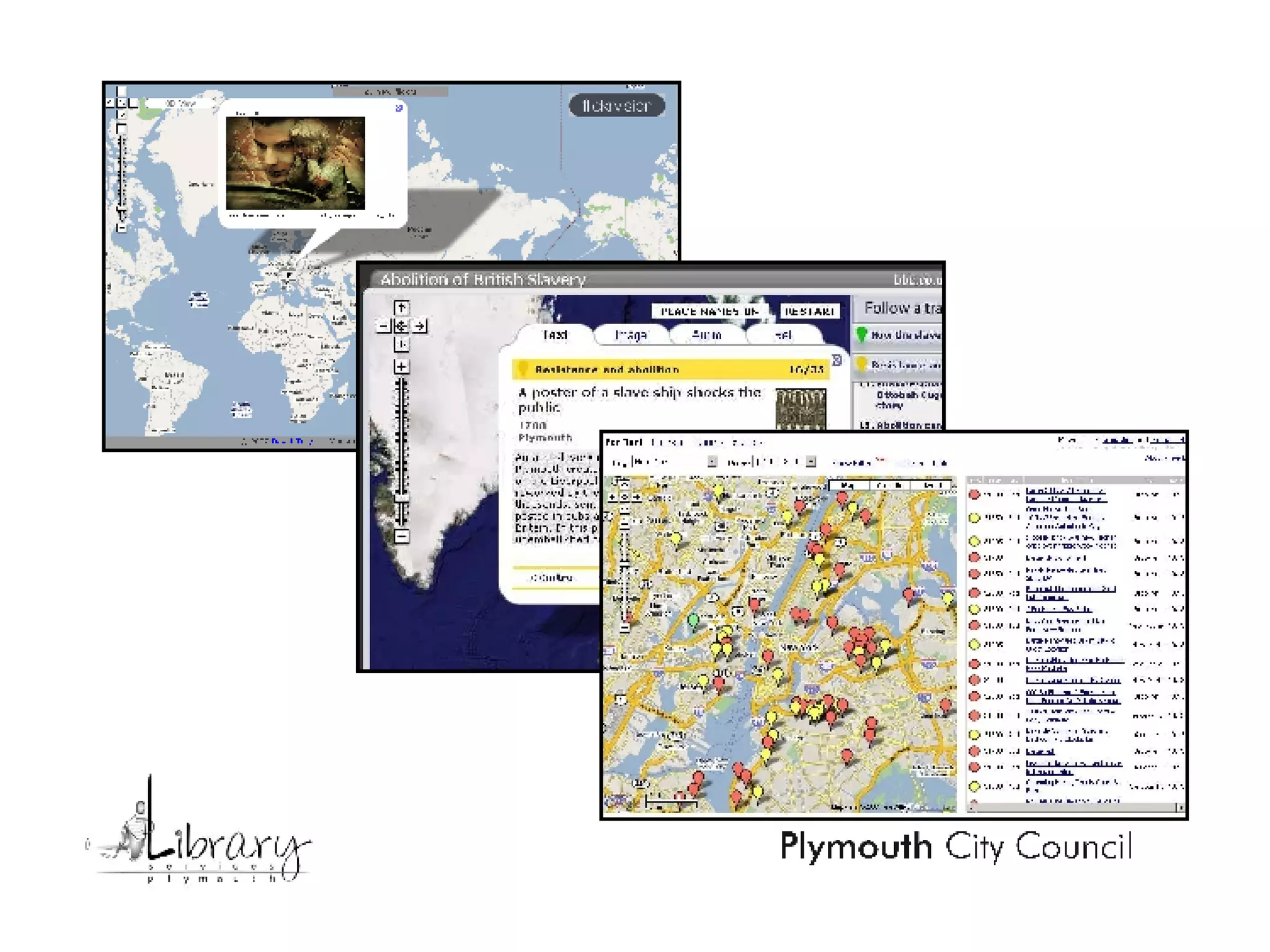
Mashups A mashup is a web application that combines data from more than one source into a single integrated tool….thereby creating a new and distinct web service that was not originally envisaged by either source. http://en.wikipedia.org/wiki/Mashup_%28web_application_hybrid%29
 
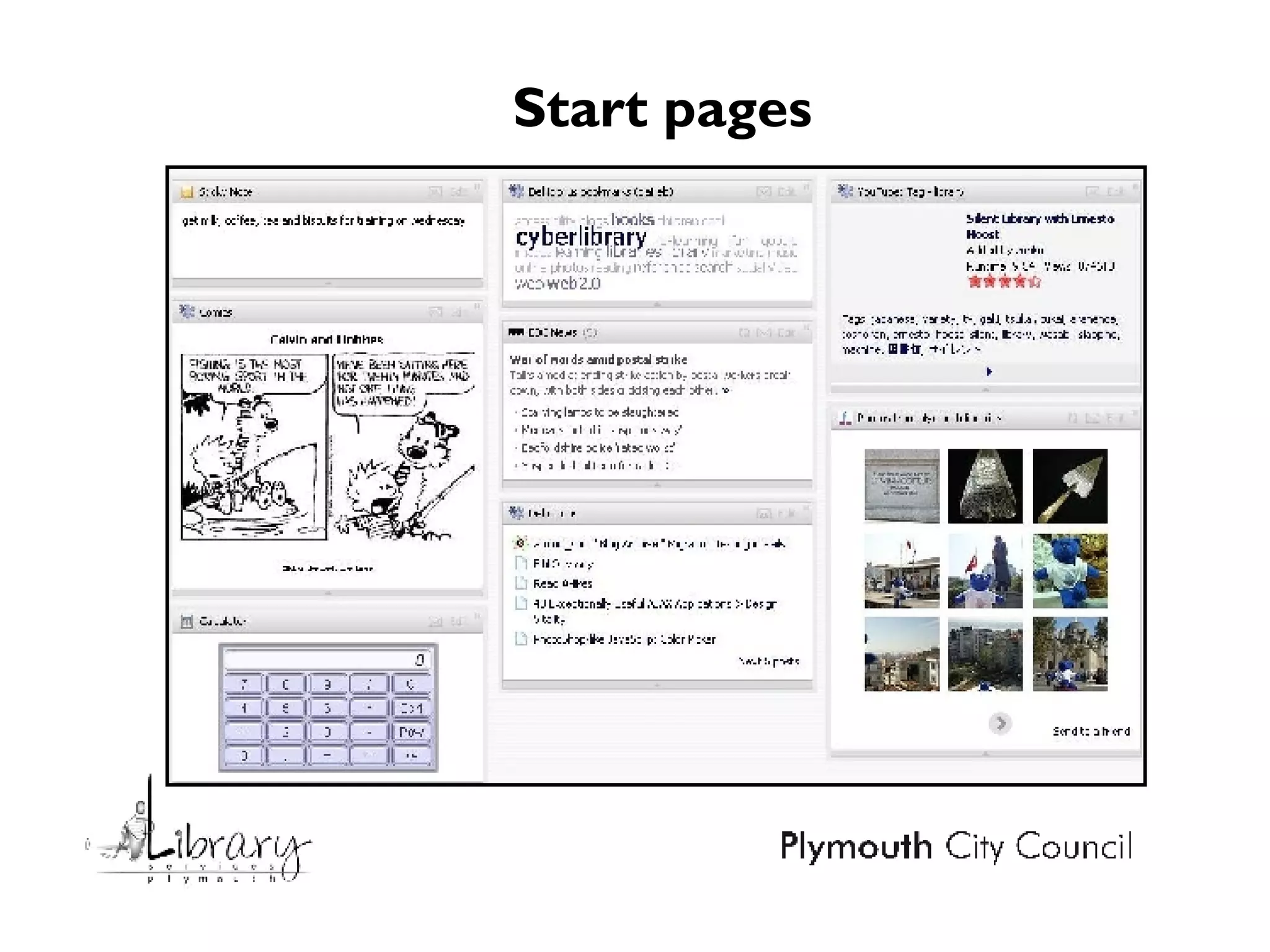
Start pages
Social networking  A social network service focuses on the building and verifying of online social networks for communities of people who share interests and activities, or who are interested in exploring the interests and activities of others, and which necessitates the use of software. Most social network services are primarily web based and provide a collection of various ways for users to interact, such  as chat, messaging, email, video, voice chat, file sharing, blogging, discussion groups, and so on. http://en.wikipedia.org/wiki/Social_networking
 
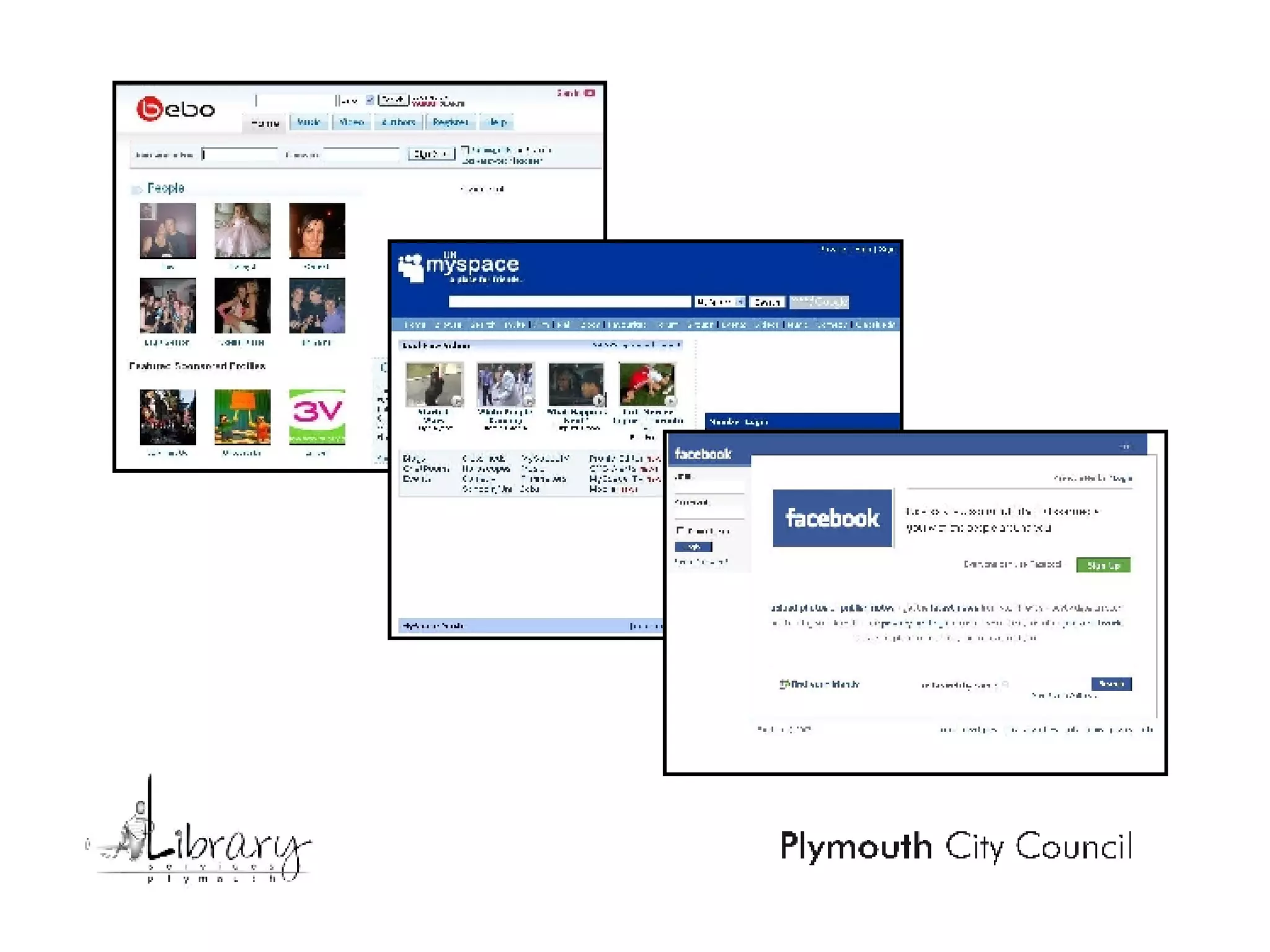
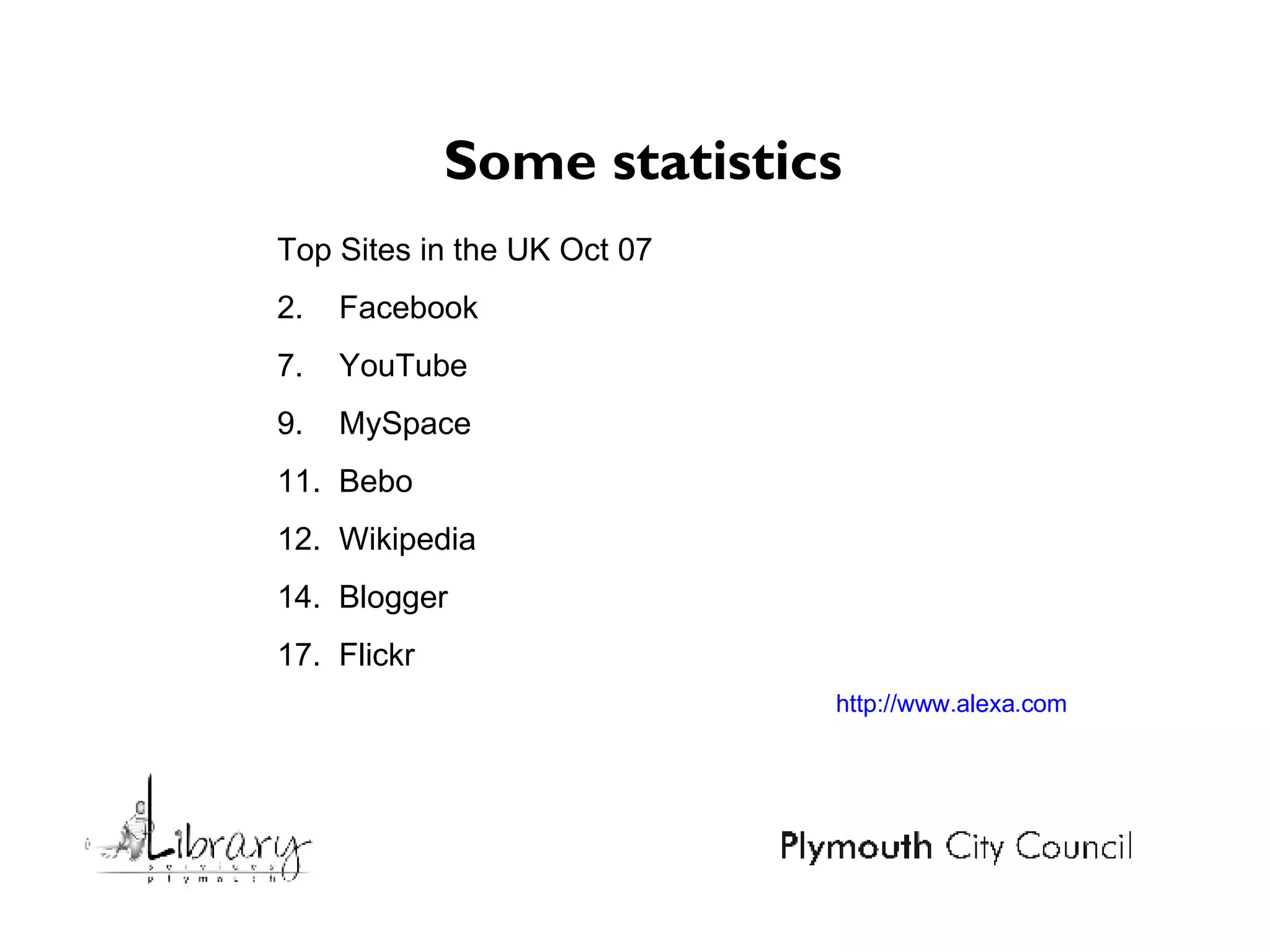
The main types of social networking services are those which contain directories of some categories (such as former classmates), means to connect with friends (usually with self-description pages), and recommender systems linked to trust. Popular methods now combine many of these, with MySpace, Bebo and Facebook being the mostly widely used in 2007. http://en.wikipedia.org/wiki/Social_networking
 
 
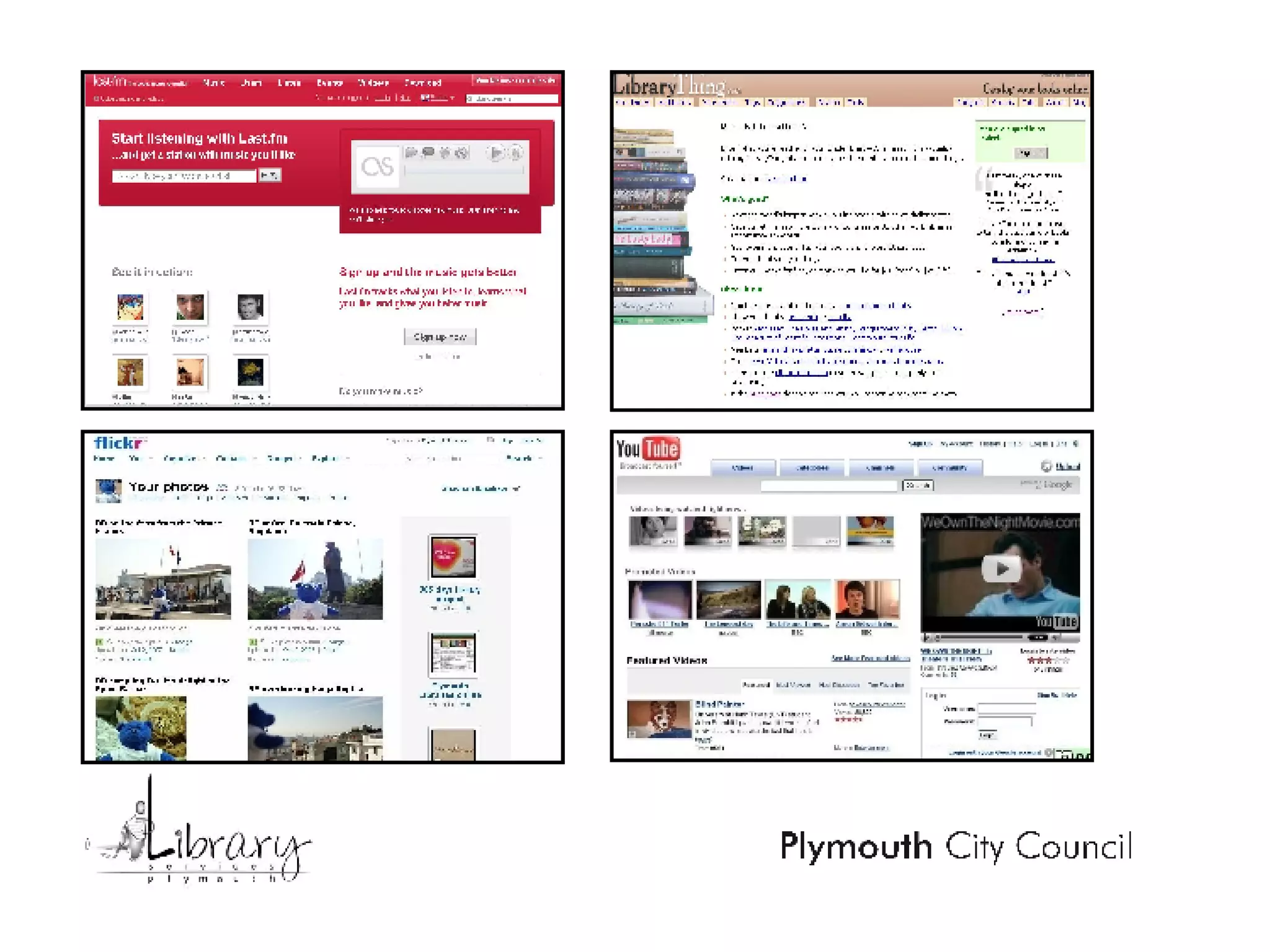
Some statistics  Top Sites in the UK Oct 07 2.  Facebook 7.  YouTube 9.  MySpace 11.  Bebo  12.  Wikipedia  14.  Blogger  17.  Flickr http://www.alexa.com
Thank you for listening Any questions?

Web2.0 An Introduction

  • 1.
    An introduction to Web2.0 Claire Back
  • 2.
    What is Web2.0?A perceived second generation of web-based communities and hosted services – such as social-networking sites, wikis and folksonomies – which aim to facilitate collaboration and sharing between users. Although the term suggests a new version of the World Wide Web, it does not refer to an update to any technical specifications, but to changes in the ways software developers and end-users use the web. http://en.wikipedia.org/wiki/Web2.0
  • 3.
  • 4.
    Characteristics of Web2.0Read/write web Web as a platform Permanent beta Open source Radical trust
  • 5.
    Terminology associated withWeb2.0 RSS blogs wikis feeds mash-ups social networking tagging folksonomies API tag cloud social software podcasts
  • 6.
    Blogging Online diary/journalBrief entries arranged in reverse chronological order Most recent entry at the top Quick and easy way to publish content online Ability to comment
  • 7.
    Create your own www.blogger.com www.wordpress.com
  • 8.
  • 9.
  • 10.
    Really Simple Syndication/RichSite Summary Also known as news feeds Allows you to be notified when new content appears without having to visit a site. Easy way to receive updates from your favourite sites or blogs Can save you a lot of time RSS
  • 11.
    Web-based news readerswww.google.com/reader www.bloglines.com
  • 12.
    Wikis A collaborativewebsite that can be edited by anyone with access to it
  • 13.
  • 14.
    Create your ownhttp://pbwiki.com www.wetpaint.com
  • 15.
    Tagging and FolksonomiesTag – keyword associated with or assigned to a piece of information Informal, chosen by the author/creator or by consumers/viewers/community Folksonomy – social/collaborative tagging
  • 16.
  • 17.
    Social bookmarking Storeyour bookmarks/favourites online Share with others See what others have bookmarked Usually organised by tags
  • 18.
  • 19.
  • 20.
  • 21.
    Mashups A mashupis a web application that combines data from more than one source into a single integrated tool….thereby creating a new and distinct web service that was not originally envisaged by either source. http://en.wikipedia.org/wiki/Mashup_%28web_application_hybrid%29
  • 22.
  • 23.
  • 24.
    Social networking A social network service focuses on the building and verifying of online social networks for communities of people who share interests and activities, or who are interested in exploring the interests and activities of others, and which necessitates the use of software. Most social network services are primarily web based and provide a collection of various ways for users to interact, such as chat, messaging, email, video, voice chat, file sharing, blogging, discussion groups, and so on. http://en.wikipedia.org/wiki/Social_networking
  • 25.
  • 26.
    The main typesof social networking services are those which contain directories of some categories (such as former classmates), means to connect with friends (usually with self-description pages), and recommender systems linked to trust. Popular methods now combine many of these, with MySpace, Bebo and Facebook being the mostly widely used in 2007. http://en.wikipedia.org/wiki/Social_networking
  • 27.
  • 28.
  • 29.
    Some statistics Top Sites in the UK Oct 07 2. Facebook 7. YouTube 9. MySpace 11. Bebo 12. Wikipedia 14. Blogger 17. Flickr http://www.alexa.com
  • 30.
    Thank you forlistening Any questions?