Building a DH Community of
Practice in the Liberal Arts
College Library
Ashley Sanders, Ph.D. (History)
Digital Scholarship Librarian
Claremont Colleges Library
Roadmap
1. Define “community of practice”
2. Essential features of a successful faculty community of
practice
3. Building a scholarly communications community of
practice
4. Claremont Colleges Library – one year into the
development of a digital humanities community of
practice
1. “Community of Practice”:
•According to Lave & Wenger
▫A group of learners united in their shared
interest in a particular topic
▫“Newcomers” and “old-timers” who learn
together and from each other in a social
context
2. Essential features of a successful
faculty community of practice
1. Trust
2. Shared commitment
3. University & department support
4. Voluntary
5. Openness to change
6. Participant-defined desired outcomes
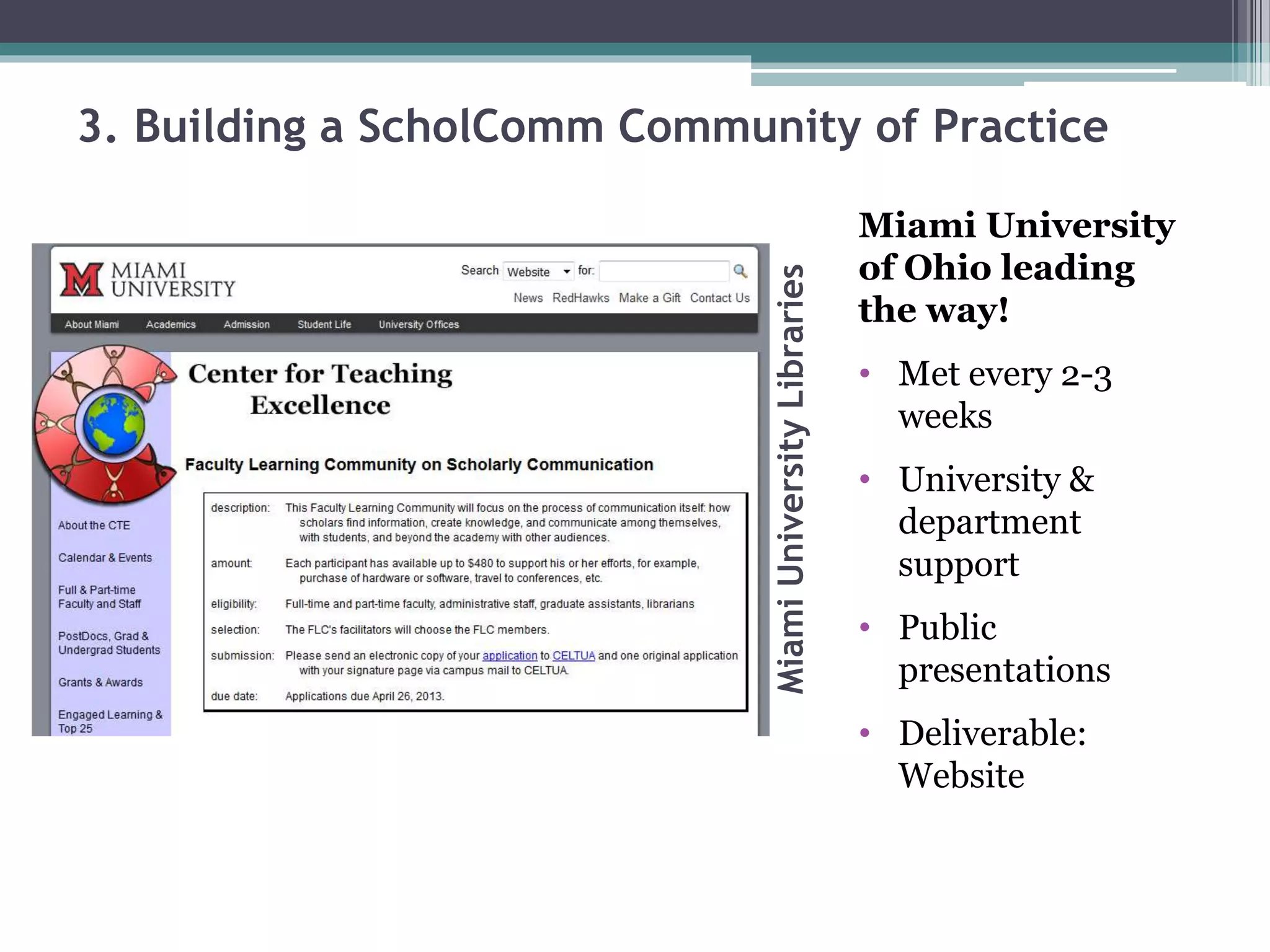
MiamiUniversityLibraries
Miami University
of Ohio leading
the way!
• Met every 2-3
weeks
• University &
department
support
• Public
presentations
• Deliverable:
Website
3. Building a ScholComm Community of Practice
4. Case Study:
Claremont Colleges Library
•5 Claremont undergraduate colleges:
▫Pomona College
▫Scripps College
▫Claremont McKenna College
▫Harvey Mudd College
▫Pitzer College
•Mellon DH grant: “Digital Humanities at
the Claremont Colleges: Developing
Capacity and Community”
DH @ the CCL:
• “Intro to DH” Short Course
• DH Workshop Series at the
Library
• DH Project Design Consulting
• GIS Workshops and
Consulting
• Audio/Video Consulting
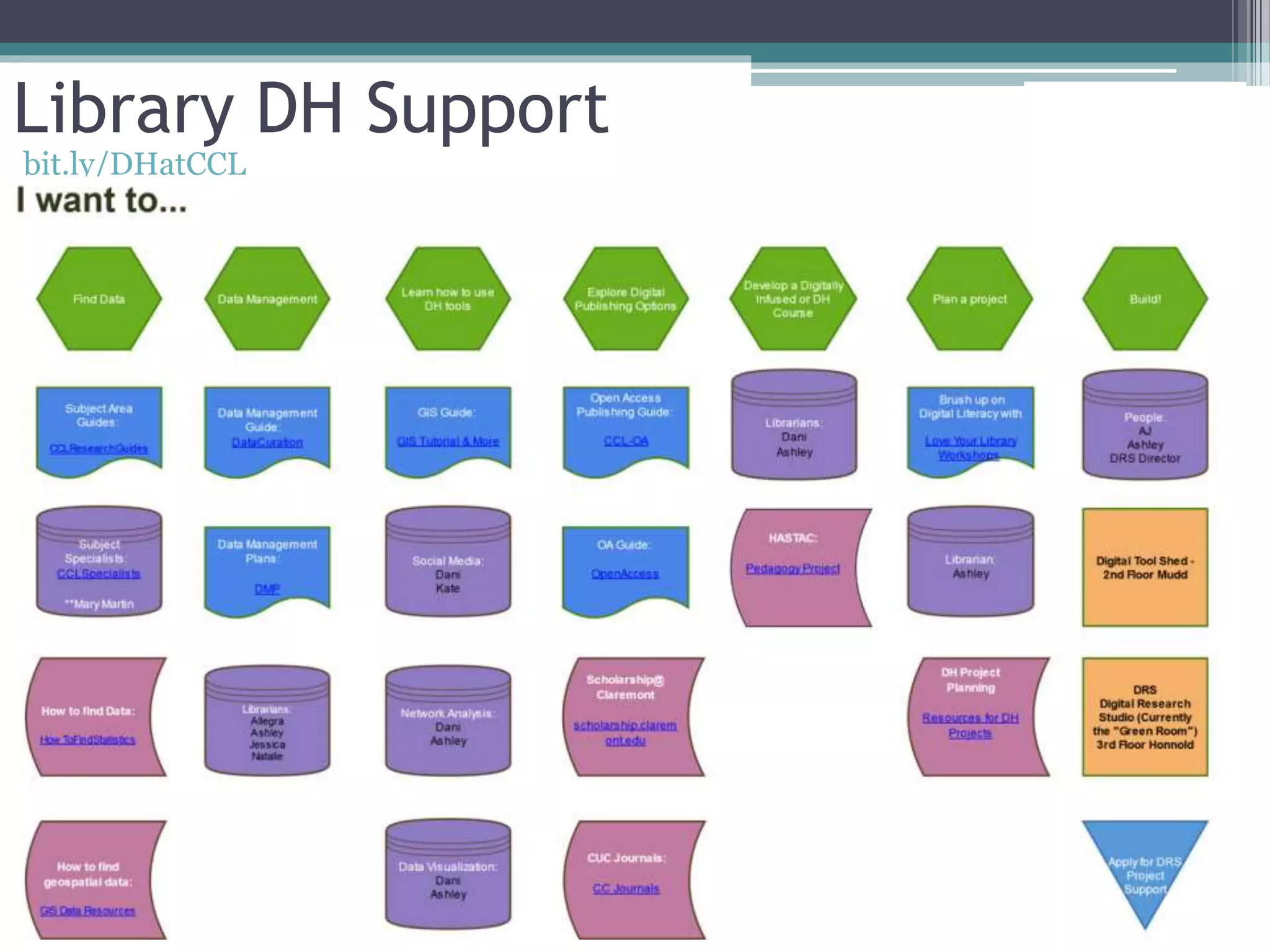
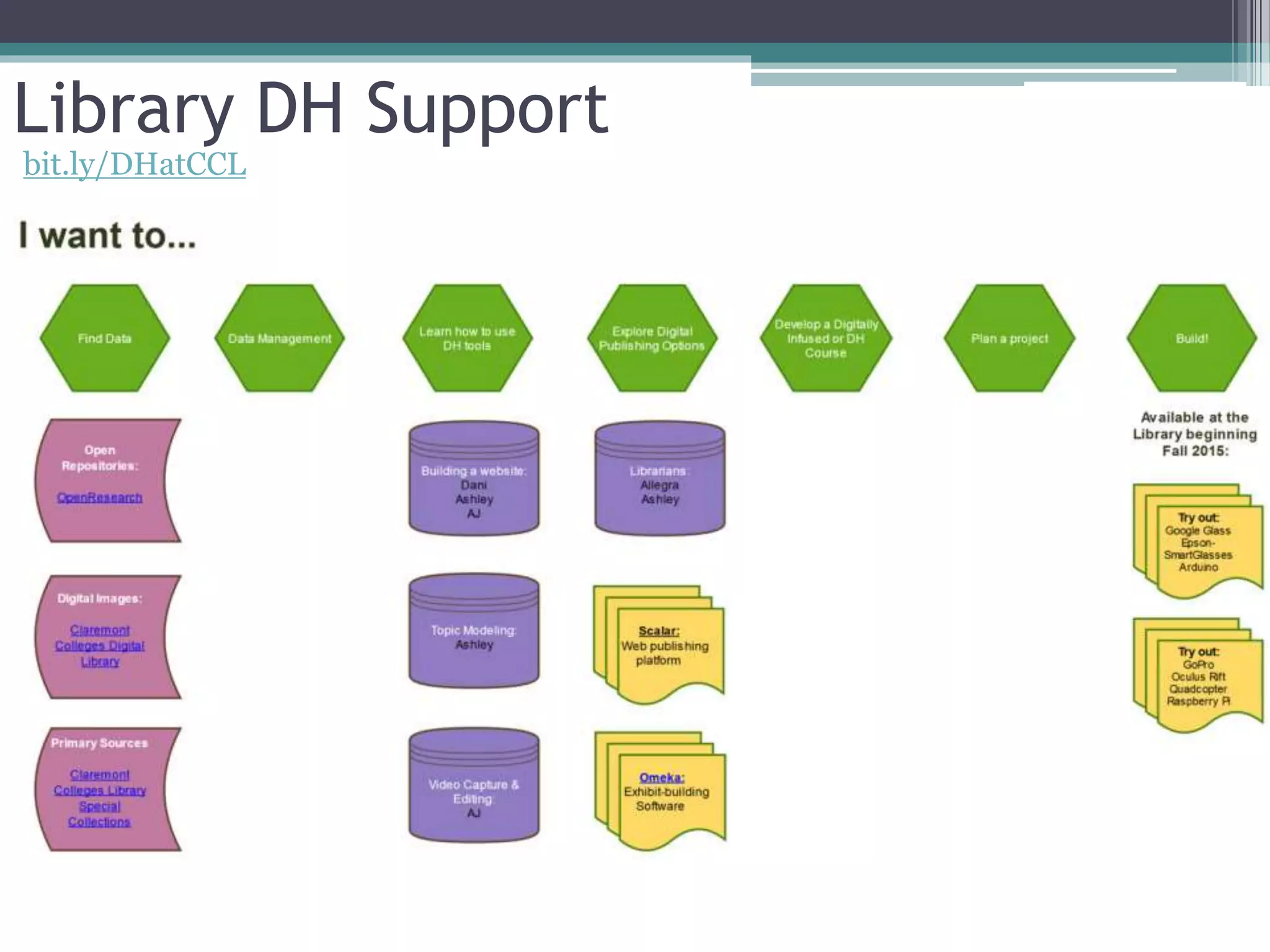
Library DH Support
bit.ly/DHatCCL
Library DH Support
bit.ly/DHatCCL
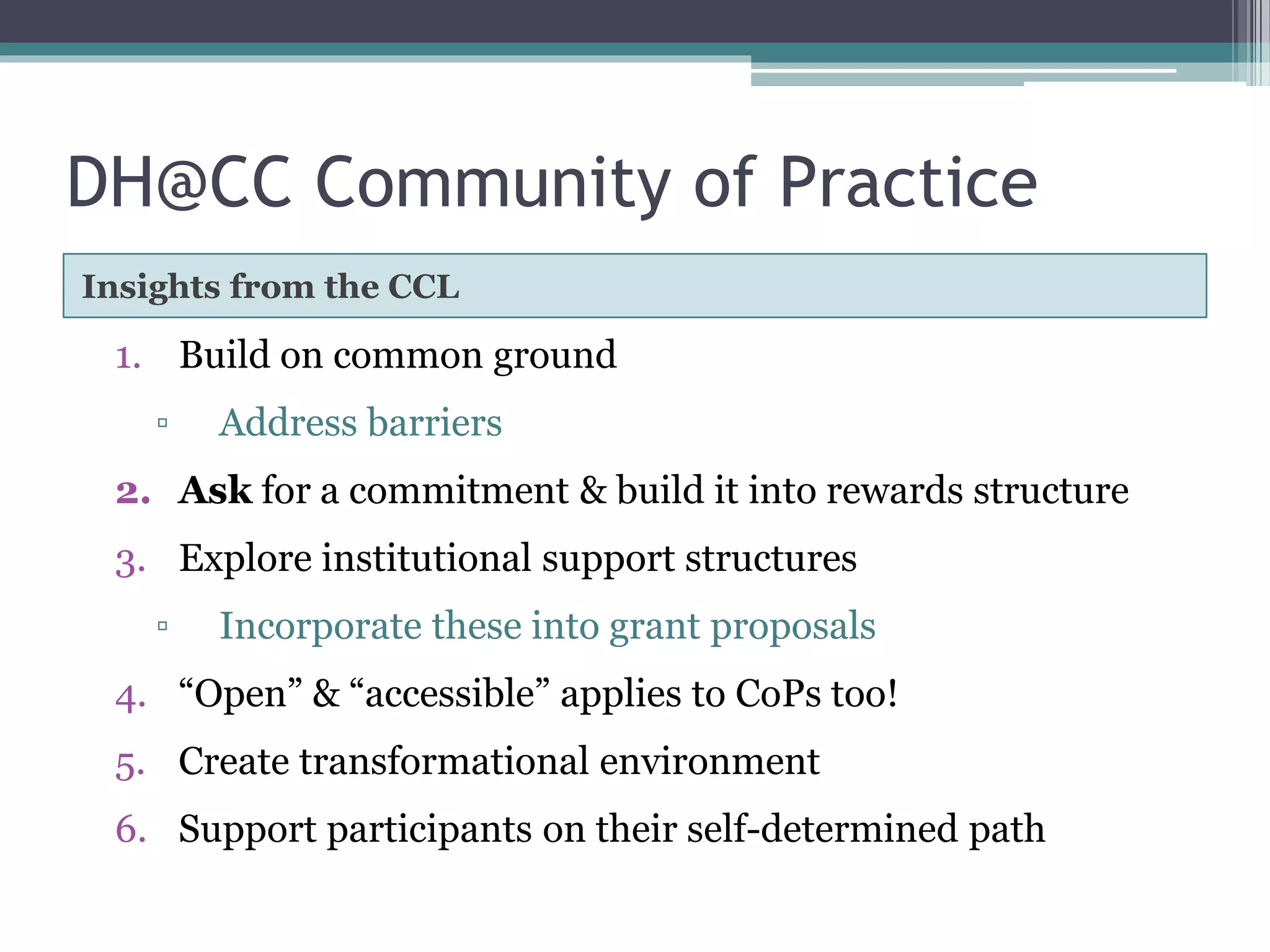
DH@CC Community of Practice
Insights from the CCL
1. Build on common ground
▫ Address barriers
2. Ask for a commitment & build it into rewards structure
3. Explore institutional support structures
▫ Incorporate these into grant proposals
4. “Open” & “accessible” applies to CoPs too!
5. Create transformational environment
6. Support participants on their self-determined path
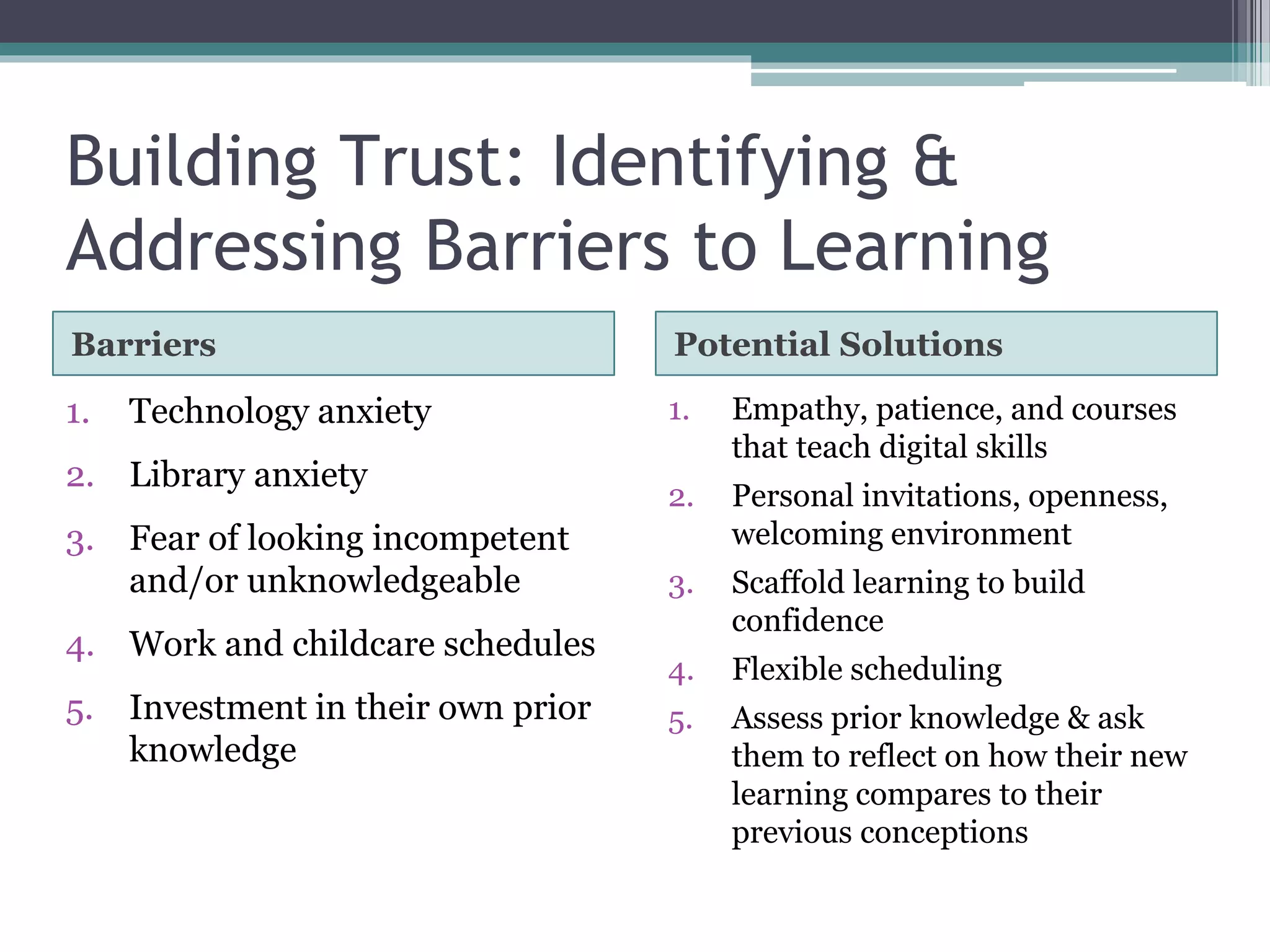
Building Trust: Identifying &
Addressing Barriers to Learning
Barriers Potential Solutions
1. Technology anxiety
2. Library anxiety
3. Fear of looking incompetent
and/or unknowledgeable
4. Work and childcare schedules
5. Investment in their own prior
knowledge
1. Empathy, patience, and courses
that teach digital skills
2. Personal invitations, openness,
welcoming environment
3. Scaffold learning to build
confidence
4. Flexible scheduling
5. Assess prior knowledge & ask
them to reflect on how their new
learning compares to their
previous conceptions
DH@CC Community of Practice
Insights from the CCL
1. Build on common ground
▫ Address barriers
2. Ask for a commitment & build it into rewards structure
3. Explore institutional support structures
▫ Incorporate these into grant proposals
4. “Open” & “accessible” applies to CoPs too!
5. Create transformational environment
6. Support participants on their self-determined path
Discussion Questions
How do faculty, students, and librarians engage
with digital humanities/scholarship on your
campus?
Do you have a formal DH/DS curriculum?
What is your library’s role in your DH/DS
program?
How do you approach training for faculty in
DH/DS?
Building DH Community of Practice

Building DH Community of Practice

  • 1.
    Building a DHCommunity of Practice in the Liberal Arts College Library Ashley Sanders, Ph.D. (History) Digital Scholarship Librarian Claremont Colleges Library
  • 2.
    Roadmap 1. Define “communityof practice” 2. Essential features of a successful faculty community of practice 3. Building a scholarly communications community of practice 4. Claremont Colleges Library – one year into the development of a digital humanities community of practice
  • 3.
    1. “Community ofPractice”: •According to Lave & Wenger ▫A group of learners united in their shared interest in a particular topic ▫“Newcomers” and “old-timers” who learn together and from each other in a social context
  • 4.
    2. Essential featuresof a successful faculty community of practice 1. Trust 2. Shared commitment 3. University & department support 4. Voluntary 5. Openness to change 6. Participant-defined desired outcomes
  • 5.
    MiamiUniversityLibraries Miami University of Ohioleading the way! • Met every 2-3 weeks • University & department support • Public presentations • Deliverable: Website 3. Building a ScholComm Community of Practice
  • 6.
    4. Case Study: ClaremontColleges Library •5 Claremont undergraduate colleges: ▫Pomona College ▫Scripps College ▫Claremont McKenna College ▫Harvey Mudd College ▫Pitzer College •Mellon DH grant: “Digital Humanities at the Claremont Colleges: Developing Capacity and Community”
  • 7.
    DH @ theCCL: • “Intro to DH” Short Course • DH Workshop Series at the Library • DH Project Design Consulting • GIS Workshops and Consulting • Audio/Video Consulting
  • 8.
  • 9.
  • 10.
    DH@CC Community ofPractice Insights from the CCL 1. Build on common ground ▫ Address barriers 2. Ask for a commitment & build it into rewards structure 3. Explore institutional support structures ▫ Incorporate these into grant proposals 4. “Open” & “accessible” applies to CoPs too! 5. Create transformational environment 6. Support participants on their self-determined path
  • 11.
    Building Trust: Identifying& Addressing Barriers to Learning Barriers Potential Solutions 1. Technology anxiety 2. Library anxiety 3. Fear of looking incompetent and/or unknowledgeable 4. Work and childcare schedules 5. Investment in their own prior knowledge 1. Empathy, patience, and courses that teach digital skills 2. Personal invitations, openness, welcoming environment 3. Scaffold learning to build confidence 4. Flexible scheduling 5. Assess prior knowledge & ask them to reflect on how their new learning compares to their previous conceptions
  • 12.
    DH@CC Community ofPractice Insights from the CCL 1. Build on common ground ▫ Address barriers 2. Ask for a commitment & build it into rewards structure 3. Explore institutional support structures ▫ Incorporate these into grant proposals 4. “Open” & “accessible” applies to CoPs too! 5. Create transformational environment 6. Support participants on their self-determined path
  • 14.
    Discussion Questions How dofaculty, students, and librarians engage with digital humanities/scholarship on your campus? Do you have a formal DH/DS curriculum? What is your library’s role in your DH/DS program? How do you approach training for faculty in DH/DS?