Bathes 5 Codes
 Linguist Roland Barthes (1915-1980) was interested in semiotics
(the meanings of signs) and the structures that underpin our
understanding of the world (Structuralism).
 Barthes said that texts may be:
 'open' (unravelled in a lot of different ways)
 or 'closed' (there is only one obvious thread to pull on).
 Barthes described Five Codes which are woven into any text to
create meaning:
 The Cultural (Referential) Code
 The Symbolic Code
 The Semantic Code
 The Hermeneutic (Enigma) Code
 The Proairetic (Action) Code
The Cultural (Referential) Code
 This code refers to any external body of knowledge held by the
audience. Directors rely on the audience having this knowledge
present in order to make sense of the text.
 Typically this involves either science or religion, although other banks
of knowledge, such as magical truths, may be used in fantasy
stories.
Example
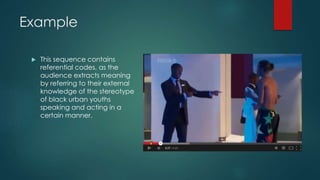
 This sequence contains
referential codes, as the
audience extracts meaning
by referring to their external
knowledge of the stereotype
of black urban youths
speaking and acting in a
certain manner.
The Semantic Code
 This code refers to connotations (additional meanings beyond the
literal) within the narrative that give additional meaning to the basic
denotative meaning of the text.
Example
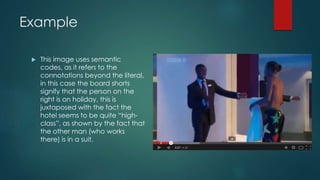
 This image uses semantic
codes, as it refers to the
connotations beyond the literal,
in this case the board shorts
signify that the person on the
right is on holiday, this is
juxtaposed with the fact the
hotel seems to be quite “high-
class”, as shown by the fact that
the other man (who works
there) is in a suit.
The Symbolic Code
 This is very similar to the Semantic Code, but acts at a wider level,
organizing semantic meanings into broader and deeper sets of
meaning.
 This is typically done in the use of antithesis, where new meaning
arises out of opposing and conflict ideas.
Example
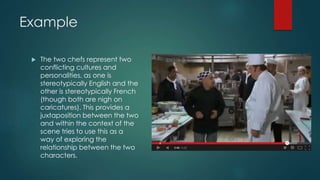
 The two chefs represent two
conflicting cultures and
personalities, as one is
stereotypically English and the
other is stereotypically French
(though both are nigh on
caricatures). This provides a
juxtaposition between the two
and within the context of the
scene tries to use this as a
way of exploring the
relationship between the two
characters.
The Hermeneutic (Enigma) Code
 The Hermeneutic Code refers to any element of the story that is not
fully explained and hence becomes a mystery to the reader.
 The purpose of the director in this is typically to keep the audience
guessing, arresting the enigma, until the final scenes when all is
revealed and all loose ends are tied off and closure is achieved.
 Unanswered enigmas can be frustrating for the audience.
Example
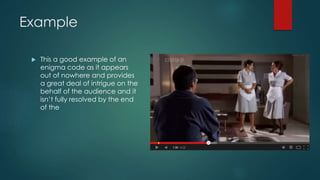
 This a good example of an
enigma code as it appears
out of nowhere and provides
a great deal of intrigue on the
behalf of the audience and it
isn’t fully resolved by the end
of the
The Proairetic (Action) Code
 The Proairetic Code builds tension. It refers to any sequential action
or events that indicate something else is going to happen, and
which hence gets the viewer guessing as to what will happen next.
 The Hermeneutic and Proairetic Codes work as a pair to develop
the story's tensions and keep the viewer interested.
Example
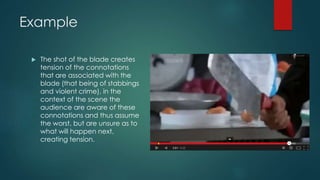
 The shot of the blade creates
tension of the connotations
that are associated with the
blade (that being of stabbings
and violent crime), in the
context of the scene the
audience are aware of these
connotations and thus assume
the worst, but are unsure as to
what will happen next,
creating tension.

Codes

  • 1.
  • 2.
     Linguist RolandBarthes (1915-1980) was interested in semiotics (the meanings of signs) and the structures that underpin our understanding of the world (Structuralism).  Barthes said that texts may be:  'open' (unravelled in a lot of different ways)  or 'closed' (there is only one obvious thread to pull on).  Barthes described Five Codes which are woven into any text to create meaning:  The Cultural (Referential) Code  The Symbolic Code  The Semantic Code  The Hermeneutic (Enigma) Code  The Proairetic (Action) Code
  • 3.
    The Cultural (Referential)Code  This code refers to any external body of knowledge held by the audience. Directors rely on the audience having this knowledge present in order to make sense of the text.  Typically this involves either science or religion, although other banks of knowledge, such as magical truths, may be used in fantasy stories.
  • 4.
    Example  This sequencecontains referential codes, as the audience extracts meaning by referring to their external knowledge of the stereotype of black urban youths speaking and acting in a certain manner.
  • 5.
    The Semantic Code This code refers to connotations (additional meanings beyond the literal) within the narrative that give additional meaning to the basic denotative meaning of the text.
  • 6.
    Example  This imageuses semantic codes, as it refers to the connotations beyond the literal, in this case the board shorts signify that the person on the right is on holiday, this is juxtaposed with the fact the hotel seems to be quite “high- class”, as shown by the fact that the other man (who works there) is in a suit.
  • 7.
    The Symbolic Code This is very similar to the Semantic Code, but acts at a wider level, organizing semantic meanings into broader and deeper sets of meaning.  This is typically done in the use of antithesis, where new meaning arises out of opposing and conflict ideas.
  • 8.
    Example  The twochefs represent two conflicting cultures and personalities, as one is stereotypically English and the other is stereotypically French (though both are nigh on caricatures). This provides a juxtaposition between the two and within the context of the scene tries to use this as a way of exploring the relationship between the two characters.
  • 9.
    The Hermeneutic (Enigma)Code  The Hermeneutic Code refers to any element of the story that is not fully explained and hence becomes a mystery to the reader.  The purpose of the director in this is typically to keep the audience guessing, arresting the enigma, until the final scenes when all is revealed and all loose ends are tied off and closure is achieved.  Unanswered enigmas can be frustrating for the audience.
  • 10.
    Example  This agood example of an enigma code as it appears out of nowhere and provides a great deal of intrigue on the behalf of the audience and it isn’t fully resolved by the end of the
  • 11.
    The Proairetic (Action)Code  The Proairetic Code builds tension. It refers to any sequential action or events that indicate something else is going to happen, and which hence gets the viewer guessing as to what will happen next.  The Hermeneutic and Proairetic Codes work as a pair to develop the story's tensions and keep the viewer interested.
  • 12.
    Example  The shotof the blade creates tension of the connotations that are associated with the blade (that being of stabbings and violent crime), in the context of the scene the audience are aware of these connotations and thus assume the worst, but are unsure as to what will happen next, creating tension.