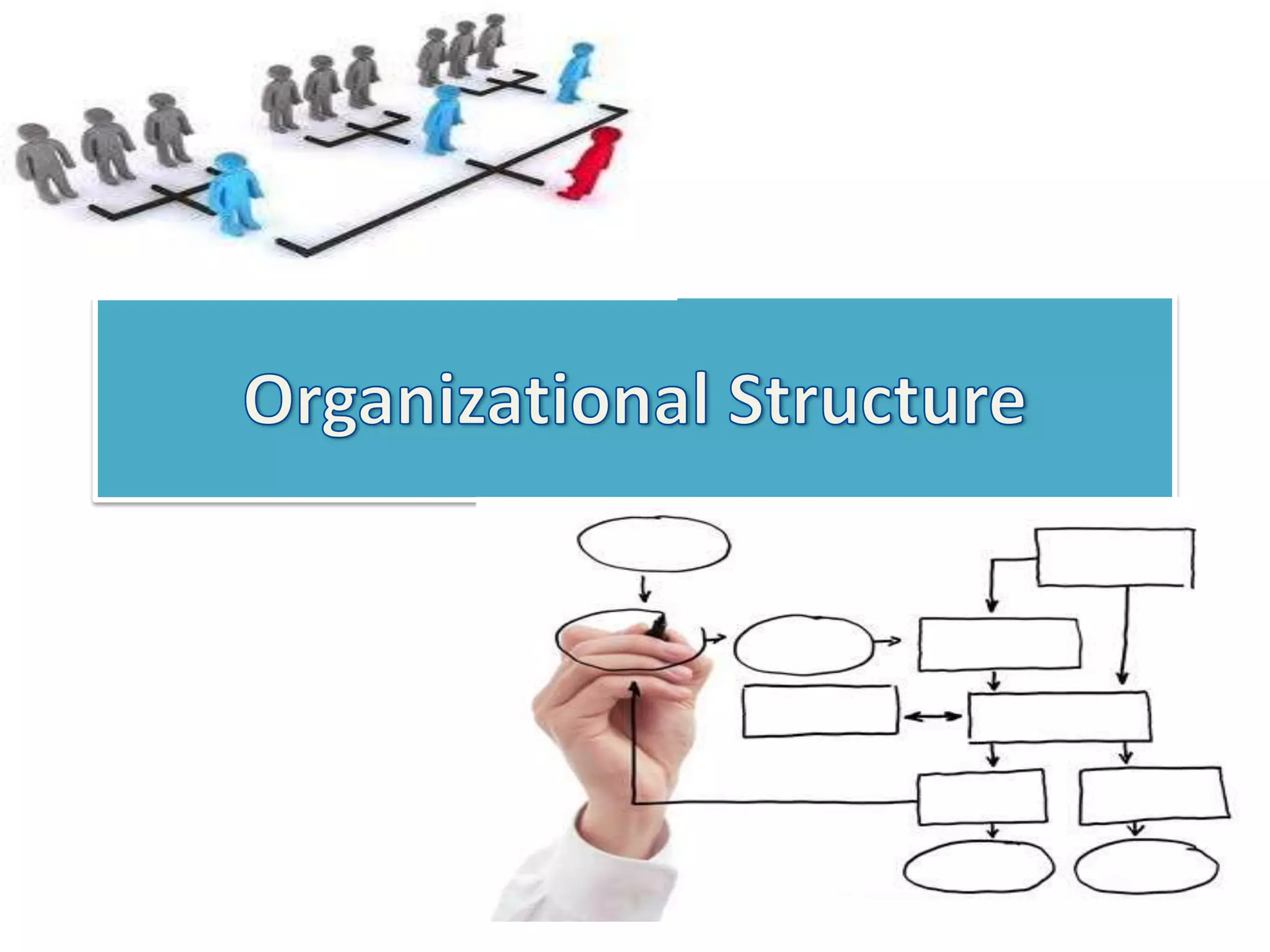
A social unit of people, systematically structured
  and managed to meet a need or to pursue
  collective goals on a continuing basis.
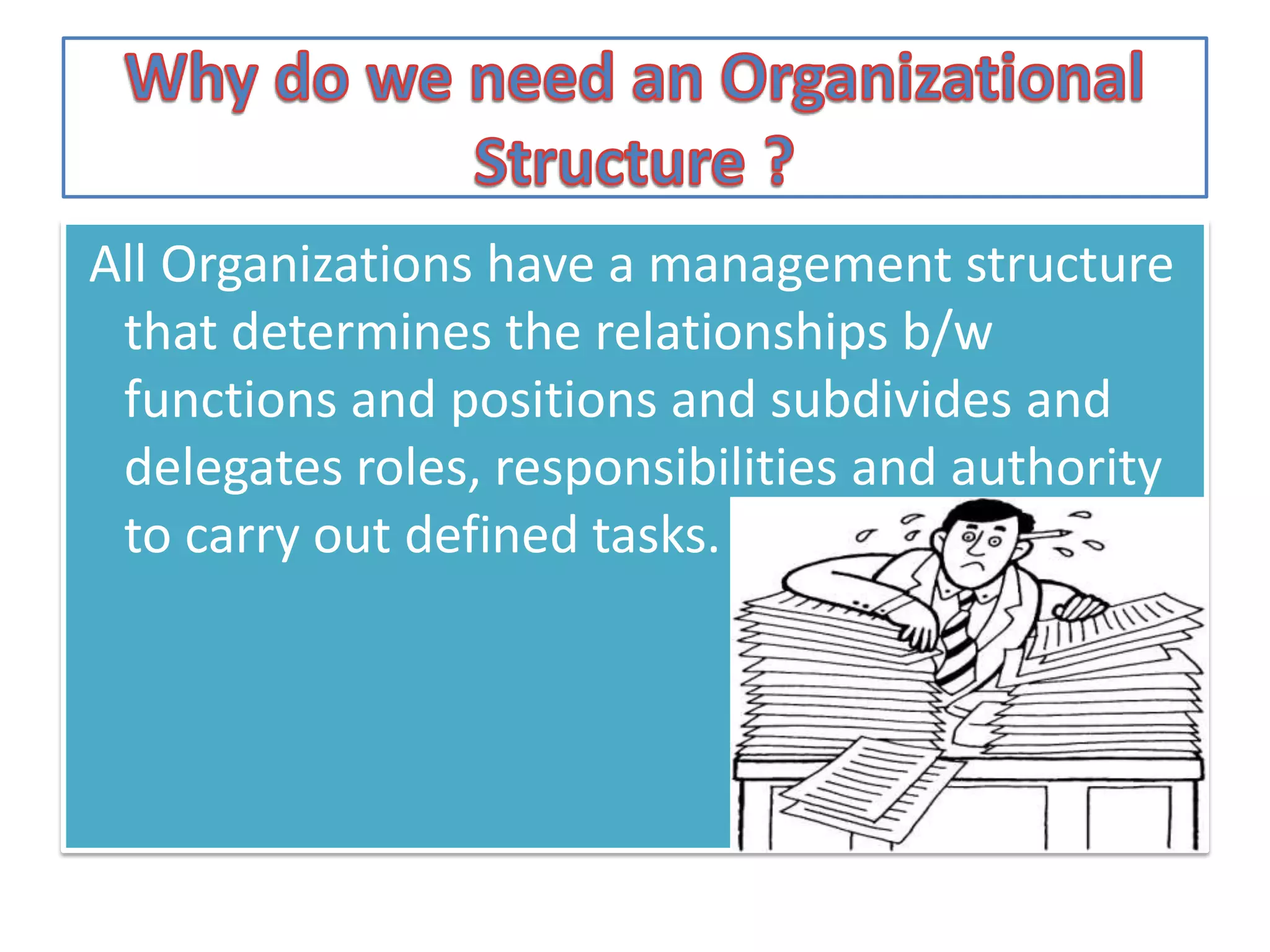
All Organizations have a management structure
 that determines the relationships b/w
 functions and positions and subdivides and
 delegates roles, responsibilities and authority
 to carry out defined tasks.
It is a framework within which an Organization
   arranges it’s lines of authorities and
   communications and allocates rights and
   duties.
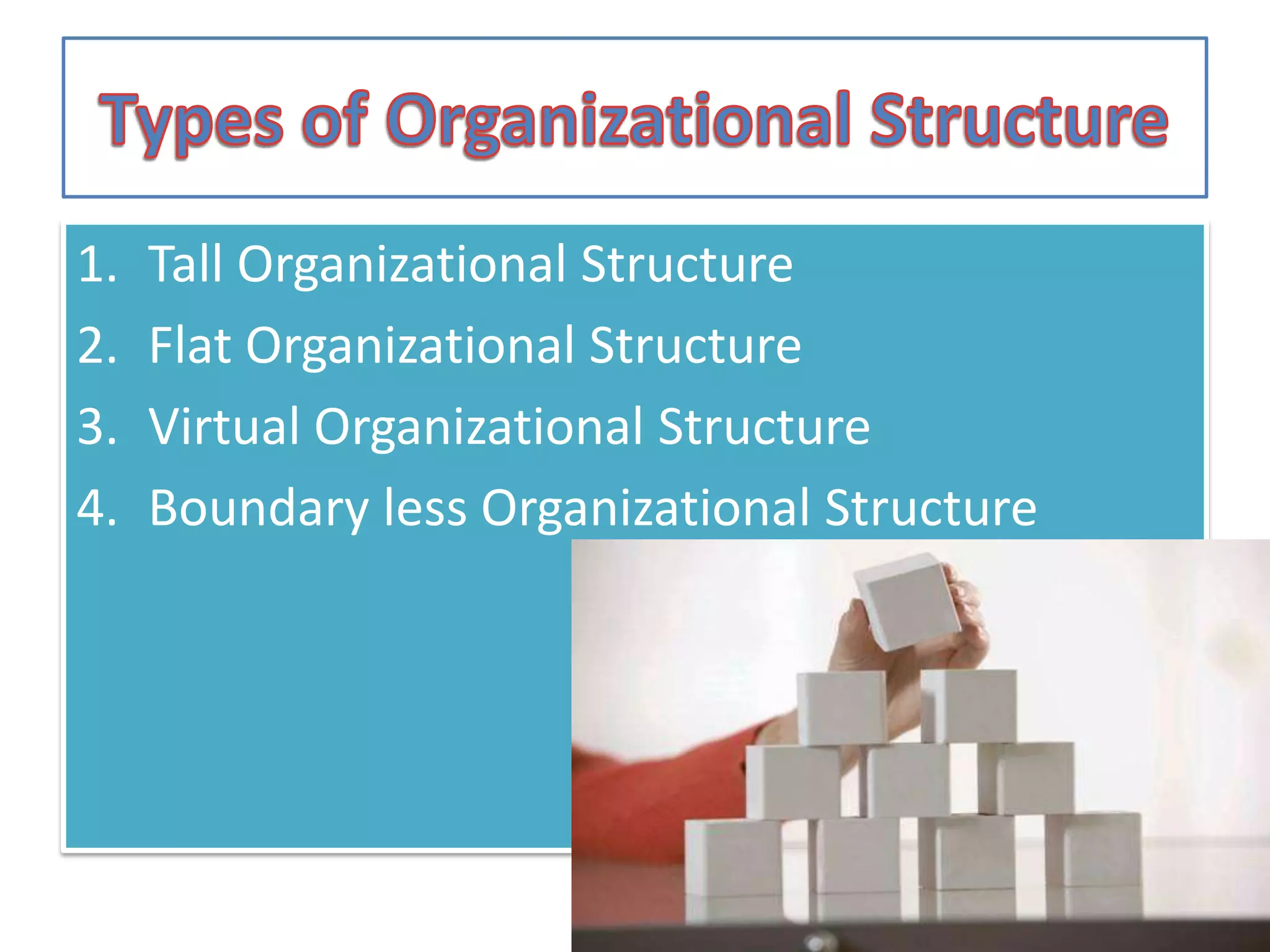
1.   Tall Organizational Structure
2.   Flat Organizational Structure
3.   Virtual Organizational Structure
4.   Boundary less Organizational Structure
• Large, complex organizations often require a
  taller hierarchy.
• In its simplest form, a tall structure results in one
  long chain of command similar to the military.
• As an organization grows, the number of
  management levels increases and the structure
  grows taller. In a tall structure, managers form
  many ranks and each has a small area of control.
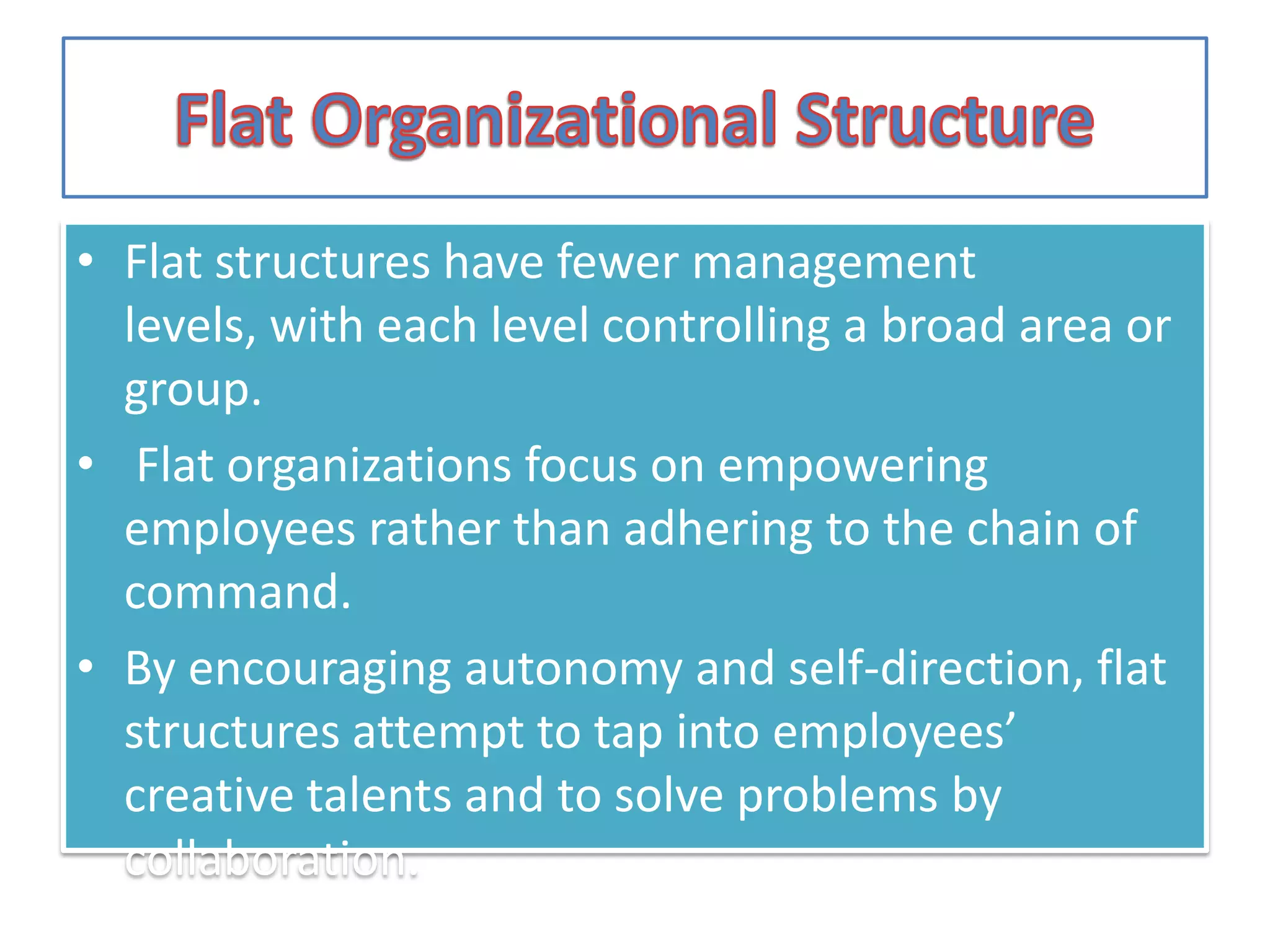
• Flat structures have fewer management
  levels, with each level controlling a broad area or
  group.
• Flat organizations focus on empowering
  employees rather than adhering to the chain of
  command.
• By encouraging autonomy and self-direction, flat
  structures attempt to tap into employees’
  creative talents and to solve problems by
  collaboration.
• Virtual organization can be thought of as a way in
which an organization uses information and
  communication technologies to replace or
  augment some aspect of the organization.
• People who are virtually organized primarily
  interact by electronic means.
• For example, many customer help desks link
  customers and consultants together via
  telephone or the Internet and problems may be
  solved without ever bringing people together
  face-to-face.
• A boundary less Organizational structure is a
  contemporary approach in Organizational design.
• It is an organization that is not defined by, or
  limited to the horizontal, vertical or external
  boundaries imposed by a pre-defined structure.
• It behaves more like an organism encouraging
  better integration among employees and closer
  partnership with stakeholders.
• It’s highly flexible and responsive and draws on
  talent wherever it’s found.
• Determines the manner and extent to which
  roles, power and responsibilities are
  delegated.
• Depends on objectives and strategies.
• Acts as a perspective through which
  individuals can see their organization and it’s
  environment.
•   Impacts effectiveness and efficiency.
•   Reduces redundant actions.
•   Promotes teamwork.
•   Improves communication.
•   Contributes to success or failure.
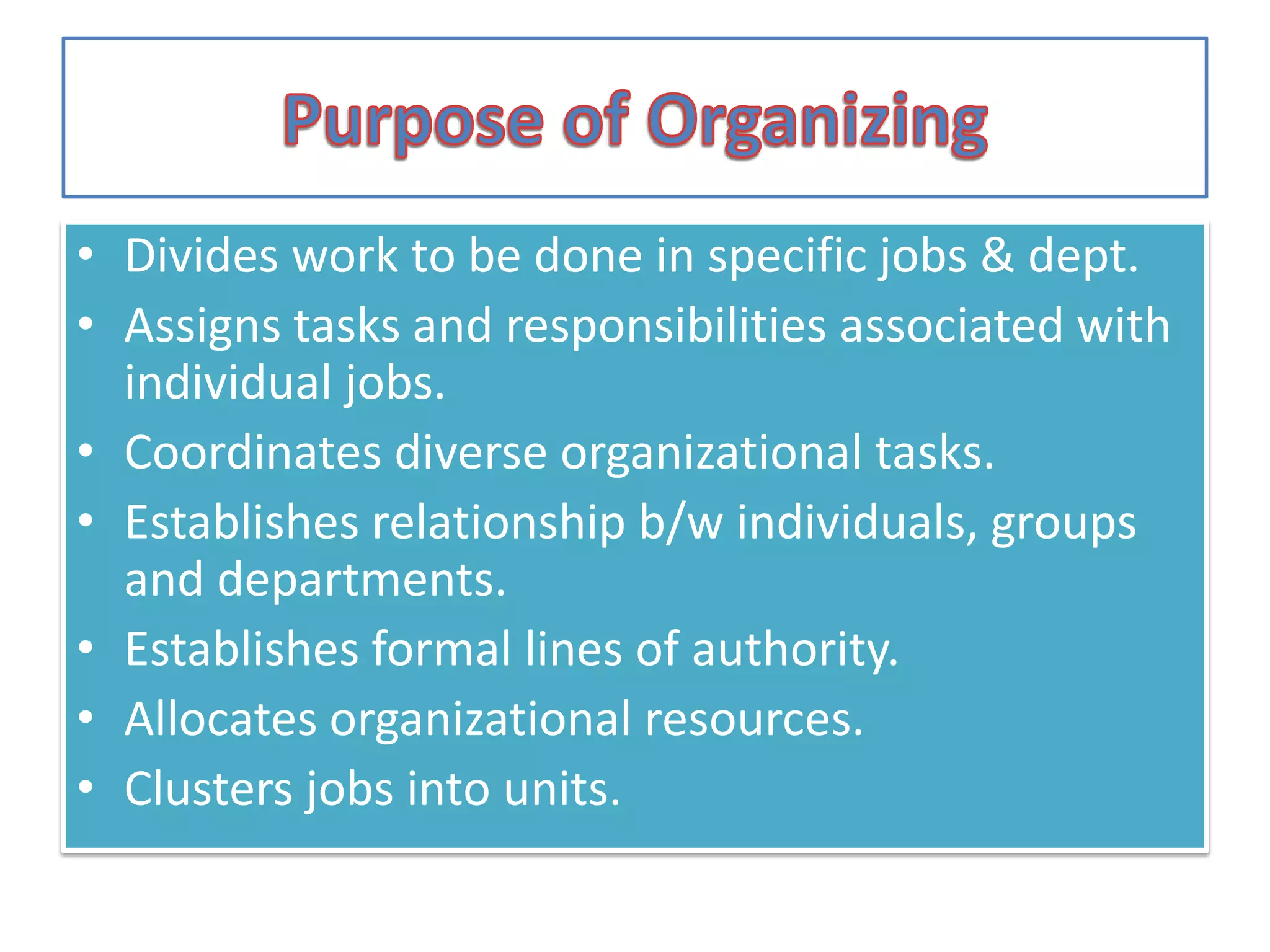
• Divides work to be done in specific jobs & dept.
• Assigns tasks and responsibilities associated with
  individual jobs.
• Coordinates diverse organizational tasks.
• Establishes relationship b/w individuals, groups
  and departments.
• Establishes formal lines of authority.
• Allocates organizational resources.
• Clusters jobs into units.
The continuous line of
authority that extends from upper level of
organization to lowest level of organization
and clarifies who reports to whom.
            The rights inherent in a managerial
position to tell people what to do and expect
them to do it.
The obligation or expectation
to perform. Responsibility brings with it
accountability.
                    The concept that a person
should have one boss and should report only
to him.
            The assignment of authority to
another person to carry out specific duties.
• When a company expands to
Supply goods or services
Produces variety of diff. products
Engage in several diff. markets
  in such conditions the company can adopt
  Departmentalization.
•   Functional
•   Product
•   Customer
•   Geographic
•   Process
• Arranging the business according to what each
  section or department does.
• Organizing according to the different types of
  products produced.
• Where different customer groups have
  different needs.
• It’s based on geographical or regional
  structure.
• Where products have to go through stages as
  they are made.
• Department can be staffed with specialized
  training.
• Shared management responsibility.
• Supervision is facilitated.
• Coordination within the department is easier.
• Inter department documentation of activities
  is not possible.
• Decision-making becomes slow.
• Delays when there are problems.
• Accountability and performance are difficult
  to monitor.
CONCLUSION

Organizational structure ppt

  • 2.
    A social unitof people, systematically structured and managed to meet a need or to pursue collective goals on a continuing basis.
  • 3.
    All Organizations havea management structure that determines the relationships b/w functions and positions and subdivides and delegates roles, responsibilities and authority to carry out defined tasks.
  • 4.
    It is aframework within which an Organization arranges it’s lines of authorities and communications and allocates rights and duties.
  • 5.
    1. Tall Organizational Structure 2. Flat Organizational Structure 3. Virtual Organizational Structure 4. Boundary less Organizational Structure
  • 6.
    • Large, complexorganizations often require a taller hierarchy. • In its simplest form, a tall structure results in one long chain of command similar to the military. • As an organization grows, the number of management levels increases and the structure grows taller. In a tall structure, managers form many ranks and each has a small area of control.
  • 8.
    • Flat structureshave fewer management levels, with each level controlling a broad area or group. • Flat organizations focus on empowering employees rather than adhering to the chain of command. • By encouraging autonomy and self-direction, flat structures attempt to tap into employees’ creative talents and to solve problems by collaboration.
  • 10.
    • Virtual organizationcan be thought of as a way in which an organization uses information and communication technologies to replace or augment some aspect of the organization. • People who are virtually organized primarily interact by electronic means. • For example, many customer help desks link customers and consultants together via telephone or the Internet and problems may be solved without ever bringing people together face-to-face.
  • 11.
    • A boundaryless Organizational structure is a contemporary approach in Organizational design. • It is an organization that is not defined by, or limited to the horizontal, vertical or external boundaries imposed by a pre-defined structure. • It behaves more like an organism encouraging better integration among employees and closer partnership with stakeholders. • It’s highly flexible and responsive and draws on talent wherever it’s found.
  • 12.
    • Determines themanner and extent to which roles, power and responsibilities are delegated. • Depends on objectives and strategies. • Acts as a perspective through which individuals can see their organization and it’s environment.
  • 13.
    Impacts effectiveness and efficiency. • Reduces redundant actions. • Promotes teamwork. • Improves communication. • Contributes to success or failure.
  • 14.
    • Divides workto be done in specific jobs & dept. • Assigns tasks and responsibilities associated with individual jobs. • Coordinates diverse organizational tasks. • Establishes relationship b/w individuals, groups and departments. • Establishes formal lines of authority. • Allocates organizational resources. • Clusters jobs into units.
  • 16.
    The continuous lineof authority that extends from upper level of organization to lowest level of organization and clarifies who reports to whom. The rights inherent in a managerial position to tell people what to do and expect them to do it.
  • 17.
    The obligation orexpectation to perform. Responsibility brings with it accountability. The concept that a person should have one boss and should report only to him. The assignment of authority to another person to carry out specific duties.
  • 18.
    • When acompany expands to Supply goods or services Produces variety of diff. products Engage in several diff. markets in such conditions the company can adopt Departmentalization.
  • 19.
    Functional • Product • Customer • Geographic • Process
  • 20.
    • Arranging thebusiness according to what each section or department does.
  • 22.
    • Organizing accordingto the different types of products produced.
  • 24.
    • Where differentcustomer groups have different needs.
  • 26.
    • It’s basedon geographical or regional structure.
  • 28.
    • Where productshave to go through stages as they are made.
  • 30.
    • Department canbe staffed with specialized training. • Shared management responsibility. • Supervision is facilitated. • Coordination within the department is easier.
  • 31.
    • Inter departmentdocumentation of activities is not possible. • Decision-making becomes slow. • Delays when there are problems. • Accountability and performance are difficult to monitor.
  • 32.