TASK-BASED SYLLABUS

PRESENTED BY :
SUPARTI
USPAN SAYUTI
POINTS WILL BE DISCUSSED:
 Definition of task-based syllabus

 Aspects of Task-based Syllabus Design
 Types of Tasks
 Advantages and Disadvantages of Task-based

Syllabus
 Conclusion
DEFINITION OF TASK-BASED
SYLLABUS
 A Task

Task is a piece of classroom work which involves
learners in
comprehending, manipulating, producing, or
interacting in the target language which their
attention is particularly focuses on meaning rather
than form (1989:10) By David Nunan
 Syllabus

Syllabus is refers to the selecting and grading of
content (Nunan.1989. 14)
DEFINITION OF TASK-BASED
SYLLABUS
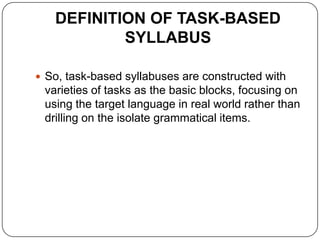
 So, task-based syllabuses are constructed with

varieties of tasks as the basic blocks, focusing on
using the target language in real world rather than
drilling on the isolate grammatical items.
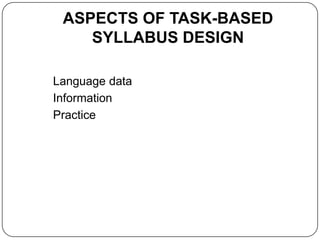
ASPECTS OF TASK-BASED
SYLLABUS DESIGN
Language data
Information
Practice
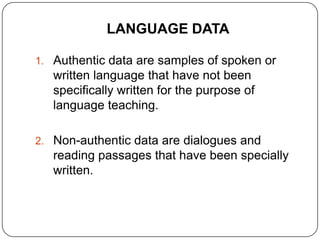
LANGUAGE DATA
1. Authentic data are samples of spoken or

written language that have not been
specifically written for the purpose of
language teaching.
2. Non-authentic data are dialogues and

reading passages that have been specially
written.
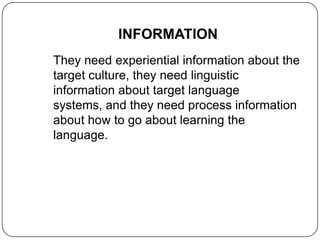
INFORMATION
They need experiential information about the
target culture, they need linguistic
information about target language
systems, and they need process information
about how to go about learning the
language.
PRACTICE
The third and final essential element is
practice.
“Practice makes perfect”
TYPES OF TASKS
 Real-world or target task
 Pedagogical tasks
 Rehearsal task
 Activation task

 Enabling skills
 Language exercise
 Communication activity
ADVANTAGES AND
DISADVANTAGES OF TASKBASED SYLLABUS
Advantages

Disadvantages

 Goals

 No guidance on how to

 Input

combine the grammatical items
with the communicative skills.
 No guidance provided on the
selection of tasks and how
tasks might be related to the
real-world language needs of
the learners
 Difficult to degree tasks
 Teacher-training courses

 Activities
 Teacher role
 Learner role
 Settings
CONCLUSION
 Task-based syllabuses are constructed with

varieties of tasks as the basic blocks, focusing on
using the target language in real world rather than
drilling on the isolate grammatical items. In
making practical decisions about task-based
syllabus design, one must consider all the
possible factors that might affect the teach ability
of the syllabus. Adjusting the choice and
integrating the different types according to
learners’ needs.
Task based syllabus

Task based syllabus

  • 1.
    TASK-BASED SYLLABUS PRESENTED BY: SUPARTI USPAN SAYUTI
  • 2.
    POINTS WILL BEDISCUSSED:  Definition of task-based syllabus  Aspects of Task-based Syllabus Design  Types of Tasks  Advantages and Disadvantages of Task-based Syllabus  Conclusion
  • 3.
    DEFINITION OF TASK-BASED SYLLABUS A Task Task is a piece of classroom work which involves learners in comprehending, manipulating, producing, or interacting in the target language which their attention is particularly focuses on meaning rather than form (1989:10) By David Nunan  Syllabus Syllabus is refers to the selecting and grading of content (Nunan.1989. 14)
  • 4.
    DEFINITION OF TASK-BASED SYLLABUS So, task-based syllabuses are constructed with varieties of tasks as the basic blocks, focusing on using the target language in real world rather than drilling on the isolate grammatical items.
  • 5.
    ASPECTS OF TASK-BASED SYLLABUSDESIGN Language data Information Practice
  • 6.
    LANGUAGE DATA 1. Authenticdata are samples of spoken or written language that have not been specifically written for the purpose of language teaching. 2. Non-authentic data are dialogues and reading passages that have been specially written.
  • 7.
    INFORMATION They need experientialinformation about the target culture, they need linguistic information about target language systems, and they need process information about how to go about learning the language.
  • 8.
    PRACTICE The third andfinal essential element is practice. “Practice makes perfect”
  • 9.
    TYPES OF TASKS Real-world or target task  Pedagogical tasks  Rehearsal task  Activation task  Enabling skills  Language exercise  Communication activity
  • 10.
    ADVANTAGES AND DISADVANTAGES OFTASKBASED SYLLABUS Advantages Disadvantages  Goals  No guidance on how to  Input combine the grammatical items with the communicative skills.  No guidance provided on the selection of tasks and how tasks might be related to the real-world language needs of the learners  Difficult to degree tasks  Teacher-training courses  Activities  Teacher role  Learner role  Settings
  • 11.
    CONCLUSION  Task-based syllabusesare constructed with varieties of tasks as the basic blocks, focusing on using the target language in real world rather than drilling on the isolate grammatical items. In making practical decisions about task-based syllabus design, one must consider all the possible factors that might affect the teach ability of the syllabus. Adjusting the choice and integrating the different types according to learners’ needs.