Epidemiology
(Definition)
‫يف‬‫ر‬‫تع‬‫عمل‬‫يات‬‫ئ‬‫الواب‬
At the end of this presentation the attendant is
expected to:
Define Epidemiology.
Identify the main issues in the definition.
Discuss the uses of Epidemiology.
12/17/2014
Historical Aspects
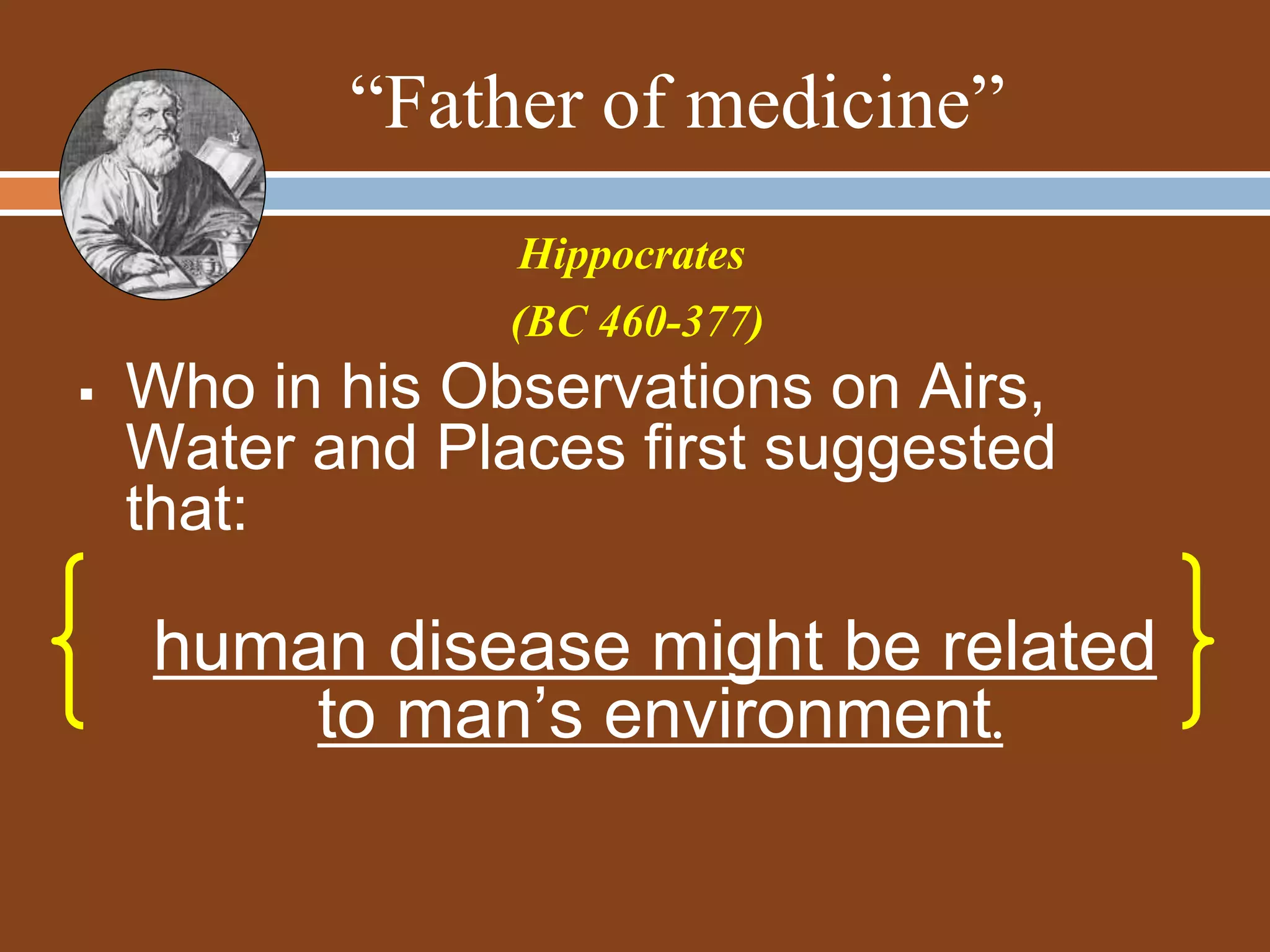
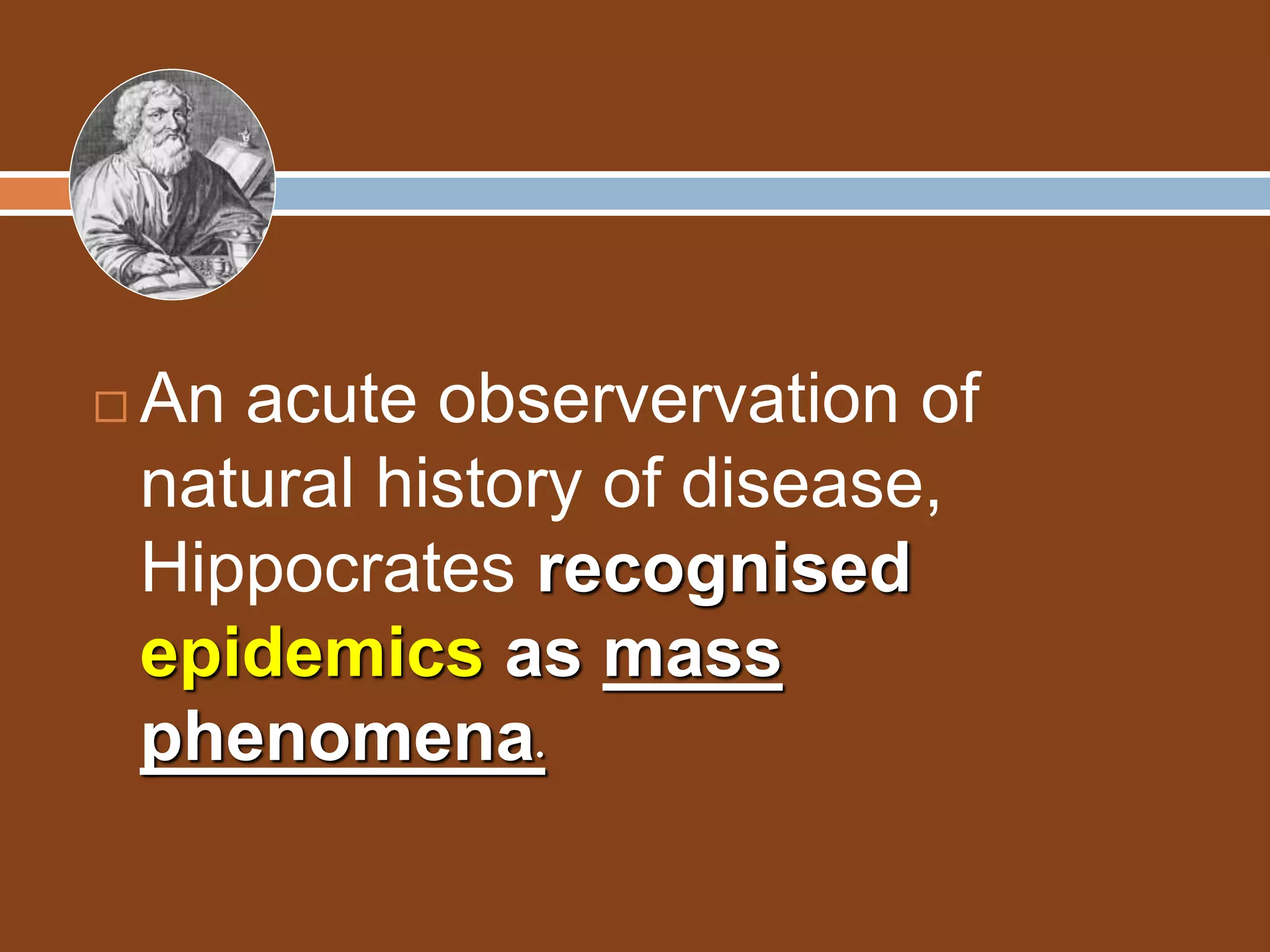
“Father of medicine”
 Who in his Observations on Airs,
Water and Places first suggested
that:
human disease might be related
to man’s environment.
Hippocrates
(BC 460-377)
 An acute observervation of
natural history of disease,
Hippocrates recognised
epidemics as mass
phenomena.
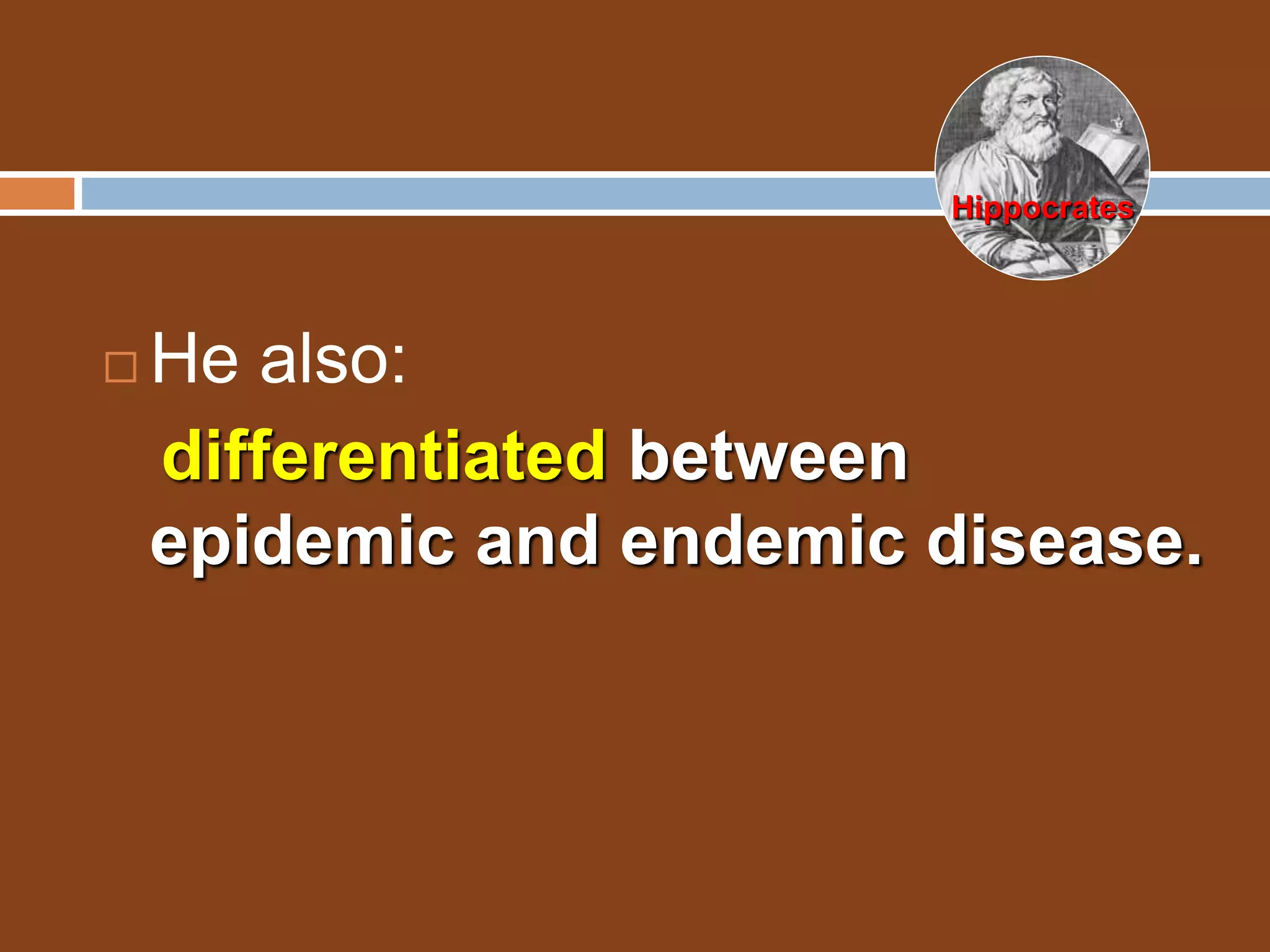
 He also:
differentiated between
epidemic and endemic disease.
Hippocrates
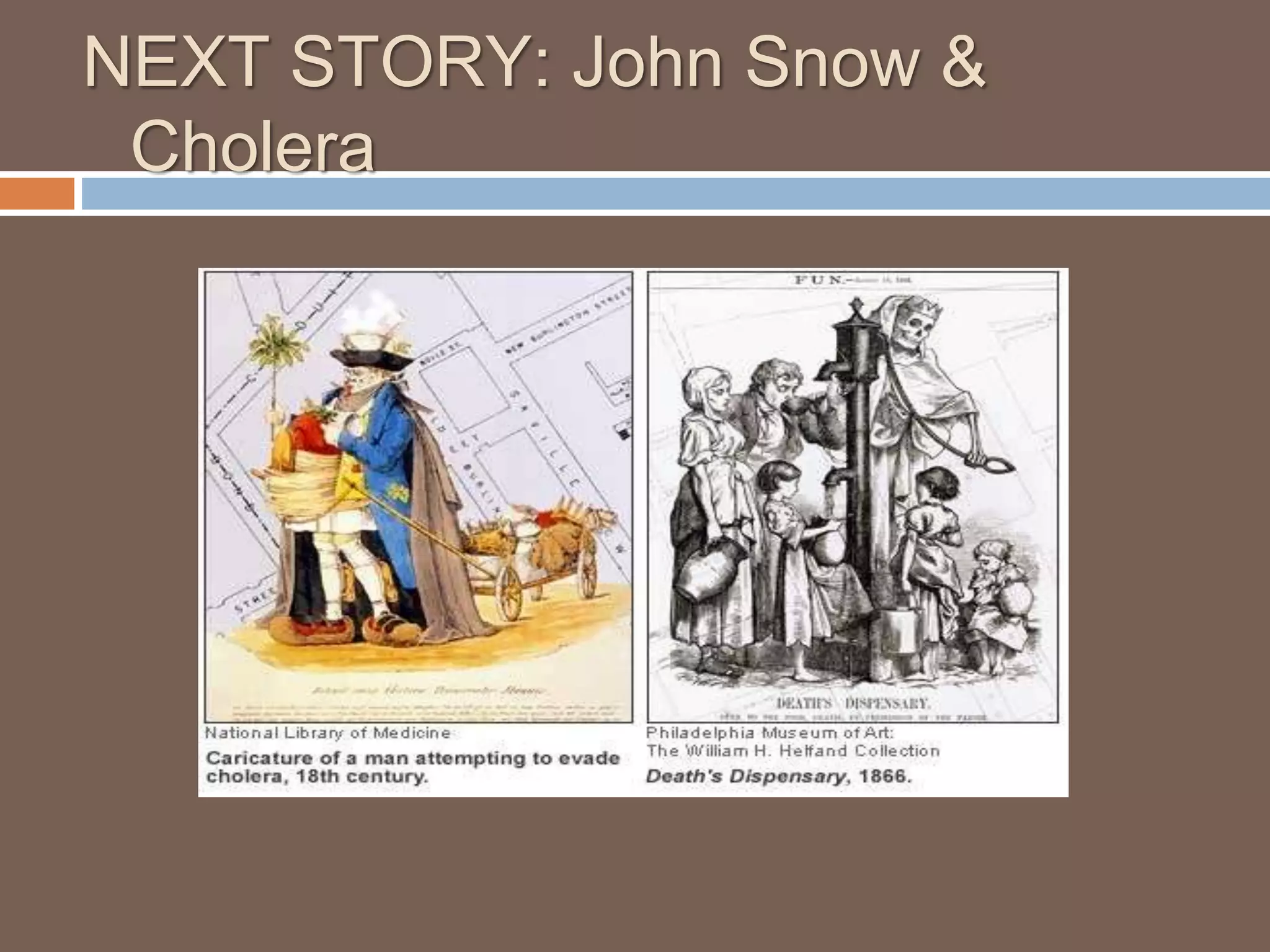
NEXT STORY: John Snow &
Cholera
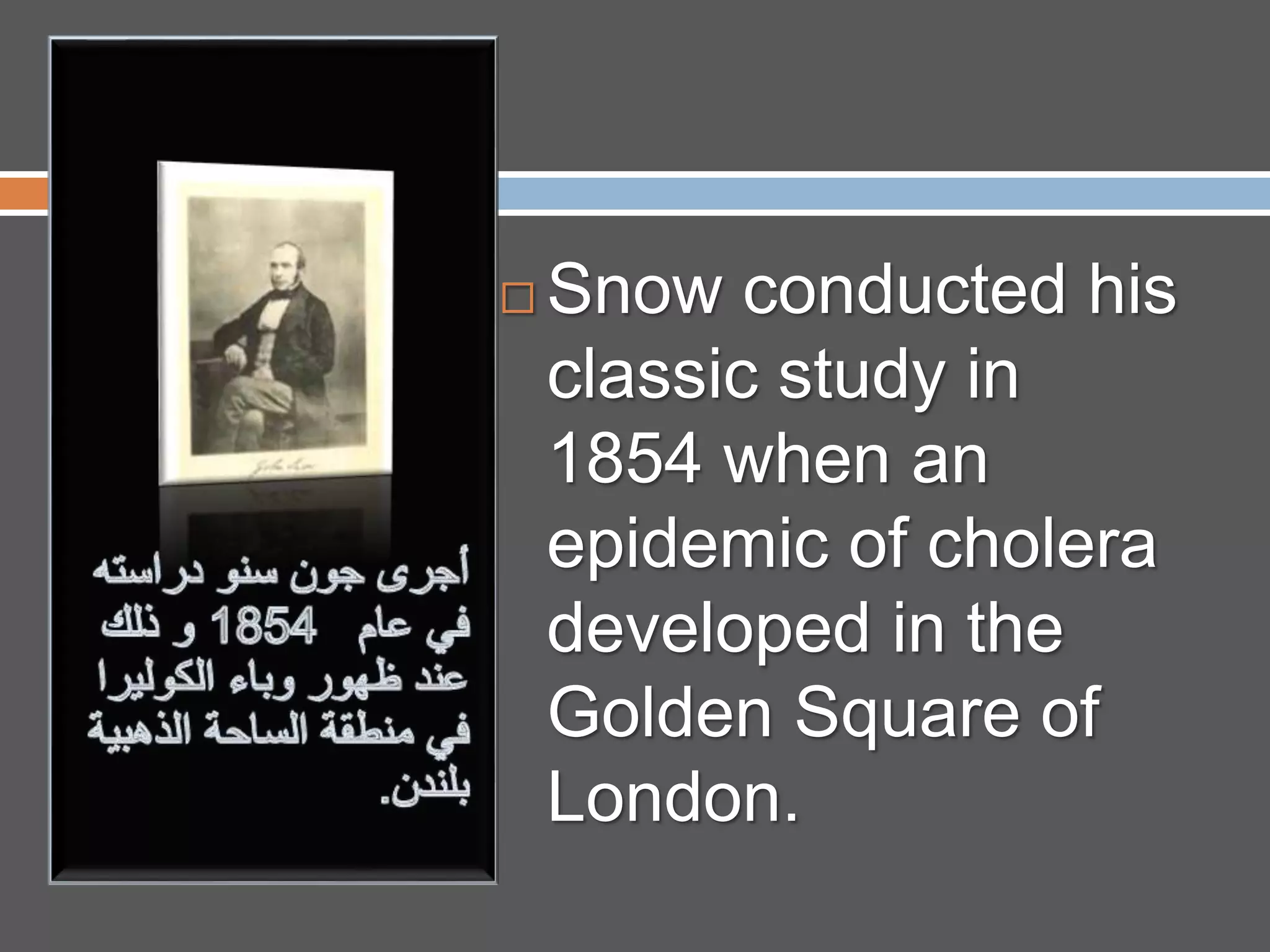
 Snow conducted his
classic study in
1854 when an
epidemic of cholera
developed in the
Golden Square of
London.
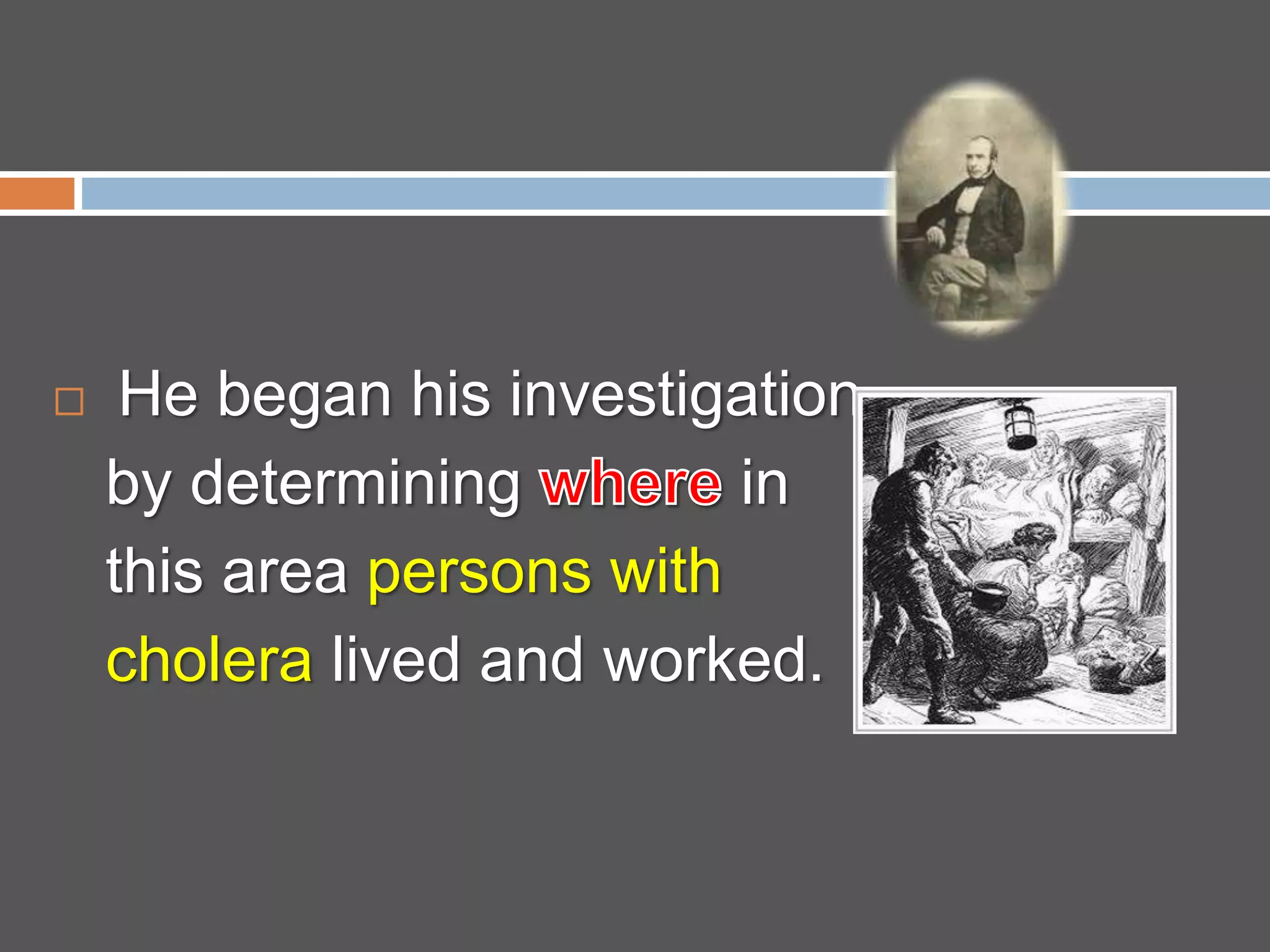
 He began his investigation
by determining in
this area persons with
cholera lived and worked.
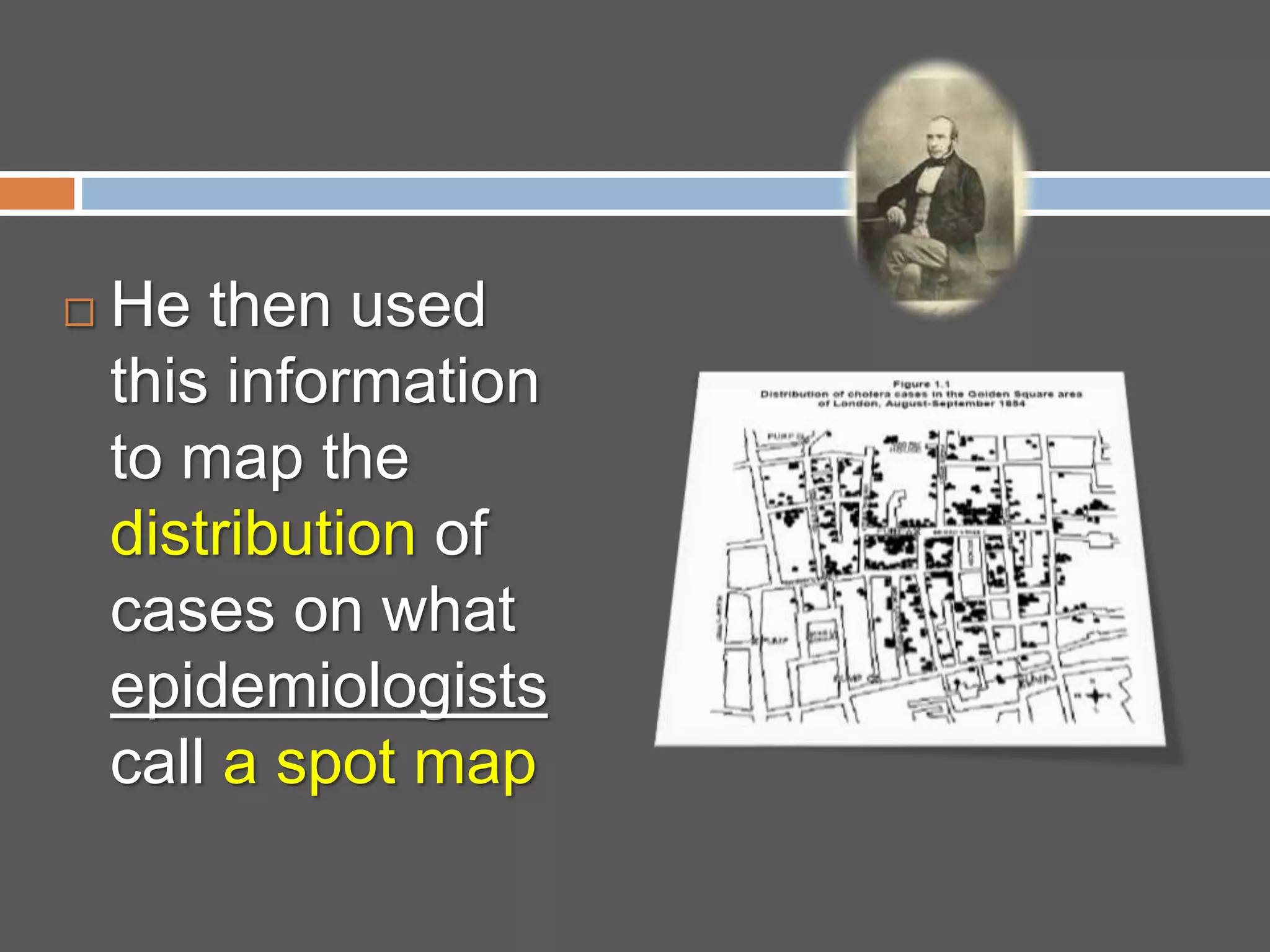
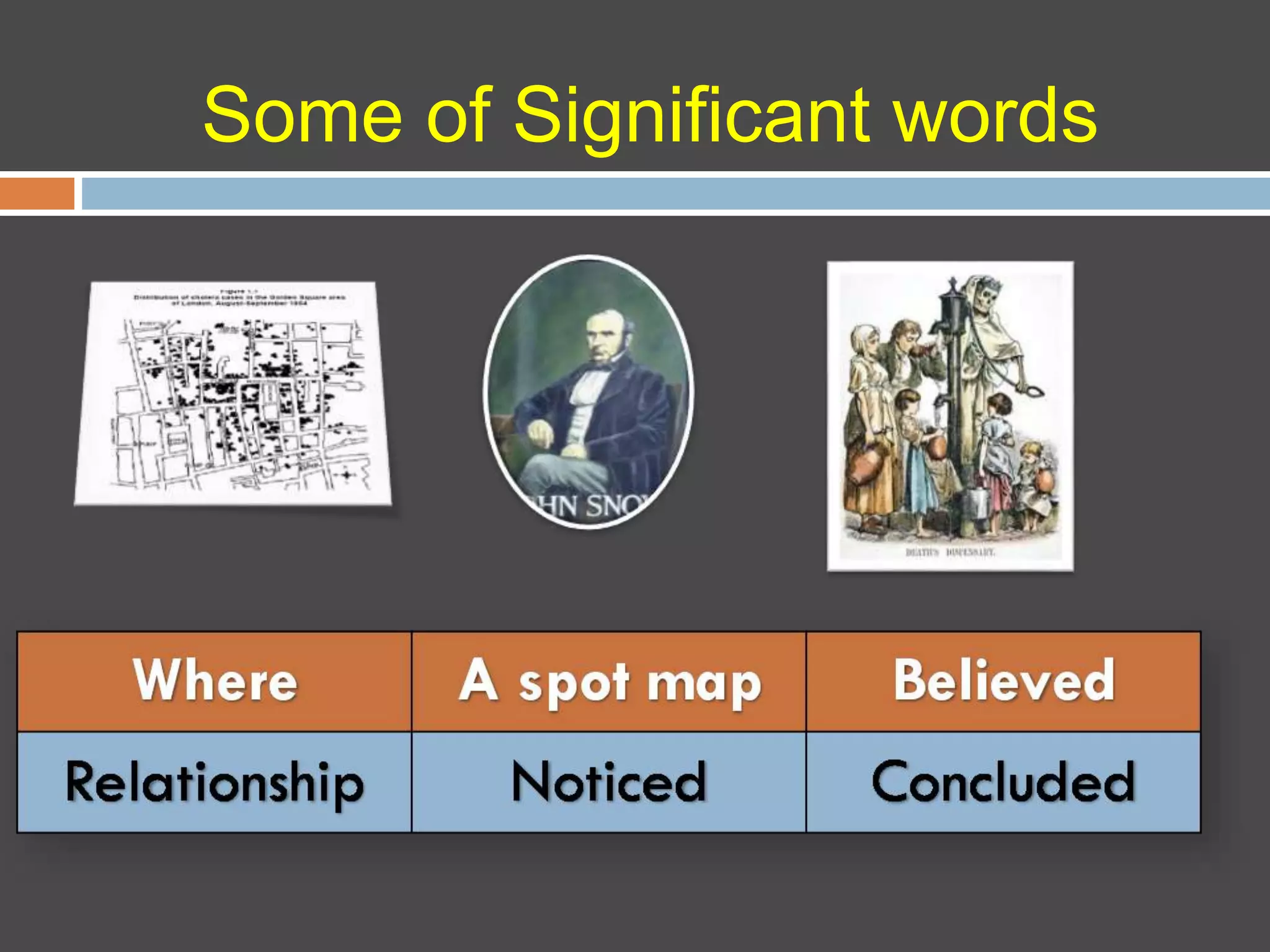
 He then used
this information
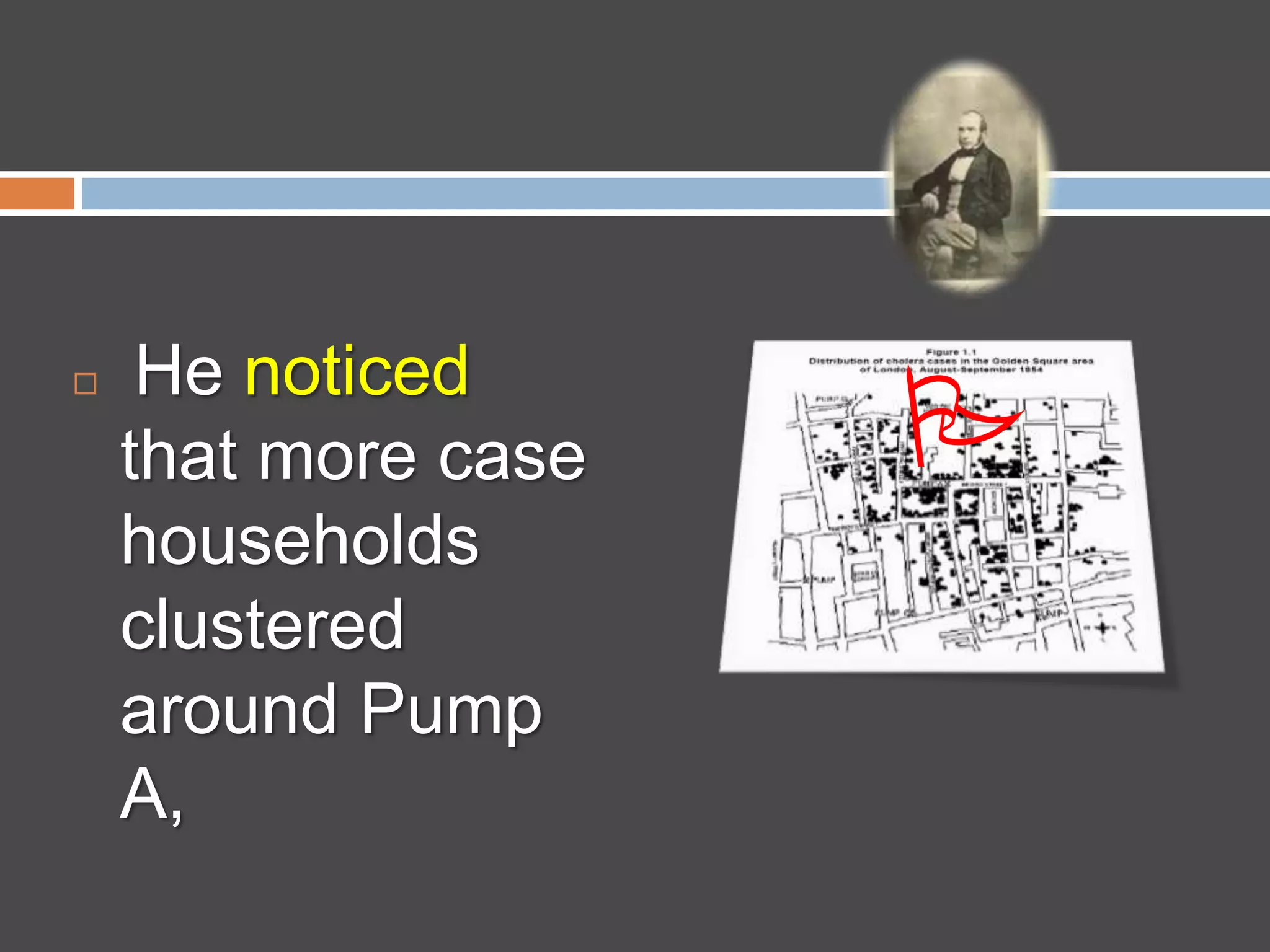
to map the
distribution of
cases on what
epidemiologists
call a spot map
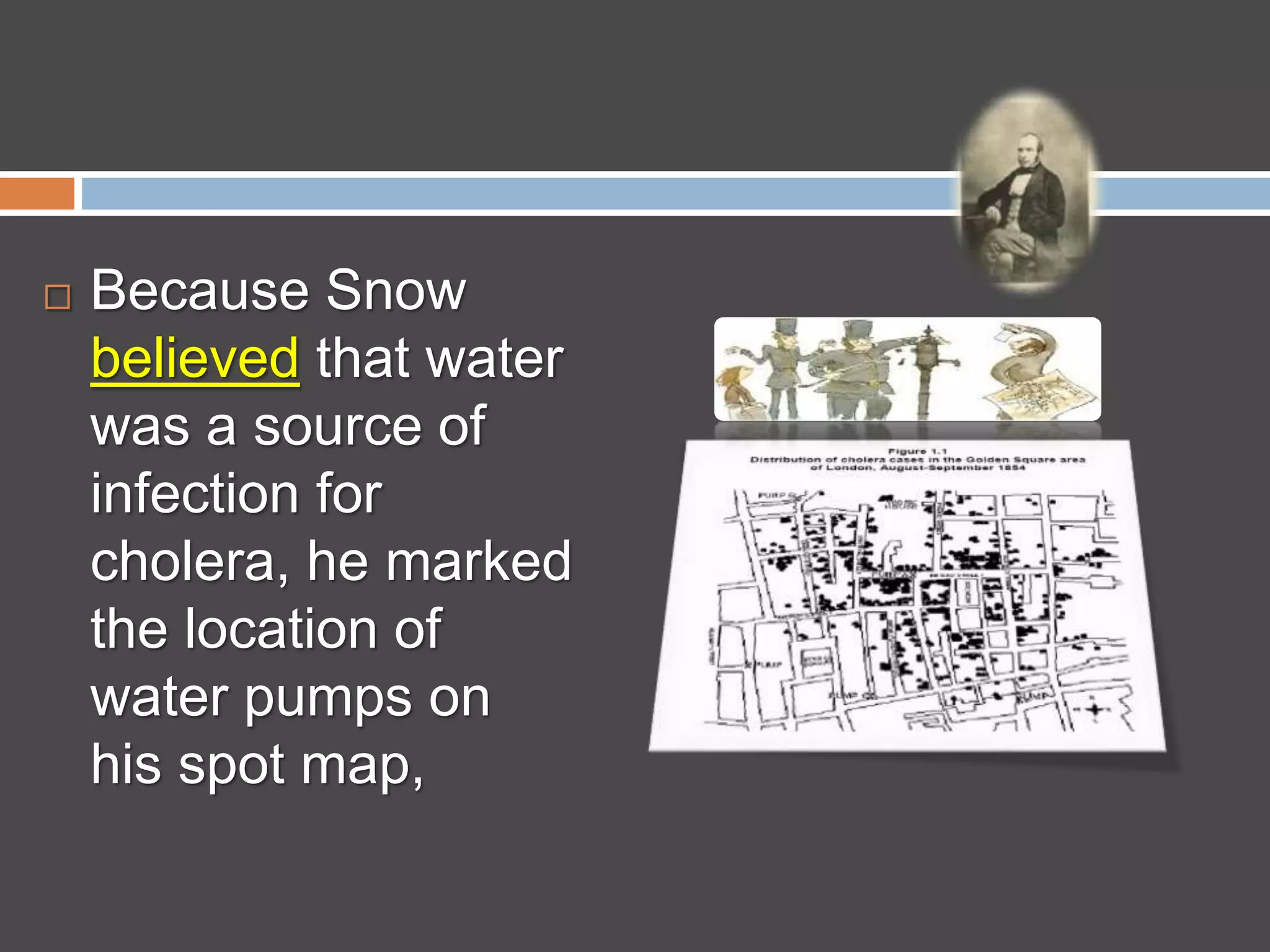
 Because Snow
believed that water
was a source of
infection for
cholera, he marked
the location of
water pumps on
his spot map,
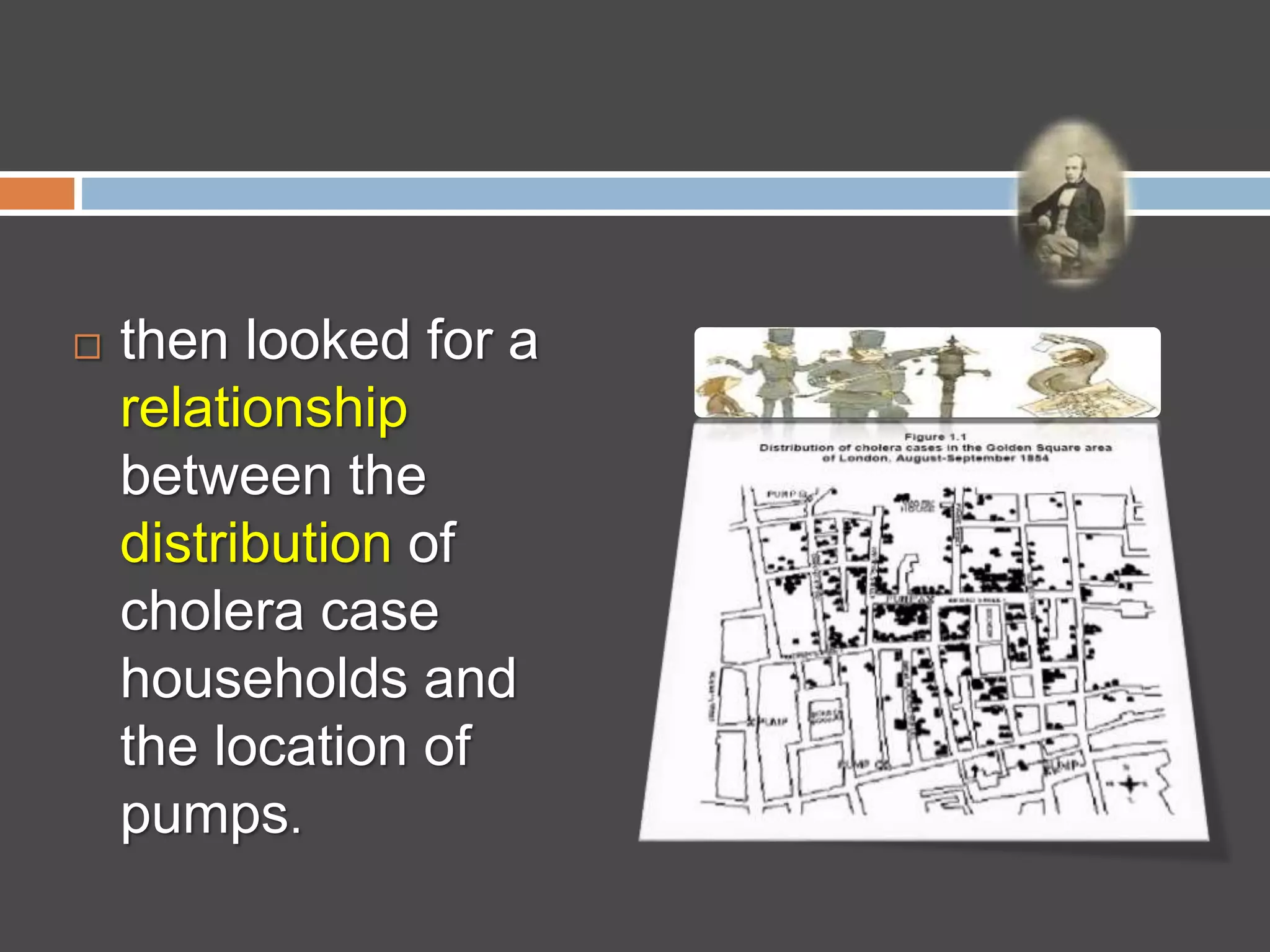
 then looked for a
relationship
between the
distribution of
cholera case
households and
the location of
pumps.
 He noticed
that more case
households
clustered
around Pump
A,

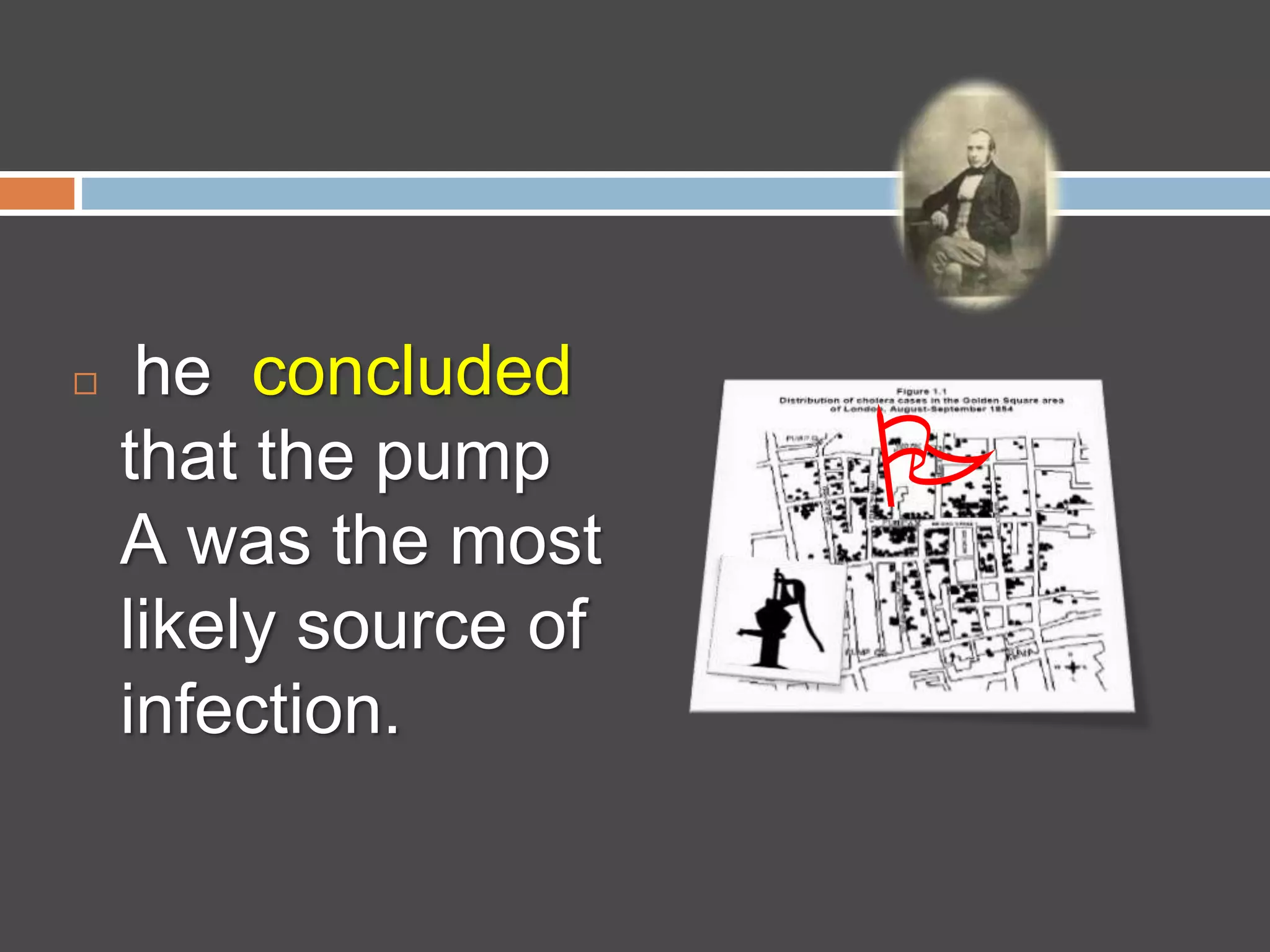
 he concluded
that the pump
A was the most
likely source of
infection.

Story continue…
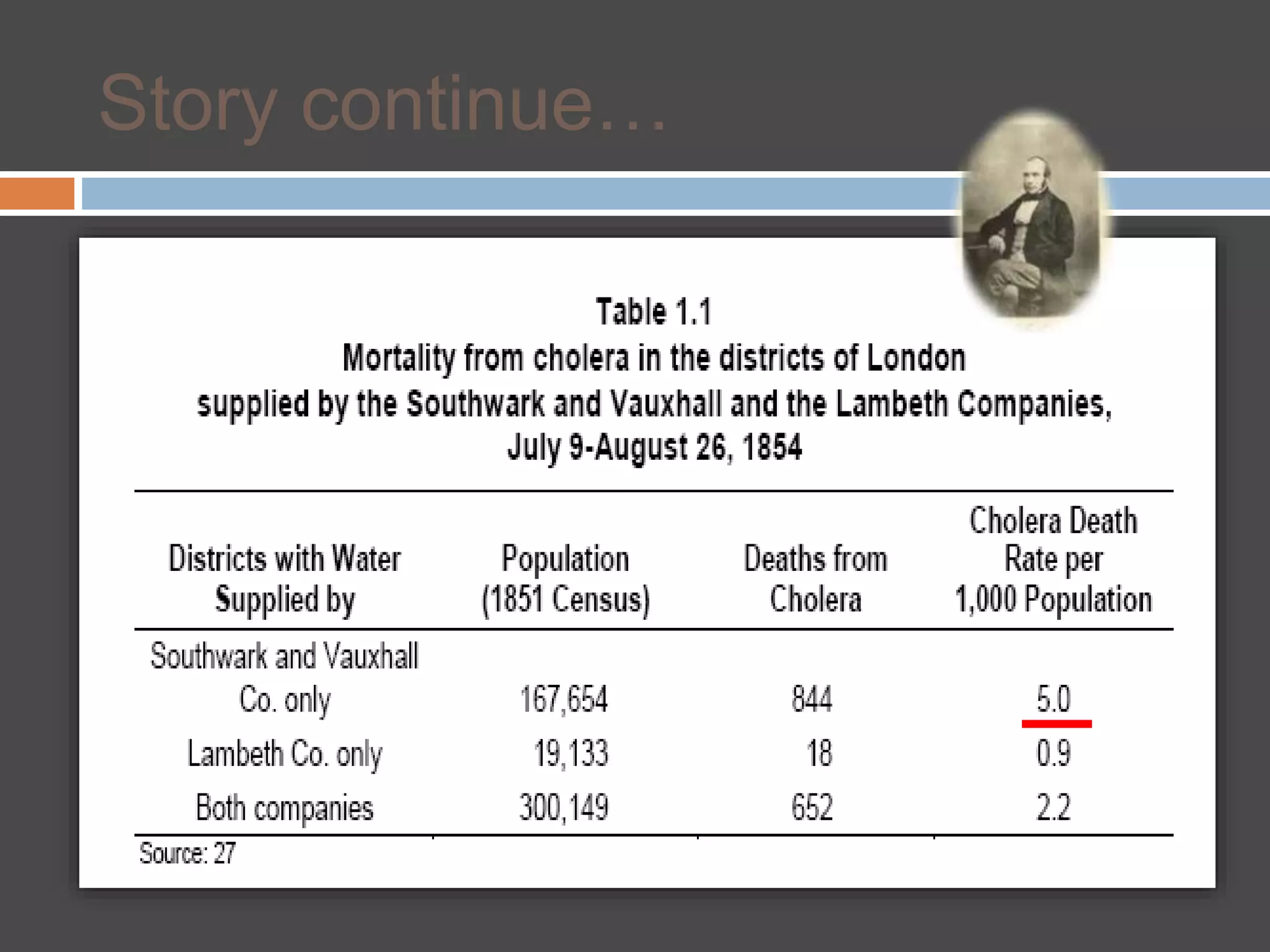
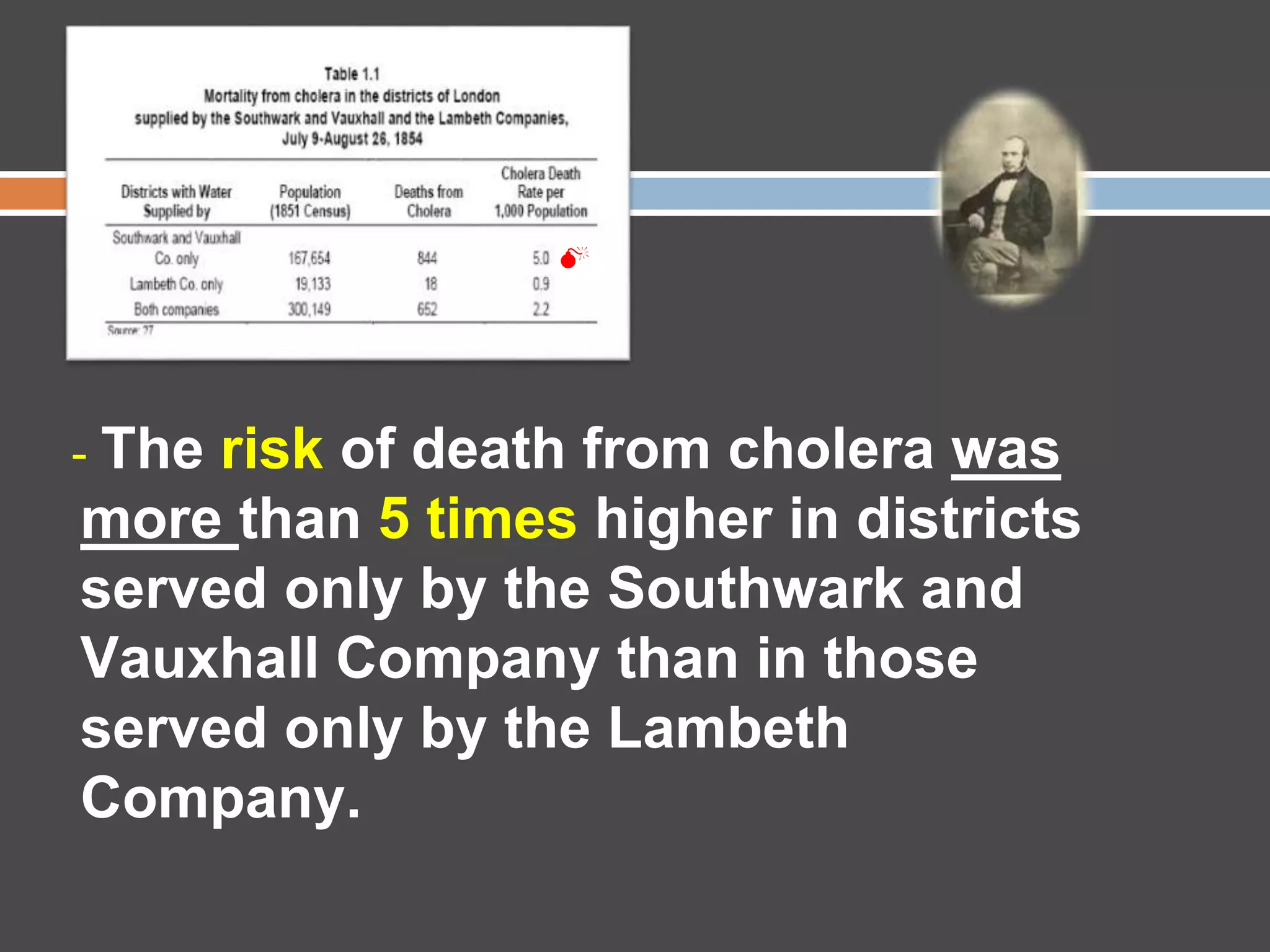
- The risk of death from cholera was
more than 5 times higher in districts
served only by the Southwark and
Vauxhall Company than in those
served only by the Lambeth
Company.

Some of Significant words
Definition
of
Epidemiology
Definition of
Epidemiology
 Epidemiology is derived from the Greek,
Epi: On or upon.
Demos: people.
Logos : the study of
Epidemiology is the basic
science
of Public Health
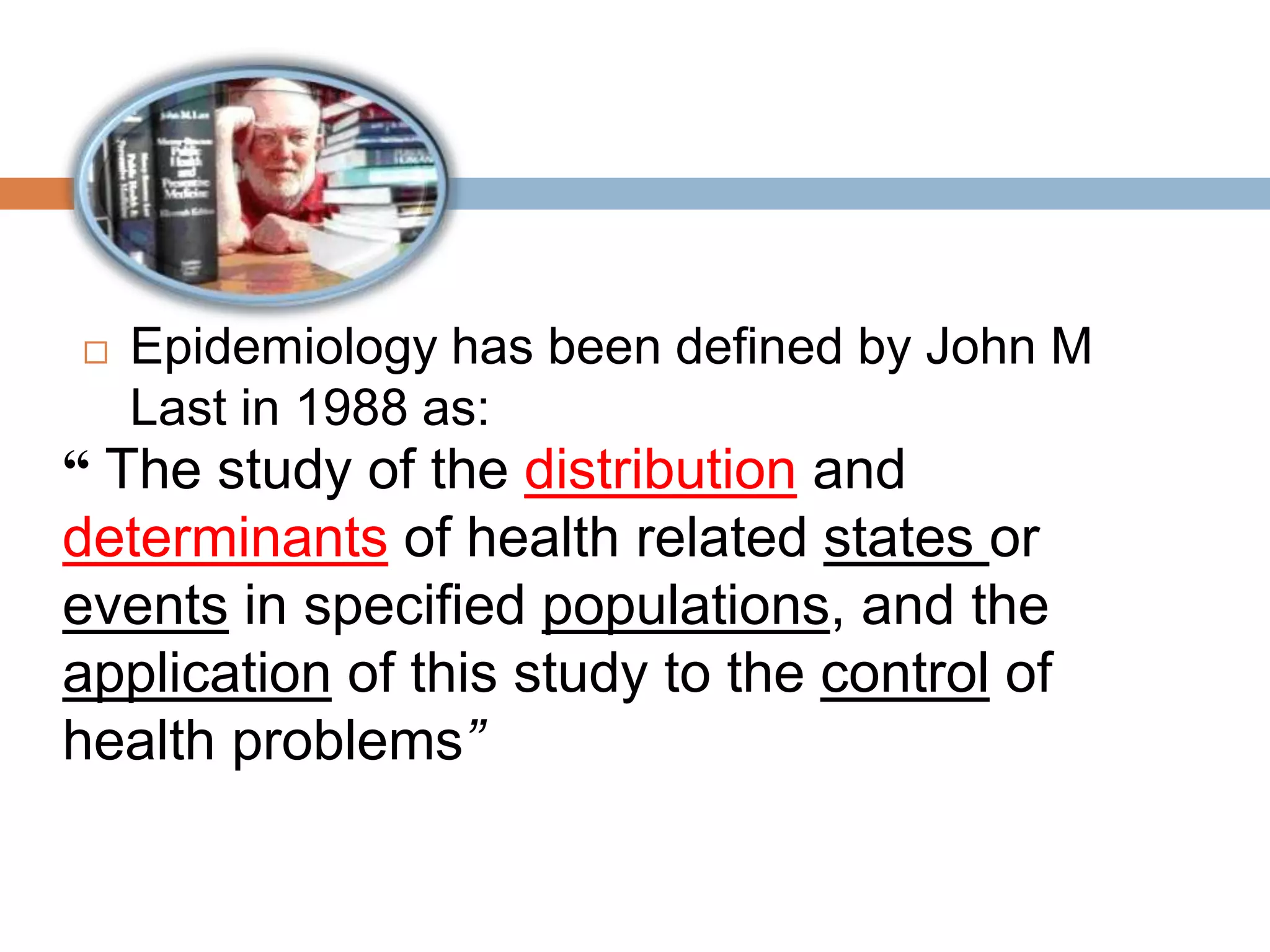
 Epidemiology has been defined by John M
Last in 1988 as:
“ The study of the distribution and
determinants of health related states or
events in specified populations, and the
application of this study to the control of
health problems”
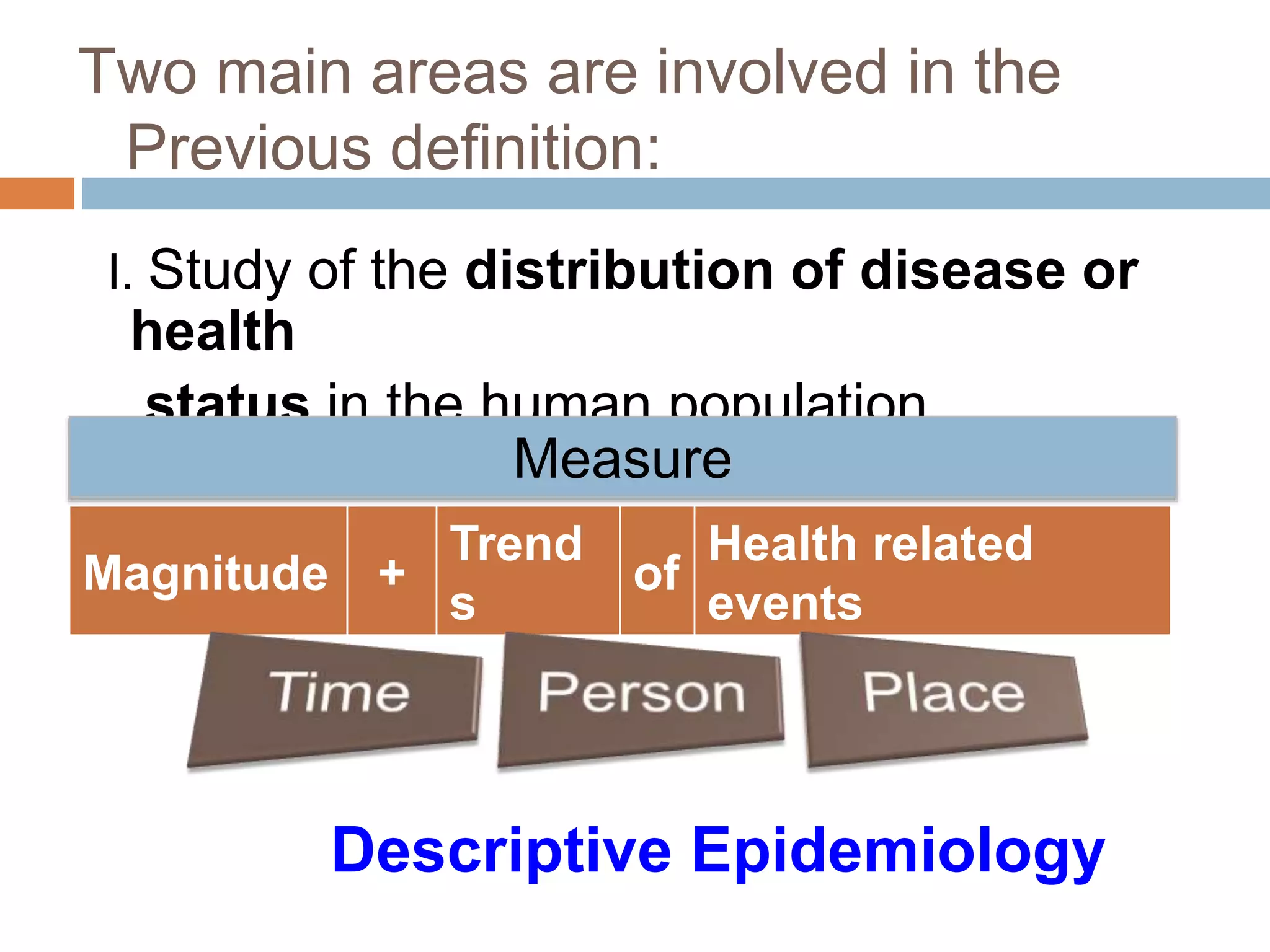
Two main areas are involved in the
Previous definition:
I. Study of the distribution of disease or
health
status in the human population
Descriptive Epidemiology
Magnitude +
Trend
s
of
Health related
events
Measure
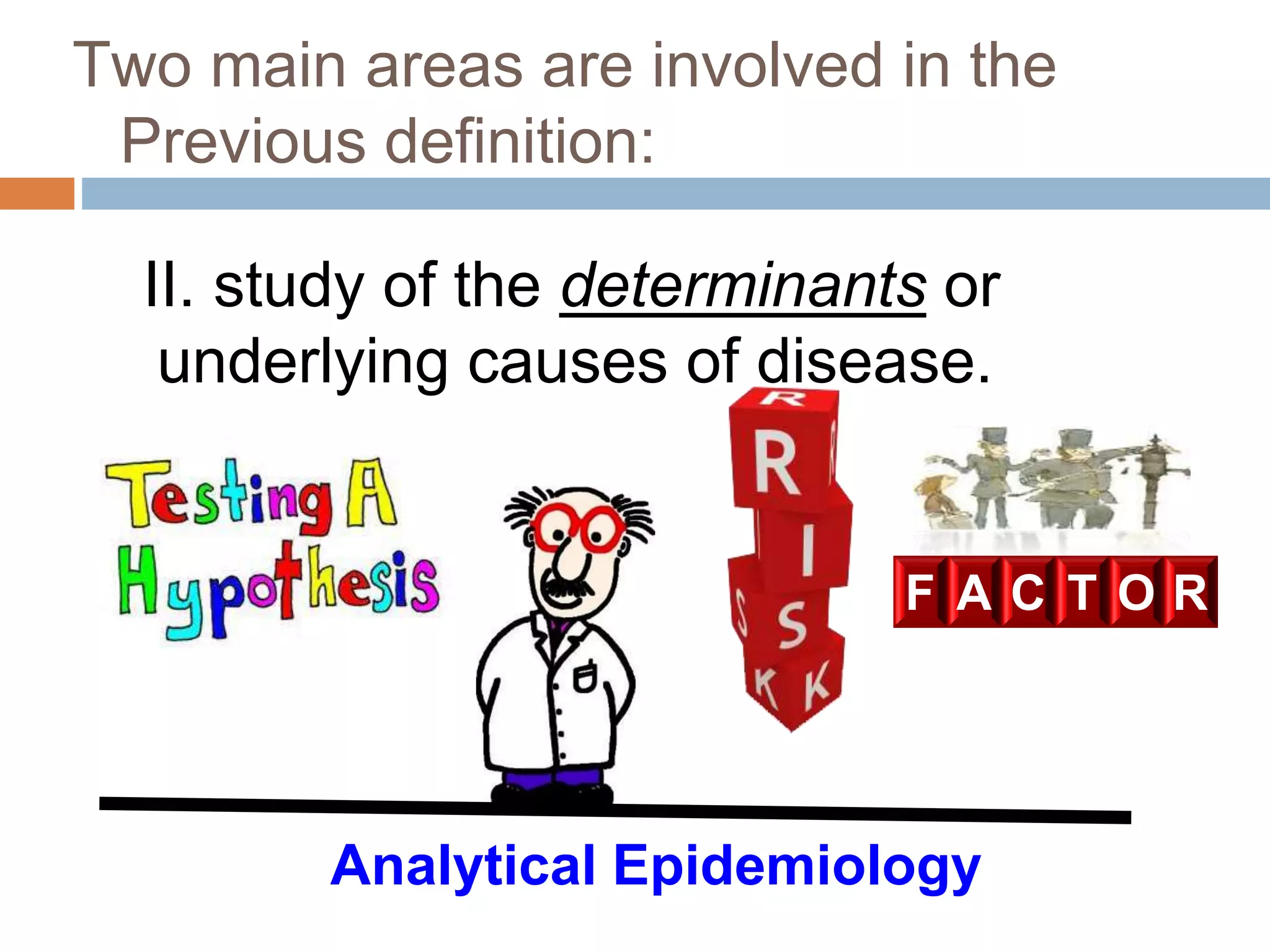
II. study of the determinants or
underlying causes of disease.
Analytical Epidemiology
Two main areas are involved in the
Previous definition:
F A C T O R
Aims of
Epidemiology
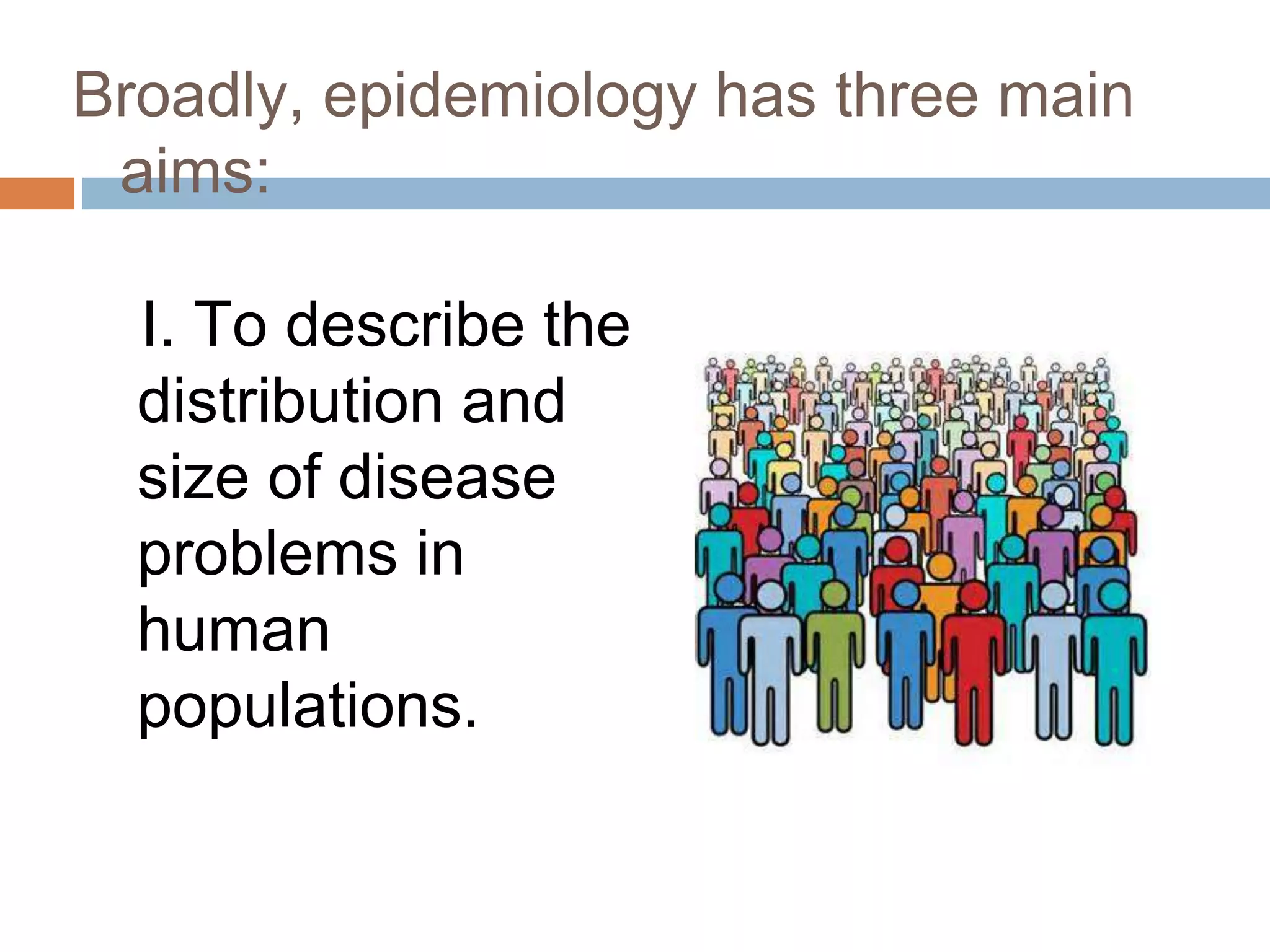
Broadly, epidemiology has three main
aims:
I. To describe the
distribution and
size of disease
problems in
human
populations.
Broadly, epidemiology has three main
aims:
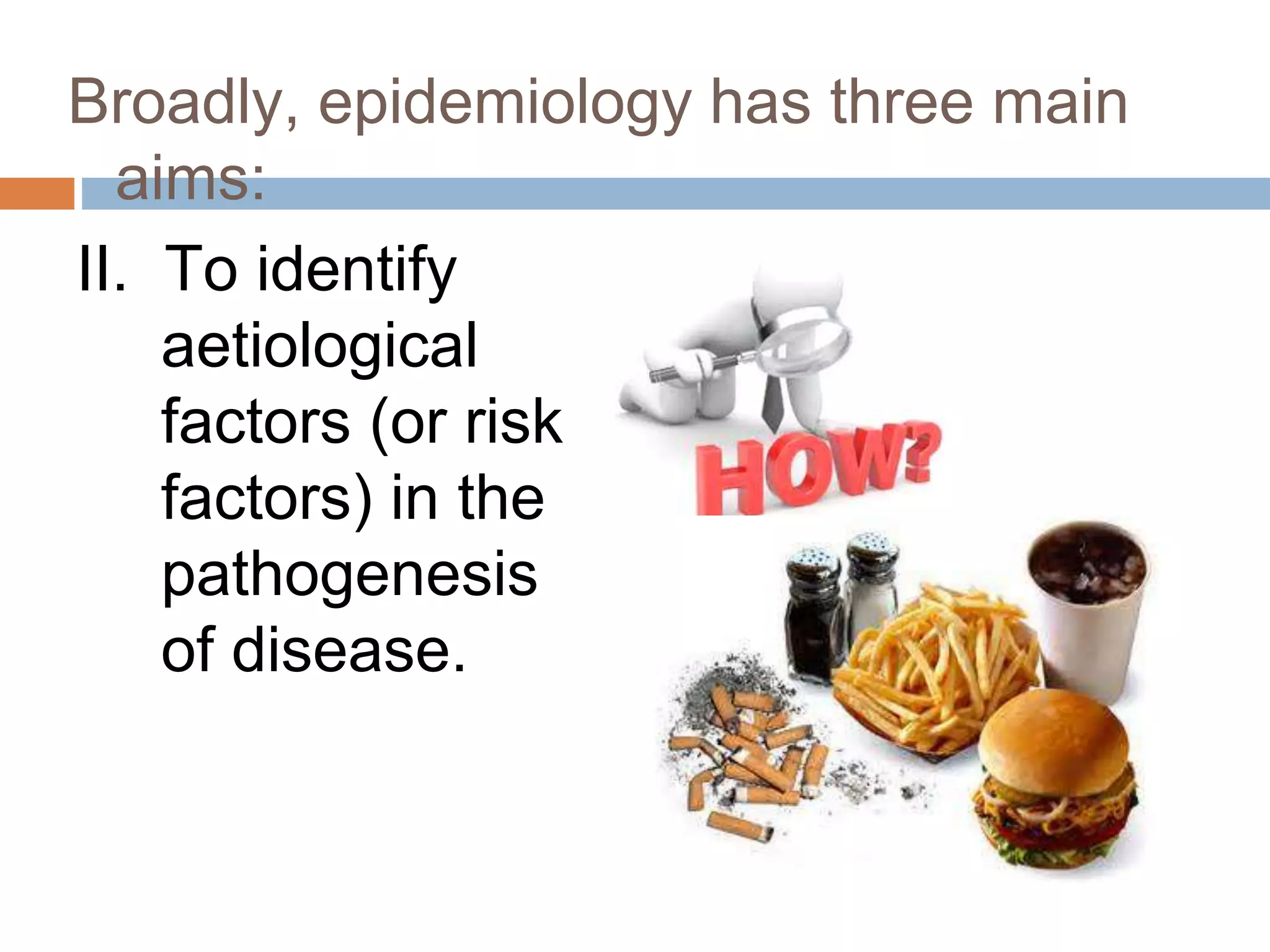
II. To identify
aetiological
factors (or risk
factors) in the
pathogenesis
of disease.
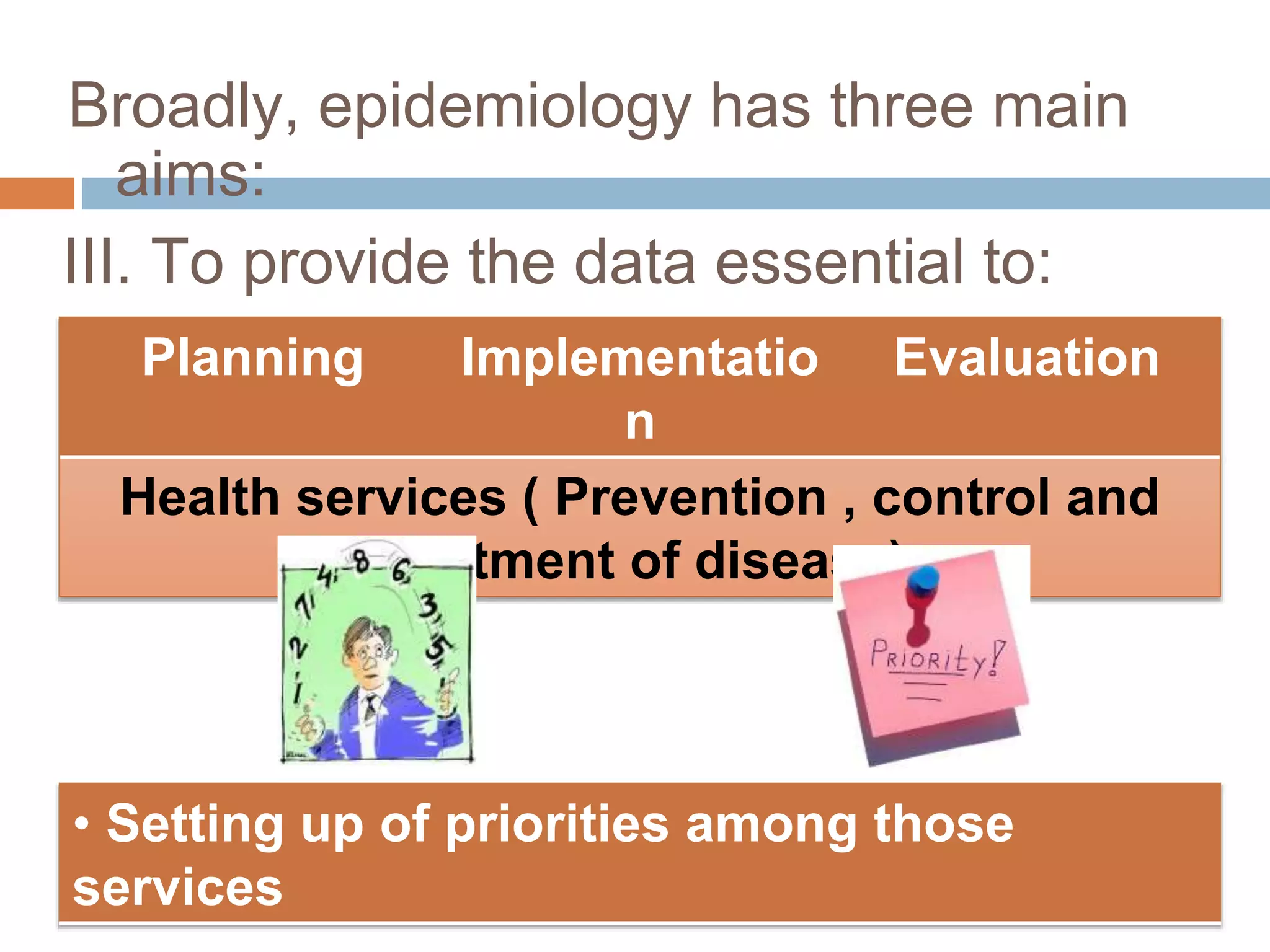
III. To provide the data essential to:
Broadly, epidemiology has three main
aims:
Planning Implementatio
n
Evaluation
Health services ( Prevention , control and
treatment of disease)
• Setting up of priorities among those
services
definition of Epidemiology

definition of Epidemiology

  • 1.
  • 2.
    At the endof this presentation the attendant is expected to: Define Epidemiology. Identify the main issues in the definition. Discuss the uses of Epidemiology.
  • 3.
  • 4.
    “Father of medicine” Who in his Observations on Airs, Water and Places first suggested that: human disease might be related to man’s environment. Hippocrates (BC 460-377)
  • 5.
     An acuteobservervation of natural history of disease, Hippocrates recognised epidemics as mass phenomena.
  • 6.
     He also: differentiatedbetween epidemic and endemic disease. Hippocrates
  • 7.
    NEXT STORY: JohnSnow & Cholera
  • 8.
     Snow conductedhis classic study in 1854 when an epidemic of cholera developed in the Golden Square of London.
  • 9.
     He beganhis investigation by determining in this area persons with cholera lived and worked.
  • 10.
     He thenused this information to map the distribution of cases on what epidemiologists call a spot map
  • 11.
     Because Snow believedthat water was a source of infection for cholera, he marked the location of water pumps on his spot map,
  • 12.
     then lookedfor a relationship between the distribution of cholera case households and the location of pumps.
  • 13.
     He noticed thatmore case households clustered around Pump A, 
  • 14.
     he concluded thatthe pump A was the most likely source of infection. 
  • 15.
  • 16.
    - The riskof death from cholera was more than 5 times higher in districts served only by the Southwark and Vauxhall Company than in those served only by the Lambeth Company. 
  • 17.
  • 18.
  • 19.
     Epidemiology isderived from the Greek, Epi: On or upon. Demos: people. Logos : the study of Epidemiology is the basic science of Public Health
  • 20.
     Epidemiology hasbeen defined by John M Last in 1988 as: “ The study of the distribution and determinants of health related states or events in specified populations, and the application of this study to the control of health problems”
  • 21.
    Two main areasare involved in the Previous definition: I. Study of the distribution of disease or health status in the human population Descriptive Epidemiology Magnitude + Trend s of Health related events Measure
  • 22.
    II. study ofthe determinants or underlying causes of disease. Analytical Epidemiology Two main areas are involved in the Previous definition: F A C T O R
  • 23.
  • 24.
    Broadly, epidemiology hasthree main aims: I. To describe the distribution and size of disease problems in human populations.
  • 25.
    Broadly, epidemiology hasthree main aims: II. To identify aetiological factors (or risk factors) in the pathogenesis of disease.
  • 26.
    III. To providethe data essential to: Broadly, epidemiology has three main aims: Planning Implementatio n Evaluation Health services ( Prevention , control and treatment of disease) • Setting up of priorities among those services