The Evolving Role of
Healthcare Professionals
Matthew Katz, MD
October 20, 2011
Disclosures
• Doctor at Radiation Oncology Associates, PA
- Practice in MA, NH

• Volunteer for
- American Society of Radiation Oncology
- Massachusetts Medical Society
- Mayo Clinic Center for Social Media

•Financial disclosures: none
- No speakership, consulting, ownership stakes
Overview
• Definition
• Challenge of social media
• Current guidelines
• Redefining professionalism
What is a professional?
• Professional:
– “conforming to the technical or ethical standards
of a profession”
– “participating for gain or livelihood in an activity
or field of endeavor often engaged in by
amateurs”

Merriam-Webster.com, accessed 9/19/11
Social Media are
Communication Tools
• Global reach
• Easy access
• Little technical expertise needed to use
• Immediate impact
• Dynamic content

Wikipedia, http://bit.ly/mZcwaH
Social Media
• Presents perplexing challenge
• Transforming the way we interact
• Patients online for healthcare beyond the exam
room
• Unclear how best to get involved without harm
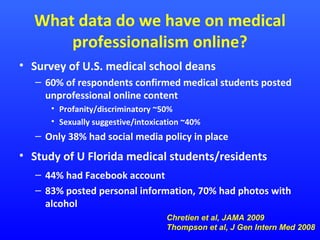
What data do we have on medical
professionalism online?
• Survey of U.S. medical school deans
– 60% of respondents confirmed medical students posted
unprofessional online content
• Profanity/discriminatory ~50%
• Sexually suggestive/intoxication ~40%

– Only 38% had social media policy in place

• Study of U Florida medical students/residents
– 44% had Facebook account
– 83% posted personal information, 70% had photos with
alcohol
Chretien et al, JAMA 2009
Thompson et al, J Gen Intern Med 2008
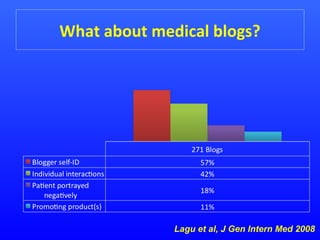
What about medical blogs?

Lagu et al, J Gen Intern Med 2008
Risks of Social Media
• Reputation
– Expertise
– Patient satisfaction

• Career
– Medicolegal

• Patient harm
– Privacy violation
– Damage to doctor-patient relationship

• Boundaries
• Blurring of personal and professional spheres
Medicolegal Risks
• Disclosure of patient information
– Statutory risk
– Common law risk

• “Friending” patients
– Established
– Non-established

• Surfing social media sites of established patients
• Physician as employer: social media risks
• Malpractice & risk management
Terry Wall, ASTRO Annual Meeting 2011
Benefits of Social Media
• Collaboration
– Conducting research
– Clinical guidelines
– Donations for cancer care

• Connect with patients, others
– Marketing your practice or organization
– Enhance therapeutic relationship
– Share your research

• Education
– Patients
– Colleagues, CME

• Reputation Management
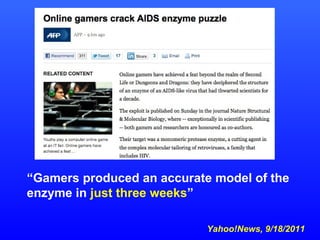
“Gamers produced an accurate model of the
enzyme in just three weeks”
Yahoo!News, 9/18/2011
AMA Guidelines
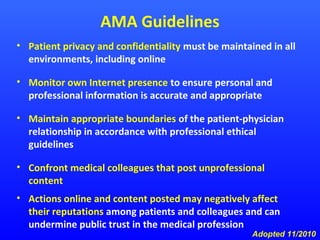
• Patient privacy and confidentiality must be maintained in all
environments, including online
• Monitor own Internet presence to ensure personal and
professional information is accurate and appropriate
• Maintain appropriate boundaries of the patient-physician
relationship in accordance with professional ethical
guidelines
• Confront medical colleagues that post unprofessional
content
• Actions online and content posted may negatively affect
their reputations among patients and colleagues and can
undermine public trust in the medical profession

Adopted 11/2010
Posted 6/20/2011
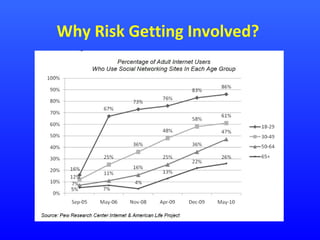
Why Risk Getting Involved?
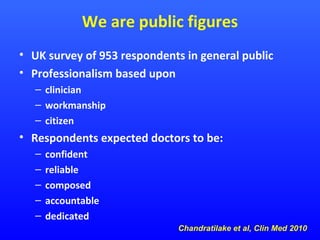
We are public figures
• UK survey of 953 respondents in general public
• Professionalism based upon
– clinician
– workmanship
– citizen

• Respondents expected doctors to be:
–
–
–
–
–

confident
reliable
composed
accountable
dedicated
Chandratilake et al, Clin Med 2010
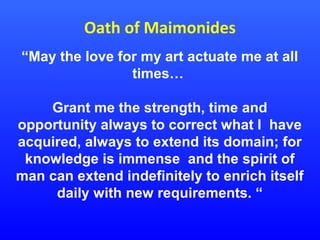
Oath of Maimonides
“May the love for my art actuate me at all
times…
Grant me the strength, time and
opportunity always to correct what I have
acquired, always to extend its domain; for
knowledge is immense and the spirit of
man can extend indefinitely to enrich itself
daily with new requirements. “
Social media can extend our domain
• Doctors are healers and teachers
• Opportunity to learn
• Lead by example
• Re-embrace millennia tradition of caring
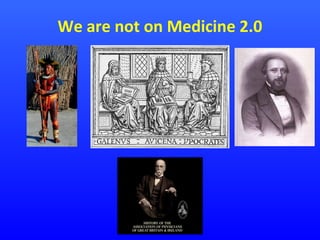
We are not on Medicine 2.0
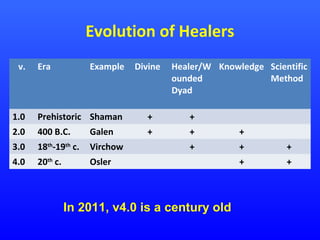
Evolution of Healers
v.

Era

Example

Divine

Healer/W Knowledge Scientific
ounded
Method
Dyad

1.0

Prehistoric Shaman

+

+

2.0

400 B.C.

Galen

+

+

+

3.0

18th-19th c.

Virchow

+

+

+

4.0

20th c.

Osler

+

+

In 2011, v4.0 is a century old
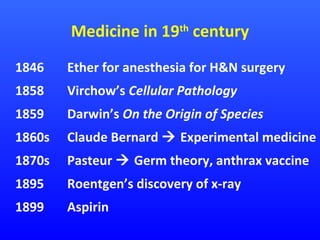
Medicine in 19th century
1846

Ether for anesthesia for H&N surgery

1858

Virchow’s Cellular Pathology

1859

Darwin’s On the Origin of Species

1860s

Claude Bernard  Experimental medicine

1870s

Pasteur  Germ theory, anthrax vaccine

1895

Roentgen’s discovery of x-ray

1899

Aspirin
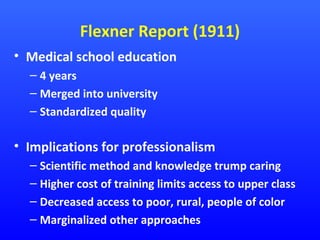
Flexner Report (1911)
• Medical school education
– 4 years
– Merged into university
– Standardized quality

• Implications for professionalism
– Scientific method and knowledge trump caring
– Higher cost of training limits access to upper class
– Decreased access to poor, rural, people of color
– Marginalized other approaches
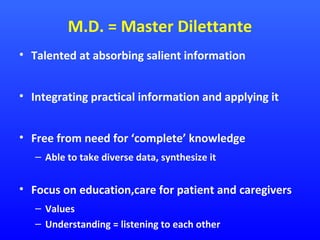
M.D. = Master Dilettante
• Talented at absorbing salient information
• Integrating practical information and applying it
• Free from need for ‘complete’ knowledge
– Able to take diverse data, synthesize it

• Focus on education,care for patient and caregivers
– Values
– Understanding = listening to each other
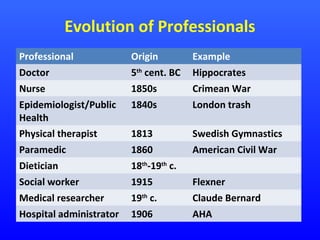
Evolution of Professionals
Professional

Origin

Example

Doctor

5th cent. BC

Hippocrates

Nurse

1850s

Crimean War

Epidemiologist/Public
Health
Physical therapist

1840s

London trash

1813

Swedish Gymnastics

Paramedic

1860

American Civil War

Dietician

18th-19th c.

Social worker

1915

Flexner

Medical researcher

19th c.

Claude Bernard

Hospital administrator

1906

AHA
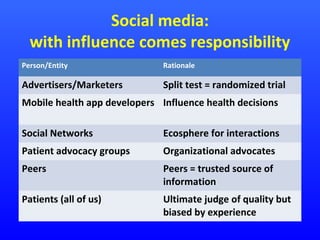
Social media:
with influence comes responsibility
Person/Entity

Rationale

Advertisers/Marketers

Split test = randomized trial

Mobile health app developers Influence health decisions
Social Networks

Ecosphere for interactions

Patient advocacy groups

Organizational advocates

Peers

Peers = trusted source of
information

Patients (all of us)

Ultimate judge of quality but
biased by experience
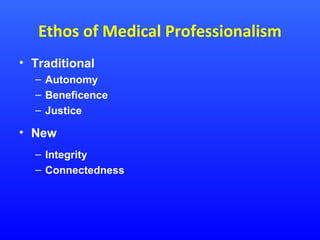
Ethos of Medical Professionalism
• Traditional
– Autonomy
– Beneficence
– Justice

• New
– Integrity
– Connectedness
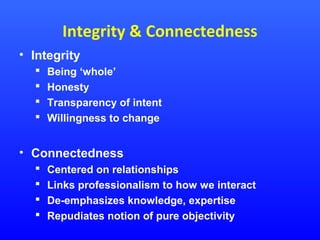
Integrity & Connectedness
• Integrity





Being ‘whole’
Honesty
Transparency of intent
Willingness to change

• Connectedness





Centered on relationships
Links professionalism to how we interact
De-emphasizes knowledge, expertise
Repudiates notion of pure objectivity
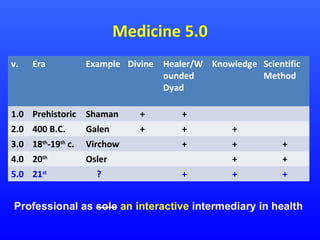
Medicine 5.0
v.

Era

Example Divine Healer/W Knowledge Scientific
ounded
Method
Dyad

1.0 Prehistoric Shaman

+

+

2.0 400 B.C.

Galen

+

+

+

3.0 18th-19th c.

Virchow

+

+

+

4.0 20th

Osler

+

+

5.0 21st

?

+

+

+
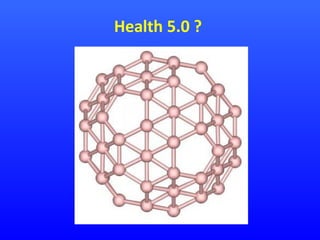
Health 5.0 ?
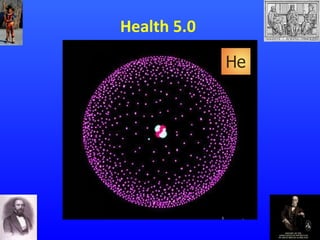
Health 5.0
Medical professionalism 10 20

Medical professionalism 10 20

  • 1.
    The Evolving Roleof Healthcare Professionals Matthew Katz, MD October 20, 2011
  • 2.
    Disclosures • Doctor atRadiation Oncology Associates, PA - Practice in MA, NH • Volunteer for - American Society of Radiation Oncology - Massachusetts Medical Society - Mayo Clinic Center for Social Media •Financial disclosures: none - No speakership, consulting, ownership stakes
  • 3.
    Overview • Definition • Challengeof social media • Current guidelines • Redefining professionalism
  • 4.
    What is aprofessional? • Professional: – “conforming to the technical or ethical standards of a profession” – “participating for gain or livelihood in an activity or field of endeavor often engaged in by amateurs” Merriam-Webster.com, accessed 9/19/11
  • 5.
    Social Media are CommunicationTools • Global reach • Easy access • Little technical expertise needed to use • Immediate impact • Dynamic content Wikipedia, http://bit.ly/mZcwaH
  • 6.
    Social Media • Presentsperplexing challenge • Transforming the way we interact • Patients online for healthcare beyond the exam room • Unclear how best to get involved without harm
  • 7.
    What data dowe have on medical professionalism online? • Survey of U.S. medical school deans – 60% of respondents confirmed medical students posted unprofessional online content • Profanity/discriminatory ~50% • Sexually suggestive/intoxication ~40% – Only 38% had social media policy in place • Study of U Florida medical students/residents – 44% had Facebook account – 83% posted personal information, 70% had photos with alcohol Chretien et al, JAMA 2009 Thompson et al, J Gen Intern Med 2008
  • 8.
    What about medicalblogs? Lagu et al, J Gen Intern Med 2008
  • 9.
    Risks of SocialMedia • Reputation – Expertise – Patient satisfaction • Career – Medicolegal • Patient harm – Privacy violation – Damage to doctor-patient relationship • Boundaries • Blurring of personal and professional spheres
  • 10.
    Medicolegal Risks • Disclosureof patient information – Statutory risk – Common law risk • “Friending” patients – Established – Non-established • Surfing social media sites of established patients • Physician as employer: social media risks • Malpractice & risk management Terry Wall, ASTRO Annual Meeting 2011
  • 11.
    Benefits of SocialMedia • Collaboration – Conducting research – Clinical guidelines – Donations for cancer care • Connect with patients, others – Marketing your practice or organization – Enhance therapeutic relationship – Share your research • Education – Patients – Colleagues, CME • Reputation Management
  • 12.
    “Gamers produced anaccurate model of the enzyme in just three weeks” Yahoo!News, 9/18/2011
  • 13.
    AMA Guidelines • Patientprivacy and confidentiality must be maintained in all environments, including online • Monitor own Internet presence to ensure personal and professional information is accurate and appropriate • Maintain appropriate boundaries of the patient-physician relationship in accordance with professional ethical guidelines • Confront medical colleagues that post unprofessional content • Actions online and content posted may negatively affect their reputations among patients and colleagues and can undermine public trust in the medical profession Adopted 11/2010
  • 14.
  • 15.
  • 17.
    We are publicfigures • UK survey of 953 respondents in general public • Professionalism based upon – clinician – workmanship – citizen • Respondents expected doctors to be: – – – – – confident reliable composed accountable dedicated Chandratilake et al, Clin Med 2010
  • 19.
    Oath of Maimonides “Maythe love for my art actuate me at all times… Grant me the strength, time and opportunity always to correct what I have acquired, always to extend its domain; for knowledge is immense and the spirit of man can extend indefinitely to enrich itself daily with new requirements. “
  • 20.
    Social media canextend our domain • Doctors are healers and teachers • Opportunity to learn • Lead by example • Re-embrace millennia tradition of caring
  • 21.
    We are noton Medicine 2.0
  • 22.
    Evolution of Healers v. Era Example Divine Healer/WKnowledge Scientific ounded Method Dyad 1.0 Prehistoric Shaman + + 2.0 400 B.C. Galen + + + 3.0 18th-19th c. Virchow + + + 4.0 20th c. Osler + + In 2011, v4.0 is a century old
  • 23.
    Medicine in 19thcentury 1846 Ether for anesthesia for H&N surgery 1858 Virchow’s Cellular Pathology 1859 Darwin’s On the Origin of Species 1860s Claude Bernard  Experimental medicine 1870s Pasteur  Germ theory, anthrax vaccine 1895 Roentgen’s discovery of x-ray 1899 Aspirin
  • 24.
    Flexner Report (1911) •Medical school education – 4 years – Merged into university – Standardized quality • Implications for professionalism – Scientific method and knowledge trump caring – Higher cost of training limits access to upper class – Decreased access to poor, rural, people of color – Marginalized other approaches
  • 26.
    M.D. = MasterDilettante • Talented at absorbing salient information • Integrating practical information and applying it • Free from need for ‘complete’ knowledge – Able to take diverse data, synthesize it • Focus on education,care for patient and caregivers – Values – Understanding = listening to each other
  • 27.
    Evolution of Professionals Professional Origin Example Doctor 5thcent. BC Hippocrates Nurse 1850s Crimean War Epidemiologist/Public Health Physical therapist 1840s London trash 1813 Swedish Gymnastics Paramedic 1860 American Civil War Dietician 18th-19th c. Social worker 1915 Flexner Medical researcher 19th c. Claude Bernard Hospital administrator 1906 AHA
  • 28.
    Social media: with influencecomes responsibility Person/Entity Rationale Advertisers/Marketers Split test = randomized trial Mobile health app developers Influence health decisions Social Networks Ecosphere for interactions Patient advocacy groups Organizational advocates Peers Peers = trusted source of information Patients (all of us) Ultimate judge of quality but biased by experience
  • 29.
    Ethos of MedicalProfessionalism • Traditional – Autonomy – Beneficence – Justice • New – Integrity – Connectedness
  • 30.
    Integrity & Connectedness •Integrity     Being ‘whole’ Honesty Transparency of intent Willingness to change • Connectedness     Centered on relationships Links professionalism to how we interact De-emphasizes knowledge, expertise Repudiates notion of pure objectivity
  • 31.
    Medicine 5.0 v. Era Example DivineHealer/W Knowledge Scientific ounded Method Dyad 1.0 Prehistoric Shaman + + 2.0 400 B.C. Galen + + + 3.0 18th-19th c. Virchow + + + 4.0 20th Osler + + 5.0 21st ? + + +
  • 32.
  • 33.

Editor's Notes

  • #3 Define professional Social media as challenge – risks and benefits Guidelines
  • #7 -- Social media challenges our approach to interactions in healthcare -- Partly because we do not always provide information that patients are looking for, they’re going online to find it -- As professionals, not easy to just jump in when we’re obligated to “first, do no harm”
  • #13 Developed in 2008 at U Washington “ fun-for-purpose video game in which gamers…compete to unfold chains of amino acids”
  • #16 - Half of 50-64 year olds, ¼ of 65+ ysing social networking sites - 58% of all adults have looked for health information online
  • #17 To know how to improve in the social media era, we have to look at where we’ve been
  • #21 -- We are healers, not scientists - Our value is in what we do for our patients, not what we can do to them - To learn how to use these tools well, we need to start using them
  • #24 - Not the first time medicine has faced challenges - Similar period of rapid change occurred about 150 years ago -- Medical advances during Industrial Revolution and social change -- Flexner Report culminated in defining basis for how we define medical professionalism – MD as scientist -- Focus on what we know and can do, not how much we care -- More objective, less willing to engage