ACKNOWLEDGEMENT
Any accomplishment requires work effort of many people.
This project work is no different. We are grateful to MRS.
DEEPA SHARMA who inspired and direct us to carryout
this project.
TOPIC NAME
KITCHEN HYGINE AND SANITATION
CONTENTS
Introduction
Types of kitchen cleanings
Prevention in kitchen
Prevention of food borne infection
 Introduction
 Consideration in kitchen
KITCHEN HYGIENE
INTRODUCTION:
 Kitchen Hygiene is related to clean and maintain the
surface and equipment of entire kitchen. It is very crucial
part of total hygiene in Food Production areas. Careless
in the cleanliness of any section of the kitchen could lead
to risk of food poisoning. To make a kitchen safe and
hygienic the following points must be considered…..
THINGS WE SHOULD CONSIDER AND AVOID:
WRONG HABITS
TYPES OF KITCHEN CLEANING
Kitchen cleaning tasks fall into 4 categories:
I. After each use
II. Daily use
III. Weekly use
IV. Monthly use
I. AFTER EACH USE
 Chopping boards, food preparation such as oven, grills,
microwave machine, slicer, can opener and knife.
 Kitchen sanitizer remover is perfect to use for all surface
including stainless steel items.
II. DAILY USE
 Floors, Hot cover, Refrigerator display and Cabinets.
 General kitchen degreaser is ideal for kitchen floor
III. WEEKLY USE
 Shelves, door, food storage rack, fries and fridges and
cold rooms.
 Kitchen cleaner sanitizer will clean surfaces and the
inside of fridge. As it is very ideal for weekly task or use.
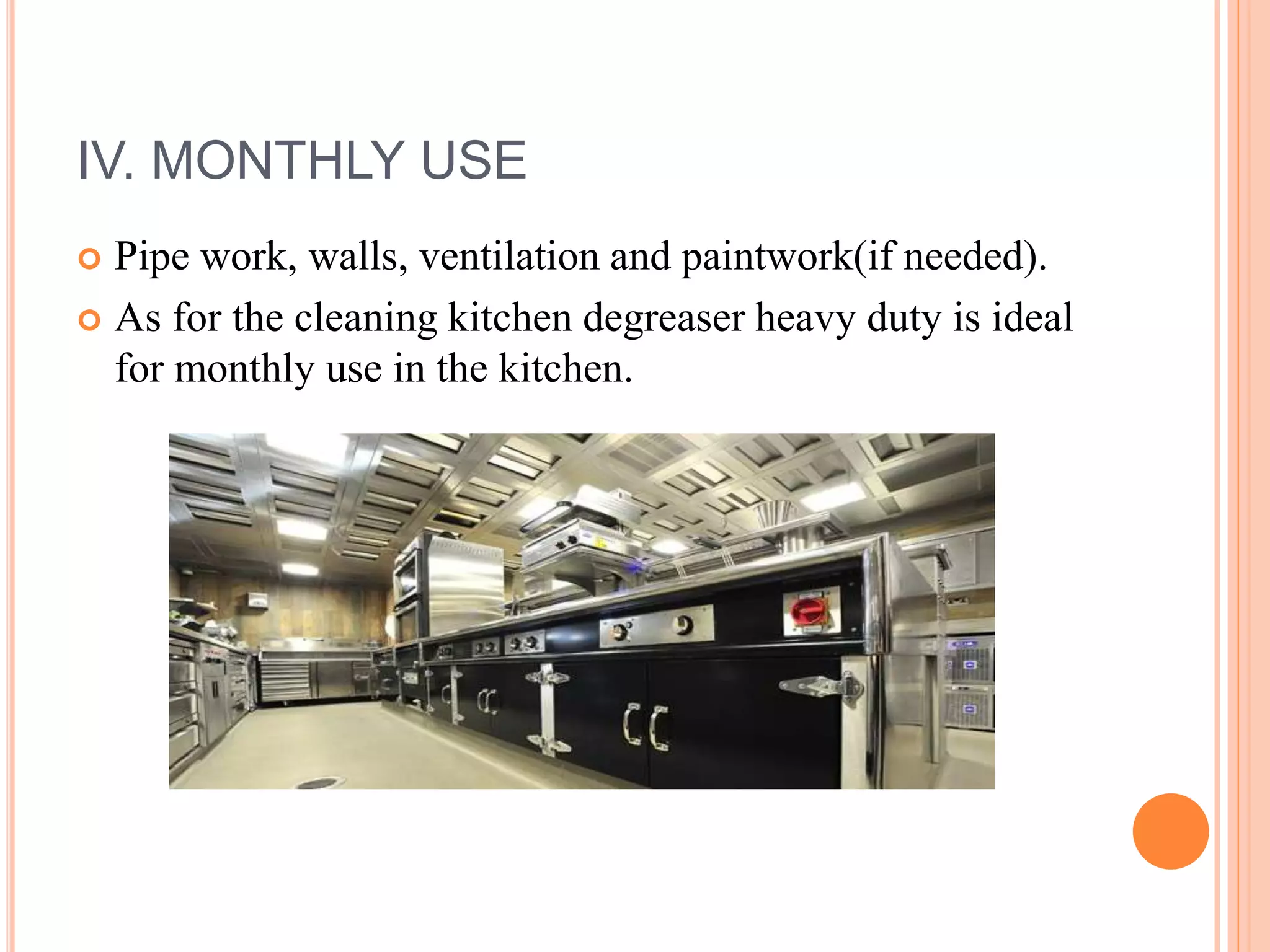
IV. MONTHLY USE
 Pipe work, walls, ventilation and paintwork(if needed).
 As for the cleaning kitchen degreaser heavy duty is ideal
for monthly use in the kitchen.
PREVENTION IN KITCHEN
We all need to be aware of potential risk involving cleaning
kitchen these includes:
 Correct handling of knives and other sharp equipments to
minimize the danger from injury.
 Correct handling, storing and disposal of rubbish.
 Checking the electrical equipment and reporting if any
faults are found.
 Ensuring the gas appliance is a switched off and not
accidently turned on while cleaning.
 Always put a safety sign board while cleaning and
remove after cleaning.
PREVENTION OF FOOD BORNE INFECTION
The following tips for kitchen hygiene will protect against
food borne infection they are:
 Heat food well so that it reaches at least 70C for 2
minutes in the centre.
 To avoid cross contamination thoroughly clean the work
surface.
 Wash vegetable and fruits for raw consumption
thoroughly in order to remove germs.
 Maintain a cold chain and keep food in the fridge at 2-5C
store meat and fish on the coldest shelf.
SANITATION
INTRODUCTION
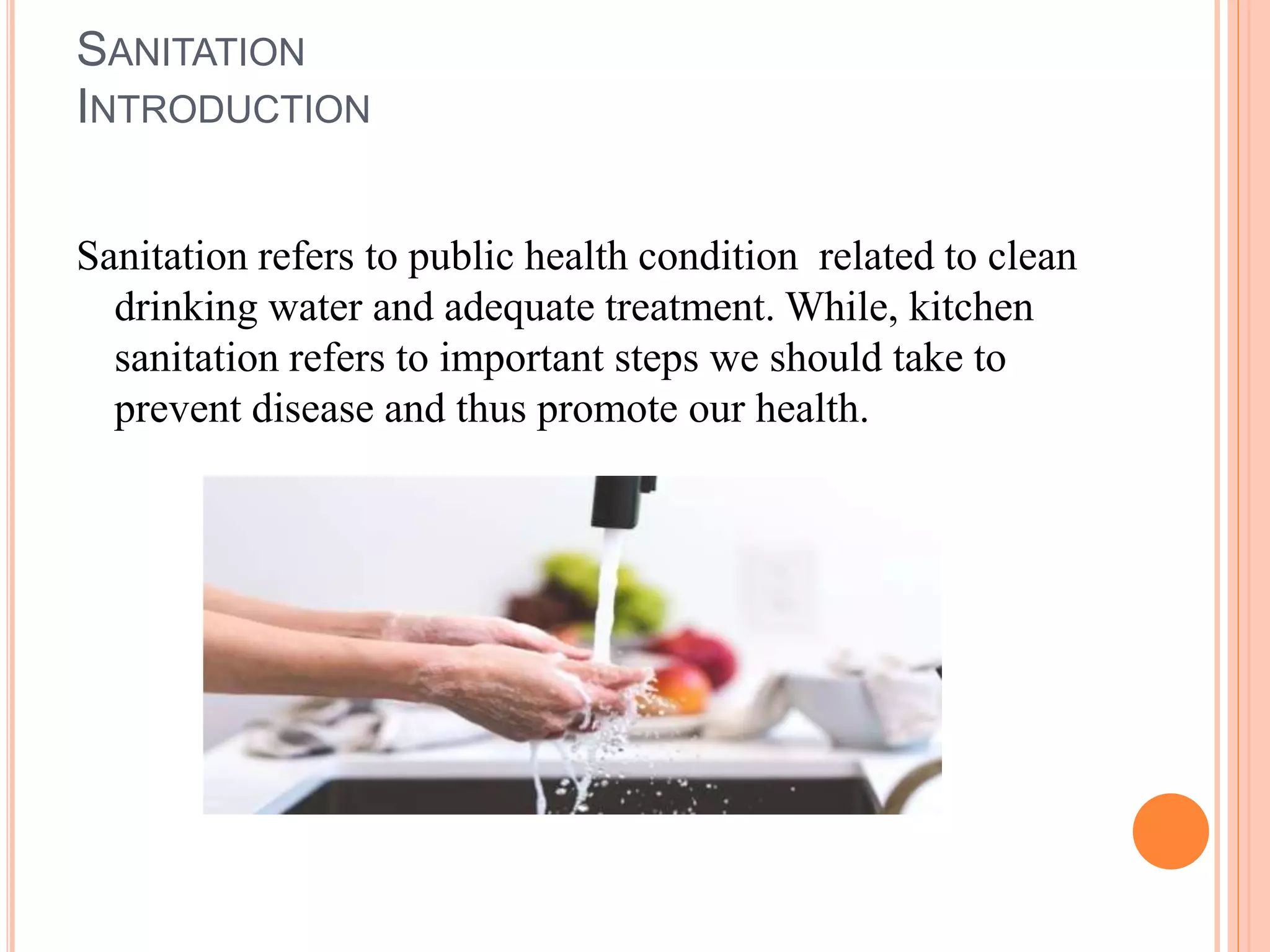
Sanitation refers to public health condition related to clean
drinking water and adequate treatment. While, kitchen
sanitation refers to important steps we should take to
prevent disease and thus promote our health.
CONSIDERATION IN KITCHEN
 Wash or change kitchen towels, cloths and sponges every
few days.
 Use of disinfectant is only advisable on the
recommendation of a doctor or health authority.
 Store knives in a wooden block or in a drawer.
 Floor must be kept reasonably clean all time.
 Refuse must be kept reasonably clean all time.
 Store all food and utensils at least 6 inches off of the
floor.
 All food must be obtained from approved source.
CONCLUSION
Kitchen hygiene is the most important thing that should be
considered while working in the kitchen. As well as
sanitation also comes secondly in the kitchen. Sanitation
and hygiene mainly attracts the customer so we have to
mainly focus on this two term….
PREPARED BY:
Dalhamu lama

Kitchen hygiene and sanitation

  • 1.
    ACKNOWLEDGEMENT Any accomplishment requireswork effort of many people. This project work is no different. We are grateful to MRS. DEEPA SHARMA who inspired and direct us to carryout this project.
  • 2.
  • 3.
    CONTENTS Introduction Types of kitchencleanings Prevention in kitchen Prevention of food borne infection  Introduction  Consideration in kitchen
  • 4.
    KITCHEN HYGIENE INTRODUCTION:  KitchenHygiene is related to clean and maintain the surface and equipment of entire kitchen. It is very crucial part of total hygiene in Food Production areas. Careless in the cleanliness of any section of the kitchen could lead to risk of food poisoning. To make a kitchen safe and hygienic the following points must be considered…..
  • 5.
    THINGS WE SHOULDCONSIDER AND AVOID:
  • 6.
  • 7.
    TYPES OF KITCHENCLEANING Kitchen cleaning tasks fall into 4 categories: I. After each use II. Daily use III. Weekly use IV. Monthly use
  • 8.
    I. AFTER EACHUSE  Chopping boards, food preparation such as oven, grills, microwave machine, slicer, can opener and knife.  Kitchen sanitizer remover is perfect to use for all surface including stainless steel items.
  • 9.
    II. DAILY USE Floors, Hot cover, Refrigerator display and Cabinets.  General kitchen degreaser is ideal for kitchen floor
  • 10.
    III. WEEKLY USE Shelves, door, food storage rack, fries and fridges and cold rooms.  Kitchen cleaner sanitizer will clean surfaces and the inside of fridge. As it is very ideal for weekly task or use.
  • 11.
    IV. MONTHLY USE Pipe work, walls, ventilation and paintwork(if needed).  As for the cleaning kitchen degreaser heavy duty is ideal for monthly use in the kitchen.
  • 12.
    PREVENTION IN KITCHEN Weall need to be aware of potential risk involving cleaning kitchen these includes:  Correct handling of knives and other sharp equipments to minimize the danger from injury.  Correct handling, storing and disposal of rubbish.  Checking the electrical equipment and reporting if any faults are found.  Ensuring the gas appliance is a switched off and not accidently turned on while cleaning.  Always put a safety sign board while cleaning and remove after cleaning.
  • 13.
    PREVENTION OF FOODBORNE INFECTION The following tips for kitchen hygiene will protect against food borne infection they are:  Heat food well so that it reaches at least 70C for 2 minutes in the centre.  To avoid cross contamination thoroughly clean the work surface.  Wash vegetable and fruits for raw consumption thoroughly in order to remove germs.  Maintain a cold chain and keep food in the fridge at 2-5C store meat and fish on the coldest shelf.
  • 14.
    SANITATION INTRODUCTION Sanitation refers topublic health condition related to clean drinking water and adequate treatment. While, kitchen sanitation refers to important steps we should take to prevent disease and thus promote our health.
  • 15.
    CONSIDERATION IN KITCHEN Wash or change kitchen towels, cloths and sponges every few days.  Use of disinfectant is only advisable on the recommendation of a doctor or health authority.  Store knives in a wooden block or in a drawer.  Floor must be kept reasonably clean all time.  Refuse must be kept reasonably clean all time.  Store all food and utensils at least 6 inches off of the floor.  All food must be obtained from approved source.
  • 16.
    CONCLUSION Kitchen hygiene isthe most important thing that should be considered while working in the kitchen. As well as sanitation also comes secondly in the kitchen. Sanitation and hygiene mainly attracts the customer so we have to mainly focus on this two term….
  • 17.

Editor's Notes