SANITATION
AND
SAFETY
FOOD SANITATION
Food sanitation is the cleanliness
of equipment and facilities.
It is important for the safety of lab
members and the preparation of
food.
The areas of food sanitation
include:
hands
pots and pans
appliances
kitchen utensils
food preparation areas
food storage areas
Pots And Pans
• For the safety of lab members and proper food
preparation pots and pans :
– must be clean
– have secure handles
– should have flat bottoms
– lids must have handles
– made from food grade metal
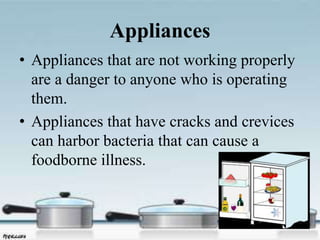
Appliances
• Appliances that are not working properly
are a danger to anyone who is operating
them.
• Appliances that have cracks and crevices
can harbor bacteria that can cause a
foodborne illness.
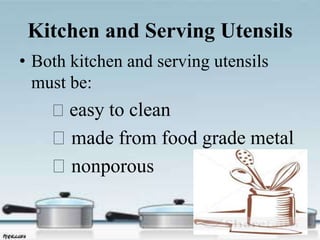
Kitchen and Serving Utensils
• Both kitchen and serving utensils
must be:
easy to clean
made from food grade metal
nonporous
Food Preparation Areas
Food preparation areas have the
potential for cross contamination of
food. To PREVENT this food
preparation areas:
must be easy to clean
must be non-porous
be free from cracks and crevices
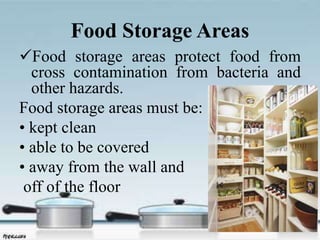
Food Storage Areas
Food storage areas protect food from
cross contamination from bacteria and
other hazards.
Food storage areas must be:
• kept clean
• able to be covered
• away from the wall and
off of the floor
FOOD SAFETY
• Food safety is how food is handled to
prevent foodborne illness. This
includes:
Food preparation methods
Cooking
Chilling
Serving
Food Preparation Methods
• Raw foods must be kept separate
from ready to eat foods to PREVENT
cross contamination.
Cooking Food
• Meats should be cooked to the
proper internal temperature to
prevent foodborne illness.
Serving Food
• Food should be served as quickly
as possible after preparation and
held at 135° for food service 140°
personal/home use.
Chilling Food
• Foods should be cooled in small
containers to help speed the
cooling process.
• Foods that are chilling should be
covered to prevent cross
contamination
OTHER SAFETY TIPS
IN THE
KITCHEN
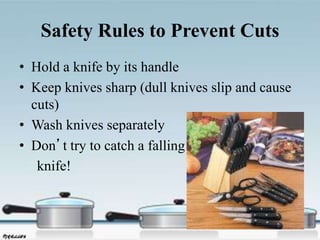
Safety Rules to Prevent Cuts
• Hold a knife by its handle
• Keep knives sharp (dull knives slip and cause
cuts)
• Wash knives separately
• Don’t try to catch a falling
knife!
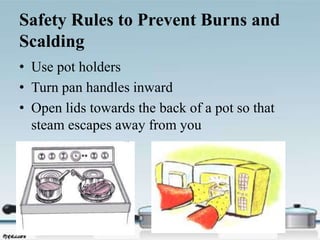
Safety Rules to Prevent Burns and
Scalding
• Use pot holders
• Turn pan handles inward
• Open lids towards the back of a pot so that
steam escapes away from you
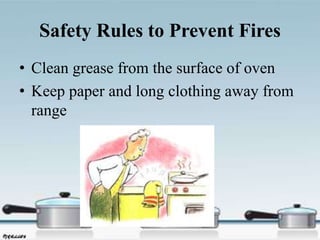
Safety Rules to Prevent Fires
• Clean grease from the surface of oven
• Keep paper and long clothing away from
range
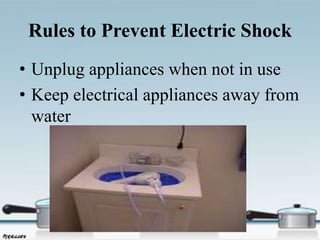
Rules to Prevent Electric Shock
• Unplug appliances when not in use
• Keep electrical appliances away from
water
PRINCIPLES
ON
SANITATION AND SAFETY
IN
FOOD ESTABLISHMENT
ESTABLISHMENT
• Food borne illness outbreak cost an
establishment thousands of pesos, it
can even be the reason an
establishment is forced to closed.
Foodborne illness in your
establishment can cause:
Loss of customers and sales
Loss of prestige and reputation
Lowered employee morale
Increase employee turn over
embarrassment
TYPES OF FOOD CONTAMINANTS
BIOLOGICAL CONTAMINANT
PHYSICAL CONTAMINANT
CHEMICAL CONTAMINANT
BIOLOGICAL CONTAMINANT
A microbial contaminant that may cause a
food borne illness (bacteria, viruses, fungi,
biological toxins)
examples:
Sea food toxins
Mushroom toxins
Clostridium botulinum
Salmonella bacteria
Preventing Biological Contaminantion
Purchase foods only on reputable supplier
Do not use wild mushroom
Observe proper hand washing
Clean and sanitize equipment
Maintain clean and sanitize facilities
Control pest
PHYSICAL CONTAMINANT
Any foreign that accidentally find its way
into food:
hair, staple wire, dust, metal shavings,
nails, earing's, hair clips. Glass fragments,
insects, extraneous vegetable and stones.
Preventing Physical Contaminantion
Wear hair restraint
Avoid wearing jewelry when preparing,
cooking and holding foods
Do not carry pencil or pen
Do not wear nail polish or artificial nails
when working with foods
Clean can openers regularly
Remove staple wire in the receiving area
Place shields on light
CHEMICAL CONTAMINAN
A chemical substance that can cause food
borne illness. Substances normally found in
restaurant.
Toxic metals
Pesticides
Cleaning product
Sanitizers
Preservatives
Preventing Chemical Contamination
Teach employees how to use chemicals
Store chemicals in original containers to
prevent accidental misuse, as well as
leakage into food.
Make sure labels are clearly identify
chemical contents of chemical containers
Always chemical according to chemical
recommendation.
Preventing Chemical Contamination
Always test sanitizing solution
Wash hand thoroughly after working with
chemicals
Wash foods in cold running water
Monitor pest control operator and make
sure chemicals do not contaminate foods.
3 Main Causes Of
Food Borne Illness
CROSS CONTAMINATION
Occurs when microorganism are
transferred from one surface or food to
another. The bacteria can transfer from:
Hand to food
Food to hand
Equipment to food
FOOD TO FOOD CONTAMINATION
When harmful organisms from
one food contaminate other foods.
Equipment to Food Contamination
• Use separate cutting boards for different foods
• Prepare raw foods in separate area from fresh and
ready to eat foods.
• Clean & sanitize equipment, work surfaces &
utensils after preparing each foods
• Use specific containers for various food products.
• Make sure cloth and paper towel use for wiping
spills are not used for any other purposes.
KEEPING GOOD
PERSONAL HYGENE
• Medicines should be kept inside the locker and away
from foods
• Clean and cover cuts and wound
• Never use bare hand when handling ready to eat foods
• Disposable gloves should be used once
• Take a bath everyday
• Wear appropriate attire
• Observe proper hand washing procedures at all times

CAFETERIA.pptxcbsbsmmsnshebbsekmmsmndndn

  • 1.
  • 2.
    FOOD SANITATION Food sanitationis the cleanliness of equipment and facilities. It is important for the safety of lab members and the preparation of food.
  • 3.
    The areas offood sanitation include: hands pots and pans appliances kitchen utensils food preparation areas food storage areas
  • 4.
    Pots And Pans •For the safety of lab members and proper food preparation pots and pans : – must be clean – have secure handles – should have flat bottoms – lids must have handles – made from food grade metal
  • 5.
    Appliances • Appliances thatare not working properly are a danger to anyone who is operating them. • Appliances that have cracks and crevices can harbor bacteria that can cause a foodborne illness.
  • 6.
    Kitchen and ServingUtensils • Both kitchen and serving utensils must be: easy to clean made from food grade metal nonporous
  • 7.
    Food Preparation Areas Foodpreparation areas have the potential for cross contamination of food. To PREVENT this food preparation areas: must be easy to clean must be non-porous be free from cracks and crevices
  • 8.
    Food Storage Areas Foodstorage areas protect food from cross contamination from bacteria and other hazards. Food storage areas must be: • kept clean • able to be covered • away from the wall and off of the floor
  • 9.
    FOOD SAFETY • Foodsafety is how food is handled to prevent foodborne illness. This includes: Food preparation methods Cooking Chilling Serving
  • 10.
    Food Preparation Methods •Raw foods must be kept separate from ready to eat foods to PREVENT cross contamination.
  • 11.
    Cooking Food • Meatsshould be cooked to the proper internal temperature to prevent foodborne illness.
  • 12.
    Serving Food • Foodshould be served as quickly as possible after preparation and held at 135° for food service 140° personal/home use.
  • 13.
    Chilling Food • Foodsshould be cooled in small containers to help speed the cooling process. • Foods that are chilling should be covered to prevent cross contamination
  • 14.
  • 15.
    Safety Rules toPrevent Cuts • Hold a knife by its handle • Keep knives sharp (dull knives slip and cause cuts) • Wash knives separately • Don’t try to catch a falling knife!
  • 16.
    Safety Rules toPrevent Burns and Scalding • Use pot holders • Turn pan handles inward • Open lids towards the back of a pot so that steam escapes away from you
  • 17.
    Safety Rules toPrevent Fires • Clean grease from the surface of oven • Keep paper and long clothing away from range
  • 18.
    Rules to PreventElectric Shock • Unplug appliances when not in use • Keep electrical appliances away from water
  • 19.
  • 20.
    ESTABLISHMENT • Food borneillness outbreak cost an establishment thousands of pesos, it can even be the reason an establishment is forced to closed.
  • 21.
    Foodborne illness inyour establishment can cause: Loss of customers and sales Loss of prestige and reputation Lowered employee morale Increase employee turn over embarrassment
  • 22.
    TYPES OF FOODCONTAMINANTS BIOLOGICAL CONTAMINANT PHYSICAL CONTAMINANT CHEMICAL CONTAMINANT
  • 23.
    BIOLOGICAL CONTAMINANT A microbialcontaminant that may cause a food borne illness (bacteria, viruses, fungi, biological toxins) examples: Sea food toxins Mushroom toxins Clostridium botulinum Salmonella bacteria
  • 24.
    Preventing Biological Contaminantion Purchasefoods only on reputable supplier Do not use wild mushroom Observe proper hand washing Clean and sanitize equipment Maintain clean and sanitize facilities Control pest
  • 25.
    PHYSICAL CONTAMINANT Any foreignthat accidentally find its way into food: hair, staple wire, dust, metal shavings, nails, earing's, hair clips. Glass fragments, insects, extraneous vegetable and stones.
  • 26.
    Preventing Physical Contaminantion Wearhair restraint Avoid wearing jewelry when preparing, cooking and holding foods Do not carry pencil or pen Do not wear nail polish or artificial nails when working with foods Clean can openers regularly Remove staple wire in the receiving area Place shields on light
  • 27.
    CHEMICAL CONTAMINAN A chemicalsubstance that can cause food borne illness. Substances normally found in restaurant. Toxic metals Pesticides Cleaning product Sanitizers Preservatives
  • 28.
    Preventing Chemical Contamination Teachemployees how to use chemicals Store chemicals in original containers to prevent accidental misuse, as well as leakage into food. Make sure labels are clearly identify chemical contents of chemical containers Always chemical according to chemical recommendation.
  • 29.
    Preventing Chemical Contamination Alwaystest sanitizing solution Wash hand thoroughly after working with chemicals Wash foods in cold running water Monitor pest control operator and make sure chemicals do not contaminate foods.
  • 30.
    3 Main CausesOf Food Borne Illness
  • 31.
    CROSS CONTAMINATION Occurs whenmicroorganism are transferred from one surface or food to another. The bacteria can transfer from: Hand to food Food to hand Equipment to food
  • 32.
    FOOD TO FOODCONTAMINATION When harmful organisms from one food contaminate other foods.
  • 33.
    Equipment to FoodContamination • Use separate cutting boards for different foods • Prepare raw foods in separate area from fresh and ready to eat foods. • Clean & sanitize equipment, work surfaces & utensils after preparing each foods • Use specific containers for various food products. • Make sure cloth and paper towel use for wiping spills are not used for any other purposes.
  • 34.
    KEEPING GOOD PERSONAL HYGENE •Medicines should be kept inside the locker and away from foods • Clean and cover cuts and wound • Never use bare hand when handling ready to eat foods • Disposable gloves should be used once • Take a bath everyday • Wear appropriate attire • Observe proper hand washing procedures at all times