Cross
Contamination
What is Cross Contamination
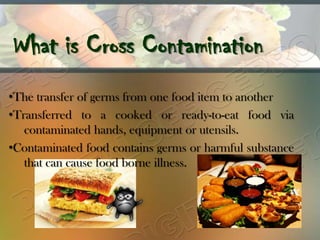
•The transfer of germs from one food item to another
•Transferred to a cooked or ready-to-eat food via
   contaminated hands, equipment or utensils.
•Contaminated food contains germs or harmful substance
   that can cause food borne illness.
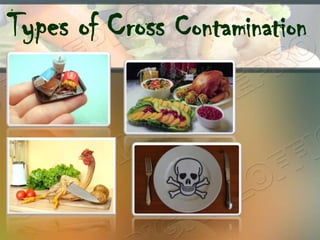
Types of Cross Contamination
Important things to remember
• Always store cooked and ready-to-eat foods over
  raw products
• Keep raw and ready to eat foods separate during
  storage
• Use good personal hygiene and hand washing
• Keep all food-contact surfaces clean and sanitary
• Avoid bare hand contact with ready-to-eat foods
Avoiding Cross Contamination
         There are many things you can do to avoid, or at least reduce,
opportunities for cross contamination during food preparation and service. An
important part of food safety is to impress upon your employees the importance
of clean hands and clothing.
To avoid cross contamination by way of food-contact surfaces (e.i., cutting
boards, knife blades, slicers, and preparation tables) an effective in-house
cleaning and sanitation

         Provide on going supervision to ensure employees remain clean and
apply safe food handling practices when working with food

         Once bacteria get on the surface, they can be difficult to remove. To
avoid such a buildup, always clean and sanitize food-contact surfaces
thoroughly before working with ready-to-eat foods and foods that will not be heat
processed.
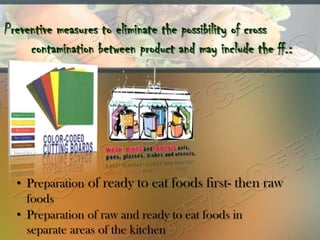
Preventive measures to eliminate the possibility of cross
     contamination between product and may include the ff.:


  • Preparation of ready to eat foods first- then raw
    foods
  • Preparation of raw and ready to eat foods in
    separate areas of the kitchen
Always keep raw foods separate from ready-to-eat
foods
• In the refrigerator, ready to eat foods must be
  stored above raw foods. Display cases, such as
  those use to display seafood items, should be
  designed to keep raw and cooked food items
  separate. In addition separate buckets in place
  of sanitizing solution and wiping cloths should
  be used for cleaning food contact surfaces in raw
  and ready-to-eat food production areas.
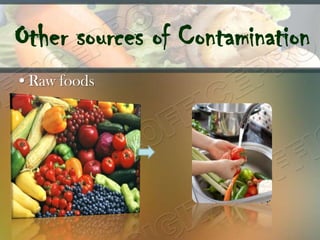
Other sources of Contamination
•Raw foods
• Utensils used to dispense
  and served foods
• Germs from a
• Animals     worker’s mouth
Solution
WHEN SHOPPING:
• Separate raw meat, poultry and seafood from other foods in the grocery cart. Place these
  foods in plastic bags to prevent juices from dripping onto other foods.
WHEN STORING:
• Place raw meat, poultry and seafood in containers or sealed bags to prevent their juices
  from dripping.
WHEN PREPARING:
• Wash hands and surfaces often. Harmful bacteria can spread throughout the food
  preparation area and contaminate cutting boards, utensils, counter tops and the preparer's
  hands.
• Wash hands with soap and hot water before and after handling food.
• Use soap and hot water to clean kitchen surfaces. Use a sanitizer to clean spills and kitchen
  counter tops.
• Wash, rinse and sanitize cutting boards
WHEN SERVING:
• Always use a clean plate or serving utensils. Never place cooked food on the same plate
  that previously held raw food. Change utensils when you change products.
Cross contamination

Cross contamination

  • 1.
  • 2.
    What is CrossContamination •The transfer of germs from one food item to another •Transferred to a cooked or ready-to-eat food via contaminated hands, equipment or utensils. •Contaminated food contains germs or harmful substance that can cause food borne illness.
  • 3.
    Types of CrossContamination
  • 4.
    Important things toremember • Always store cooked and ready-to-eat foods over raw products • Keep raw and ready to eat foods separate during storage • Use good personal hygiene and hand washing • Keep all food-contact surfaces clean and sanitary • Avoid bare hand contact with ready-to-eat foods
  • 5.
    Avoiding Cross Contamination There are many things you can do to avoid, or at least reduce, opportunities for cross contamination during food preparation and service. An important part of food safety is to impress upon your employees the importance of clean hands and clothing. To avoid cross contamination by way of food-contact surfaces (e.i., cutting boards, knife blades, slicers, and preparation tables) an effective in-house cleaning and sanitation Provide on going supervision to ensure employees remain clean and apply safe food handling practices when working with food Once bacteria get on the surface, they can be difficult to remove. To avoid such a buildup, always clean and sanitize food-contact surfaces thoroughly before working with ready-to-eat foods and foods that will not be heat processed.
  • 6.
    Preventive measures toeliminate the possibility of cross contamination between product and may include the ff.: • Preparation of ready to eat foods first- then raw foods • Preparation of raw and ready to eat foods in separate areas of the kitchen
  • 7.
    Always keep rawfoods separate from ready-to-eat foods • In the refrigerator, ready to eat foods must be stored above raw foods. Display cases, such as those use to display seafood items, should be designed to keep raw and cooked food items separate. In addition separate buckets in place of sanitizing solution and wiping cloths should be used for cleaning food contact surfaces in raw and ready-to-eat food production areas.
  • 8.
    Other sources ofContamination •Raw foods
  • 9.
    • Utensils usedto dispense and served foods
  • 10.
    • Germs froma • Animals worker’s mouth
  • 11.
    Solution WHEN SHOPPING: • Separateraw meat, poultry and seafood from other foods in the grocery cart. Place these foods in plastic bags to prevent juices from dripping onto other foods. WHEN STORING: • Place raw meat, poultry and seafood in containers or sealed bags to prevent their juices from dripping. WHEN PREPARING: • Wash hands and surfaces often. Harmful bacteria can spread throughout the food preparation area and contaminate cutting boards, utensils, counter tops and the preparer's hands. • Wash hands with soap and hot water before and after handling food. • Use soap and hot water to clean kitchen surfaces. Use a sanitizer to clean spills and kitchen counter tops. • Wash, rinse and sanitize cutting boards WHEN SERVING: • Always use a clean plate or serving utensils. Never place cooked food on the same plate that previously held raw food. Change utensils when you change products.