1/11
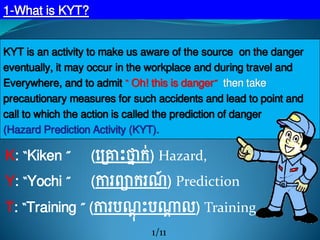
KYT is an activity to make us aware of the source on the danger
eventually, it may occur in the workplace and during travel and
Everywhere, and to admit “ Oh! this is danger” then take
precautionary measures for such accidents and lead to point and
call to which the action is called the prediction of danger
(Hazard Prediction Activity (KYT).
1-What is KYT?
K: “Kiken ” (គ្រោះថា្ន ក់) Hazard,
Y: “Yochi ” (ការព្យាករណ៍ ) Prediction
T: “Training ” (ការបណ្ុ ោះបណ្ត្ ល) Training
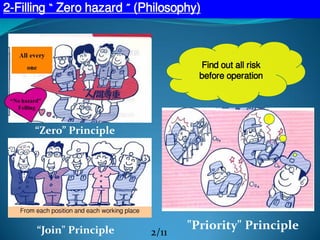
“Zero” Principle
Find out all risk
before operation
“Join" Principle "Priority" Principle
2-Filling “ Zero hazard ” (Philosophy)
2/11
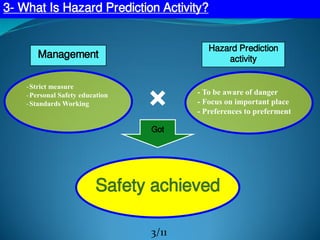
×
Management
Hazard Prediction
activity
Got
Safety achieved
3- What Is Hazard Prediction Activity?
- To be aware of danger
- Focus on important place
- Preferences to preferment
-Strict measure
-Personal Safety education
-Standards Working
3/11
4- What are the Purpose of Hazard Prediction Activity?
4/11
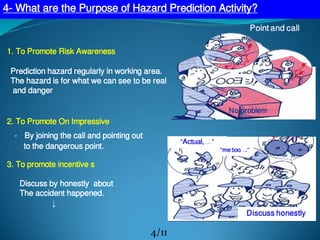
1. To Promote Risk Awareness
Prediction hazard regularly in working area.
The hazard is for what we can see to be real
and danger
2. To Promote On Impressive
- By joining the call and pointing out
to the dangerous point.
3. To promote incentive s
Discuss by honestly about
The accident happened.
↓
05/11
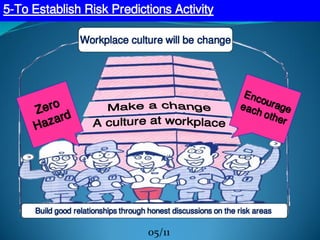
5-To Establish Risk Predictions Activity
6-Point And Call
1. Point and calling at the same time
- Point and Call (“yubisashi kosho”)
Each operator identify the main point of the workplace risk.
- Finger pointing at the same time (“yubisashi showa”)
Everybody screams the slogan (As away of meeting people)
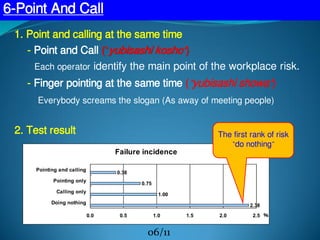
2. Test result
Failure incidence
2.38
1.00
0.75
0.38
0.0 0.5 1.0 1.5 2.0 2.5
Doing nothing
Calling only
Pointing only
Pointing and calling
%
The first rank of risk
“do nothing”
06/11
The goal of KYT
07/11
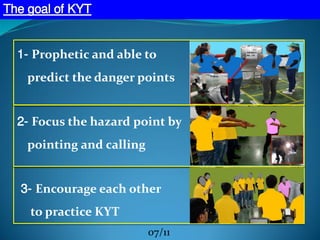
1- Prophetic and able to
predict the danger points
2- Focus the hazard point by
pointing and calling
3- Encourage each other
to practice KYT
08/11
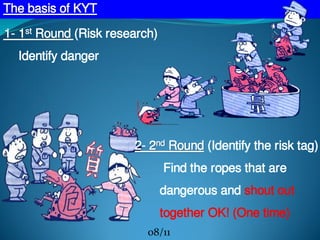
The basis of KYT
1- 1st Round (Risk research)
Identify danger
2- 2nd Round (Identify the risk tag)
Find the ropes that are
dangerous and shout out
together OK! (One time)
09/11
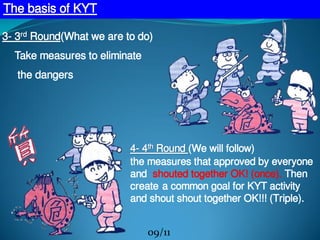
The basis of KYT
3- 3rd Round(What we are to do)
Take measures to eliminate
the dangers
4- 4th Round (We will follow)
the measures that approved by everyone
and shouted together OK! (once). Then
create a common goal for KYT activity
and shout shout together OK!!! (Triple).
10/11
សុវត្ថិភាព្យជាចំបង !
រា នគ្រោះថា្ន ក់ , OK!
ご安全に!
GO-AN-ZEN
-NI
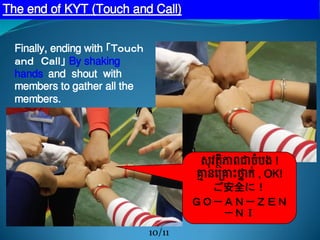
The end of KYT (Touch and Call)
Finally, ending with 「Touch
and Call」 By shaking
hands and shout with
members to gather all the
members.
11/11
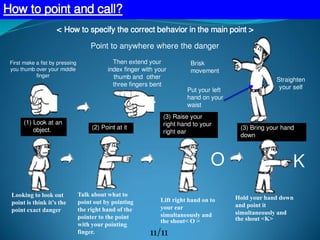
How to point and call?
< How to specify the correct behavior in the main point >
Point to anywhere where the danger
First make a fist by pressing
you thumb over your middle
finger
Then extend your
index finger with your
thumb and other
three fingers bent
Brisk
movement
Put your left
hand on your
waist
(1) Look at an
object. (2) Point at it
(3) Raise your
right hand to your
right ear
(3) Bring your hand
down
O K
Talk about what to
point out by pointing
the right hand of the
pointer to the point
with your pointing
finger.
Straighten
your self
Lift right hand on to
your ear
simultaneously and
the shout< O >
Looking to look out
point is think it’s the
point exact danger
Hold your hand down
and point it
simultaneously and
the shout <K>
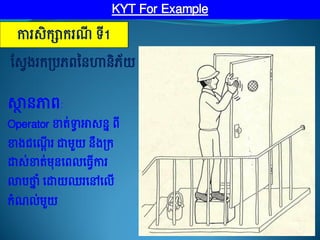
ការសិកាករណី ទី1
ស្ថថ នភាព្យ:
Operator ខាត្់ទ្វា អាសនន ព្យី
ខាងជគណ្ើ រ ជាមួយ នឹង្ក
ដាស់ខាត្់មុនគព្យលគ្ាើការ
លាបថា្ន ំ គដាយឈរគៅគលើ
កំណល់មួយ
ស្សាងរក្បភព្យននហានិភ័យ
KYT For Example
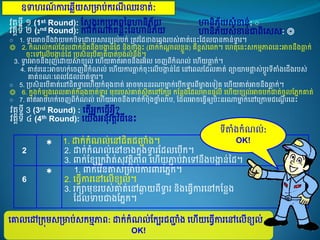
1. ដាក់កំណល់គៅជិត្ជញ្ជ ំង។
2 2. ដាក់កំណល់គៅខាងកនុងទ្វា រស្ដលគបើក។
3. ពាក់ស្សែ្កវ៉ា ត្់សុវត្ថិភាព្យ គ ើយភាជ ប់វគៅនឹងបង្កា ន់នដ។
1. ពាក់ស្វ ៉ានតាស្ាប់ការពារស្ភនក។
6 2. គ្ាើការគៅគលើសយល់។
3. រកាមុសរបស់រត្់គៅឆ្ងា យព្យីទ្វា រ និងគ្ាើការគៅកស្នែង
ស្ដលទ្វបជាងស្ភនក។
វគ្គទី ១ (1st Round): ស្សាងរក្បភព្យននហានិភ័យ
វគ្គទី ២ (2nd Round): ការកំណត្់គ្នែិោះននហានិភ័យ
ឧទ្វ រណ៍ ការគឆែើយស្ាប់ករណី ឈរខាត្់:
○ 1. ទ្វា រអាចនឹងវយមកបិទគដាយស្ថរសយល់បក់ ្ត្ូវនដខាងគឆាងរបស់រត្់គនោះស្ដលបានកាន់ទ្វា រ។
◎ 2. កំណល់កល់ស្ដលដាក់ជិត្នឹងបង្កា ន់នដ និងចគងាោះ (ពាក់កណ្ត្ លសែួន) គ្ឺសពស់គព្យក។ គ ត្ុគនោះសកមាភាព្យគនោះអាចនឹងធ្លែ ក់
ចុោះគៅគលើបង្កា ន់នដ ្បសិនគបើរត្់បាត្់បង់លំនឹង។
3. ទ្វា រអាចនឹងរុញគដាយស្ថសយល់ គ ើយរត្់អាចនឹងរអិល គចញព្យីកំណល់ គ ើយធ្លែ ក់។
4. រត្់រគនោះអាច ក់គចញព្យីកំណល់ គ ើយការធ្លែ ក់ចុោះគលើបង្កា ន់នដ គៅគព្យលស្ដលរត្់ ព្យាយាមផ្លែ ស់ប្ូរទីតាំងគជើងរបស់
រត្់សណៈគព្យលស្ដលខាត្់ទ្វា រ។
○ 5. ្បសិនគបើរត្់គៅជិត្ទ្វា រគ ើយកំព្យុងខាត្់ អាចាននរណ្តាន ក់គបើកទ្វា រព្យីាា ងគទៀត្ គ ើយរត្់អាចនឹងធ្លែ ក់។
◎ 6. កនុងកំឡុងគព្យលរត្់កំព្យុងខាត្់ទ្វា រ មុសរបស់រត្់សថិត្គៅស្កែរ កស្នែងស្ដលាន្ូលី គ ើយសែល់អាចបក់ផ្លត្់ចូលស្ភនករត្់
○ 7. រត្់អាច ក់គចញព្យីកំណល់ គ ើយអាចនឹងទ្វត្់កំប៉ាុងថា្ន ំលាប, ស្ដលអាចគ្ាើឲ្យប៉ាោះនរណ្តាន ក់គៅគ្កាមជគណ្ើ រគនោះ
វគ្គទី 3 (3rd Round) : គត្ើអនកគ្ាើអាី?
វគ្គទី ៤ (4th Round): គយើងអនុវត្្វិ្ីគនោះ
គរលគៅ្កុមស្ាប់សកមាភាព្យ: ដាក់កំណល់ស្កែរជញ្ជ ំង គ ើយគ្ាើការគៅគលើសយល់
OK!
ទីតាំងកំណល់:
OK!
ហានិភ័យសំខាន់: ○
ហានិភ័យសំខាន់ជាព្យិគសស: ◎
*
*

Kyt method

  • 2.
    1/11 KYT is anactivity to make us aware of the source on the danger eventually, it may occur in the workplace and during travel and Everywhere, and to admit “ Oh! this is danger” then take precautionary measures for such accidents and lead to point and call to which the action is called the prediction of danger (Hazard Prediction Activity (KYT). 1-What is KYT? K: “Kiken ” (គ្រោះថា្ន ក់) Hazard, Y: “Yochi ” (ការព្យាករណ៍ ) Prediction T: “Training ” (ការបណ្ុ ោះបណ្ត្ ល) Training
  • 3.
    “Zero” Principle Find outall risk before operation “Join" Principle "Priority" Principle 2-Filling “ Zero hazard ” (Philosophy) 2/11
  • 4.
    × Management Hazard Prediction activity Got Safety achieved 3-What Is Hazard Prediction Activity? - To be aware of danger - Focus on important place - Preferences to preferment -Strict measure -Personal Safety education -Standards Working 3/11
  • 5.
    4- What arethe Purpose of Hazard Prediction Activity? 4/11 1. To Promote Risk Awareness Prediction hazard regularly in working area. The hazard is for what we can see to be real and danger 2. To Promote On Impressive - By joining the call and pointing out to the dangerous point. 3. To promote incentive s Discuss by honestly about The accident happened. ↓
  • 6.
    05/11 5-To Establish RiskPredictions Activity
  • 7.
    6-Point And Call 1.Point and calling at the same time - Point and Call (“yubisashi kosho”) Each operator identify the main point of the workplace risk. - Finger pointing at the same time (“yubisashi showa”) Everybody screams the slogan (As away of meeting people) 2. Test result Failure incidence 2.38 1.00 0.75 0.38 0.0 0.5 1.0 1.5 2.0 2.5 Doing nothing Calling only Pointing only Pointing and calling % The first rank of risk “do nothing” 06/11
  • 8.
    The goal ofKYT 07/11 1- Prophetic and able to predict the danger points 2- Focus the hazard point by pointing and calling 3- Encourage each other to practice KYT
  • 9.
    08/11 The basis ofKYT 1- 1st Round (Risk research) Identify danger 2- 2nd Round (Identify the risk tag) Find the ropes that are dangerous and shout out together OK! (One time)
  • 10.
    09/11 The basis ofKYT 3- 3rd Round(What we are to do) Take measures to eliminate the dangers 4- 4th Round (We will follow) the measures that approved by everyone and shouted together OK! (once). Then create a common goal for KYT activity and shout shout together OK!!! (Triple).
  • 11.
    10/11 សុវត្ថិភាព្យជាចំបង ! រា នគ្រោះថា្នក់ , OK! ご安全に! GO-AN-ZEN -NI The end of KYT (Touch and Call) Finally, ending with 「Touch and Call」 By shaking hands and shout with members to gather all the members.
  • 12.
    11/11 How to pointand call? < How to specify the correct behavior in the main point > Point to anywhere where the danger First make a fist by pressing you thumb over your middle finger Then extend your index finger with your thumb and other three fingers bent Brisk movement Put your left hand on your waist (1) Look at an object. (2) Point at it (3) Raise your right hand to your right ear (3) Bring your hand down O K Talk about what to point out by pointing the right hand of the pointer to the point with your pointing finger. Straighten your self Lift right hand on to your ear simultaneously and the shout< O > Looking to look out point is think it’s the point exact danger Hold your hand down and point it simultaneously and the shout <K>
  • 13.
    ការសិកាករណី ទី1 ស្ថថ នភាព្យ: Operatorខាត្់ទ្វា អាសនន ព្យី ខាងជគណ្ើ រ ជាមួយ នឹង្ក ដាស់ខាត្់មុនគព្យលគ្ាើការ លាបថា្ន ំ គដាយឈរគៅគលើ កំណល់មួយ ស្សាងរក្បភព្យននហានិភ័យ KYT For Example
  • 14.
    1. ដាក់កំណល់គៅជិត្ជញ្ជ ំង។ 22. ដាក់កំណល់គៅខាងកនុងទ្វា រស្ដលគបើក។ 3. ពាក់ស្សែ្កវ៉ា ត្់សុវត្ថិភាព្យ គ ើយភាជ ប់វគៅនឹងបង្កា ន់នដ។ 1. ពាក់ស្វ ៉ានតាស្ាប់ការពារស្ភនក។ 6 2. គ្ាើការគៅគលើសយល់។ 3. រកាមុសរបស់រត្់គៅឆ្ងា យព្យីទ្វា រ និងគ្ាើការគៅកស្នែង ស្ដលទ្វបជាងស្ភនក។ វគ្គទី ១ (1st Round): ស្សាងរក្បភព្យននហានិភ័យ វគ្គទី ២ (2nd Round): ការកំណត្់គ្នែិោះននហានិភ័យ ឧទ្វ រណ៍ ការគឆែើយស្ាប់ករណី ឈរខាត្់: ○ 1. ទ្វា រអាចនឹងវយមកបិទគដាយស្ថរសយល់បក់ ្ត្ូវនដខាងគឆាងរបស់រត្់គនោះស្ដលបានកាន់ទ្វា រ។ ◎ 2. កំណល់កល់ស្ដលដាក់ជិត្នឹងបង្កា ន់នដ និងចគងាោះ (ពាក់កណ្ត្ លសែួន) គ្ឺសពស់គព្យក។ គ ត្ុគនោះសកមាភាព្យគនោះអាចនឹងធ្លែ ក់ ចុោះគៅគលើបង្កា ន់នដ ្បសិនគបើរត្់បាត្់បង់លំនឹង។ 3. ទ្វា រអាចនឹងរុញគដាយស្ថសយល់ គ ើយរត្់អាចនឹងរអិល គចញព្យីកំណល់ គ ើយធ្លែ ក់។ 4. រត្់រគនោះអាច ក់គចញព្យីកំណល់ គ ើយការធ្លែ ក់ចុោះគលើបង្កា ន់នដ គៅគព្យលស្ដលរត្់ ព្យាយាមផ្លែ ស់ប្ូរទីតាំងគជើងរបស់ រត្់សណៈគព្យលស្ដលខាត្់ទ្វា រ។ ○ 5. ្បសិនគបើរត្់គៅជិត្ទ្វា រគ ើយកំព្យុងខាត្់ អាចាននរណ្តាន ក់គបើកទ្វា រព្យីាា ងគទៀត្ គ ើយរត្់អាចនឹងធ្លែ ក់។ ◎ 6. កនុងកំឡុងគព្យលរត្់កំព្យុងខាត្់ទ្វា រ មុសរបស់រត្់សថិត្គៅស្កែរ កស្នែងស្ដលាន្ូលី គ ើយសែល់អាចបក់ផ្លត្់ចូលស្ភនករត្់ ○ 7. រត្់អាច ក់គចញព្យីកំណល់ គ ើយអាចនឹងទ្វត្់កំប៉ាុងថា្ន ំលាប, ស្ដលអាចគ្ាើឲ្យប៉ាោះនរណ្តាន ក់គៅគ្កាមជគណ្ើ រគនោះ វគ្គទី 3 (3rd Round) : គត្ើអនកគ្ាើអាី? វគ្គទី ៤ (4th Round): គយើងអនុវត្្វិ្ីគនោះ គរលគៅ្កុមស្ាប់សកមាភាព្យ: ដាក់កំណល់ស្កែរជញ្ជ ំង គ ើយគ្ាើការគៅគលើសយល់ OK! ទីតាំងកំណល់: OK! ហានិភ័យសំខាន់: ○ ហានិភ័យសំខាន់ជាព្យិគសស: ◎ * *