DATA
COLLECTION
 Data can be define as the quantitative or qualitative
value of a variable (e.g. number, images, words,
figures,facts or ideas)
 It is a lowest unit of information from which other
measurements and analysis can be done.
 Data is one of the most important and vital aspect
of any research study.
Introduction
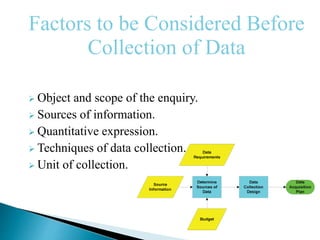
 Object and scope of the enquiry.
 Sources of information.
 Quantitative expression.
 Techniques of data collection.
 Unit of collection.
Factors to be Considered Before
Collection of Data
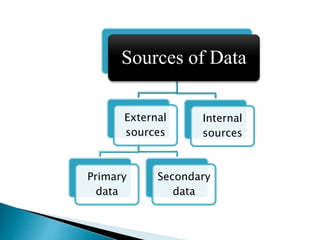
Sources of Data
External
sources
Primary
data
Secondary
data
Internal
sources
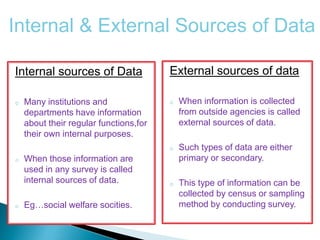
Internal sources of Data
o Many institutions and
departments have information
about their regular functions,for
their own internal purposes.
o When those information are
used in any survey is called
internal sources of data.
o Eg…social welfare socities.
External sources of data
o When information is collected
from outside agencies is called
external sources of data.
o Such types of data are either
primary or secondary.
o This type of information can be
collected by census or sampling
method by conducting survey.
Internal & External Sources of Data
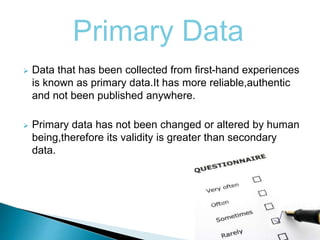
 Data that has been collected from first-hand experiences
is known as primary data.It has more reliable,authentic
and not been published anywhere.
 Primary data has not been changed or altered by human
being,therefore its validity is greater than secondary
data.
Primary Data
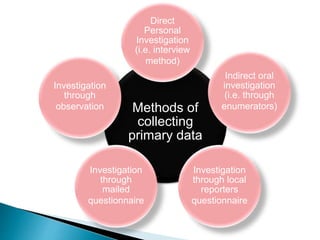
Methods of
collecting
primary data
Direct
Personal
Investigation
(i.e. interview
method)
Indirect oral
investigation
(i.e. through
enumerators)
Investigation
through local
reporters
questionnaire
Investigation
through
mailed
questionnaire
Investigation
through
observation
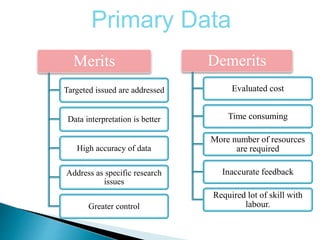
Merits
Targeted issued are addressed
Data interpretation is better
High accuracy of data
Address as specific research
issues
Greater control
Demerits
Evaluated cost
Time consuming
More number of resources
are required
Inaccurate feedback
Required lot of skill with
labour.
Primary Data
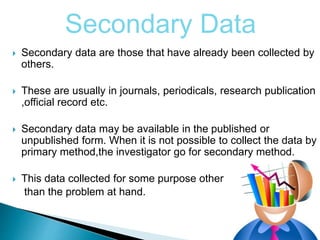
 Secondary data are those that have already been collected by
others.
 These are usually in journals, periodicals, research publication
,official record etc.
 Secondary data may be available in the published or
unpublished form. When it is not possible to collect the data by
primary method,the investigator go for secondary method.
 This data collected for some purpose other
than the problem at hand.
Secondary Data
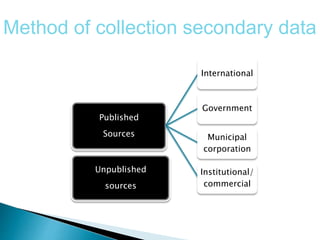
Published
Sources
International
Government
Municipal
corporation
Institutional/
commercial
Unpublished
sources
Method of collection secondary data
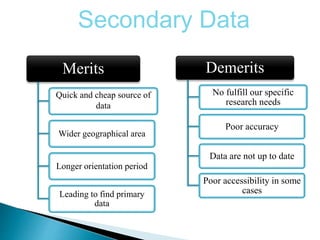
Merits
Quick and cheap source of
data
Wider geographical area
Longer orientation period
Leading to find primary
data
Demerits
No fulfill our specific
research needs
Poor accuracy
Data are not up to date
Poor accessibility in some
cases
Secondary Data
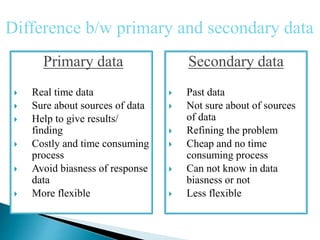
Primary data
 Real time data
 Sure about sources of data
 Help to give results/
finding
 Costly and time consuming
process
 Avoid biasness of response
data
 More flexible
Secondary data
 Past data
 Not sure about of sources
of data
 Refining the problem
 Cheap and no time
consuming process
 Can not know in data
biasness or not
 Less flexible
Difference b/w primary and secondary data
Kanchan Agrawal
http://www.ezyshine.com/
Created by -

Data collection presentation

  • 1.
  • 2.
     Data canbe define as the quantitative or qualitative value of a variable (e.g. number, images, words, figures,facts or ideas)  It is a lowest unit of information from which other measurements and analysis can be done.  Data is one of the most important and vital aspect of any research study. Introduction
  • 3.
     Object andscope of the enquiry.  Sources of information.  Quantitative expression.  Techniques of data collection.  Unit of collection. Factors to be Considered Before Collection of Data
  • 4.
  • 5.
    Internal sources ofData o Many institutions and departments have information about their regular functions,for their own internal purposes. o When those information are used in any survey is called internal sources of data. o Eg…social welfare socities. External sources of data o When information is collected from outside agencies is called external sources of data. o Such types of data are either primary or secondary. o This type of information can be collected by census or sampling method by conducting survey. Internal & External Sources of Data
  • 6.
     Data thathas been collected from first-hand experiences is known as primary data.It has more reliable,authentic and not been published anywhere.  Primary data has not been changed or altered by human being,therefore its validity is greater than secondary data. Primary Data
  • 7.
    Methods of collecting primary data Direct Personal Investigation (i.e.interview method) Indirect oral investigation (i.e. through enumerators) Investigation through local reporters questionnaire Investigation through mailed questionnaire Investigation through observation
  • 8.
    Merits Targeted issued areaddressed Data interpretation is better High accuracy of data Address as specific research issues Greater control Demerits Evaluated cost Time consuming More number of resources are required Inaccurate feedback Required lot of skill with labour. Primary Data
  • 9.
     Secondary dataare those that have already been collected by others.  These are usually in journals, periodicals, research publication ,official record etc.  Secondary data may be available in the published or unpublished form. When it is not possible to collect the data by primary method,the investigator go for secondary method.  This data collected for some purpose other than the problem at hand. Secondary Data
  • 10.
  • 11.
    Merits Quick and cheapsource of data Wider geographical area Longer orientation period Leading to find primary data Demerits No fulfill our specific research needs Poor accuracy Data are not up to date Poor accessibility in some cases Secondary Data
  • 12.
    Primary data  Realtime data  Sure about sources of data  Help to give results/ finding  Costly and time consuming process  Avoid biasness of response data  More flexible Secondary data  Past data  Not sure about of sources of data  Refining the problem  Cheap and no time consuming process  Can not know in data biasness or not  Less flexible Difference b/w primary and secondary data
  • 13.