ABOUT ZERO WASTE
The concept of Zero Waste aims to minimize use of resources
and maximize the ongoing benefits of the essential value within the
waste generated by society.
Zero waste is a philosophy that encourages the redesign of
resource life cycles so that all products are reused. No trash is sent to
landfills and incinerators.
The 3 Rs are:
Reduce - reduce generation of waste at the source.
Reuse - maximise recovery of materials for reuse.
Recycle - maximise recycling of discarded material.
Rather than the linear ‘cradle to grave’ process
above, where a product has no use at the end of its life, we must think
in cycles: ‘cradle to cradle’. At the end of the original life of a product, it
should be used to begin as another product - just like our natural ecosystems.
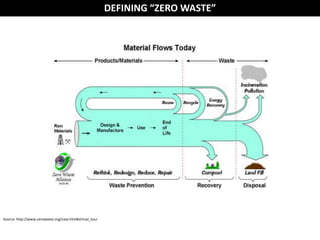
DEFINING “ZERO WASTE”

Source: http://www.zerowaste.org/case.htm#virtual_tour
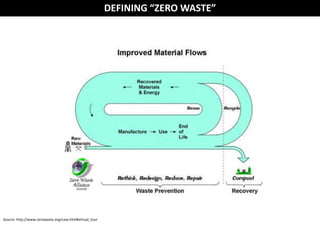
DEFINING “ZERO WASTE”

Source: http://www.zerowaste.org/case.htm#virtual_tour
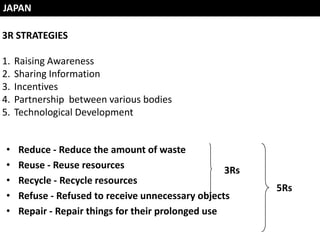
JAPAN
3R STRATEGIES
1.
2.
3.
4.
5.
•
•
•
•
•

Raising Awareness
Sharing Information
Incentives
Partnership between various bodies
Technological Development

Reduce - Reduce the amount of waste
Reuse - Reuse resources
3Rs
Recycle - Recycle resources
Refuse - Refused to receive unnecessary objects
Repair - Repair things for their prolonged use

5Rs
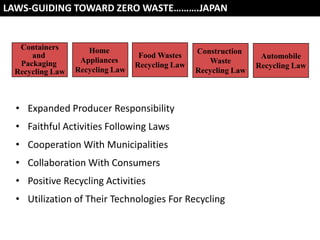
LAWS-GUIDING TOWARD ZERO WASTE……….JAPAN

Containers
and
Packaging
Recycling Law

Home
Appliances
Recycling Law

Food Wastes
Recycling Law

Construction
Waste
Recycling Law

• Expanded Producer Responsibility
• Faithful Activities Following Laws
• Cooperation With Municipalities
• Collaboration With Consumers
• Positive Recycling Activities
• Utilization of Their Technologies For Recycling

Automobile
Recycling Law
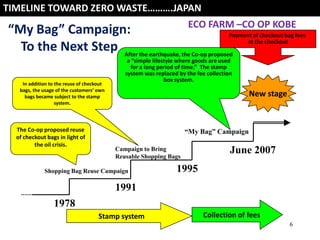
TIMELINE TOWARD ZERO WASTE……….JAPAN

ECO FARM –CO OP KOBE
“My Bag” Campaign:
Payment of checkout bag fees
at the checkout
To the Next Step After the earthquake, the Co-op proposed
In addition to the reuse of checkout
bags, the usage of the customers’ own
bags became subject to the stamp
system.

The Co-op proposed reuse
of checkout bags in light of
the oil crisis.

a “simple lifestyle where goods are used
for a long period of time.” The stamp
system was replaced by the fee collection
box system.

New stage

“My Bag” Campaign
Campaign to Bring
Reusable Shopping Bags

Shopping Bag Reuse Campaign

June 2007

1995

1991
1978
Stamp system

Collection of fees
6

6
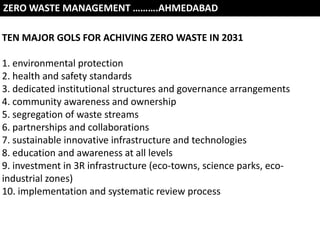
ZERO WASTE MANAGEMENT ……….AHMEDABAD
TEN MAJOR GOLS FOR ACHIVING ZERO WASTE IN 2031
1. environmental protection
2. health and safety standards
3. dedicated institutional structures and governance arrangements
4. community awareness and ownership
5. segregation of waste streams
6. partnerships and collaborations
7. sustainable innovative infrastructure and technologies
8. education and awareness at all levels
9. investment in 3R infrastructure (eco-towns, science parks, ecoindustrial zones)
10. implementation and systematic review process
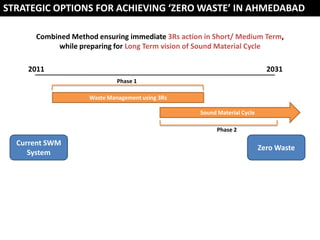
STRATEGIC OPTIONS FOR ACHIEVING ‘ZERO WASTE’ IN AHMEDABAD
Combined Method ensuring immediate 3Rs action in Short/ Medium Term,
while preparing for Long Term vision of Sound Material Cycle
2011

2031
Phase 1
Waste Management using 3Rs
Sound Material Cycle
Phase 2

Current SWM
System

Zero Waste
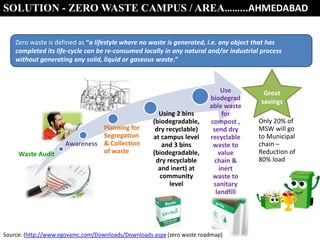
SOLUTION - ZERO WASTE CAMPUS / AREA……...AHMEDABAD
Zero waste is defined as “a lifestyle where no waste is generated, i.e. any object that has
completed its life‐cycle can be re‐consumed locally in any natural and/or industrial process
without generating any solid, liquid or gaseous waste.”

Waste Audit

Planning for
Segregation
Awareness & Collection
of waste

Using 2 bins
(biodegradable,
dry recyclable)
at campus level
and 3 bins
(biodegradable,
dry recyclable
and inert) at
community
level

Use
biodegrad
able waste
for
compost ,
send dry
recyclable
waste to
value
chain &
inert
waste to
sanitary
landfill

Source: (http://www.egovamc.com/Downloads/Downloads.aspx (zero waste roadmap)

Great
savings
Only 20% of
MSW will go
to Municipal
chain –
Reduction of
80% load
ZERO WASTE CONCEPT - ADVANTAGES

•
•
•
•
•
•
•
•
•
•
•
•

Full awareness among citizens
Segregated organic waste collection & treatment
Separate collection for residential & commercial waste
De-centralized Biogas Generation
De-centralized Composting
Savings in transportation cost, great savings in natural
resources, 80%
Generation of green employment
Will advance the development of resource recovery
Promote recycling
Will reduce carbon foot print and thus GHG emissions
Eliminate waste or its consignment to landfill
Promote ecological sustainability
10

Zero waste

  • 1.
    ABOUT ZERO WASTE Theconcept of Zero Waste aims to minimize use of resources and maximize the ongoing benefits of the essential value within the waste generated by society. Zero waste is a philosophy that encourages the redesign of resource life cycles so that all products are reused. No trash is sent to landfills and incinerators. The 3 Rs are: Reduce - reduce generation of waste at the source. Reuse - maximise recovery of materials for reuse. Recycle - maximise recycling of discarded material. Rather than the linear ‘cradle to grave’ process above, where a product has no use at the end of its life, we must think in cycles: ‘cradle to cradle’. At the end of the original life of a product, it should be used to begin as another product - just like our natural ecosystems.
  • 2.
    DEFINING “ZERO WASTE” Source:http://www.zerowaste.org/case.htm#virtual_tour
  • 3.
    DEFINING “ZERO WASTE” Source:http://www.zerowaste.org/case.htm#virtual_tour
  • 4.
    JAPAN 3R STRATEGIES 1. 2. 3. 4. 5. • • • • • Raising Awareness SharingInformation Incentives Partnership between various bodies Technological Development Reduce - Reduce the amount of waste Reuse - Reuse resources 3Rs Recycle - Recycle resources Refuse - Refused to receive unnecessary objects Repair - Repair things for their prolonged use 5Rs
  • 5.
    LAWS-GUIDING TOWARD ZEROWASTE……….JAPAN Containers and Packaging Recycling Law Home Appliances Recycling Law Food Wastes Recycling Law Construction Waste Recycling Law • Expanded Producer Responsibility • Faithful Activities Following Laws • Cooperation With Municipalities • Collaboration With Consumers • Positive Recycling Activities • Utilization of Their Technologies For Recycling Automobile Recycling Law
  • 6.
    TIMELINE TOWARD ZEROWASTE……….JAPAN ECO FARM –CO OP KOBE “My Bag” Campaign: Payment of checkout bag fees at the checkout To the Next Step After the earthquake, the Co-op proposed In addition to the reuse of checkout bags, the usage of the customers’ own bags became subject to the stamp system. The Co-op proposed reuse of checkout bags in light of the oil crisis. a “simple lifestyle where goods are used for a long period of time.” The stamp system was replaced by the fee collection box system. New stage “My Bag” Campaign Campaign to Bring Reusable Shopping Bags Shopping Bag Reuse Campaign June 2007 1995 1991 1978 Stamp system Collection of fees 6 6
  • 7.
    ZERO WASTE MANAGEMENT……….AHMEDABAD TEN MAJOR GOLS FOR ACHIVING ZERO WASTE IN 2031 1. environmental protection 2. health and safety standards 3. dedicated institutional structures and governance arrangements 4. community awareness and ownership 5. segregation of waste streams 6. partnerships and collaborations 7. sustainable innovative infrastructure and technologies 8. education and awareness at all levels 9. investment in 3R infrastructure (eco-towns, science parks, ecoindustrial zones) 10. implementation and systematic review process
  • 8.
    STRATEGIC OPTIONS FORACHIEVING ‘ZERO WASTE’ IN AHMEDABAD Combined Method ensuring immediate 3Rs action in Short/ Medium Term, while preparing for Long Term vision of Sound Material Cycle 2011 2031 Phase 1 Waste Management using 3Rs Sound Material Cycle Phase 2 Current SWM System Zero Waste
  • 9.
    SOLUTION - ZEROWASTE CAMPUS / AREA……...AHMEDABAD Zero waste is defined as “a lifestyle where no waste is generated, i.e. any object that has completed its life‐cycle can be re‐consumed locally in any natural and/or industrial process without generating any solid, liquid or gaseous waste.” Waste Audit Planning for Segregation Awareness & Collection of waste Using 2 bins (biodegradable, dry recyclable) at campus level and 3 bins (biodegradable, dry recyclable and inert) at community level Use biodegrad able waste for compost , send dry recyclable waste to value chain & inert waste to sanitary landfill Source: (http://www.egovamc.com/Downloads/Downloads.aspx (zero waste roadmap) Great savings Only 20% of MSW will go to Municipal chain – Reduction of 80% load
  • 10.
    ZERO WASTE CONCEPT- ADVANTAGES • • • • • • • • • • • • Full awareness among citizens Segregated organic waste collection & treatment Separate collection for residential & commercial waste De-centralized Biogas Generation De-centralized Composting Savings in transportation cost, great savings in natural resources, 80% Generation of green employment Will advance the development of resource recovery Promote recycling Will reduce carbon foot print and thus GHG emissions Eliminate waste or its consignment to landfill Promote ecological sustainability 10