PRITHIVI MOHAN
Md.MAAZ ALI
SAVITRI KUMARI
SARTHAKMOHAP
ATRA
VENUS VERMA
Zero waste is a philosophy that encourages the redesign
of resource life cycles so that all products are reused. No trash is sent
to landfills and incinerators. The process recommended is one similar to the way that
resources are reused in nature
Zero Waste Systems Inc (ZWS), which was founded by PhD chemist Paul
Palmer in the mid-1970s in Oakland, California
Aims/Objectives
o Too see a reduction in the amount of waste (in tonnes) send to landfill
(target is 66% resources recovery rate by 2014
o Encourage people to avoid waste,and to reuse and recycle more
o Awareness on environmental waste issues and behaviour change on those
issues
What is zero waste?
New Zealand became the first country in the world to adopt the national policy
of zero waste
• Over 50% of the Cities-Country adopted ZW as a goal
Zero Waste plan was launched in Scotland by Scottish government
on 9th june,2010
Other cities implementing zero waste plan:-
 Adelaide,captial city of southAustralia
 Stockholm, capital city of Sweden
 San Francisco-for zero waste energy
 Europe-Italy
 United Kingdom-England, Wales
 SouthAfrica
 Asia- Philippines; Kamikatsu, Japan;Kovalam,India
Kanchrapara Municipality-West Bengal, India
Zero Waste Alliance
The Zero Waste Alliance (ZWA) has a clear and simple vision: a prosperous
and inclusive future without waste. A future without waste and toxics is not
just a dream; it’s a necessity. Waste reduces the effectiveness of our
businesses, increases pressures on the natural environment and harms the
vitality of our communities.
ZWA’s Visionary Goal Strives for:
 Zero Waste of Resources - energy, materials and
human
 Zero Waste in Production Activities – recycling,
reclamation, sourcing
 Zero Waste in Product Life – go to market, use, end of
life
 Zero Emissions – air, soil, water, solid and hazardous
 Zero Use of Toxics – processes and products
Types
of
garbage bins
used
in
zero waste management
Steps
in
Zero Waste
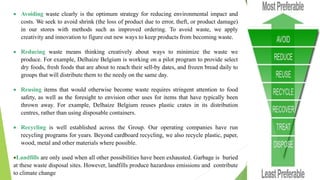
 Avoiding waste clearly is the optimum strategy for reducing environmental impact and
costs. We seek to avoid shrink (the loss of product due to error, theft, or product damage)
in our stores with methods such as improved ordering. To avoid waste, we apply
creativity and innovation to figure out new ways to keep products from becoming waste.
 Reducing waste means thinking creatively about ways to minimize the waste we
produce. For example, Delhaize Belgium is working on a pilot program to provide select
dry foods, fresh foods that are about to reach their sell-by dates, and frozen bread daily to
groups that will distribute them to the needy on the same day.
 Reusing items that would otherwise become waste requires stringent attention to food
safety, as well as the foresight to envision other uses for items that have typically been
thrown away. For example, Delhaize Belgium reuses plastic crates in its distribution
centres, rather than using disposable containers.
 Recycling is well established across the Group. Our operating companies have run
recycling programs for years. Beyond cardboard recycling, we also recycle plastic, paper,
wood, metal and other materials where possible.
Landfills are only used when all other possibilities have been exhausted. Garbage is buried
at these waste disposal sites. However, landfills produce hazardous emissions and contribute
to climate change
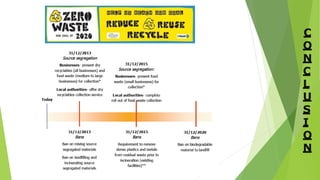
Zero Waste Plan in Scotland
Convertion of Organic waste into energy
KITCHEN
• disposables (paper towels, garbage liners, wax paper,
aluminium sheets, disposable plates, cups, etc....)
• Learn to love your tap water.
• Turn your trash can into a big compost keeper. Use your tiny
compost keeper as a trash can
BA
THROOM
• Use 100% recycled and unbleached toilet paper individually
wrapped in paper
• Refill your bottles with bulk shampoo and conditioner.
LAUNDRY AND
CLEANING
• Welcome alternative house cleaning tools: a metal scourer on
stainless, a wooden brush for light scrubbing, an old
toothbrush for hard to reach places
• Let houseplants absorb toxins and clean your air. Open a
window instead of plugging in an air freshener.
ZERO WASTE IN HOME
DINING AND
ENTERTAINING
• Use ceramic dishes and cloth napkins at all times.
• Stop buying CD and DVD's – download music and videos online
OFFICE
• Use refillable pens, piston fountain pens, mechanical pencils,
refillable white board markers
• Reuse paper clips (available in bulk) instead of staples, or
a staple-free stapler
• Use memory sticks and external drives instead of CD’s.
MEDICA
TION
• Do not buy jumbo size medication jars, they expire way
before you can finish them.
• Choose metal tubes instead of plastic
• Clean cuts and scrapes with soap and water, forgo the plastic
Band-Aids and let air-dry.
ZERO WASTE MANAGEMENT IN INDIA
India's first zero waste toilet system inaugurated
TIRUCHIRAPALLI: Aiming to encourage public to follow environment-friendly solid waste
management practices and end open defecation, a Zero Waste Toilet System (ZWTS),
claiming to be the first in the country,
People from Bangalore, Pune and Tamil Nadu and other places are major
buyers of this dry waste. The zero waste management units at Kumbarkoppal are earning thousands of
rupees through manufacturing the compost manure and also from segregating waste.
There is a big demand for this manure from farmers and also from
companies. The cost of this compost manure ` five per kilo.
VIJAY
AW
ADA: Concepts like ‘waste to energy’and ‘waste to manure’play a crucial role in
the solid waste management. As part of this, the Vijayawada Municipal Corporation
(VMC) has promoted Shriram Energy Systems and Excel Industries atAjit Singh Nagar for
recycling of solid waste and vegetable waste. A biomethanisation plant was also set up to
process the vegetable and slaughter house waste.
C
O
N
C
L
U
S
I
O
N
If you’re not for Zero Waste,
How much waste are you for ?Thank you…

zerowaste rough ppt.pptx

  • 1.
    PRITHIVI MOHAN Md.MAAZ ALI SAVITRIKUMARI SARTHAKMOHAP ATRA VENUS VERMA
  • 2.
    Zero waste isa philosophy that encourages the redesign of resource life cycles so that all products are reused. No trash is sent to landfills and incinerators. The process recommended is one similar to the way that resources are reused in nature Zero Waste Systems Inc (ZWS), which was founded by PhD chemist Paul Palmer in the mid-1970s in Oakland, California Aims/Objectives o Too see a reduction in the amount of waste (in tonnes) send to landfill (target is 66% resources recovery rate by 2014 o Encourage people to avoid waste,and to reuse and recycle more o Awareness on environmental waste issues and behaviour change on those issues What is zero waste?
  • 3.
    New Zealand becamethe first country in the world to adopt the national policy of zero waste • Over 50% of the Cities-Country adopted ZW as a goal Zero Waste plan was launched in Scotland by Scottish government on 9th june,2010 Other cities implementing zero waste plan:-  Adelaide,captial city of southAustralia  Stockholm, capital city of Sweden  San Francisco-for zero waste energy  Europe-Italy  United Kingdom-England, Wales  SouthAfrica  Asia- Philippines; Kamikatsu, Japan;Kovalam,India Kanchrapara Municipality-West Bengal, India
  • 5.
    Zero Waste Alliance TheZero Waste Alliance (ZWA) has a clear and simple vision: a prosperous and inclusive future without waste. A future without waste and toxics is not just a dream; it’s a necessity. Waste reduces the effectiveness of our businesses, increases pressures on the natural environment and harms the vitality of our communities. ZWA’s Visionary Goal Strives for:  Zero Waste of Resources - energy, materials and human  Zero Waste in Production Activities – recycling, reclamation, sourcing  Zero Waste in Product Life – go to market, use, end of life  Zero Emissions – air, soil, water, solid and hazardous  Zero Use of Toxics – processes and products
  • 6.
  • 7.
  • 8.
     Avoiding wasteclearly is the optimum strategy for reducing environmental impact and costs. We seek to avoid shrink (the loss of product due to error, theft, or product damage) in our stores with methods such as improved ordering. To avoid waste, we apply creativity and innovation to figure out new ways to keep products from becoming waste.  Reducing waste means thinking creatively about ways to minimize the waste we produce. For example, Delhaize Belgium is working on a pilot program to provide select dry foods, fresh foods that are about to reach their sell-by dates, and frozen bread daily to groups that will distribute them to the needy on the same day.  Reusing items that would otherwise become waste requires stringent attention to food safety, as well as the foresight to envision other uses for items that have typically been thrown away. For example, Delhaize Belgium reuses plastic crates in its distribution centres, rather than using disposable containers.  Recycling is well established across the Group. Our operating companies have run recycling programs for years. Beyond cardboard recycling, we also recycle plastic, paper, wood, metal and other materials where possible. Landfills are only used when all other possibilities have been exhausted. Garbage is buried at these waste disposal sites. However, landfills produce hazardous emissions and contribute to climate change
  • 10.
    Zero Waste Planin Scotland
  • 12.
    Convertion of Organicwaste into energy
  • 13.
    KITCHEN • disposables (papertowels, garbage liners, wax paper, aluminium sheets, disposable plates, cups, etc....) • Learn to love your tap water. • Turn your trash can into a big compost keeper. Use your tiny compost keeper as a trash can BA THROOM • Use 100% recycled and unbleached toilet paper individually wrapped in paper • Refill your bottles with bulk shampoo and conditioner. LAUNDRY AND CLEANING • Welcome alternative house cleaning tools: a metal scourer on stainless, a wooden brush for light scrubbing, an old toothbrush for hard to reach places • Let houseplants absorb toxins and clean your air. Open a window instead of plugging in an air freshener. ZERO WASTE IN HOME
  • 14.
    DINING AND ENTERTAINING • Useceramic dishes and cloth napkins at all times. • Stop buying CD and DVD's – download music and videos online OFFICE • Use refillable pens, piston fountain pens, mechanical pencils, refillable white board markers • Reuse paper clips (available in bulk) instead of staples, or a staple-free stapler • Use memory sticks and external drives instead of CD’s. MEDICA TION • Do not buy jumbo size medication jars, they expire way before you can finish them. • Choose metal tubes instead of plastic • Clean cuts and scrapes with soap and water, forgo the plastic Band-Aids and let air-dry.
  • 15.
    ZERO WASTE MANAGEMENTIN INDIA India's first zero waste toilet system inaugurated TIRUCHIRAPALLI: Aiming to encourage public to follow environment-friendly solid waste management practices and end open defecation, a Zero Waste Toilet System (ZWTS), claiming to be the first in the country, People from Bangalore, Pune and Tamil Nadu and other places are major buyers of this dry waste. The zero waste management units at Kumbarkoppal are earning thousands of rupees through manufacturing the compost manure and also from segregating waste. There is a big demand for this manure from farmers and also from companies. The cost of this compost manure ` five per kilo. VIJAY AW ADA: Concepts like ‘waste to energy’and ‘waste to manure’play a crucial role in the solid waste management. As part of this, the Vijayawada Municipal Corporation (VMC) has promoted Shriram Energy Systems and Excel Industries atAjit Singh Nagar for recycling of solid waste and vegetable waste. A biomethanisation plant was also set up to process the vegetable and slaughter house waste.
  • 16.
  • 17.
    If you’re notfor Zero Waste, How much waste are you for ?Thank you…