Youth Information Practices
Dr. Mary Ann Harlan
Assistant Professor, School of Information
San José State University
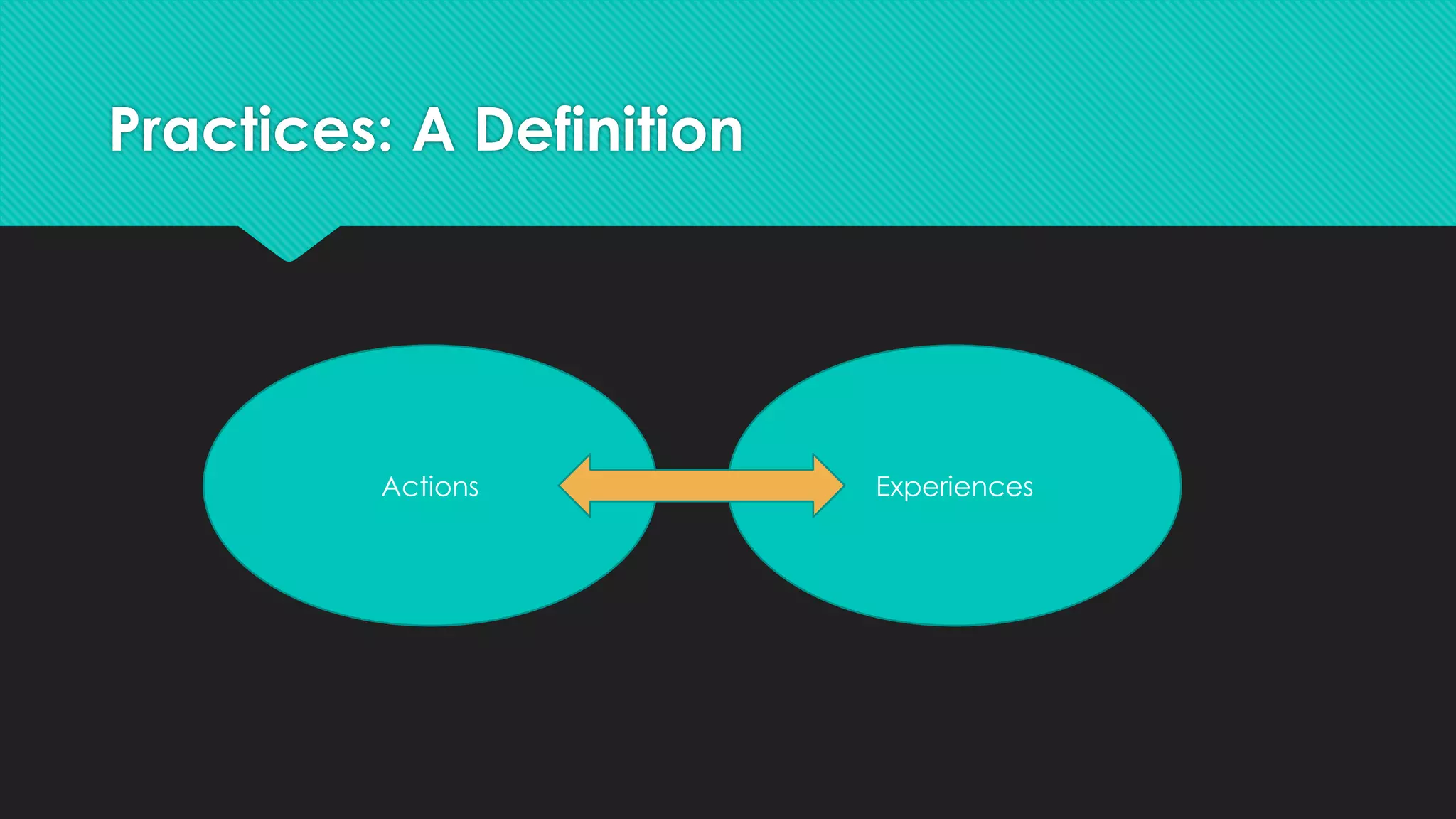
Practices: A Definition
Actions Experiences
Information Practices: Youth Creators
Negotiating
Capacity
Negotiating
Control
Learning Community
Representing Knowledge
Negotiating
Aesthetic
Information Practices: Context
 Rural Areas
 65% of homes rely on basic wired services (Beede & Neville). Basic service allows for 3 MBPS
download speed and 768 kbps upload speed which is sufficient for basic services but not media
rich participation.
 39.7% of rural homes have access to broadband via cable, and 7.5% have access via optical
fiber
 Barriers to access in community
 Transportation
 Mentors
Information Practices: Rural (A Case
Study)
 9 schools – K12; 1000 students
 One to one in schools via Chromebooks
 One school operates on a generator
 Mixed grade level classrooms
 High level of poverty
Information Practices: Rural (A Case
Study)
 Participation Gap
 Instruction primarily in Information Access, Evaluation
 No instruction in Digital Citizenship; students learn from families and peers (with mixed results)
 No instruction in information creation
 Youth participation in creation is limited by service area (wi-fi from community center)
 Lack of mentors – community has strong values but only recently have the outlier areas received basic
broadband (2015); minimal teacher professional development
The Research Tangent: Girls and
Information
 Representations of Girlhood in Texts
 Girls and Identity
 Ophelia’s At Risk
 Buffy’s Kicking Butt
 Regina’s Being Mean
 Rory is Next Door
 Holly Goes Lightly
 Girls and Desire – Non-Fiction texts written for adults
 Girls and Sex – Young Adult Literature
 Virginity, Promiscuity, and Risk

Youth Information Practices

  • 1.
    Youth Information Practices Dr.Mary Ann Harlan Assistant Professor, School of Information San José State University
  • 2.
  • 3.
    Information Practices: YouthCreators Negotiating Capacity Negotiating Control Learning Community Representing Knowledge Negotiating Aesthetic
  • 4.
    Information Practices: Context Rural Areas  65% of homes rely on basic wired services (Beede & Neville). Basic service allows for 3 MBPS download speed and 768 kbps upload speed which is sufficient for basic services but not media rich participation.  39.7% of rural homes have access to broadband via cable, and 7.5% have access via optical fiber  Barriers to access in community  Transportation  Mentors
  • 5.
    Information Practices: Rural(A Case Study)  9 schools – K12; 1000 students  One to one in schools via Chromebooks  One school operates on a generator  Mixed grade level classrooms  High level of poverty
  • 6.
    Information Practices: Rural(A Case Study)  Participation Gap  Instruction primarily in Information Access, Evaluation  No instruction in Digital Citizenship; students learn from families and peers (with mixed results)  No instruction in information creation  Youth participation in creation is limited by service area (wi-fi from community center)  Lack of mentors – community has strong values but only recently have the outlier areas received basic broadband (2015); minimal teacher professional development
  • 7.
    The Research Tangent:Girls and Information  Representations of Girlhood in Texts  Girls and Identity  Ophelia’s At Risk  Buffy’s Kicking Butt  Regina’s Being Mean  Rory is Next Door  Holly Goes Lightly  Girls and Desire – Non-Fiction texts written for adults  Girls and Sex – Young Adult Literature  Virginity, Promiscuity, and Risk