Yin - Yang Theory
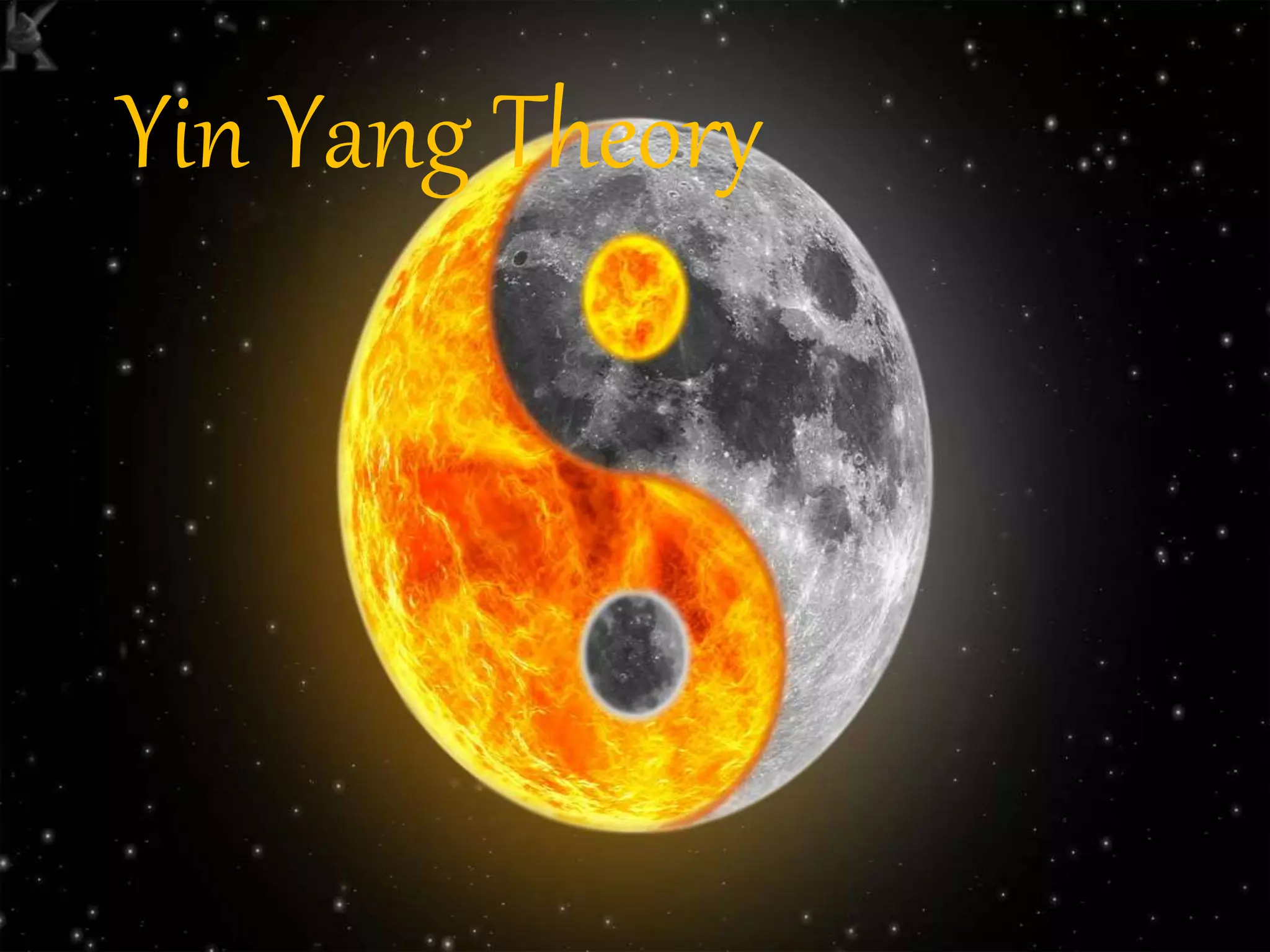
Yin Yang Theory
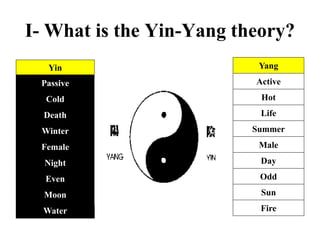
I- What is the Yin-Yang theory?
Yin
Passive
Cold
Death
Winter
Female
Night
Even
Moon
Water
Yang
Active
Hot
Life
Summer
Male
Day
Odd
Sun
Fire
II- What is the origin of the
Yin-Yang theory?
• It is about 5000 years old?
• It is related to Taoism:
- Lao Tzu (604 – 531 BC).
- Tao = The way (The
essence of Taoism).
- Taoism as a religion.
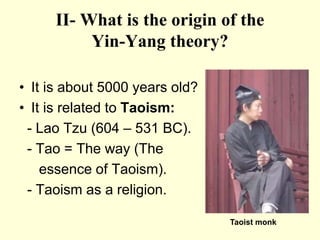
Taoist monk
III- Where did the Yin-Yang symbol
come from?
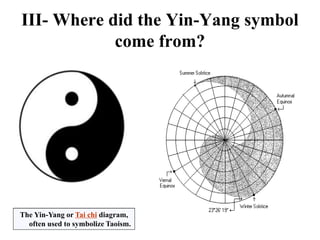
The Yin-Yang or Tai chi diagram,
often used to symbolize Taoism.
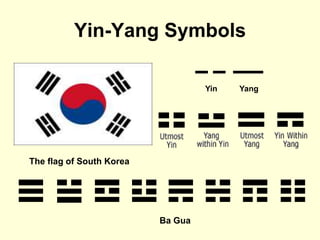
Yin Yang
Yin-Yang Symbols
Ba Gua
The flag of South Korea
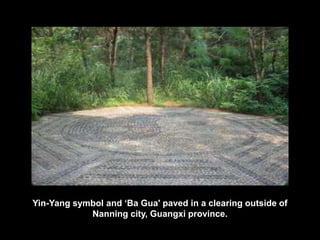
Yin-Yang symbol and ‘Ba Gua' paved in a clearing outside of
Nanning city, Guangxi province.
IV- What are the main principles of
the Yin-Yang theory?
1- Yin and Yang are opposites.
2- Yin and Yang are interdependent.
3- Yin and Yang are interchangeable.
4- Yin and Yang can transform into one
another.
IV- What are the main principles of
the Yin-Yang theory?
5- Part of Yin is in Yang, and part of
Yang is in Yin.
6- Yin and Yang can be further
subdivided into Yin and Yang.
V- What are some of the
applications of the Yin-Yang theory?
TCM = Traditional Chinese Medicine:
- Acupuncture.
- Herbal remedies.
- exercise.
- Changes in diet and lifestyle.
 Tai Chi.

Yin Yang Theory.ppt

  • 1.
    Yin - YangTheory Yin Yang Theory
  • 2.
    I- What isthe Yin-Yang theory? Yin Passive Cold Death Winter Female Night Even Moon Water Yang Active Hot Life Summer Male Day Odd Sun Fire
  • 3.
    II- What isthe origin of the Yin-Yang theory? • It is about 5000 years old? • It is related to Taoism: - Lao Tzu (604 – 531 BC). - Tao = The way (The essence of Taoism). - Taoism as a religion. Taoist monk
  • 4.
    III- Where didthe Yin-Yang symbol come from? The Yin-Yang or Tai chi diagram, often used to symbolize Taoism.
  • 5.
    Yin Yang Yin-Yang Symbols BaGua The flag of South Korea
  • 6.
    Yin-Yang symbol and‘Ba Gua' paved in a clearing outside of Nanning city, Guangxi province.
  • 7.
    IV- What arethe main principles of the Yin-Yang theory? 1- Yin and Yang are opposites. 2- Yin and Yang are interdependent. 3- Yin and Yang are interchangeable. 4- Yin and Yang can transform into one another.
  • 8.
    IV- What arethe main principles of the Yin-Yang theory? 5- Part of Yin is in Yang, and part of Yang is in Yin. 6- Yin and Yang can be further subdivided into Yin and Yang.
  • 9.
    V- What aresome of the applications of the Yin-Yang theory? TCM = Traditional Chinese Medicine: - Acupuncture. - Herbal remedies. - exercise. - Changes in diet and lifestyle.  Tai Chi.