Chinese 
Acupuncture 
BY: Puffy
What is Acupuncture? 
Acupuncture is another way of treatment 
from China to make the body being balance, 
or not to make you feeling sick because of the 
unbalance in your body that make you feel ill.
How many disease can acupuncture cure? 
The good thing of Acupuncture is they can cure quite a lot of disease. 
For examples: 
● Normal Pain - headache, neck, shoulder, and other body pain. 
● Paralysis - to make the nerve systems work better but not yet 
fully cure. 
● Gastritis 
● Trigeminal neuralgia 
● Facial palsy 
● Central retinitis 
● Frozen shoulder
1. Diseases, symptoms or conditions for which acupuncture has been proved, through controlled trials, to be 
an effective treatment. 
Adverse reactions to radiotherapy and/or chemotherapy 
Allergic rhinitis (including hay fever) 
Biliary colic 
Depression (including depressive neurosis and depression following stroke) 
Dysentery, acute bacillary 
Dysmenorrhoea, primary 
Epigastralgia, acute (in peptic ulcer, acute and chronic gastritis, and gastrospasm) 
Facial pain (including craniomandibular disorders) 
Headache 
Hypertension, essential 
Hypotension, primary 
Induction of labour 
Knee pain 
Leukopenia 
Low back pain 
Malposition of fetus, correction of 
Morning sickness 
Nausea and vomiting 
Neck pain 
Pain in dentistry (including dental pain and temporomandibular dysfunction) 
Periarthritis of shoulder 
Postoperative pain 
Renal colic 
Rheumatoid arthritis 
Sciatica 
Sprain 
Stroke 
Tennis elbow
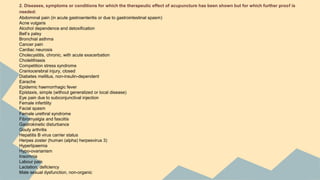
2. Diseases, symptoms or conditions for which the therapeutic effect of acupuncture has been shown but for which further proof is 
needed: 
Abdominal pain (in acute gastroenteritis or due to gastrointestinal spasm) 
Acne vulgaris 
Alcohol dependence and detoxification 
Bell’s palsy 
Bronchial asthma 
Cancer pain 
Cardiac neurosis 
Cholecystitis, chronic, with acute exacerbation 
Cholelithiasis 
Competition stress syndrome 
Craniocerebral injury, closed 
Diabetes mellitus, non-insulin-dependent 
Earache 
Epidemic haemorrhagic fever 
Epistaxis, simple (without generalized or local disease) 
Eye pain due to subconjunctival injection 
Female infertility 
Facial spasm 
Female urethral syndrome 
Fibromyalgia and fasciitis 
Gastrokinetic disturbance 
Gouty arthritis 
Hepatitis B virus carrier status 
Herpes zoster (human (alpha) herpesvirus 3) 
Hyperlipaemia 
Hypo-ovarianism 
Insomnia 
Labour pain 
Lactation, deficiency 
Male sexual dysfunction, non-organic
Ménière disease 
Neurodermatitis 
Obesity 
Opium, cocaine and heroin dependence 
Osteoarthritis 
Pain due to endoscopic examination 
Pain in thromboangiitis obliterans 
Polycystic ovary syndrome (Stein–Leventhal syndrome) 
Postextubation in children 
Postoperative convalescence 
Premenstrual syndrome 
Prostatitis, chronic 
PruritusRadicular and pseudoradicular pain syndrome 
Raynaud syndrome, primary 
Recurrent lower urinary-tract infection 
Reflex sympathetic dystrophy 
Retention of urine, traumatic 
Schizophrenia 
Sialism, drug-induced 
Sjögren syndrome 
Sore throat (including tonsillitis) 
Spine pain, acute 
Stiff neck 
Temporomandibular joint dysfunction 
Tietze syndrome 
Tobacco dependence 
Tourette syndrome 
Ulcerative colitis, chronic 
Urolithiasis 
Vascular dementia 
Whooping cough (pertussis)
3. Diseases, symptoms or conditions for which there are only individual controlled trials reporting 
some therapeutic effects, but for which acupuncture is worth trying because treatment by 
conventional and other therapies is difficult: 
Chloasma 
Choroidopathy, central serous 
Colour blindness 
Deafness 
Hypophrenia 
Irritable colon syndrome 
Neuropathic bladder in spinal cord injury 
Pulmonary heart disease, chronic 
Small airway obstruction 
4. Diseases, symptoms or conditions for which acupuncture may be tried provided the practitioner 
has special modern medical knowledge and adequate monitoring equipment: 
Breathlessness in chronic 
obstructive pulmonary disease 
Coma 
Convulsions in infantsa 
Coronary heart disease 
(angina pectoris) 
Diarrhoea in infants and young children 
Encephalitis, viral, in children, late stage 
Paralysis, progressive bulbar and pseudobulbar
How does Acupuncture work? 
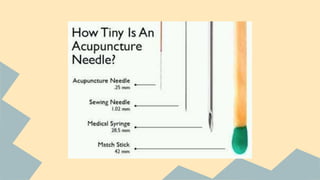
The doctor would use a sterile needles to 
poke your nerve systems where your pain are. 
And to clear the energy blockages encourage 
the normal flow of life energy. Also, it does 
help you to protect the disease not to happen 
to you too.
How to poke you nerve systems? 
There are 2 ways of poking the systems. 
● up and down 
● spin
Citation 
● http://www.acupuncture.org.au/Health_Se 
rvices/Acupuncture.aspx 
● http://www.atlasacupuncture.com/acupun 
cture.html
Thank 
You

Chinese Acupuncture presentation

  • 1.
  • 2.
    What is Acupuncture? Acupuncture is another way of treatment from China to make the body being balance, or not to make you feeling sick because of the unbalance in your body that make you feel ill.
  • 4.
    How many diseasecan acupuncture cure? The good thing of Acupuncture is they can cure quite a lot of disease. For examples: ● Normal Pain - headache, neck, shoulder, and other body pain. ● Paralysis - to make the nerve systems work better but not yet fully cure. ● Gastritis ● Trigeminal neuralgia ● Facial palsy ● Central retinitis ● Frozen shoulder
  • 5.
    1. Diseases, symptomsor conditions for which acupuncture has been proved, through controlled trials, to be an effective treatment. Adverse reactions to radiotherapy and/or chemotherapy Allergic rhinitis (including hay fever) Biliary colic Depression (including depressive neurosis and depression following stroke) Dysentery, acute bacillary Dysmenorrhoea, primary Epigastralgia, acute (in peptic ulcer, acute and chronic gastritis, and gastrospasm) Facial pain (including craniomandibular disorders) Headache Hypertension, essential Hypotension, primary Induction of labour Knee pain Leukopenia Low back pain Malposition of fetus, correction of Morning sickness Nausea and vomiting Neck pain Pain in dentistry (including dental pain and temporomandibular dysfunction) Periarthritis of shoulder Postoperative pain Renal colic Rheumatoid arthritis Sciatica Sprain Stroke Tennis elbow
  • 6.
    2. Diseases, symptomsor conditions for which the therapeutic effect of acupuncture has been shown but for which further proof is needed: Abdominal pain (in acute gastroenteritis or due to gastrointestinal spasm) Acne vulgaris Alcohol dependence and detoxification Bell’s palsy Bronchial asthma Cancer pain Cardiac neurosis Cholecystitis, chronic, with acute exacerbation Cholelithiasis Competition stress syndrome Craniocerebral injury, closed Diabetes mellitus, non-insulin-dependent Earache Epidemic haemorrhagic fever Epistaxis, simple (without generalized or local disease) Eye pain due to subconjunctival injection Female infertility Facial spasm Female urethral syndrome Fibromyalgia and fasciitis Gastrokinetic disturbance Gouty arthritis Hepatitis B virus carrier status Herpes zoster (human (alpha) herpesvirus 3) Hyperlipaemia Hypo-ovarianism Insomnia Labour pain Lactation, deficiency Male sexual dysfunction, non-organic
  • 7.
    Ménière disease Neurodermatitis Obesity Opium, cocaine and heroin dependence Osteoarthritis Pain due to endoscopic examination Pain in thromboangiitis obliterans Polycystic ovary syndrome (Stein–Leventhal syndrome) Postextubation in children Postoperative convalescence Premenstrual syndrome Prostatitis, chronic PruritusRadicular and pseudoradicular pain syndrome Raynaud syndrome, primary Recurrent lower urinary-tract infection Reflex sympathetic dystrophy Retention of urine, traumatic Schizophrenia Sialism, drug-induced Sjögren syndrome Sore throat (including tonsillitis) Spine pain, acute Stiff neck Temporomandibular joint dysfunction Tietze syndrome Tobacco dependence Tourette syndrome Ulcerative colitis, chronic Urolithiasis Vascular dementia Whooping cough (pertussis)
  • 8.
    3. Diseases, symptomsor conditions for which there are only individual controlled trials reporting some therapeutic effects, but for which acupuncture is worth trying because treatment by conventional and other therapies is difficult: Chloasma Choroidopathy, central serous Colour blindness Deafness Hypophrenia Irritable colon syndrome Neuropathic bladder in spinal cord injury Pulmonary heart disease, chronic Small airway obstruction 4. Diseases, symptoms or conditions for which acupuncture may be tried provided the practitioner has special modern medical knowledge and adequate monitoring equipment: Breathlessness in chronic obstructive pulmonary disease Coma Convulsions in infantsa Coronary heart disease (angina pectoris) Diarrhoea in infants and young children Encephalitis, viral, in children, late stage Paralysis, progressive bulbar and pseudobulbar
  • 9.
    How does Acupuncturework? The doctor would use a sterile needles to poke your nerve systems where your pain are. And to clear the energy blockages encourage the normal flow of life energy. Also, it does help you to protect the disease not to happen to you too.
  • 11.
    How to pokeyou nerve systems? There are 2 ways of poking the systems. ● up and down ● spin
  • 13.
    Citation ● http://www.acupuncture.org.au/Health_Se rvices/Acupuncture.aspx ● http://www.atlasacupuncture.com/acupun cture.html
  • 14.