XIAOMI INC.
School of Data Science and Forecasting , DAVV
Submitted By-
Gaurav Lakhotia
M.B.A(BA)-2nd Semester
Submitted To-
Dr. Meenu Kumar
INTRODUCTION
• Xiaomi (Pronounced as SHAO-ME) Inc. better known as “Mi” is a
privately owned Chinese electronics company headquartered in
Beijing, China.
• Xiaomi was founded in 2010 by Lei Jun .
• In August 2012, Xiaomi launched the Xiaomi Mi2 smartphone with
Android based firmware MIUI . The company had sold over 10 million
Mi2 devices in just 11 months in China.
• Xiaomi currently sells its products in all major counties including
USA, Australia, India, Russia, Singapore etc.
• Xiaomi entered the Indian Market by mid 2014.
MISSION STATEMENT
“ MAKING QUALITY
TECHNOLOGY ACCESSIBLE
TO EVERYONE. ”
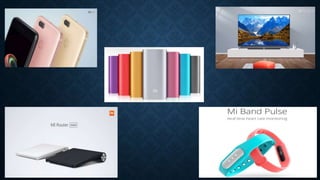
Other than mobile phones they offer products such as-
• MiPad Tablets Software.
• MIUI Home entertainment.
• Mi smart TV.
• Set top box Accessories.
• Mi WiFi (network router).
• Mi Power Bank (External Battery).
• Mi Band (fitness monitor & sleep tracker).
• Mi Air Purifier .
• Mi Mobile Accessories
A Mixture Combined of “ Quality,
Technology, Affordability and the key
ingredient INNOVATION along with
that.”
MARKETING MIX
• PRODUCT (Good quality phone, low prices)
• PROMOTION (Power of word of mouth, Active use of Social
Media, Big fan base)
• PRICE (Selling low today, but gaining more in the future)
• PLACE (Expanding to 11 different countries namely
Malaysia, Singapore, India, Philippines, Indonesia,
Thailand, Vietnam, Russia, Turkey, Brazil, Mexico)
• “Customer obsessed” strategy:
 Taking customer feedbacks to keep improving.
 Also maintains and develops a strong relationship with
customers through customer forums .
• Xiaomi sells it’s product through online stores through
flash sales which ensures that supply never outstrips
demand .
Xiaomi with its innovative marketing and business models
is redefining the mobile phone market around the world,
and that’s why Xiaomi is at top position in Indian Market.
Conclusion
Xiaomi Inc. -Marketing Management

Xiaomi Inc. -Marketing Management

  • 1.
    XIAOMI INC. School ofData Science and Forecasting , DAVV Submitted By- Gaurav Lakhotia M.B.A(BA)-2nd Semester Submitted To- Dr. Meenu Kumar
  • 2.
    INTRODUCTION • Xiaomi (Pronouncedas SHAO-ME) Inc. better known as “Mi” is a privately owned Chinese electronics company headquartered in Beijing, China. • Xiaomi was founded in 2010 by Lei Jun . • In August 2012, Xiaomi launched the Xiaomi Mi2 smartphone with Android based firmware MIUI . The company had sold over 10 million Mi2 devices in just 11 months in China. • Xiaomi currently sells its products in all major counties including USA, Australia, India, Russia, Singapore etc. • Xiaomi entered the Indian Market by mid 2014.
  • 3.
    MISSION STATEMENT “ MAKINGQUALITY TECHNOLOGY ACCESSIBLE TO EVERYONE. ”
  • 4.
    Other than mobilephones they offer products such as- • MiPad Tablets Software. • MIUI Home entertainment. • Mi smart TV. • Set top box Accessories. • Mi WiFi (network router). • Mi Power Bank (External Battery). • Mi Band (fitness monitor & sleep tracker). • Mi Air Purifier . • Mi Mobile Accessories
  • 6.
    A Mixture Combinedof “ Quality, Technology, Affordability and the key ingredient INNOVATION along with that.”
  • 7.
    MARKETING MIX • PRODUCT(Good quality phone, low prices) • PROMOTION (Power of word of mouth, Active use of Social Media, Big fan base) • PRICE (Selling low today, but gaining more in the future) • PLACE (Expanding to 11 different countries namely Malaysia, Singapore, India, Philippines, Indonesia, Thailand, Vietnam, Russia, Turkey, Brazil, Mexico)
  • 8.
    • “Customer obsessed”strategy:  Taking customer feedbacks to keep improving.  Also maintains and develops a strong relationship with customers through customer forums . • Xiaomi sells it’s product through online stores through flash sales which ensures that supply never outstrips demand .
  • 9.
    Xiaomi with itsinnovative marketing and business models is redefining the mobile phone market around the world, and that’s why Xiaomi is at top position in Indian Market. Conclusion