Download as PDF, PPTX

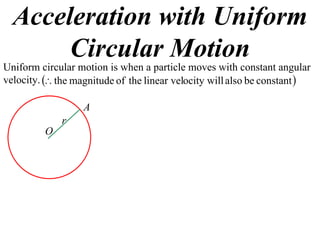
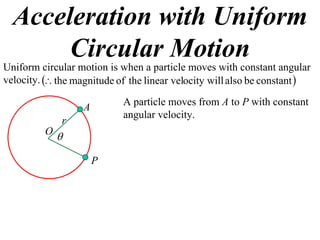

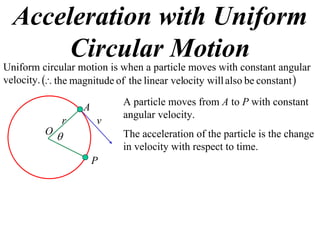
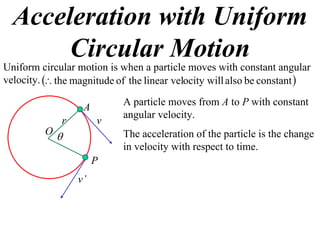
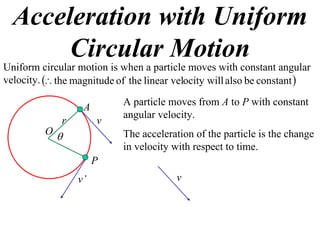


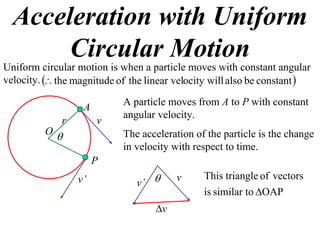

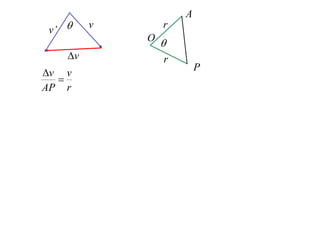
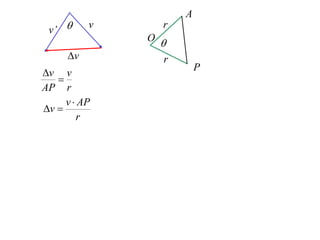
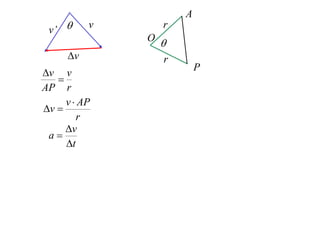
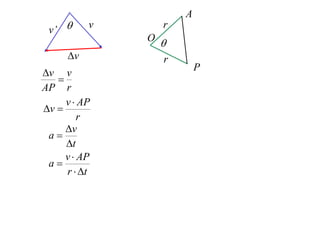
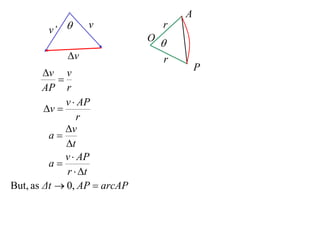


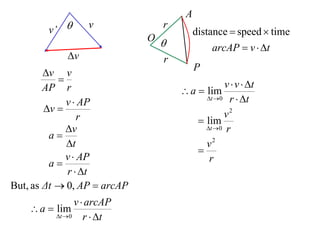
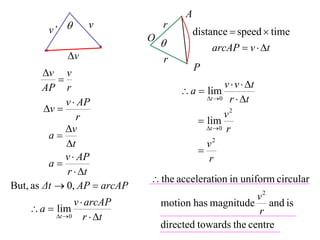
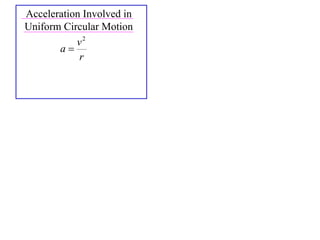

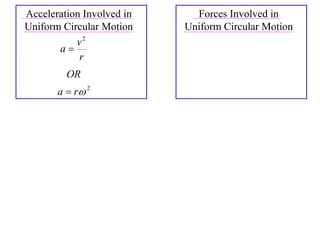
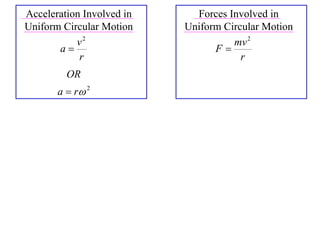

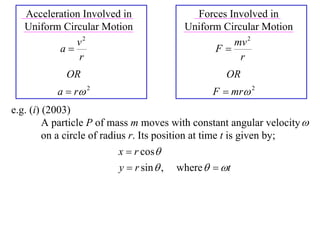


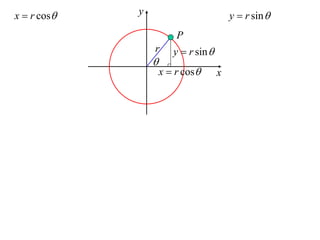
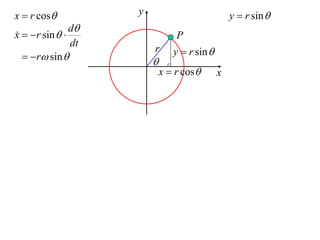

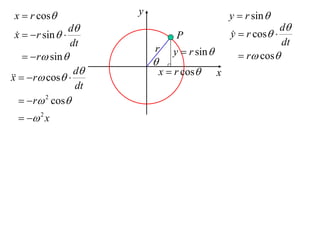

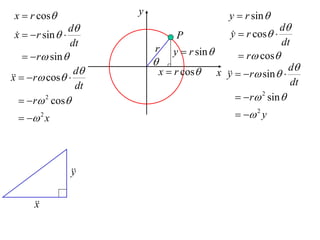
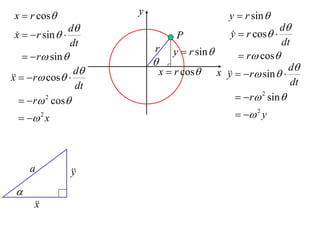
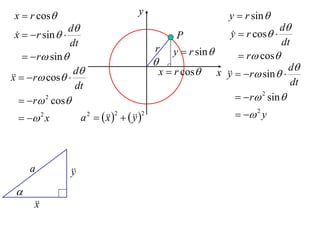
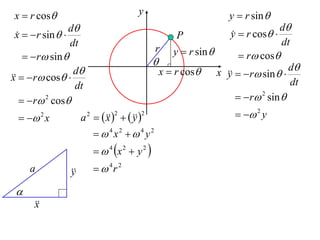
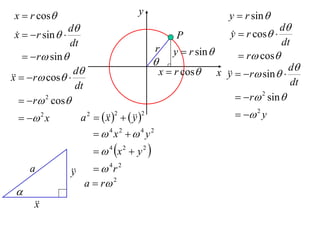
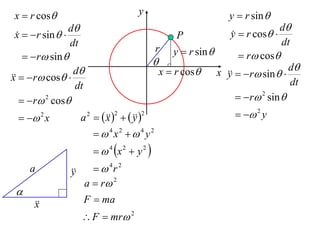


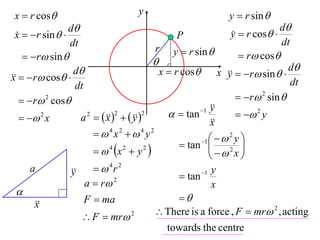
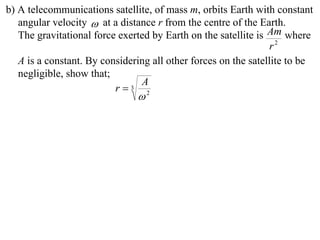
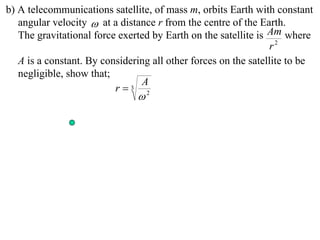
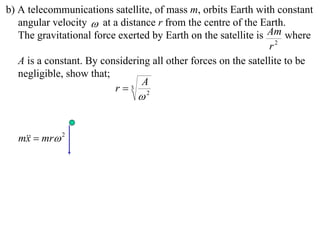
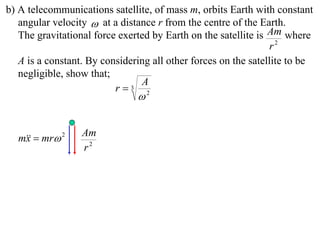

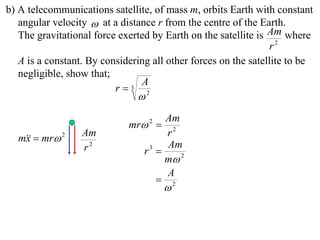


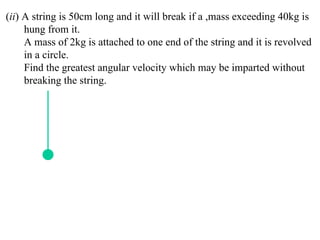
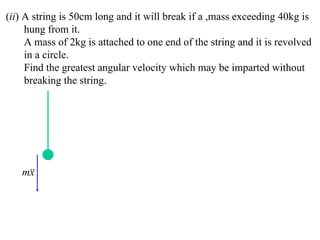

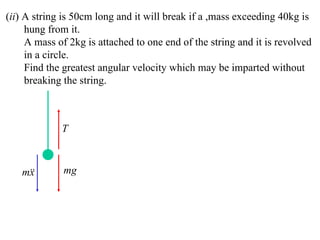
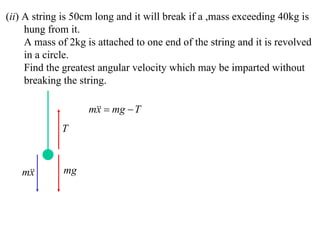
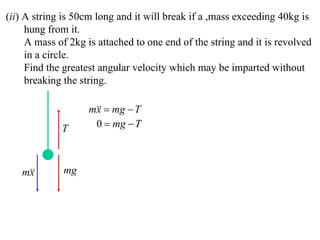

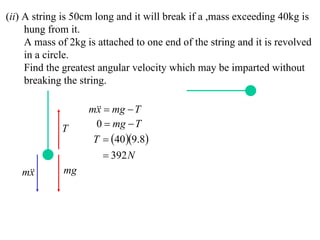
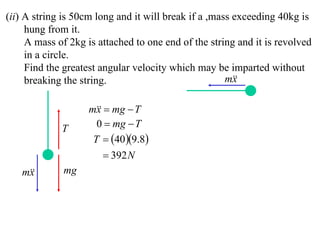
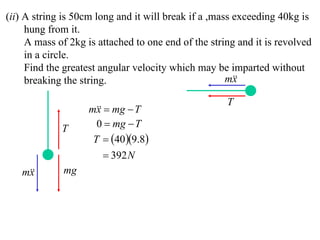
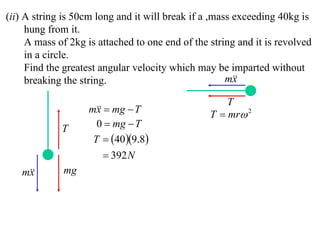
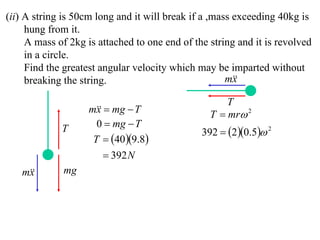

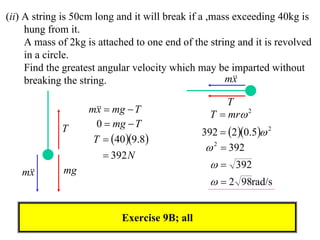
The document discusses uniform circular motion and the acceleration involved. It can be summarized as: 1) Uniform circular motion occurs when a particle moves with a constant angular velocity, meaning its linear velocity also remains constant. 2) For an object moving in uniform circular motion, the acceleration has a magnitude of v^2/r and is directed toward the center of the circle. 3) This acceleration is caused by a centripetal force of magnitude mv^2/r, where m is the mass of the object and v is its linear velocity. The centripetal force provides the inward force necessary to cause uniform circular motion.


