Download as PDF, PPTX

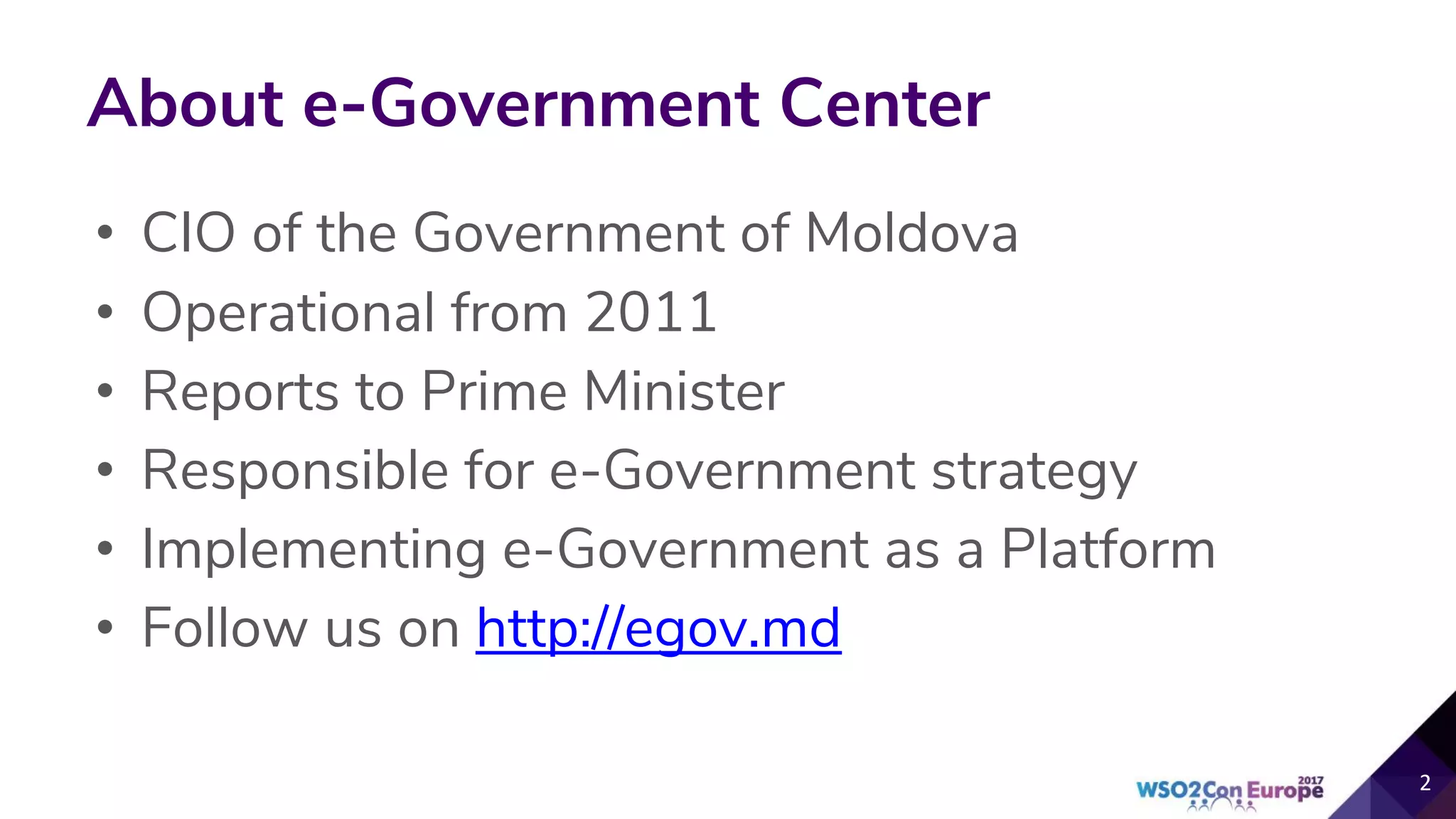
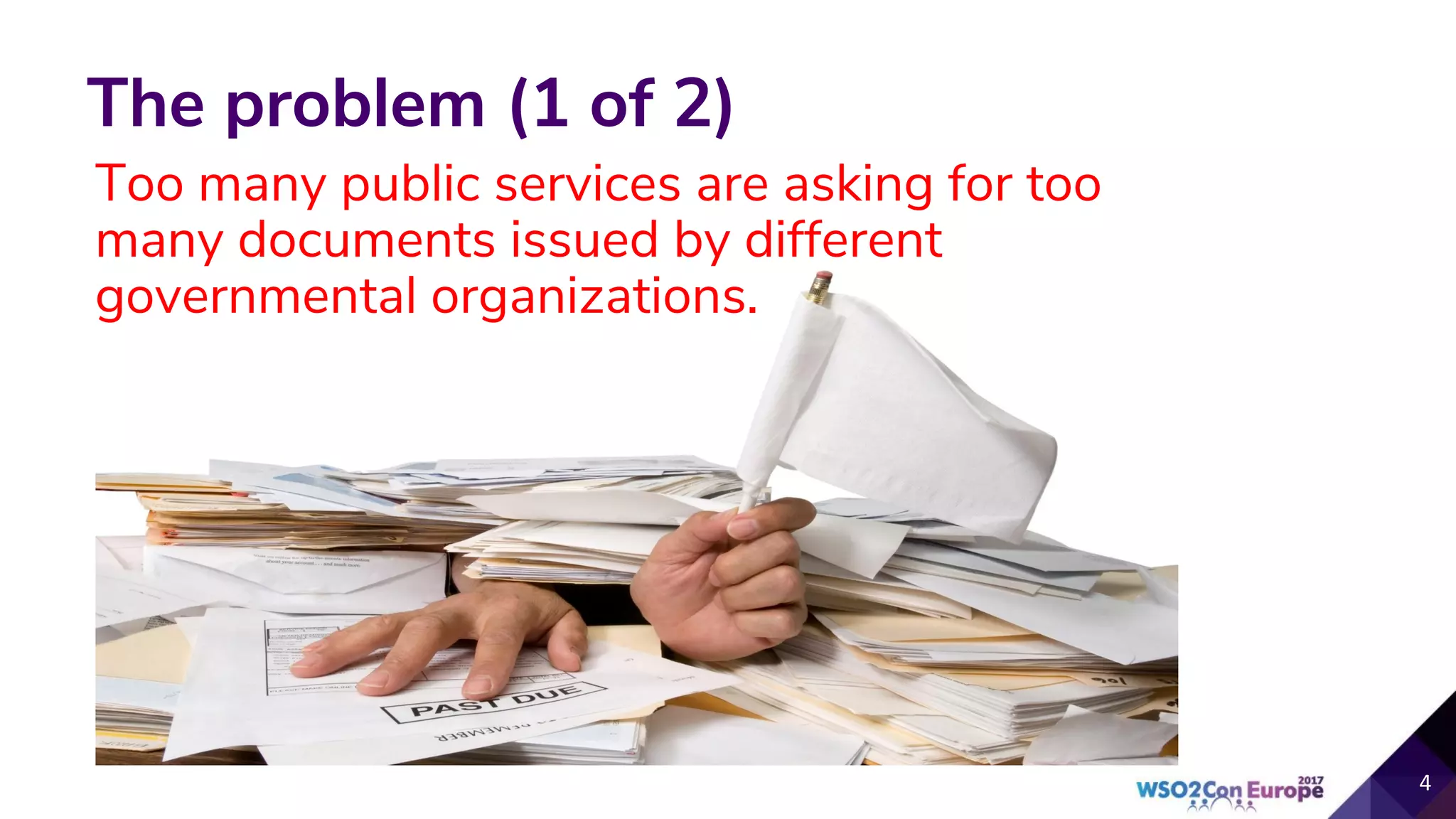

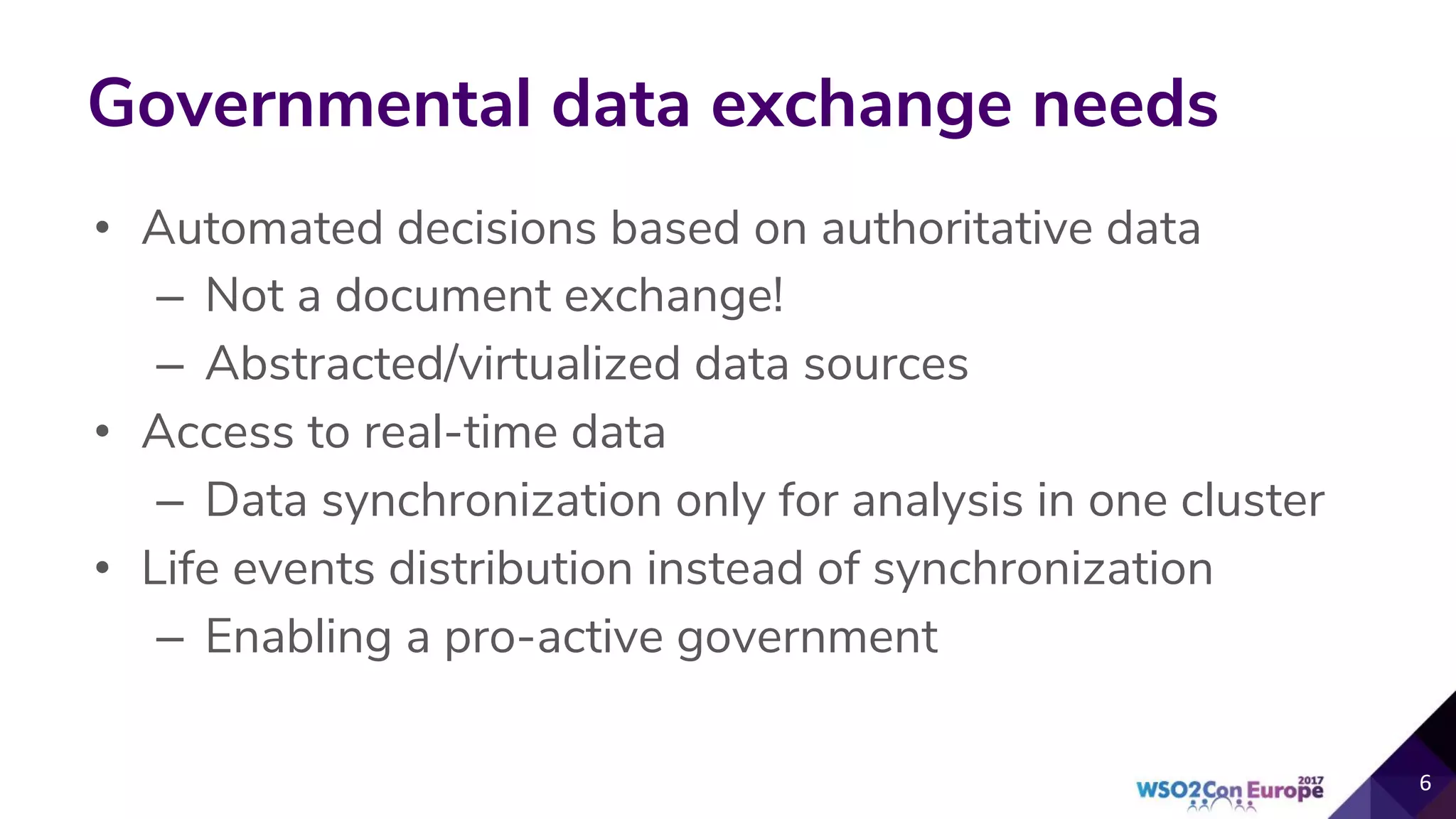
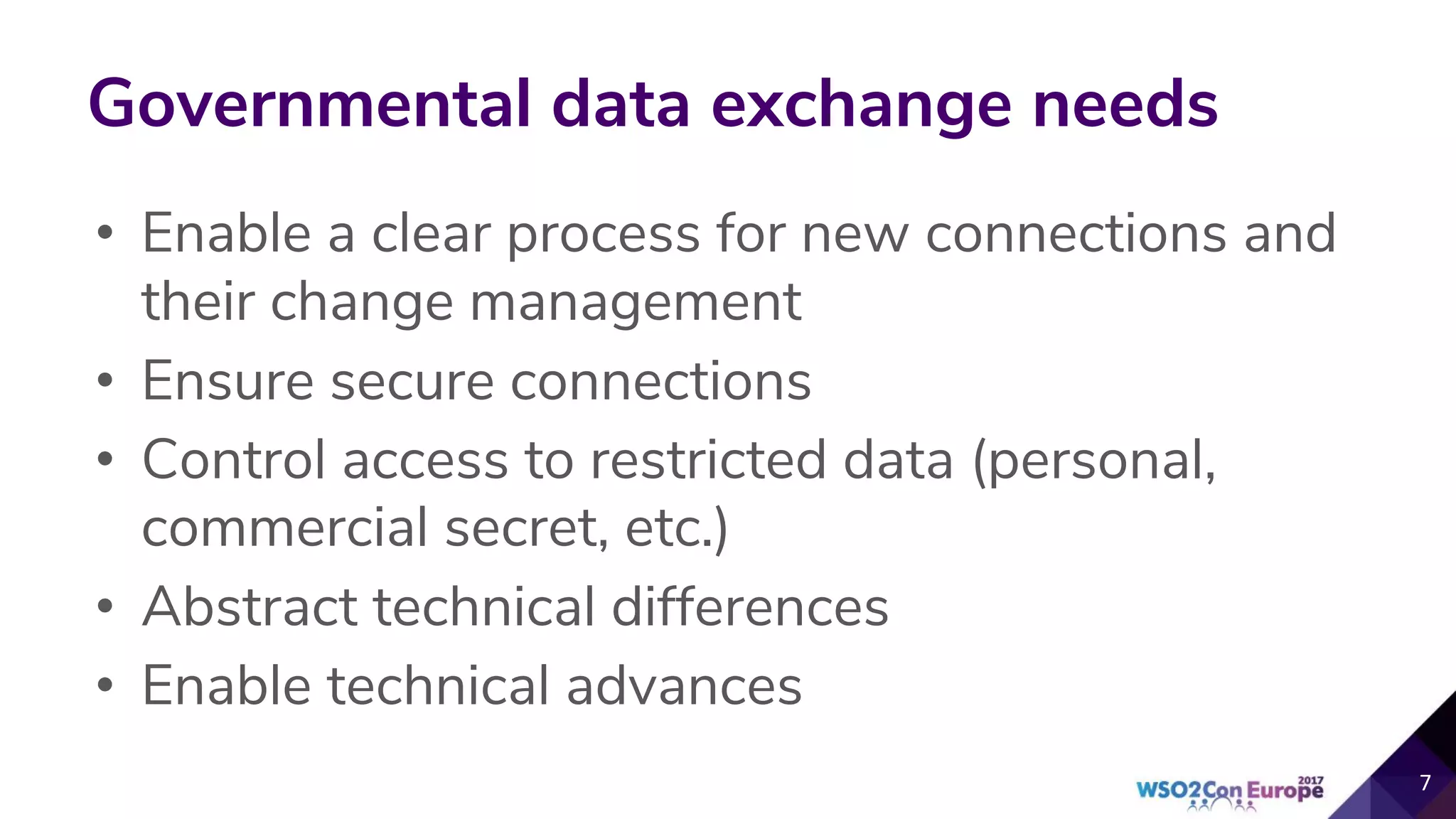
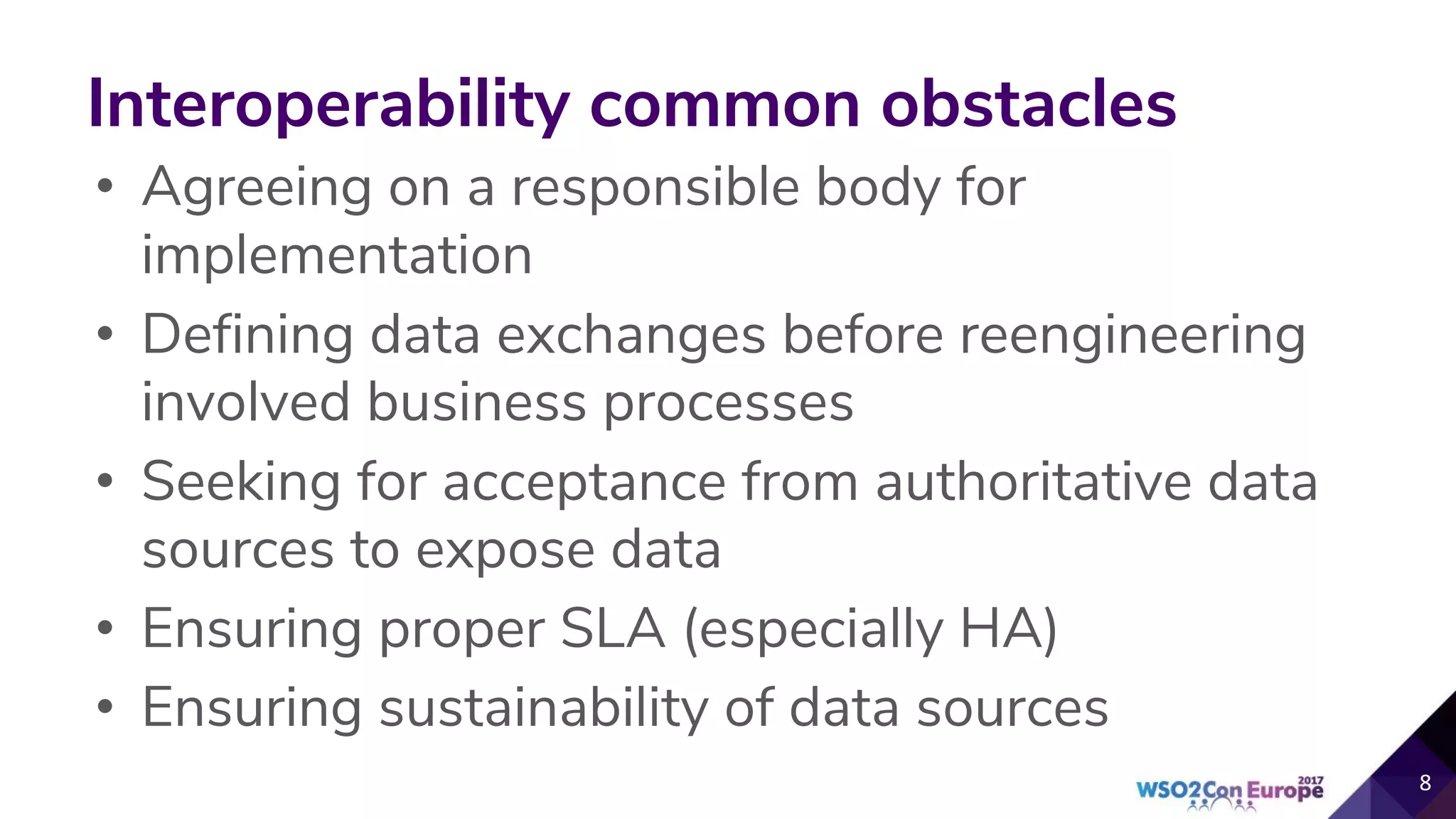
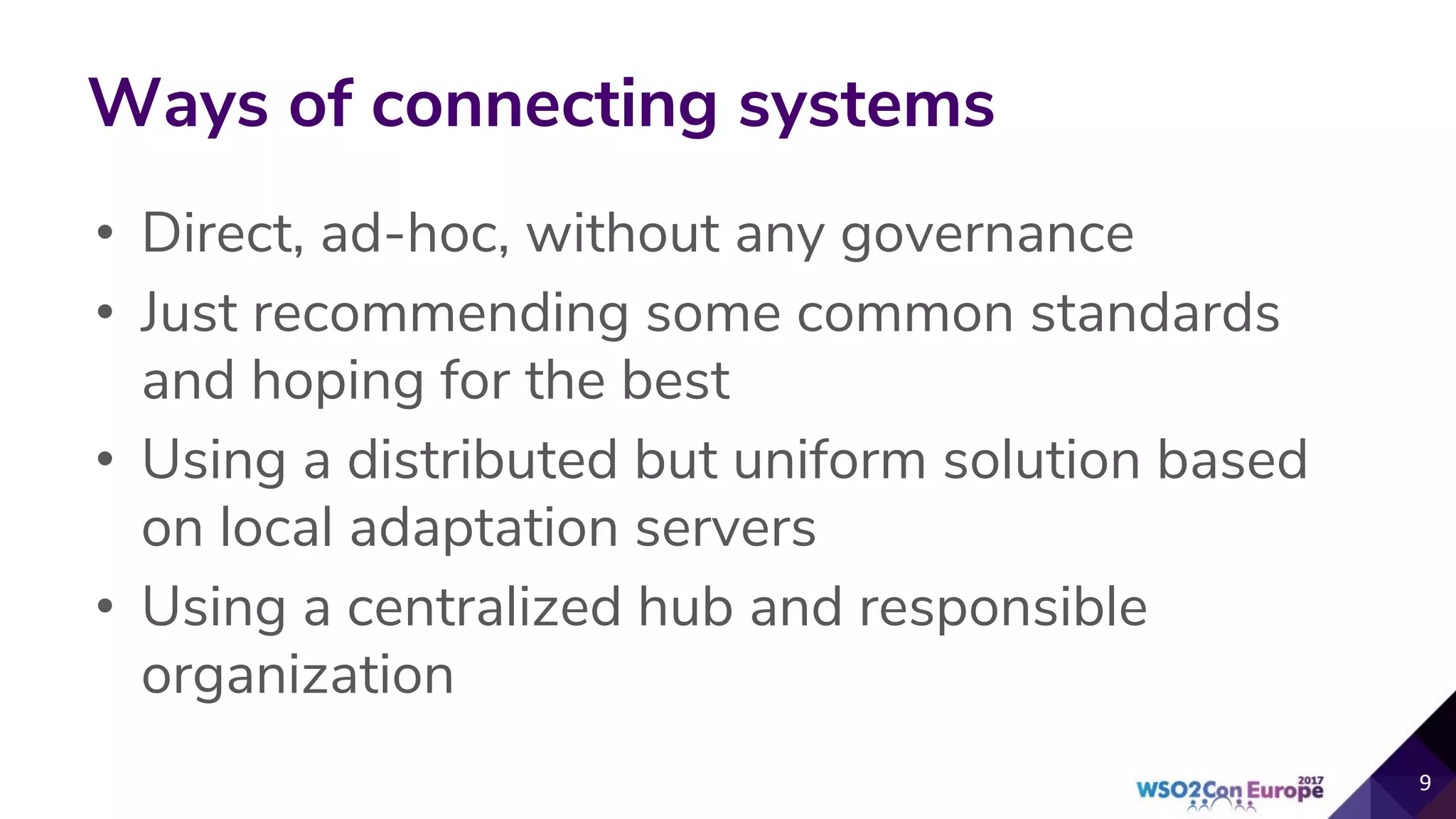
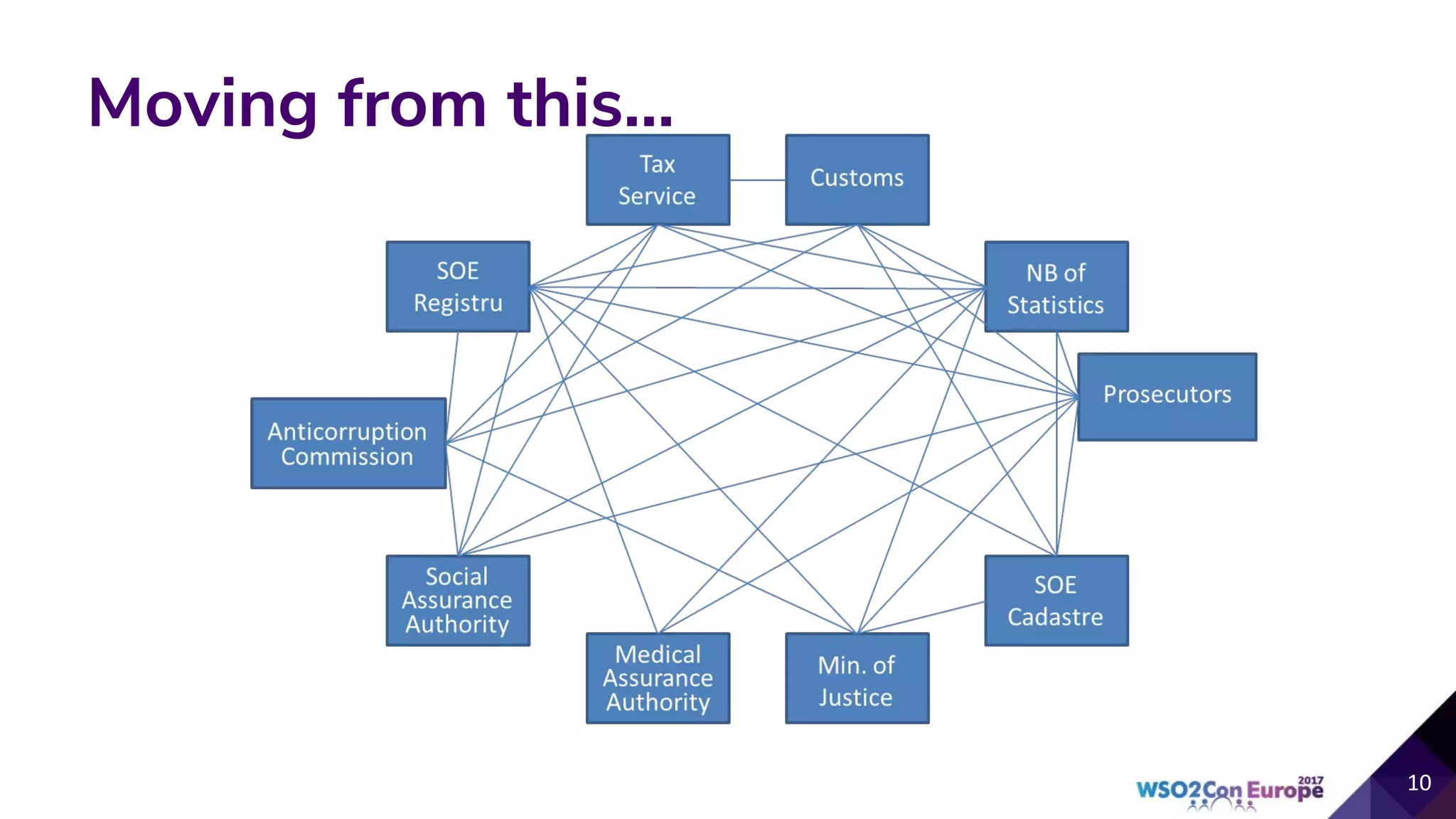
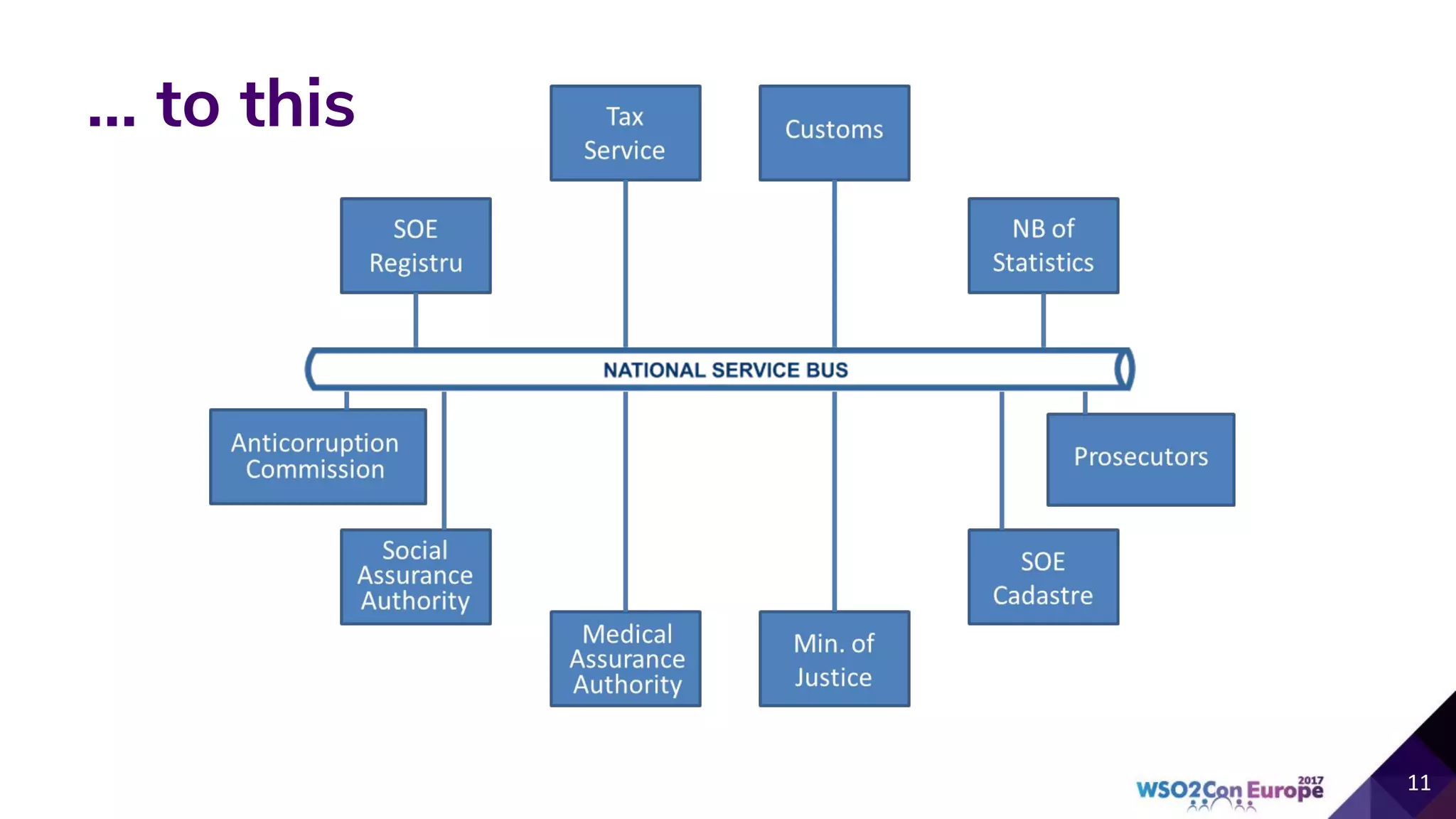
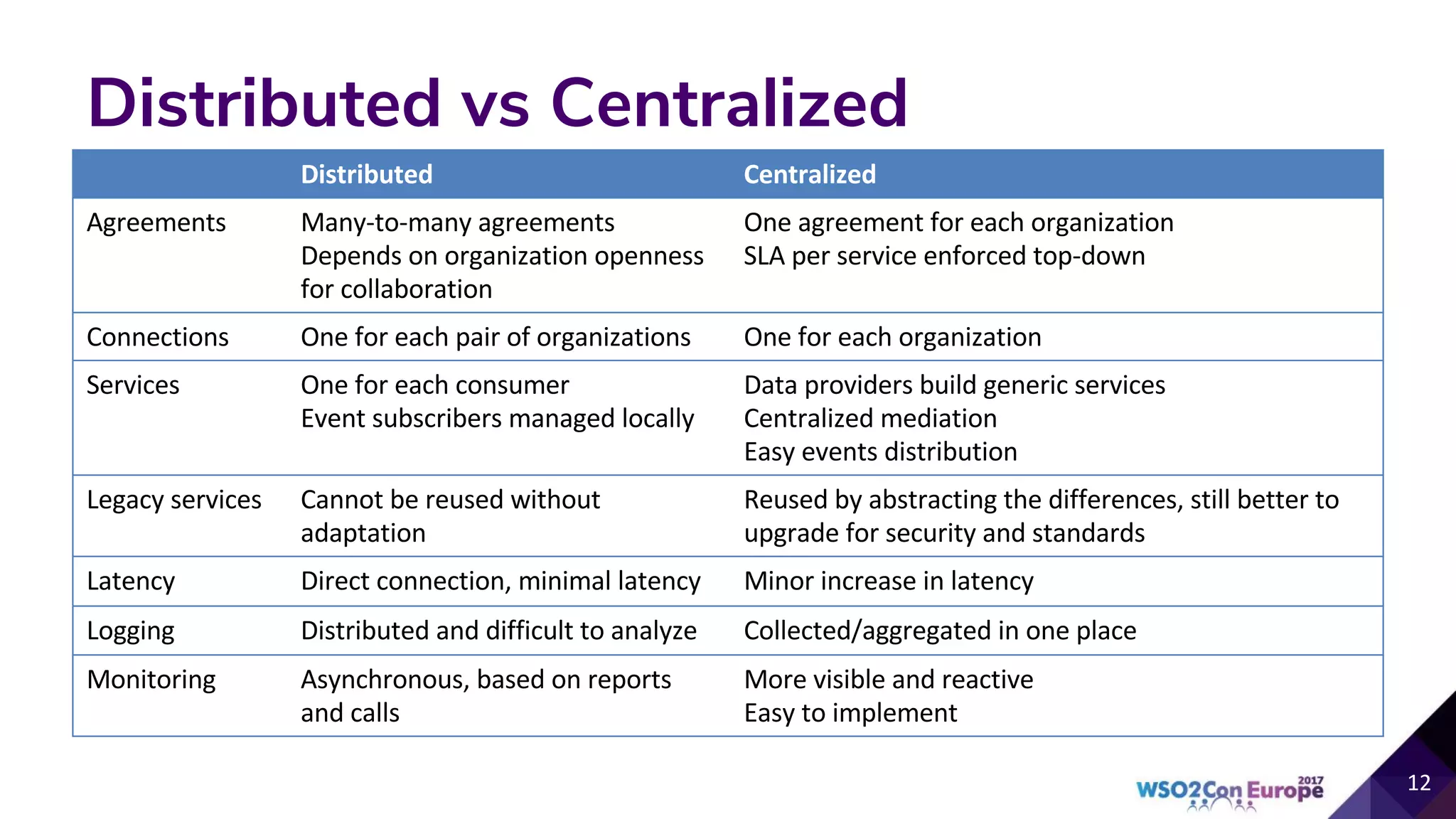
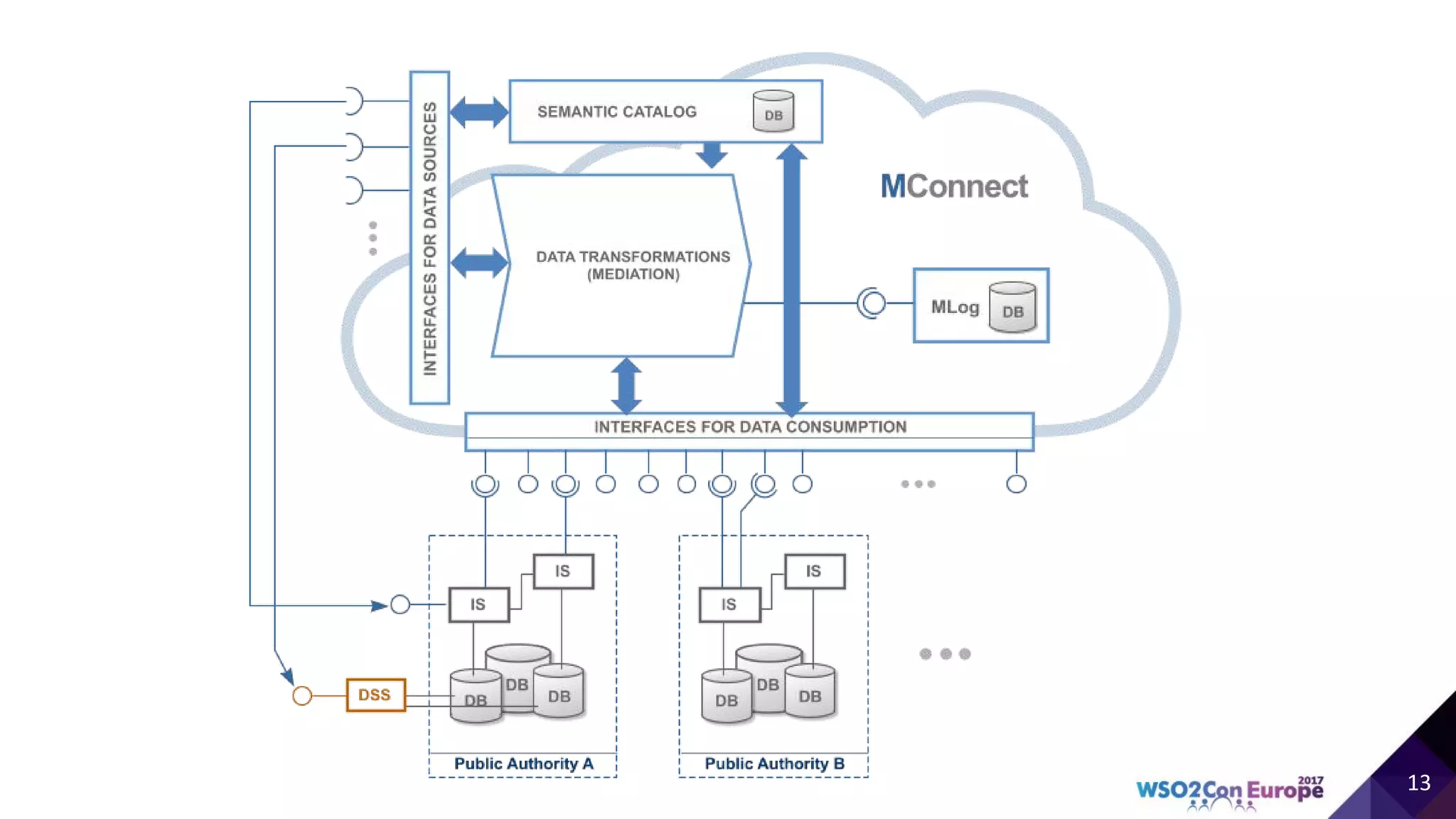
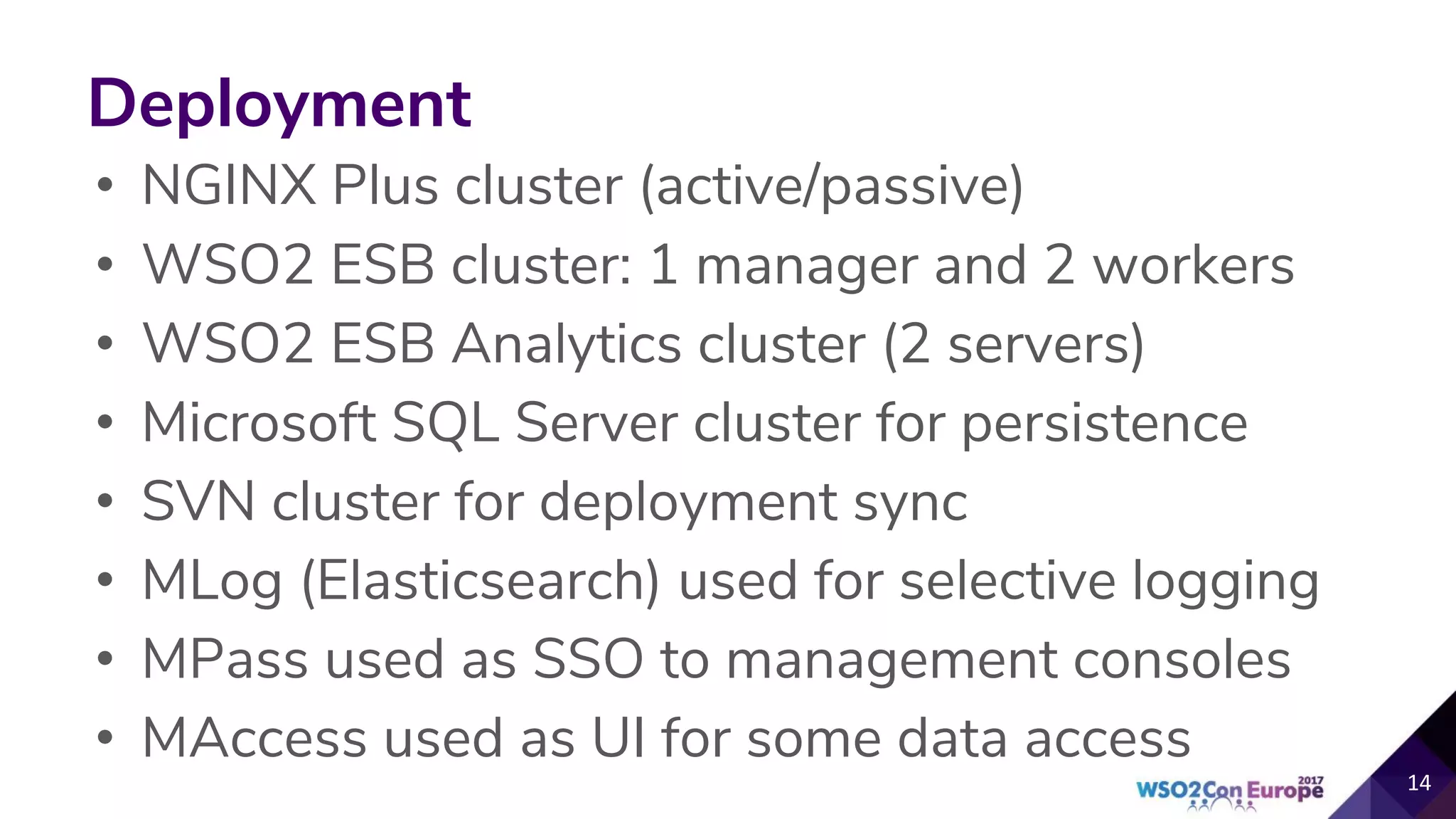
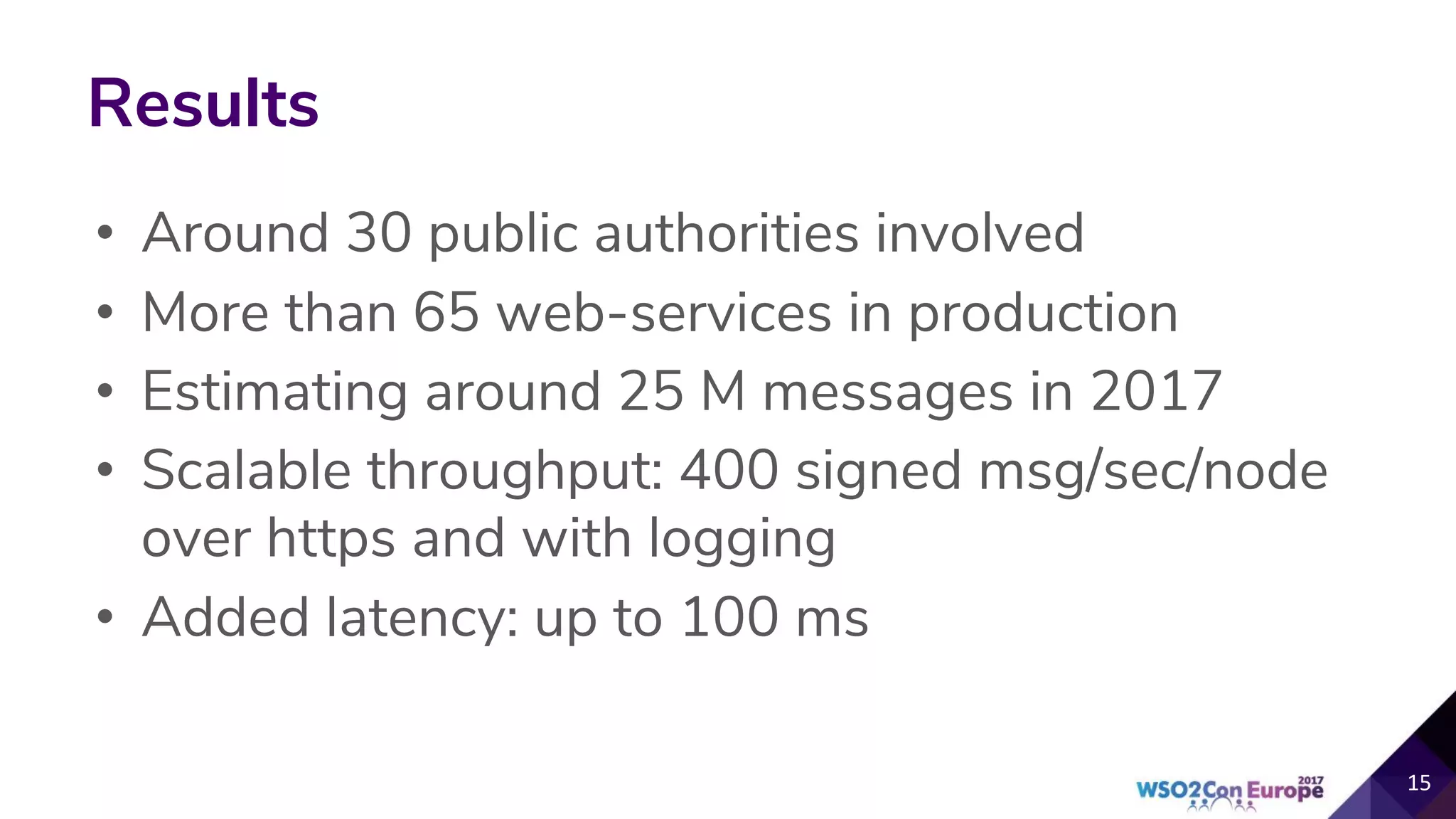
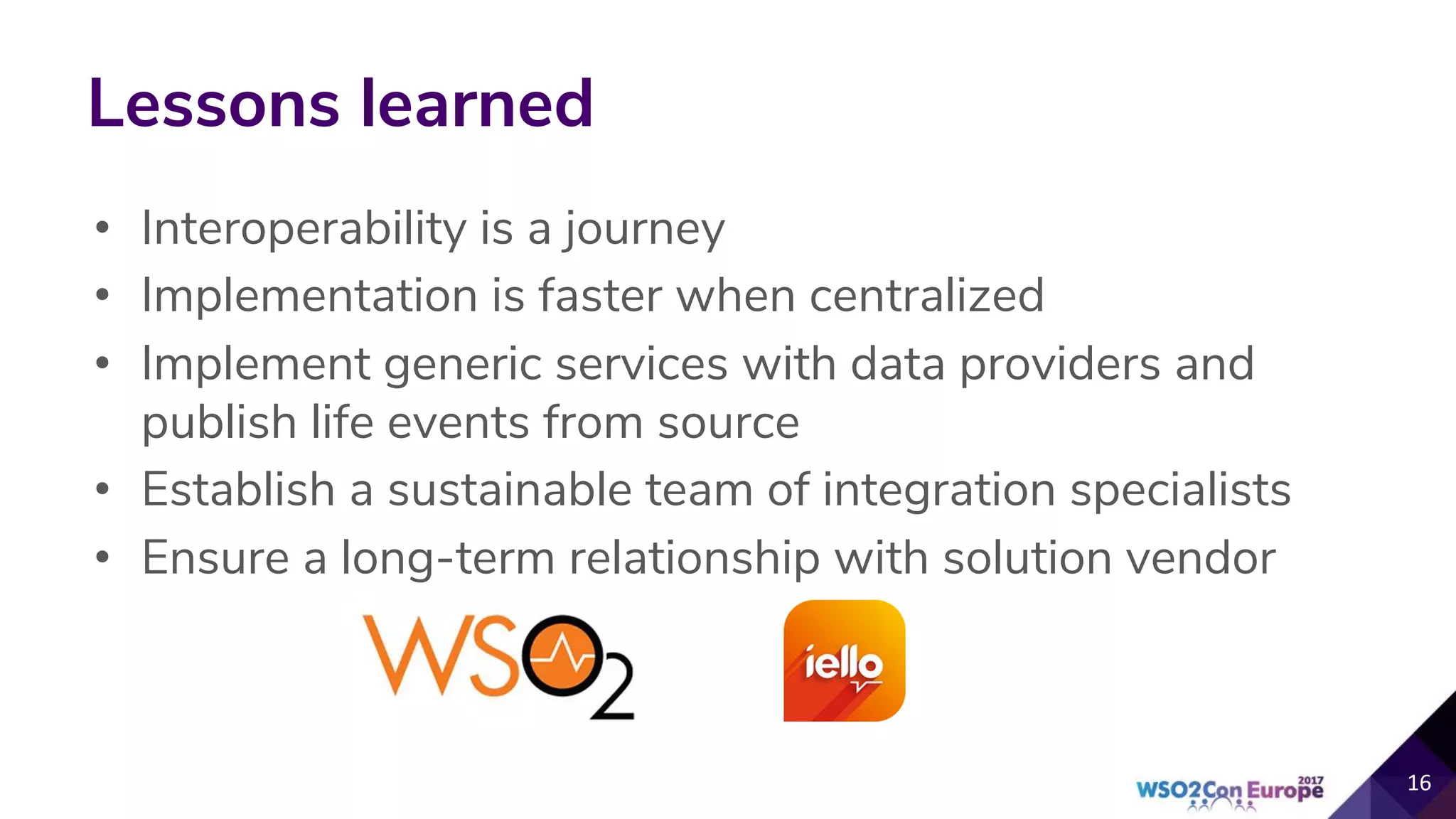
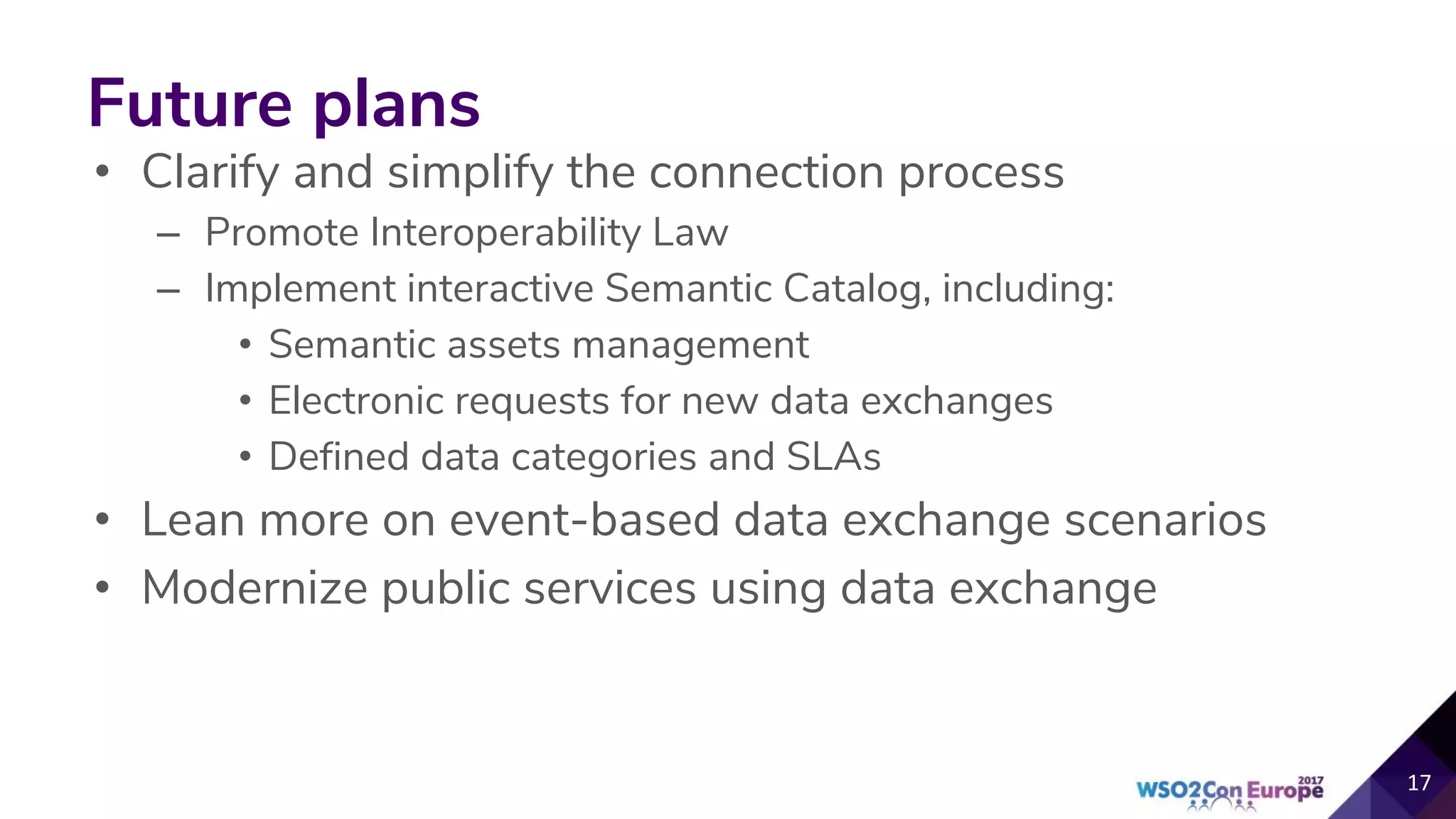
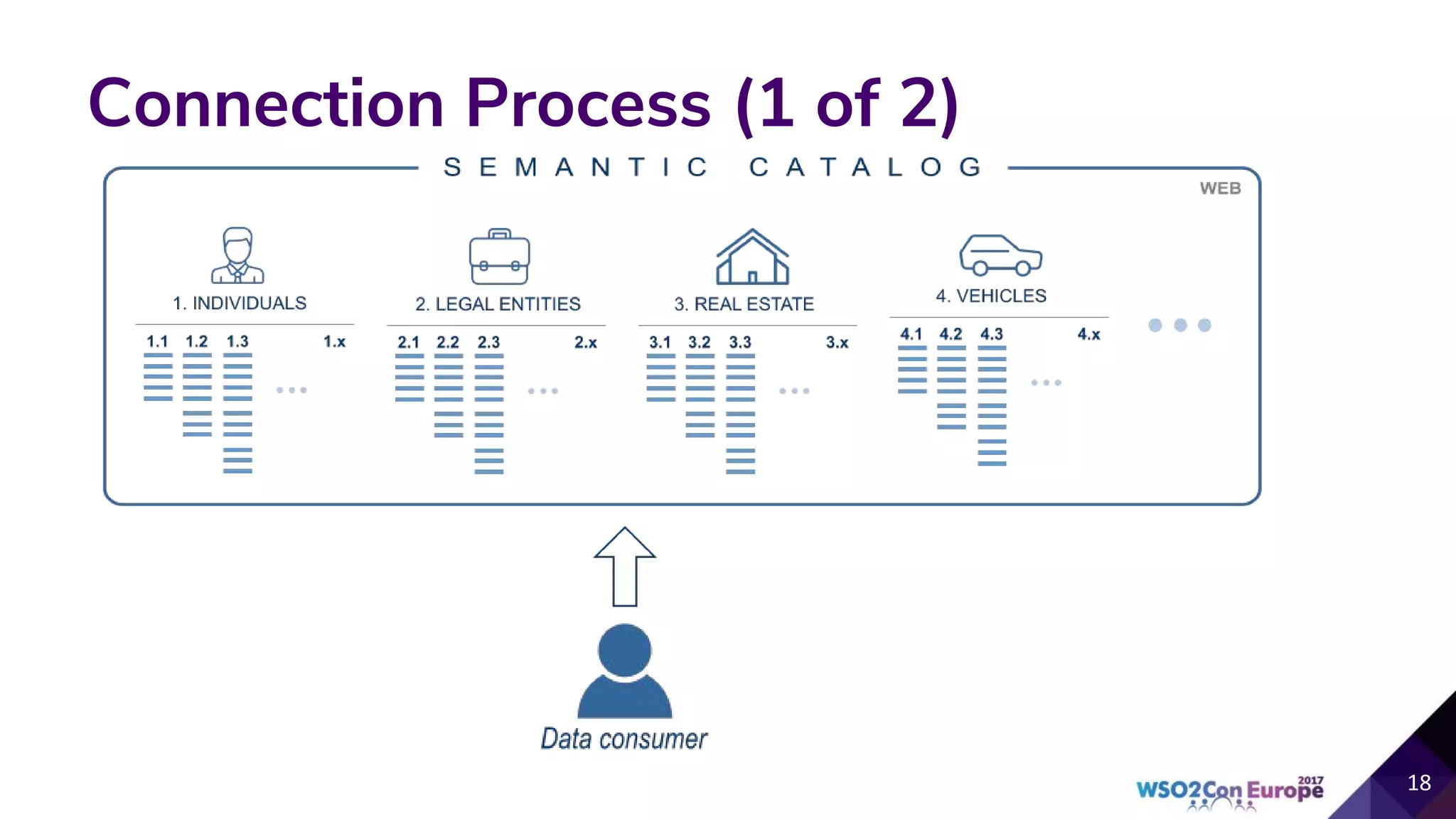
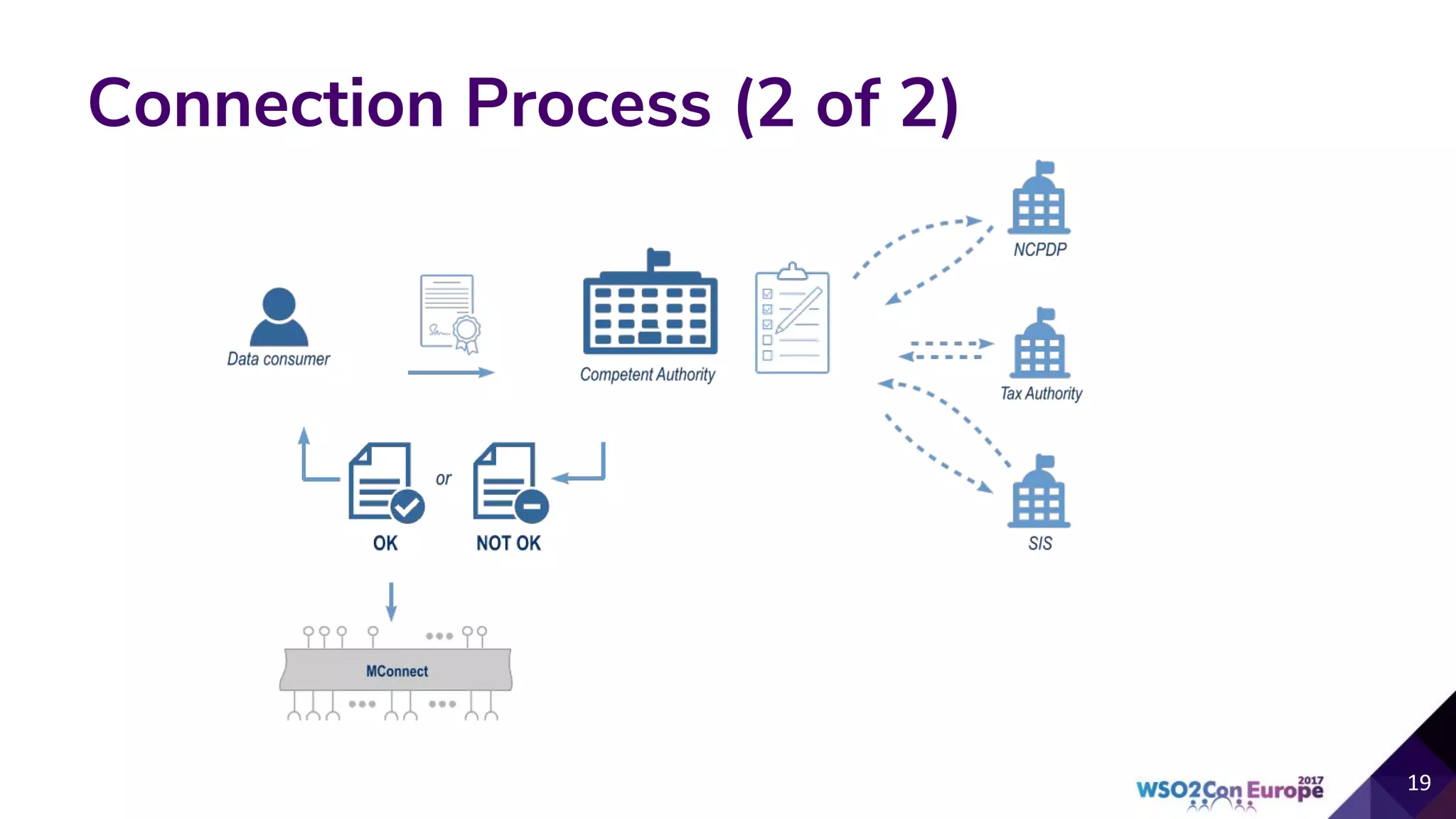
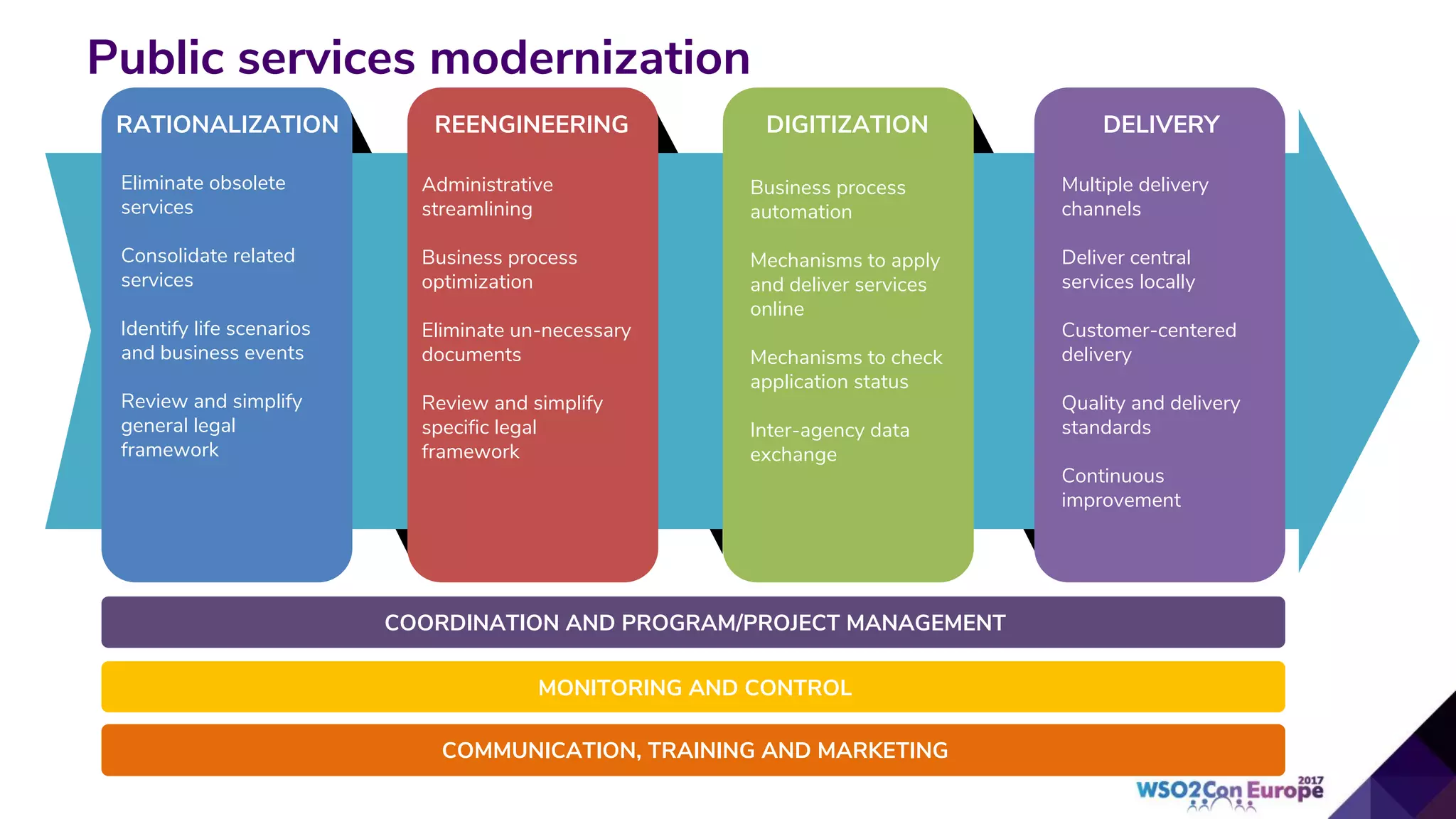


The document discusses the implementation of a data exchange infrastructure by the e-Government Center of Moldova, highlighting challenges such as excessive documentation demands and slow internal processes due to lack of real-time data. It outlines needs for automated decision-making, secure connections, and effective data management for improved interoperability. Future plans focus on simplifying connection processes, modernizing public services, and promoting data exchange for better service delivery.


![[WSO2Con EU 2017] WSO2 Unleashed: Full Stack Automation, Pitfalls and Solutions](https://cdn.slidesharecdn.com/ss_thumbnails/fiot-final-171107115910-thumbnail.jpg?width=640&height=640&fit=bounds)
![[WSO2Con EU 2017] Open Interoperability of WSO2 Analytics Platform](https://cdn.slidesharecdn.com/ss_thumbnails/9mrq2xytr5oqokhb1dgt-signature-6abac760590306a9c092f3ba66249d9a805ee6b52c9eb804a80eabb33b95c5ef-poli-171106133401-thumbnail.jpg?width=640&height=640&fit=bounds)
![[WSO2Con EU 2017] Extending Your Enterprise Integration Patterns Beyond ESBs](https://cdn.slidesharecdn.com/ss_thumbnails/iqasrssmsvgfykj8m7c6-signature-b0c4715f543dfe5c10349ce8530b5c81ef3fc243f4ed1faea354e2a22502099b-poli-171107112010-thumbnail.jpg?width=640&height=640&fit=bounds)
![[WSO2Con EU 2017] WHO CARES? A WSO2 Cloud Oriented Reference Architecture for...](https://cdn.slidesharecdn.com/ss_thumbnails/61krwlpytgis9fu16mrd-signature-10c352b17e3f171dbc0d45b422788a98081eda1dd1fdd2adacfd28644ef1cf59-poli-171107113845-thumbnail.jpg?width=640&height=640&fit=bounds)


![[WSO2Con EU 2018] Decentralized Data Architectures](https://cdn.slidesharecdn.com/ss_thumbnails/wso2coneu2018-decentraliseddataarchitectures-181113104248-thumbnail.jpg?width=640&height=640&fit=bounds)


![[WSO2Con EU 2017] Creating Composite Services Using Ballerina](https://cdn.slidesharecdn.com/ss_thumbnails/creatingcompositeservicesusingballerinaisuruedited-171108114658-thumbnail.jpg?width=640&height=640&fit=bounds)
![[WSO2Con EU 2017] Building Smarter Cities: Examples from Deployments Across t...](https://cdn.slidesharecdn.com/ss_thumbnails/riw9x9qlr9ms9mihunsw-signature-9119aa91aa49883e48c4941d40fb9827f8ba8afecf167aa90a325ffcd0cac924-poli-171107140509-thumbnail.jpg?width=640&height=640&fit=bounds)
![[WSO2Con EU 2017] Keynote: Ballerina Plans and Futures](https://cdn.slidesharecdn.com/ss_thumbnails/2017-11-07-wso2coneu-ballerina-171108104750-thumbnail.jpg?width=640&height=640&fit=bounds)
![[WSO2Con EU 2017] Building Smart, Connected Products with WSO2 IoT Platform](https://cdn.slidesharecdn.com/ss_thumbnails/kjpxgjy0rds38akb7ykr-signature-9119aa91aa49883e48c4941d40fb9827f8ba8afecf167aa90a325ffcd0cac924-poli-171107140509-thumbnail.jpg?width=640&height=640&fit=bounds)
![[WSO2Con EU 2017] Travis Perkins - Our Digital Transformation & the Importanc...](https://cdn.slidesharecdn.com/ss_thumbnails/uhe8hhokr8ohjybjnoo7-signature-b521f0548f2a07c9bb75a715013744a23512b96bed5649fa80993361ce5d335a-poli-171107142024-thumbnail.jpg?width=640&height=640&fit=bounds)
![[WSO2Con EU 2017] Transforming the Way We Deliver Operational Technology](https://cdn.slidesharecdn.com/ss_thumbnails/02ws02pres-tfl-transformingthewaywedeliveroperationaltechnology-171107154829-thumbnail.jpg?width=640&height=640&fit=bounds)
![[WSO2Con EU 2017] Microservices for Enterprises](https://cdn.slidesharecdn.com/ss_thumbnails/buildingapragmaticmicroservicearchitecture-171108114640-thumbnail.jpg?width=640&height=640&fit=bounds)
![[WSO2Con EU 2017] Integration Platform Strategy for Digital Transformation](https://cdn.slidesharecdn.com/ss_thumbnails/f5f9pw8r3lpuxqjzizlw-signature-b0c4715f543dfe5c10349ce8530b5c81ef3fc243f4ed1faea354e2a22502099b-poli-171107112010-thumbnail.jpg?width=640&height=640&fit=bounds)
![[WSO2Con EU 2017] How API Management at Suva is Helping in Reducing Costs to ...](https://cdn.slidesharecdn.com/ss_thumbnails/suva-final-171108114608-thumbnail.jpg?width=640&height=640&fit=bounds)
![[WSO2Con EU 2017] From the Trenches: IoT Customer Stories](https://cdn.slidesharecdn.com/ss_thumbnails/p96laot8rrgnfjlneqan-signature-9119aa91aa49883e48c4941d40fb9827f8ba8afecf167aa90a325ffcd0cac924-poli-171107140509-thumbnail.jpg?width=640&height=640&fit=bounds)
![[WSO2Con EU 2017] The Win-Win-Win of Water Authority HHNK](https://cdn.slidesharecdn.com/ss_thumbnails/wso2con2017-hhnk-171108114725-thumbnail.jpg?width=640&height=640&fit=bounds)
![[WSO2Con EU 2017] Keynote: Mobile Identity in the Digital Economy](https://cdn.slidesharecdn.com/ss_thumbnails/20171108wso2conferencemarieaustenaagsma-171108073649-thumbnail.jpg?width=640&height=640&fit=bounds)
![[WSO2Con EU 2017] Fraud Prevention and Compliance in Financial Sector with WS...](https://cdn.slidesharecdn.com/ss_thumbnails/hgdjwoygqyqawlfcqfwy-signature-b521f0548f2a07c9bb75a715013744a23512b96bed5649fa80993361ce5d335a-poli-171107142024-thumbnail.jpg?width=640&height=640&fit=bounds)
![[WSO2Con EU 2017] Writing Microservices Using MSF4J](https://cdn.slidesharecdn.com/ss_thumbnails/writingmicroserviceswithmsf4jazeezedited-171108114703-thumbnail.jpg?width=640&height=640&fit=bounds)
![[WSO2Con EU 2017] Jump to the Next Curve with DevOps](https://cdn.slidesharecdn.com/ss_thumbnails/jumptothenextcurvewithdevopschamithedited-171107085752-thumbnail.jpg?width=640&height=640&fit=bounds)
![[WSO2Con EU 2017] How to Learn and Contribute to Ballerina](https://cdn.slidesharecdn.com/ss_thumbnails/0fiwb0b3t4eeco8hg7rz-signature-9119aa91aa49883e48c4941d40fb9827f8ba8afecf167aa90a325ffcd0cac924-poli-171107140509-thumbnail.jpg?width=640&height=640&fit=bounds)
![[WSO2Con EU 2017] GDPR Impact on Consumer Identity and Access Management (CIAM)](https://cdn.slidesharecdn.com/ss_thumbnails/xchmywatqrtjj4f4qdka-signature-898b3419d2223d165af7471f4efd7e0583c12954ec4ed0a3dba52d7d74f9a2b6-poli-171106160334-thumbnail.jpg?width=640&height=640&fit=bounds)

![[WSO2Con EU 2017] Manipulating XML, JSON and SQL Data Types with Ballerina](https://cdn.slidesharecdn.com/ss_thumbnails/aev4zplktukyp61ncbqq-signature-dbac0dc010ea0ff3c90449ac7a4aa2ad1e9d36fce7d438c08edba1852dade946-poli-171106125022-thumbnail.jpg?width=640&height=640&fit=bounds)
![[WSO2Con EU 2017] An Overview of Ballerina Composer](https://cdn.slidesharecdn.com/ss_thumbnails/anoverviewofballerinacomposerjosephedited-171106115828-thumbnail.jpg?width=640&height=640&fit=bounds)


![[Roundtable] Choreo - The AI-Native Internal Developer Platform as a Service](https://cdn.slidesharecdn.com/ss_thumbnails/choreo-deck-250328074645-511dded7-thumbnail.jpg?width=640&height=640&fit=bounds)


