WSO2 Enterprise Integrator
Deployment Patterns
Chanaka Fernando
WSO2
Agenda
• Introduction to WSO2 Enterprise Integrator
• Enterprise Integrator profiles
• Deployment patterns
– Traditional integration
– Microservices architecture compatible
– Modern integration
WSO2 Enterprise Integrator
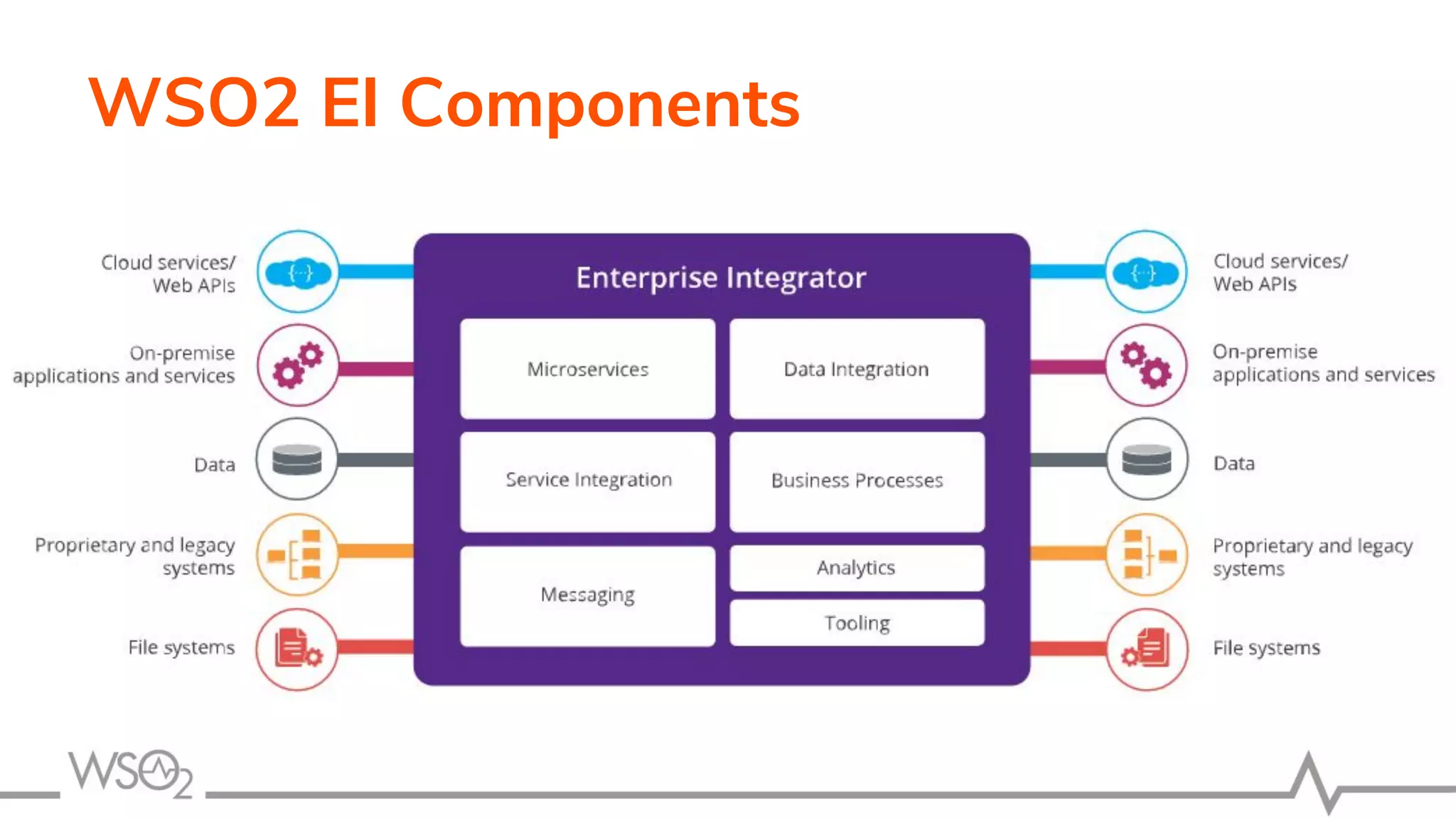
WSO2 EI Components
WSO2 EI Value Proposition
• Connect heterogeneous systems together
• Better consumer experience through connected data and
business processes
• Digitize legacy systems: mediate legacy with modern
architecture paradigms
• Hybrid integration by taking on-premise data and processes
into the cloud and back
• Core of digital transformation
Enterprise Integrator Profiles
Available profiles
• Integration - System and data integration
• Business Process - Long running business process
implemented on BPEL, BPMN and Human tasks
• Message Broker - Reliable, high performing, persistent
message storage
• Microservices - Host microservices implemented using Java
and MSF4J
• Analytics - Analyze services and data flowing through the
system
Enterprise Integrator Tooling
• Separate binary download
• Includes eclipse based IDE
• GUI based tool to
– Design
– Implement
– Debug
– Test
– Deploy artifacts
Deployment Patterns
Pattern 1 - Enterprise Integration (Systems +
Data)
• Stateless service integration
• Integrate legacy systems, SaaS APIs, and data sources
(RDBMS, NoSQL, Excel)
• Use WSO2 EI Integration Profile and WSO2 EI
Analytics
• Caters good portion of the integration requirements
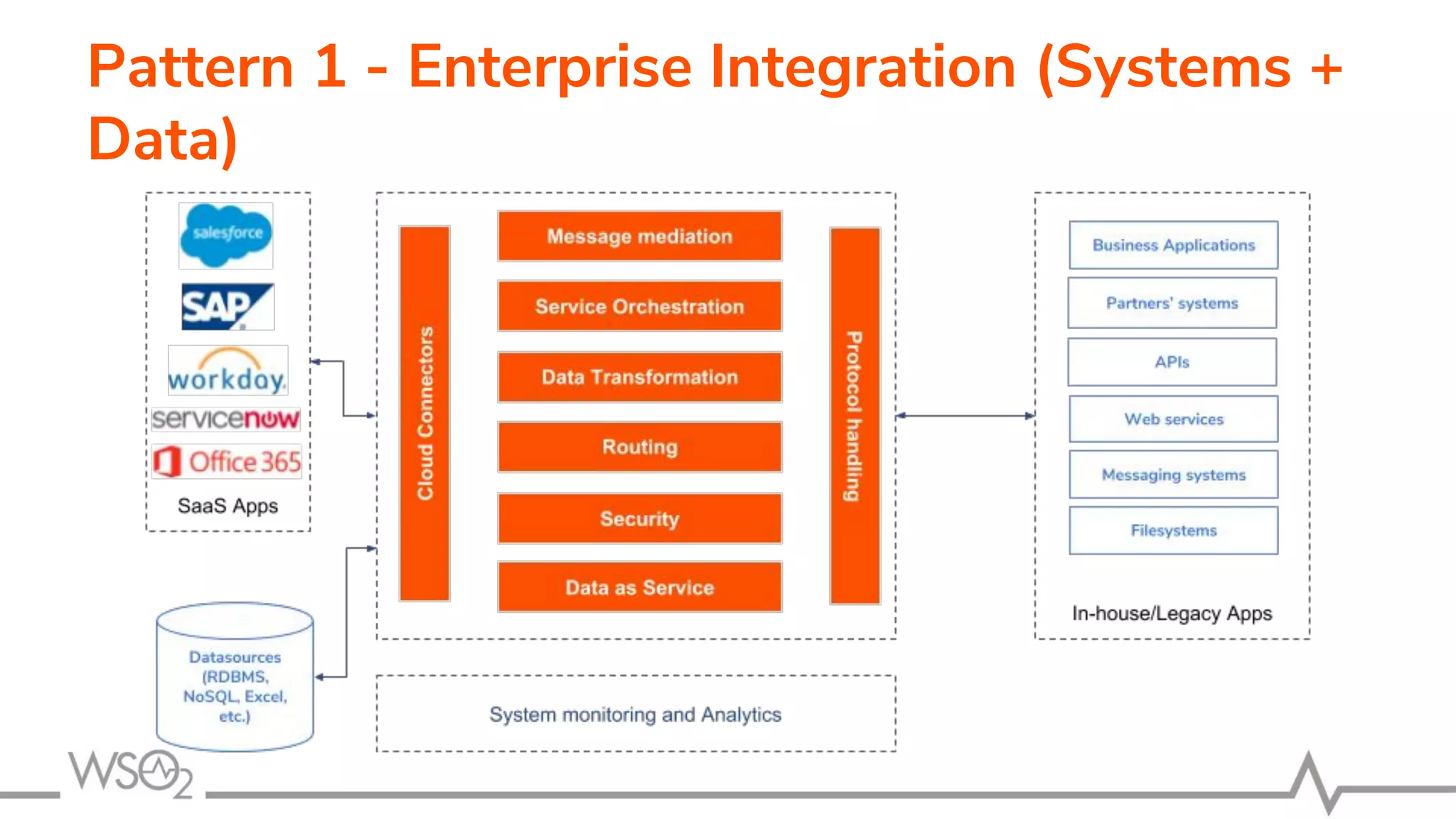
Pattern 1 - Enterprise Integration (Systems +
Data)
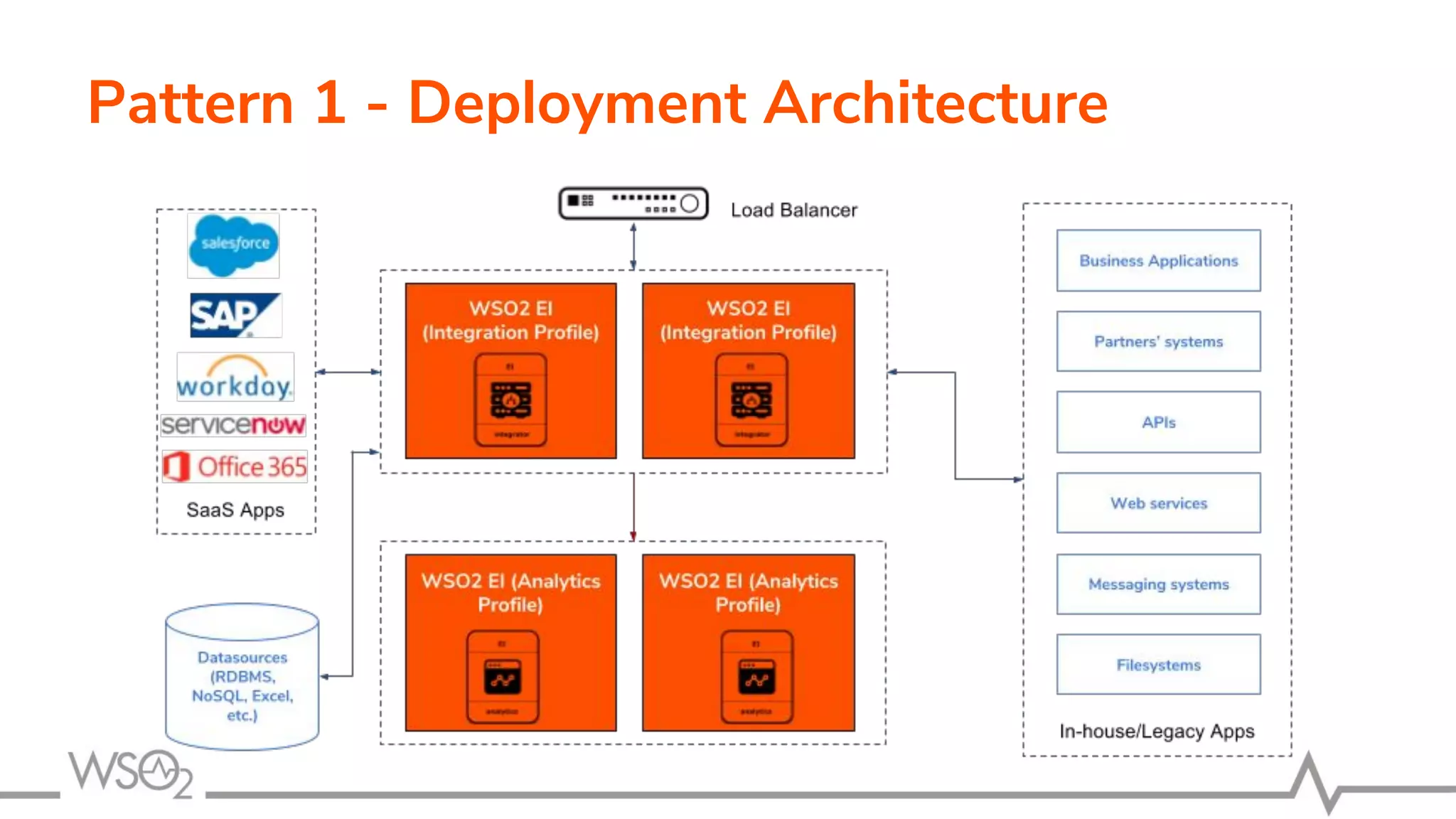
Pattern 1 - Deployment Architecture
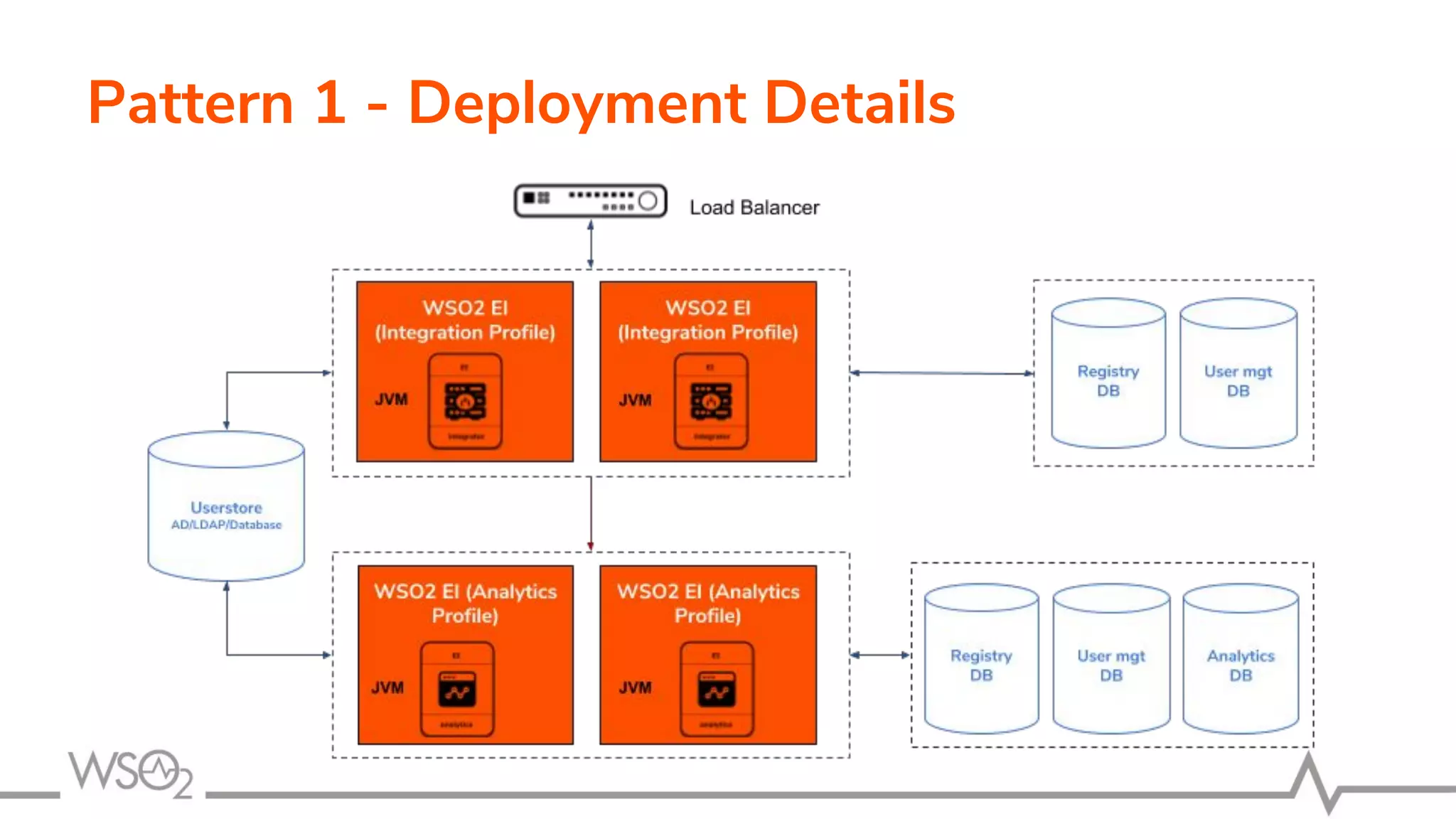
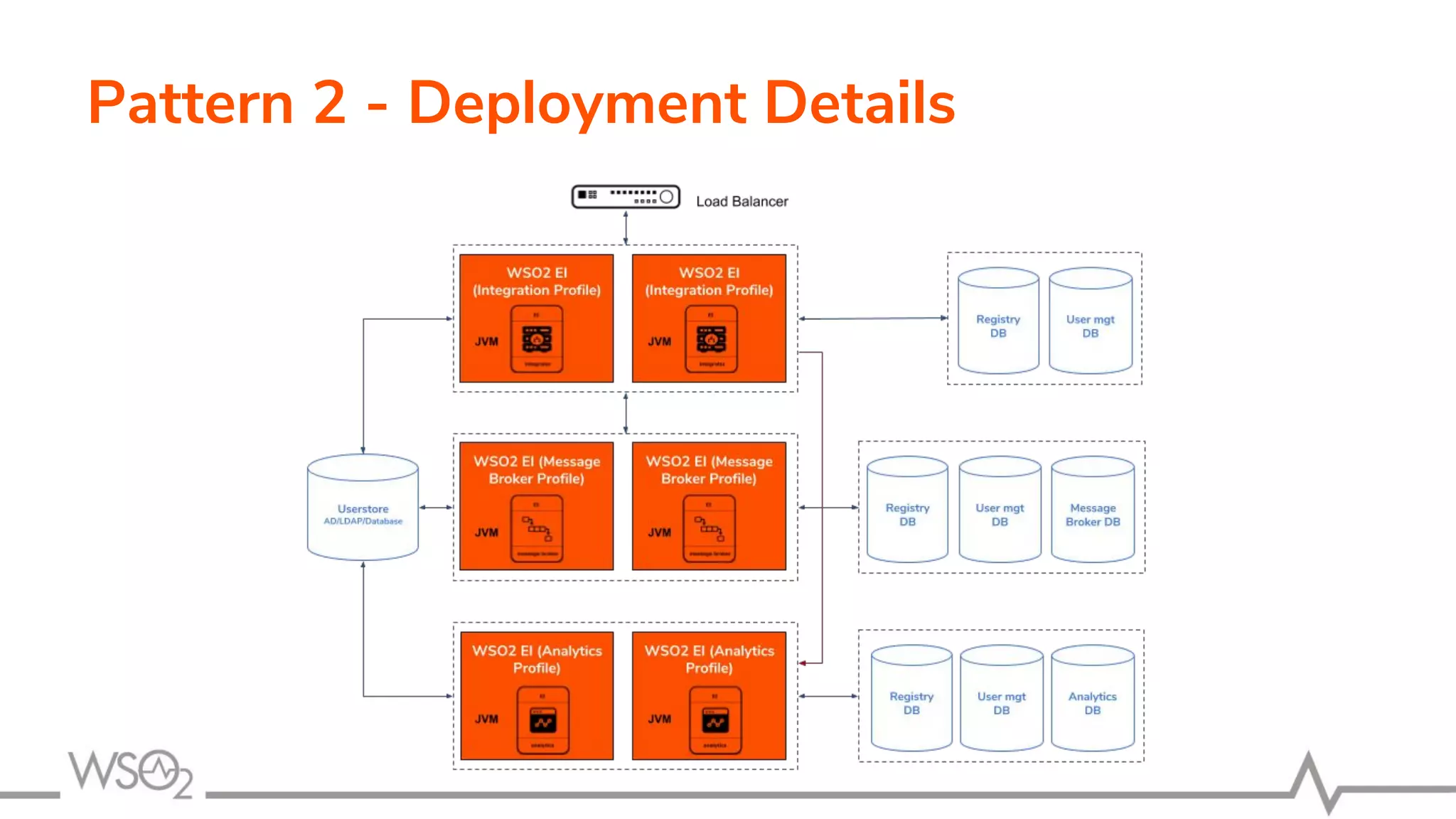
Pattern 1 - Deployment Details
Pattern 2 - Traditional Integration with
Message Reliability
• Message reliability is guaranteed through message
broker
• JMS heavy enterprises can bridge into modern SaaS
world
• Publish-Subscribe type of messaging
• Uses WSO2 EI Integration Profile, WSO2 EI Message
Broker Profile and WSO2 EI Analytics Profile
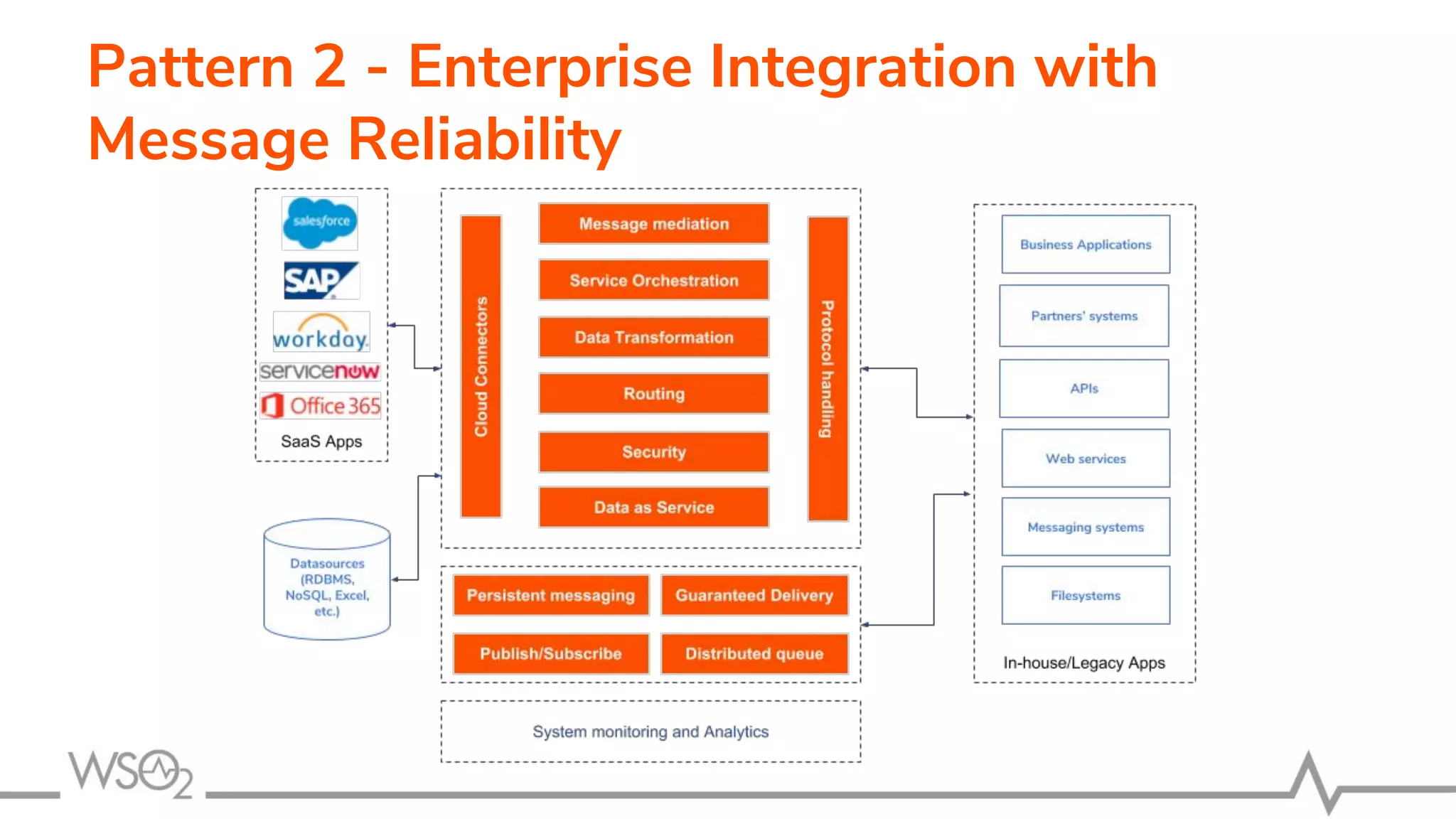
Pattern 2 - Enterprise Integration with
Message Reliability
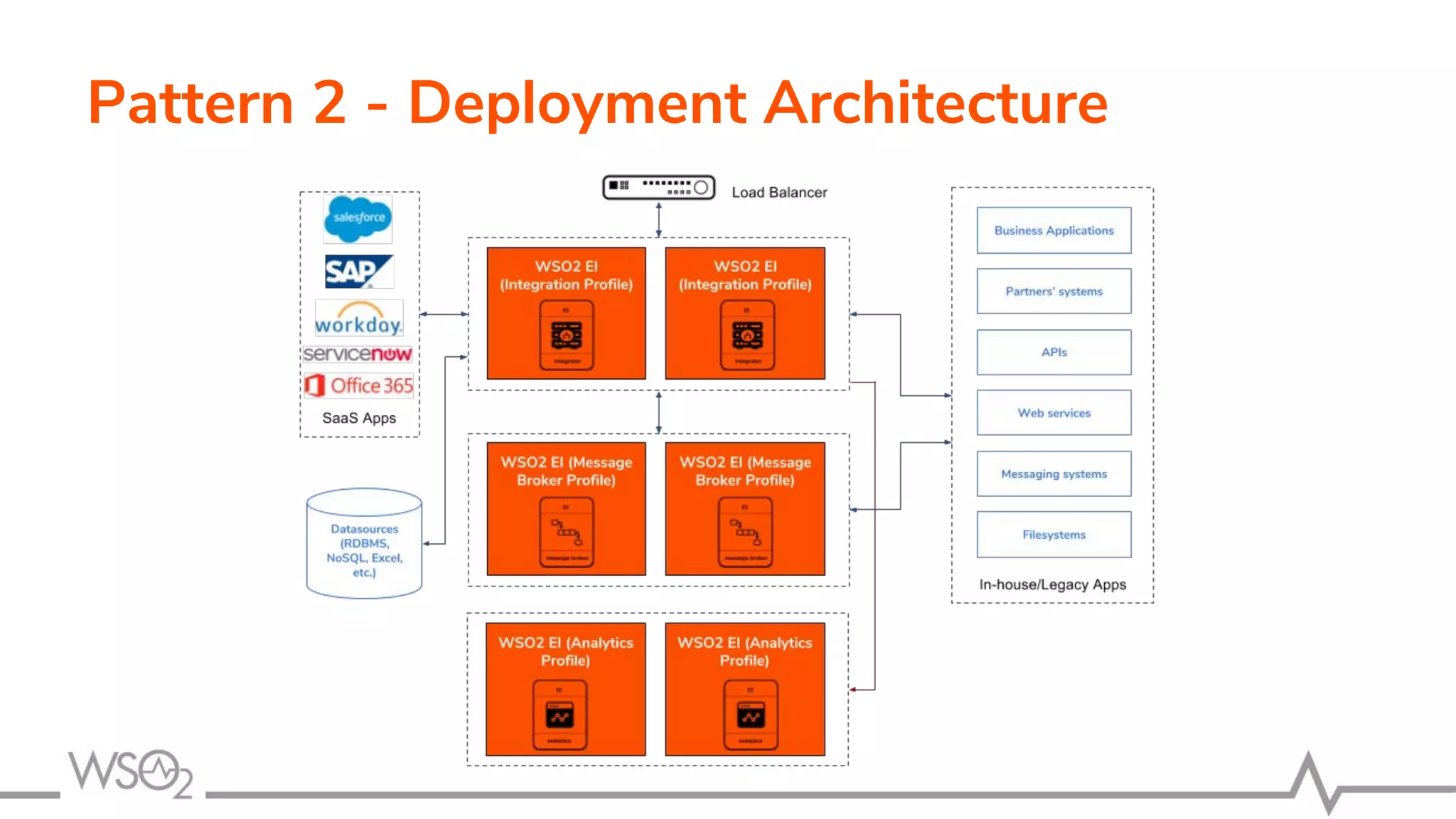
Pattern 2 - Deployment Architecture
Pattern 2 - Deployment Details
Pattern 3 - Enterprise Integration with
Business Processes
• Stateless as well as stateful service implementation
• Human integration through human tasks
• Implement business processes with BPEL and/or BPMN
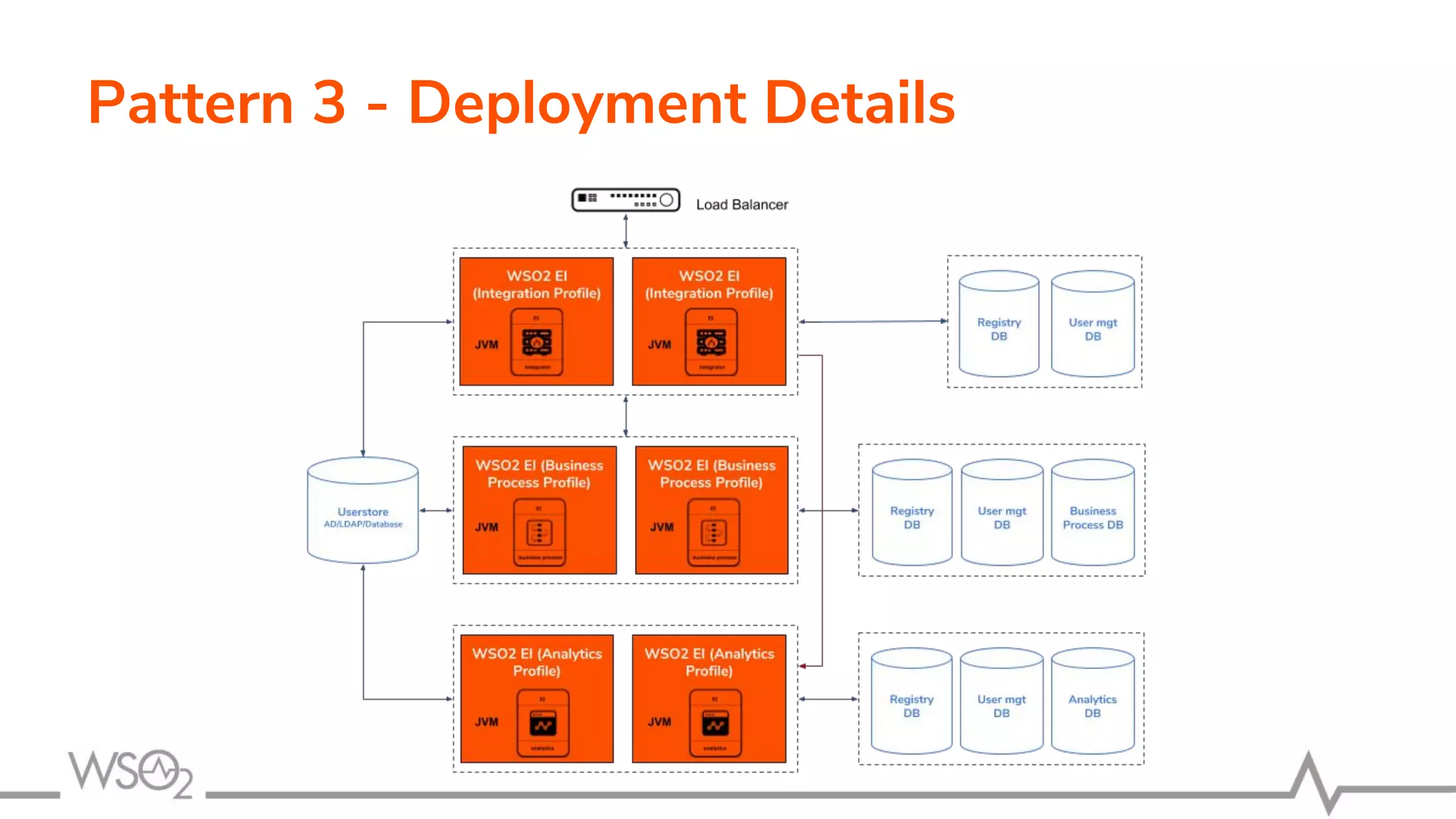
• Uses WSO2 EI Integration Profile, WSO2 EI Business
Process Profile and WSO2 EI Analytics Profile
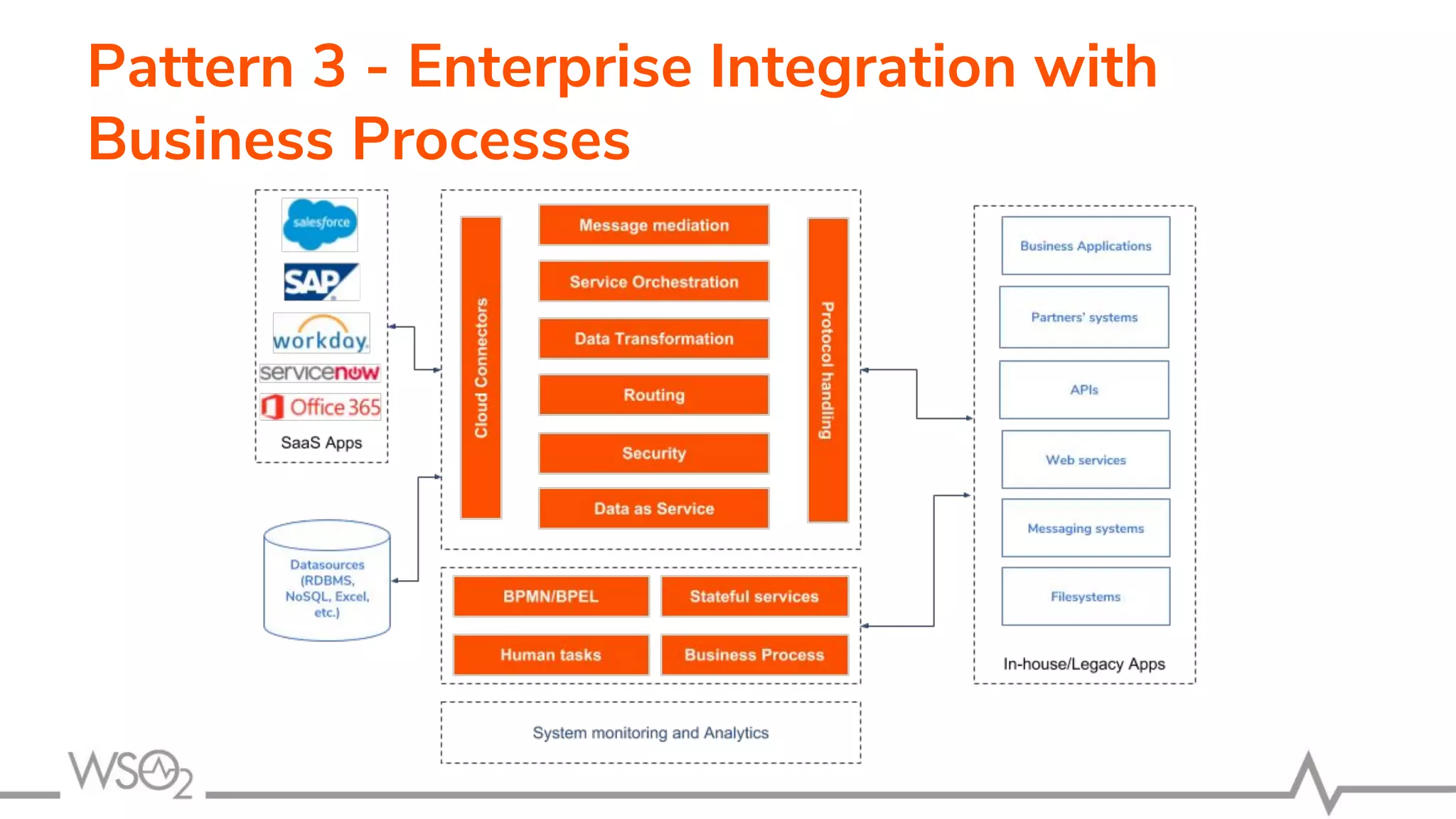
Pattern 3 - Enterprise Integration with
Business Processes
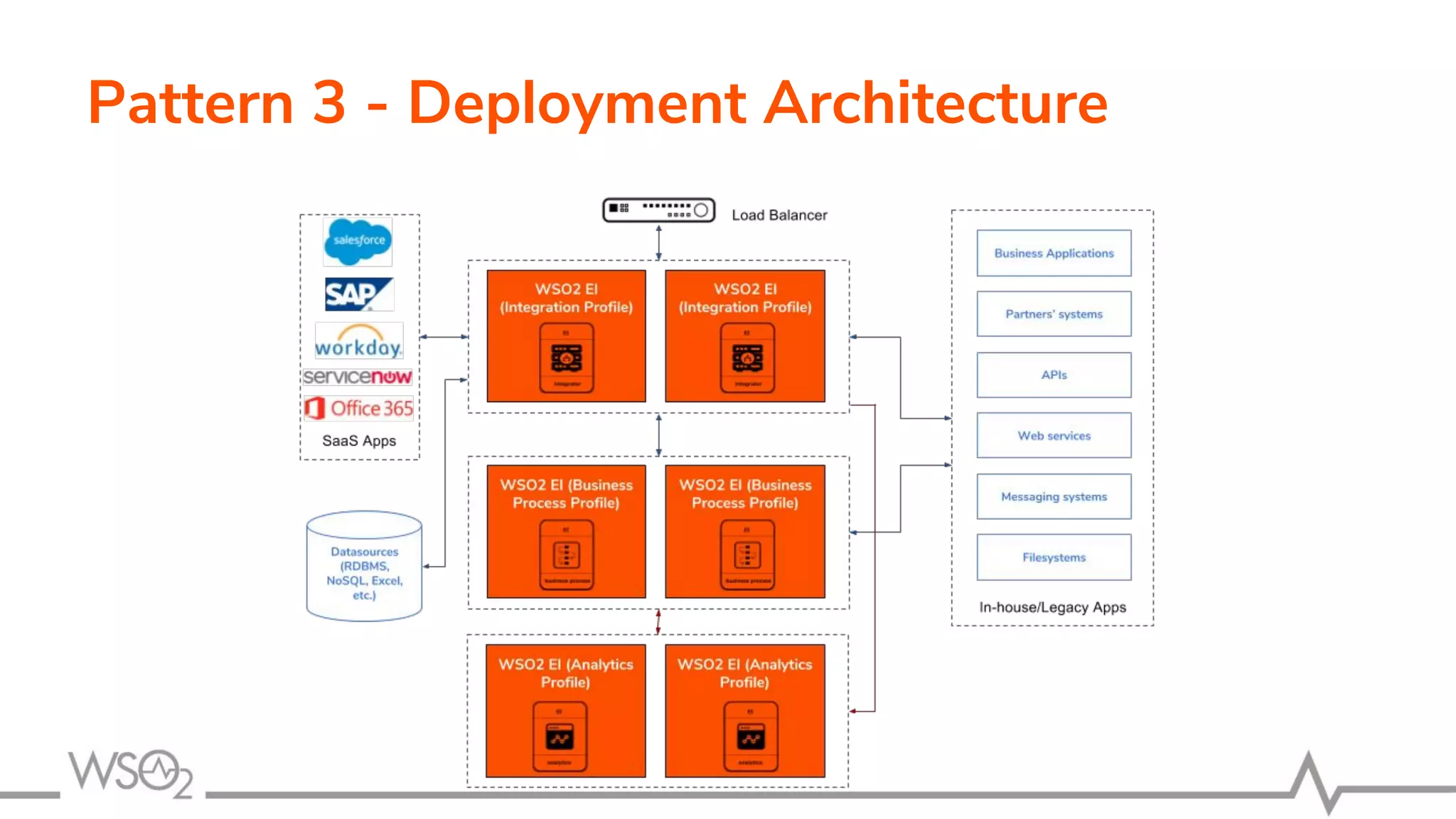
Pattern 3 - Deployment Architecture
Pattern 3 - Deployment Details
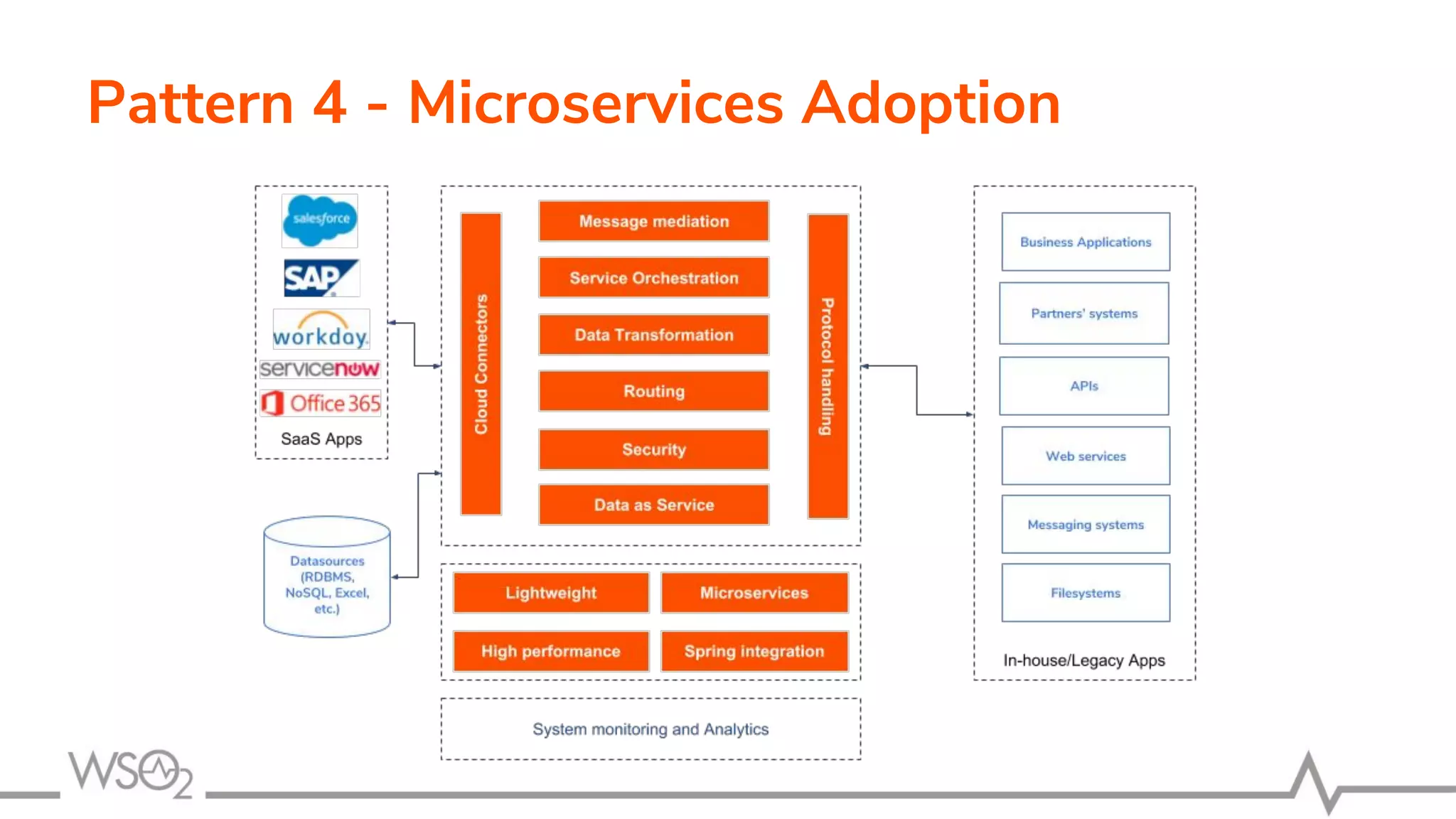
Pattern 4 - Microservices Adoption
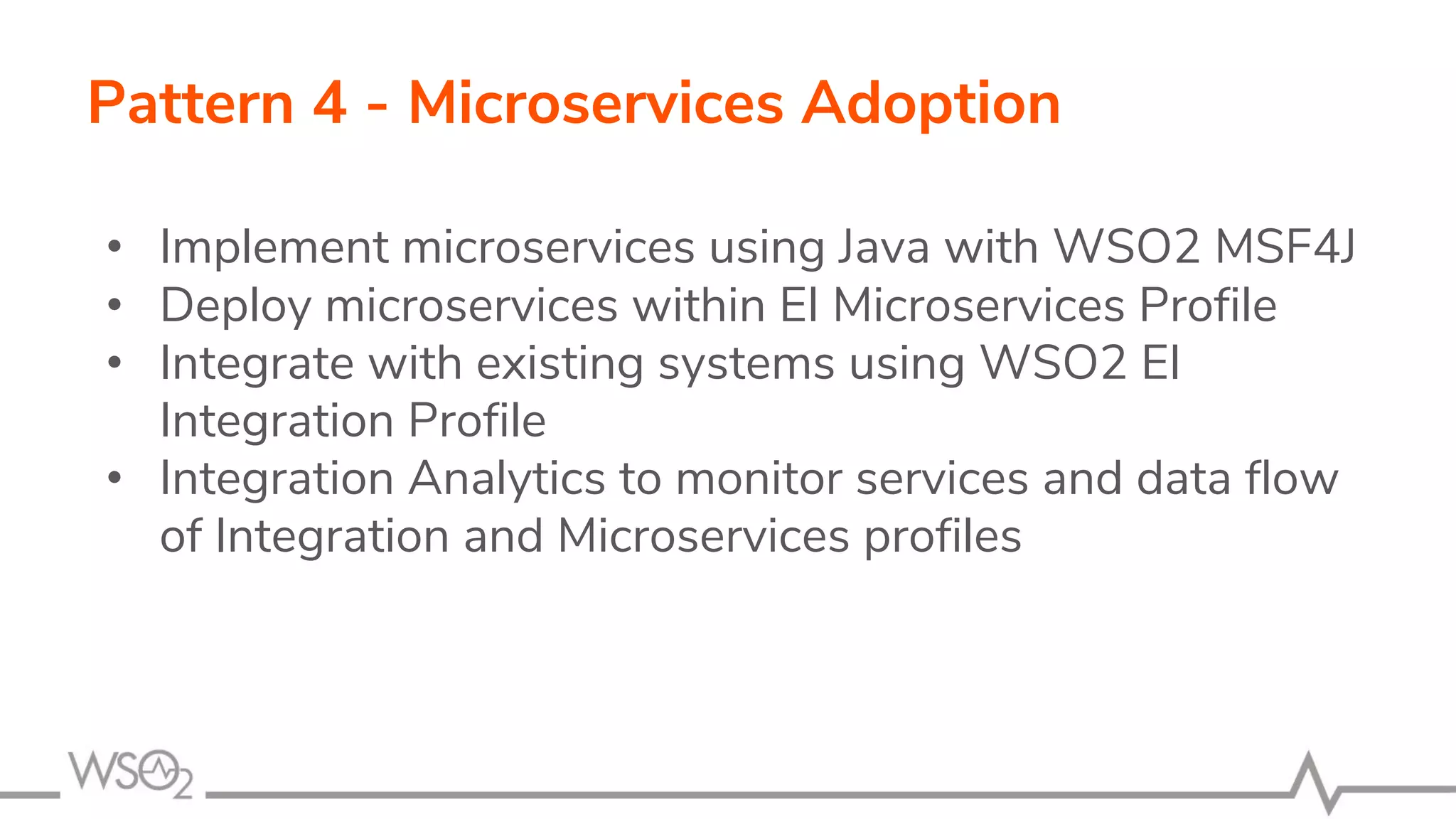
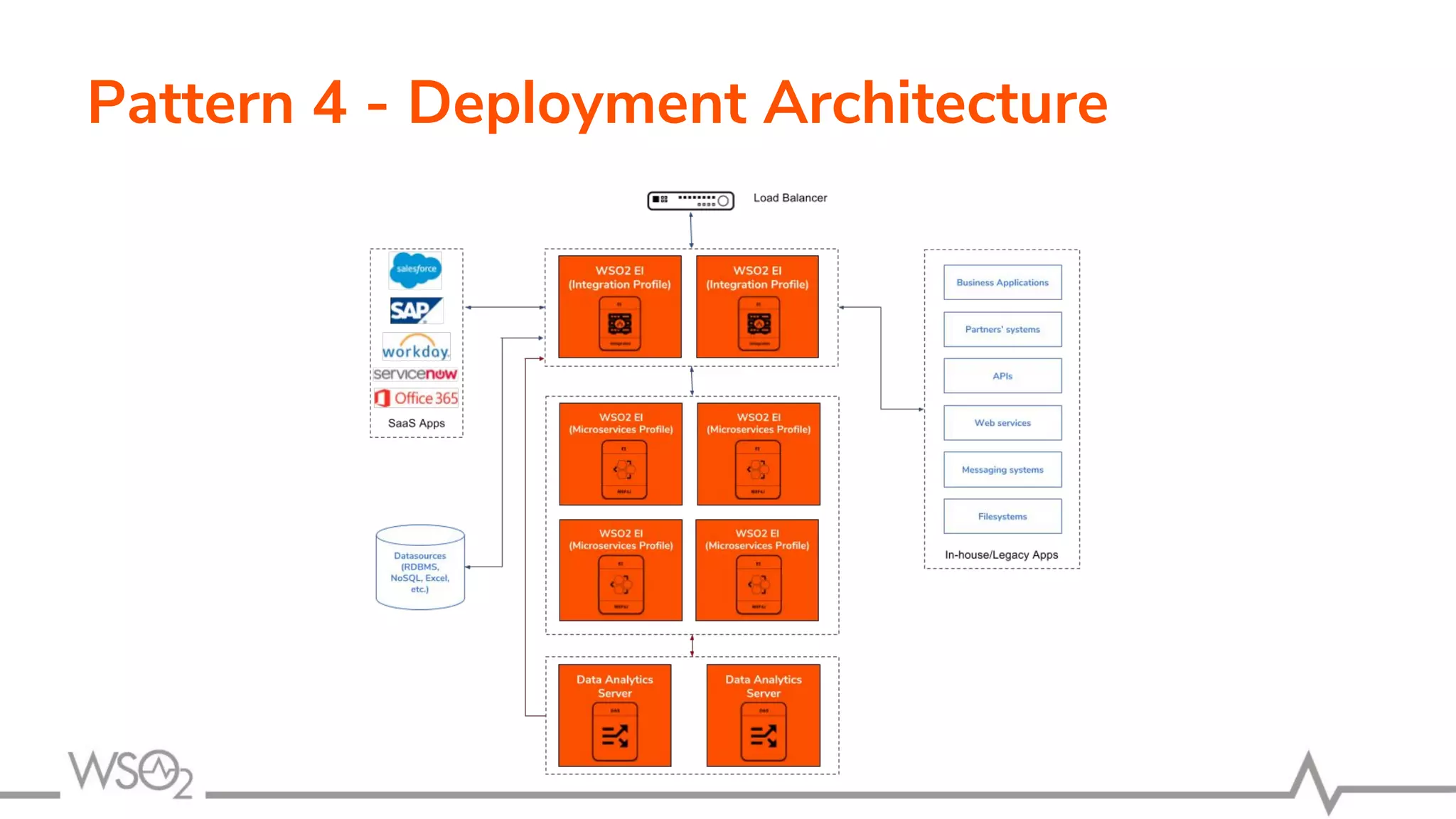
• Implement microservices using Java with WSO2 MSF4J
• Deploy microservices within EI Microservices Profile
• Integrate with existing systems using WSO2 EI
Integration Profile
• Integration Analytics to monitor services and data flow
of Integration and Microservices profiles
Pattern 4 - Deployment Architecture
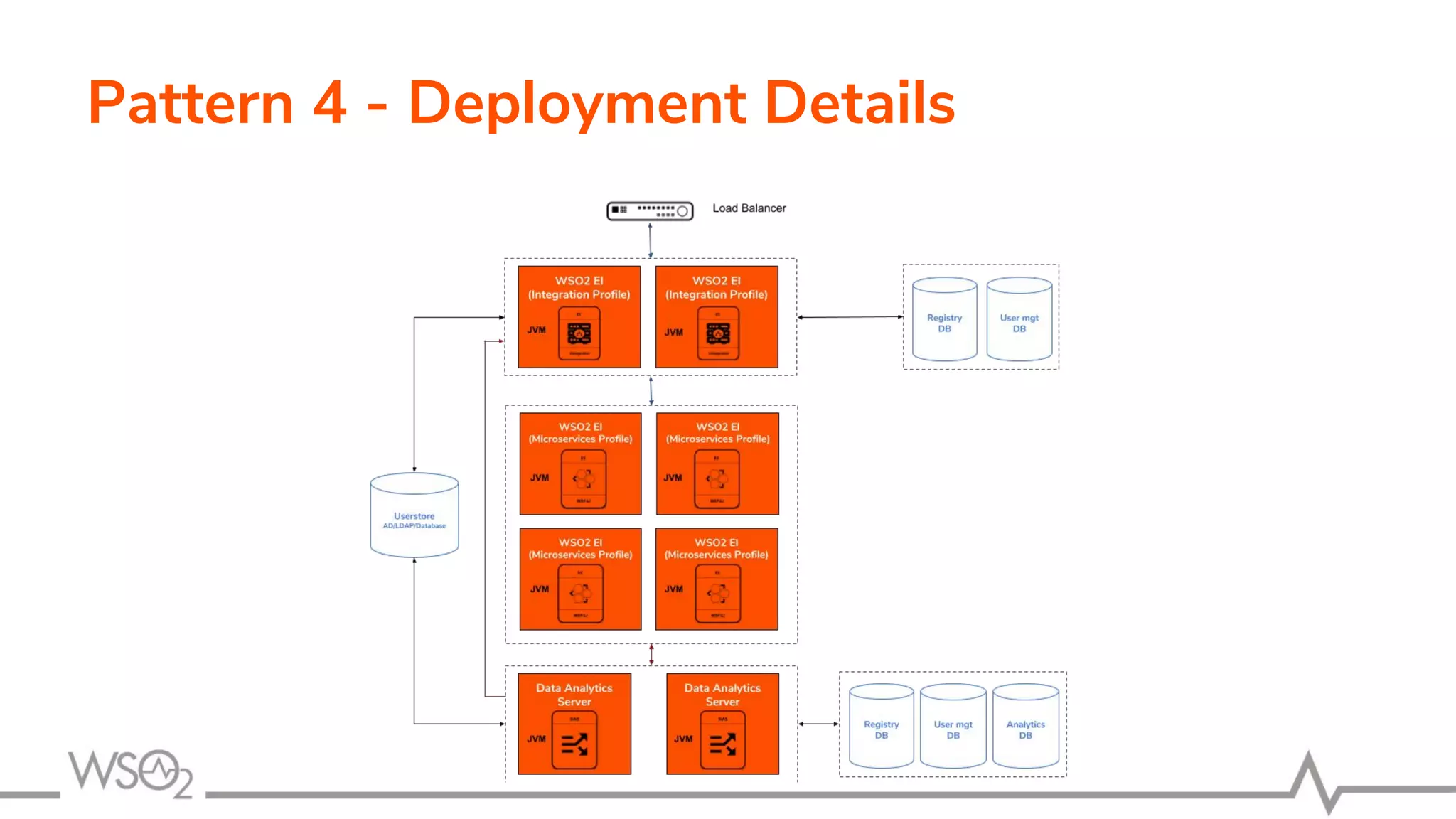
Pattern 4 - Deployment Details
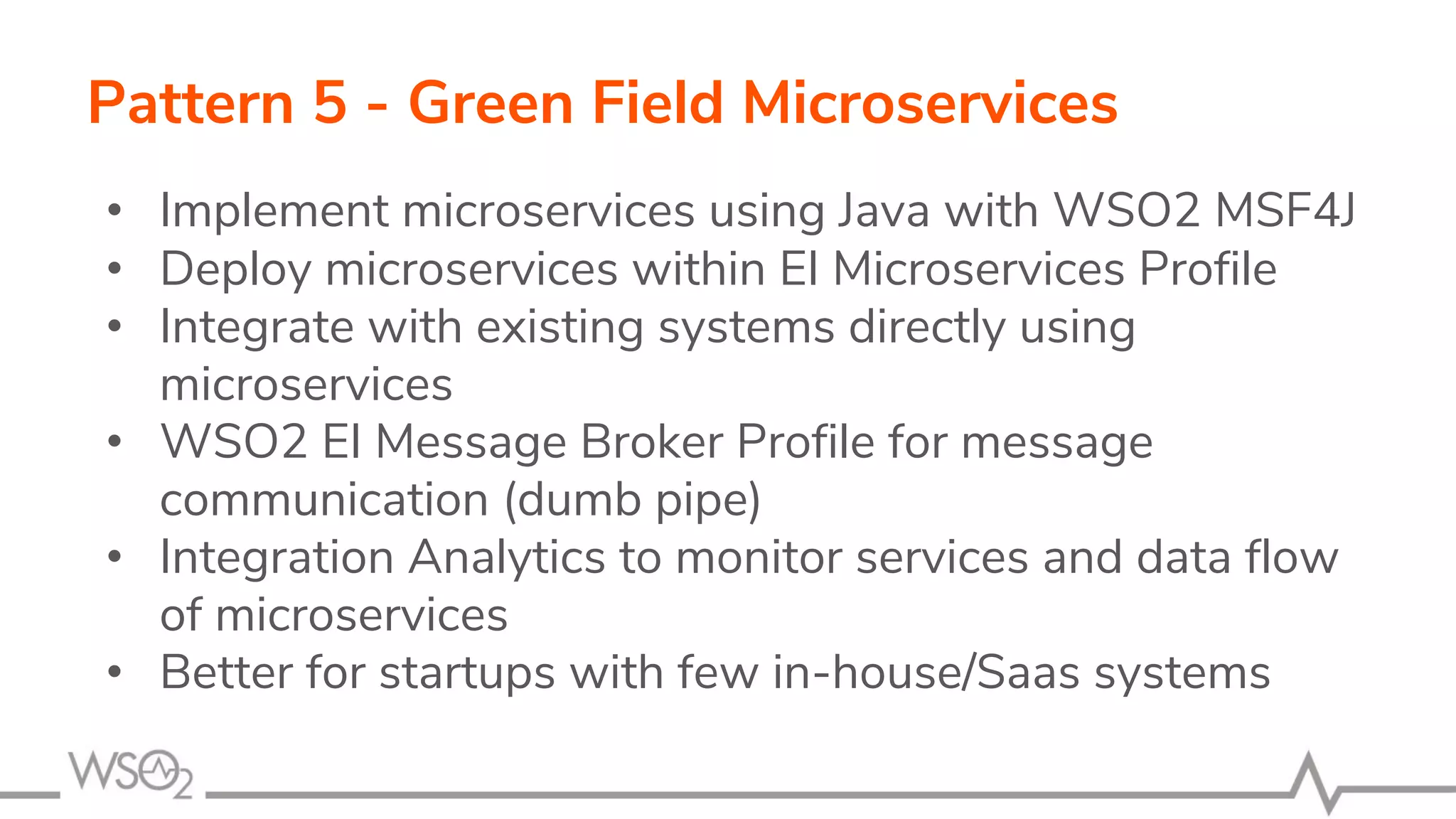
Pattern 5 - Green Field Microservices
• Implement microservices using Java with WSO2 MSF4J
• Deploy microservices within EI Microservices Profile
• Integrate with existing systems directly using
microservices
• WSO2 EI Message Broker Profile for message
communication (dumb pipe)
• Integration Analytics to monitor services and data flow
of microservices
• Better for startups with few in-house/Saas systems
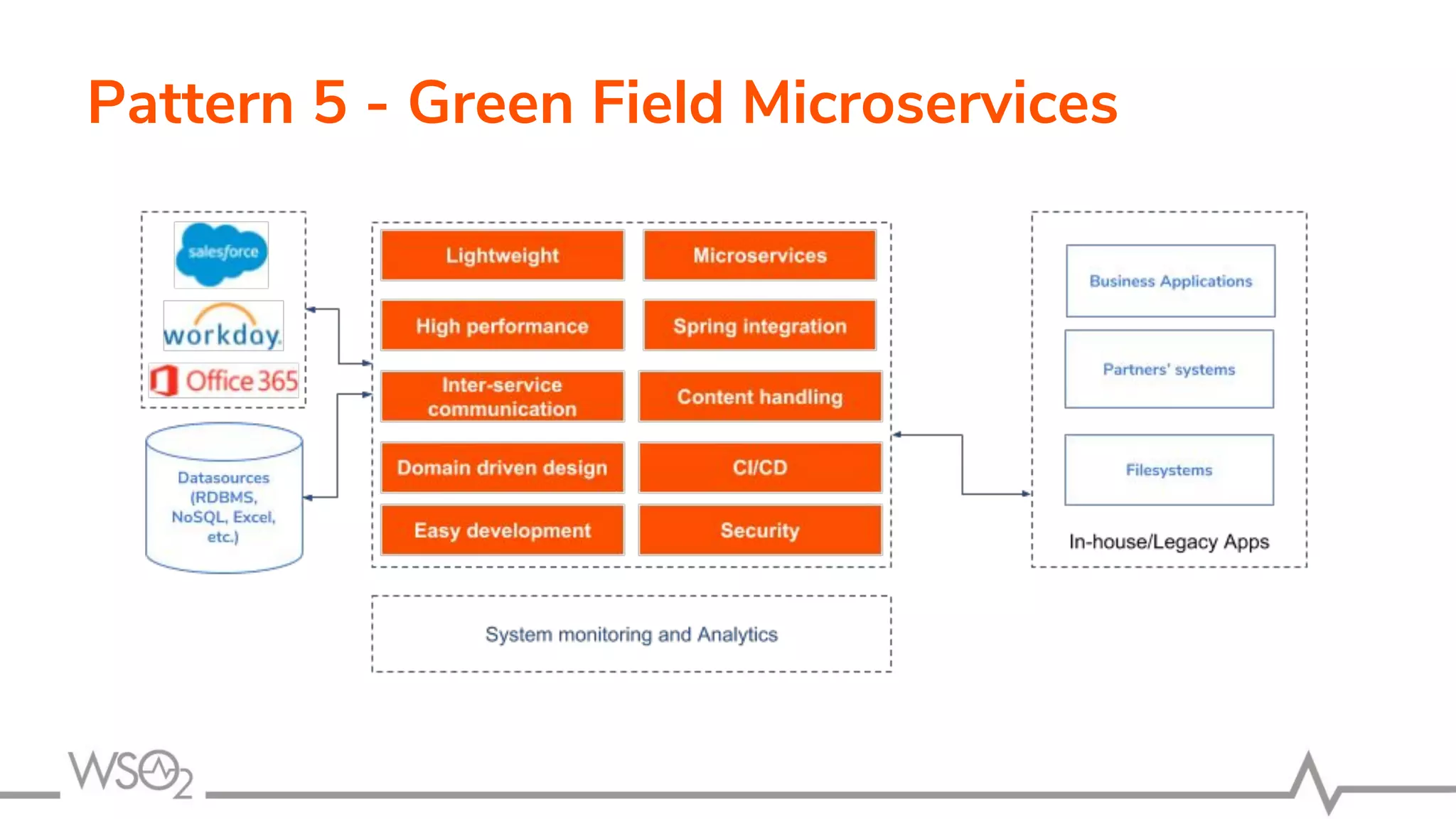
Pattern 5 - Green Field Microservices
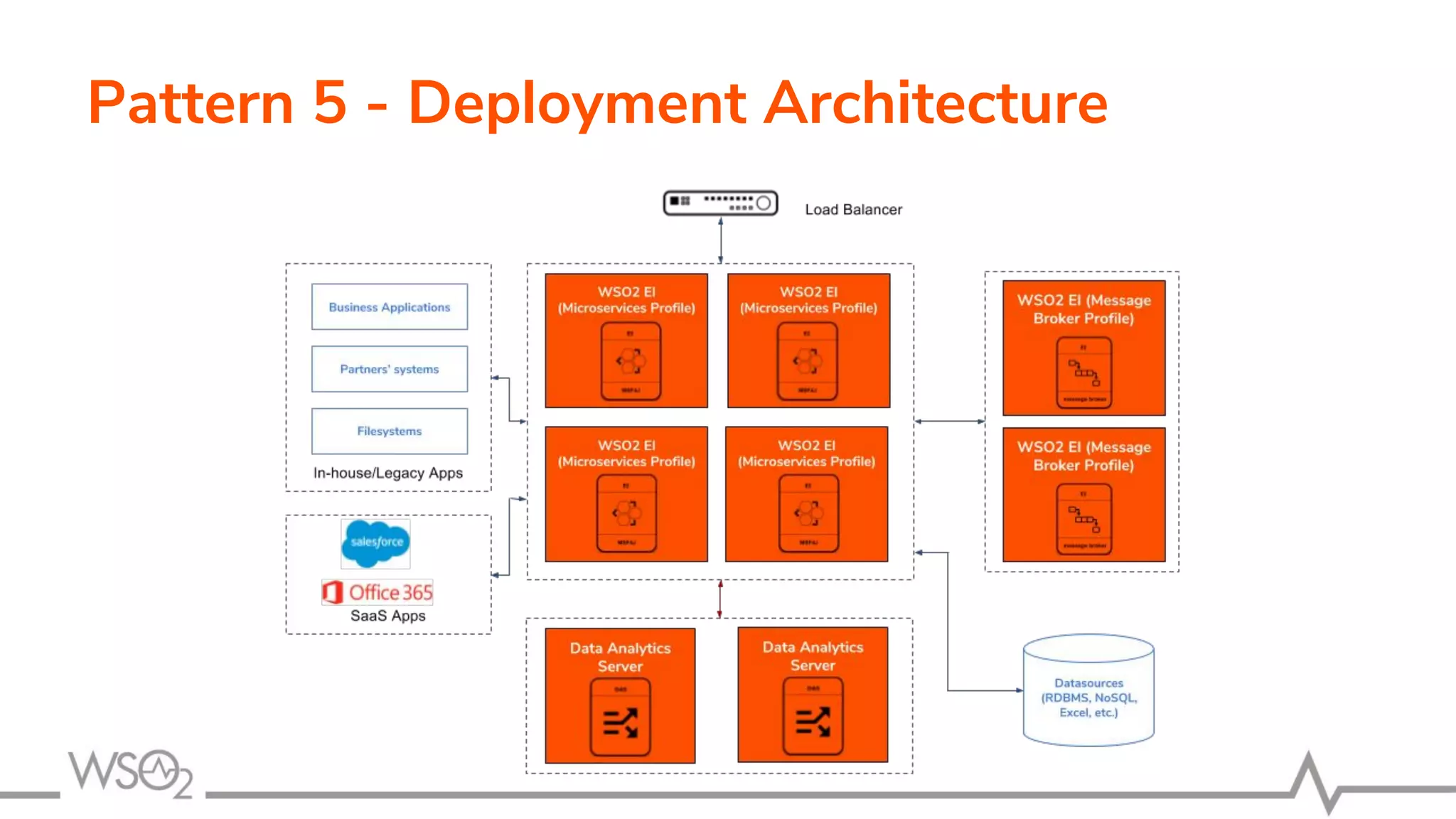
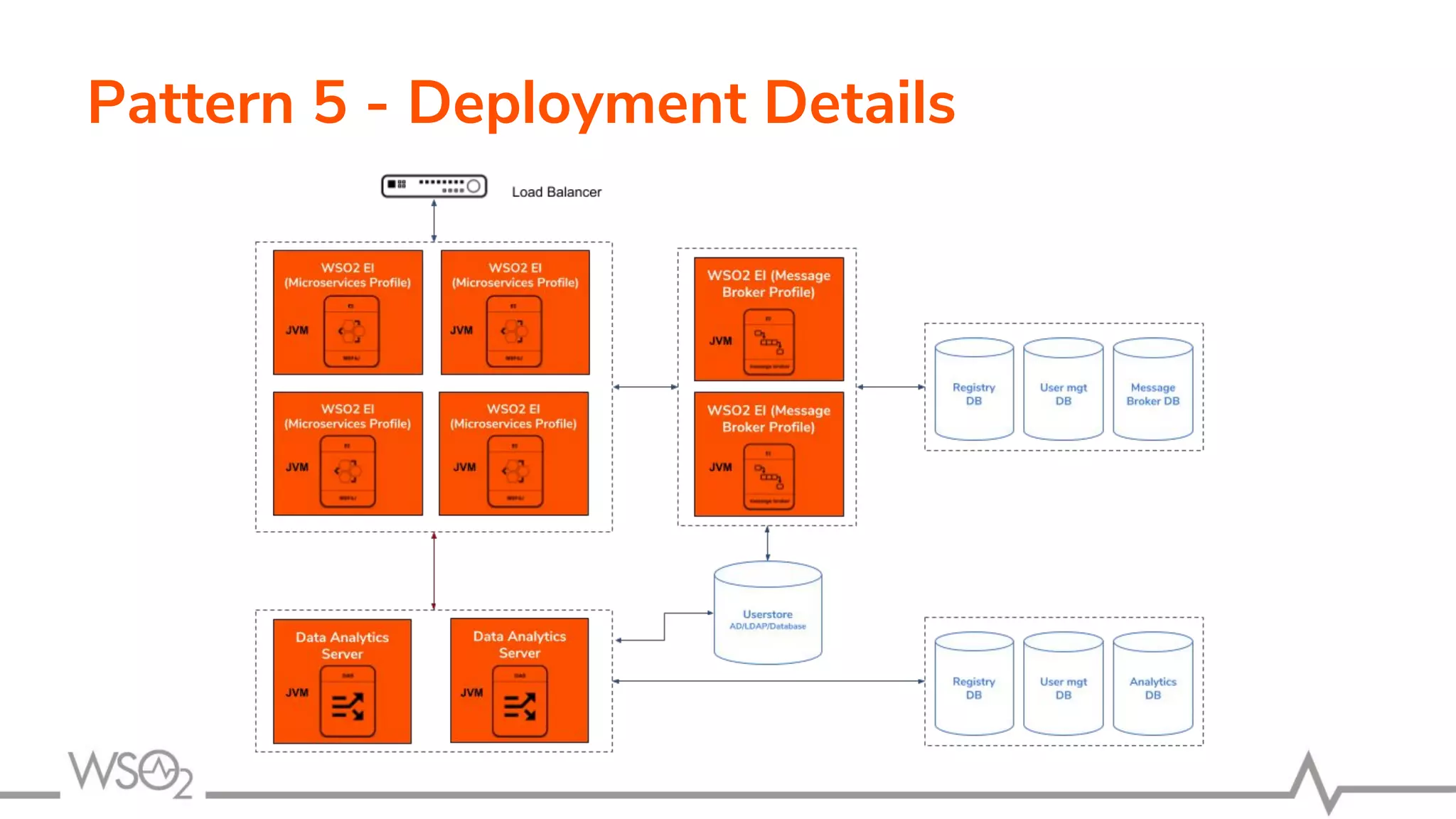
Pattern 5 - Deployment Architecture
Pattern 5 - Deployment Details
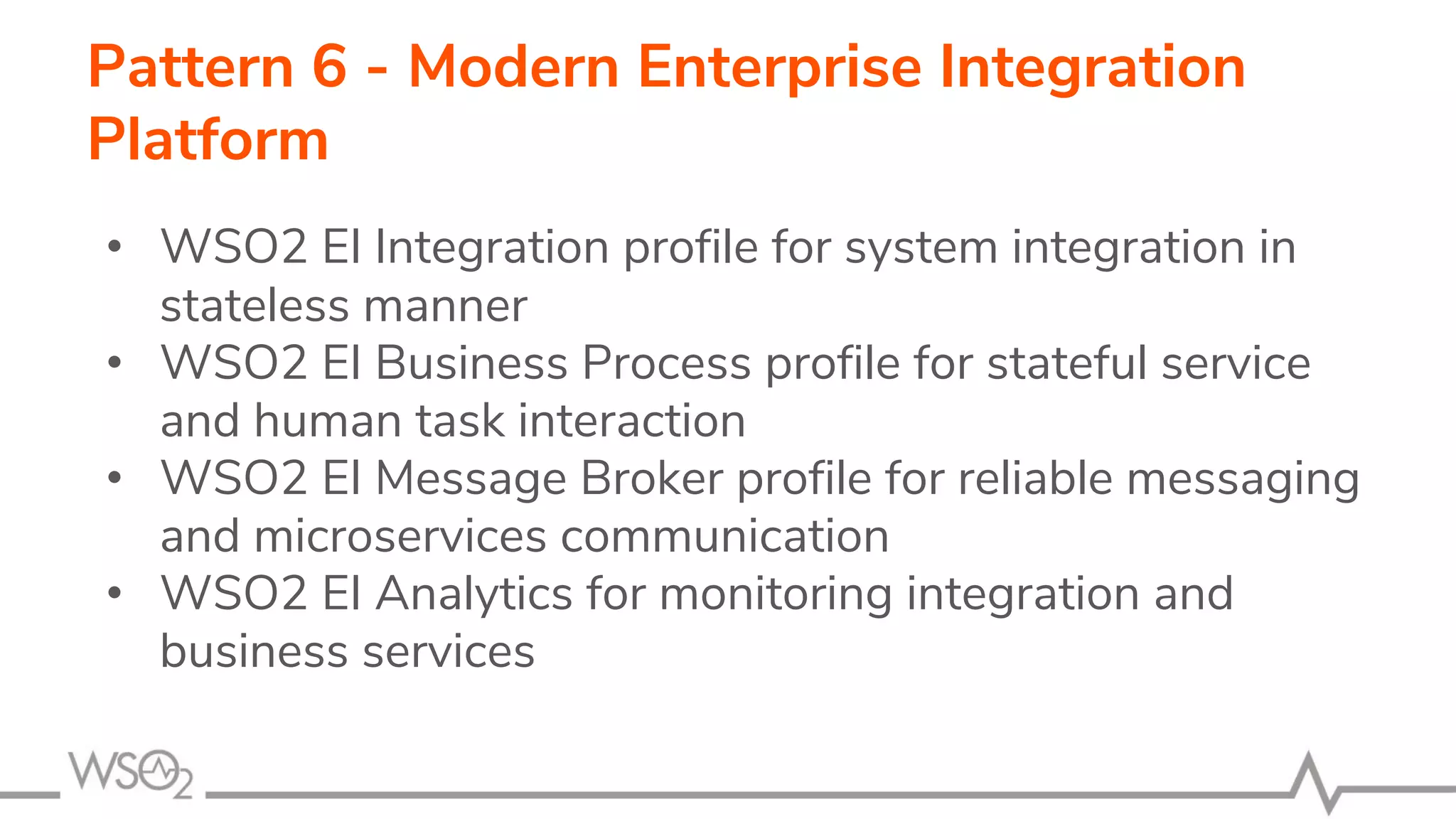
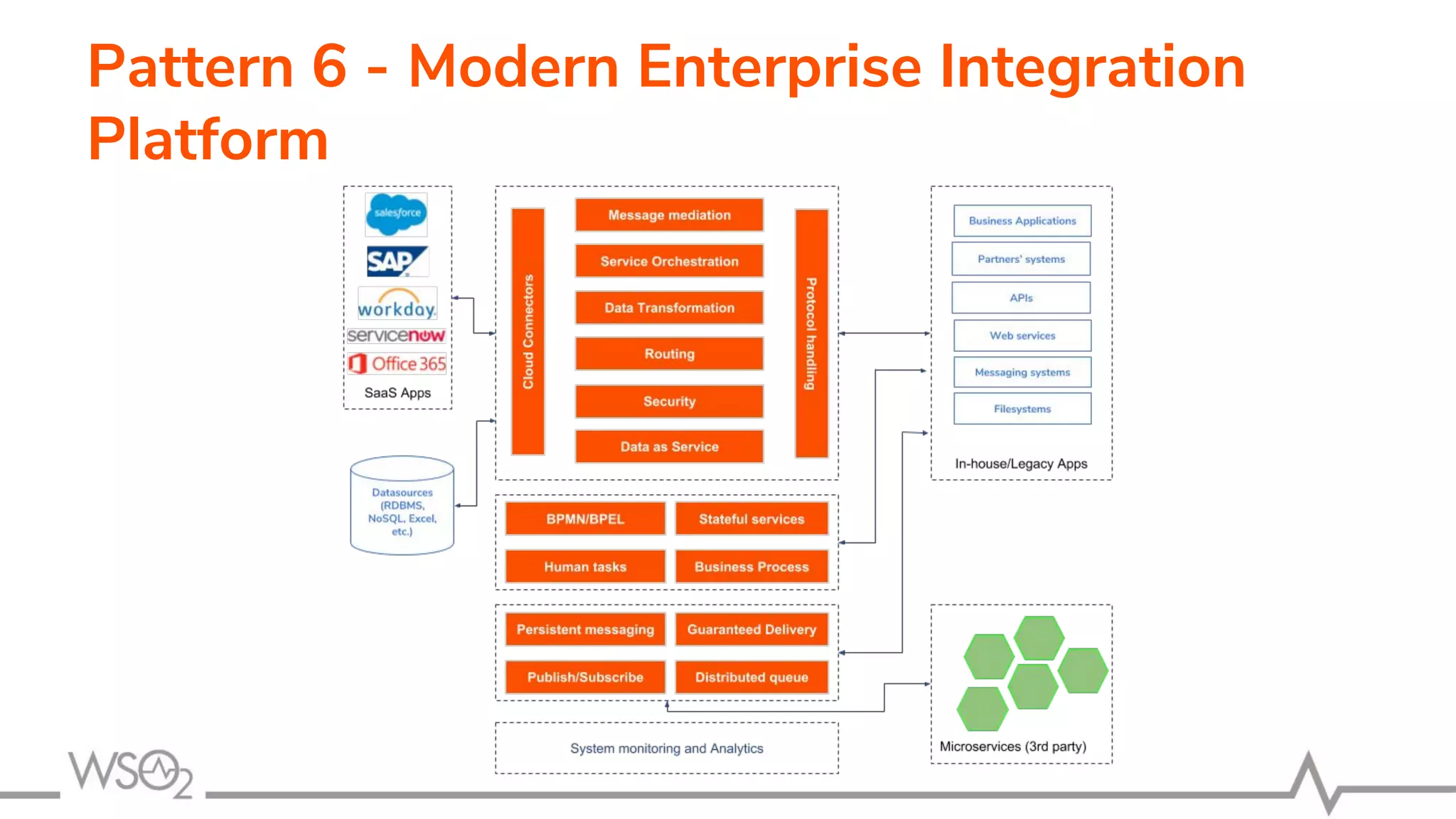
Pattern 6 - Modern Enterprise Integration
Platform
• WSO2 EI Integration profile for system integration in
stateless manner
• WSO2 EI Business Process profile for stateful service
and human task interaction
• WSO2 EI Message Broker profile for reliable messaging
and microservices communication
• WSO2 EI Analytics for monitoring integration and
business services
Pattern 6 - Modern Enterprise Integration
Platform
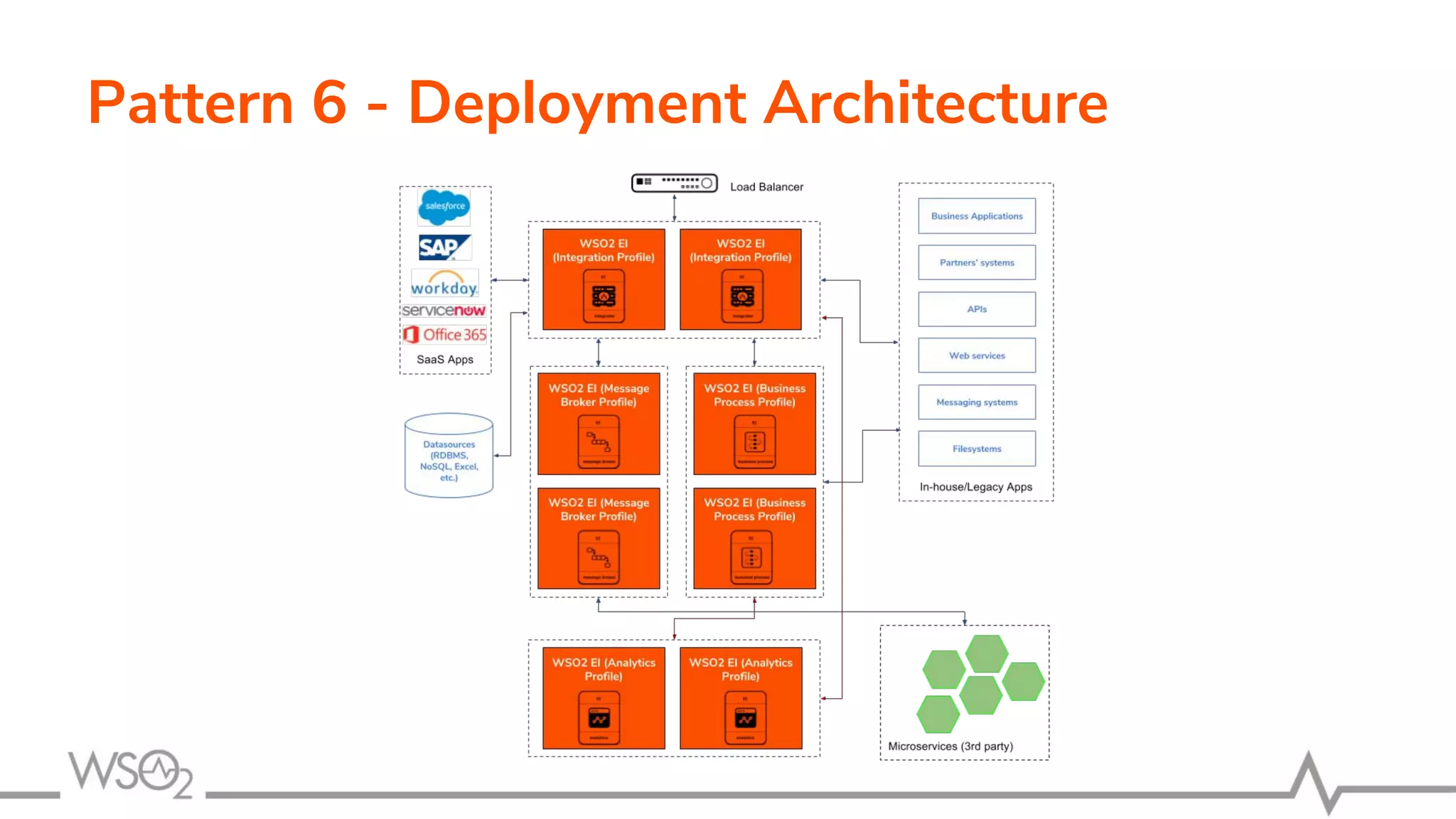
Pattern 6 - Deployment Architecture
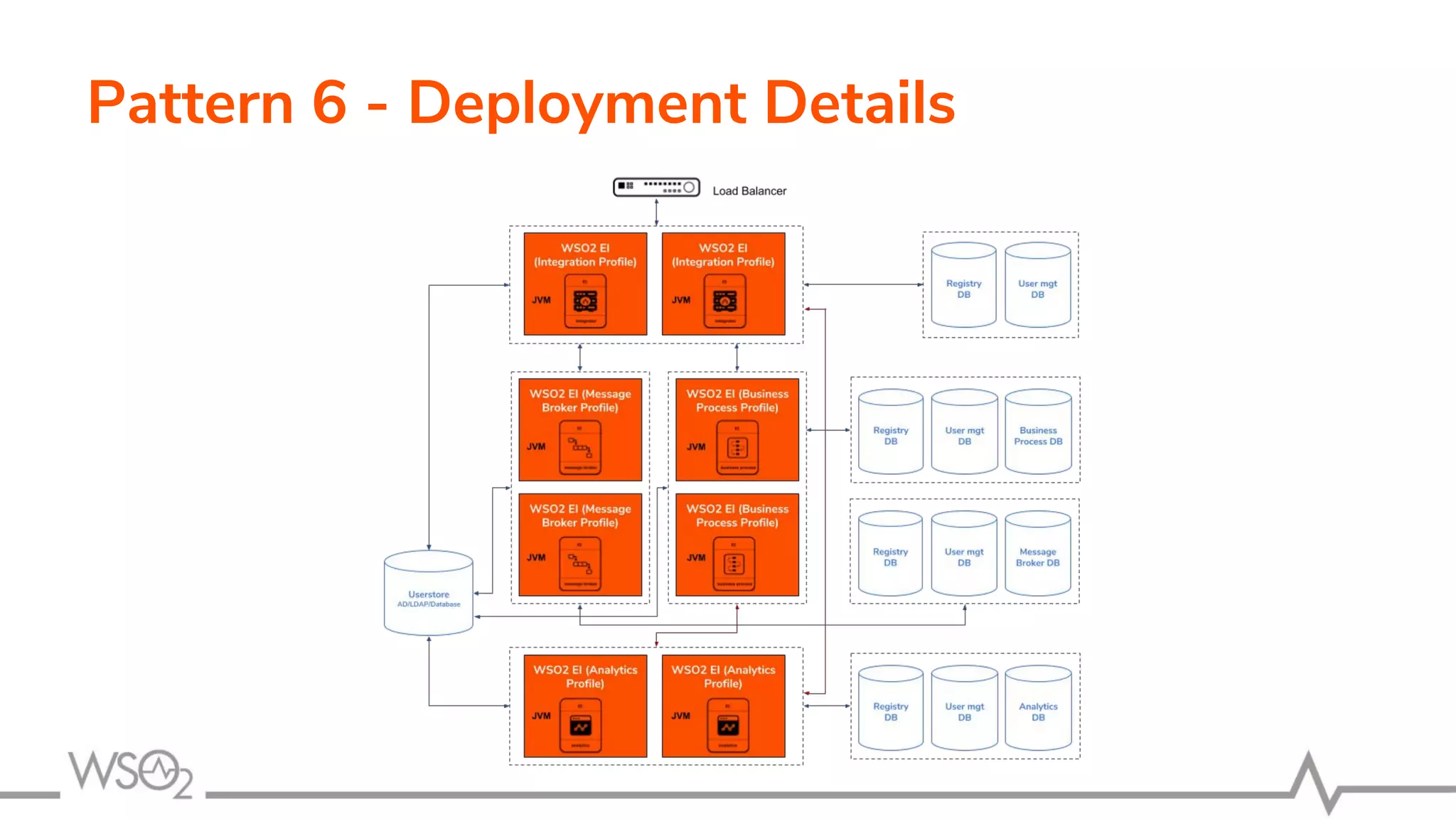
Pattern 6 - Deployment Details
Pattern 7 - Integration on the Cloud
• Fully managed infrastructure (by WSO2)
• WSO2 EI Integration Profile runs on containers in the
cloud (kubernetes on AWS)
• Shared WSO2 EI Analytics with tenant isolation
• VPN connectivity to on-premise systems
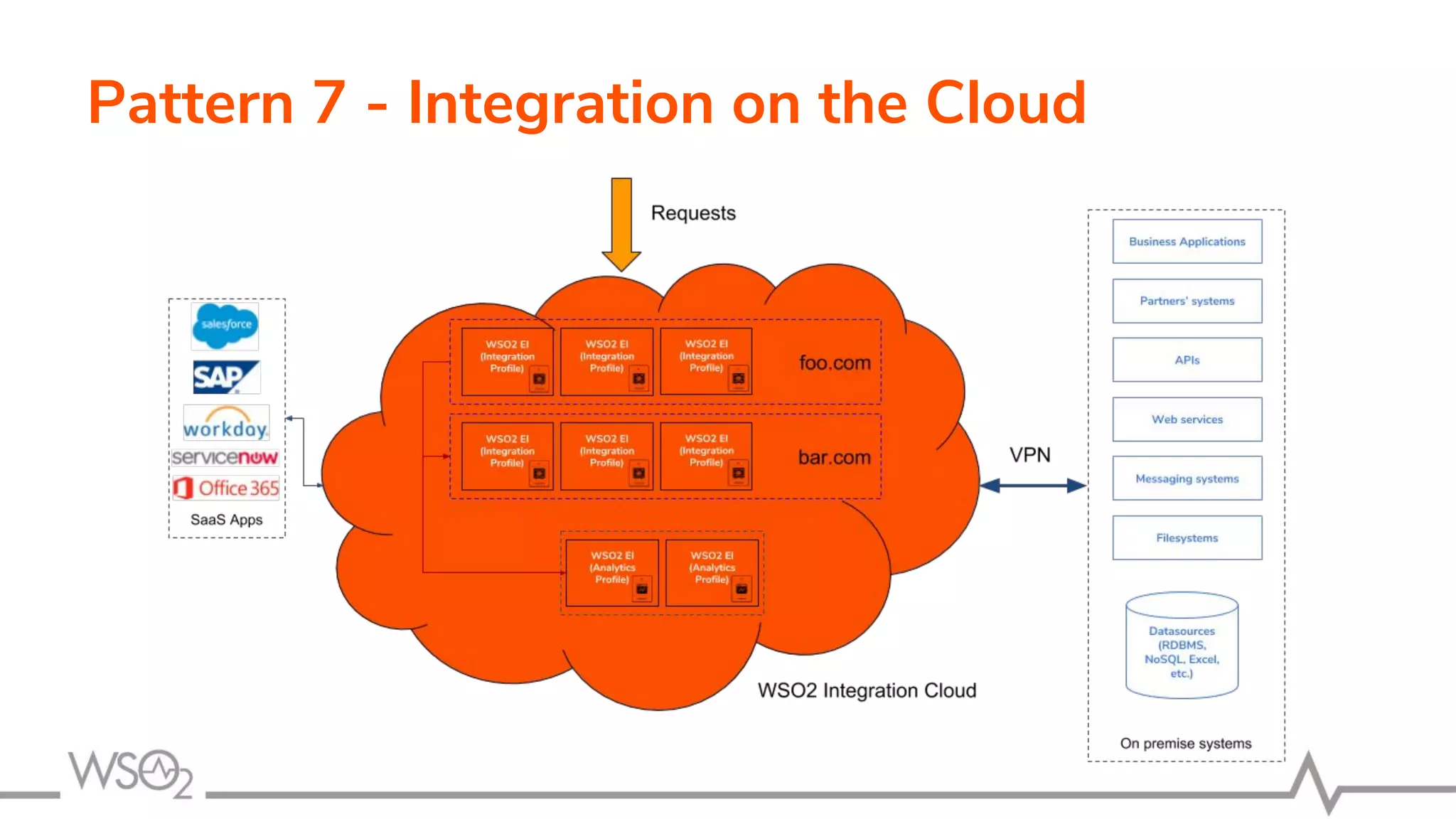
Pattern 7 - Integration on the Cloud
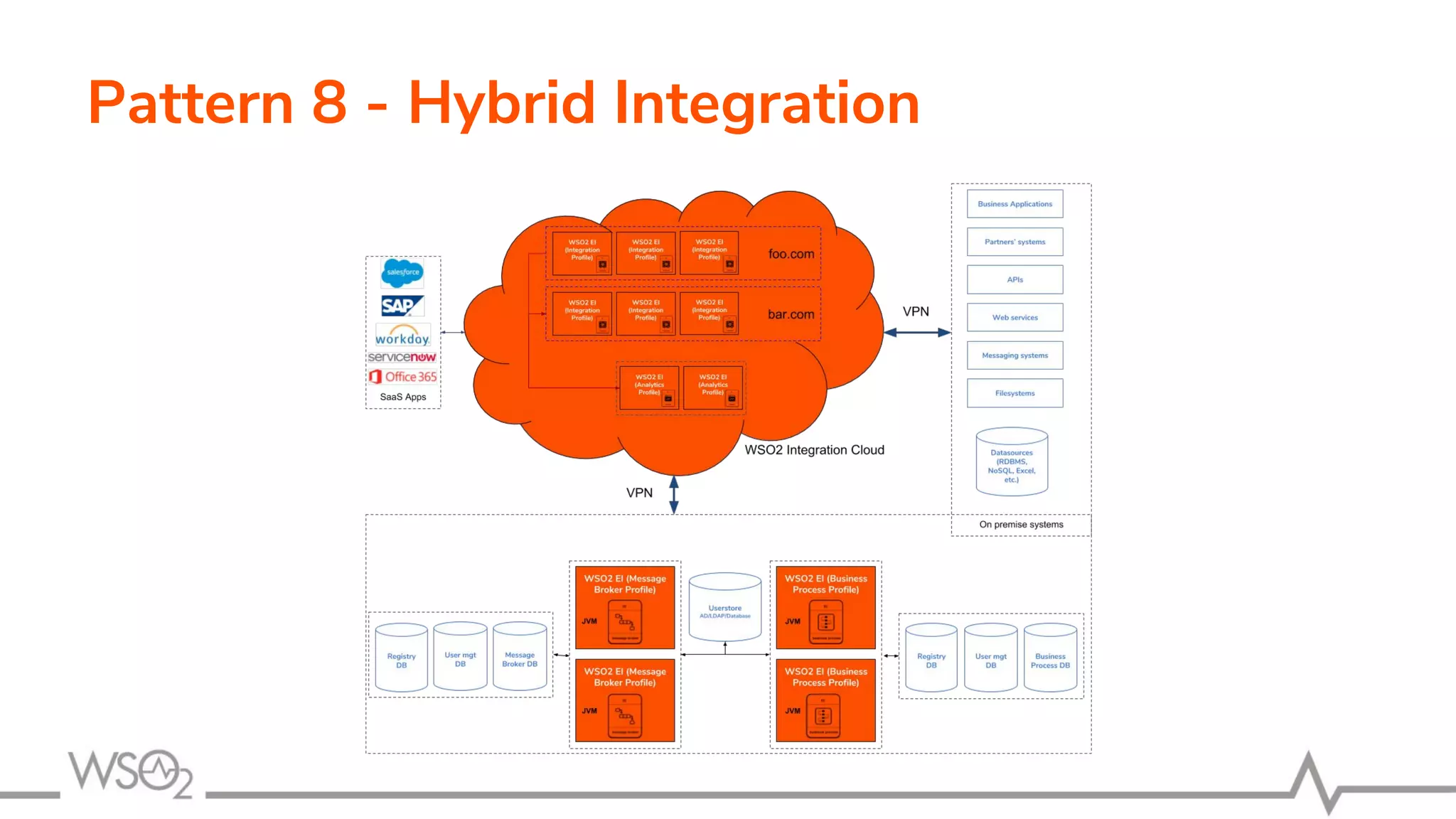
Pattern 8 - Hybrid Integration
• WSO2 EI Integration Profile runs on containers in the
cloud (Kubernetes on AWS)
• Shared WSO2 EI Analytics with tenant isolation
• VPN connectivity to on-premise systems
• Message Broker and Business Process running on
premise and connected via VPN
Pattern 8 - Hybrid Integration
THANK YOU
wso2.com

WSO2 Enterprise Integrator Deployment Patterns

  • 1.
    WSO2 Enterprise Integrator DeploymentPatterns Chanaka Fernando WSO2
  • 2.
    Agenda • Introduction toWSO2 Enterprise Integrator • Enterprise Integrator profiles • Deployment patterns – Traditional integration – Microservices architecture compatible – Modern integration
  • 3.
  • 4.
  • 5.
    WSO2 EI ValueProposition • Connect heterogeneous systems together • Better consumer experience through connected data and business processes • Digitize legacy systems: mediate legacy with modern architecture paradigms • Hybrid integration by taking on-premise data and processes into the cloud and back • Core of digital transformation
  • 6.
  • 7.
    Available profiles • Integration- System and data integration • Business Process - Long running business process implemented on BPEL, BPMN and Human tasks • Message Broker - Reliable, high performing, persistent message storage • Microservices - Host microservices implemented using Java and MSF4J • Analytics - Analyze services and data flowing through the system
  • 8.
    Enterprise Integrator Tooling •Separate binary download • Includes eclipse based IDE • GUI based tool to – Design – Implement – Debug – Test – Deploy artifacts
  • 9.
  • 10.
    Pattern 1 -Enterprise Integration (Systems + Data) • Stateless service integration • Integrate legacy systems, SaaS APIs, and data sources (RDBMS, NoSQL, Excel) • Use WSO2 EI Integration Profile and WSO2 EI Analytics • Caters good portion of the integration requirements
  • 11.
    Pattern 1 -Enterprise Integration (Systems + Data)
  • 12.
    Pattern 1 -Deployment Architecture
  • 13.
    Pattern 1 -Deployment Details
  • 14.
    Pattern 2 -Traditional Integration with Message Reliability • Message reliability is guaranteed through message broker • JMS heavy enterprises can bridge into modern SaaS world • Publish-Subscribe type of messaging • Uses WSO2 EI Integration Profile, WSO2 EI Message Broker Profile and WSO2 EI Analytics Profile
  • 15.
    Pattern 2 -Enterprise Integration with Message Reliability
  • 16.
    Pattern 2 -Deployment Architecture
  • 17.
    Pattern 2 -Deployment Details
  • 18.
    Pattern 3 -Enterprise Integration with Business Processes • Stateless as well as stateful service implementation • Human integration through human tasks • Implement business processes with BPEL and/or BPMN • Uses WSO2 EI Integration Profile, WSO2 EI Business Process Profile and WSO2 EI Analytics Profile
  • 19.
    Pattern 3 -Enterprise Integration with Business Processes
  • 20.
    Pattern 3 -Deployment Architecture
  • 21.
    Pattern 3 -Deployment Details
  • 22.
    Pattern 4 -Microservices Adoption
  • 23.
    Pattern 4 -Microservices Adoption • Implement microservices using Java with WSO2 MSF4J • Deploy microservices within EI Microservices Profile • Integrate with existing systems using WSO2 EI Integration Profile • Integration Analytics to monitor services and data flow of Integration and Microservices profiles
  • 24.
    Pattern 4 -Deployment Architecture
  • 25.
    Pattern 4 -Deployment Details
  • 26.
    Pattern 5 -Green Field Microservices • Implement microservices using Java with WSO2 MSF4J • Deploy microservices within EI Microservices Profile • Integrate with existing systems directly using microservices • WSO2 EI Message Broker Profile for message communication (dumb pipe) • Integration Analytics to monitor services and data flow of microservices • Better for startups with few in-house/Saas systems
  • 27.
    Pattern 5 -Green Field Microservices
  • 28.
    Pattern 5 -Deployment Architecture
  • 29.
    Pattern 5 -Deployment Details
  • 30.
    Pattern 6 -Modern Enterprise Integration Platform • WSO2 EI Integration profile for system integration in stateless manner • WSO2 EI Business Process profile for stateful service and human task interaction • WSO2 EI Message Broker profile for reliable messaging and microservices communication • WSO2 EI Analytics for monitoring integration and business services
  • 31.
    Pattern 6 -Modern Enterprise Integration Platform
  • 32.
    Pattern 6 -Deployment Architecture
  • 33.
    Pattern 6 -Deployment Details
  • 34.
    Pattern 7 -Integration on the Cloud • Fully managed infrastructure (by WSO2) • WSO2 EI Integration Profile runs on containers in the cloud (kubernetes on AWS) • Shared WSO2 EI Analytics with tenant isolation • VPN connectivity to on-premise systems
  • 35.
    Pattern 7 -Integration on the Cloud
  • 36.
    Pattern 8 -Hybrid Integration • WSO2 EI Integration Profile runs on containers in the cloud (Kubernetes on AWS) • Shared WSO2 EI Analytics with tenant isolation • VPN connectivity to on-premise systems • Message Broker and Business Process running on premise and connected via VPN
  • 37.
    Pattern 8 -Hybrid Integration
  • 38.