Seventh Grade Writing Standards Rene Malamed Tech 290/Cohort 21 September 17, 2008
Standards 2.0 Writing Applications (Genres and Their Characteristics)   2.1 Write fictional or autobiographical narratives 2.2 Write responses to literature 2.4 Write persuasive compositions 2.5 Write summaries of reading materials
Four Types of Writing Narrative Persuasive Summary Response to Literature
Narrative A story Beginning, middle, end No color-coding! First Person Multi-paragraph
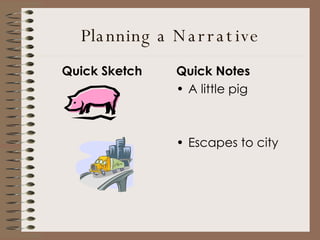
Planning a Narrative Quick Notes A little pig Escapes to city Quick Sketch
Elements of Narratives Plot Dialogue Characters Setting
Narrative Must-haves Description Show, don’t tell! An interesting start Not “once upon a time” or “Hi, my name is…” Your character reaches a goal, solves a problem
Persuasive Multi-Paragraph Essay Thesis states a clear position Arguments support thesis Counterpoints addressed
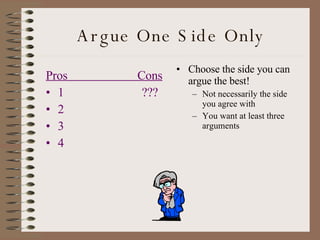
Argue One Side Only Choose the side you can argue the best! Not necessarily the side you agree with You want at least three arguments Pros  Cons 1 ??? 2 3 4
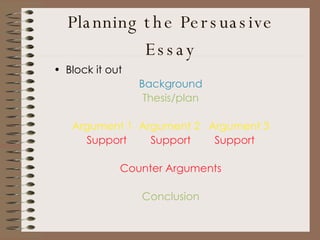
Planning the Persuasive Essay Block it out Background Thesis/plan Argument 1   Argument 2  Argument 3 Support Support Support Counter Arguments Conclusion
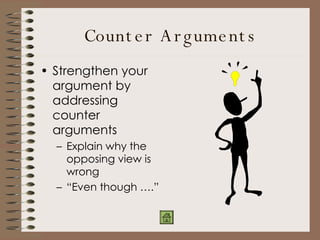
Counter Arguments Strengthen your argument by addressing counter arguments Explain why the opposing view is wrong “ Even though ….”
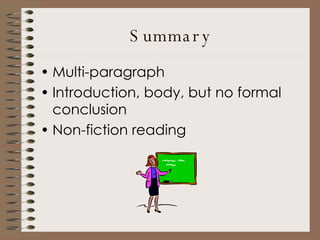
Summary Multi-paragraph Introduction, body, but no formal conclusion Non-fiction reading
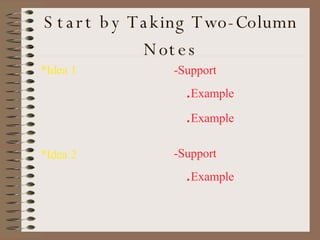
Start by Taking Two-Column Notes *Idea 1 *Idea 2 -Support . Example . Example -Support . Example
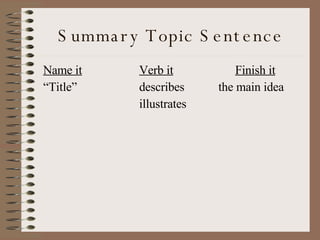
Summary Topic Sentence Name it Verb it Finish it “ Title” describes   the main idea illustrates
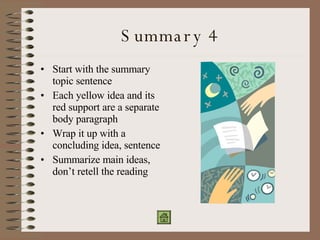
Summary 4 Start with the summary topic sentence Each yellow idea and its red support are a separate body paragraph Wrap it up with a concluding idea, sentence Summarize main ideas, don’t retell the reading
Response to Literature Introduce (begin your thesis with the summary topic sentence : “Of Mice and Men  captures the true meaning of friendship.” Find two to three pieces of evidence to support your thesis statement Turn these pieces of evidence into your plan sentence
Planning the Response Follow the same structure as the other expository essays -Green introduction ( Thesis and plan ) -Yellow and red body paragraphs ( Transition topic sentences  and  examples, explanations, etc. - Green conclusion
Finding Evidence to Support Thesis Highlight quotes in the reading that support your ideas Use the quotes as “reds” to support your main points Don’t forget to explain and elaborate on the quotes to further support your point
Making Connections Try to find a connection between the reading and something else Text to self Text to text Text to world You can incorporate this into your essay as evidence if it supports your thesis
References  Images Clipart in Microsoft Powerpoint Instructional strategies Step Up To Writing

Writing Standards For Seventh Grade

  • 1.
    Seventh Grade WritingStandards Rene Malamed Tech 290/Cohort 21 September 17, 2008
  • 2.
    Standards 2.0 WritingApplications (Genres and Their Characteristics) 2.1 Write fictional or autobiographical narratives 2.2 Write responses to literature 2.4 Write persuasive compositions 2.5 Write summaries of reading materials
  • 3.
    Four Types ofWriting Narrative Persuasive Summary Response to Literature
  • 4.
    Narrative A storyBeginning, middle, end No color-coding! First Person Multi-paragraph
  • 5.
    Planning a NarrativeQuick Notes A little pig Escapes to city Quick Sketch
  • 6.
    Elements of NarrativesPlot Dialogue Characters Setting
  • 7.
    Narrative Must-haves DescriptionShow, don’t tell! An interesting start Not “once upon a time” or “Hi, my name is…” Your character reaches a goal, solves a problem
  • 8.
    Persuasive Multi-Paragraph EssayThesis states a clear position Arguments support thesis Counterpoints addressed
  • 9.
    Argue One SideOnly Choose the side you can argue the best! Not necessarily the side you agree with You want at least three arguments Pros Cons 1 ??? 2 3 4
  • 10.
    Planning the PersuasiveEssay Block it out Background Thesis/plan Argument 1 Argument 2 Argument 3 Support Support Support Counter Arguments Conclusion
  • 11.
    Counter Arguments Strengthenyour argument by addressing counter arguments Explain why the opposing view is wrong “ Even though ….”
  • 12.
    Summary Multi-paragraph Introduction,body, but no formal conclusion Non-fiction reading
  • 13.
    Start by TakingTwo-Column Notes *Idea 1 *Idea 2 -Support . Example . Example -Support . Example
  • 14.
    Summary Topic SentenceName it Verb it Finish it “ Title” describes the main idea illustrates
  • 15.
    Summary 4 Startwith the summary topic sentence Each yellow idea and its red support are a separate body paragraph Wrap it up with a concluding idea, sentence Summarize main ideas, don’t retell the reading
  • 16.
    Response to LiteratureIntroduce (begin your thesis with the summary topic sentence : “Of Mice and Men captures the true meaning of friendship.” Find two to three pieces of evidence to support your thesis statement Turn these pieces of evidence into your plan sentence
  • 17.
    Planning the ResponseFollow the same structure as the other expository essays -Green introduction ( Thesis and plan ) -Yellow and red body paragraphs ( Transition topic sentences and examples, explanations, etc. - Green conclusion
  • 18.
    Finding Evidence toSupport Thesis Highlight quotes in the reading that support your ideas Use the quotes as “reds” to support your main points Don’t forget to explain and elaborate on the quotes to further support your point
  • 19.
    Making Connections Tryto find a connection between the reading and something else Text to self Text to text Text to world You can incorporate this into your essay as evidence if it supports your thesis
  • 20.
    References ImagesClipart in Microsoft Powerpoint Instructional strategies Step Up To Writing