Writing Online Campaign Plans
Overview of a Campaign Plan, pt 1 Goal Target Audiences Who are you mobilizing to advocate/take action? Which policymakers are you trying to persuade? Actions and channels Message Top line Additional messages
Overview of a Campaign Plan, pt 2 Channels Website Email Social Media Offline (Phone, Direct Mail, etc.) Creative Website Ads Email, etc. Success Metrics Budget and Timeline
Campaign Goal What are you specifically trying to accomplish? Legislation defeated or passed? Change corporate policy Raise money Raise awareness on a specific issue Grow your contact list Recruit volunteers Elect a candidate Pass /defeat a referendum Note: You may have multiple goals.
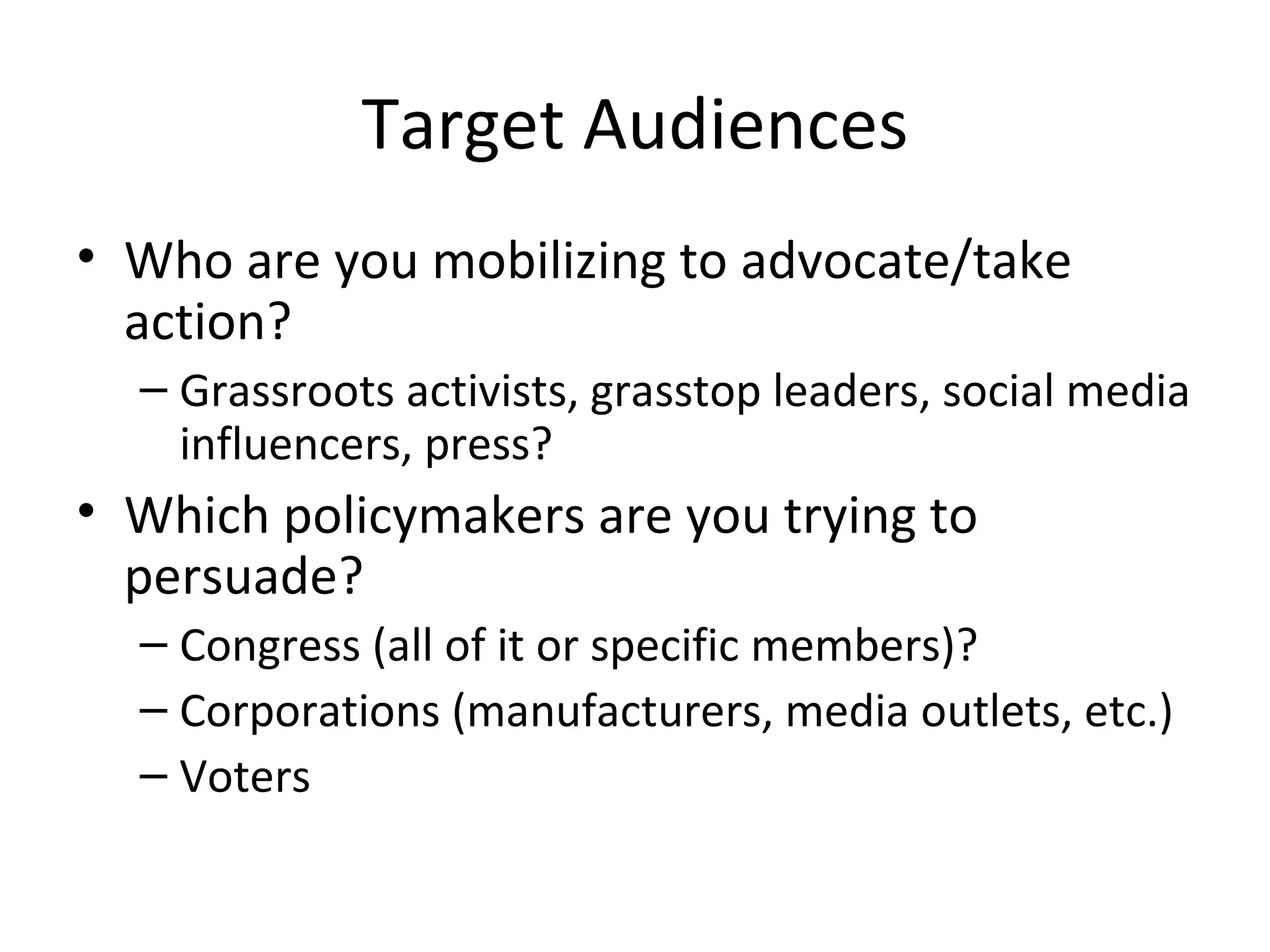
Target Audiences Who are you mobilizing to advocate/take action? Grassroots activists, grasstop leaders, social media influencers, press? Which policymakers are you trying to persuade? Congress (all of it or specific members)? Corporations (manufacturers, media outlets, etc.) Voters
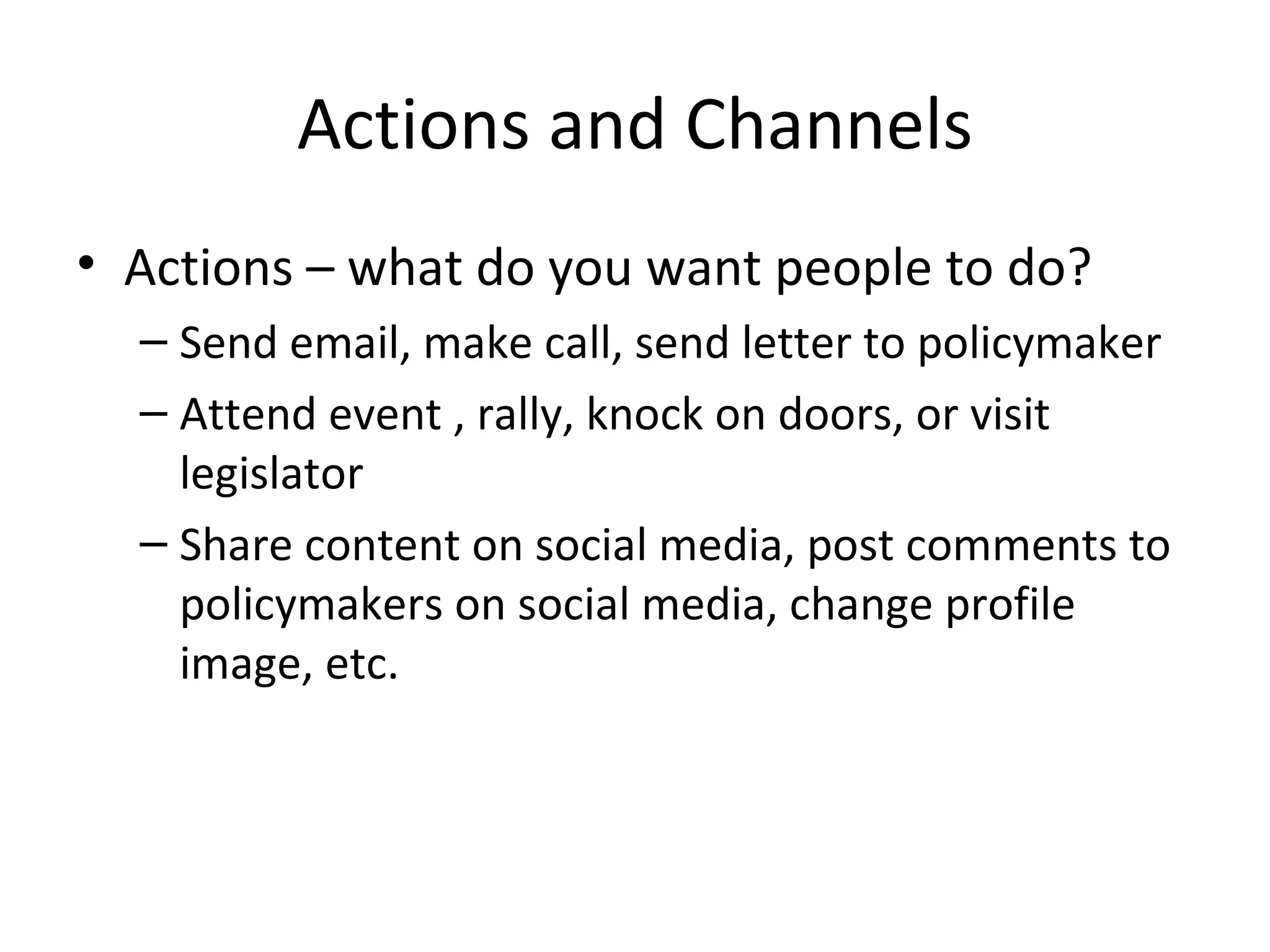
Actions and Channels Actions – what do you want people to do? Send email, make call, send letter to policymaker Attend event , rally, knock on doors, or visit legislator Share content on social media, post comments to policymakers on social media, change profile image, etc.
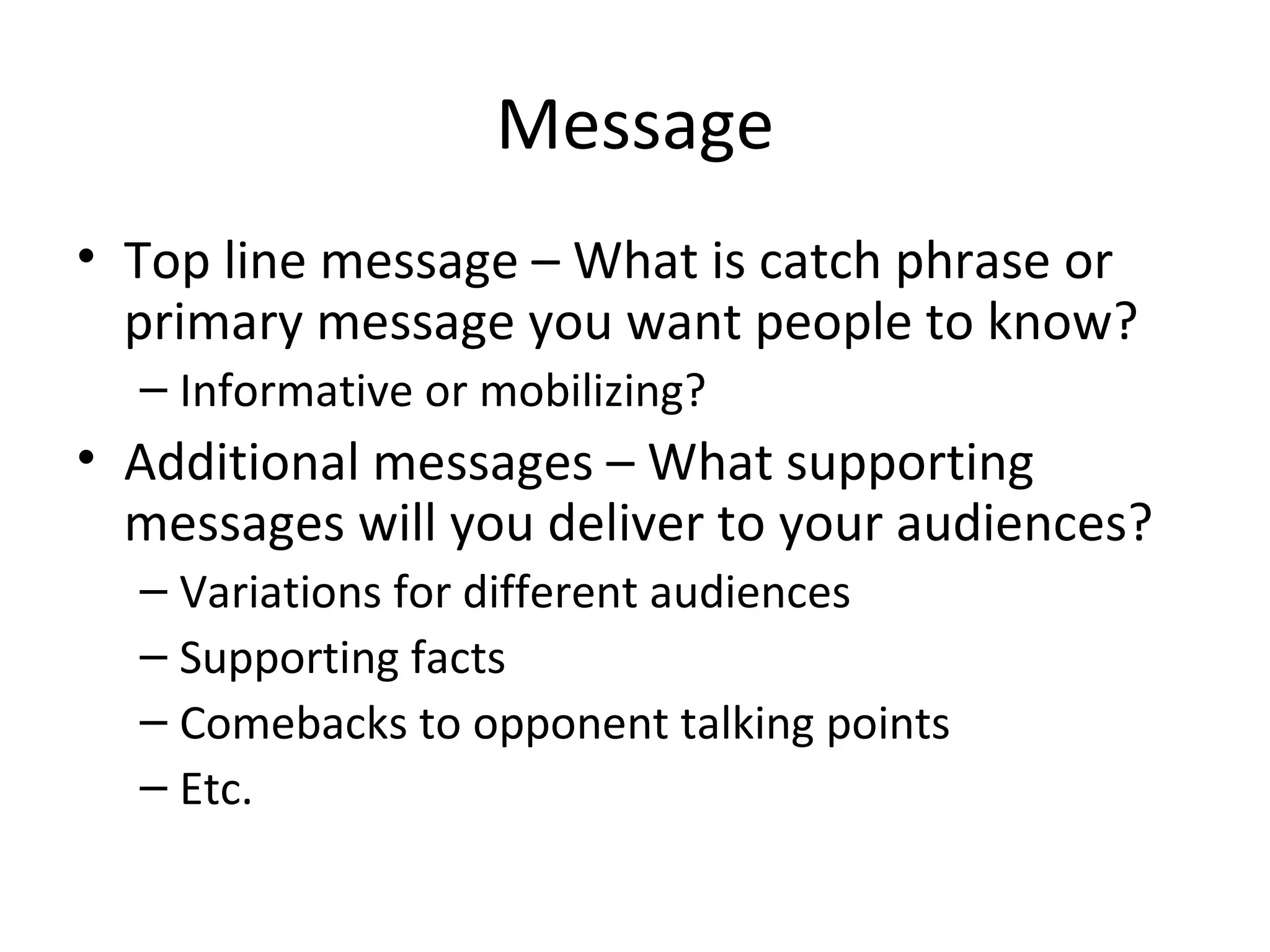
Message Top line message – What is catch phrase or primary message you want people to know? Informative or mobilizing? Additional messages – What supporting messages will you deliver to your audiences? Variations for different audiences Supporting facts Comebacks to opponent talking points Etc.
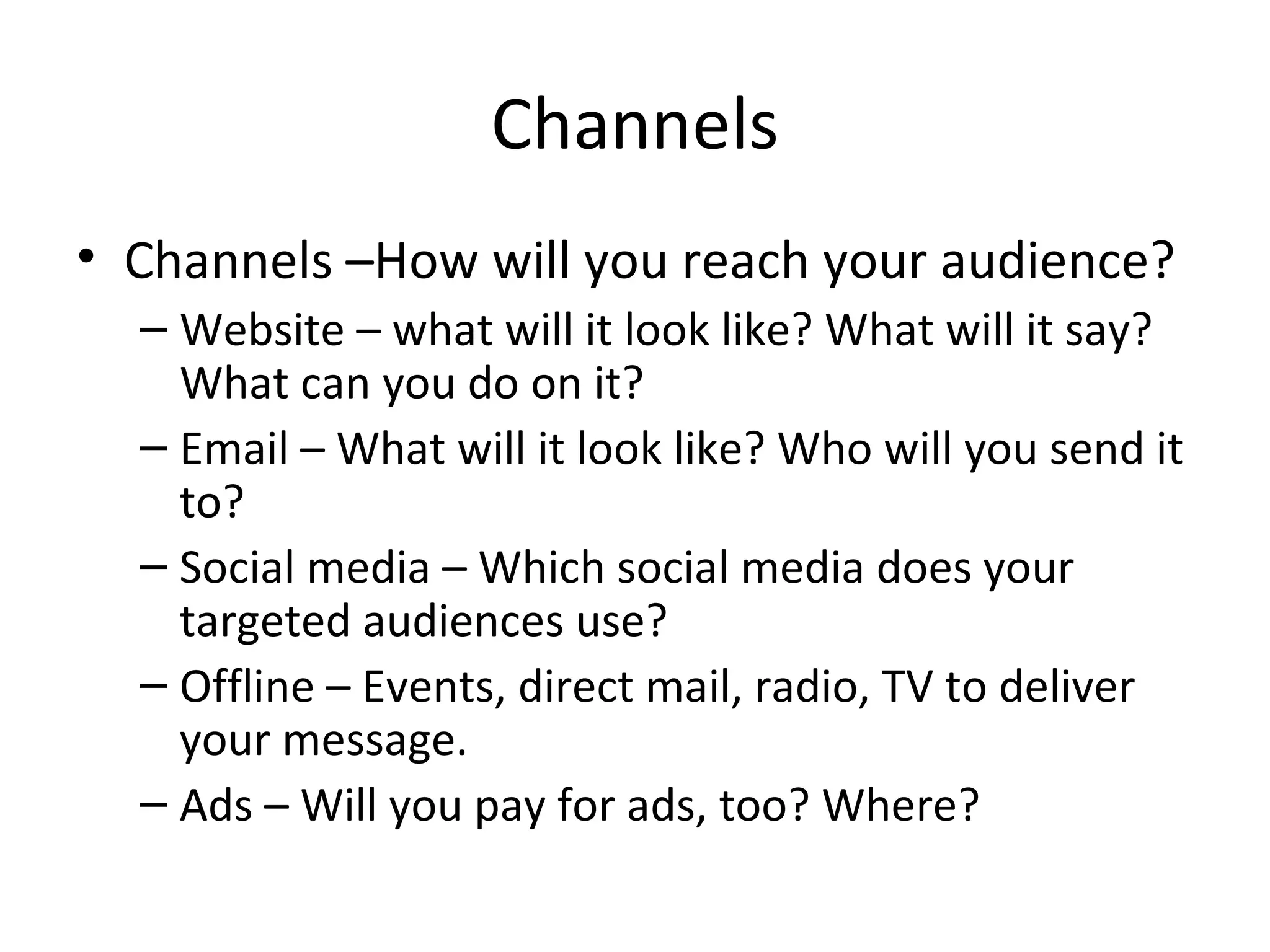
Channels Channels –How will you reach your audience? Website – what will it look like? What will it say? What can you do on it? Email – What will it look like? Who will you send it to? Social media – Which social media does your targeted audiences use? Offline – Events, direct mail, radio, TV to deliver your message. Ads – Will you pay for ads, too? Where?
Creative Website – Create mock-up/wireframe Email – Draft actual text for emails sent to all targeted audiences Social Media – What will you talk about on Twitter and Facebook (give examples); what videos will you make or find/share? Other – If you are including any other types of messages for your campaign, carefully describe it.
Metrics of Success What does success look like? How many people need to take action to be successful? How many views of your creative are needed to get your message out? What other metrics will help you make case that your campaign worked? Metrics tools What tools will you use to measure success
Budget and Timeline Budget – Lay out costs of all aspects of the campaign Timeline – When do you start, how long will things take, when will you launch, when will campaign end?
Final Comments Your campaign plan should be a blueprint that a project manager can follow and a supervisor can understand. Supervisor needs to understand what you plan to do and how you plan to do it You, a project manager and your team need a clear understanding of what they have to do. If your plan doesn’t do these things, it is incomplete.

Writing online campaign plans

  • 1.
  • 2.
    Overview of aCampaign Plan, pt 1 Goal Target Audiences Who are you mobilizing to advocate/take action? Which policymakers are you trying to persuade? Actions and channels Message Top line Additional messages
  • 3.
    Overview of aCampaign Plan, pt 2 Channels Website Email Social Media Offline (Phone, Direct Mail, etc.) Creative Website Ads Email, etc. Success Metrics Budget and Timeline
  • 4.
    Campaign Goal Whatare you specifically trying to accomplish? Legislation defeated or passed? Change corporate policy Raise money Raise awareness on a specific issue Grow your contact list Recruit volunteers Elect a candidate Pass /defeat a referendum Note: You may have multiple goals.
  • 5.
    Target Audiences Whoare you mobilizing to advocate/take action? Grassroots activists, grasstop leaders, social media influencers, press? Which policymakers are you trying to persuade? Congress (all of it or specific members)? Corporations (manufacturers, media outlets, etc.) Voters
  • 6.
    Actions and ChannelsActions – what do you want people to do? Send email, make call, send letter to policymaker Attend event , rally, knock on doors, or visit legislator Share content on social media, post comments to policymakers on social media, change profile image, etc.
  • 7.
    Message Top linemessage – What is catch phrase or primary message you want people to know? Informative or mobilizing? Additional messages – What supporting messages will you deliver to your audiences? Variations for different audiences Supporting facts Comebacks to opponent talking points Etc.
  • 8.
    Channels Channels –Howwill you reach your audience? Website – what will it look like? What will it say? What can you do on it? Email – What will it look like? Who will you send it to? Social media – Which social media does your targeted audiences use? Offline – Events, direct mail, radio, TV to deliver your message. Ads – Will you pay for ads, too? Where?
  • 9.
    Creative Website –Create mock-up/wireframe Email – Draft actual text for emails sent to all targeted audiences Social Media – What will you talk about on Twitter and Facebook (give examples); what videos will you make or find/share? Other – If you are including any other types of messages for your campaign, carefully describe it.
  • 10.
    Metrics of SuccessWhat does success look like? How many people need to take action to be successful? How many views of your creative are needed to get your message out? What other metrics will help you make case that your campaign worked? Metrics tools What tools will you use to measure success
  • 11.
    Budget and TimelineBudget – Lay out costs of all aspects of the campaign Timeline – When do you start, how long will things take, when will you launch, when will campaign end?
  • 12.
    Final Comments Yourcampaign plan should be a blueprint that a project manager can follow and a supervisor can understand. Supervisor needs to understand what you plan to do and how you plan to do it You, a project manager and your team need a clear understanding of what they have to do. If your plan doesn’t do these things, it is incomplete.