Writing Helpful 
Recommendations 
and a little bit about where they come from 
By Paul Brown
Why do we Write Recommendations at all? 
• Recommendations are part of ensuring that the QM review process is: 
• Continuous 
• (ensuring that all courses meet expectations AND improve over time); 
• Collegial 
• (intended to be diagnostic); 
• Collaborative 
• (many ways to meet the standards and based on more than personal preference).
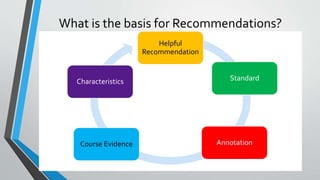
What is the basis for Recommendations? 
Helpful 
Recommendation 
Standard 
Characteristics 
Course Evidence Annotation
How are Helpful Recommendations related to 
the Standards? 
Helpful 
Recommendation 
Standard 
Characteristics 
Course Evidence Annotation 
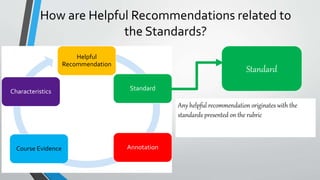
Standard 
Any helpful recommendation originates with the 
standards presented on the rubric
How do Annotations (on the Rubric) help with 
Writing Recommendations? 
Helpful 
Recommendation 
Standard 
Characteristics 
Course Evidence Annotation 
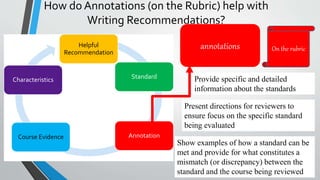
annotations 
On the rubric 
Provide specific and detailed 
information about the standards 
Present directions for reviewers to 
ensure focus on the specific standard 
being evaluated 
Show examples of how a standard can be 
met and provide for what constitutes a 
mismatch (or discrepancy) between the 
standard and the course being reviewed
What does “Course Evidence” mean for writing 
Recommendations? 
Helpful 
Recommendation 
Standard 
Characteristics 
Course Evidence Annotation 
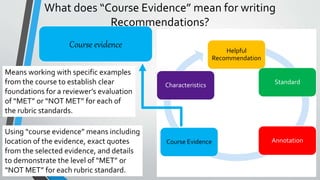
Course evidence 
Means working with specific examples 
from the course to establish clear 
foundations for a reviewer’s evaluation 
of “MET” or “NOT MET” for each of 
the rubric standards. 
Using “course evidence” means including 
location of the evidence, exact quotes 
from the selected evidence, and details 
to demonstrate the level of “MET” or 
“NOT MET” for each rubric standard.
What makes a Recommendation “Helpful?” 
Helpful 
Recommendation 
Standard 
Characteristics 
Course Evidence Annotation 
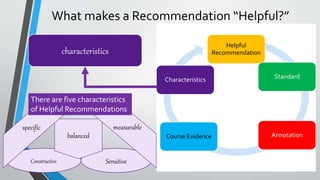
characteristics 
There are five characteristics 
of Helpful Recommendations 
specific measurable 
balanced 
Constructive Sensitive
What makes a Recommendation “Helpful?” 
Helpful 
Recommendation 
Standard 
Characteristics 
Course Evidence Annotation 
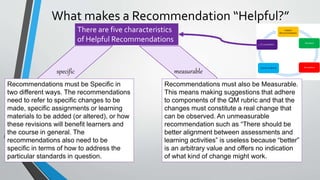
There are five characteristics 
of Helpful Recommendations 
specific measurable 
Recommendations must be Specific in 
two different ways. The recommendations 
need to refer to specific changes to be 
made, specific assignments or learning 
materials to be added (or altered), or how 
these revisions will benefit learners and 
the course in general. The 
recommendations also need to be 
specific in terms of how to address the 
particular standards in question. 
Recommendations must also be Measurable. 
This means making suggestions that adhere 
to components of the QM rubric and that the 
changes must constitute a real change that 
can be observed. An unmeasurable 
recommendation such as “There should be 
better alignment between assessments and 
learning activities” is useless because “better” 
is an arbitrary value and offers no indication 
of what kind of change might work.
What makes a Recommendation “Helpful?” 
Helpful 
Recommendation 
Standard 
Characteristics 
Course Evidence Annotation 
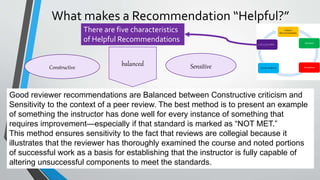
There are five characteristics 
of Helpful Recommendations 
Constructive Sensitive balanced 
Good reviewer recommendations are Balanced between Constructive criticism and 
Sensitivity to the context of a peer review. The best method is to present an example 
of something the instructor has done well for every instance of something that 
requires improvement—especially if that standard is marked as “NOT MET.” 
This method ensures sensitivity to the fact that reviews are collegial because it 
illustrates that the reviewer has thoroughly examined the course and noted portions 
of successful work as a basis for establishing that the instructor is fully capable of 
altering unsuccessful components to meet the standards.
What makes a Recommendation “Helpful?” 
Helpful 
Recommendation 
Standard 
Characteristics 
Course Evidence Annotation 
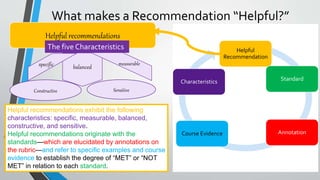
Helpful recommendations 
The five Characteristics 
specific measurable 
balanced 
Constructive Sensitive 
Helpful recommendations exhibit the following 
characteristics: specific, measurable, balanced, 
constructive, and sensitive. 
Helpful recommendations originate with the 
standards—which are elucidated by annotations on 
the rubric—and refer to specific examples and course 
evidence to establish the degree of “MET” or “NOT 
MET” in relation to each standard.
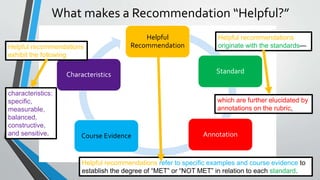
What makes a Recommendation “Helpful?” 
Helpful 
Recommendation 
Helpful recommendations 
Helpful recommendations originate with the standards— 
exhibit the following 
Standard 
Characteristics 
Course Evidence Annotation 
characteristics: 
specific, 
measurable, 
balanced, 
constructive, 
and sensitive. 
which are further elucidated by 
annotations on the rubric, 
Helpful recommendations refer to specific examples and course evidence to 
establish the degree of “MET” or “NOT MET” in relation to each standard.
The End

Writing helpful recommendations

  • 1.
    Writing Helpful Recommendations and a little bit about where they come from By Paul Brown
  • 2.
    Why do weWrite Recommendations at all? • Recommendations are part of ensuring that the QM review process is: • Continuous • (ensuring that all courses meet expectations AND improve over time); • Collegial • (intended to be diagnostic); • Collaborative • (many ways to meet the standards and based on more than personal preference).
  • 3.
    What is thebasis for Recommendations? Helpful Recommendation Standard Characteristics Course Evidence Annotation
  • 4.
    How are HelpfulRecommendations related to the Standards? Helpful Recommendation Standard Characteristics Course Evidence Annotation Standard Any helpful recommendation originates with the standards presented on the rubric
  • 5.
    How do Annotations(on the Rubric) help with Writing Recommendations? Helpful Recommendation Standard Characteristics Course Evidence Annotation annotations On the rubric Provide specific and detailed information about the standards Present directions for reviewers to ensure focus on the specific standard being evaluated Show examples of how a standard can be met and provide for what constitutes a mismatch (or discrepancy) between the standard and the course being reviewed
  • 6.
    What does “CourseEvidence” mean for writing Recommendations? Helpful Recommendation Standard Characteristics Course Evidence Annotation Course evidence Means working with specific examples from the course to establish clear foundations for a reviewer’s evaluation of “MET” or “NOT MET” for each of the rubric standards. Using “course evidence” means including location of the evidence, exact quotes from the selected evidence, and details to demonstrate the level of “MET” or “NOT MET” for each rubric standard.
  • 7.
    What makes aRecommendation “Helpful?” Helpful Recommendation Standard Characteristics Course Evidence Annotation characteristics There are five characteristics of Helpful Recommendations specific measurable balanced Constructive Sensitive
  • 8.
    What makes aRecommendation “Helpful?” Helpful Recommendation Standard Characteristics Course Evidence Annotation There are five characteristics of Helpful Recommendations specific measurable Recommendations must be Specific in two different ways. The recommendations need to refer to specific changes to be made, specific assignments or learning materials to be added (or altered), or how these revisions will benefit learners and the course in general. The recommendations also need to be specific in terms of how to address the particular standards in question. Recommendations must also be Measurable. This means making suggestions that adhere to components of the QM rubric and that the changes must constitute a real change that can be observed. An unmeasurable recommendation such as “There should be better alignment between assessments and learning activities” is useless because “better” is an arbitrary value and offers no indication of what kind of change might work.
  • 9.
    What makes aRecommendation “Helpful?” Helpful Recommendation Standard Characteristics Course Evidence Annotation There are five characteristics of Helpful Recommendations Constructive Sensitive balanced Good reviewer recommendations are Balanced between Constructive criticism and Sensitivity to the context of a peer review. The best method is to present an example of something the instructor has done well for every instance of something that requires improvement—especially if that standard is marked as “NOT MET.” This method ensures sensitivity to the fact that reviews are collegial because it illustrates that the reviewer has thoroughly examined the course and noted portions of successful work as a basis for establishing that the instructor is fully capable of altering unsuccessful components to meet the standards.
  • 10.
    What makes aRecommendation “Helpful?” Helpful Recommendation Standard Characteristics Course Evidence Annotation Helpful recommendations The five Characteristics specific measurable balanced Constructive Sensitive Helpful recommendations exhibit the following characteristics: specific, measurable, balanced, constructive, and sensitive. Helpful recommendations originate with the standards—which are elucidated by annotations on the rubric—and refer to specific examples and course evidence to establish the degree of “MET” or “NOT MET” in relation to each standard.
  • 11.
    What makes aRecommendation “Helpful?” Helpful Recommendation Helpful recommendations Helpful recommendations originate with the standards— exhibit the following Standard Characteristics Course Evidence Annotation characteristics: specific, measurable, balanced, constructive, and sensitive. which are further elucidated by annotations on the rubric, Helpful recommendations refer to specific examples and course evidence to establish the degree of “MET” or “NOT MET” in relation to each standard.
  • 12.