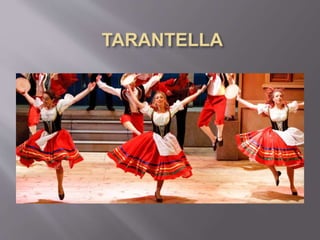
Tarantella is a group of various folk dances
characterized by a fast upbeat tempo, usually in 6/8
time (sometimes 18/8 or 4/4), accompanied by
tambourines.
Tarantella is popular in Southern Italy and
Argentina.
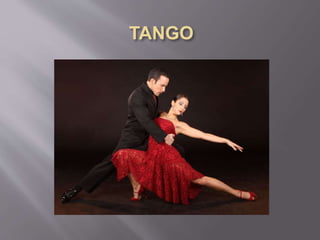
Argentine tango is a musical genre of simple
quadruple metre and binary musical form, and the
social dance that accompanies it. Its lyrics and
music are marked by nostalgia, expressed through
melodic instruments including the bandoneón.
Originating at the ending of the 19th century in the
suburbs of Buenos Aires, and Montevideo,
Uruguay, it quickly grew in popularity and spread
internationally.
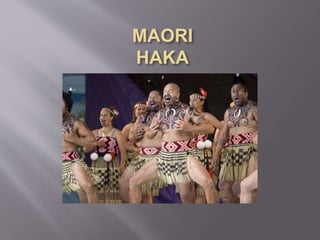
The Haka (plural is the same as singular: haka) is a
traditional ancestral war cry, dance, or challenge from
the Māori people of New Zealand. It is a posture dance
performed by a group, with vigorous movements and
stamping of the feet with rhythmically shouted
accompaniment.
War haka were originally performed by warriors before
a battle, proclaiming their strength and prowess in
order to intimidate the opposition, but haka are also
performed for various reasons: for welcoming
distinguished guests, or to acknowledge great
achievements, occasions or funerals, and kapa haka
performance groups are very common in schools.
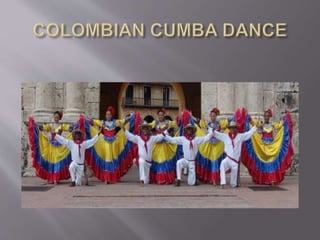
The fast pace of the drums, trumpet, and song
accompanies the Colombian dancers in a style that is
characterized by a lot of spinning, and brightly colored
dresses for the women. Cumbia is performed with a
long, wide skirt, and accompanied by musicians playing
drums. Colombia is in the northern part of the South
American continent.
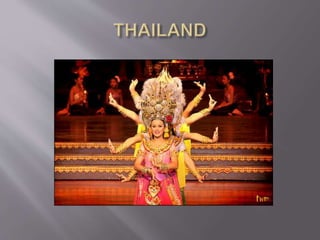
The Thai dancers look like magnificent
statues, and their traditional dance includes
slow, delicate movements, mostly of their
palms and feet, with their fingers gracefully
bent back.
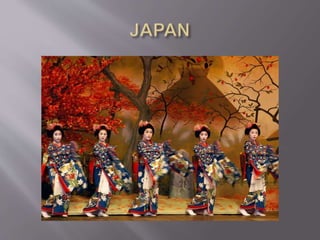
Japanese culture is very reserved, and that
is very evident in the traditional Geisha
dance. With a sealed face, noble stance,
and gentle hand movements all express an
aspiration for esthetics and harmony.
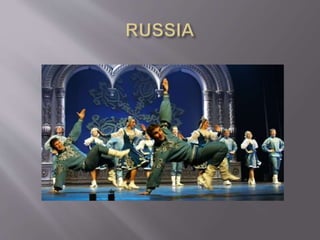
Russian folk dancing is characterized by
many jumps, bounds, and spinning, with
periodic slowing of the rhythm, only to
quicken again moments later. It is a joyful
dance, which evolved as an antithesis to the
hard life of Russian farmers.
Presentation by:
Valentinos Gkiouris
And
Dimitris Theodorou

WORLD FOLK DANCES

  • 2.
    Tarantella is agroup of various folk dances characterized by a fast upbeat tempo, usually in 6/8 time (sometimes 18/8 or 4/4), accompanied by tambourines. Tarantella is popular in Southern Italy and Argentina.
  • 4.
    Argentine tango isa musical genre of simple quadruple metre and binary musical form, and the social dance that accompanies it. Its lyrics and music are marked by nostalgia, expressed through melodic instruments including the bandoneón. Originating at the ending of the 19th century in the suburbs of Buenos Aires, and Montevideo, Uruguay, it quickly grew in popularity and spread internationally.
  • 6.
    The Haka (pluralis the same as singular: haka) is a traditional ancestral war cry, dance, or challenge from the Māori people of New Zealand. It is a posture dance performed by a group, with vigorous movements and stamping of the feet with rhythmically shouted accompaniment. War haka were originally performed by warriors before a battle, proclaiming their strength and prowess in order to intimidate the opposition, but haka are also performed for various reasons: for welcoming distinguished guests, or to acknowledge great achievements, occasions or funerals, and kapa haka performance groups are very common in schools.
  • 8.
    The fast paceof the drums, trumpet, and song accompanies the Colombian dancers in a style that is characterized by a lot of spinning, and brightly colored dresses for the women. Cumbia is performed with a long, wide skirt, and accompanied by musicians playing drums. Colombia is in the northern part of the South American continent.
  • 10.
    The Thai dancerslook like magnificent statues, and their traditional dance includes slow, delicate movements, mostly of their palms and feet, with their fingers gracefully bent back.
  • 12.
    Japanese culture isvery reserved, and that is very evident in the traditional Geisha dance. With a sealed face, noble stance, and gentle hand movements all express an aspiration for esthetics and harmony.
  • 14.
    Russian folk dancingis characterized by many jumps, bounds, and spinning, with periodic slowing of the rhythm, only to quicken again moments later. It is a joyful dance, which evolved as an antithesis to the hard life of Russian farmers.
  • 16.