Working With People “ If it weren’t for the people I work with, work for, I’d really love this job!” Staying Sane – Staying Constructive
The Constructive Mindset Focus on fixing things and not blaming. Not waiting for others to “fix things” Look to present and future Realize they can have a positive impact Focus on building cooperative relationships and not “winning”
Constructive Actions Listen and understand first. Problem solving language rather than blaming Willing to take active role in improving things. Making suggestions and being willing to be part of solutions.
Destructive Language -1 Power of Language Sounds blaming rather than aimed at solving problems Focuses on the past, not the present or future Uses absolutes like always, never, etc Attempts to prove other person wrong Does not provide other person with chance to save face
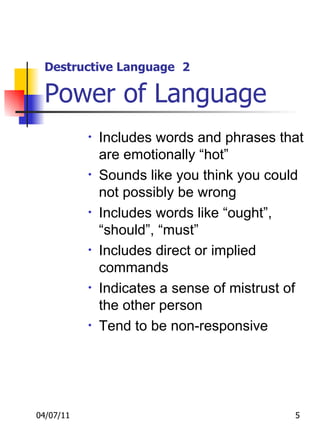
Destructive Language   2 Power of Language Includes words and phrases that are emotionally “hot” Sounds like you think you could not possibly be wrong Includes words like “ought”, “should”, “must” Includes direct or implied commands Indicates a sense of mistrust of the other person Tend to be non-responsive
Topic Three Details about this topic Supporting information and examples How it relates to your audience
Real Life Give an example or real life anecdote Sympathize with the audience’s situation if appropriate
What This Means Add a strong statement that summarizes how you feel or think about this topic Summarize key points you want your audience to remember
Next Steps  Summarize any actions required of your audience Summarize any follow up action items required of you

Working with people

  • 1.
    Working With People“ If it weren’t for the people I work with, work for, I’d really love this job!” Staying Sane – Staying Constructive
  • 2.
    The Constructive MindsetFocus on fixing things and not blaming. Not waiting for others to “fix things” Look to present and future Realize they can have a positive impact Focus on building cooperative relationships and not “winning”
  • 3.
    Constructive Actions Listenand understand first. Problem solving language rather than blaming Willing to take active role in improving things. Making suggestions and being willing to be part of solutions.
  • 4.
    Destructive Language -1Power of Language Sounds blaming rather than aimed at solving problems Focuses on the past, not the present or future Uses absolutes like always, never, etc Attempts to prove other person wrong Does not provide other person with chance to save face
  • 5.
    Destructive Language 2 Power of Language Includes words and phrases that are emotionally “hot” Sounds like you think you could not possibly be wrong Includes words like “ought”, “should”, “must” Includes direct or implied commands Indicates a sense of mistrust of the other person Tend to be non-responsive
  • 6.
    Topic Three Detailsabout this topic Supporting information and examples How it relates to your audience
  • 7.
    Real Life Givean example or real life anecdote Sympathize with the audience’s situation if appropriate
  • 8.
    What This MeansAdd a strong statement that summarizes how you feel or think about this topic Summarize key points you want your audience to remember
  • 9.
    Next Steps Summarize any actions required of your audience Summarize any follow up action items required of you