Submitted By
 Subhankar Das
 Roll No-3720
METROPOLITAN SCHOOL OF MANAGEMENT
capital is the keynote of economic development. In
this modern age, the level of economic development is
determined by the proportion of capital available.
Capital (economics), A factor of production that
is not wanted for itself but for its ability to help in
producing other goods.
 Working capital refers to the funds invested in Current
assets , sundry debtors, inventories , cash and bank balance
 It is the fund required to support day to day operations
such as purchase of raw materials , payments of wages and
defraying other expenses for operations
 Working capital = Current assets – Current liabilities
 It measures how much in liquid assets a company has
available to build its business.
 Positive working capital is required to ensure that a firm is
able to continue its operations and that it has sufficient
funds to satisfy both maturing short-term debt and
upcoming operational expenses.
 The management of working capital involves managing
inventories, accounts receivable and payable and cash.
 An increase in working capital indicates that the business
has either increased current assets (that is received cash, or
other current assets) or has decreased current liabilities,
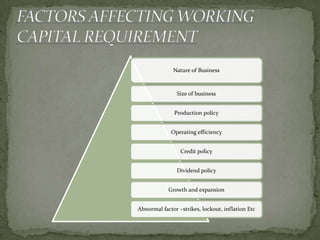
Nature of Business
Size of business
Production policy
Operating efficiency
Credit policy
Dividend policy
Growth and expansion
Abnormal factor –strikes, lockout, inflation Etc
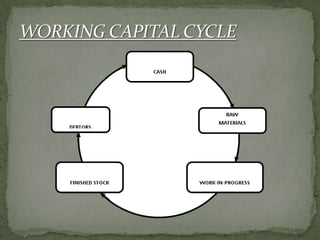
 Conversion of cash into raw materials.
 Conversion of raw materials into work in
progress.
 Conversion of work in progress into finished
stock.
 Conversion of finished stock into accounts
receivables(Debtors)through sale
 Conversion of account receivables into cash.
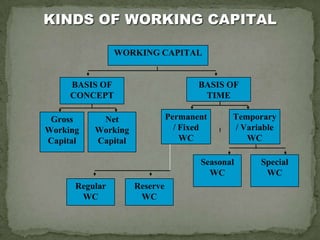
KINDS OF WORKING CAPITAL
WORKING CAPITAL
BASIS OF
CONCEPT
BASIS OF
TIME
Gross
Working
Capital
Net
Working
Capital
Permanent
/ Fixed
WC
Temporary
/ Variable
WC
Regular
WC
Reserve
WC
Special
WC
Seasonal
WC
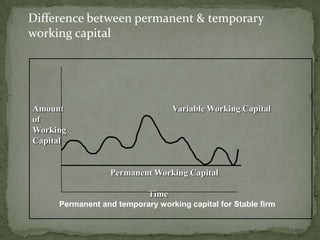
Difference between permanent & temporary
working capital
Amount Variable Working Capital
of
Working
Capital
Permanent Working Capital
Time
Permanent and temporary working capital for Stable firm
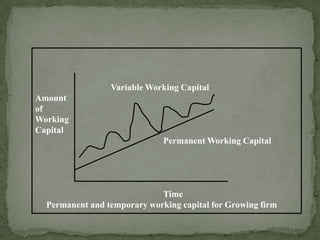
Variable Working Capital
Amount
of
Working
Capital
Permanent Working Capital
Time
Permanent and temporary working capital for Growing firm
IMPORTANCE OF WORKING CAPITAL
• Goodwill
• Easy loans
• Cash discounts
• Regular Supply of Raw Material:
• Regular payment of salaries, wages and other
day to day commitments
• Ability to Face Crises:
• Quick and regular return on investments
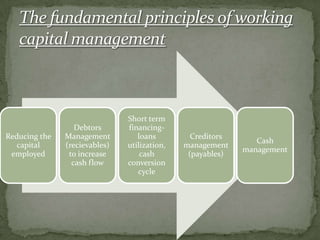
Reducing the
capital
employed
Debtors
Management
(recievables)
to increase
cash flow
Short term
financing-
loans
utilization,
cash
conversion
cycle
Creditors
management
(payables)
Cash
management
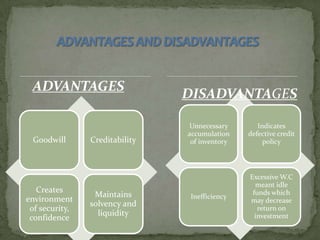
ADVANTAGES
Goodwill Creditability
Creates
environment
of security,
confidence
Maintains
solvency and
liquidity
Unnecessary
accumulation
of inventory
Indicates
defective credit
policy
Inefficiency
Excessive W.C
meant idle
funds which
may decrease
return on
investment
DISADVANTAGES
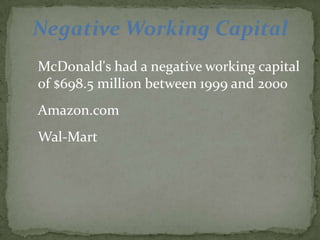
Negative Working Capital
McDonald's had a negative working capital
of $698.5 million between 1999 and 2000
Amazon.com
Wal-Mart
Working capital managment

Working capital managment

  • 1.
    Submitted By  SubhankarDas  Roll No-3720 METROPOLITAN SCHOOL OF MANAGEMENT
  • 2.
    capital is thekeynote of economic development. In this modern age, the level of economic development is determined by the proportion of capital available. Capital (economics), A factor of production that is not wanted for itself but for its ability to help in producing other goods.
  • 3.
     Working capitalrefers to the funds invested in Current assets , sundry debtors, inventories , cash and bank balance  It is the fund required to support day to day operations such as purchase of raw materials , payments of wages and defraying other expenses for operations  Working capital = Current assets – Current liabilities  It measures how much in liquid assets a company has available to build its business.
  • 4.
     Positive workingcapital is required to ensure that a firm is able to continue its operations and that it has sufficient funds to satisfy both maturing short-term debt and upcoming operational expenses.  The management of working capital involves managing inventories, accounts receivable and payable and cash.  An increase in working capital indicates that the business has either increased current assets (that is received cash, or other current assets) or has decreased current liabilities,
  • 5.
    Nature of Business Sizeof business Production policy Operating efficiency Credit policy Dividend policy Growth and expansion Abnormal factor –strikes, lockout, inflation Etc
  • 7.
     Conversion ofcash into raw materials.  Conversion of raw materials into work in progress.  Conversion of work in progress into finished stock.  Conversion of finished stock into accounts receivables(Debtors)through sale  Conversion of account receivables into cash.
  • 8.
    KINDS OF WORKINGCAPITAL WORKING CAPITAL BASIS OF CONCEPT BASIS OF TIME Gross Working Capital Net Working Capital Permanent / Fixed WC Temporary / Variable WC Regular WC Reserve WC Special WC Seasonal WC
  • 9.
    Difference between permanent& temporary working capital Amount Variable Working Capital of Working Capital Permanent Working Capital Time Permanent and temporary working capital for Stable firm
  • 10.
    Variable Working Capital Amount of Working Capital PermanentWorking Capital Time Permanent and temporary working capital for Growing firm
  • 11.
    IMPORTANCE OF WORKINGCAPITAL • Goodwill • Easy loans • Cash discounts • Regular Supply of Raw Material: • Regular payment of salaries, wages and other day to day commitments • Ability to Face Crises: • Quick and regular return on investments
  • 12.
    Reducing the capital employed Debtors Management (recievables) to increase cashflow Short term financing- loans utilization, cash conversion cycle Creditors management (payables) Cash management
  • 13.
    ADVANTAGES Goodwill Creditability Creates environment of security, confidence Maintains solvencyand liquidity Unnecessary accumulation of inventory Indicates defective credit policy Inefficiency Excessive W.C meant idle funds which may decrease return on investment DISADVANTAGES
  • 14.
    Negative Working Capital McDonald'shad a negative working capital of $698.5 million between 1999 and 2000 Amazon.com Wal-Mart

Editor's Notes