
11 October 2016
Work-based Learning System
(Dual System)
Ha Sang Jin(Jimmy Ha)
Director, Work-Learning Management Team, HRD Korea
(Pre.) Director General in Policy, Federation of Korea Public Trade Unions
(Pre.)Member of Tripartite Sub-committee, Economic and Social Development Commission
(Pre.)PM in Financial Management, ODA Project for the Development of Vietnam National Qualification Testing System
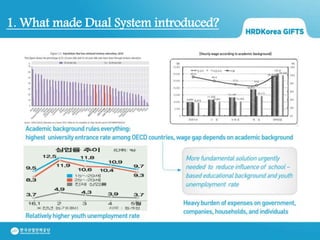
1. What made Dual System introduced?
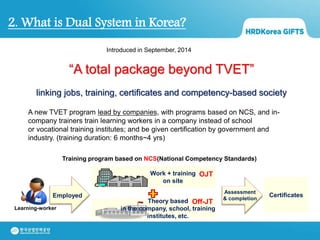
2. What is Dual System in Korea?
“A total package beyond TVET”
linking jobs, training, certificates and competency-based society
Learning-worker
Work + training
on site
Theory based
in the company, school, training
institutes, etc.
Assessment
& completion
Certificates
Training program based on NCS(National Competency Standards)
Employed
OJT
Off-JT
A new TVET program lead by companies, with programs based on NCS, and in-
company trainers train learning workers in a company instead of school
or vocational training institutes; and be given certification by government and
industry. (training duration: 6 months~4 yrs)
Introduced in September, 2014
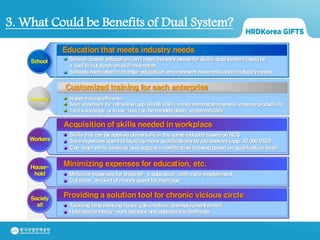
3. What Could be Benefits of Dual System?
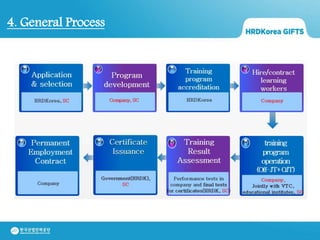
4. General Process
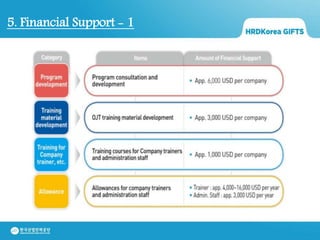
5. Financial Support - 1
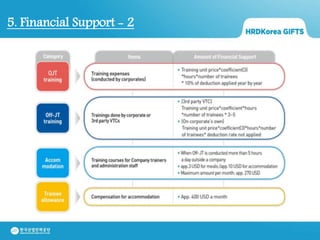
5. Financial Support - 2
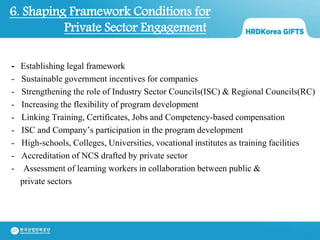
6. Shaping Framework Conditions for
Private Sector Engagement
- Establishing legal framework
- Sustainable government incentives for companies
- Strengthening the role of Industry Sector Councils(ISC) & Regional Councils(RC)
- Increasing the flexibility of program development
- Linking Training, Certificates, Jobs and Competency-based compensation
- ISC and Company’s participation in the program development
- High-schools, Colleges, Universities, vocational institutes as training facilities
- Accreditation of NCS drafted by private sector
- Assessment of learning workers in collaboration between public &
private sectors
Work-based learning System

Work-based learning System

  • 1.
    11 October 2016 Work-basedLearning System (Dual System) Ha Sang Jin(Jimmy Ha) Director, Work-Learning Management Team, HRD Korea (Pre.) Director General in Policy, Federation of Korea Public Trade Unions (Pre.)Member of Tripartite Sub-committee, Economic and Social Development Commission (Pre.)PM in Financial Management, ODA Project for the Development of Vietnam National Qualification Testing System
  • 2.
    1. What madeDual System introduced?
  • 3.
    2. What isDual System in Korea? “A total package beyond TVET” linking jobs, training, certificates and competency-based society Learning-worker Work + training on site Theory based in the company, school, training institutes, etc. Assessment & completion Certificates Training program based on NCS(National Competency Standards) Employed OJT Off-JT A new TVET program lead by companies, with programs based on NCS, and in- company trainers train learning workers in a company instead of school or vocational training institutes; and be given certification by government and industry. (training duration: 6 months~4 yrs) Introduced in September, 2014
  • 4.
    3. What Couldbe Benefits of Dual System?
  • 5.
  • 6.
  • 7.
  • 8.
    6. Shaping FrameworkConditions for Private Sector Engagement - Establishing legal framework - Sustainable government incentives for companies - Strengthening the role of Industry Sector Councils(ISC) & Regional Councils(RC) - Increasing the flexibility of program development - Linking Training, Certificates, Jobs and Competency-based compensation - ISC and Company’s participation in the program development - High-schools, Colleges, Universities, vocational institutes as training facilities - Accreditation of NCS drafted by private sector - Assessment of learning workers in collaboration between public & private sectors