A SWOT Analysis


Leonardo Langaro | PD MAL DIT | 21.05.2010
Strenghts
  Openness and accessibility
  Facilitate to work with others
  Creates knowledge and communities
  Usability
  Anonymity of authorship
  Public ownership
  Freely technology
  Organized by the context or by links
Weaknesses
  Difficulties to trust content
  Used to repeat work
  Content is constantly changing
  Not professionally edited
  Need close control to prevent
   vandalism
Opportunities
    Motivate collaboration
    Versatile tool
    Long life learning
    Growing and flexible resource
    Comprehensive
    Share knowledge, resources,
     experiences
    Everyone is smarter than anyone alone
    Encorage learning and critical thinking
    Large audience
    Virtual community
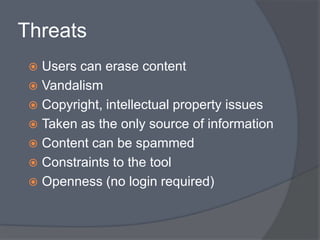
Threats
  Users can erase content
  Vandalism
  Copyright, intellectual property issues
  Taken as the only source of information
  Content can be spammed
  Constraints to the tool
  Openness (no login required)
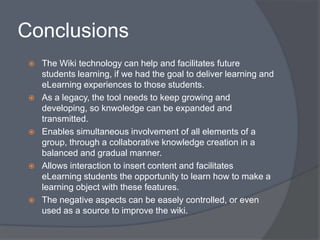
Conclusions
    The Wiki technology can help and facilitates future
     students learning, if we had the goal to deliver learning and
     eLearning experiences to those students.
    As a legacy, the tool needs to keep growing and
     developing, so knwoledge can be expanded and
     transmitted.
    Enables simultaneous involvement of all elements of a
     group, through a collaborative knowledge creation in a
     balanced and gradual manner.
    Allows interaction to insert content and facilitates
     eLearning students the opportunity to learn how to make a
     learning object with these features.
    The negative aspects can be easely controlled, or even
     used as a source to improve the wiki.
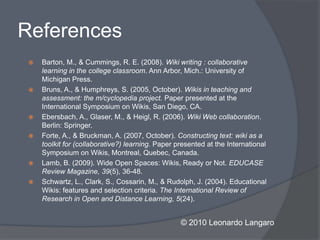
References
    Barton, M., & Cummings, R. E. (2008). Wiki writing : collaborative
     learning in the college classroom. Ann Arbor, Mich.: University of
     Michigan Press.
    Bruns, A., & Humphreys, S. (2005, October). Wikis in teaching and
     assessment: the m/cyclopedia project. Paper presented at the
     International Symposium on Wikis, San Diego, CA.
    Ebersbach, A., Glaser, M., & Heigl, R. (2006). Wiki Web collaboration.
     Berlin: Springer.
    Forte, A., & Bruckman, A. (2007, October). Constructing text: wiki as a
     toolkit for (collaborative?) learning. Paper presented at the International
     Symposium on Wikis, Montreal, Quebec, Canada.
    Lamb, B. (2009). Wide Open Spaces: Wikis, Ready or Not. EDUCASE
     Review Magazine, 39(5), 36-48.
    Schwartz, L., Clark, S., Cossarin, M., & Rudolph, J. (2004). Educational
     Wikis: features and selection criteria. The International Review of
     Research in Open and Distance Learning, 5(24).


                                                   © 2010 Leonardo Langaro

Wiki SWOT Analysis

  • 1.
    A SWOT Analysis LeonardoLangaro | PD MAL DIT | 21.05.2010
  • 2.
    Strenghts  Opennessand accessibility  Facilitate to work with others  Creates knowledge and communities  Usability  Anonymity of authorship  Public ownership  Freely technology  Organized by the context or by links
  • 3.
    Weaknesses  Difficultiesto trust content  Used to repeat work  Content is constantly changing  Not professionally edited  Need close control to prevent vandalism
  • 4.
    Opportunities  Motivate collaboration  Versatile tool  Long life learning  Growing and flexible resource  Comprehensive  Share knowledge, resources, experiences  Everyone is smarter than anyone alone  Encorage learning and critical thinking  Large audience  Virtual community
  • 5.
    Threats  Userscan erase content  Vandalism  Copyright, intellectual property issues  Taken as the only source of information  Content can be spammed  Constraints to the tool  Openness (no login required)
  • 6.
    Conclusions  The Wiki technology can help and facilitates future students learning, if we had the goal to deliver learning and eLearning experiences to those students.  As a legacy, the tool needs to keep growing and developing, so knwoledge can be expanded and transmitted.  Enables simultaneous involvement of all elements of a group, through a collaborative knowledge creation in a balanced and gradual manner.  Allows interaction to insert content and facilitates eLearning students the opportunity to learn how to make a learning object with these features.  The negative aspects can be easely controlled, or even used as a source to improve the wiki.
  • 7.
    References  Barton, M., & Cummings, R. E. (2008). Wiki writing : collaborative learning in the college classroom. Ann Arbor, Mich.: University of Michigan Press.  Bruns, A., & Humphreys, S. (2005, October). Wikis in teaching and assessment: the m/cyclopedia project. Paper presented at the International Symposium on Wikis, San Diego, CA.  Ebersbach, A., Glaser, M., & Heigl, R. (2006). Wiki Web collaboration. Berlin: Springer.  Forte, A., & Bruckman, A. (2007, October). Constructing text: wiki as a toolkit for (collaborative?) learning. Paper presented at the International Symposium on Wikis, Montreal, Quebec, Canada.  Lamb, B. (2009). Wide Open Spaces: Wikis, Ready or Not. EDUCASE Review Magazine, 39(5), 36-48.  Schwartz, L., Clark, S., Cossarin, M., & Rudolph, J. (2004). Educational Wikis: features and selection criteria. The International Review of Research in Open and Distance Learning, 5(24). © 2010 Leonardo Langaro