Represented by:-
shubham anand
WHAT IS WITRICITY ?
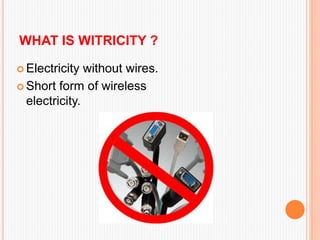
 Electricity without wires.
 Short form of wireless
electricity.
HISTORY OF WIRELESS POWER
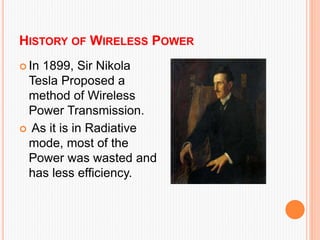
 In 1899, Sir Nikola
Tesla Proposed a
method of Wireless
Power Transmission.
 As it is in Radiative
mode, most of the
Power was wasted and
has less efficiency.
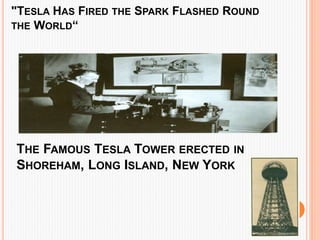
"TESLA HAS FIRED THE SPARK FLASHED ROUND
THE WORLD“
THE FAMOUS TESLA TOWER ERECTED IN
SHOREHAM, LONG ISLAND, NEW YORK
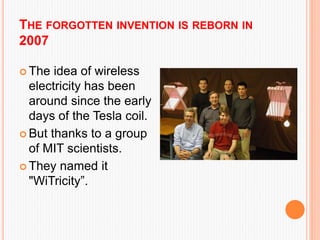
THE FORGOTTEN INVENTION IS REBORN IN
2007
 The idea of wireless
electricity has been
around since the early
days of the Tesla coil.
 But thanks to a group
of MIT scientists.
 They named it
"WiTricity”.
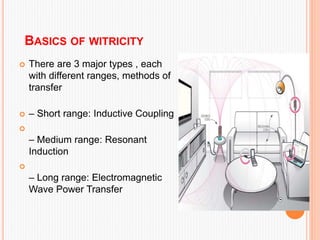
BASICS OF WITRICITY
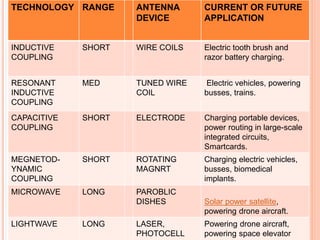
 There are 3 major types , each
with different ranges, methods of
transfer
 – Short range: Inductive Coupling

– Medium range: Resonant
Induction

– Long range: Electromagnetic
Wave Power Transfer
TECHNOLOGY RANGE ANTENNA
DEVICE
CURRENT OR FUTURE
APPLICATION
INDUCTIVE
COUPLING
SHORT WIRE COILS Electric tooth brush and
razor battery charging.
RESONANT
INDUCTIVE
COUPLING
MED TUNED WIRE
COIL
Electric vehicles, powering
busses, trains.
CAPACITIVE
COUPLING
SHORT ELECTRODE Charging portable devices,
power routing in large-scale
integrated circuits,
Smartcards.
MEGNETOD-
YNAMIC
COUPLING
SHORT ROTATING
MAGNRT
Charging electric vehicles,
busses, biomedical
implants.
MICROWAVE LONG PAROBLIC
DISHES Solar power satellite,
powering drone aircraft.
LIGHTWAVE LONG LASER,
PHOTOCELL
Powering drone aircraft,
powering space elevator
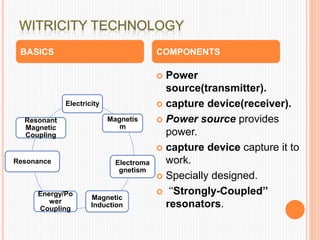
 Power
source(transmitter).
 capture device(receiver).
 Power source provides
power.
 capture device capture it to
work.
 Specially designed.
 ‘‘Strongly-Coupled’’
resonators.
BASICS COMPONENTS
Electricity
Magnetis
m
Electroma
gnetism
Magnetic
Induction
Energy/Po
wer
Coupling
Resonance
Resonant
Magnetic
Coupling
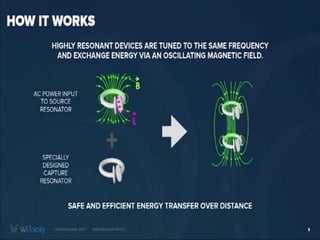
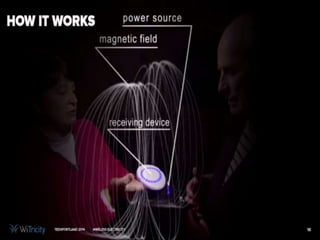
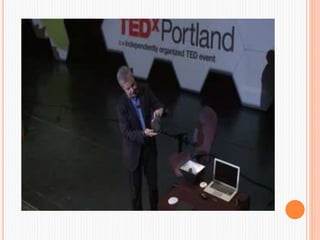
WORKING
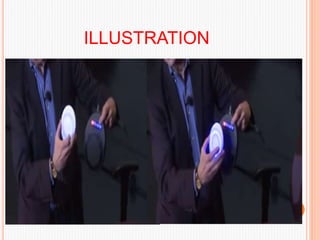
ILLUSTRATION
DISADVANTAGES
 Transmissions possible only in few meters.
 Possibility of “energy theft”.
 Efficiency decreases with distance.
 The resonance condition should be satisfied
and if any error exists, there is no possibility
of power transfer.
CONCLUSION
 Will it harm me?
 Will it harm the environment?
 Will it interfere with important
communication?
NO
Sources:-
Wikipedia
Witricity.com
Google
Youtube
THANKS

Witricity.pptx2

  • 1.
  • 2.
    WHAT IS WITRICITY?  Electricity without wires.  Short form of wireless electricity.
  • 3.
    HISTORY OF WIRELESSPOWER  In 1899, Sir Nikola Tesla Proposed a method of Wireless Power Transmission.  As it is in Radiative mode, most of the Power was wasted and has less efficiency.
  • 4.
    "TESLA HAS FIREDTHE SPARK FLASHED ROUND THE WORLD“ THE FAMOUS TESLA TOWER ERECTED IN SHOREHAM, LONG ISLAND, NEW YORK
  • 5.
    THE FORGOTTEN INVENTIONIS REBORN IN 2007  The idea of wireless electricity has been around since the early days of the Tesla coil.  But thanks to a group of MIT scientists.  They named it "WiTricity”.
  • 7.
    BASICS OF WITRICITY There are 3 major types , each with different ranges, methods of transfer  – Short range: Inductive Coupling  – Medium range: Resonant Induction  – Long range: Electromagnetic Wave Power Transfer
  • 8.
    TECHNOLOGY RANGE ANTENNA DEVICE CURRENTOR FUTURE APPLICATION INDUCTIVE COUPLING SHORT WIRE COILS Electric tooth brush and razor battery charging. RESONANT INDUCTIVE COUPLING MED TUNED WIRE COIL Electric vehicles, powering busses, trains. CAPACITIVE COUPLING SHORT ELECTRODE Charging portable devices, power routing in large-scale integrated circuits, Smartcards. MEGNETOD- YNAMIC COUPLING SHORT ROTATING MAGNRT Charging electric vehicles, busses, biomedical implants. MICROWAVE LONG PAROBLIC DISHES Solar power satellite, powering drone aircraft. LIGHTWAVE LONG LASER, PHOTOCELL Powering drone aircraft, powering space elevator
  • 9.
     Power source(transmitter).  capturedevice(receiver).  Power source provides power.  capture device capture it to work.  Specially designed.  ‘‘Strongly-Coupled’’ resonators. BASICS COMPONENTS Electricity Magnetis m Electroma gnetism Magnetic Induction Energy/Po wer Coupling Resonance Resonant Magnetic Coupling
  • 10.
  • 16.
  • 18.
    DISADVANTAGES  Transmissions possibleonly in few meters.  Possibility of “energy theft”.  Efficiency decreases with distance.  The resonance condition should be satisfied and if any error exists, there is no possibility of power transfer.
  • 19.
    CONCLUSION  Will itharm me?  Will it harm the environment?  Will it interfere with important communication? NO
  • 20.