WIND ENERGY
CONVERSION SYSTEM,
COMPONENTS AND TYPES
Presented By:
Ashwinee Kharel(41042)
Satish Adhikari (41029)
Presented To:
(Undergraduate Program Co-ordinator_Power & Control)
Outline Of Presentation
❏ Introduction of Wind Energy
❏ History of Wind energy
❏ Power Generation and Wind Power Curve
❏ Components of Wind Turbines
❏ Types of Wind Turbine
❏ Wind Farm Energy
❏ Wind Energy in Nepal
❏ Global Scenario of Wind Energy
Wind Energy
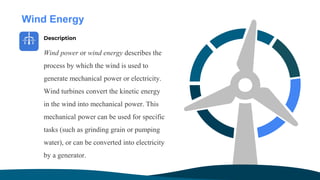
Wind power or wind energy describes the
process by which the wind is used to
generate mechanical power or electricity.
Wind turbines convert the kinetic energy
in the wind into mechanical power. This
mechanical power can be used for specific
tasks (such as grinding grain or pumping
water), or can be converted into electricity
by a generator.
Description
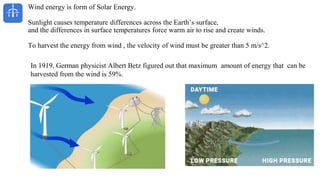
Wind energy is form of Solar Energy.
Sunlight causes temperature differences across the Earth’s surface,
and the differences in surface temperatures force warm air to rise and create winds.
To harvest the energy from wind , the velocity of wind must be greater than 5 m/s^2.
In 1919, German physicist Albert Betz figured out that maximum amount of energy that can be
harvested from the wind is 59%.
History Of Wind Energy
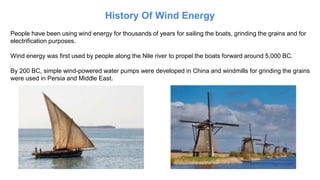
People have been using wind energy for thousands of years for sailing the boats, grinding the grains and for
electrification purposes.
Wind energy was first used by people along the Nile river to propel the boats forward around 5,000 BC.
By 200 BC, simple wind-powered water pumps were developed in China and windmills for grinding the grains
were used in Persia and Middle East.
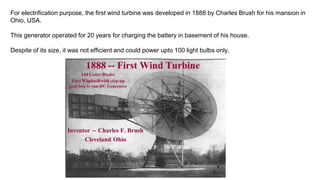
For electrification purpose, the first wind turbine was developed in 1888 by Charles Brush for his mansion in
Ohio, USA.
This generator operated for 20 years for charging the battery in basement of his house.
Despite of its size, it was not efficient and could power upto 100 light bulbs only.
Power Equation Of Wind
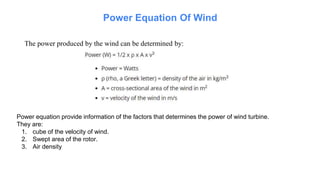
The power produced by the wind can be determined by:
Power equation provide information of the factors that determines the power of wind turbine.
They are:
1. cube of the velocity of wind.
2. Swept area of the rotor.
3. Air density
Solaire Powered
Wind Power Curve
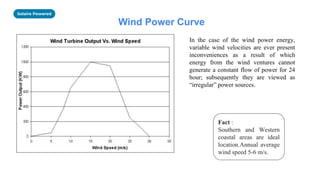
In the case of the wind power energy,
variable wind velocities are ever present
inconveniences as a result of which
energy from the wind ventures cannot
generate a constant flow of power for 24
hour; subsequently they are viewed as
“irregular” power sources.
Fact :
Southern and Western
coastal areas are ideal
location.Annual average
wind speed 5-6 m/s.
Solaire Powered
Solaire Powered
Solaire Powered
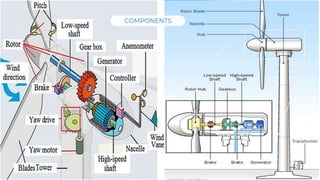
COMPONENTS
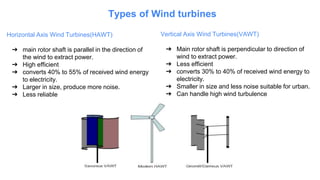
Types of Wind turbines
Horizontal Axis Wind Turbines(HAWT)
➔ main rotor shaft is parallel in the direction of
the wind to extract power.
➔ High efficient
➔ converts 40% to 55% of received wind energy
to electricity.
➔ Larger in size, produce more noise.
➔ Less reliable
Vertical Axis Wind Turbines(VAWT)
➔ Main rotor shaft is perpendicular to direction of
wind to extract power.
➔ Less efficient
➔ converts 30% to 40% of received wind energy to
electricity.
➔ Smaller in size and less noise suitable for urban.
➔ Can handle high wind turbulence
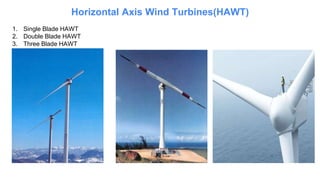
Horizontal Axis Wind Turbines(HAWT)
1. Single Blade HAWT
2. Double Blade HAWT
3. Three Blade HAWT
Vertical Axis Wind Turbines(VAWT)
Savonius Turbines
➔ Drag based wind turbine.
➔ Good with low speed wind
Darrieus Turbines
➔ Lift based wind turbine.
➔ High speed and can generate more power.
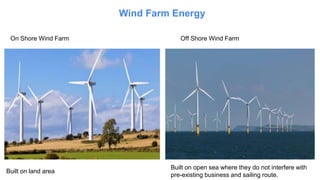
Wind Farm Energy
On Shore Wind Farm
Built on land area
Off Shore Wind Farm
Built on open sea where they do not interfere with
pre-existing business and sailing route.
Wind Power Plant in Nepal
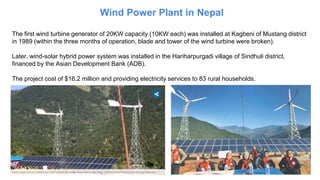
The first wind turbine generator of 20KW capacity (10KW each) was installed at Kagbeni of Mustang district
in 1989 (within the three months of operation, blade and tower of the wind turbine were broken).
Later, wind-solar hybrid power system was installed in the Hariharpurgadi village of Sindhuli district,
financed by the Asian Development Bank (ADB).
The project cost of $16.2 million and providing electricity services to 83 rural households.
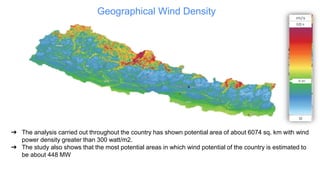
➔ The analysis carried out throughout the country has shown potential area of about 6074 sq. km with wind
power density greater than 300 watt/m2.
➔ The study also shows that the most potential areas in which wind potential of the country is estimated to
be about 448 MW
Geographical Wind Density
Solaire Powered
•
………………………………………….
Global Review
Renewable Energy for Better Life and
Future
• Wind energy is growing year-over-year by
about 10% and is a key part of most
climate change reduction and sustainable
growth plans in a variety of countries,
including China, India, Germany, and the
United States.
• With a market share of 56 percent in
2020, China lead worldwide ranking of
the largest newly installed wind power
47570MW, ahead of the United
States, India and Spain.
•
• When properly placed, wind
energy can produce low-cost and
non polluting electricity about
90% of the time.
Solaire Powered
Figure: Global cumulative installed wind power capacity from 2001 to 2021
The cumulative capacity of installed wind power worldwide amounted to
approximately 837 gigawatts in 2021. Onshore wind power accounted for the
majority of total wind power capacity, at about 780 gigawatts that year.
Thank You

WIND ENERGY .pptx

  • 1.
    WIND ENERGY CONVERSION SYSTEM, COMPONENTSAND TYPES Presented By: Ashwinee Kharel(41042) Satish Adhikari (41029) Presented To: (Undergraduate Program Co-ordinator_Power & Control)
  • 2.
    Outline Of Presentation ❏Introduction of Wind Energy ❏ History of Wind energy ❏ Power Generation and Wind Power Curve ❏ Components of Wind Turbines ❏ Types of Wind Turbine ❏ Wind Farm Energy ❏ Wind Energy in Nepal ❏ Global Scenario of Wind Energy
  • 3.
    Wind Energy Wind poweror wind energy describes the process by which the wind is used to generate mechanical power or electricity. Wind turbines convert the kinetic energy in the wind into mechanical power. This mechanical power can be used for specific tasks (such as grinding grain or pumping water), or can be converted into electricity by a generator. Description
  • 4.
    Wind energy isform of Solar Energy. Sunlight causes temperature differences across the Earth’s surface, and the differences in surface temperatures force warm air to rise and create winds. To harvest the energy from wind , the velocity of wind must be greater than 5 m/s^2. In 1919, German physicist Albert Betz figured out that maximum amount of energy that can be harvested from the wind is 59%.
  • 5.
    History Of WindEnergy People have been using wind energy for thousands of years for sailing the boats, grinding the grains and for electrification purposes. Wind energy was first used by people along the Nile river to propel the boats forward around 5,000 BC. By 200 BC, simple wind-powered water pumps were developed in China and windmills for grinding the grains were used in Persia and Middle East.
  • 6.
    For electrification purpose,the first wind turbine was developed in 1888 by Charles Brush for his mansion in Ohio, USA. This generator operated for 20 years for charging the battery in basement of his house. Despite of its size, it was not efficient and could power upto 100 light bulbs only.
  • 7.
    Power Equation OfWind The power produced by the wind can be determined by: Power equation provide information of the factors that determines the power of wind turbine. They are: 1. cube of the velocity of wind. 2. Swept area of the rotor. 3. Air density
  • 8.
    Solaire Powered Wind PowerCurve In the case of the wind power energy, variable wind velocities are ever present inconveniences as a result of which energy from the wind ventures cannot generate a constant flow of power for 24 hour; subsequently they are viewed as “irregular” power sources. Fact : Southern and Western coastal areas are ideal location.Annual average wind speed 5-6 m/s.
  • 9.
  • 10.
  • 11.
  • 12.
    Types of Windturbines Horizontal Axis Wind Turbines(HAWT) ➔ main rotor shaft is parallel in the direction of the wind to extract power. ➔ High efficient ➔ converts 40% to 55% of received wind energy to electricity. ➔ Larger in size, produce more noise. ➔ Less reliable Vertical Axis Wind Turbines(VAWT) ➔ Main rotor shaft is perpendicular to direction of wind to extract power. ➔ Less efficient ➔ converts 30% to 40% of received wind energy to electricity. ➔ Smaller in size and less noise suitable for urban. ➔ Can handle high wind turbulence
  • 13.
    Horizontal Axis WindTurbines(HAWT) 1. Single Blade HAWT 2. Double Blade HAWT 3. Three Blade HAWT
  • 14.
    Vertical Axis WindTurbines(VAWT) Savonius Turbines ➔ Drag based wind turbine. ➔ Good with low speed wind Darrieus Turbines ➔ Lift based wind turbine. ➔ High speed and can generate more power.
  • 15.
    Wind Farm Energy OnShore Wind Farm Built on land area Off Shore Wind Farm Built on open sea where they do not interfere with pre-existing business and sailing route.
  • 16.
    Wind Power Plantin Nepal The first wind turbine generator of 20KW capacity (10KW each) was installed at Kagbeni of Mustang district in 1989 (within the three months of operation, blade and tower of the wind turbine were broken). Later, wind-solar hybrid power system was installed in the Hariharpurgadi village of Sindhuli district, financed by the Asian Development Bank (ADB). The project cost of $16.2 million and providing electricity services to 83 rural households.
  • 17.
    ➔ The analysiscarried out throughout the country has shown potential area of about 6074 sq. km with wind power density greater than 300 watt/m2. ➔ The study also shows that the most potential areas in which wind potential of the country is estimated to be about 448 MW Geographical Wind Density
  • 18.
    Solaire Powered • …………………………………………. Global Review RenewableEnergy for Better Life and Future • Wind energy is growing year-over-year by about 10% and is a key part of most climate change reduction and sustainable growth plans in a variety of countries, including China, India, Germany, and the United States. • With a market share of 56 percent in 2020, China lead worldwide ranking of the largest newly installed wind power 47570MW, ahead of the United States, India and Spain. • • When properly placed, wind energy can produce low-cost and non polluting electricity about 90% of the time.
  • 19.
    Solaire Powered Figure: Globalcumulative installed wind power capacity from 2001 to 2021 The cumulative capacity of installed wind power worldwide amounted to approximately 837 gigawatts in 2021. Onshore wind power accounted for the majority of total wind power capacity, at about 780 gigawatts that year.
  • 20.