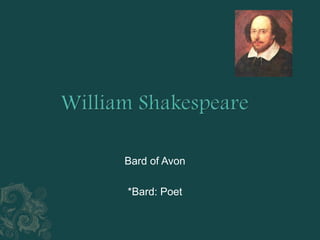
William ShakespeareBard of Avon*Bard: Poet
Who is Shakespeare?Famous playwright, actor and theatre entrepreneurBorn on around 23rd April 1564 in the family home in Stratford-upon-AvonBaptised in 26 April 1564 in Holy Trinity Church in StratfordMarried Anne Hathaway at the age of 18 and had 3 childrenDied on 23rd April 1616
FamilySon of John Shakespeare, a successful glove-maker and eventually a bailiff (mayor), and Mary Arden, daughter of a rich and ancient landowning familyHad 7 siblingsUpper-middle social status due to affluence of his family
Early Life of ShakespeareProbably attended the King’s New School, a local grammar schoolSchool days were hectic – started at six in the morning till five in the afternoonLeft school at the age of fifteen or sixteen Became an apprentice or trainee in his father’s shop
Inspirations and WorksInspired to write both by nature and most importantly, the other great novelists of his day such as Ovid and SenecaFamous plays that he had written include “Macbeth”, “Romeo and Juliet”, “Hamlet”, “The Tempest” and of course “The Merchant of Venice”Shakespeare’s plays were well-received even till now because of their unbeatable balance of prose and verse, profound study of human nature and their relevance
Interesting FactsShakespeare lived for exactly 52 years(1564-1616)Humorous scenes in his plays mostly deal with ordinary people rather than aristocratsShakespeare wrote a total of 38 plays (including The Two Noble Kinsmen) and 154 sonnetsShakespeare’s works contain over 600 references to birds of all kinds, one of the most among poets
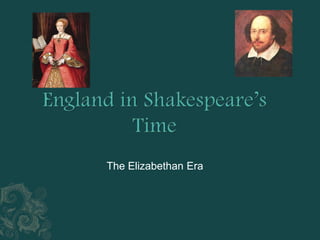
England in Shakespeare’s TimeThe Elizabethan Era
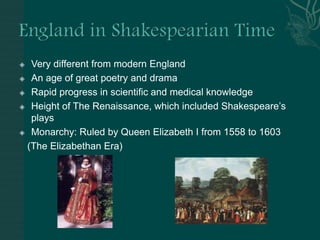
England in Shakespearian TimeVery different from modern EnglandAn age of great poetry and dramaRapid progress in scientific and medical knowledgeHeight of The Renaissance, which included Shakespeare’s playsMonarchy: Ruled by Queen Elizabeth I from 1558 to 1603    (The Elizabethan Era)
Social SystemGreat difference between the way ordinary people and the rich livedThe rich landownersEmploy hundreds of permanent servants‘patrons’ to actors or musiciansOrdinary people led normal livesEveryone at any level of society was likely to remain therePeople could not easily rise to a position of power through education, unlike today
Significant EventsAnglo-Spanish War of 1585-1604Defeat of the Spanish Armada in 1588Drake-Norris Expedition in 1589Signing of the Treaty of London in 1604, concluding the Anglo-Spanish War
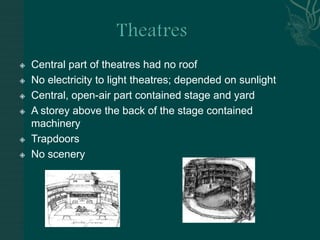
TheatresCentral part of theatres had no roofNo electricity to light theatres; depended on sunlightCentral, open-air part contained stage and yardA storey above the back of the stage contained machineryTrapdoors No scenery
Impact of Set-up of TheatresAllowed actors to move about freelyShape of theatres (polygonal) provided an all-rounded effectBalcony was used in plays such as Romeo and Juliet
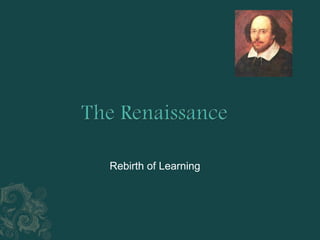
The RenaissanceRebirth of Learning
The RenaissanceFrench word, meaning rebirth or revivalHappened during 14th Century and 17th CenturyBegan in Italy in the 14th Century before spreading throughout EuropeNew interest in the ancient Greek and Roman classics, new forms of art, architecture, music and literature
Significant EventsBlack Death in EuropeChanged the views of people and they began to care more about their lives on Earth, rather than spirituality and afterlifePeriod of change, questioning and vitalityPeople no longer believed everything they were told, but found things out for themselves
Effects on Shakespeare’s WorkMade use of his knowledge of Greek and Roman classics in his playsPortrayed humanity in every character regardless of his/her social status, since hierarchy no longer existed during the Renaissance
Thank you!

William Shakespeare

  • 1.
  • 2.
    Who is Shakespeare?Famousplaywright, actor and theatre entrepreneurBorn on around 23rd April 1564 in the family home in Stratford-upon-AvonBaptised in 26 April 1564 in Holy Trinity Church in StratfordMarried Anne Hathaway at the age of 18 and had 3 childrenDied on 23rd April 1616
  • 3.
    FamilySon of JohnShakespeare, a successful glove-maker and eventually a bailiff (mayor), and Mary Arden, daughter of a rich and ancient landowning familyHad 7 siblingsUpper-middle social status due to affluence of his family
  • 4.
    Early Life ofShakespeareProbably attended the King’s New School, a local grammar schoolSchool days were hectic – started at six in the morning till five in the afternoonLeft school at the age of fifteen or sixteen Became an apprentice or trainee in his father’s shop
  • 5.
    Inspirations and WorksInspiredto write both by nature and most importantly, the other great novelists of his day such as Ovid and SenecaFamous plays that he had written include “Macbeth”, “Romeo and Juliet”, “Hamlet”, “The Tempest” and of course “The Merchant of Venice”Shakespeare’s plays were well-received even till now because of their unbeatable balance of prose and verse, profound study of human nature and their relevance
  • 6.
    Interesting FactsShakespeare livedfor exactly 52 years(1564-1616)Humorous scenes in his plays mostly deal with ordinary people rather than aristocratsShakespeare wrote a total of 38 plays (including The Two Noble Kinsmen) and 154 sonnetsShakespeare’s works contain over 600 references to birds of all kinds, one of the most among poets
  • 7.
    England in Shakespeare’sTimeThe Elizabethan Era
  • 8.
    England in ShakespearianTimeVery different from modern EnglandAn age of great poetry and dramaRapid progress in scientific and medical knowledgeHeight of The Renaissance, which included Shakespeare’s playsMonarchy: Ruled by Queen Elizabeth I from 1558 to 1603 (The Elizabethan Era)
  • 9.
    Social SystemGreat differencebetween the way ordinary people and the rich livedThe rich landownersEmploy hundreds of permanent servants‘patrons’ to actors or musiciansOrdinary people led normal livesEveryone at any level of society was likely to remain therePeople could not easily rise to a position of power through education, unlike today
  • 10.
    Significant EventsAnglo-Spanish Warof 1585-1604Defeat of the Spanish Armada in 1588Drake-Norris Expedition in 1589Signing of the Treaty of London in 1604, concluding the Anglo-Spanish War
  • 11.
    TheatresCentral part oftheatres had no roofNo electricity to light theatres; depended on sunlightCentral, open-air part contained stage and yardA storey above the back of the stage contained machineryTrapdoors No scenery
  • 12.
    Impact of Set-upof TheatresAllowed actors to move about freelyShape of theatres (polygonal) provided an all-rounded effectBalcony was used in plays such as Romeo and Juliet
  • 13.
  • 14.
    The RenaissanceFrench word,meaning rebirth or revivalHappened during 14th Century and 17th CenturyBegan in Italy in the 14th Century before spreading throughout EuropeNew interest in the ancient Greek and Roman classics, new forms of art, architecture, music and literature
  • 15.
    Significant EventsBlack Deathin EuropeChanged the views of people and they began to care more about their lives on Earth, rather than spirituality and afterlifePeriod of change, questioning and vitalityPeople no longer believed everything they were told, but found things out for themselves
  • 16.
    Effects on Shakespeare’sWorkMade use of his knowledge of Greek and Roman classics in his playsPortrayed humanity in every character regardless of his/her social status, since hierarchy no longer existed during the Renaissance
  • 17.