
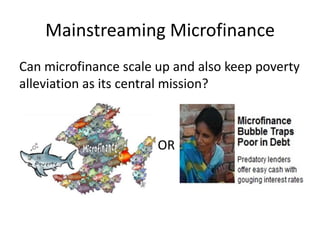

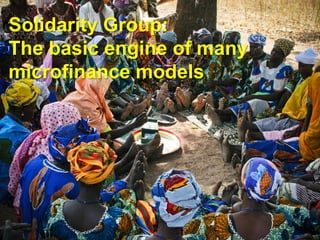

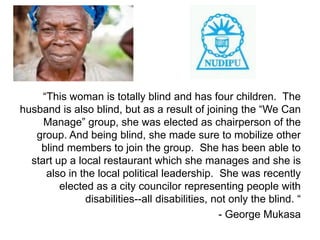
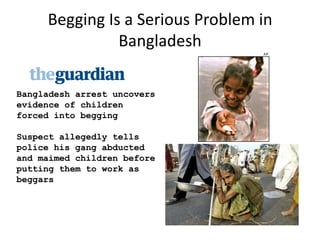
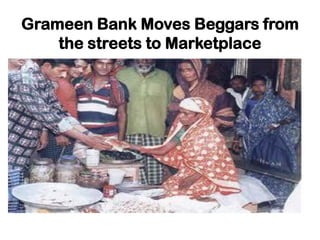
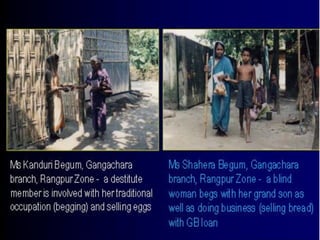
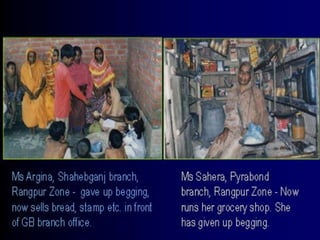
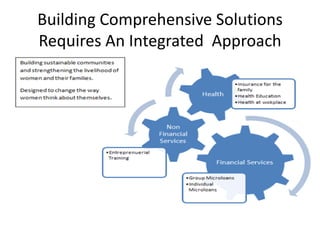


This document discusses how microfinance programs can help address social problems through building social capital and networks. It provides examples of microfinance programs that have helped reduce begging in Bangladesh by moving beggars to marketplace work. It also discusses how microfinance groups in Uganda have empowered the disabled, with one blind woman elected as city councilor. The document advocates for an integrated approach using microfinance to create health solutions through partnerships while targeting the ultra-poor.


![Role of civil society in urban planning and development [compatibility mode]](https://cdn.slidesharecdn.com/ss_thumbnails/roleofcivilsocietyinurbanplanninganddevelopmentcompatibilitymode-141227105858-conversion-gate01-thumbnail.jpg?width=640&height=640&fit=bounds)


